
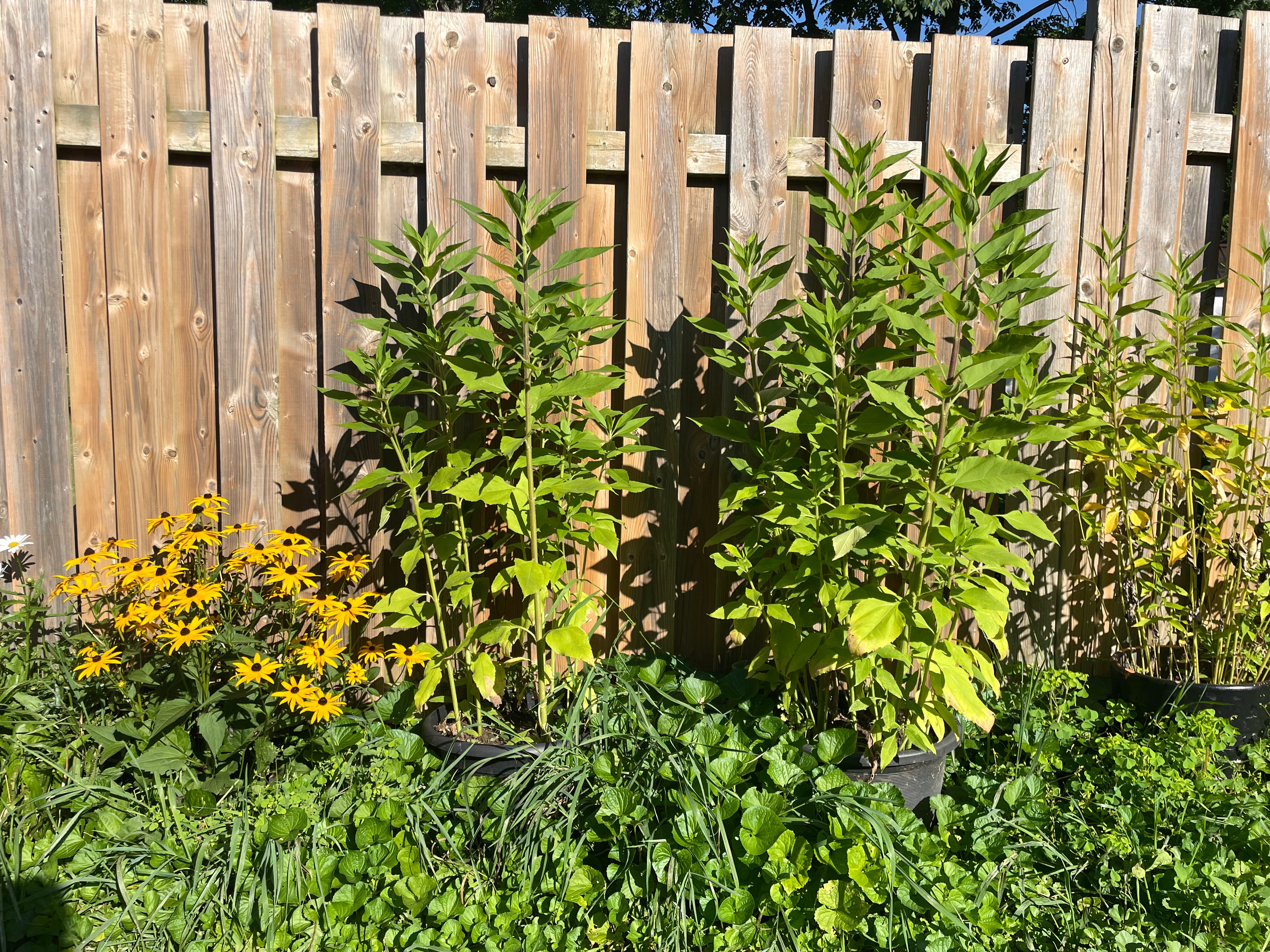
I have officially reached the point where casually saying, “I grow sunchokes,” is no longer enough.
Now I want to know which sunchokes.
How do they grow? What do the tubers look like? How productive are they? Do they form a nice little cluster underneath the plant, or do they send themselves halfway across the garden and pop up somewhere I absolutely did not invite them?
Because apparently I have opinions and if I’m going to continue expanding my little sunchoke growing experiment, those details matter.
One of the biggest things I’ve learned while growing and researching Jerusalem artichokes, also called sunchokes, is that we tend to talk about them as though they are all the same plant.
You hear:
“Sunchokes spread.”
“Sunchokes take over.”
“Never put sunchokes in the ground.” and of course, the dreaded word…
Invasive.
I understand where the reputation comes from. I have personally grown a sunchoke that spread much farther than I wanted it to, and removing it was an experience. There was digging. There was regret. There may have been a small emotional breakdown over the possibility that I had planted something I would now be fighting for the rest of my natural life.
Spoiler: I survived.
And so did the garden.
BUT that experience also made me curious because I knew there were cultivated varieties of sunchokes out there. Surely they couldn’t all behave exactly the same way underground.
Turns out, they don’t.
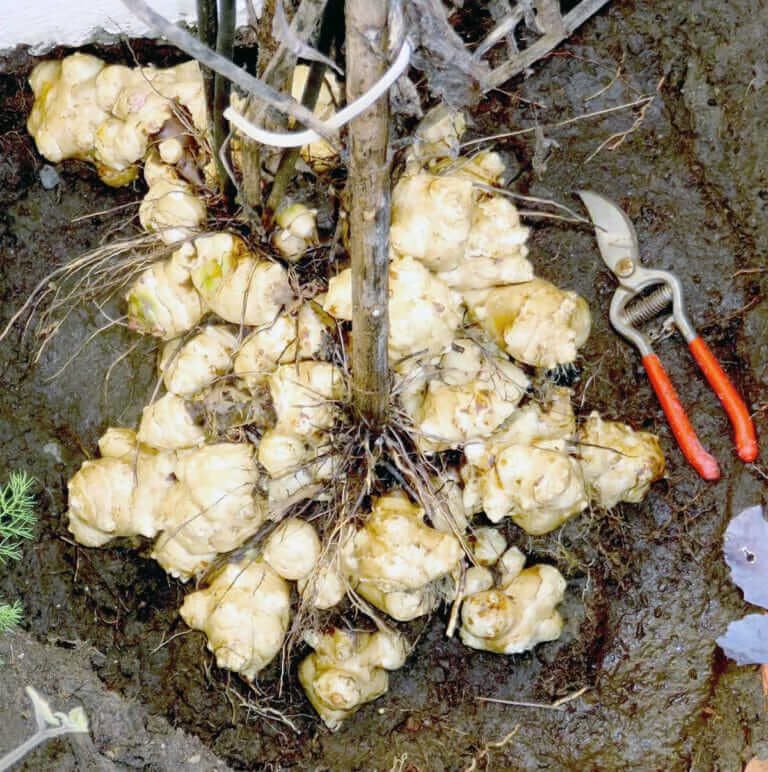
This has become the number-one characteristic I’m researching.
I want sunchokes that produce their tubers relatively close to the base of the plant.
Think less:
SURPRISE! I’M OVER HERE NOW!
And more:
Hello, all of my potatoes-with-an-identity-crisis are conveniently located right here.
That clustering growth habit matters for a few reasons.
First, harvesting becomes significantly easier when you’re not digging through a huge area trying to find tubers.
Second, it makes managing the plant much more realistic in a home garden.
And third, any tuber you accidentally leave behind can potentially become next year’s plant. If your tubers are concentrated around the crown instead of travelling outward, you have a much better chance of actually finding them when you harvest.
That’s important because sunchokes aren’t usually taking over the garden because they’re dropping thousands of seeds everywhere.
They’re incredibly persistent because of their tubers.
Leave a piece behind and you’ve potentially planted next year’s crop.
Which means growth habit matters.
A lot.
I found a Canadian supplier, Garden Faerie Botanicals, that carries around 30 different sunchoke varieties.
THIRTY.
Do you know what happens when you give a gardener who is already slightly obsessed with sunchokes a catalogue containing approximately 30 different kinds?
Nothing productive gets done for the rest of the afternoon.
I’ve been combing through the varieties, reading descriptions, comparing characteristics and trying to narrow everything down to the ones that make the most sense for what I’m trying to accomplish and I’m not necessarily looking for the biggest tuber.
I’m not automatically choosing the highest-yielding variety.
I’m definitely not picking solely based on which one has the prettiest name.
Although some of the names certainly aren’t helping my self-control.
My biggest question is:
How does this variety actually grow underground?
At this point, I’m looking at a few things when considering a variety.
Does it cluster at the base?
This is the big one. I want varieties described as producing concentrated clusters rather than long-ranging tubers.
How long are the stolons?
This is something I’m paying much more attention to now. Sunchoke tubers form at the ends of underground stolons, so varieties with shorter stolons should theoretically keep their harvest closer to the original plant.
What are the tubers like?
Smooth versus knobbly matters when you’re actually trying to clean and cook them. I don’t necessarily need perfectly smooth sunchokes, but it’s definitely something worth considering.
How productive is it?
Obviously, I want a good harvest. Especially because I’m interested in growing these beyond just having a novelty plant tucked into the garden.
How does it perform in a colder climate?
I’m gardening in Ontario. Whatever I grow needs to make sense here, not just look fantastic in somebody else’s garden several growing zones away.
And finally:
Would I confidently recommend this variety to another home gardener?
That’s becoming a surprisingly important part of this experiment.
This is probably where my little sunchoke obsession has changed.
At first, I just wanted to grow them.
Then I wanted to grow more of them.
Then I started thinking about selling tubers and now I’m thinking about the information that comes along with selling them.
If somebody eventually buys a sunchoke variety from me, I don’t want to hand them a tuber and say:
“Good luck! Hope it doesn’t eat your yard!”
I want to be able to say:
This is how this particular variety grows.
This one clusters tightly.
This one produces slightly farther from the crown.
This one is easy to harvest.
This one produces heavily.
This one might be better suited to a dedicated bed or container.
And yes, maybe eventually I’ll find one that I grow again and immediately think, Absolutely not. This one gets its own containment facility.
That’s useful information too.
For the cost of one garden centre impulse buy, you’ll unlock the full Growing With Beccalynne experience — garden downloads, practical mini guides, essays, and access full of resources designed to help you grow a more abundant, low-effort garden without overcomplicating it.
I think this is where we need a little nuance.
“Invasive” gets tossed around gardening conversations incredibly casually.
A plant growing enthusiastically, spreading quickly or being difficult to remove doesn’t automatically make it an invasive species.
BUT sunchokes can absolutely be aggressive growers, and pretending otherwise isn’t helpful either.
Their tubers allow them to persist and spread, especially when they’re planted somewhere they can freely move through the soil. If you harvest them and miss tubers, those can grow again the following year.
I’ve experienced that myself and that’s exactly why I’m interested in researching cultivars and growth habits instead of simply deciding that all sunchokes are garden monsters.
There is a massive difference between saying:
“Sunchokes take over.”
And asking:
Which sunchoke varieties are easier to manage?
That’s the question I’m much more interested in answering.
Reading descriptions is one thing.
Growing them is another.
My plan is to choose several varieties that are described as having the clustering growth habit I’m looking for and grow them under similar conditions.
Then comes the fun part.
At harvest, I want to actually see what happened underground.
How far did the tubers travel from the original plant?
How concentrated was the harvest?
How much did each variety produce?
How easy were they to dig?
Did the description match what happened in my garden and most importantly, would I grow it again because that’s the information I want when I’m choosing a perennial food crop for my own garden.
Not just can I grow it?
I want to know what living with it is actually like.
I genuinely think part of the problem with sunchokes is that they’re often introduced to gardeners without enough information.
Someone gives you a few tubers.
You plant them.
They grow into enormous sunflower-looking plants.
You dig up approximately 700 tubers.
The following spring another one appears six feet away and suddenly you’re on the internet warning strangers never to plant Jerusalem artichokes.
Fair.
But what variety did you grow?
How did that variety produce its tubers?
How far did its stolons travel?
Was it a cultivar selected for food production or essentially an unnamed plant that had been passed around for years? Ask me how I know this.
Those are the questions I’m asking now and I’m having an unreasonable amount of fun doing it because somewhere among those 30-ish varieties might be a handful of sunchokes that are productive, delicious, cold-hardy and much more manageable for an ordinary home garden.
Those are the ones I want.
So yes, researching my next sunchoke varieties has turned into a whole process.
But if I’m going to become the person enthusiastically convincing everyone that sunchokes deserve a place in the garden, I should probably figure out which ones deserve that place first.
AND that is exactly what I’m doing.
See you in the next one!
Beccalynne🌻
Meet The Author.
Hi there! I’m Becca, the heart behind Growing With Beccalynne.
From Eastern Ontario Canada, gardening has been apart of me my whole life starting with my great grandpa when I was little. I’ve been building and educating through my own garden since 2018. By day, I run my business as a virtual assistant and creating content for you (@growingwithbeccalynne on all platforms). Here, I pour my love for soil science, creating gardens, growing plants and the joys of creating a low effort garden to love long term.
Ways To Keep Growing With Me:
Become a Paid Subscriber: For the cost of a monthly garden centre impulse buy, you can unlock the full Growing With Beccalynne experience — downloads, private essays, seasonal workbooks, and access to the growing Growers Vault of resources designed to help you build a healthier, lower-effort garden.
Explore the Garden Resources I Share : Seasonal notes, how-to guides, soil-building methods, herb-bed layouts, and the real process of growing a backyard garden with ease. These tools are here to help you grow more confidently without overwhelm.
Follow Along on Instagram - Come hang out with me on Instagram for real-time garden updates, photos from the backyard, short-form videos, seasonal reminders, plant rambles, garden experiments, and the honest in-between moments that don’t always make it into a full post.
💬 Feel free to like or comment on this newsletter so more Substack users can find it!
Comments
Nothing yet. Say the first thing.
Sign in to join the conversation.