
Friends,
This week marked the release of JD Vance’s new memoir Communion, which, I am pleased to report, at the moment I’m writing this, has only two reviews on Amazon; it also has a rating of 1.3 stars on Goodreads. (I am displeased to report that it’s also the #1 bestselling book on all of Amazon right now.)
In my little, highly-biased, artificially-algorithmically-controlled corner of the interwebs, this has meant that posts are popping up all over the place, saying that the only book called Communion that we want to buy or otherwise have anything to do with is the one by bell hooks.
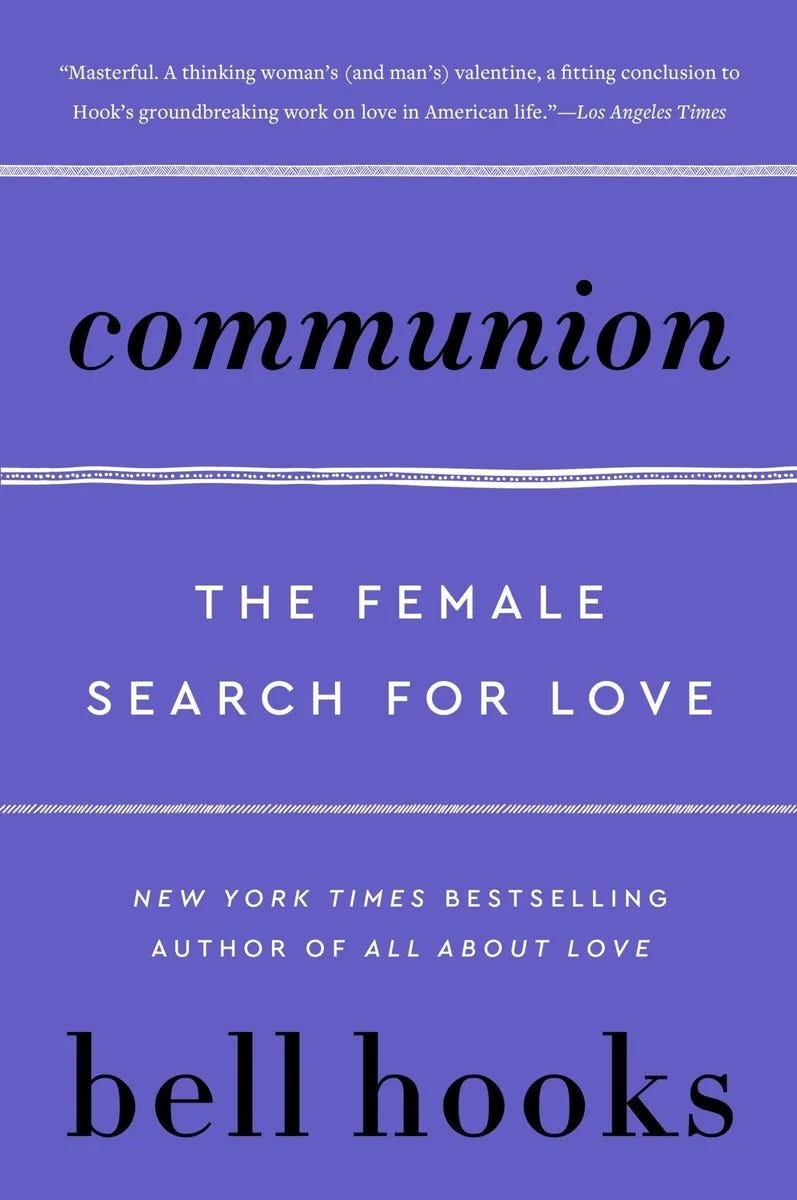
I’m so here for this energy.
(And I’m with those who think it’s a little…odd…that JD Vance wrote a book called Hillbilly Elegy after bell hooks wrote a book called Appalachian Elegy, and now JD Vance has written a book called Communion after bell hooks wrote a book also called Communion.)
I do wonder, though—and it feels appropriate to wonder this aloud on Juneteenth—are we just talking about bell hooks’ work to offer a big “screw you” to JD Vance during his book launch week? (Not that I’m necessarily against this.)
Or are we actually engaging with bell hooks’ work? Reading it, taking it in, processing it, talking about it, letting it change us?
In other words—and yes, I am saying this in a Barney Stinson voice from How I Met Your Mother—Haaave you met bell hooks?
I haven’t read either Communion book—Vance’s or hooks’. But I’ve read quite a bit of hooks’ other work,* and I always feel like I’m transformed by it in the best ways.
There are a thousand amazing quotes that I could share here, and so many things that could be said. But to keep this post to a length I want to write (and you might want to read), I’ll just share a couple here.
I think of these quotes because I don’t know how many of us—myself included, as always, although of course I’m working on it—really see how interconnected all of our struggles for equality and liberation are. Race, class, gender, sexuality, ability, all of it.
I still see so much disregard for class and race oppression in white-dominated feminist spaces. So much minimizing or dismissing of the voice of women of color.
And I still see so much casual, unthinking, unintentional-but-no-less-damaging sexism in spaces that advocate racial justice.
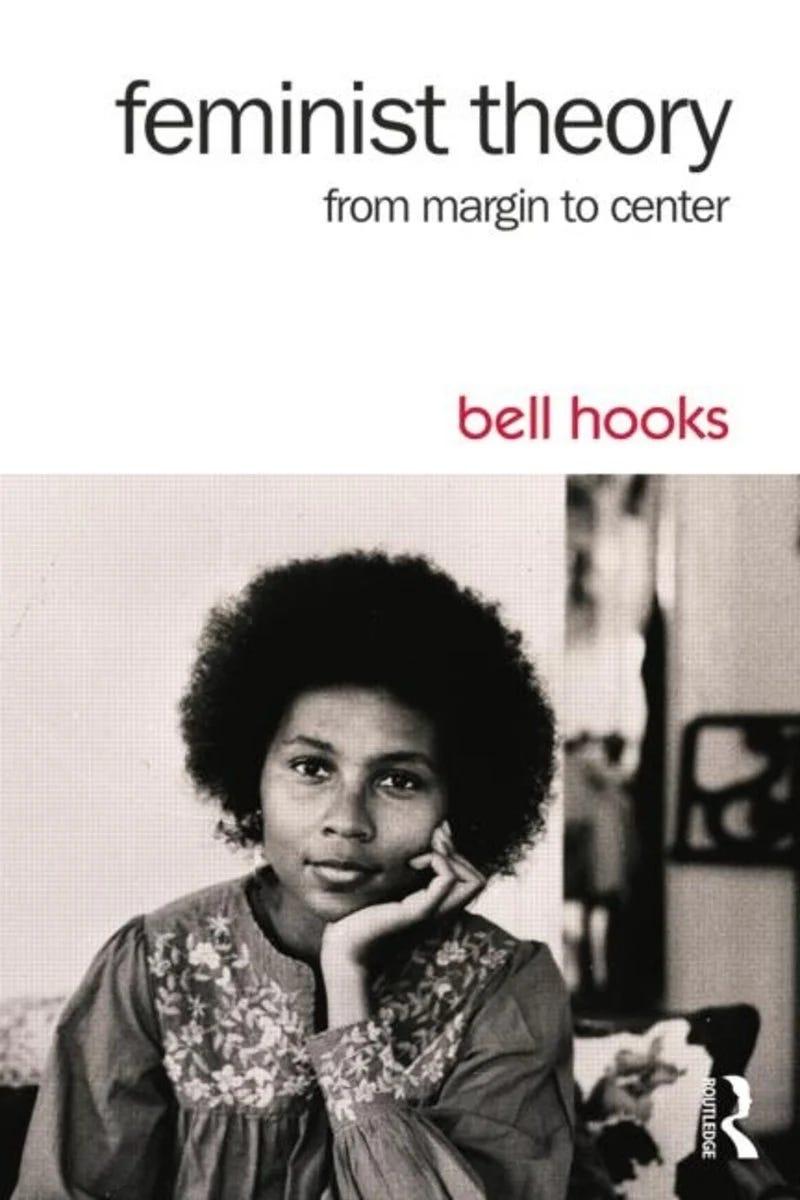
bell hooks speaks to all of this. In Feminist Theory: From Margin to Center, she writes:
Within our society, all forms of oppression are supported by traditional Western thinking. The primary contradiction in Western cultural thought is the belief that the superior should control the inferior…
Sexist oppression is of primary importance not because it is the basis of all other oppression, but because it is the practice of domination most people experience, whether their role be that of discriminator or discriminated against, exploiter or exploited. It is the practice of domination most people are socialized to accept before they even know that other forms of group oppression exist. This does not mean that eradicating sexist oppression would eliminate other forms of oppression. Since all forms of oppression are linked in our society because they are supported by similar institutional and social structures, one system cannot be eradicated while the others remain intact. Challenging sexist oppression is a crucial step in the struggle to eliminate all forms of oppression.
I so appreciate her clarity here.
And then, on the flip side, also from Feminist Theory: From Margin to Center:
Individuals who fight for the eradication of sexism without supporting struggles to end racism or classism undermine their own efforts. Individuals who fight for the eradication of racism or classism while supporting sexist oppression are helping to maintain the cultural basis of all forms of group oppression. While they may initiate successful reforms, their efforts will not lead to revolutionary change. Their ambivalent relationship to oppression in general is a contradiction that must be resolved, or they will daily undermine their own radical work.
While hooks wrote these words decades ago (the book was published in 1984, to be exact), they feel so, so relevant today.
We need hooks’ insights into the ways all forms of oppression are interconnected. How they are not separate. How being indoctrinated into one system of dominance conditions us to think in a way that accepts other forms of dominance too.
And, for white women like me, we’re challenged to advocate feminism in a way that does not “undermine [our] own efforts” by accepting other forms of oppression for other people while fighting for our own freedom.
May hooks’ words invite us to reflect. May we collectively resolve our “ambivalent relationship to oppression” everywhere and anywhere it exists.
May we gain clarity on who we are, what we’re about, and the kind of mutually-honoring communities of equals we want to see and build in our world.
Happy Juneteenth to all who celebrate.
In this with you.
If you need more…
A while back I wrote a two-part “super chill book review” with a bunch of quotes and thoughts from bell hooks’ The Will to Change. If you’re interested, here’s part 1 and here’s part 2.
I’ve also written a piece on why bell hooks is a favorite theologian of mine. It’s over here at the lovely Feminism & Religion blog. Maybe take a look as a way of celebrating and pondering Juneteenth this year. I really do think hooks’ vision of active love and mutuality among all people is about the best theology I know of. And I think the Jesus who told his followers that the most important thing in the universe is to love God and to love others as ourselves would be here for it.
*To be specific, I’ve read All About Love: New Visions, Feminism Is for Everybody: Passionate Politics, The Will to Change: Men, Masculinity, and Love, Ain’t I a Woman: Black Women and Feminism, Wounds of Passion: A Writing Life, and Feminist Theory: from Margin to Center. I’m also floored by how many other books she wrote that I haven’t read yet. Any recommendations for what comes next??
Comments
Nothing yet. Say the first thing.
Sign in to join the conversation.