
“Give up Science, Sausage. Stick to swimming.”
Those words came from Mr. Del Bianco, Melinda Nicci’s science teacher and swimming coach, when she was a student in South Africa. Years later, when she earned her Master of Science degree, one thought crossed her mind:
‘Take that, Mr. Del Bianco.’
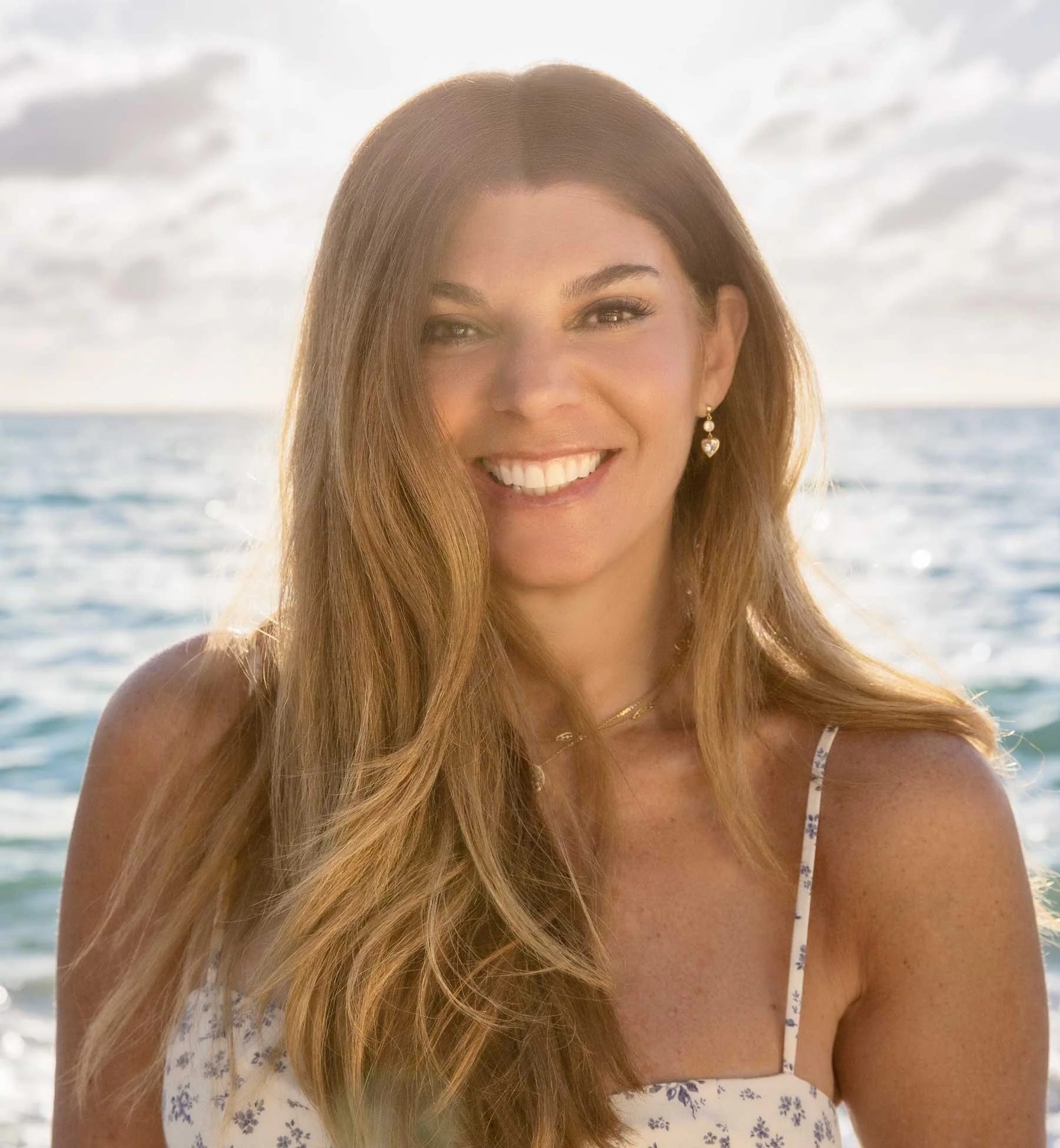
It was a small, private victory. But it established a pattern that would define her career: systematic underestimation transformed into systematic proof. From that schoolgirl dismissed by her teacher to a founder serving 6 million women across 150 countries, Nicci has spent three decades doing something remarkable - not just building successful health technology platforms, but teaching millions of women that being dismissed is no longer acceptable.
And now Melinda has changed what 6 million women expect, and healthcare systems have to do something about it.
This pattern of dismissal persisted.
In 1994, Melinda was living in the UK after emigrating from South Africa. She was also pregnant with her first child. As a sports psychologist and fitness professional who’d competed for her school and university in South Africas as a swimmer and who’d studied exercise science formally, she understood the body both physically and psychologically. So she sought advice from her doctor about exercise and nutrition during pregnancy. The doctor’s response?
“You’ll be fine. You can sit on the sofa and eat biscuits. You don’t have to worry about it.”
Thirty years later, she still remembers his exact words. Not because the medical advice was questionable, though it was, but because of what the interaction revealed about how the healthcare system saw her.
“I felt reduced to a biological machine to create this human, but I wasn’t given the right information to optimize my health for that process,” she recalls.
The system would take control of her body to make new life, but it wouldn’t give her the tools she needed to stay healthy while it was happening. She wasn’t seen as a complete human being with agency, expertise, and needs. She was a vessel. An incubator. A biological functionary.
This wasn’t just one dismissive interaction with a doctor. It was emblematic of how the entire healthcare system approached women’s health, if it approached it at all. Navigating the NHS with its 7.5-minute GP appointments, trying to understand a new healthcare system as an immigrant, seeking evidence based guidance and finding only patronizing reassurance, the experience crystallized something fundamental.
The system didn’t see her. And if the system couldn’t see a well educated, professionally trained athlete asking informed questions, what happened to women with fewer resources, less education, and no medical literacy?
That question would drive the next three decades of her work.
Melinda did what many frustrated professionals do: she started solving the problem herself. She researched. She traveled to the United States and studied under Professor James Clapp at Tufts University, who’d conducted groundbreaking research on the physiological changes of the fetus while mothers exercised. She returned to London and began training pregnant women one-on-one, then in group classes, building what she describes as “a great little lifestyle business” with ten people working for her.
“We had very low overheads and consistent membership revenue every month. I was getting to hundreds of women in London,” she remembers.
But hundreds wasn’t enough. Not when the problem affected billions.
“I thought, okay, I’m getting to hundreds of women in London, but I could probably get to millions. So how do I do that?”
The answer was technology. But first, she needed to understand it. So she did something remarkable: while running her business and raising two children, by then as a single mother, she went back to school for her master’s degree. “It was a long year,” she says with characteristic understatement.
Her formal education led to a role at Philips in Amsterdam, working in their personal health division. And there, she discovered something that would cement her mission: the company had accumulated massive amounts of health data and was building products and algorithms based on that data. There was just one problem.
“I had so much data about men’s health, and all the products they were building were based on men’s data,” she recalls. “I was like, how is this going to help women? If the algorithms for heart rate are based on men, it’s not going to be reflective of women’s biology and physiology.”
She saw what she calls “this whole blue ocean” of women’s health in technology, an entirely untapped opportunity. When Philips suggested she launch a corporate venture to pursue it, she declined.
“I just thought, they’re going to make me do things I wouldn’t necessarily want to do, and I’d probably move a lot faster on my own. So I said, actually, no, I’ll build it. You can buy it from me.”
That response ”I’ll build it; you can buy it from me” captures something essential about Melinda. She doesn’t wait for permission. She doesn’t negotiate for scraps. She takes what she needs and builds what the world requires.
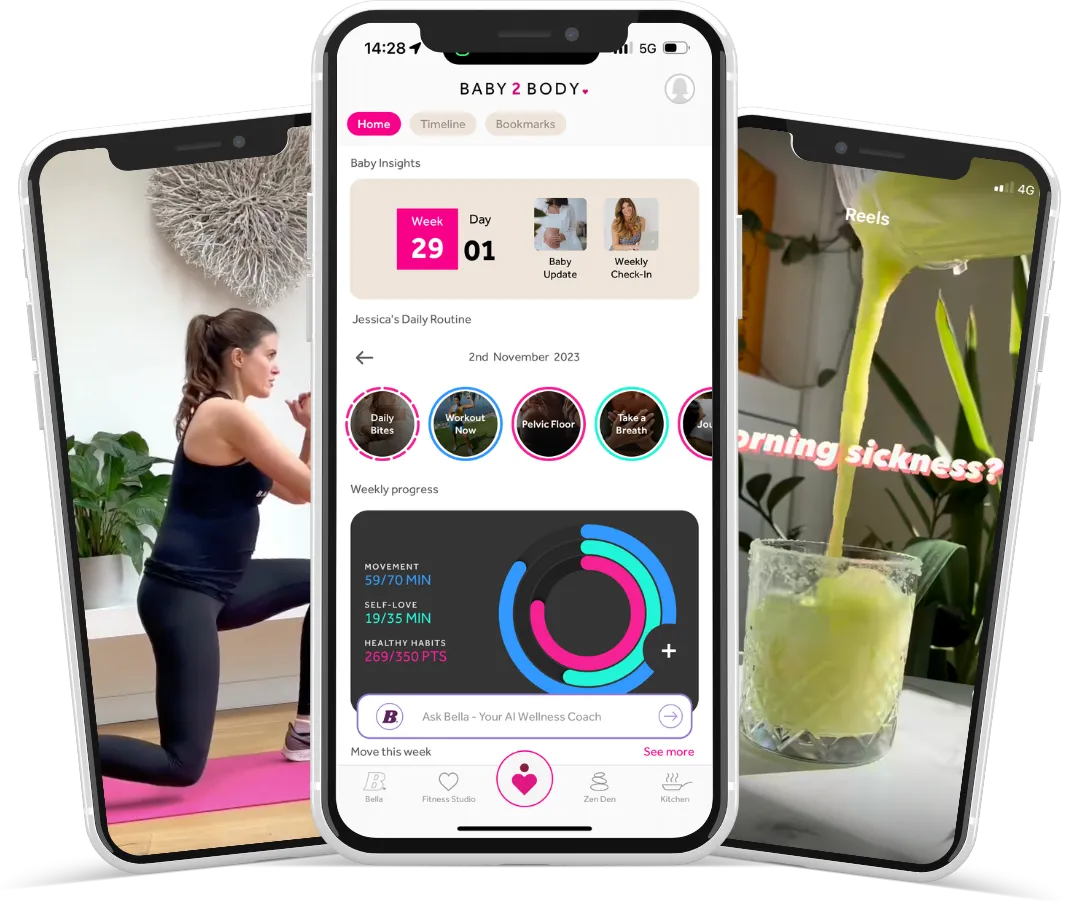
In 2015, she launched Baby2Body as a digital platform. At the time, there wasn’t a category for what she was creating.
“There was nobody doing anything for women specifically. I was literally the only person, and it was the only product out there,” she explains. “When we started the digital product in 2015, there was no category for women’s wellness in tech.”
The term “femtech” wouldn’t even be coined until 2016, when Clue founder Ida Tin created it specifically to help male venture capitalists, who comprised 95.5% of decision-makers, feel comfortable discussing menstruation and fertility without naming specific bodily functions.
Nicci was building in a vacuum. Creating a market that didn’t exist. Serving a population that investors would repeatedly tell her was “niche.”
“I was sitting there going, this is not niche,” she recalls, the frustration still evident. “Ninety percent of women have children globally. I think this is not niche.”
That absurdity, being told that half the human population represents a niche market, was just another form of the same dismissal she’d experienced her entire life. Mr. Del Bianco telling her to give up science. The doctor is telling her to eat biscuits. VCs telling her women’s health was too small to matter.
Let all that sink in for a moment.
The pattern was familiar. So was her response: prove them wrong, at scale.
What Melinda discovered in building Baby2Body, and later MBody for perimenopause and menopause support, was that individual dismissal was just the surface. Beneath it lay systemic design choices that revealed what healthcare actually valued, and it wasn’t women’s specific needs.
The data gap is staggering. Women were formally barred from early-phase clinical trials for 16 years under FDA policy from 1977-1993. Even today, women account for only 40% of participants in trials for diseases that most affect them. The sleeping pill Ambien was approved in 1992 at the same dose for men and women despite FDA knowledge that women metabolize it 45% more slowly, it took 20 years for the agency to cut the recommended dose for women in half.
Large scale cardiac studies on heart attack prevention enrolled 15,000 men and zero women. Multiple Risk Factor Intervention Trial: no women. Physicians’ Health Study on aspirin: 22,071 men, zero women. This male-centric research contributed to women being 50% more likely to receive wrong initial diagnoses during heart attacks.
The gender blindness extends beyond medicine. Crash test dummies are based on 5’9”, 171-pound male bodies. The first dummy modeled on actual female anatomy was created in Sweden in May 2023, five decades after male dummies were standardized. This results in a 47% higher risk of serious injuries for women in frontal collisions.
Surgical mesh designed for male hernia repairs was used in women for transvaginal implantation without additional research, with designers assuming women were “anatomically and biologically identical to men.” Personal protective equipment designed for male bodies affects women, who comprise 70% of the global health workforce.
“I think this isn’t just a problem in the health sector. I think it’s every sector,” Melinda observed. “But the health sector specifically matters because our physiology is different.”
The economic consequences of this systematic gender blindness are massive. Despite women representing 50% of the population and controlling over 80% of healthcare spending decisions, women’s health receives just 4% of total healthcare R&D funding. Eleven erectile dysfunction startups raised $1.24 billion from 2019-2023, while eight endometriosis startups raised only $44 million, a 28-fold funding gap for conditions affecting comparable populations.
Menopause costs the global economy $150 billion annually in productivity losses, yet only 5-15% of employers offered menopause benefits in 2024. One in ten UK women have left jobs due to menopause symptoms. Women experiencing menopause are 47% less likely to apply for promotions.
Melinda didn’t just observe this gap. She’s accumulated evidence of it. By now, her platforms have collected 800 million data points from 6 million women, a dataset that represents one of the largest collections of real-world women’s health information across the reproductive lifespan.
Interestingly, she only recently fully grasped the strategic value of what she’d built. “I wrote this piece on LinkedIn this week, actually,” she mentions. “A few people sent me direct messages saying, you’re literally sitting on a gold mine with so much data collected over the last 10 years.”
The fact that someone else had to tell her this reveals something about her optimization function. She’s been focused on serving the women in front of her, the mission, the users, the immediate health outcomes, not on building a data asset for monetization. She’s been solving for impact, not exit multiples.
What makes Melinda Nicci’s work transformative rather than merely successful is how it shifts traditional power dynamics. She’s not changing healthcare from the top down through policy or infrastructure redesign. She’s creating change from the bottom up by raising the floor of what women will now accept.
“I think we’ve leveled up the expectations,” she explains. “When we started, there was nobody doing anything for women specifically. There was no category for women’s wellness in tech.”
She describes a generational progression: “Ten years ago, our users were millennials who had no expectations of anything specific for women. Then the next generation started being more demanding. And now Gen Z expects care that’s bespoke to them personally.”
This expectation escalation creates systemic pressure. When millions of women expect personalized, evidence-based guidance throughout their reproductive journey, doctors who offer dismissive “eat biscuits” advice lose patients. Employers who ignore menopause support lose talent. Investors who call women’s health “niche” miss massive market opportunities.
The change happens not because leaders mandate it from above, but because the old way simply stops working. Dismissal becomes commercially unviable.
Melinda recognizes the paradox of being a category creator: “I literally started a category, and now there’s a lot of money going in. But, you know, sometimes the first movers create the category.”
She trailed off, leaving the implication clear: the first movers often create the category but don’t capture the biggest exits. Flo Health achieved a €1 billion valuation in 2024. Maven Clinic reached $1.7 billion. Progyny is now valued at approximately $4 billion. Nicci could have pursued that path—she had the traction, the user base, and the data.
“I haven’t actually raised a lot of money at all,” she acknowledges.
But she’s optimizing for a different kind of success. Three years from now, she sees herself “leading a roll-up” and consolidating smaller women’s health businesses into something with real scale.
Ten years from now? “I want to have a number of books published and be doing more portfolio stuff, teaching, advising, and mentoring the next generation.”
It’s legacy work. Infrastructure work. Teaching the next cohort of founders that they don’t need to accept being told women’s health is “niche.” That they can take permission rather than wait for it.
While Silicon Valley champions “move fast and break things,” Melinda operates by a different principle: move carefully when dealing with vulnerable humans.
This becomes clearest when discussing AI in healthcare. While others race to automate everything, she focuses on what she calls building with guardrails, technology that doesn’t just provide information faster but understands context, respects privacy, and recognizes when NOT to answer.
“The guardrails were really important, so we spent a lot of time giving feedback on the answers,” she explains about building Bella AI. “This is a dangerous answer. This question is going to elicit a dangerous response. We don’t answer it. We’ve got these blockers that come up saying we don’t answer this question, but here’s where to go for help.”
Her concern isn’t theoretical. At a recent mothers’ conference where she spoke about AI, attendees casually mentioned uploading their children’s medical records to ChatGPT. Her response: “I’m like, oh my God. Did you switch off the security? Did you look at the security function? They didn’t even know there was a security function. Your child’s data is now being used to train an LLM.”
This isn’t technophobia. It’s moral clarity about the stakes. Pregnancy, postpartum, conception and menopause, these aren’t just health conditions. They’re moments of profound vulnerability. Getting AI wrong in these contexts doesn’t just fail commercially. It causes harm.
“I think there’s a big issue with trust,” she says when asked who might build the health operating system of the future, the unified platform that would integrate DNA sequencing, blood tests, wearables, cycle tracking, medications, and supplements into one system. “Do you want all of that information in one company’s hands? I’m not so sure it’s healthy for the world.”
She’s wrestling with a fundamental tension: the future of personalized health requires data consolidation, but data consolidation creates a concentration of power. And when you’ve spent your career fighting against systems that reduced you to a biological machine, you’re hyperaware of what concentrated power does to vulnerable populations.
One of the most striking patterns in Melinda’s story is how often she simply took permission rather than waited for it.
Permission to become a women’s health entrepreneur despite not being a doctor.
Permission to launch a tech company in her 40s despite not being a developer.
Permission to reject venture capital terms that would compromise her mission.
Permission to build for menopause when no one else was talking about it.
Permission to speak publicly about topics, like defending Serena Williams’ GLP-1 use, that her peers avoided.
When asked what advice she’d give her younger self, she’s unequivocal: “If I had to tell myself something, it would be to be less afraid. Less afraid about what people think.”
She expands: “What gives you the right? Everything. No one’s going to give you the right. What gave Elon the right to do what he does? No one taps you on the shoulder and says, “We want you to do this.”
This isn’t arrogance. It’s hard-won clarity. She’s watched systems tell her “no” her entire life - no, you can’t do science; no, you don’t need information about pregnancy fitness; no, women’s health is too niche. And she’s seen what happens when you ignore those nos and build anyway.
Six million women now have access to evidence-based health guidance they couldn’t find before. A generation of Gen Z women now expects personalized care as a baseline right, not a luxury. An entire category, femtech, now exists with billions in investment flowing into what was once dismissed as too small to matter.
None of that required permission. It required taking permission.
“I think there’s no question, it has to be technology,” she says when asked what someone with similar ambitions should focus on. “Because that gives you the scale, but it also gives you the freedom to test.”
But then she adds something crucial: “The second thing is, really, listen to the data. I see so many entrepreneurs who’ve been banging their head against a brick wall for five years, and it’s not working; it’s not resonating with people. The market is telling you something.”
There’s wisdom in that tension: Take permission boldly, but stay humble to what users actually need. Build audaciously, but serve authentically.
She pauses, then adds one more insight from building across cultures and continents, from South Africa to the UK to a global scale: “Sometimes the strength and power of an entrepreneur being so driven to do something can sometimes be their downfall, where they don’t listen to the data. You can’t change the entire world to fit your thing. You’ve got to do the opposite.”
Melinda is clear-eyed about what hasn’t happened yet. “What we need is some kind of consolidation. But unless there’s a big exit and people can realize that, yes, this is a massive commercial opportunity as well as being good for the world—people aren’t going to put money in, unless they’re philanthropic.”
The challenge: “We haven’t seen a big outcome yet” in women’s health exits that would prove to mainstream investors this is a massive commercial opportunity, not just a social good.
She’s also honest about the personal cost of three decades building mission-driven companies. When asked about rest and work-life balance, she admits, “I don’t really understand how to rest without thinking. And so I’m working on that. It’s still an ongoing project.”
The wellness leader struggles with wellness. The permission-taker is still learning to give herself permission to rest. The entrepreneur who built platforms serving 6 million women is still figuring out how to serve herself.
There’s profound authenticity in that admission. She’s not presenting herself as someone who figured it all out, who cracked the code, or who achieved perfect balance. She’s showing that architecting change is ongoing, iterative, imperfect work.
But she’s also pointing toward what comes next. She’s exploring behavioral psychology more deeply, understanding motivation as a seven-step process where users begin at vastly different starting points. She recently built an app focused on motivation assessment, then realized, “Nobody does this.”
That realization points to her next innovation focus: meeting users where they actually are in their readiness to change, rather than assuming everyone starts from the same place.
She’s also thinking bigger - about creating “an operating system for my health” that would integrate all health data into one unified, portable, privacy-respecting platform.
“Wouldn’t it be amazing if you could have your profile with your DNA sequence, your blood test results, all the supplements you’re taking, and any medication you’re on linked to your Oura ring, your Apple watch... That’s where we’re going. I think that is the future. And it’s not that far away, actually.”
Melinda Nicci’s career can be understood as a single throughline: She’s moved from being dismissed by individuals to being dismissed by systems to creating new systems that make dismissal impossible.
Mr. Del Bianco told her to give up science. The pregnancy doctor told her to eat biscuits. VCs told her women’s health was niche. Each dismissal became fuel. Each “no” became a “watch me.”
But she didn’t just prove them wrong. She changed what’s possible for millions of women who come after her. When her users go to doctors now and ask for evidence-based guidance, they know what to expect because she taught them. When they face dismissive responses, they leave and find different providers because she showed them they have options. When they demand workplace menopause policies, they know they’re not asking for special treatment because she normalized the conversation.
That’s not just entrepreneurial success. That’s systemic transformation.
The healthcare system is catching up, slowly, because millions of women simply refuse to be reduced to biological machines anymore. They expect better. They demand better. And when millions of women change their expectations simultaneously, institutions have no choice but to respond.
It started with one swimming coach telling one girl to stick to swimming and give up science. It ends with millions of women who’ve learned they don’t need permission to expect comprehensive, personalized, evidence-based healthcare across their entire lifespan.
“Take that, Mr. Del Bianco,” indeed.
Here’s what makes Melinda Nicci’s story particularly instructive for other leaders: She didn’t disrupt healthcare by building better healthcare. She disrupted it by showing millions of women what good service feels like, and then asking why their healthcare didn’t feel that way.
When Gen Z expects “care that’s bespoke to them personally,” that’s not a healthcare innovation. That’s Netflix personalization logic transferred to pregnancy guidance. When women leave doctors who dismiss their menopause symptoms, they’re not making a medical decision, they’re making a consumer choice based on service standards they’ve learned from every other category. When her users demand evidence-based, on-demand guidance through an app, they’re not asking for better medicine, they’re asking for Peloton-quality experience design applied to reproductive health.
This is the mechanism healthcare leaders consistently miss: People don’t compartmentalize their experiences. The service standards they encounter in retail, transportation, entertainment, and finance become the baseline they expect everywhere, including healthcare. When those standards transfer to a new category, institutions can either adapt or watch their customers walk away.
At Group Of Humans, we call this phenomenon “service transference,” and it’s central to our Healthspan initiative. We work with enterprise leaders who recognize that the future of the health and wellness sector isn’t just about medical innovation, it’s about understanding which service expectations from adjacent categories are about to become non-negotiable in their industry. The leaders who see these transfers coming can architect solutions before the market demands them.
Conversations with pioneers like Melinda reveal powerful patterns: what triggers expectation shifts, how they scale, which transfers are inevitable, and how to position your organization ahead of them rather than scrambling to catch up.
Our “Architects of Change: Healthspan Edition” series explores how innovators recognize and respond to these shifting expectations and what separates leaders who shape new standards from those who defend old ones.
If your organization is navigating these questions - not just how to build better products, but how to anticipate and meet expectations your customers don’t even know they have yet - we’d welcome the conversation.
Visit groupofhumans.com/healthspan or reach out directly.
Comments
Nothing yet. Say the first thing.
Sign in to join the conversation.