
I’ve been thinking about why I’m drawn to three very different printing processes—pen plotting, risograph, and gelli printing—and what each one gives me that the others can’t.
Pen Plotting: The Patient Perfectionist
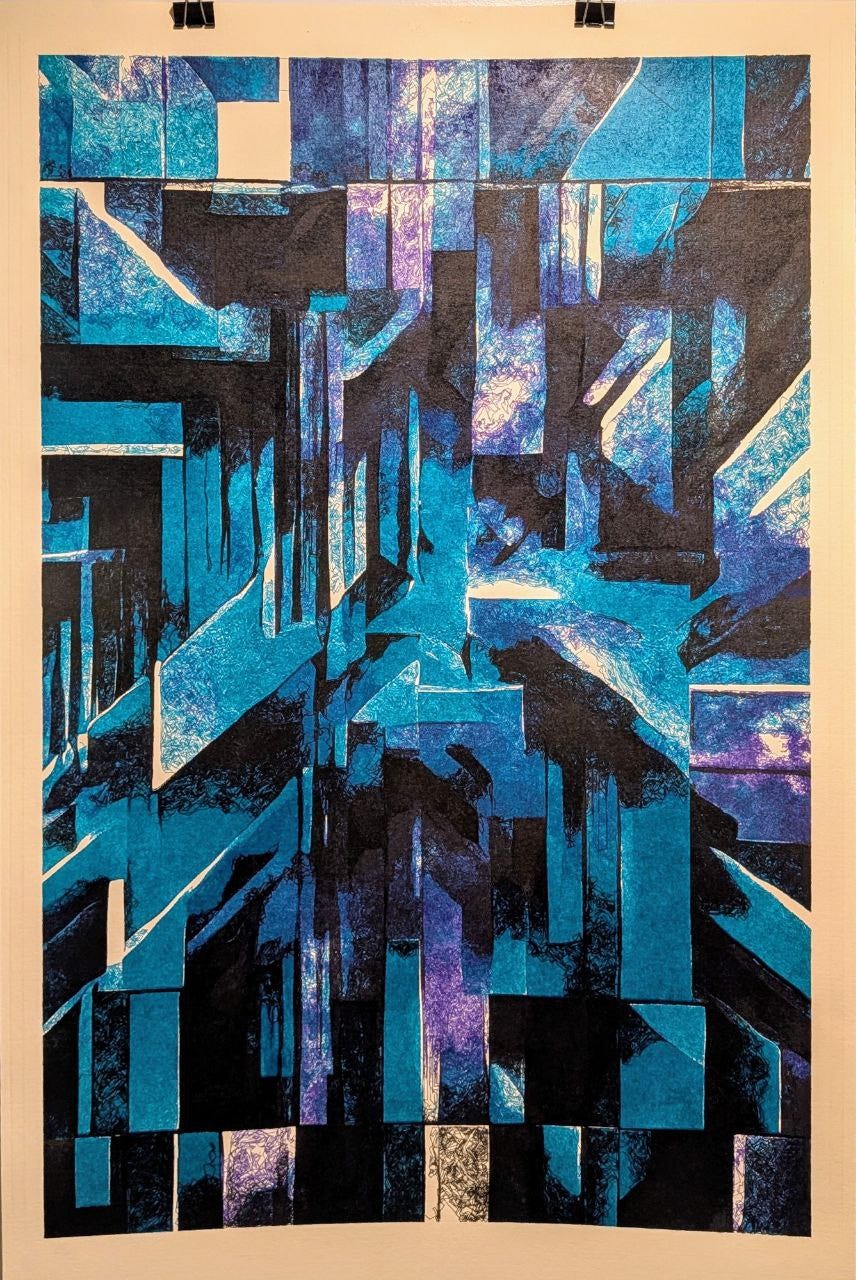
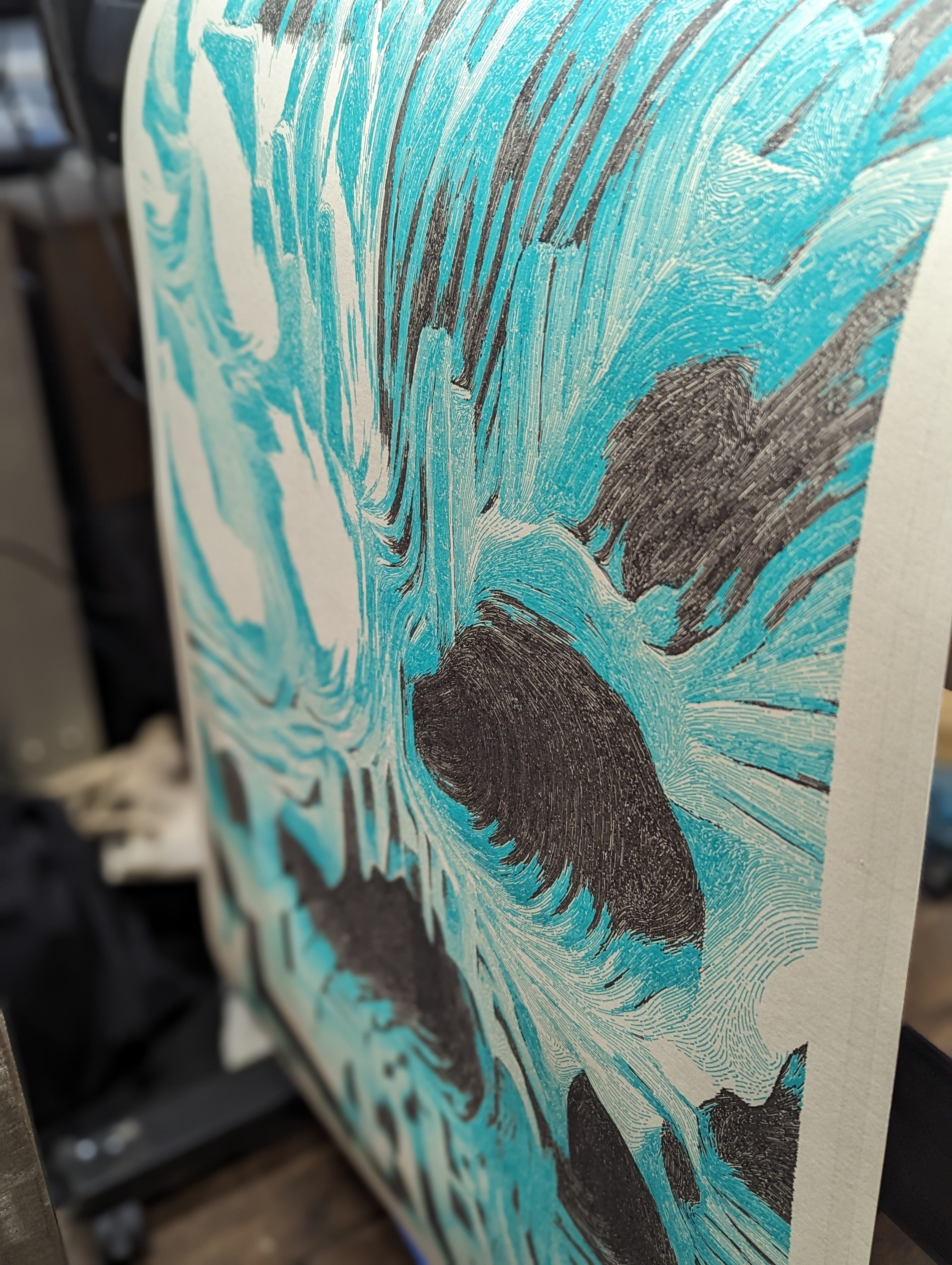
When I send a design to the AxiDraw, I’m committing to time. A complex piece might take hours, and I’m making exactly one. There’s something about watching that pen trace every single line that makes me want everything to be right. The precision is intoxicating—hairline details, perfect registration, controlled chaos rendered with mechanical accuracy. Maybe it’s the engineering background talking, but when I’m preparing files for pen plotting, I’m ruthless about dialing in the correct settings to get the best representation of the original image, optimizing paths, checking for gaps so the pen isn’t dragging across the paper between lines. The machine will do exactly what I tell it to, so I want to tell it something worth doing.
Risograph: Digital Meets Analog Production
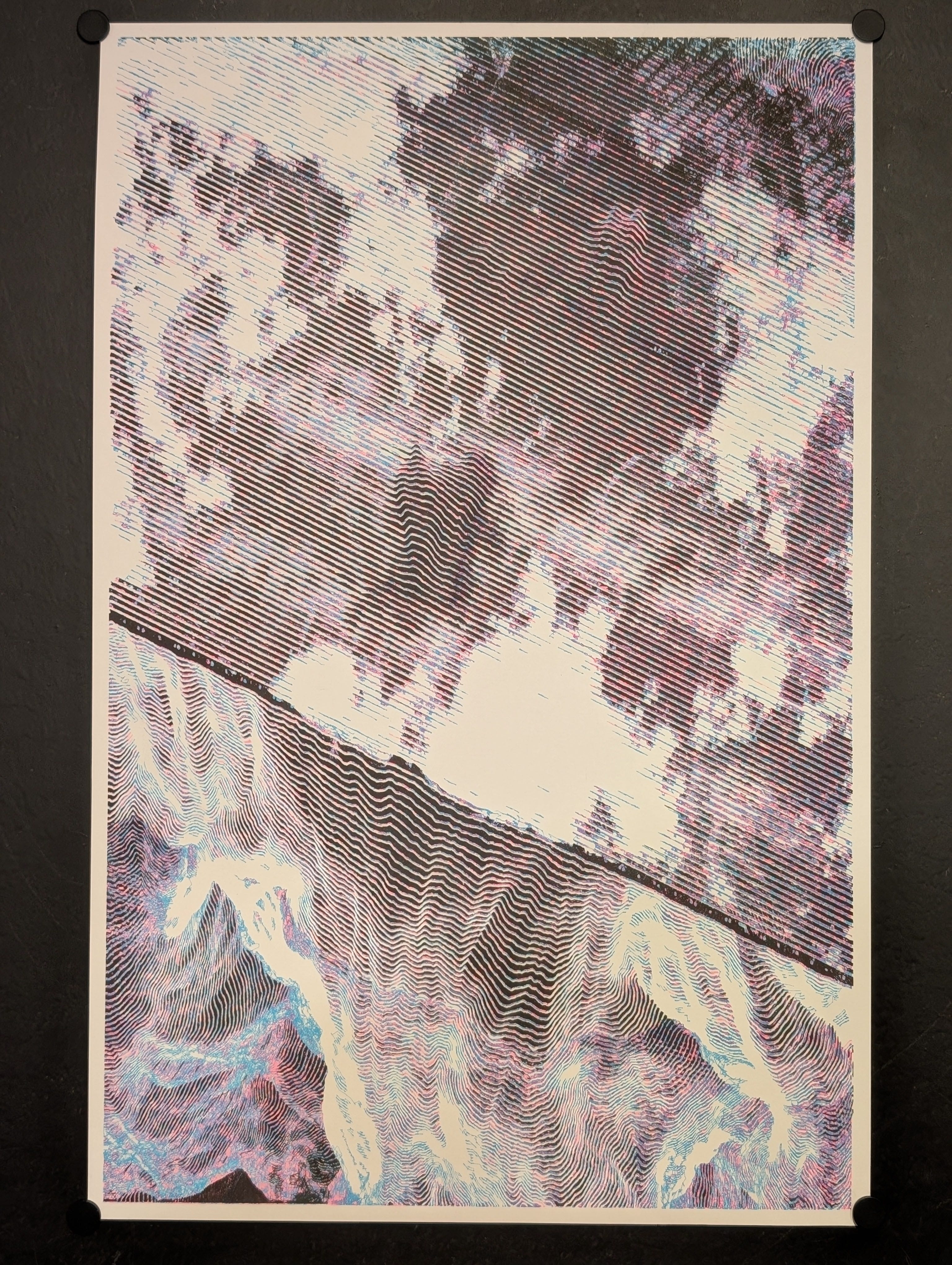
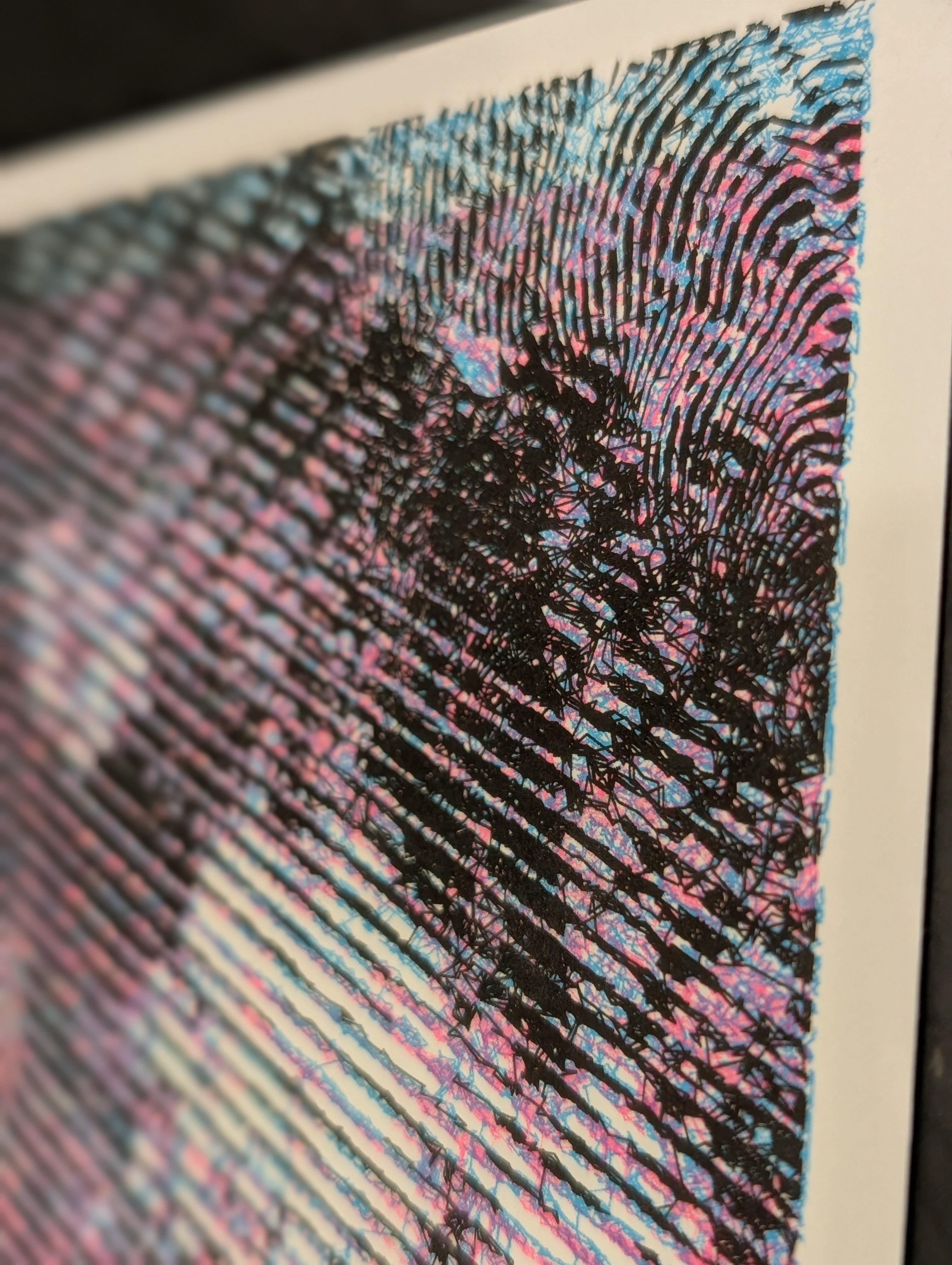
Risograph printing feels like the middle ground. I’m still starting with the same generative designs—Julia fractals, curl noise fields, strange attractors—but now I can make multiples. The process is quick compared to plotting, but the result shifts into something different. Those overlapping CMYK layers create color interactions I didn’t explicitly program. There’s a texture, a slight misregistration, an organic quality that emerges from the mechanical process itself. I’m okay with imperfections here in a way I’m not with pen plotting. The happy accidents in color mixing often improve what I designed.
Gelli Printing: Embracing the Analog
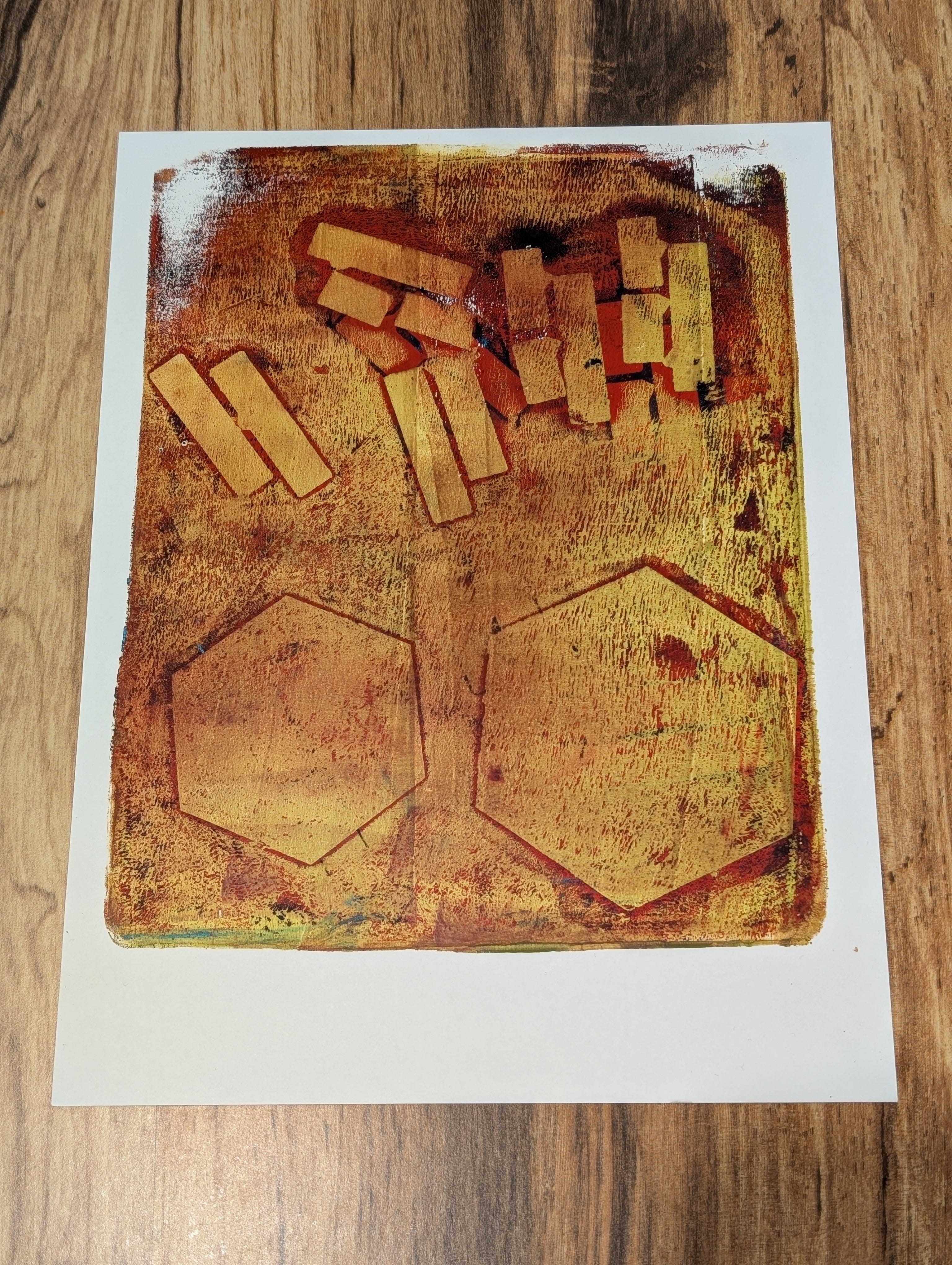
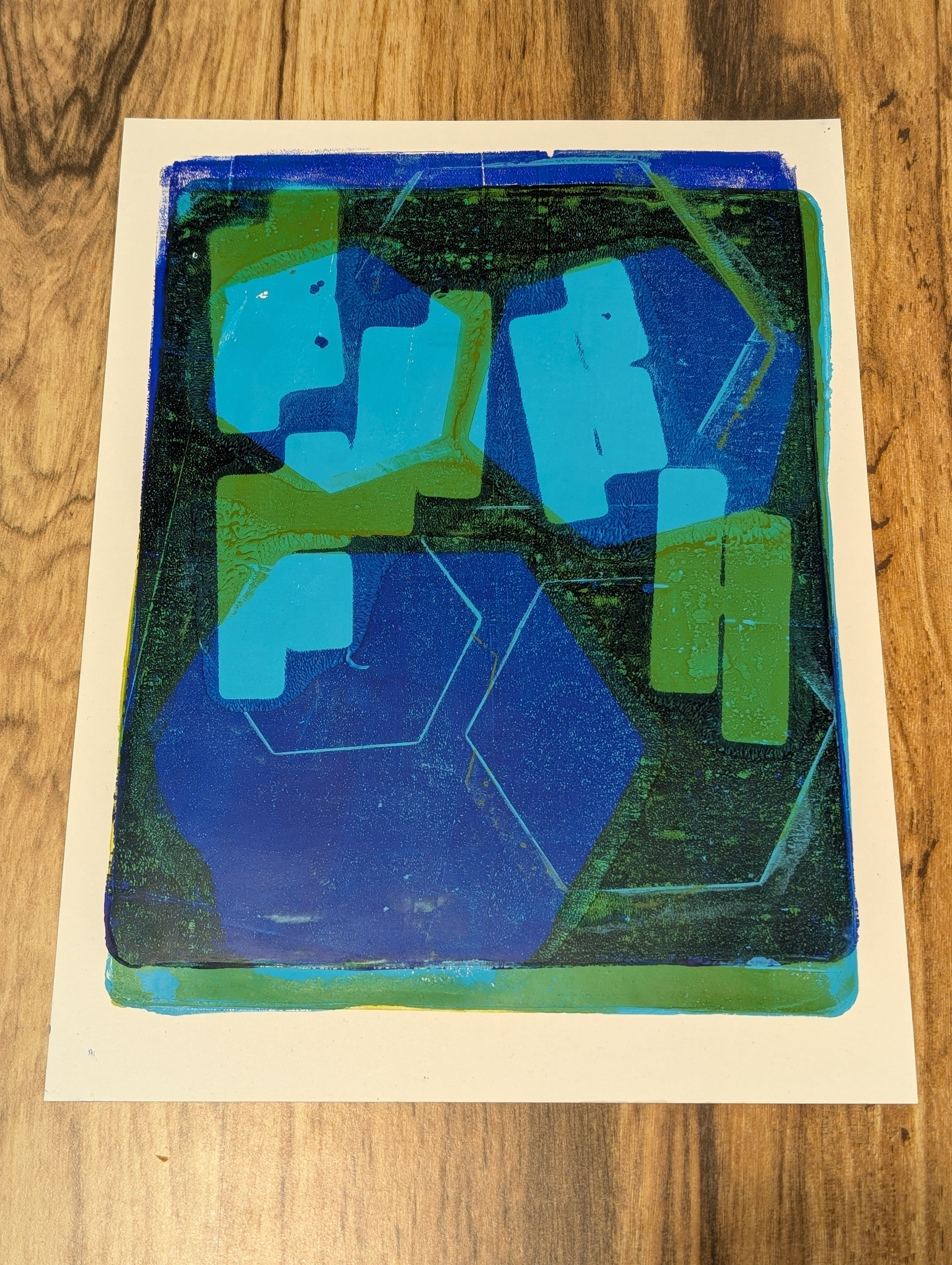
Then there’s gelli printing, which is almost entirely analog for me. Sure, I’m using the laser cutter to create masks—that’s where the digital stops. After that, it’s paint, pressure, timing, and luck. Every print is one-of-one, like pen plotting, but the relationship to control is completely inverted. I’m setting up conditions and seeing what happens. The happy accidents aren’t just tolerated—they’re the point. There’s a looseness here that feels necessary, a counterweight to the algorithmic precision of my other work.
Why All Three?
I think I need all three because they each scratch a different itch. Pen plotting satisfies my desire for precision and craft. Risograph lets me bridge digital and physical while making work more accessible through multiples. Gelli printing reminds me that not everything needs to be controlled, that emergence happens in the physical world too, not just in code.
The algorithms I write generate complexity I couldn’t plan by hand. But the way I manifest those algorithms—whether through the patient precision of a pen plotter, the layered color of Risograph, or the paint-smeared chaos of a gelli plate—that choice shapes what the work becomes and how it feels to make it.
Mixing Methods
Lately I’ve been thinking about combining these processes. Each process has its own logic, but there’s something exciting about breaking those boundaries, letting the precision inform the chaos and vice versa.
What about you? Have you experimented with mixing different printmaking or fabrication processes? I’d love to hear what combinations have worked (or spectacularly failed) for you.
Comments
Nothing yet. Say the first thing.
Sign in to join the conversation.