
Every now and again this substack must turn away from the endless science and policy squabbles, the evils of the p-value, and science misinformation to consider deeper, philosophical questions that touch us all. Today we turn to one of these: Which was the best tank of WWII?
Just as with questions over free will or the innate goodness/evil of humankind, we will find the answer to this question more difficult than we think. What do we mean by “tank”? Which qualities do we access? Is if fair to judge later years tanks against early years tanks? If you are a tank nerd like me1, you’ll find people have deep, emotive opinions about this. Just try telling people online that the M4 Sherman was a “Ronson/Zippo” lighter on treads that lit up first every time2 and you’ll see what I mean. So let’s establish some ground rules:
Just What Is a “Tank”?
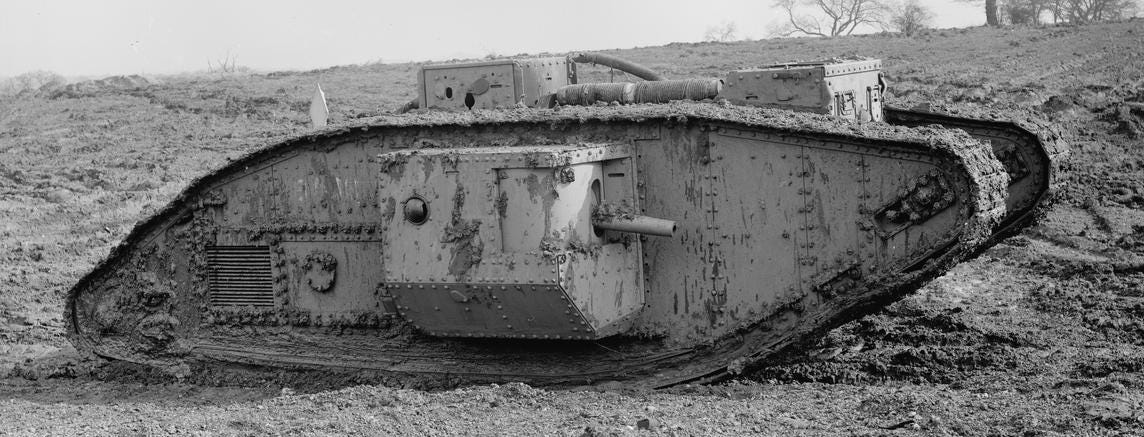
The term tank was first used by the British in WWI, and referred to armored vehicles with treads that were rhomboid in shape with set gun locations, either machine guns or short barreled cannons. Over time, the term “tank” would come to refer to armored fighting vehicles with an enclosed, rotating turret. Ironically, the first tanks wouldn’t qualify as “tanks” under this definition, lacking the turret. This terminology issue also resulted in a confusing array of armored fighting vehicles by the time WW2 rolled around. Thus, we have, light, medium and heavy tanks, as well as tank destroyers and assault guns, all of which basically handled various “tank” roles3.
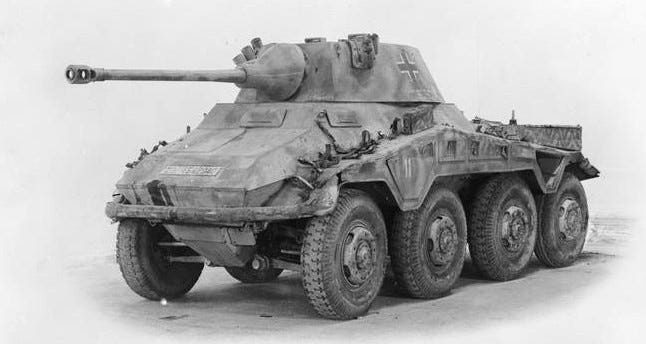
For the purposes of today, I’m going to include all fully tracked armored fighting vehicles designed specifically for either breakthrough or tank-busting roles. This will include tank destroyers and assault guns but not half-tracks or wheeled vehicles such as the German Puma. I’m sure there are some exceptions to this logic, but this is the basic definition I’ll work from.
Comparisons Across Time
WW2 saw a period of rapid development in technology. Tanks were no exception. Not surprisingly the tanks of 1945 were generally better than those of 1940, so cross-temporal comparisons are a bit unfair. As such, we’ll be looking at some of the best tanks for each year of the war. I’m also going to limit myself to tanks that saw significant involvement in the war. That will necessarily leave out a few Johnny-Come-Latelies like the American Pershing or the British Comet. Both were excellent tanks, but only saw service in limited numbers at the very end of the war.
Sorry Folks
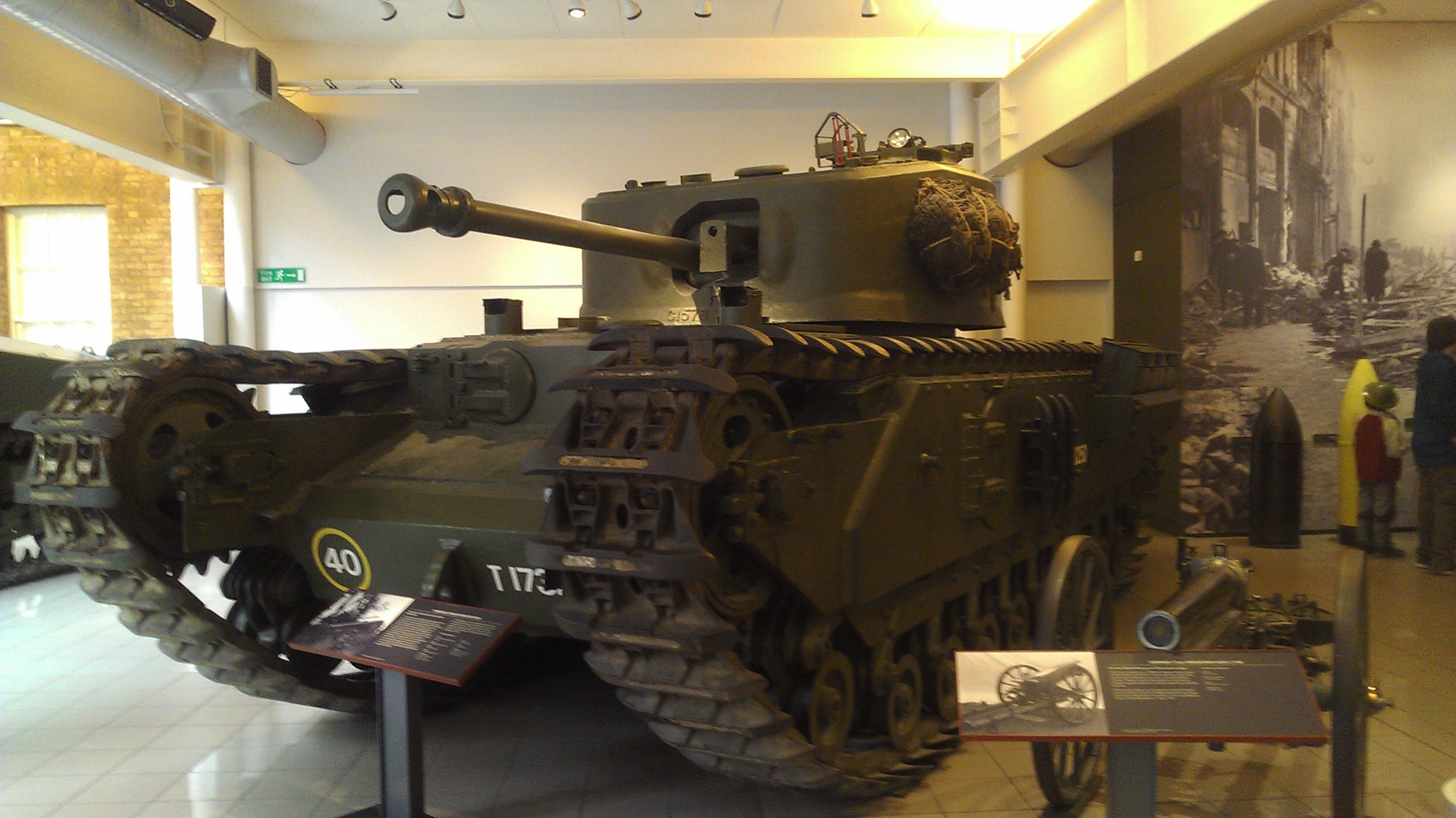
I’m afraid to say, some of the major combatants were just not known for making good tanks. Japanese tanks were generally bad, bad, bad. Granted tank warfare wasn’t as big a component of the Pacific War as it was the war in Europe. Italian tanks also generally were less well designed than other countries. I’m sad to say, just having ruled out the Comet above, British tanks don’t quite rise to the top either. To be fair, British tanks weren’t as bad as Japanese or Italian tanks and some, like the Churchill, were decent workhorses. But a lot also were lemons, and few rose to the top ranks of best tanks. The Brits really struggled with tank design during WW2.
Criteria
People can get really obsessed with armor and firepower and, yes, these were important for a successful tank. But other factors mattered as well. We’ll look at four. First, that armor and firepower everyone finds sexy. Second, secondary technology elements such as optics, targeting, radios, etc., that can help tanks see, hit other tanks, communicate with each other, get in the right spots, etc. Third…a tank is only useful if it’s running, so we’ll look at reliability and maintenance. And last…survivability. To keep good, experienced tank crews, it’s imperative that they survive critical hits to the vehicle to fight another day and gain experience. Also…crews tend to have better morale if they don’t think they’re in a death trap.
By contrast, we won’t be looking at factors outside the tank itself. Generally, we won’t consider relative crew training, air superiority, logistics quality, tactics, etc., that also make a big difference in battle. We’re just looking at the tank itself.
That having been established, let’s have a look!
1939/1940: The war doesn’t really start in Europe at least until September 1939, and not much really changes through the next year. The Germans went into WW2 with loads and loads of crappy Panzer I and Panzer II tanks. Fortunately, they had a couple decent options. In these early years, the Panzer III (the Germans weren’t yet in the habit of giving their tanks fancy big cat names, which probably helps rob the Panzer III of any glory.
The Panzer III was actually a surprisingly good German tank for the early war years. In particular, given the performance of some of the later German tanks, the Panzer III was quite reliable. It had ok armor and gun for its time, good optics and radios.
The Panzer III’s main competitor here is the French Char B1 bis, a heavier tank that, on paper, was far more powerful than the Panzer III. It had better armor and a more powerful gun and, head on, the Panzer III would have had a tough time defeating it. However, better maneuverability, optics and radios and general crew ergonomics made the Panzer III the superior vehicle. So early on, though the Germans didn’t always have enough of them, the Panzer III is the superior early war tank.
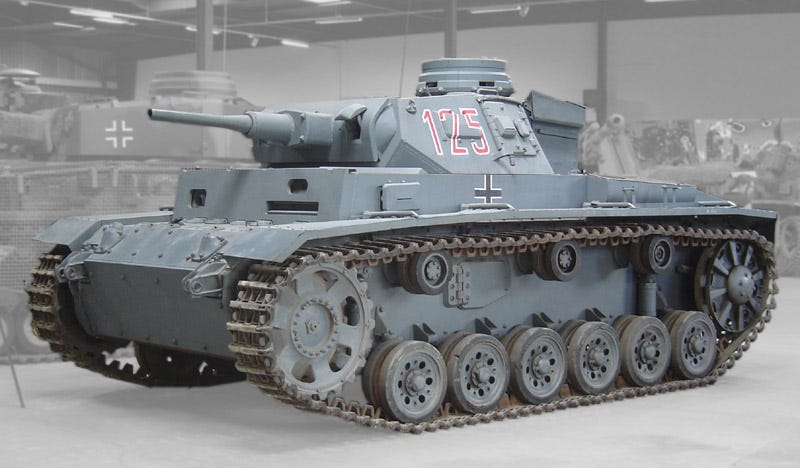
Panzer III Cheetah (sorry, it needs a cat name)
Armor and Main Gun: 2.5 start (being a bit generous)
Technical Features: 5 of 5 stars
Reliability/Maintenance: 4 of 5 stars
Crew Safety/Ergonomics: 5 of 5 stars
1941: 1941 is where things really get cooking. France is basically out of the war. But here comes the Soviet Union and the USA. Sure, the Soviets got whooped pretty bad by the Germans in Operation Barbarossa, but the Germans were in for a shock and that comes in the form of our winner for 1941.
That, of course, is the T-34, a tank with remarkable advantages in armor and gun. To be sure, I think a lot of people are guilty of exaggerating how good the T-34 was overall and, in many respects like crew safety it sucked to a remarkable degree. But in 1941 it was nearly untouchable by German anti-tank weapons and sometimes being invincible in one category is enough to carry the day. Sloped armor and an excellent gun really make the T-34 stand out.
The T-34 is emblemic of Soviet (and Russian) tank doctrine then and now. Basically, design a tank that is easy to produce in vast numbers and capable of hitting hard. Don’t worry about bells and whistles and we’ve got plenty of spare Russians, so crew safety isn’t an issue. By the end of the war the T-34 would become cannon fodder for powerful German tanks, but in 1941 it was revolutionary on it’s own terms.
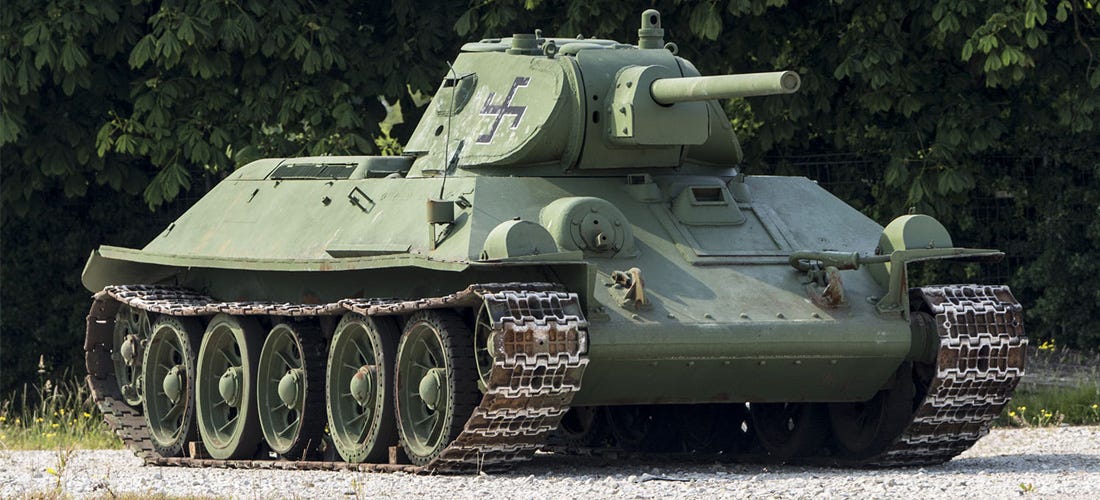
T-34
Armor and Main Gun: 5 of 5 stars
Technical Features: 1 of 5 stars (absolutely no bells and whistles)
Reliability/Maintenance: 4 of 5 stars
Crew Safety/Ergonomics: 1 of 5 stars (these were death traps)
Russian tanks have always had one basic problem, and we can still see that in the Ukraine War. Little thought goes into safety. There are lots of advantages being a tanker…obviously the crew is protected from small arms fire and shrapnel. But once something gets inside the tank death can be brutal (burning to death was not uncommon). Among other things, good tanks carefully protect ammunition so that the tank’s own explosive rounds aren’t detonated, obliterating everything inside the tank. Russian tank designers don’t seem to worry about this as much which is why, to the present day, you can see so many Russian tanks with their turrets blown clean off from internal explosions.
1942: By 1942, everybody is trying to make better tanks and the US if fully in the war so that’s going to change things up. Still, we’re back to the Germans winning out once more. Once again, with a tank that barely gets any credit: the Panzer IV. The Panzer IV would become the most produced German “traditional” tank of the war (the StuG-III assault gun would be the only armored fighting vehicle to have more individual vehicles). It was a great, all around medium tank and, once again, more reliable than later German tanks. Never as powerful as the latter German “big cat” tanks, it nonetheless was equal to most allied medium tanks. It only ranks lower in the early war years because it had only been fitted with a low-velocity howitzer for infantry support. By 1942 it’s got a 75mm high-velocity gun and ready to take on the T-34.
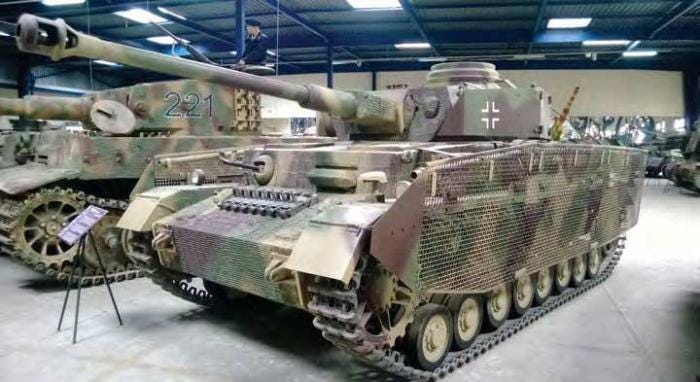
Panzer IV Serval (needs a cat name)4
Armor and Main Gun: 4 of 5 stars
Technical Features: 5 of 5 stars
Reliability/Maintenance: 4 of 5 stars
Crew Safety/Ergonomics: 5 of 5 stars
1943: Now things get interesting because we’ve got a lot of great contenders on the field, each with unique benefits and drawbacks. The Panzer IV is still operational, but now the Americans are bringing on board the reliable M4 Sherman. Both the German Panther and Tiger tanks are operational, becoming two of the most powerful and fearsome tanks of the war. They might seem like easy contenders, but both also have teething problems around reliability. The Russians are also bringing out the big tank destroyers and the very humbly named Joseph Stalin tank series.
I think the early reliability problems with the Panther tanks exclude them for the moment. The Joseph Stalin tanks weren’t really ready yet, and tended to be slow and cumbersome. Tank destroyers like the SU-152 had similar issues, despite being powerful tank killers at long range. I don’t think the Sherman had yet quite reached its apogee either. So, there’s a strong argument that 1943 should also go to the Panzer IV. But I’m going to be controversial and go with the Tiger here. I have to make some controversial choices!
It’s a tough choice, I agree and I think I’ll get a lot of pushback for this one. Overall, though I think by late 1943, while the Tiger’s reliability problems weren’t entirely behind it, they were mediated enough to push it over the edge, given its other benefits. The Tiger, though lacking sloped armor, had decent protection and probably one of the best anti-tank guns for its time. It was generally well-designed for the crew as well. Once it’s worst reliability issues were somewhat mitigated, it became a truly fearsome tank worth of it’s reputation.
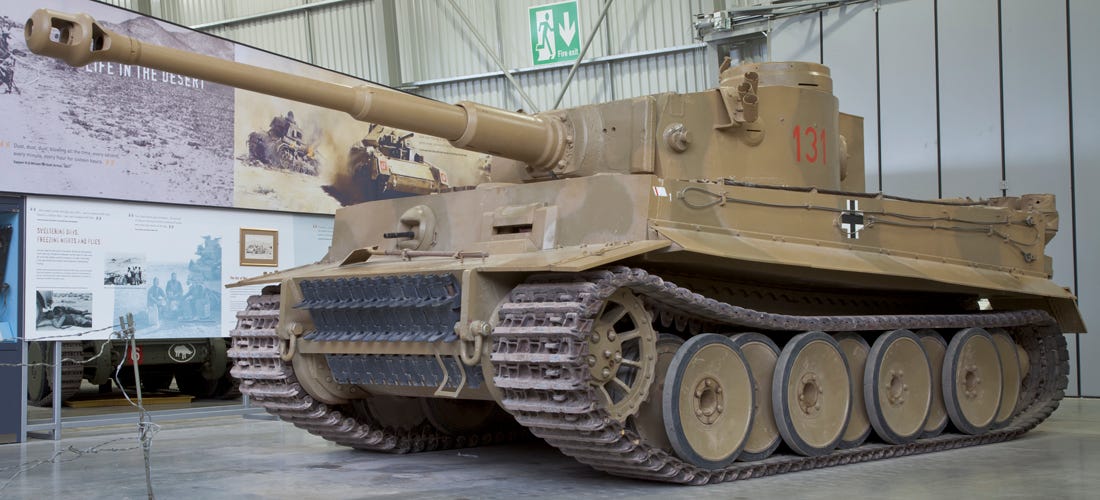
Panzer VI Tiger
Armor and Main Gun: 4.5 of 5 stars
Technical Features: 5 of 5 stars
Reliability/Maintenance: 2.5 of 5 stars
Crew Safety/Ergonomics: 5 of 5 stars
1944: 1944 to me is really a contest between two tanks. The first is the German Panther tank which, like it’s fellow Tiger big cat, had overcome some of its worst reliability issues from 1943. The other was the M4 Sherman which, similarly, was overcoming some of its worst features. For the Sherman, that primarily was its underpowered 75mm gun which was too weak by 1943 or so.
The Sherman was otherwise an amazing tank. Incredibly reliable and with probably one of best crew survivability records of the war. Its technical features were rival to the Germans as well. But its armor was thin and the main gun underpowered. It was not the Zippo lighter death trap some would later characterize it as, but it definitely was a tad underwhelming once the German big cats were on the prowl.
The answer was to stuff a bigger gun into the turret. This isn’t just as easy to manage as waving a wand, but both the Americans and British gave it a go. Here, I think the winner is a mixture of American and British ingenuity. Really, the best tank of 1944 is the Sherman Firefly…an M4 Sherman tank with the excellent British 17-pounder high velocity gun in the turret. The Firefly became the first British/American tank to be able to take on big cat German tanks on their own terms.
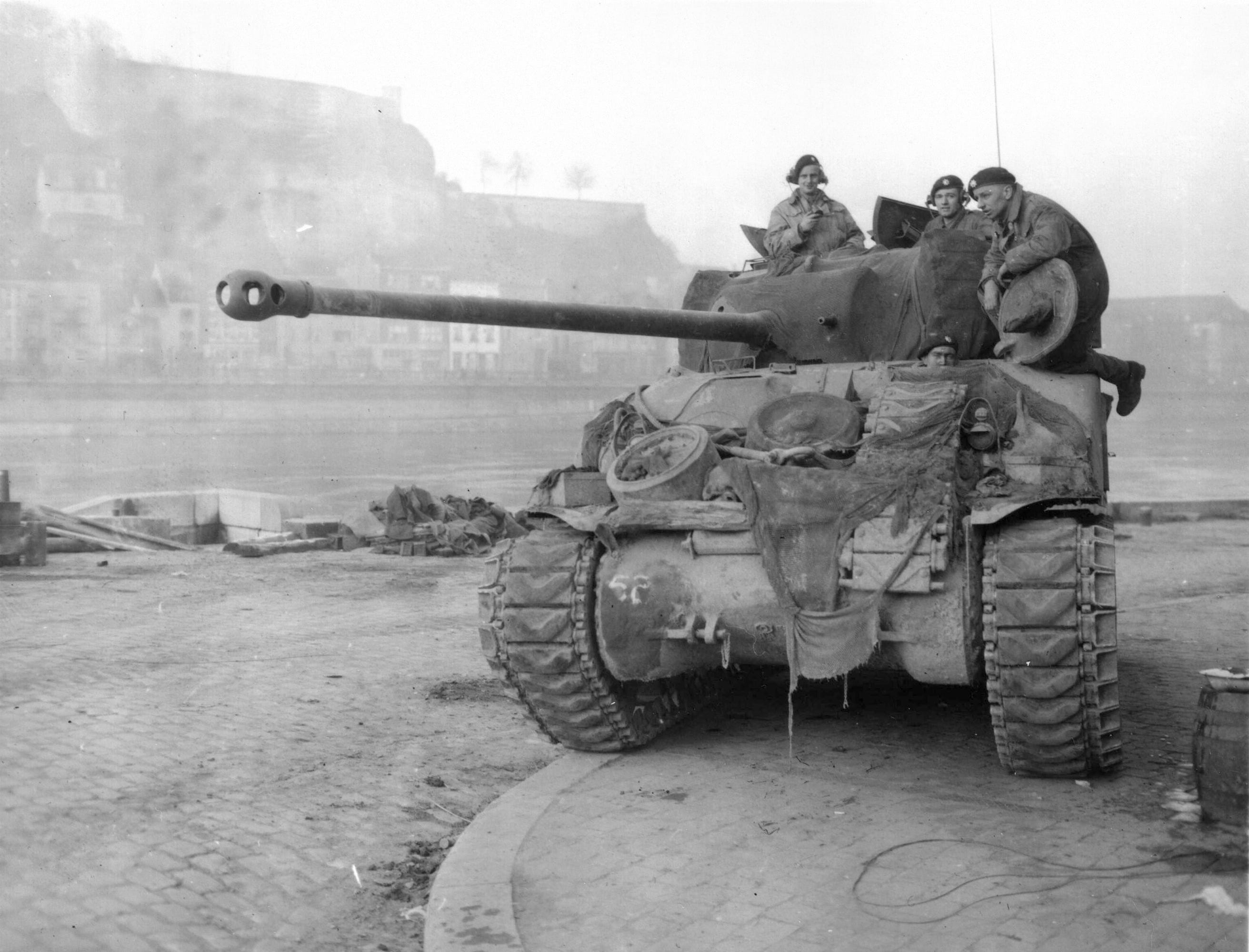
Sherman Firefly
Armor and Main Gun: 4 of 5 stars (still not the best armor)
Technical Features: 5 of 5 stars
Reliability/Maintenance: 5 of 5 stars
Crew Safety/Ergonomics: 5 of 5 stars
1945: The last year of the war sees a massive shift in tactics and needs. The Germans are now fully on the defensive. Here we see an unusual and underappreciated little vehicle rise to the top, acting mainly in ambush/defense roles and racking up incredible kill ratios, particularly against the Soviets.
The StuG-III isn’t a “traditional” tank as it has no turret, with a powerful 75mm anti-tank gun mounted in the body of a Panzer-III tank. Along with the similar and even smaller “Hetzer” assault gun, these two little fellows end up with some of the highest kill ratios of the war. Neither looking terribly impressive, nor having cool big-cat names, they are incredibly effective, particularly in this last year of the war.
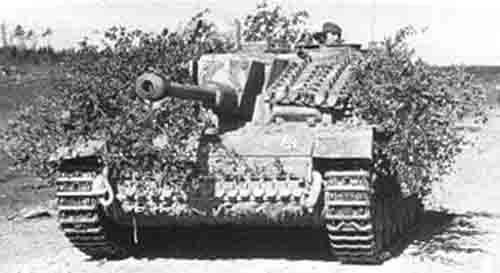
StuG III
Armor and Main Gun: 4.5 of 5 stars
Technical Features: 5 of 5 stars
Reliability/Maintenance: 5 of 5 stars
Crew Safety/Ergonomics: 4 of 5 stars (it was cramped)
And we kind of come full circle…we started with the Panzer III and we end with the StuG III, which was built on the Panzer III chassis.
I’m sure a few of these picks will be controversial. So what do you think? What were the best tanks of WW2?
I’m a minor league tank nerd. Having watched some online debates, there are lots of people who know LOTS of very minor, esoteric things about tanks. God bless ‘em.
A reference to the idea it was a poor quality tank likely to explode whenever hit.
Things would be simplified post-WW2, when most nations settled, with the benefit of improved technology, on the concept of the main battle tank. Basically a medium, faster tank with the armor and gun of a heavy tank. Thus, most countries now rely on only 1 or 2 tank designs, not the nearly a dozen one might see for WW2 era countries.
I’d really love for my improvised cat names to take off. This would leave the Panzer 2, although later models were referred to as the Lynx, so that’s all set. That leaves the really, really bad Panzer 1. Shall we call it the declawed house cat?
No posts
Comments
Nothing yet. Say the first thing.
Sign in to join the conversation.