

Imagine yourself stood outside, in a storm. Not a metaphorical one, but actual rain. Slick streets, car headlight beams piercing through slate sky, illuminating sparkling flecks of falling water. The kind of weather that leaves no room for interpretation. You’re either wet or you aren’t. And you are wet, because it is raining. You go inside, turn on the television and listen to a man in a suit tell you that some believe it is raining, while others have their doubts. No mention of the soaked camera lens. No acknowledgement of the umbrellas crowding the frame. Just the suggestion that truth is something that is up for grabs.
This is how we live now: in the space between what is happening and what we are told might be. Facts, when inconvenient, become opinions; reality becomes something to be argued. The storm, meanwhile, goes on.
It is inescapably evident that we are living in an era of populism. Ordinary citizens, in increasing numbers, are rejecting the establishment narratives pushed by political elites and parroted by mainstream ‘legacy’ media outlets; both of whom serve as compliant stenographers of talking points designed to promote the interests of wealthy individuals and large corporations, but framed as being in the common interest. Talking points which often attempt to make us question whether it has been raining, despite the fact of our being utterly drenched.
Against this backdrop, across western societies, trust in mainstream media has declined sharply and major outlets are losing the battle to be relevant in the 21st century. Indeed, mainstream media is utterly failing right now to hold power accountable; the slack is being picked up by new media that is independent.
Established news platforms are experiencing ever-shrinking readership and viewing figures. To switch metaphors: they’re drowning in a new media sea in which independent sites and podcasters are riding the waves, propelled by impassioned audiences; largely comprised of adults under 30.
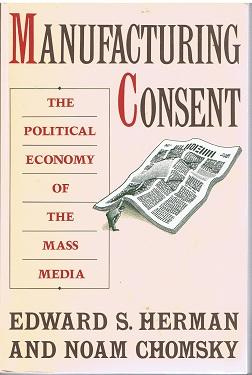
What we are increasingly witnessing is the breakdown of the propaganda model revealed to us almost 40 years ago by Edward Herman and Noam Chomsky in their book, Manufacturing Consent: The Political Economy of the Mass Media. The same filters and elite interests that have shaped our public discourse for so long are struggling to maintain control in the age of social media.
This unravelling of legacy media’s authority is not without precedent. Indeed, throughout history, the relationship between media and power has neither been static nor neutral. Newspapers have long been shaped by those who could afford both printing presses and political access.
In the late 19th and early 20th centuries, print media on both sides of the Atlantic was the domain of wealthy industrialists and aristocrats like William Randolph Hearst (New York Journal and San Francisco Examiner), Lord Northcliffe (The Times and Daily Mail), Lord Beaverbrook (Daily Express) and Lord Rothermere (Daily Mail). The most prominent contemporary equivalent has, for several decades now, been Rupert Murdoch (The Sun, The Times and Fox News).
Irrespective of the era, what these men have in common is that none of them were content on merely reporting what was happening in the world. They each needed to weaponise news coverage; to bend it to fit the contours of their own ambition, commercial interest and political outlook. The press, far from being the romanticised fourth estate in service of the people, has long served instead as a mouthpiece for the powerful.
Broadcast media has evolved differently, repackaged in smoother tones transmitted directly into our living rooms. With tight regulatory frameworks and high barriers to entry, control of broadcast media throughout the 20th century remained highly centralised and, certainly in its early decades, aligned with state and corporate interests. This started to change with deregulation from the 1980s onwards; western media has increasingly both reflected and promoted the spread of neoliberal ideology since.
In the 21st century, cracks formed in the glossy surface of traditional media have become ever more apparent to the public. Audiences, so often told not to trust their own soaked skin in the rain, began to look elsewhere. This loss of faith didn’t happen overnight but by stealth. Today, faced with a media landscape that no longer reflects them, growing numbers have turned toward something new: platforms that feel less curated and less condescending. Audiences have sought out something rawer and more direct to cut through the sanitised spin and consumerist drivel of mainstream media. New media, born of the internet and fuelled by digital technology, hasn’t just offered alternatives: it has offered a way out.
We define new media here as digital forms of communication that have emerged through the internet and related technologies, encompassing platforms such as social media, blogs, podcasts, YouTube channels and independent news websites. Unlike traditional or legacy media – newspapers, television and radio – new media is characterised by its interactivity, decentralisation and the ease with which almost anyone can publish content. These platforms have allowed a diverse range of voices to emerge, offering more personalised, on-demand and sometimes niche perspectives that appeal to audiences disillusioned with the perceived gatekeeping and editorial biases of mainstream outlets.
Audience figures have shifted significantly from traditional outlets to digital platforms, with many people now turning to social media, streaming services and independent content creators as their primary, or only, port of call for news and entertainment. Platforms like YouTube, TikTok, Instagram and X (formerly Twitter) have become key sources of information, especially among younger audiences. Podcasts and newsletters (often hosted on platforms like here on Substack or Patreon) are growing in popularity, offering more personalised and direct communication between creators and audiences. This shift reflects a demand for immediacy and a greater plurality of voices outside of mainstream narratives.
These new online platforms and outlets provide a direct channel to audiences from figures such as Cenk Uygur , Tucker Carlson, Ana Kasparian , Dave Smith, Mehdi Hasan, Steve Bannon, Owen Jones – and, until recently, the late Charlie Kirk – to name but just a few of the eclectic mix of leading voices right now. Whether from the right or the left, these folks can be considered the ‘titans of new media’ and they are challenging the established narratives that legacy outlets – CNN, Fox News, BBC, The New York Times, you name it – promulgate.
Back in 1988, Herman and Chomsky warned us that the (mainstream) media serves elite interests. Today, independent media is rallying to resist that dynamic. But what’s driving audiences towards independent outlets? The short answer is that there is a myriad of reasons that we cannot do justice to in this piece. But we’ll try to present a flavour from across the board here.
In both the U.S. and the UK, many politically right-leaning audiences have increasingly turned to independent media platforms and podcasts like The Joe Rogan Experience, Triggernometry and The Ben Shapiro Show, as well as outlets like The Daily Wire, GB News and Rebel News. This shift has been driven by what many on the right perceive as biased and censorious liberal establishment propaganda.
A fundamental turning point in the U.S. was media reporting in the lead-up to the Iraq War, where major outlets uncritically amplified claims about weapons of mass destruction that were later shown to be lies, fuelling a broader backlash against U.S. foreign policy interventionism. This helped shape the rise of “America First” sentiment and growing hostility toward what many term “forever wars.”
More recently, perceived underreporting or biased coverage of issues such as immigration, COVID-19 policies (including vaccination and mask mandates) and what some term “gender ideology” have further reinforced the belief that mainstream outlets fail to offer balanced or honest reporting. For these audiences, as with their left-leaning counterparts who go to sources like Novara Media for their news, independent platforms are seen as more transparent and unfiltered. Across the political spectrum, there is huge audience appetite for seeing dominant narratives challenged.
In recent years, a series of high-profile controversies have deepened public scepticism toward legacy media, with critics from both right and left perspectives pointing to cases of incomplete, biased or contested reporting. One such example is the BBC’s coverage of the Brexit debate, which drew significant criticism. From a pro-Remain perspective, analysts and commentators argued that, in an effort to appear balanced, the BBC gave undue weight to Leave campaigners’ claims – many of which were misleading or false – without adequately challenging them. To give just one example: the bare-faced lie that Turkey was imminently about to be admitted into the European Union.
Critics, including former BBC journalists, accused the broadcaster of adopting a “false balance” approach that legitimised fringe views and failed to rigorously interrogate the economic and political risks of leaving the EU. A decade on, with those risks materialised in a weakened economy, the broadcaster is now complicit in stifling discussion of the subject.
“If it’s raining outside, you don’t need someone’s opinion to say it’s not raining. What you want to see is actually, what is the weather outside.” – Gary Lineker
In trying to understand the shift away from mainstream media there are several angles to look at, each worthy of its own essay. We don’t claim to offer a comprehensive analysis here. In the follow-up to this piece, we will touch on how audience disconnect is further compounded by how representative of society at large the gatekeepers to our public discourse are, from editors to literary agents and commissioning producers. In this piece we are focusing on the framing of news itself.
Perhaps nothing has eroded trust in western mainstream media more in recent times than its utter inability – or, frankly, unwillingness – to provide objective coverage of events in Gaza over the past two years. The tone was set from the outset with the false reporting of the events on 7th October itself. What happened that day was horrific enough; mainstream media didn’t need to spread sensationalist disinformation about beheaded babies or babies in ovens. It set the tone of what was to follow.
We then had the bombing of Al‑Ahli Arab Hospital, when major outlets like BBC, Reuters, and The New York Times initially reported claims – based on statements from the Gaza Health Ministry – that an Israeli airstrike had caused the fatal explosion. Subsequent reporting, including Israeli military statements and U.S. intelligence assessments, contested this version and attributed the blast to a misfired rocket from within Gaza by Palestinian actors. Mainstream media decided to amplify these Israeli claims, which turned out to be false.
Thereafter those same outlets continued to downplay the evidence of human rights organisations and independent health workers documenting widespread and repeated Israeli strikes on hospitals and healthcare infrastructure throughout the conflict. The shifting narratives and early misreporting in this case set the tone. After a while, when it became clear that mainstream western media would do its bidding pretty much come what may, Israel simply stopped denying that it was, in fact, bombing Gaza’s hospitals.
Audiences tend to be fair-minded. Many of us are able to accept how high-pressure news cycles can lead to the rapid spread of unverified initial claims, especially in complex war zones. However, the way that most mainstream media outlets have ‘doubled-down’ on false claims or simply ignored the evidence refuting their earlier reporting has understandably infuriated so many of us.
These incidents have added to the perception that legacy media can not only be slow to correct errors, but is hesitant to challenge official narratives and, indeed, is overly influenced by political considerations. This in turn prompts many audience members to turn to alternative and independent media for what they see as more honest or representative coverage.
It’s worth dwelling on this point. Some investigative journalism has uncovered evidence that editorial decisions in major western outlets have been influenced by the Israeli government. For example, internal memos and testimonies revealed that CNN staff have been operating under strict guidelines influenced by Israeli government statements, requiring every story about the Gaza onslaught to be cleared by the Jerusalem bureau before publication. Staffers described directives from top management shaping the narrative and limiting content from Palestinian perspectives, in some cases suppressing or delaying reporting about Palestinian suffering compared to coverage of Israeli suffering.
BBC journalists similarly reported that senior newsroom figures downplayed Israeli atrocities or altered framing under pressure. These findings suggest that media bias is not only about omission or error, but may also involve systematic influence behind the scenes, reinforcing public distrust in mainstream news sources.
Time and again, mainstream media outlets have insisted on amplifying Israeli claims even after they have been shown to be not true – as though broadcasting one side’s lies somehow balances a story. But you cannot be neutral on facts.
Even now, despite everything that has been livestreamed to a global audience across multiple platforms, corroborated by independent human rights NGOs, academic experts and the key offices within the United Nations itself, The New York Times continues to operate editorial guidance that insists on caution in using terms like “genocide,” “ethnic cleansing,” or even “occupied territory” – despite everything our lying eyes can see.
Just last week, as mainstream media reported news of the latest “ceasefire” deal as though the Middle East crisis has been resolved, the skewed framing persisted. A key feature of the deal involved the swap of people. But the language used by every mainstream outlet revealed widespread bias. The last living Israeli “hostages” were returned home, whereas as Palestinian “prisoners” were returned. There is, fundamentally, no difference between them. Both had been cruelly and unjustifiably held captive without due process; without having been convicted of committing any crime. But a “hostage” is an innocent victim, whereas a “prisoner” is a bad criminal.
Again, only last week a striking example of mainstream media bias emerged in relation to this wider story. First, we need to rewind to November 2004 and football-related violence in Amsterdam; when supporters of Maccabi Tel Aviv – an Israeli club with a documented history of violent and racist fan behaviour – instigated serious disturbances in the city. Eyewitness accounts and independent footage showed Maccabi hooligans vandalising property, chanting hate slogans – such as “Let the IDF win, f**k the Arabs” and “There are no schools in Gaza because there are no children left” – and terrorising local residents.
Despite this, major outlets like Sky News reframed events (and their own initial reporting), portraying the perpetrators as victims of antisemitic abuse. Footage was edited or removed, and in one case, video of Maccabi fans chasing a local resident was falsely presented as the reverse. This selective framing – or media gaslighting – undermined trust by contradicting widely available evidence.
Other mainstream media skipped over the initial Maccabi violence altogether, starting their coverage with local resident responses to the provocation. As Rivka Brown highlighted in a Novara Media piece, this timeline manipulation reflects a familiar pattern: reshaping narratives to align with preferred political or ideological positions.
The issue resurfaced last week because West Midlands Police banned Maccabi supporters from attending an upcoming match in Birmingham against English club Aston Villa, citing safety concerns rooted in the Amsterdam disorder. Despite public support for the ban, senior political figures including Prime Minister Keir Starmer condemned it, siding with a foreign group linked to violent extremism over police advice and local sentiment. This alignment continues to baffle many, intensifying accusations of institutional bias in both the media and political establishment.
And so, the growing gap between official narratives and ground-level realities contributes to public disillusionment. Many now feel that mainstream outlets prioritise political messaging over truth, driving audiences toward independent media in search of more honest reporting.
There is so much more we could write on this; we are barely scratching the surface. But here’s the thing: once you see news coverage designed to promote a particular agenda, you cannot unsee it. And then, will you continue tuning in to those news sources you know are deceiving you?
Step forward independent new media. Back in the summer, from both the right and the left, from Tucker Carlson through Dave Smith to Ana Kasparian, new media commentators with the biggest audiences were speaking out against war with Iran. And the numbers showed that – unlike their legacy media counterparts – they were in tune with ordinary U.S. citizens. In a June 13–16 Economist/YouGov poll, 60% of Americans said they opposed U.S. military involvement in a war with Iran, with only 16% in favour and 24% undecided. A Washington Post poll a couple of days later echoed that same cautionary stance.
But mainstream media coverage seemed blind to public sentiment. It seemed stuck in the same mindset that it had in the build up to the Iraq war a generation earlier. It got called out. If you missed Tucker Carlson’s interview with Senator Ted Cruz back in June, we strongly encourage you to have a watch. It provides the perfect example to illustrate this point.
For now, to return to the analogy, it’s been raining outside for a long time. Legacy media needs to start challenging those who keep insisting – lying through their teeth – that it ain’t raining. But rather than do this, it usually just parrots the lies. This only leads to more and more of us tuning out.
This decline of legacy media is no longer speculative: it is measurable, structural and increasingly irreversible. As Parker Molloy outlined in a piece for DAME Magazine earlier this year, public trust in mainstream news outlets has fallen to historic lows; just 31% of Americans say they believe news organisations report “fully, accurately and fairly,” whilst 36% say they now have “no trust at all.” More striking still: for younger generations, national media is hardly more trusted than social platforms. Molloy notes that among under‑30s, there’s barely any difference in trust between what they get from the Washington Post and what they consume from scrolling on TikTok.
Behind these numbers lie deeper institutional problems. As Molloy argues, billionaire ownership has warped editorial priorities. When owners openly influence the ideological framing of opinion sections, or direct coverage in terms beneficial to them, credibility suffers … and audiences can sniff it out. The ‘balance’ once claimed by large outlets is now implicated – sometimes even enforced via AI‑tooling – in absurd outcomes that treats extremist, fringe or blatant self-interest viewpoints as legitimate counterpoints, rather than examining them critically.
What independent journalism offers that legacy media increasingly doesn’t is transparency about where it’s coming from.
– Parker Molloy
So, in the year 2025, audiences are rejecting stenography masquerading as journalism. Readers, listeners and viewers in this new media landscape demand factual reporting and authentic analysis, representing a spectrum of views free from corporate filters and government propaganda. Steve Bannon might be an architect of the MAGA movement, yet some of his audience is actually left-leaning folks simply seeking an authentic, in-depth discussion that hasn’t been sanitised through focus-grouped PR spin.
This year feels like it could be pivotal for independent journalism challenging established narratives and hitherto ‘perceived wisdom.’ We have witnessed independent outlets increasingly calling out what legacy institutions normalise: political hypocrisy, corporate influence and billionaire class self-interest. All the while, often doing so in a longer format in order to provide important context that the mainstream often omits in its condensed segments.
Last month, The Guardian ran an opinion piece entitled “Why have top Democratic leaders failed to endorse rising star Zohran Mamdani?” This subject has been covered ad nauseum by independent outlets like The Majority Report, Breaking Points and The Young Turks on YouTube ever since Mamdani won the Democratic nomination for NYC Mayor back in late June. Indeed, The Guardian has been playing catch-up on everything to do with Mamdani’s meteoric rise prior to and post his securing of the nomination. It is just the latest in a growing list of examples of mainstream media outlets being utterly behind the curve.
The rise of new media influencers represents a break from the agenda-setting monopoly of legacy outlets. In Herman and Chomsky’s analysis, corporate and political elites dominate public discourse. New media breaks that gatekeeping structure and offers some prospect of resistance, through allowing counter‑voices to confront mainstream messaging before consent is fully manufactured.
The big question, to our minds, is not whether new independent media can change the political agenda in major western societies. It is, rather, to what extent.
There’s no doubt that we are in a new information age defined by a disrupted media landscape. The ability of everyone and his or her dog to get a microphone and start a podcast has brought diverse narratives to wider audiences. No longer is dissent restricted to op‑eds or niche blogs; it’s now front and centre with the ability to achieve direct and widespread reach.
As Carlson’s remarkable interview with Ted Cruz this summer demonstrated, millions will tune in to hear alternative voices that challenge the establishment narrative, including people across ideological spectrums. We are also witnessing real-time accountability. Independent outlets fact-check, challenge and mobilise public pressure rapidly, in ways that are far more agile than entrenched media hierarchies of old.
However, there are downsides. Whilst rousing core audiences and seeking a degree of ‘cross-pollination’ between different outlets, alternative media fragments discourse into ideological silos. Most channels face severe resource constraints, especially for new entrants. Whereas many legacy outlets benefit from deeper institutional support from powerful interests, independent creators rely on ads, donations, or platform algorithms that can be fickle – hence why we’re constantly being told to “please hit like and subscribe” when we tune in.
Tucker Carlson and others like him have come from mainstream media and ought to operate with a certain level of journalistic rigour. Others have gone straight into podcasting without any formal journalistic training. This presents a clear regulatory and information risk from a lack of robust professional conduct standards.
Additionally, new media is not immune to the same pressures and influence that their more established counterparts face, including when it comes to their supposed USP: authenticity and accuracy. Whilst many consumers are drawn to the unfiltered or independent nature of these voices, not all new media creators are as grassroots as they appear. Some platforms and personalities are covertly funded by wealthy individuals, corporations or political groups with specific agendas, calling into question the independence of their content.
Furthermore, the lack of rigorous editorial standards across much of new media increases the risk of misinformation, sensationalism and echo chambers, making it harder for audiences to distinguish fact from opinion or propaganda. So, as trust in legacy media continues to decline, it is crucial to approach new media critically, recognising both its potential and its pitfalls.
That said, at a time when plutocratic power needs to be challenged somehow, the benefits outweigh the downsides. We should be mindful of how rising threats of censorship, demonetisation or content moderation policies could silence or marginalise these new media voices. As we will come on to discuss, the establishment is already using the coercive power of the state to do just that.
But resisting isn’t the same as stopping. A sustained push from our new media titans will only matter if they maintain cross-partisan credibility; appealing not just to ideological bases, but to the wider public. They must also connect discourse to the levers of power, pressuring elected representatives and public officials to change course.
In their 2023 book, The Invisible Doctrine: The Secret History of Neoliberalism (& How It Came to Control Your Life), George Monbiot and Peter Hutchison outline the ways in which neoliberalism has permeated modern life over the past 50 years. They touch on how the media has played a big part in advancing a pervasive ideology that preys on ever increasing aspects of our lives, as this extract from page 78 outlines:
To recap, neoliberalism’s network of influence operates as follows:
Oligarchs and corporations often covertly (i.e. using ‘dark money’) fund think tanks and academic departments.
These institutions, in turn, make the unreasonable demands of the oligarchs and corporations sound reasonable and normal.
The press – also largely controlled by oligarchs – presents these policy proposals as critical and important insights by independent organisations, creating the impression that people in different places are spontaneously coming to the same conclusions on the basis of sound, disinterested research.
Politicians who are paid by, or sympathetic to, the oligarchs and corporations cite the press coverage as evidence of public demand.
The voice of the oligarchs is interpreted as the voice of the people.
– George Monbiot and Peter Hutchison
New, independent media has been threatening this model and the proprietors of legacy media outlets have wised up to it. Rather than continue trying to reverse audience shifts to new media, they are now acquiring as many of the new outlets as they can. Indeed, in an effort to assert the same control of our public discourse that they have long enjoyed via ownership of traditional print and broadcast outlets, they have been buying up control of entire social media platforms.
In fact, the entire media ecosystem is increasingly in the hands of oligarchs, from Google to the Washington Post and X, they control it all. Now TikTok is being added to the list and, just this month, major U.S. network CBS; which as part of the takeover process installed a controversial editor-in-chief with a track record of playing fast and loose with objective reporting of facts.
This shouldn’t surprise us. Oligarchs and large corporations will always try to find new ways to reassert control of our public discourse; to return to ‘business as usual’ – even if it means resorting to increasingly authoritarian methods to clampdown on dissenting voices. The efforts to thwart TikTok’s ability to reach audiences unfiltered has demonstrated this.
This feels like a perilous moment, one that demands clarity and open-eyed awareness of the power dynamics shaping our societies. If independent media continues to amplify informed dissent, mobilise audiences across ideological divides and hold the powerful to account, then perhaps there is still hope … perhaps there can be a break in the clouds.
But as ownership structures shift and money flows in, we must remain vigilant. Some of today’s new independent outlets may one day look us in the eye and insist the skies are clear, even as we feel the chill of rain-soaked clothes on our flesh. And if that day comes, if even today’s truth-tellers start trying to convince us not to believe our own senses, then where will we turn for objective reporting of news and current affairs?
Stay tuned for the follow-up to this essay, where we’ll explore new ways of bringing accurate news that truly speaks truth to power. In part two, we’ll focus on the role grassroots citizen journalism can play in driving people-powered change from the ground up. Because the storm is still raging. What we need now are not voices debating whether it’s raining, but ones willing to step outside and get wet on our behalf.
… to be continued in Part Two of “Contested Rain”
References:
Herman, Edward S. and Chomsky, Noam (1988). Manufacturing Consent: The Political Economy of the Mass Media. Pantheon Books
Monbiot, George and Hutchison, Peter (2023). The Invisible Doctrine: The Secret History of Neoliberalism (& How It Came to Control Your Life). Penguin Random House
We Need New Stories
·
March 19, 2025

Humanity is at an inflection point, seemingly unable to cut through division and societal angst. A toxic combination of demagoguery and oligarchy is challenging the democratic norms many of us have taken for granted throughout our lives.
Nightswimming
·
March 25, 2025

My arms make arcing breaststrokes in tepid turquoise water, slicing through its smooth thickness which envelops my skin like silk. I bob down 15 feet or so to the seabed, where the water turns darker blue, cold, invigorating. I pinch my nose as I twist my body to look upwards at the light above. As a child I feared the salt stingi…
Thanks for reading Gridlocked! This post is public so feel free to share it.
No posts
Comments
Nothing yet. Say the first thing.
Sign in to join the conversation.