

📣 If this helped make sense of why markets are moving the way they are… share it.
This week’s stories highlight a common theme: the growing importance of real assets, energy security, and monetary stability in an increasingly uncertain world.
China proposed changes to its gold import-export framework, potentially making it easier for gold to move across borders as the country continues expanding its role in global bullion markets. Meanwhile, the Japanese yen fell to its weakest level against the U.S. dollar since 1986, underscoring the ongoing pressures facing fiat currencies and heavily indebted nations.
At the same time, soaring electricity prices in the Philippines have triggered a boom in rooftop solar installations, driving record imports of solar panels and reinforcing the long-term demand outlook for silver and other metals critical to the energy transition.
Taken together, these developments suggest that concerns surrounding currency stability, energy affordability, and access to hard assets continue to shape economic decisions around the world—a trend that remains supportive of precious metals and real assets over the long term.
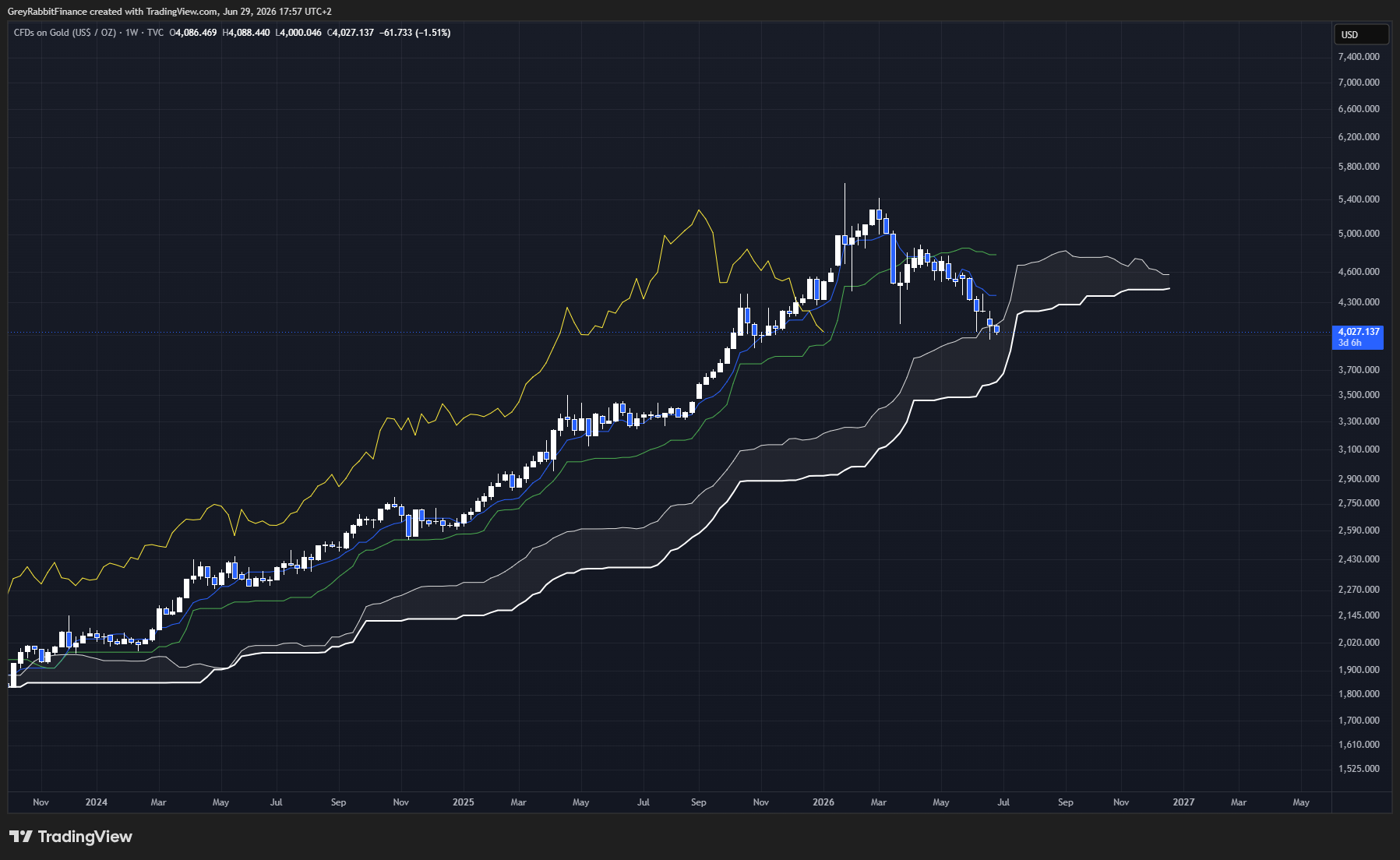
Chinese regulators proposed revisions to gold and gold product import-export regulations aimed at streamlining administration and facilitating trade. The proposed amendments, drafted jointly by the People’s Bank of China and the General Administration of Customs, would simplify certain cross-border gold procedures while maintaining customs oversight.
One notable change would remove provisions requiring joint rules for individuals carrying gold across borders while formalizing other administrative practices designed to improve efficiency and supervision.
While the announcement appears administrative on the surface, it highlights China’s continued efforts to modernize and expand its gold market infrastructure.
China has spent years building the Shanghai Gold Exchange, increasing official gold reserves, and encouraging greater participation in physical bullion markets. Any move that improves the flow of gold into and out of the country could strengthen China’s role within the global precious metals ecosystem.
For gold investors, the development serves as another reminder that physical gold continues to play an increasingly important role in the evolving international monetary system.
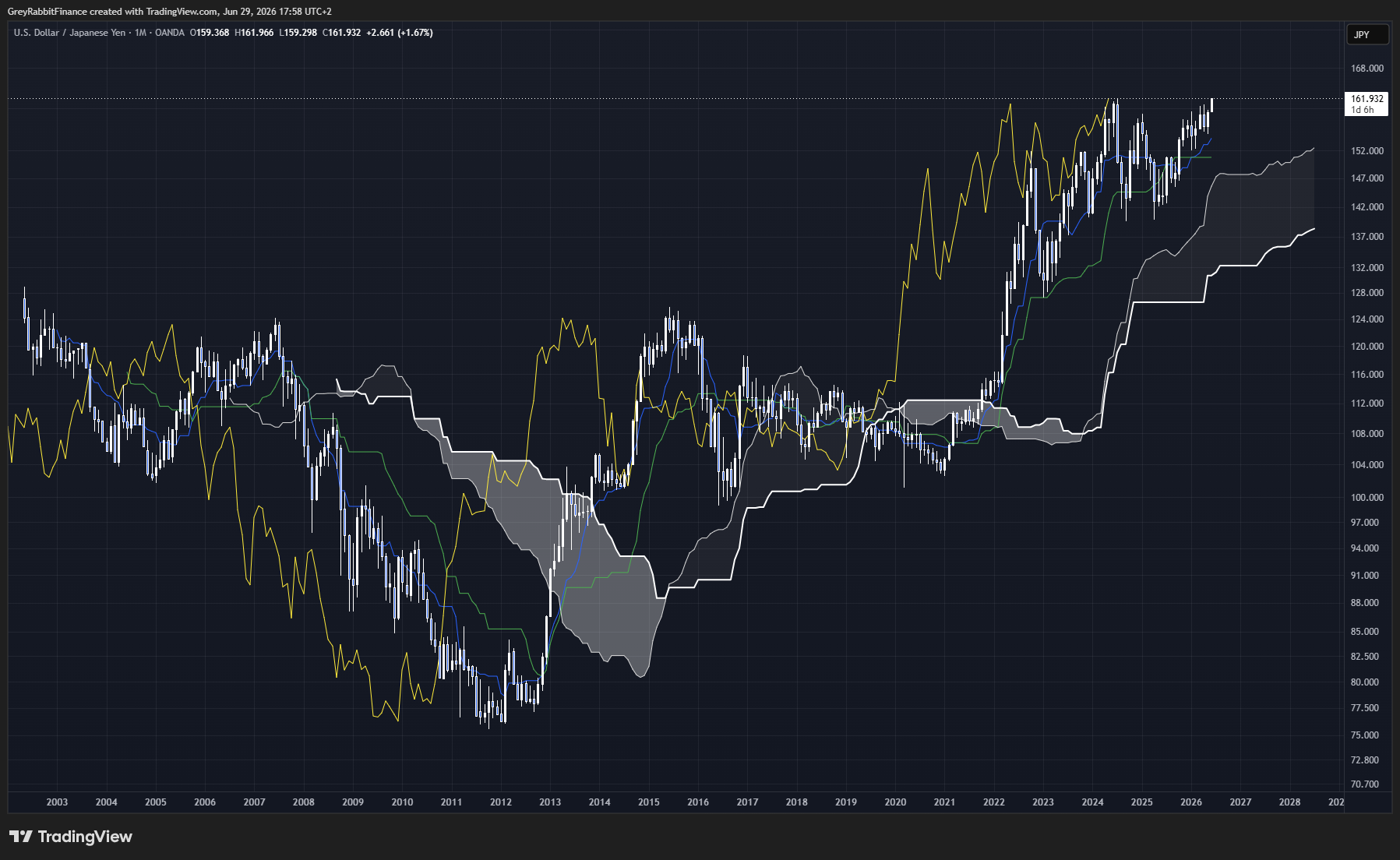
The Japanese yen slid to its weakest level against the U.S. dollar since 1986, extending a multi-year decline that has become one of the most significant currency devaluations among developed economies.
The move comes as interest rate differentials between Japan and other major economies remain wide, while investors continue questioning whether the Bank of Japan can normalize policy without destabilizing government bond markets.
The yen’s weakness is more than a Japan-specific story.
Currency devaluation remains one of the defining themes of the modern monetary system, and the yen’s decline highlights the growing challenges faced by heavily indebted nations attempting to balance economic growth, inflation, and financial stability.
For precious metals investors, persistent weakness in major fiat currencies continues to reinforce the long-term appeal of scarce monetary assets such as gold and silver.
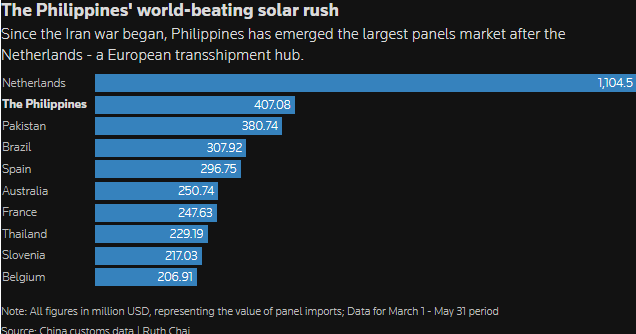
A surge in electricity costs is driving a rooftop solar boom across the Philippines, making the country one of the fastest-growing solar markets in the world.
According to Reuters, imports of Chinese solar panels jumped 145% year-over-year to $407 million during the three months through May as households and businesses rushed to reduce exposure to rising energy bills. Electricity prices have climbed roughly 10% since the outbreak of conflict in the Middle East earlier this year, while a weakening Philippine peso has increased the cost of imported coal and natural gas.
The rapid adoption of rooftop solar is accelerating despite high upfront installation costs. Industry estimates suggest distributed solar capacity could nearly triple to 3,500 megawatts within the next two years as falling equipment costs and rising electricity prices improve investment returns for consumers.
The story highlights how energy inflation continues to reshape consumer behavior around the world.
As traditional energy costs rise, households and businesses are increasingly turning to alternative energy sources that offer long-term cost savings and greater energy independence. The trend extends well beyond the Philippines and reflects a broader global push toward distributed energy infrastructure.
For commodity investors, solar expansion remains one of the strongest structural demand drivers for silver. Solar panels require significant amounts of silver for photovoltaic cells, while grid upgrades and renewable energy projects also increase demand for copper and other industrial metals.
As energy security and affordability become increasingly important policy priorities, the long-term outlook for metals tied to electrification and renewable energy infrastructure remains constructive.
(Opening Price as of June 29, 2026)
S&P 500: 7,391
Gold: $4,086/oz
Silver: $59.14/oz
GDX: $76.13
SLVP: $30.81
Crude Oil (WTI): $70.50/bbl
DXY: 101.09
Bitcoin: $59,473
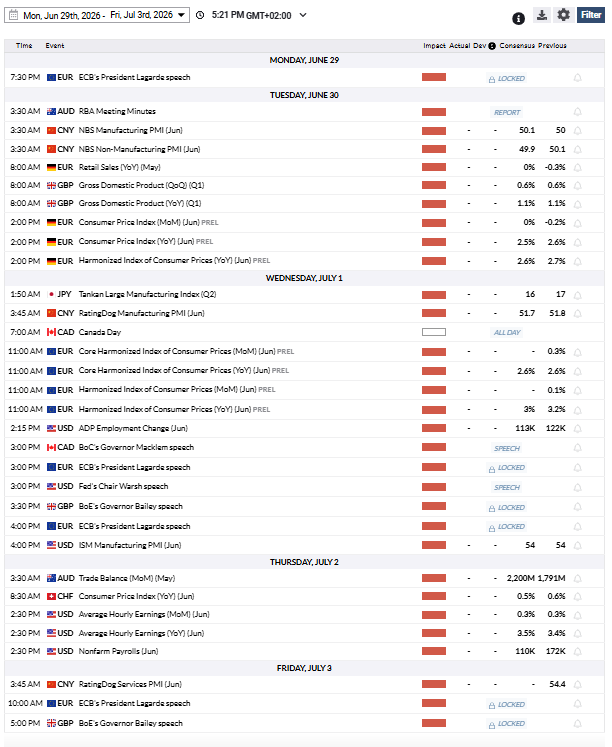
1. U.S. Nonfarm Payrolls (Thursday)
The most important release of the week. A stronger-than-expected labor market could support Treasury yields and the U.S. dollar, while a weaker report would reinforce expectations for Fed easing.
2. ISM Manufacturing PMI (Wednesday)
A key gauge of U.S. economic activity. Markets will be watching for signs of either re-acceleration or continued manufacturing weakness.
3. Eurozone CPI (Tuesday & Wednesday)
Important inflation data that could influence ECB policy expectations and euro volatility.
4. China PMI Data (Tuesday & Wednesday)
Provides insight into the health of the world’s second-largest economy and industrial demand, particularly relevant for commodities and precious metals.
5. Central Bank Speakers (Throughout the Week)
Comments from Lagarde, Bailey, Macklem, and Fed Governor Waller could generate volatility across currencies, bonds, and precious metals markets.
Trend: Corrective Structure → Potential Sign of Strength Test
Major Resistance: 121.64 (Wave 5 High)
Intermediate Resistance: 92.90 → 95.24 → 105.09
Current Resistance: 80.72 (Cloud Resistance)
Key Structural Support: 55.78
Near-Term Support: 57.95 → 55.62
Current Pivot Zone: 55–80
Timing Watch: Henka-Bi — July 1
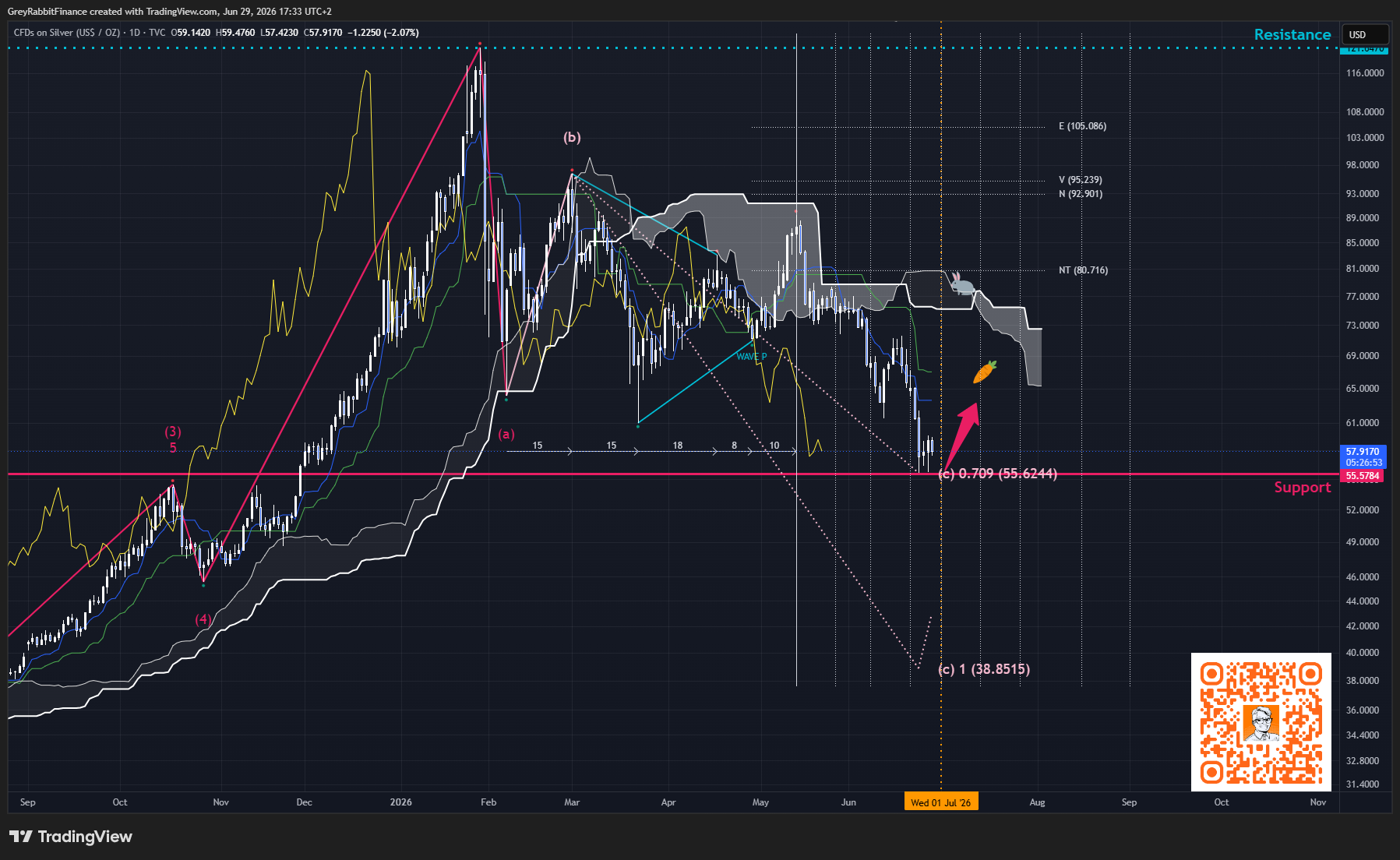
Silver remains in a long-term bullish structure, but the market continues working through a corrective phase following the sharp decline from the January highs near 121.
Unlike last week, the focus has shifted lower after silver failed to sustain its recovery attempt and rolled back toward major support. The recent decline has now brought price directly into the critical 55–58 support zone, where buyers are once again attempting to stabilize the market.
The most important development over the past week is that silver has successfully defended the 55.78 support region, preventing a deeper breakdown and producing an initial rebound from the lows.
While the recovery remains in its early stages, the market is beginning to show signs of demand emerging at a key technical level.
From a Wyckoff perspective, the structure now resembles a potential support test following an extended markdown phase:
major support has been defended,
selling momentum has begun to slow,
buyers are attempting to reclaim lost ground,
but supply remains dominant overhead.
The difference versus previous weeks is that the market is no longer consolidating beneath resistance. Instead, silver is attempting to recover from a significant decline while proving that support can hold.
The Ichimoku structure remains bearish but is beginning to stabilize:
price remains below the cloud,
the cloud continues acting as overhead resistance,
Tenkan and Kijun remain weak,
but downside momentum is beginning to slow.
This is not yet a confirmed reversal.
However, the successful defense of support increases the probability that silver may be attempting to form a tradable low rather than entering another impulsive decline.
The key trigger remains a decisive breakout above the cloud and acceptance above the 80.72 resistance level.
A successful breakout would likely confirm a larger Sign of Strength and open the door toward the next upside objectives near:
92.90
95.24
105.09
Until then, silver remains trapped beneath major resistance despite the recent rebound.
Support levels remain clearly defined:
57.95 acts as the first near-term support,
55.62–55.78 remains the key structural support zone,
a sustained break below support would increase the probability of a deeper decline toward the projected Elliott Wave targets.
The next major timing window now shifts to the July 1 Henka-Bi date highlighted on the chart.
Given the recent defense of support and the attempt to stabilize into this timing window, the market may be approaching an important decision point. A successful recovery through resistance would improve the outlook considerably, while failure to build momentum would leave silver vulnerable to another test of support.
Silver remains in a long-term bullish structure but continues navigating a corrective phase following the sharp decline from its January highs. The successful defense of the 55.78 support zone is the most important development of the week, suggesting buyers remain active at key levels. While the market has not yet confirmed a reversal, downside momentum appears to be slowing and a recovery attempt is underway. A breakout above 80.72 would significantly strengthen the bullish case and signal the beginning of a larger recovery toward the 92–95 resistance cluster. The July 1 Henka-Bi is the key timing window to monitor for confirmation of the next major move.
📈 For full context, see my Silver 2026: Full Steam Ahead, which outlines the annual macro thesis, key Ichimoku levels, and trading framework behind this move.
💡 New to Ichimoku?
Grab my audio & eBook “At One Glance: Master the Ichimoku…” — it breaks down my charting method with real examples and setup logic.

👇 What’s behind the paywall:
✅ Full Ichimoku chartbook: BTC, SP500, Gold, Silver, Oil, GDX, SLVP, DXY
✅ Key support/resistance zones + Henka-Bi Time Cycle Windows
✅ Actionable trade plans and targets
✅ Weekly macro catalyst watch
Comments
Nothing yet. Say the first thing.
Sign in to join the conversation.