
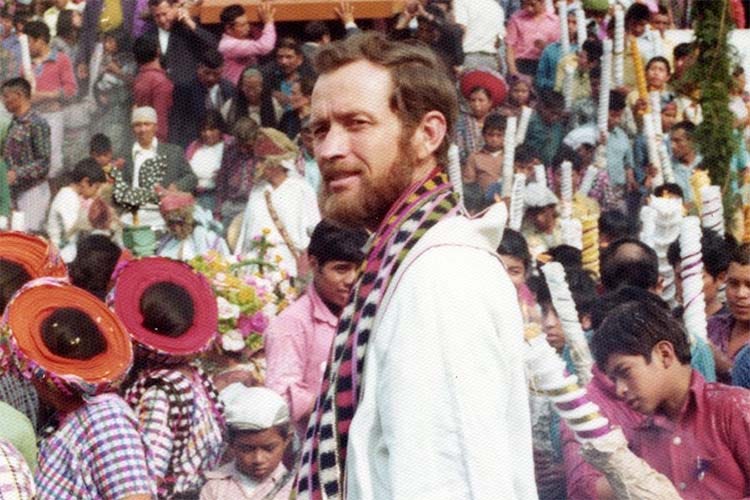
What brought Blessed Stanley Rother, a son of an Oklahoma Catholic farming community, to the remote world of Tzʼutujil Mayans nestled between two volcanoes in Guatemala in the 1960s? What brought this unassuming priest to the attention of the authoritarian military government during the Guatemalan civil war? Why is he honored as a martyr in Guatemala as well as at his Oklahoma City shrine?
The documentary American Martyr: The Stanley Rother Story comes to theaters courtesy of Fathom Entertainment, in English for two nights, August 25–26, and in Spanish for one night, August 27. For The Catholic Spirit,
I interviewed Rother’s biographer, Catholic writer María Ruiz Scaperlanda, who served on the Archdiocese of Oklahoma City’s historical commission for Fr. Stanley’s cause, helping to gather information for the Congregation for the Causes of the Saints of the Roman Curia;
I also reviewed the film itself.
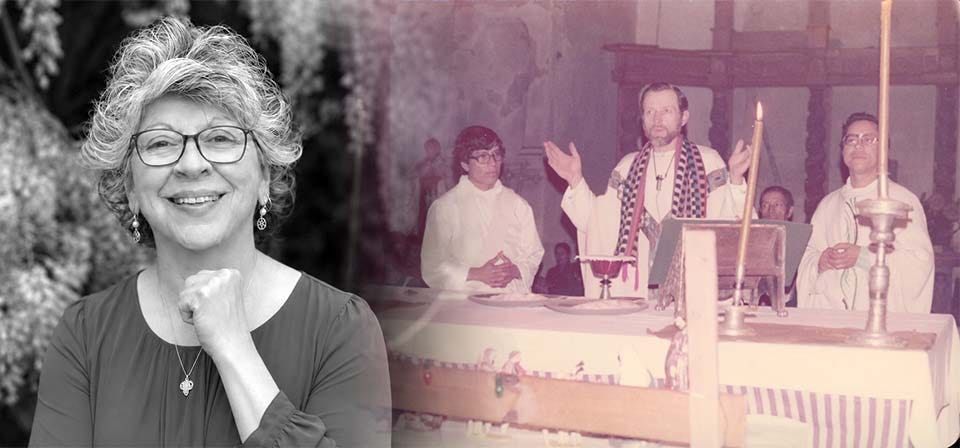
I understand that you were born in Cuba, grew up in Puerto Rico, and now live in Oklahoma, is that correct?
All of that is correct, yes.
It might seem superfluous to ask a Latina Catholic living in Oklahoma what drew her to an Oklahoma priest martyred in Latin America—but I’d still like your answer!
My kids went to Catholic school here. I credit Oklahoma Catholic school teachers with keeping the story of this man alive. My kids would come home and tell me cool stories about a diocesan priest from Oklahoma who was killed in Guatemala, and my journalistic senses were very interested in all those details!
So the stories from your children—that was the first you heard about Fr. Stan?
Yes. When the archdiocese opened the cause for Fr. Stan, they needed people who speak Spanish, which is my first language. The archbishop [Eusebius Beltran] asked me if I would be involved in the historical commission. Later, on a pilgrimage to Guatemala, I met the new archbishop [Paul Coakley], and he said to me, “You know, we need a good biography that people can pick up and get to know him.” So I dove into Fr. Stan because of assignments! Doing his biography was quite a privilege.
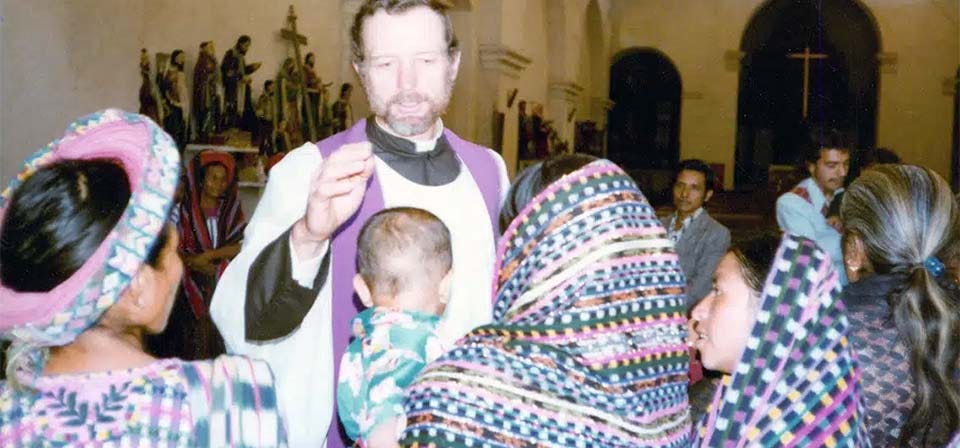
It’s a wonder that Blessed Stanley Rother ever became a priest in the first place. A farm boy from a Catholic enclave in rural Okarche, Oklahoma, Stanley had a sturdy work ethic and a resilient spirit as well as deep piety. He was confident in his calling, but he wasn’t a scholar and he hadn’t studied Latin, which was still de rigueur in those days on the eve of Vatican II. After years of struggling for passing grades at Assumption Seminary in San Antonio, Texas, he was asked to leave the formation program.
What did Bishop Victor Reed see in this unpromising student that moved him to go to bat for the young man? How did Stanley wind up attending another seminary, Mount St. Mary’s in Maryland, completing his studies and receiving ordination in 1963? Whatever other factors played a role, in view of what followed, it is not hard to discern the hand of God in Stanley’s ordination during the Council that would play a decisive role in the shape of his future life as well as his 1981 martyr’s death in Guatemala and the devotion that has grown around him.
As with most martyrs, while Fr. Stan may be remembered first of all for how he died, what matters most is how he lived. American Martyr: The Stanley Rother Story is concerned with what matters most.
We expect a documentary like this to offer a blend of archival video and still photography, location shooting, dramatized recreation video, voiceover narration—provided here by Martin Sheen—and interviews with knowledgeable sources. In this case, sources include Sister Marita Rother, ASC, Stan’s sister; biographer María Ruiz Scaperlanda, who served on the historical commission gathering data for Stan’s cause for sainthood; and Archbishop Paul Coakley of Oklahoma City.
American Martyr rises above expectations in moments of unexpected poignance. A cousin in Okarche chokes up relating the last time he talked to Fr. Stan during a brief return to the U.S. after learning that his name was on a government hit list. Regarding Stan’s intent to return to celebrate Holy Week with his Mayan parishioners, his cousin recalls him saying, “You have your family, and I have my family.” Another such moment comes with the confession of a middle-aged Guatemalan man who was a teenaged catechist the night gunmen came to the rectory looking for Fr. Stan. To this day, he admits, he feels like Judas Iscariot for leading the assassins to their sleeping victim.
Comments
Nothing yet. Say the first thing.
Sign in to join the conversation.