
I am reluctant to give the Victorians credit for anything. This was, after all, an era that looked at a perfectly good human torso and decided it needed reinforcement, lacing, and a small private war with gravity. They covered furniture legs because ankles were apparently contagious. They put arsenic in wallpaper, lead in cosmetics, and cocaine in things with the serene confidence of people who had not yet invented product liability attorneys.
And yet, every now and then I look around my house, my garden, or the general flaming dumpster of modern life and am forced to admit that the Victorians had a point. Not about child labor, obviously. About ferns.
The Victorians were absolutely deranged about ferns, and frankly I respect it. They collected them, cultivated them, pressed them into albums, decorated their houses with them, and apparently reached a cultural consensus that there was no such thing as too much fern. Correct. A fern has never once ruined a room. Put one in an empty corner and suddenly you don’t have a depressing corner anymore. You have a conservatory. You have atmosphere. You may possibly have inherited a mysterious estate from an uncle Ernest nobody remembers meeting.
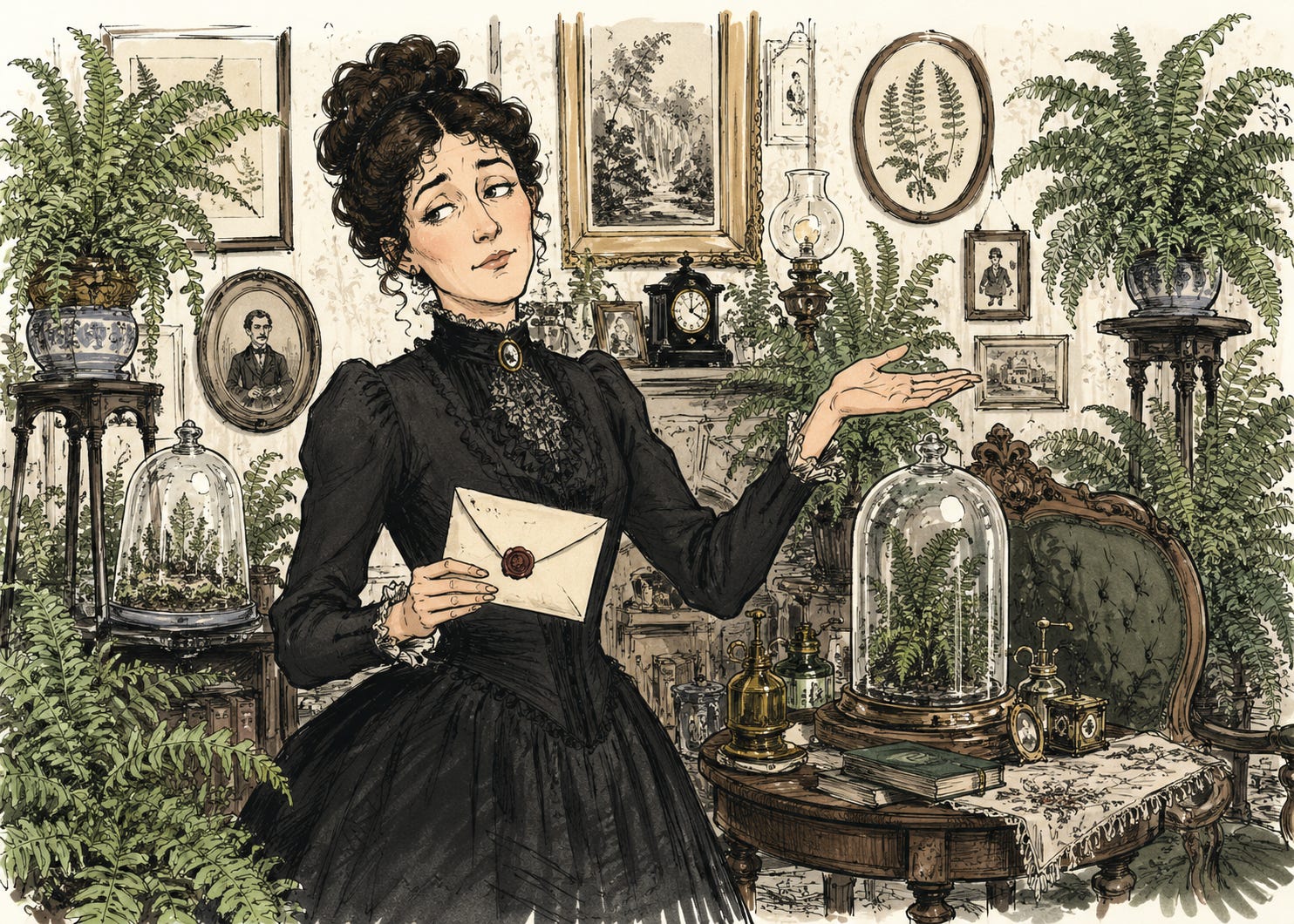
We should all own more ferns.
The Victorians were also right about conservatories, which are essentially rooms built entirely because somebody wanted to sit among plants while remaining unwilling to experience weather. That is civilization. I don’t want a home gym or a media room. I want a glass room containing an orange tree, an unreasonable number of begonias, one uncomfortable iron chair, and the distinct possibility that a ghost might wander through at dusk.
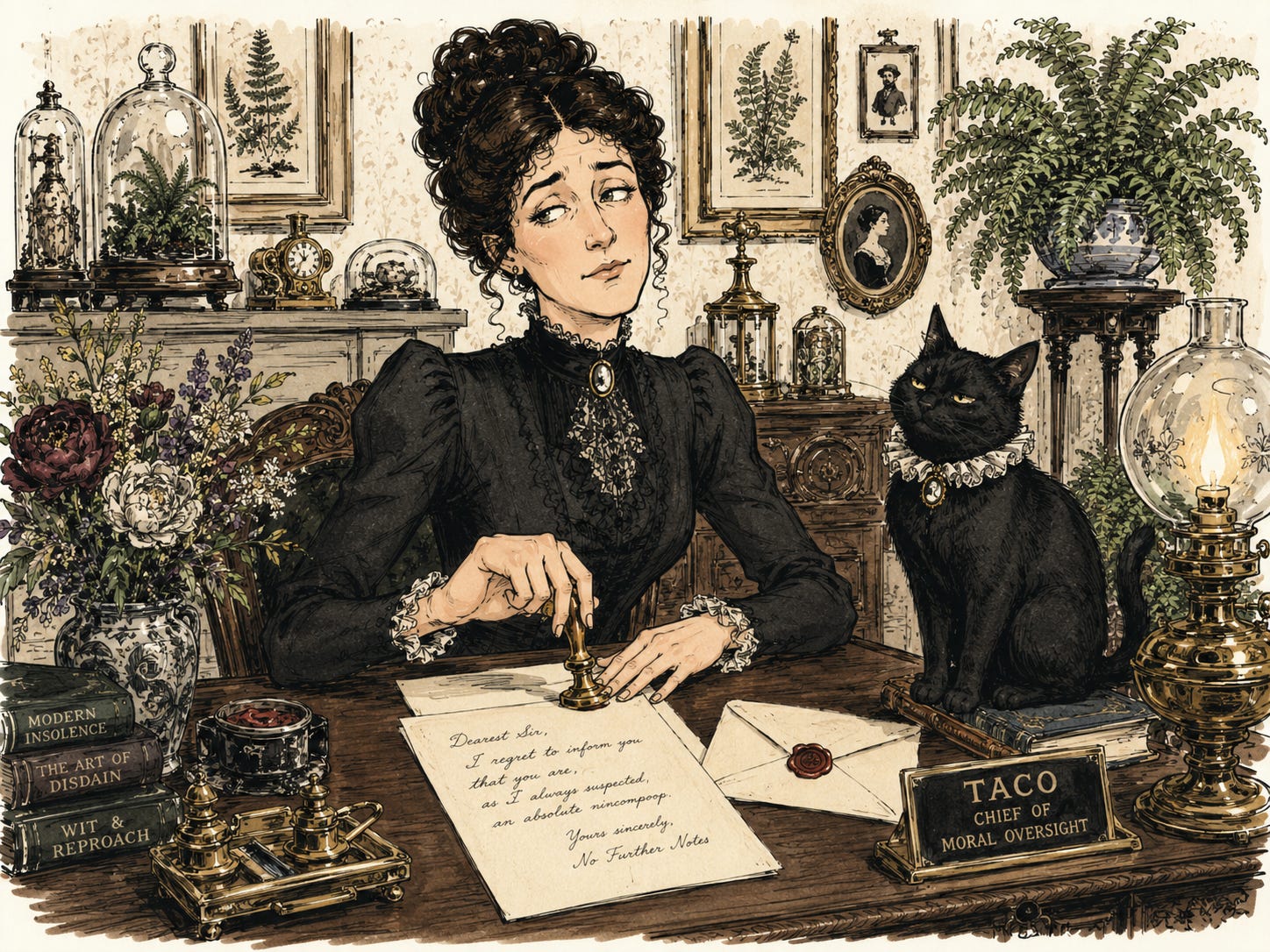
They were also correct about writing letters. I know email is efficient. Texting is efficient. We have optimized human communication to the point where another person can contact us while we’re standing in the shower, and this feels like a design flaw. A letter, meanwhile, requires effort. Paper, a pen, a stamp, and possibly some dramatic staring out a window.
You cannot casually send someone a handwritten letter saying “k.” Nobody has ever opened an envelope, unfolded two sheets of cream stationery, and discovered only the word “lol.” There is dignity in inconvenience.
Also, sealing wax should come back, not because it serves any practical purpose whatsoever, but because we have allowed practicality to win far too many battles. I would like to receive my electric bill sealed with a signet ring. The post office may be annoyed with me, but I will be delighted.
The Victorians also understood something important about flowers: they should occasionally be allowed to mean far more than is reasonable. There was a whole language attached to them. You could send somebody a bouquet and, depending on what was in it, apparently communicate affection, disdain, mourning, fidelity, jealousy, or possibly “I know what you did.”
We replaced this with the thumbs-up emoji. Progress is complicated.
Imagine getting into an argument with someone and, instead of sending a passive-aggressive text, simply leaving a carefully arranged bouquet of tansy and rue on their doorstep. No explanation. Let them research it. This is conflict resolution with craftsmanship.
And then there was mourning. The Victorians took mourning very far, with rules, timelines, clothing requirements, and jewelry made from the hair of the deceased, which is admittedly where I begin edging toward the exit. Still, they understood that grief should not be expected to tidy itself up quickly and return to work Monday morning. They made room for it.
Modern culture is uncomfortable with anything that can’t be solved, scheduled, optimized, or turned into a five-step morning routine. The Victorians occasionally said: someone has died, this is terrible, wear black for a while. There is something almost merciful in that.
They were also right about having a faintly ridiculous amount of stuff on the walls. We spent years being told that tasteful homes required blank white spaces, one tasteful ceramic vessel, and perhaps a beige throw placed casually enough to suggest no human being had ever touched it.
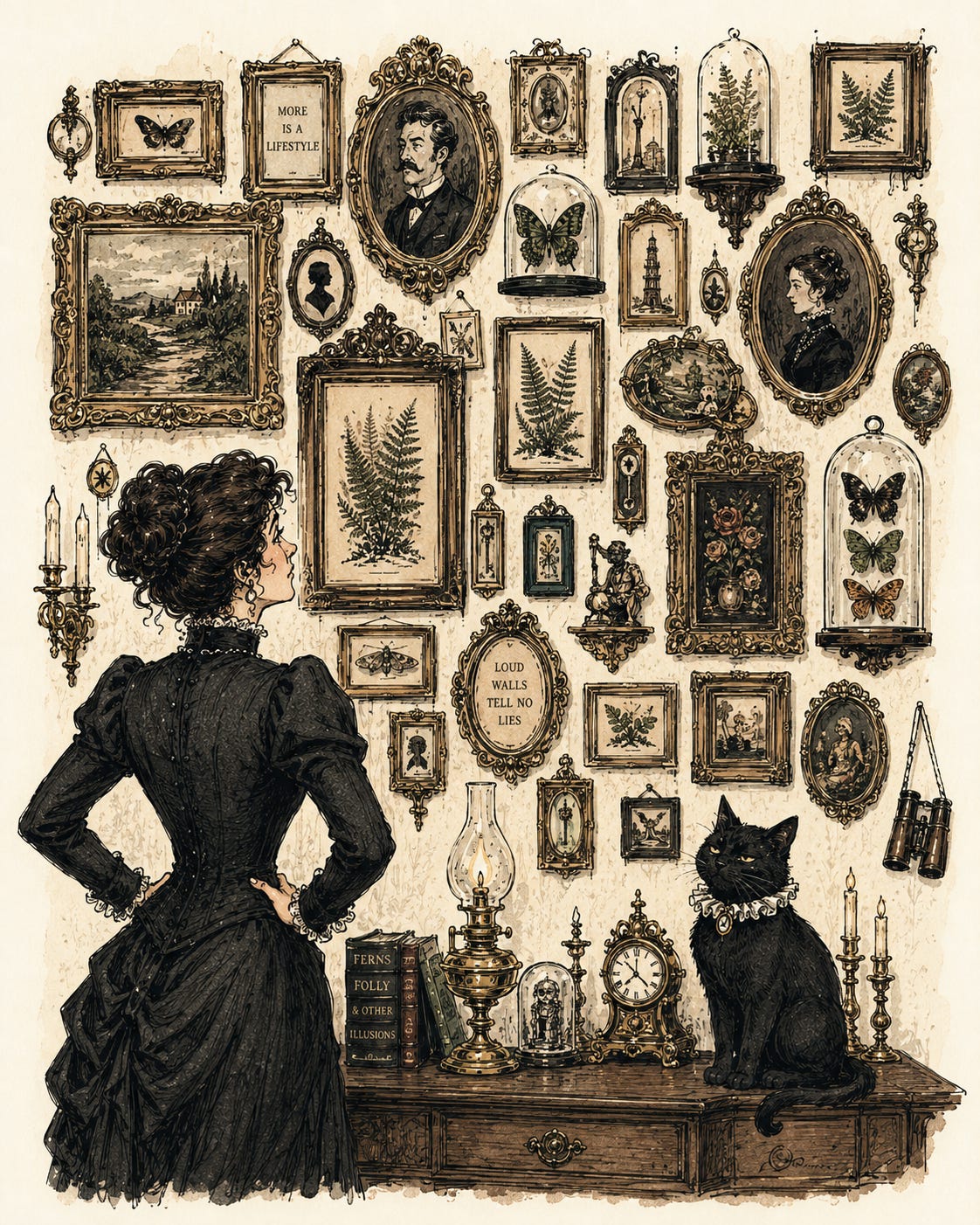
The Victorians said absolutely not. Put up the paintings, then put up more paintings. Add botanical prints, portraits of relatives who appear to have known terrible secrets, shelves, tiny frames, an oval mirror, a dead butterfly under glass, and something brass that nobody can identify.
A house should reveal that someone lives there, preferably someone interesting.
And finally, the Victorians were unquestionably right about being dramatic about gardens. A garden was not merely landscaping. It was a grotto, a fernery, a rose walk, a moon gate, a place for contemplating mortality beside a strategically placed urn.
Meanwhile, we have somehow reached a point where landscaping advice frequently boils down to installing three identical shrubs beside a garage and covering the remaining earth with decorative gravel. No. Give me the archway, the crumbling stone path, foxgloves taller than a child, and roses climbing something they were specifically told not to climb, like the basketball hoop.
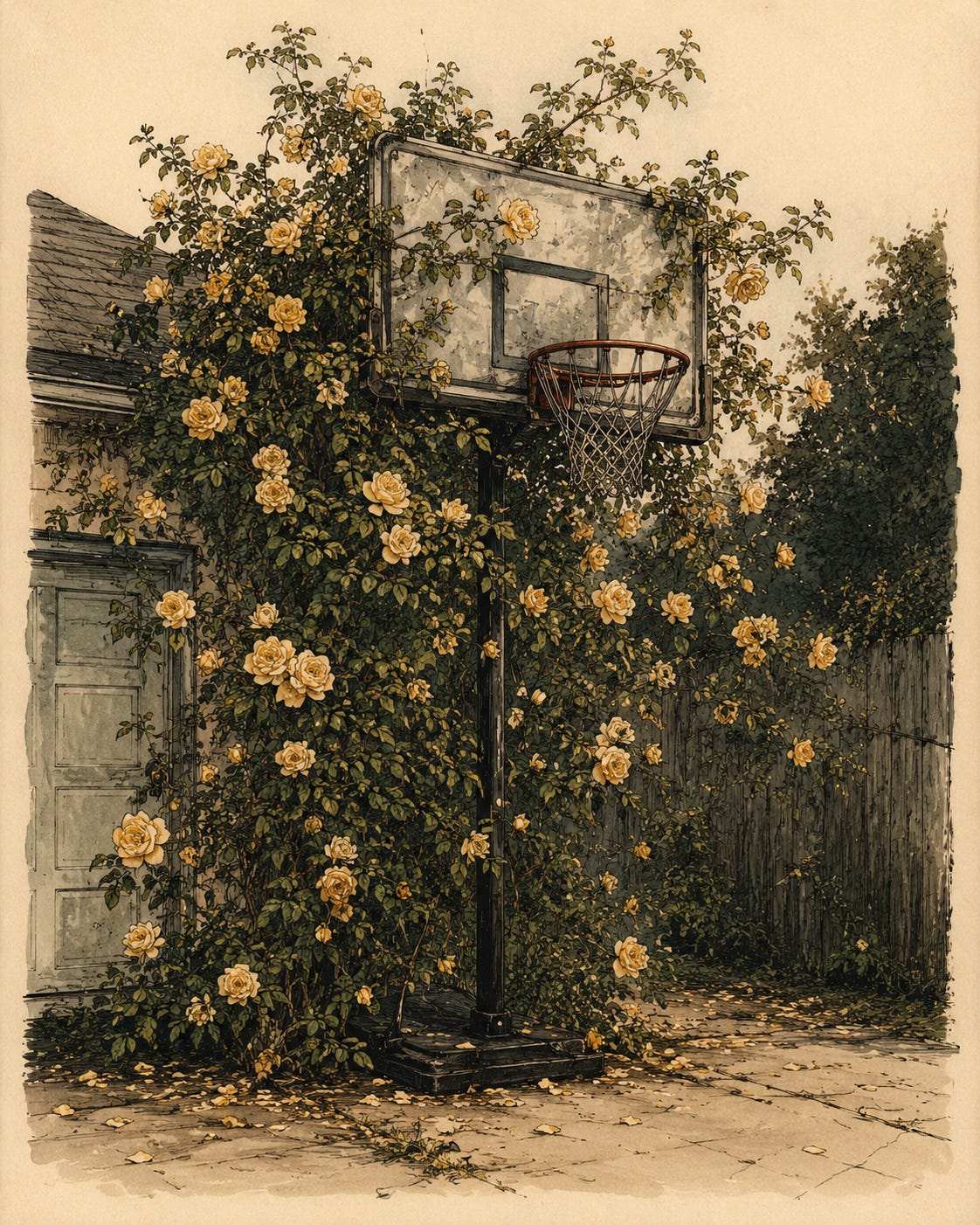
Put a bench somewhere slightly inconvenient and surround it with enough foliage that sitting there feels like disappearing. Plant something fragrant near the door. Plant something poisonous farther away. Grow a vine that eventually becomes a household discussion.
This is a garden, not a bank parking lot.
So yes, the Victorians made mistakes. Enormous ones. Occasionally luminous-green, arsenic-based mistakes. But on ferns, flowers, letters, mourning, crowded walls, excessive gardens, and the general principle that everyday life should contain at least a little unnecessary beauty, they were right.
Unfortunately.
May your ferns be excessive, your walls overcrowded, and your correspondence properly sealed with wax.
-G
No posts
Comments
Nothing yet. Say the first thing.
Sign in to join the conversation.