
When I was a teenager, my mother once begged me to paint chili peppers around the border of her kitchen. How 1990s.
I was already an artist. I had been drawing and painting for years, and I possessed the unwavering artistic judgment available only to teenagers.
Chili peppers?
Ugh. Why? That’s so boring.
I don’t remember exactly what I wanted to paint instead, but I’m sure it was vastly more serious, gothic, interesting and contained absolutely no cheerful kitchen vegetables.
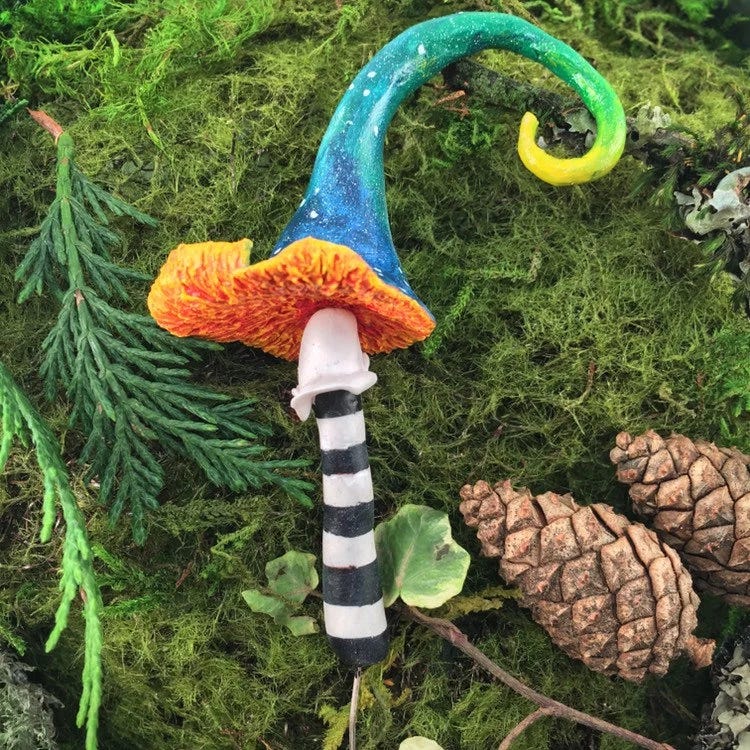
This is especially ridiculous in retrospect because I later went through a phase of making whimsical mushrooms from polymer clay, painting them as if they had wandered straight out of Alice in Wonderland.
I made mushroom garlands.
Garlands. Of mushrooms.
Apparently, chili peppers were beneath me, but festooning the house with tiny enchanted fungi was the work of a serious artist.
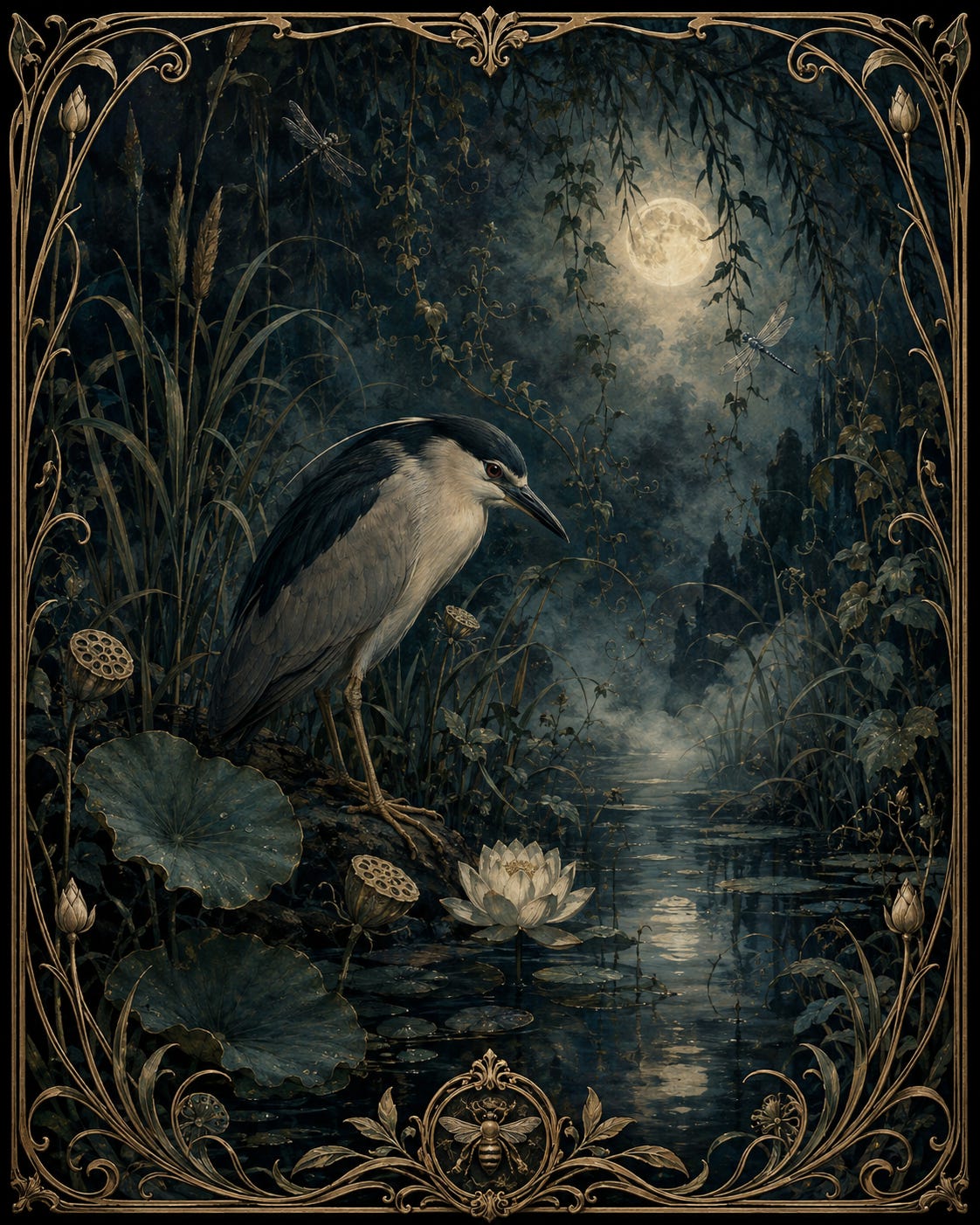
Decades later, I am digitally “painting” poisonous flowers, blackberry brambles, moths, moonlit gardens, pitcher plants, herons, owls, and the occasional tasteful skull.
So, Mother, if you’re reading this: you were not wrong about botanical art. You were simply wrong too early—and perhaps insufficiently strange in your choice of produce.
I’ve been making various forms of art for most of my life, and plants have clearly wandered through it before. But only recently has my own garden become a real source of inspiration. For years, gardening and art occupied different rooms in my mind. Gardening involved dirt, weather, wildlife, rampant vines, and muttering. Art involved paint, clay, strange ideas, and a different but equally committed form of muttering.
Then the boundaries began to fail.
Flowers started appearing in my artwork larger, moodier, and dramatically illuminated by the moon. Blackbirds settled among the blackberry canes. Moths spread their wings over poisonous blossoms. Owls took up positions of authority. Carnivorous plants became even more theatrical than carnivorous plants already are, which is saying something.
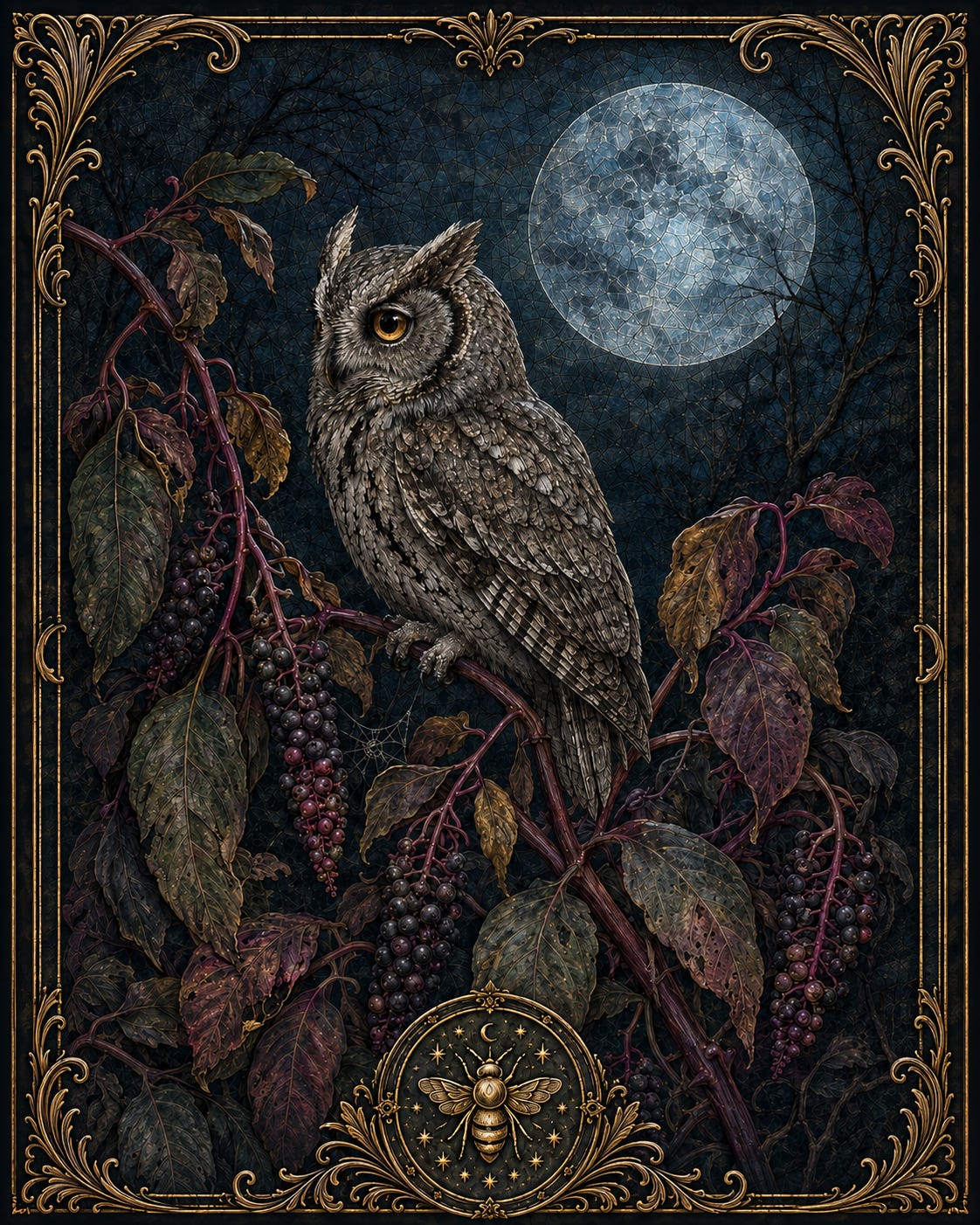
The garden had followed me indoors.
Gardening teaches you to look closely: at the architecture of a seedpod, the powdery bloom on a piece of fruit, the way a bird balances on a thorny cane, or the particular shade a flower turns just before it begins to die.
It also teaches you that beauty is rarely tidy. The most interesting parts of a garden are often tangled, bitten, decaying, overgrown, or behaving in ways that were not included on the plant tag.
That is the garden I want to make art about.
In the real garden, I have very little control. Squash vines make territorial decisions without consulting me. Tomatoes collapse beneath the weight of their own ambition. Rabbits perform unauthorized pruning. August arrives like a large, damp hand pressing down on everything.
In my painted gardens, however, I can negotiate.
I can decide where the moon rises. I can persuade flowers to bloom beside birds they might never meet. I can make blackberries glow like jewels instead of hiding behind three layers of thorns and demanding a blood sacrifice. Nothing develops powdery mildew unless it contributes to the atmosphere.
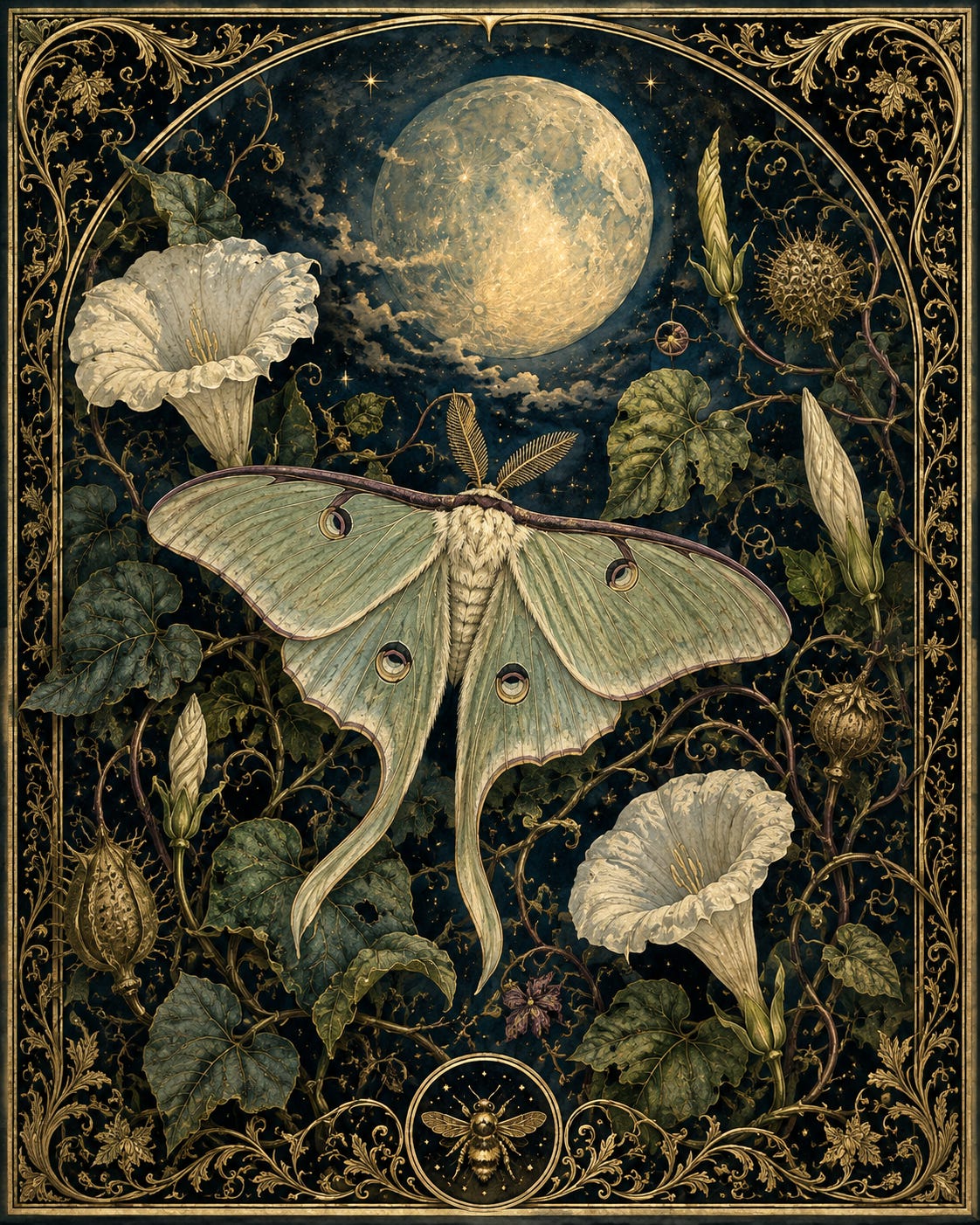
Recently, some of these strange little ecosystems have become prints, notecards, and botanical bookplates for bibliophiles in my Etsy shop (did I mention I also LOVE to read?). Someone even bought one, which caused me to refresh the order page several times just to make sure Etsy hadn’t made some sort of clerical error.
Writing about that first sale made me realize I want to share more of the art here—not as a departure from the garden, but as another path through it.
Apparently, after all these years, I have become a garden artist.
I might even paint a chili pepper.
But it will need dramatic lighting, an ominous moon, and possibly a mushroom garland.
Until next time, may your old creative phases return bearing evidence—and may nobody find the photographs.
-G
No posts
Comments
Nothing yet. Say the first thing.
Sign in to join the conversation.