
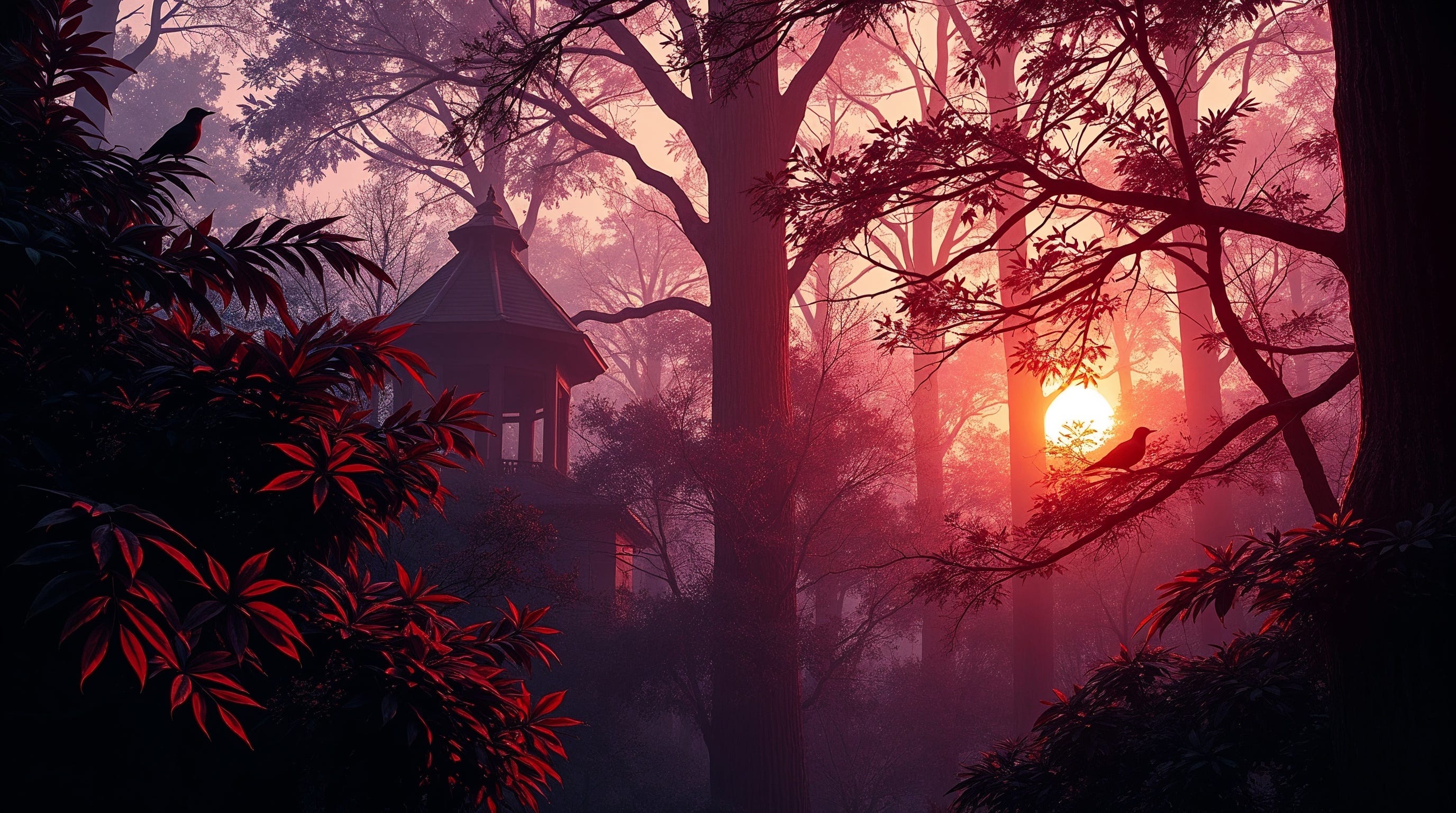
This week, the work moved from outline to actual pages. The goal wasn’t to “finish Chapter One,” but to see whether the opening of The Emberborn Oath can hold the kind of story I want to tell. Instead of asking AI to write scenes for me, I used a single long chat as a pressure test—pushing on worldbuilding, character, and stakes until the pages started to feel honest.
The chat began with a very basic prompt: “Act like an expert copy editor and help me improve this opening scene,” followed by my own draft of Bram planting a tree in the spring sun. From there, I didn’t ask for fresh scenes; I kept pasting revised versions of my own work and asking pointed questions: Does this do anything for worldbuilding? Are Bram and Kesh actually distinct on the page, or just in my head?
AI’s role in this pass was threefold:
Highlight where the prose was pretty but empty, nudging me to tie images (like the “memory tree”) to concrete stakes, such as Bram’s father’s last song.
Help tighten character contrast once I decided who Bram and Kesh are—willow vs. oak, listener vs. thunder—without turning them into pure exposition.
Push for clarity when motives or rules were fuzzy, especially around the memory magic and the legal pretext for Mara’s arrest.
Every time the model said, in essence, “this reads nicely,” I treated that as a warning, not a win. The useful moments were the ones where it asked for more specificity or pointed out repetition.
The first scene opens with Bram in the grove, planting a memory tree whose roots will carry his father’s last song. Kesh barrels in, wiping honey from his face, and their banter does the double job of introducing their friendship and showing how Rootlings live—sun-fed, soil-tied, a little reckless.
Originally, this sequence was just atmosphere. Through the chat, it became more purposeful:
The “memory tree” stopped being decorative and became real infrastructure—a living archive, not just fantasy wallpaper.
A small beat at the end, where the birds go quiet and the forest’s “thrum” turns uneasy, shifted the tone from pure pastoral into “something is wrong,” setting up the intrusion of imperial power in the next scenes.
AI helped tighten the language around that tonal shift, but didn’t decide that a shift was needed. That decision came from the trilogy’s core question: show what’s precious before you show how easily it can be threatened.
The second and third scenes move to Gable’s Hollow, where a Rootling named Mara sits alone in the town hold. Sheriff Calder and Mayor Trask are trying to follow local law while an imperial commander, Calen Aras, is on his way with sentries, dogs, and cages.
The key idea here is that Mara isn’t accused of theft or violence; she’s charged with “violating” a human girl’s mind by revealing what the roots remember. In the chat, I kept refining that accusation so it felt grounded and dangerous without turning the scene into a lecture. Lines like Mara’s quiet response—
“I opened her heart to the pain. Not a lie. I showed her what the roots remember. The memory was already in the soil.”
—came out of pushing the AI (and myself) to strip away explanation and leave a simple, defensible claim: she didn’t plant lies; she surfaced buried truth.
AI’s primary contribution here was to flag when dialogue tipped into theme-explaining and when the crowd or the officials felt too flat. That let me rework the beats so that Calder, Trask, Hollin, and Aras each showed a different relationship to truth and power, rather than all speaking with the same moral vocabulary.
For readers following the public posts, this chapter gives you three things:
A first glimpse of Rootling life through Bram and Kesh, where memory isn’t abstract—it’s rooted in living trees.
A sense of how quickly “law” shifts when memory threatens those in charge, through Mara’s arrest and the arrival of Calen Aras.
A concrete example of how AI fits into this process: not as a ghostwriter, but as a relentless second pair of eyes asking, “Is this doing real work, or just sounding nice?”
In the subscriber-only version, you’ll see actual chat transcripts, drafts I pasted in, and where I ignored AI’s suggestions. Here, the focus is the story itself—and the way these opening scenes start to answer the project’s bigger question: when lies shape reality, what would you risk to remember what’s real?
The prologue to the Defiant Space books
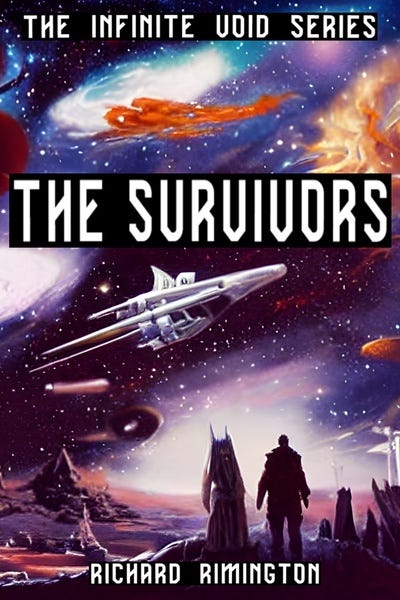
In this tale of space opera and cosmic adventure, the Ambassador of a mysterious and ancient family must forge a path through chaos to overcome the terrible enemies that desire humanity’s destruction.
Her plan to avert galactic catastrophe will unite a band of survivors who have faced every imaginable danger and disaster.
This story forms a prologue to the Infinite Void series.
A Leap Hamilton Ad-Venture
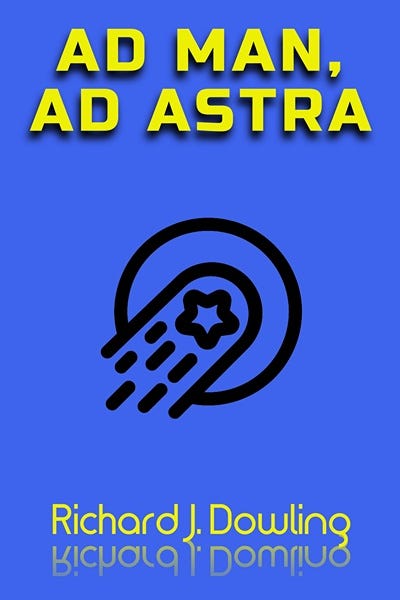
Can a humble Ad-Man from Knuckleville, USA, beat William Shakespeare and Marie Curie in a battle of minds?
Leap Hamilton is a can-do copywriter in 1959 who gets transported to the year 2119 by an AI known as Isaac.
Isaac needs a champion to help Humanity regain its former glory.
People, you see, have become too reliant on Isaac’s problem-solving abilities. Hence, future humans are as dumb as Toilet Golf.
So, Leap must compete against Shakespeare and Curie to solve an impossible task: help a race of aliens known as the Cruiskeen get to the next galaxy in time, or risk a brutal civil war.
Can Leap prove that he has what it takes? It’s not like he’ll be executed if he fails. . .
“Ad Man, Ad Astra” is a prequel to “How to Sell the Stars”, and the first Leap Hamilton Ad-Venture.
No posts
Comments
Nothing yet. Say the first thing.
Sign in to join the conversation.