
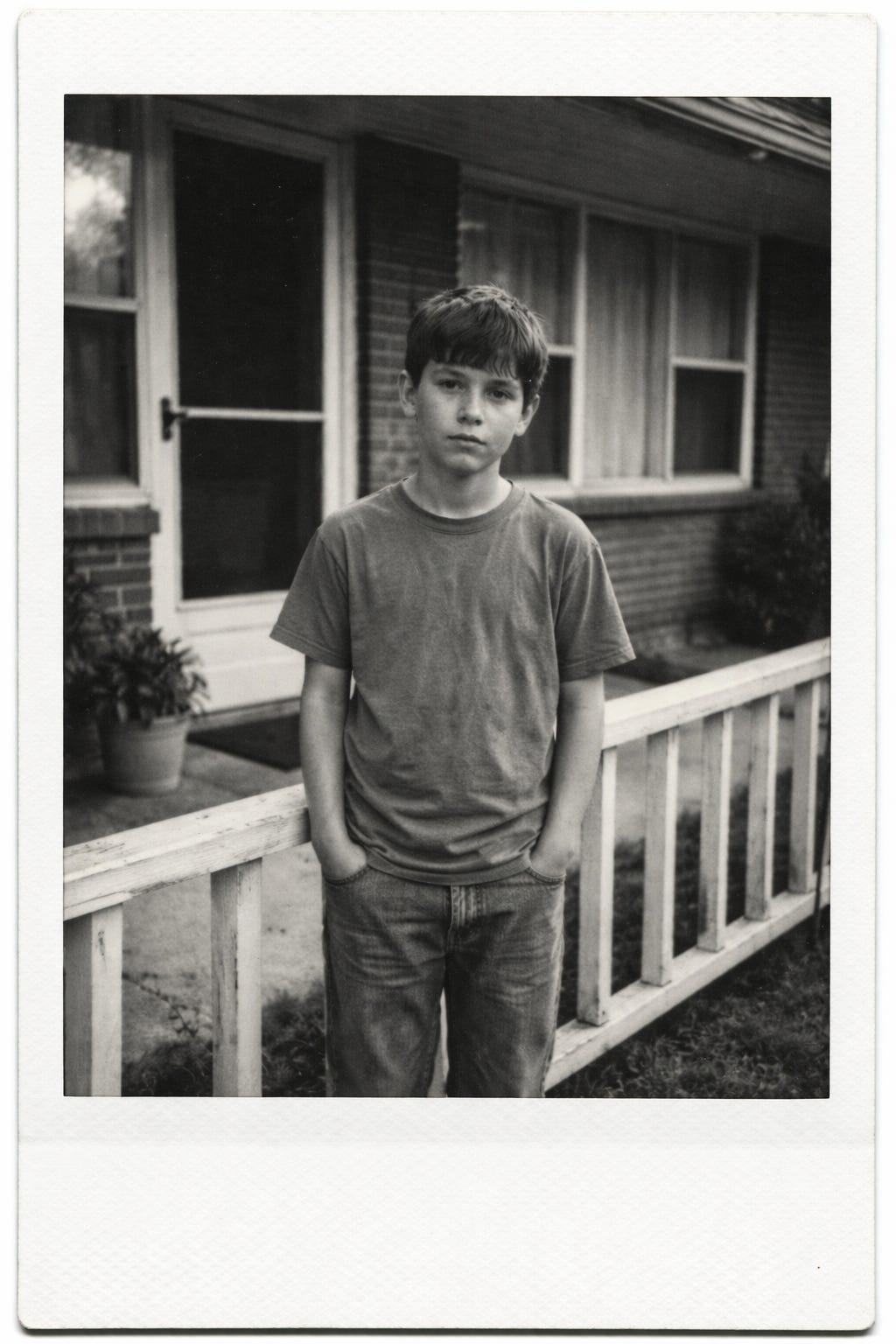
The house sat in a working neighborhood south of Houston where evenings belonged to sprinklers swaying across dry lawns and neighbors who stood in their driveways talking about heat, jobs, and nothing at all.
It was that soft hour before dark when the sun loosens its grip and everything feels temporarily forgiven.
I was kneeling at the far end of the porch near the living room window, the white railing pressing against my right shoulder, the world suddenly smaller than it had been a few minutes before.
My father stood a few feet away in his work clothes, sleeves rolled halfway up his arms, holding a shotgun that seemed too calm in his hands. Not shaking. Not wild. Just present.
Children do not understand death the way adults think they do. They understand disruption.
I remember the warmth running down my leg and the shame of it arriving before the fear. I remember saying please again and again because repetition is the last language a child believes the world still understands.
“Please don’t kill us, daddy.”
He looked at me with a sadness I would not recognize until much later in life.
“You don’t love me.”
The neighbors had gathered in their yards by then, watching from a distance that protected them from involvement but not from memory. I studied them carefully, convinced they belonged to a different kind of evening, one where fathers remained fathers and boys did not negotiate for tomorrow.
When the gun finally moved away from us, I ran without planning to run. I cleared a fence I do not remember climbing and landed in the neighbor’s back yard. My father drove away and carried his storm somewhere else. Sometime between that Friday evening and Monday morning, he turned the gun on himself and left me to make meaning where there were no words.
But what stayed with me was not the weapon, his death or even the terror. It was the lesson written quietly beneath it.
I learned that love could disappear without warning.
I learned that calm arrived only after the right words were spoken.
I learned that safety depended on the feelings of other people.
And because a child cannot control the feelings of others, he begins controlling himself.
I did not become careful. I became impossible to pin down.
Movement was safer than stillness. Achievement safer than honesty.
Intensity safer than quiet. I outran feelings I did not know how to survive by becoming whoever the next moment required.
People later called it maturity. What it really was, was watchfulness.
I listened for changes in tone the way other boys listened for ice cream trucks. I could feel tension forming before anyone named it. Sometimes I softened a room. More often I changed it. A joke, a plan, a new idea, a sudden exit. Anything but sitting still inside it.
It looked like leadership.
It felt like responsibility.
It was usually escape.
The strange thing about childhood decisions is that they grow with you. They put on adult clothes and take adult jobs and no one questions them because they work. You become the reliable one. The prepared one. The man others trust when things feel uncertain.
But trust built on vigilance has no off switch.
Years later, long after that porch was gone and the house belonged to someone else, I still found myself reading emotional weather before speaking. Not because danger remained, but because the boy who learned the rules never received permission to stop playing by them.
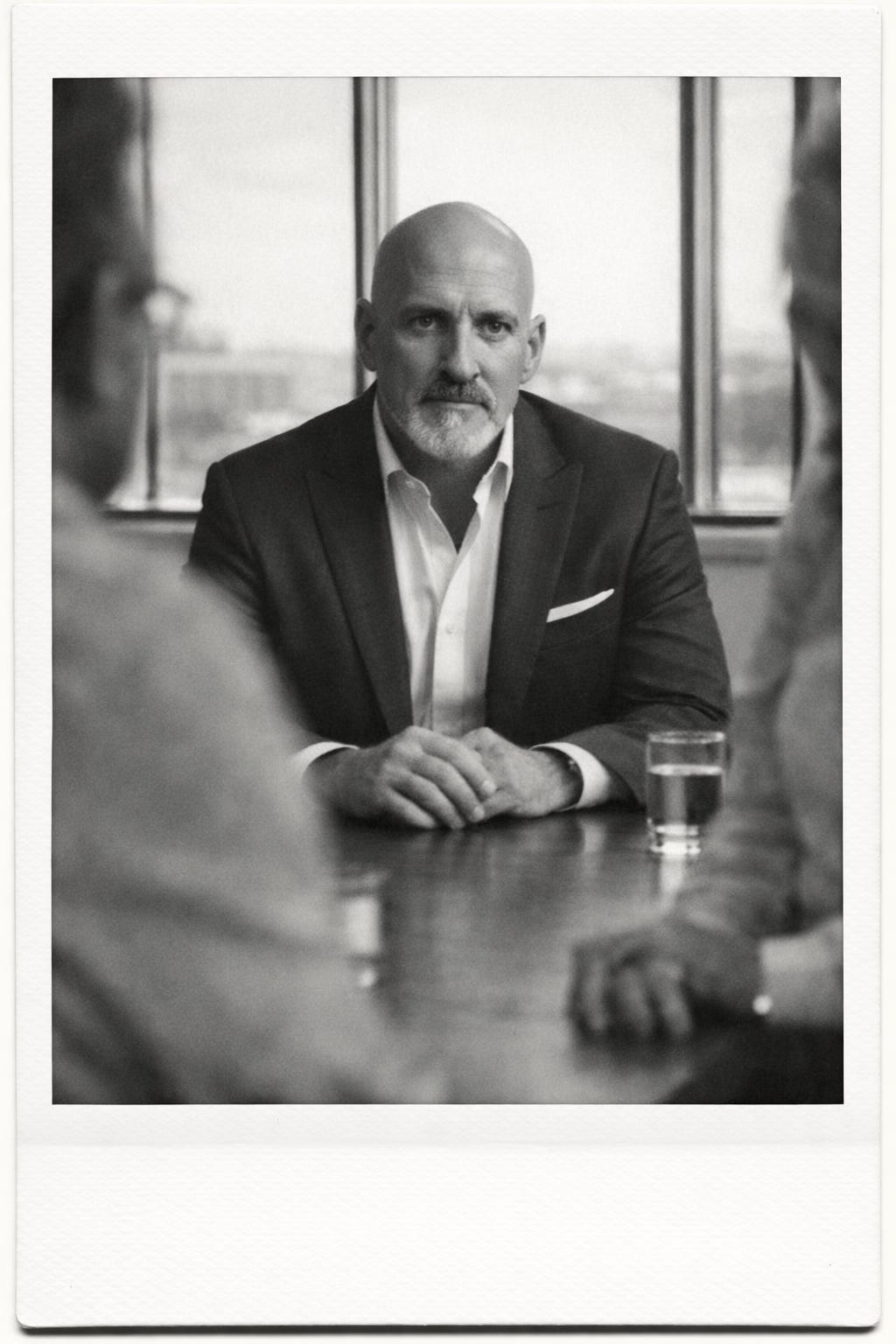
Sometimes it shows up in small places.
A pause in conversation.
An unread message.
A change in someone’s tone I can’t quite name.
My mind begins working before I ask it to.
What did I miss?
What needs fixing?
How do I steady this before it turns?
The room is calm. My body is not. The porch is gone. The rule isn’t. Some parts of us age. Some remain kneeling exactly where we left them.
Sometimes it shows up where the stakes are highest.
When someone I love grows quiet, I don’t experience quiet. I experience countdown.
My attention sharpens.
My thoughts accelerate.
I start repairing something that hasn’t broken.
They’re resting.
I’m negotiating with history.
It ends when you realize you never stopped trying to make everything okay.
Author’s note: For a long time I lived by leaving. Leaving rooms, conversations, feelings, versions of myself I did not want to meet. I called it freedom. Sometimes ambition. Often I could not name it at all. I only knew I did not like how it felt to be inside my own skin, and I learned there were many ways to change that feeling. Now I stop trying to solve it and start allowing it. Less thinking, more noticing. I pay attention to what my body is doing before my mind explains it. I let feelings arrive without immediately negotiating their exit.
I gather tools along the way, but the tools are never the point. Curiosity helps. Stillness helps. What helps most is saying the quiet thing out loud before I have time to improve it. When I feel not enough, I say it. When I feel too much, I say that too. Some patterns end when understood. Others end when witnessed. I inherit more than stories from the people before me. I inherit reactions, silences, unfinished sentences. At some point the work becomes deciding which ones continue.
In the end I am not fixing myself. I am sitting close enough to the fire to be seen.
Comments
Nothing yet. Say the first thing.
Sign in to join the conversation.