
1. Perspective
2. Air Density and Gradient
3. Humidity and Water Vapor
4. Temperature Inversions
5. Atmospheric Turbidity
6. Atmospheric Refraction
7. Water Vapor Effects
8. Optical Perception From Cloud Density
9. Atmospheric Absorption
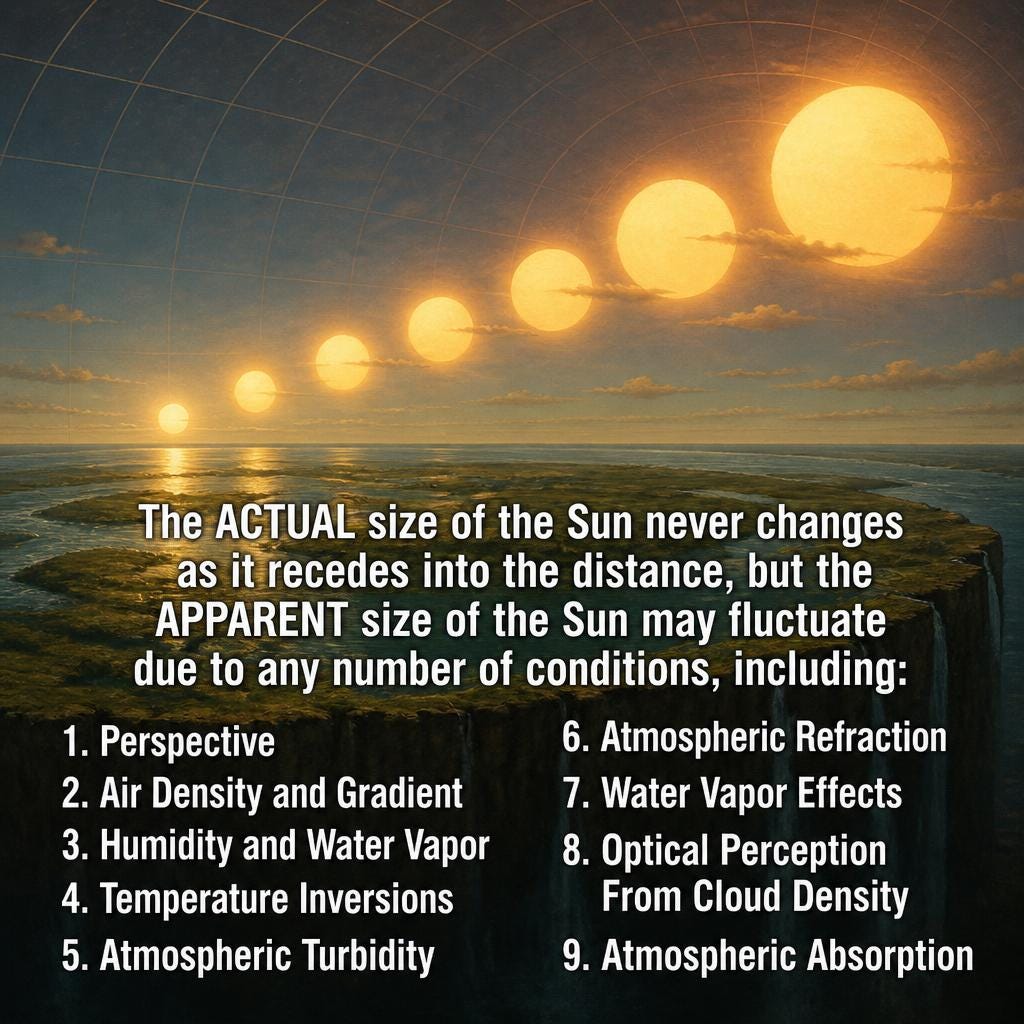
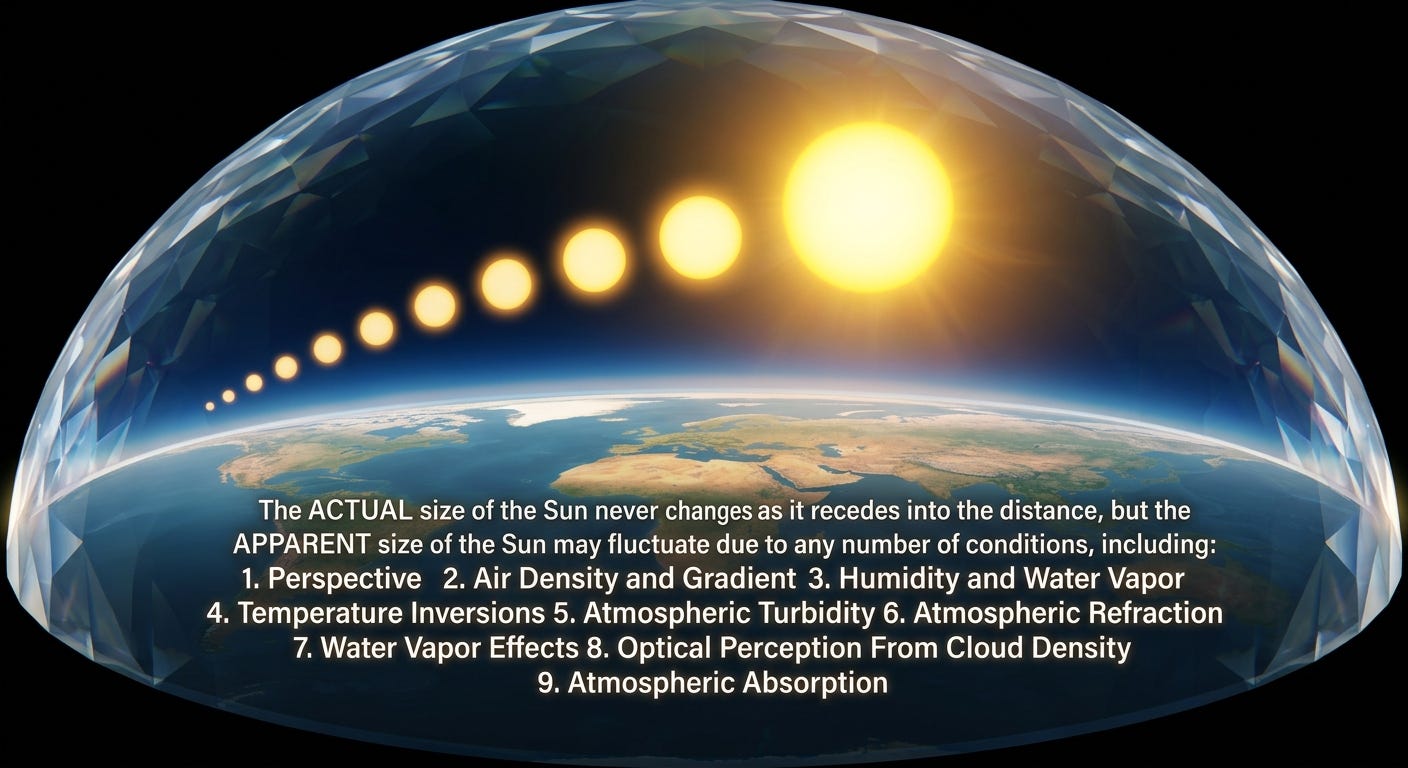
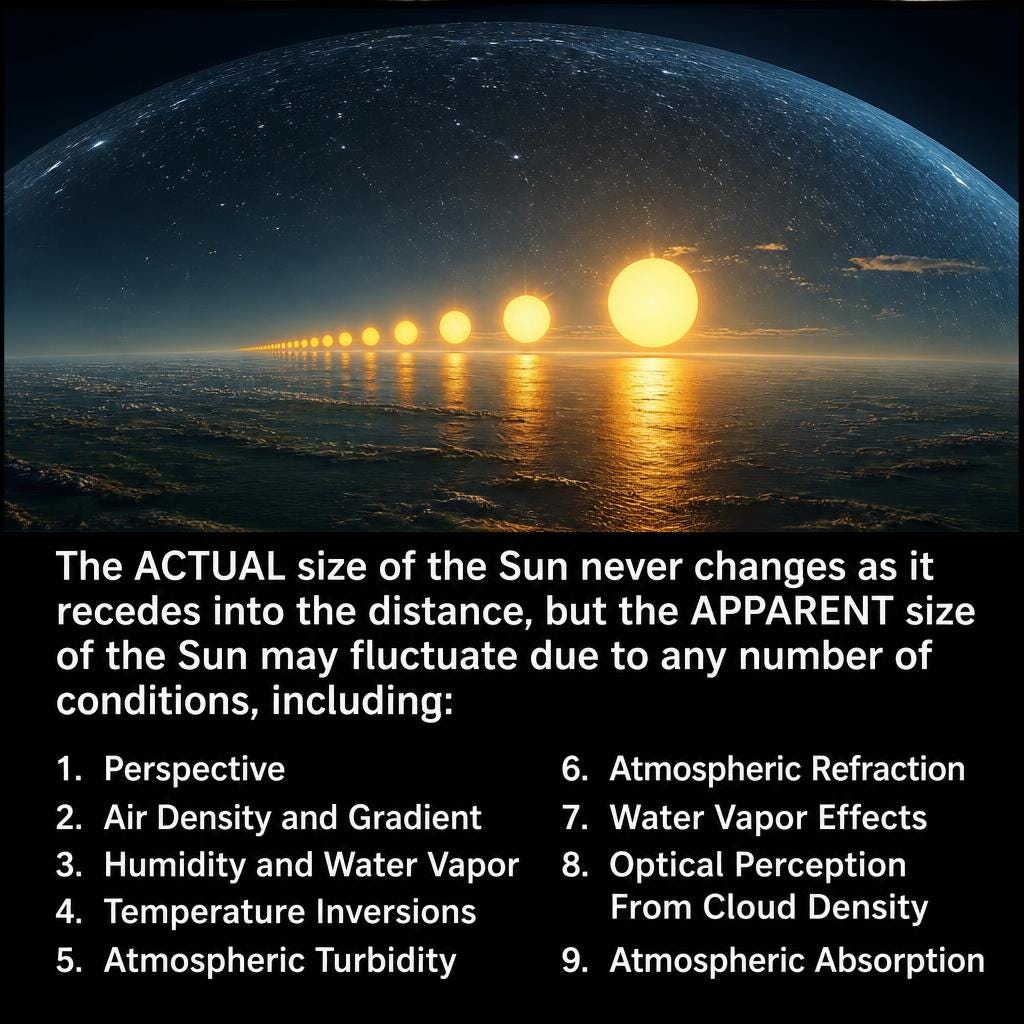
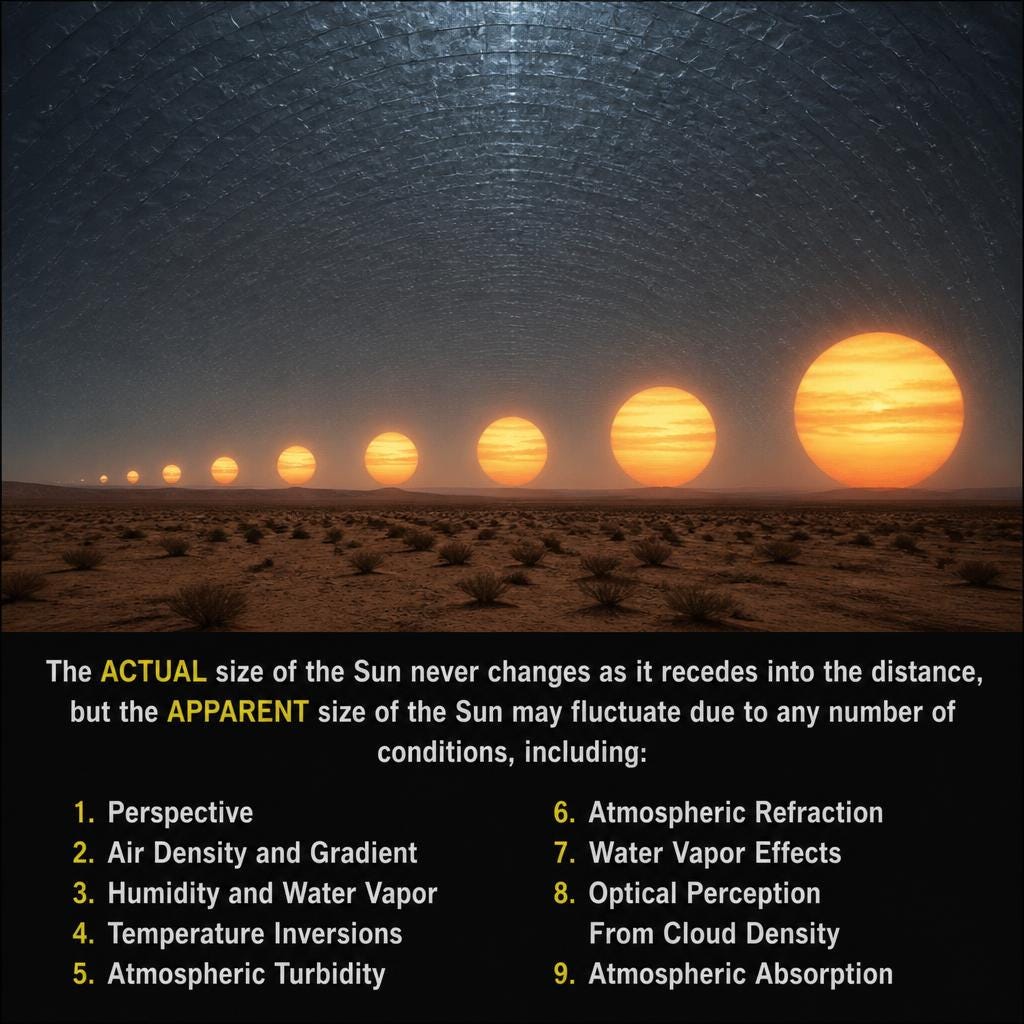
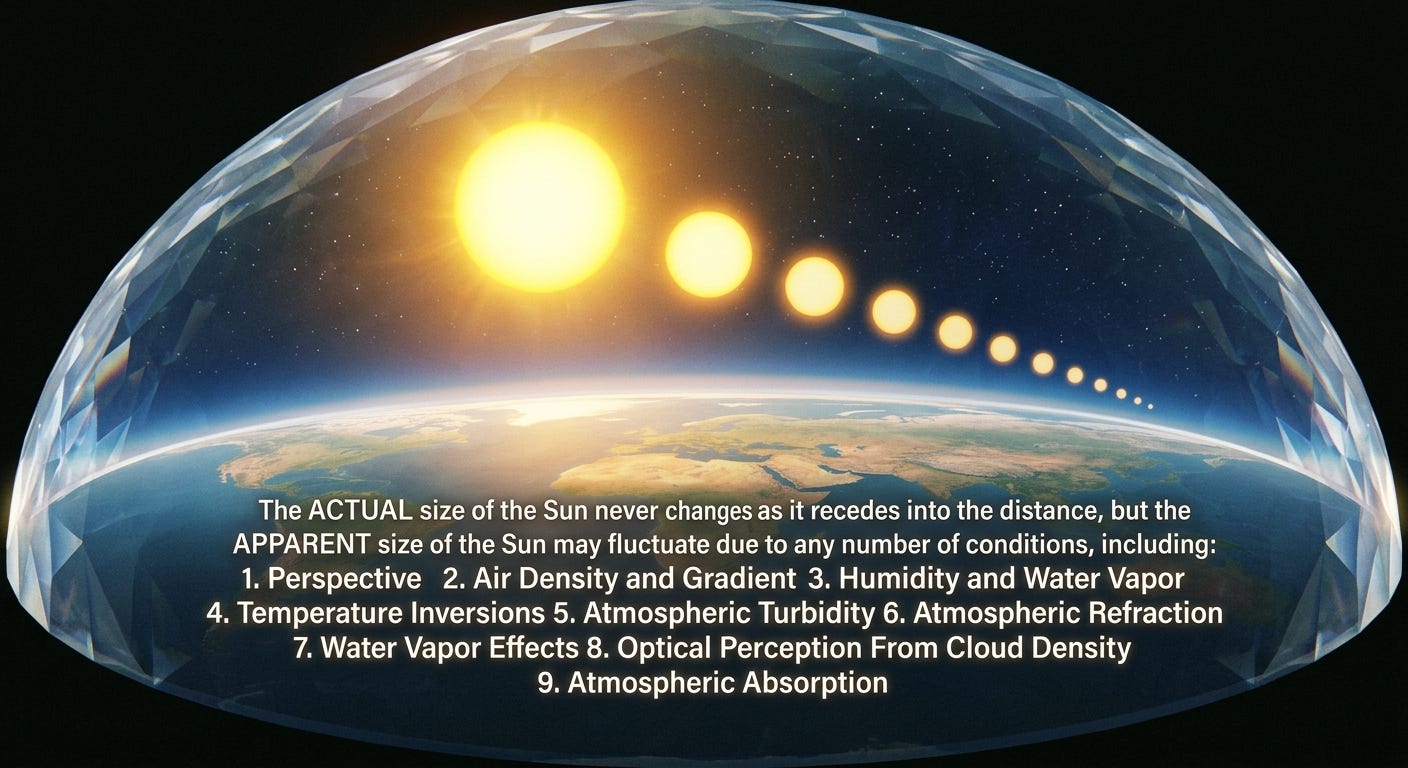
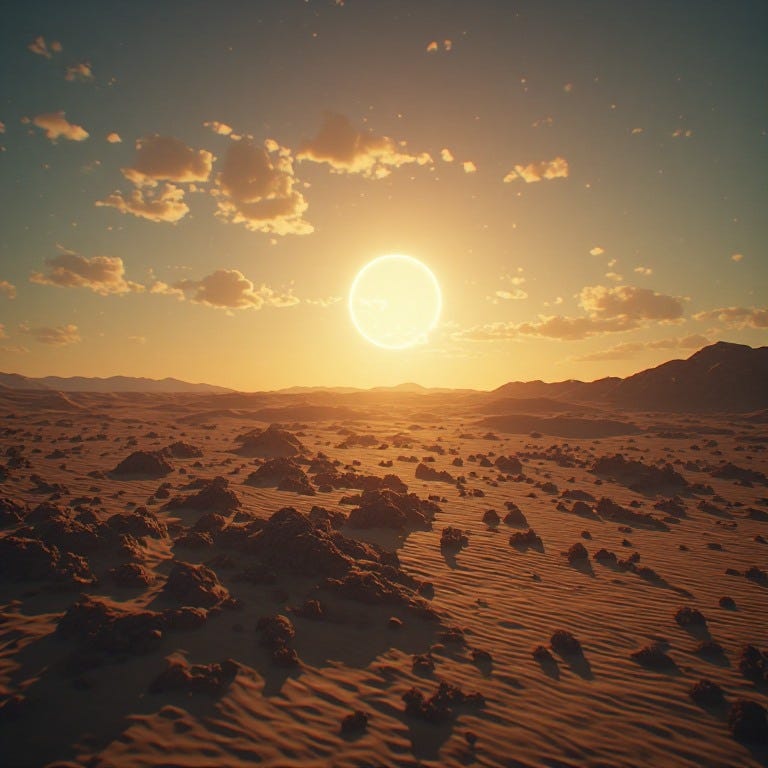
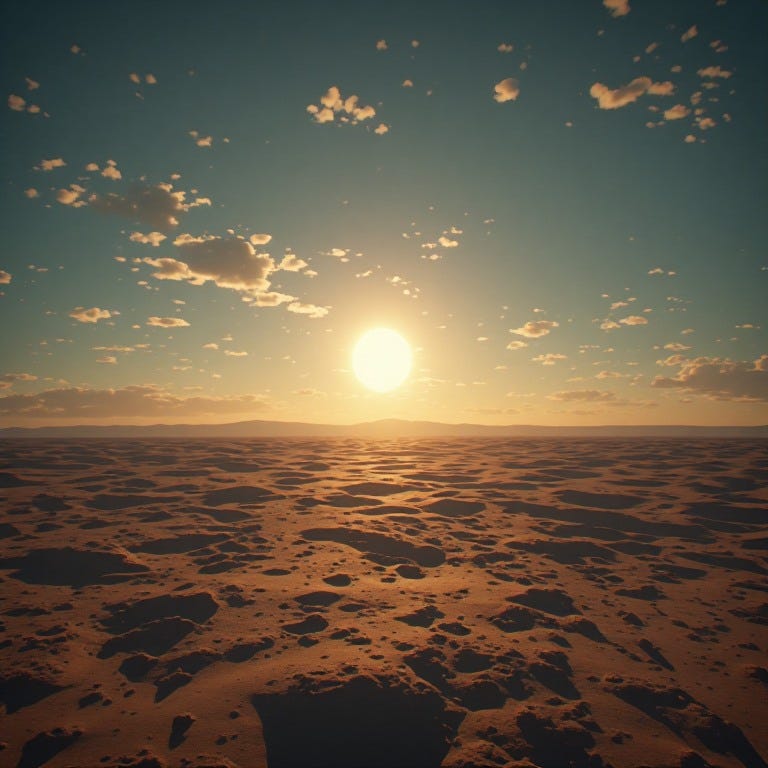
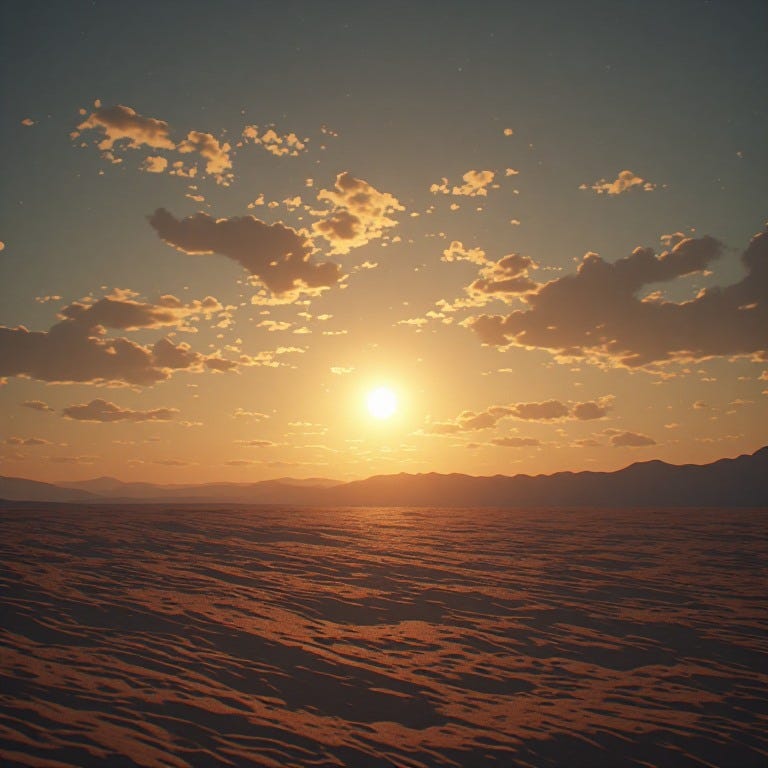
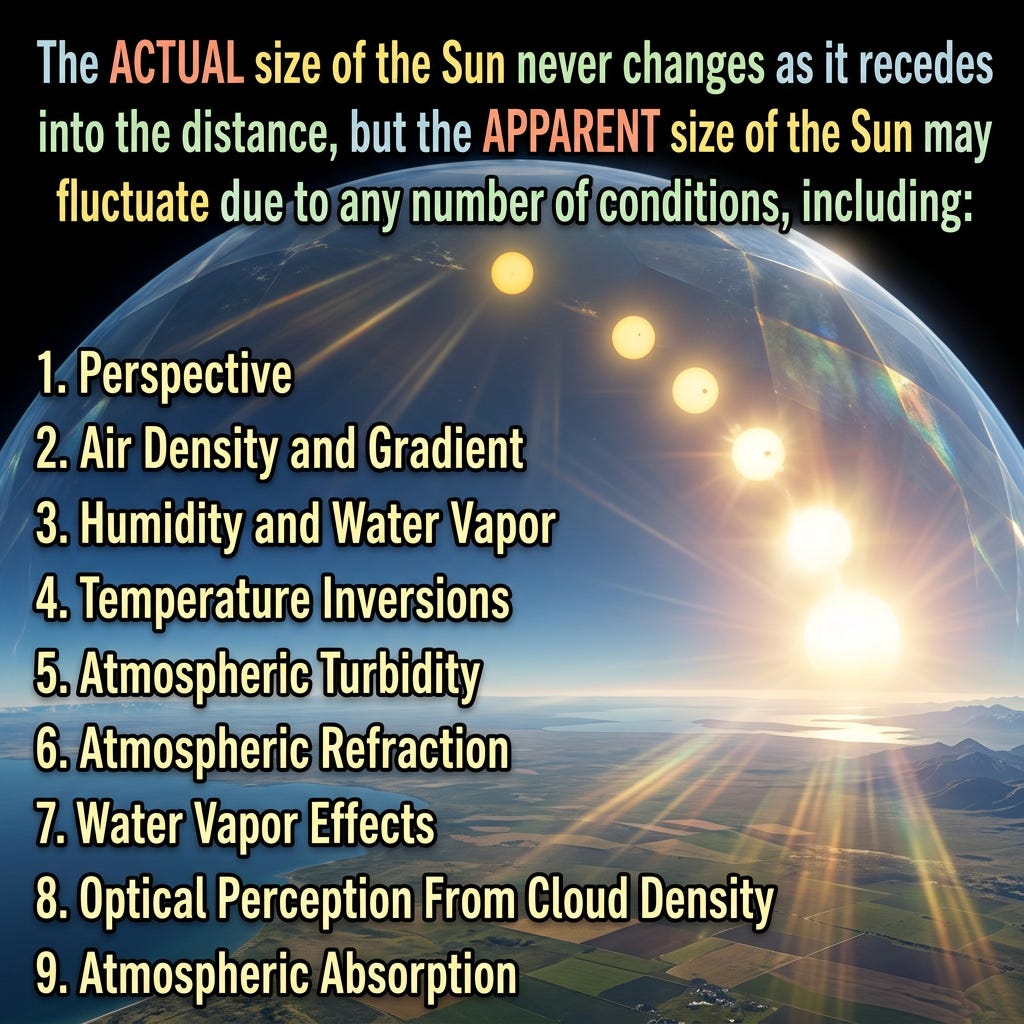
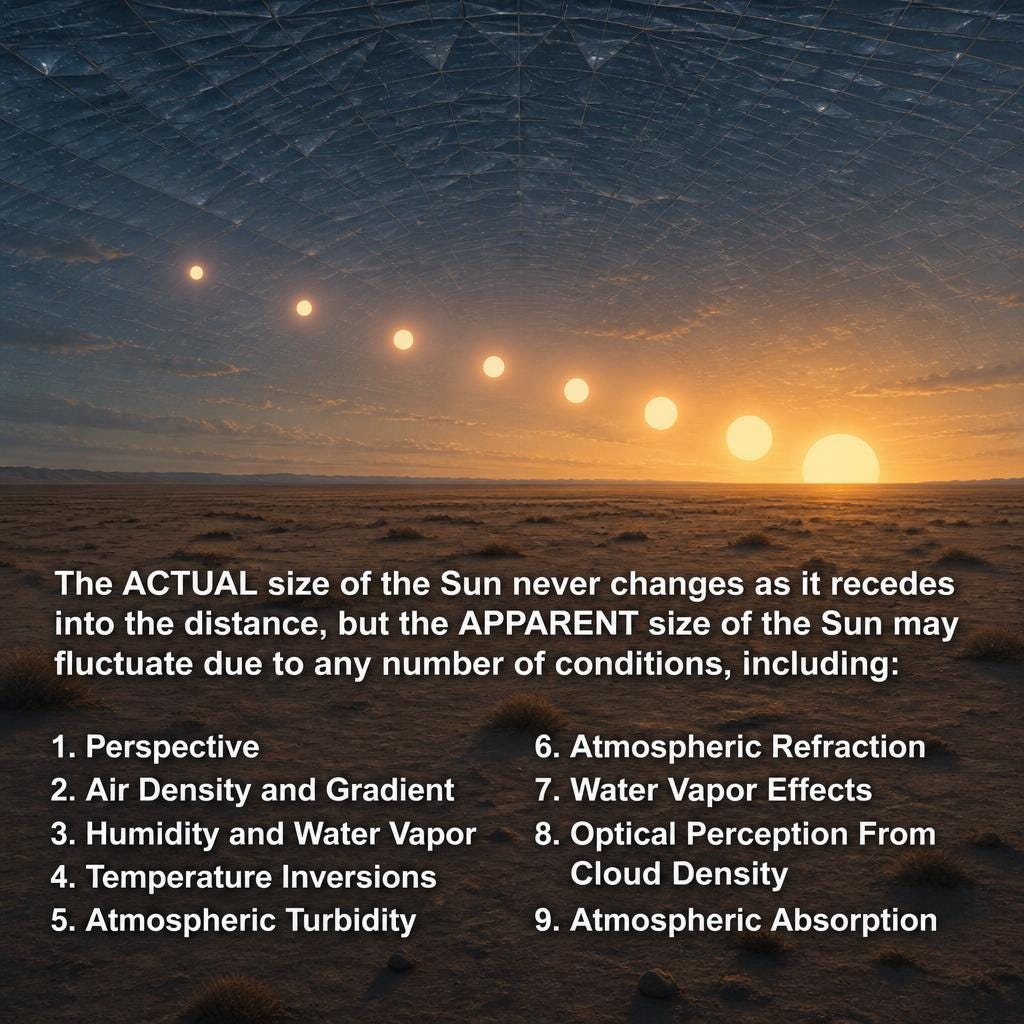
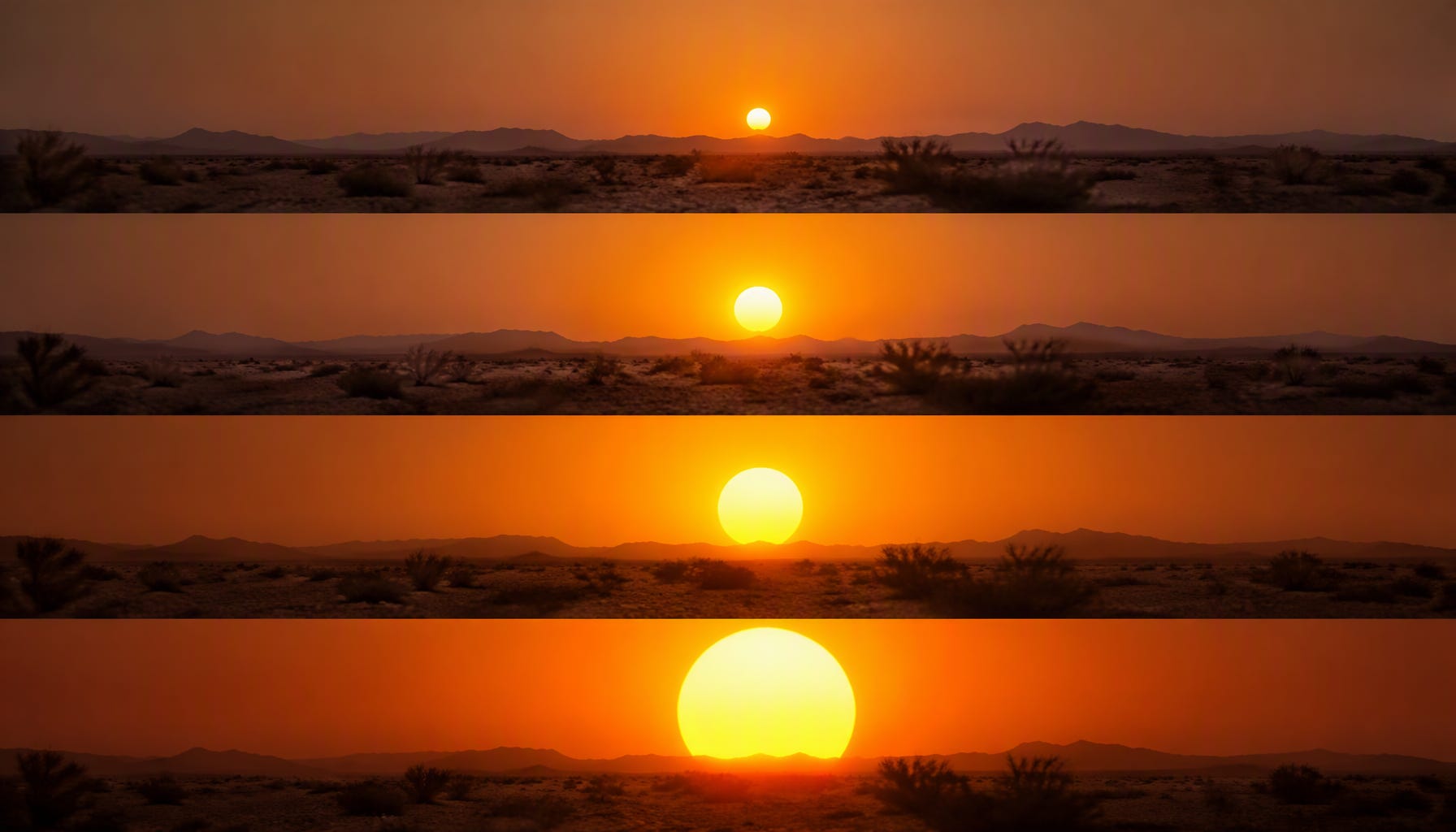



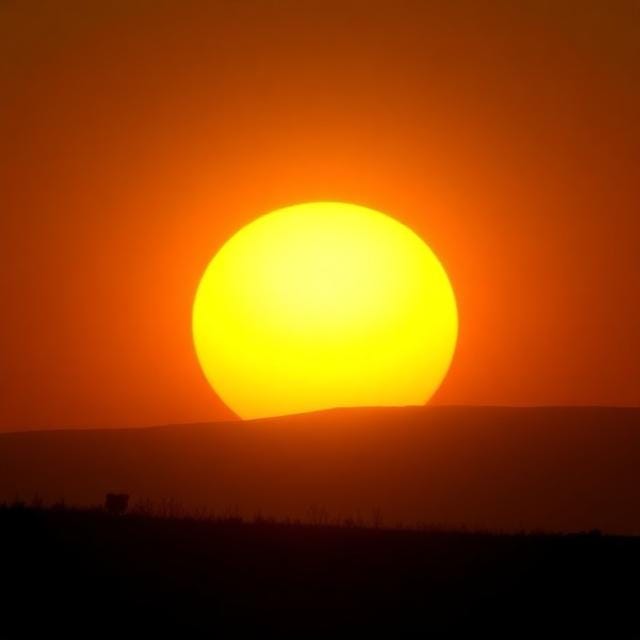
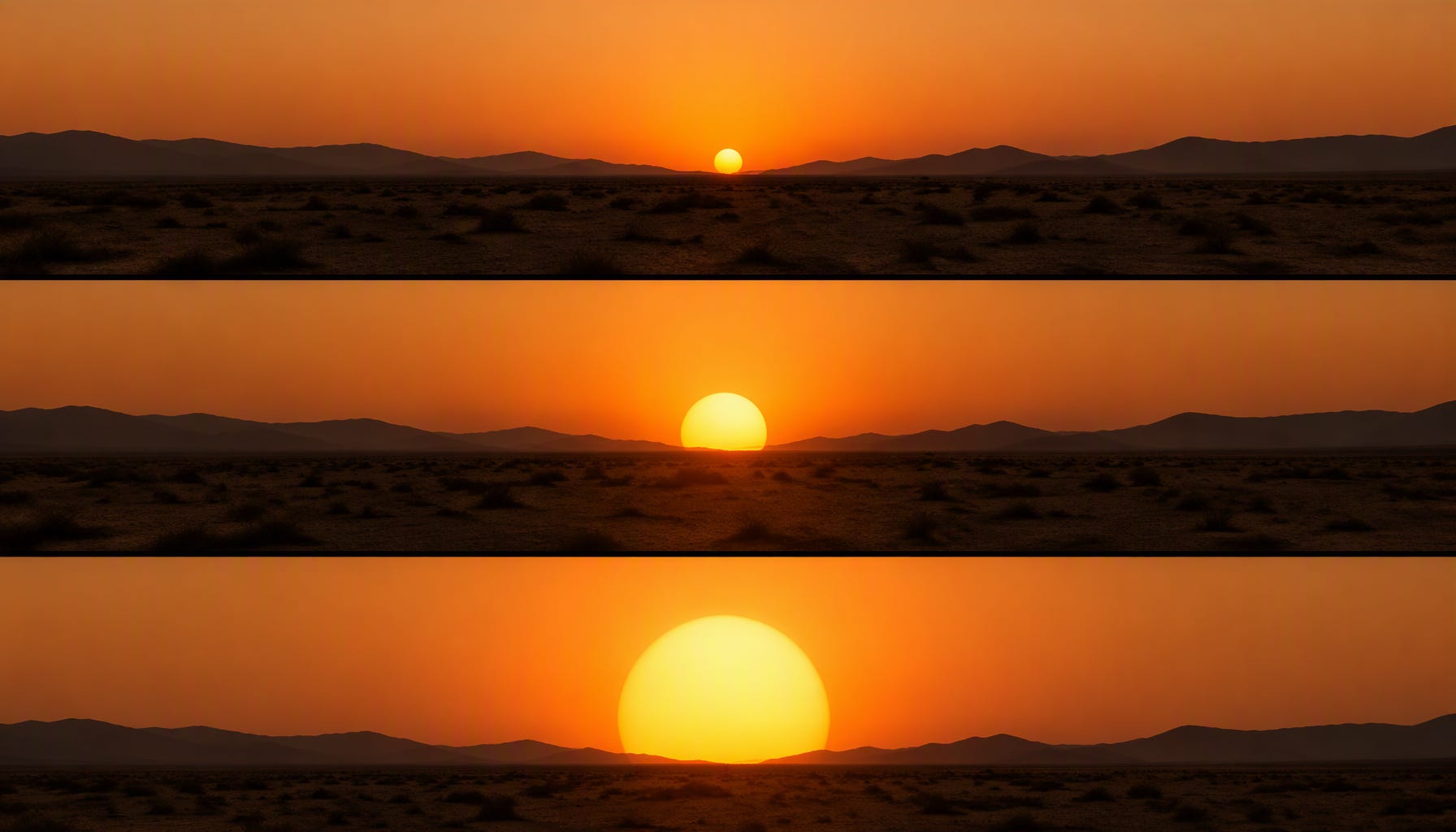
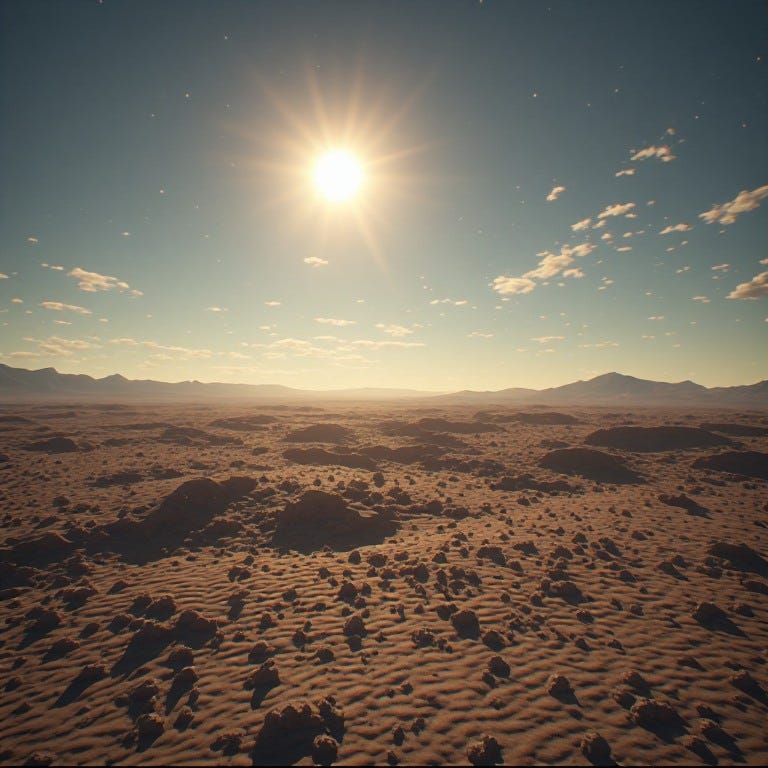
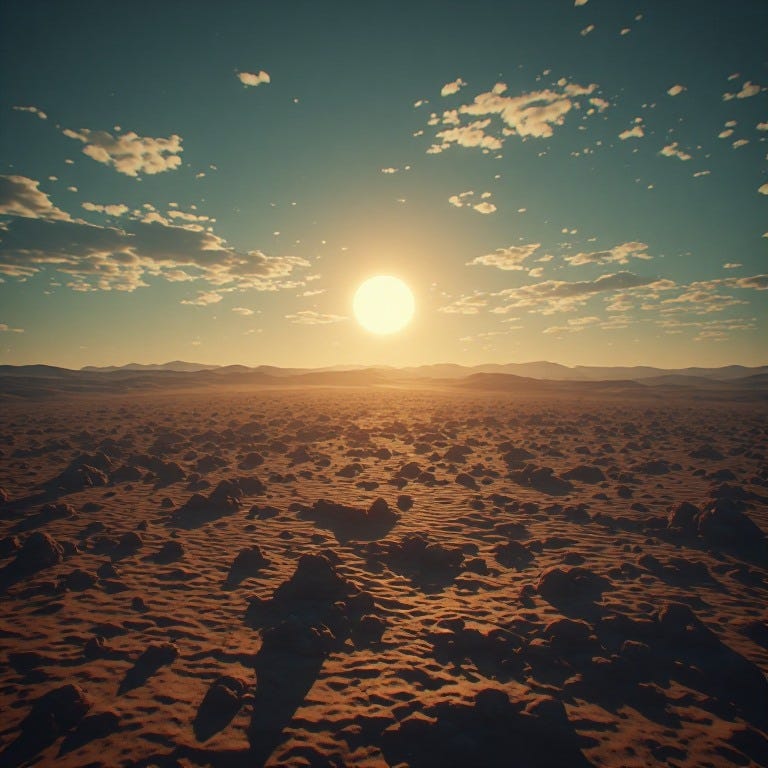
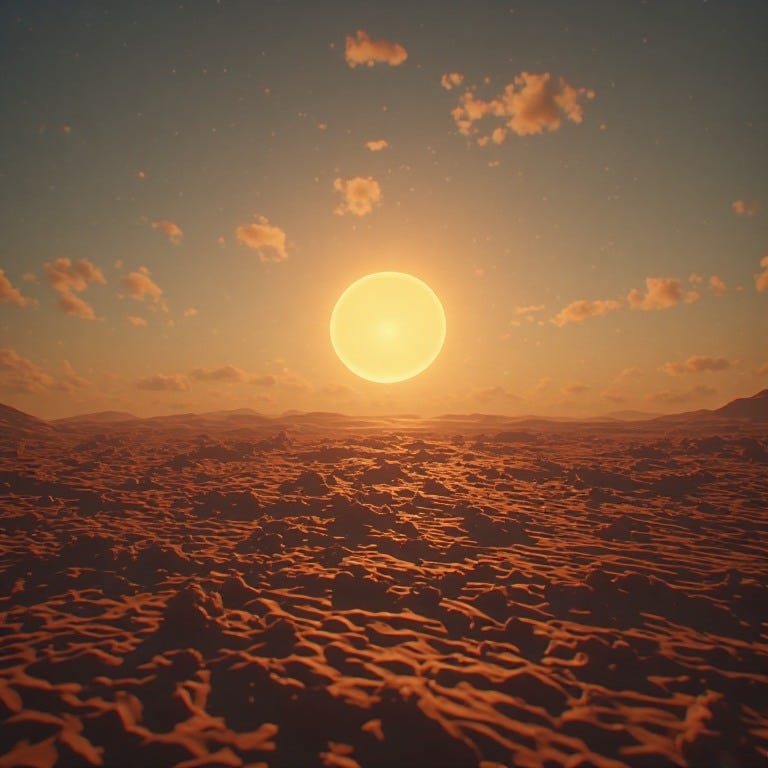
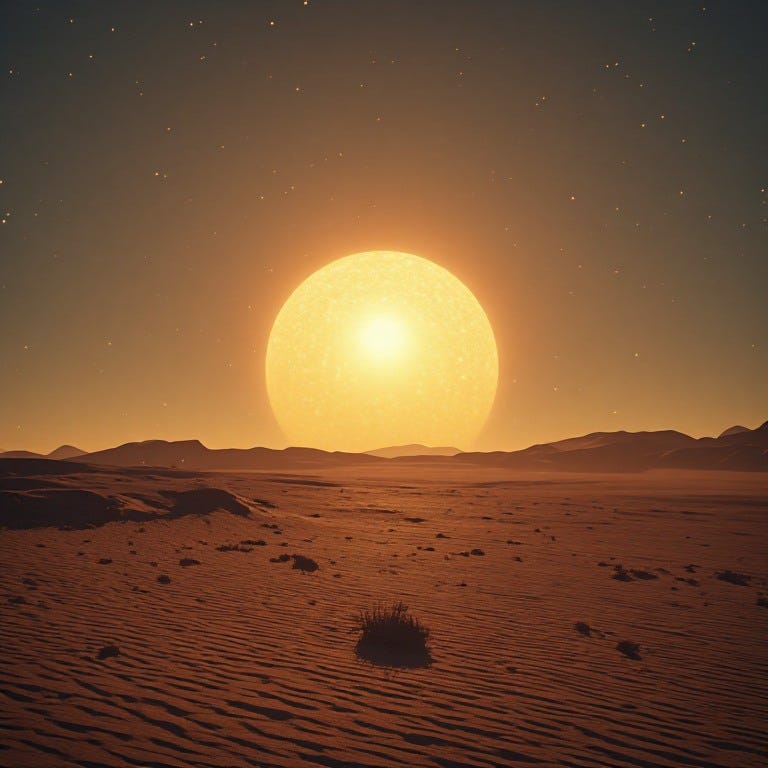
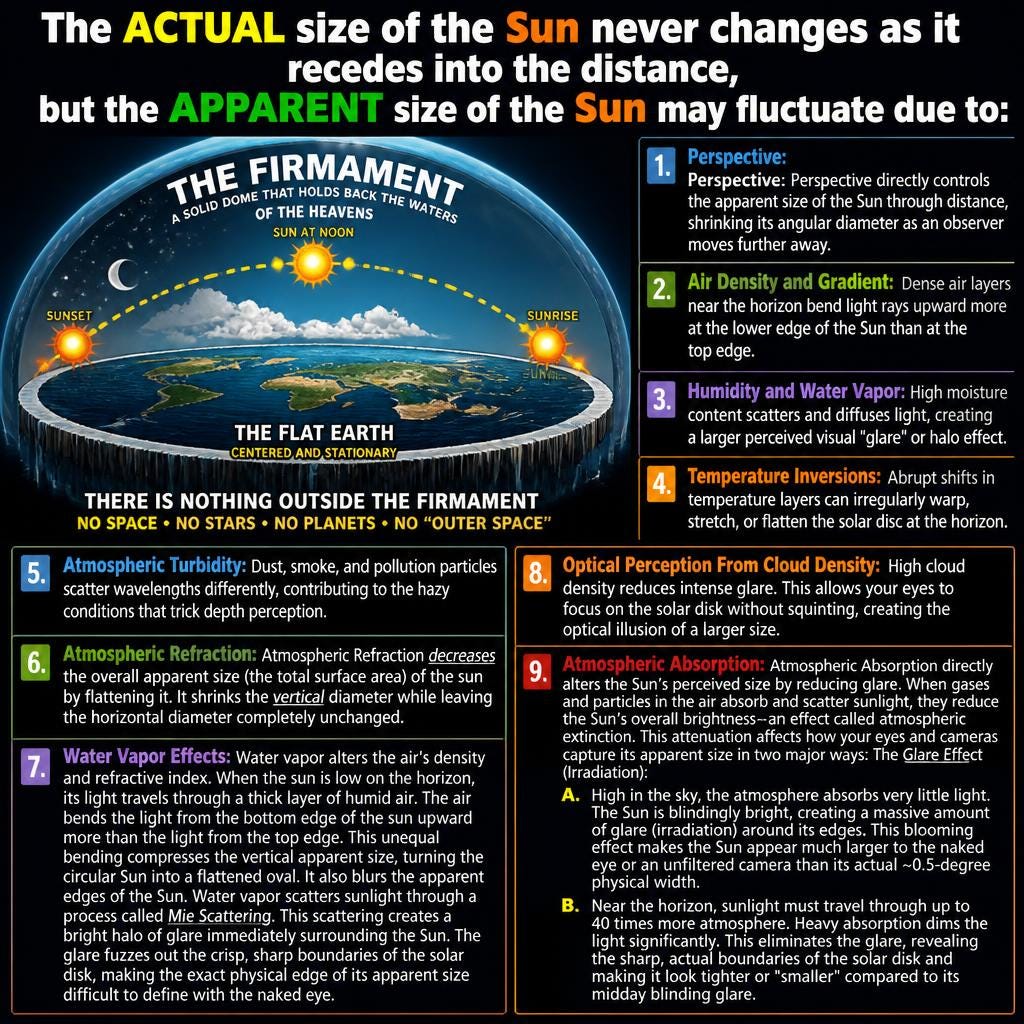
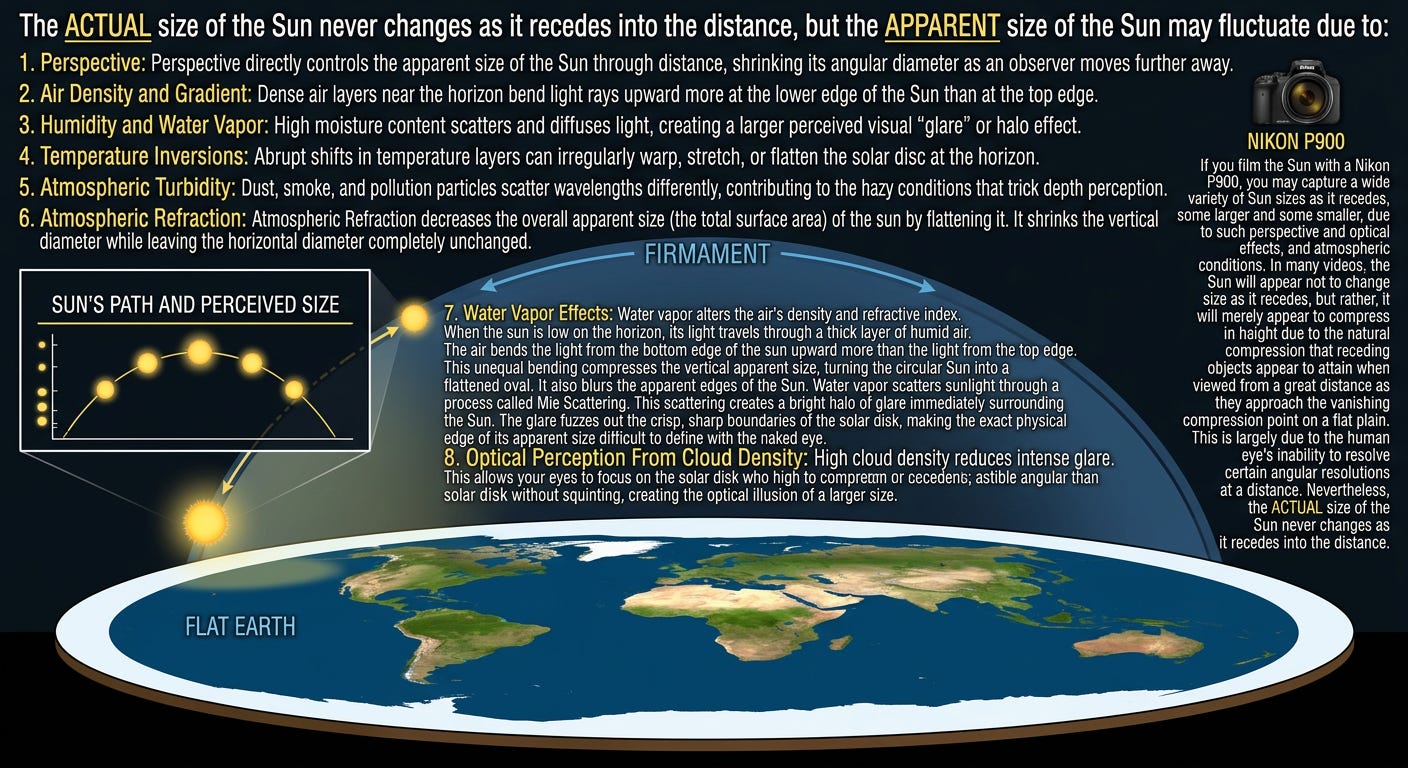
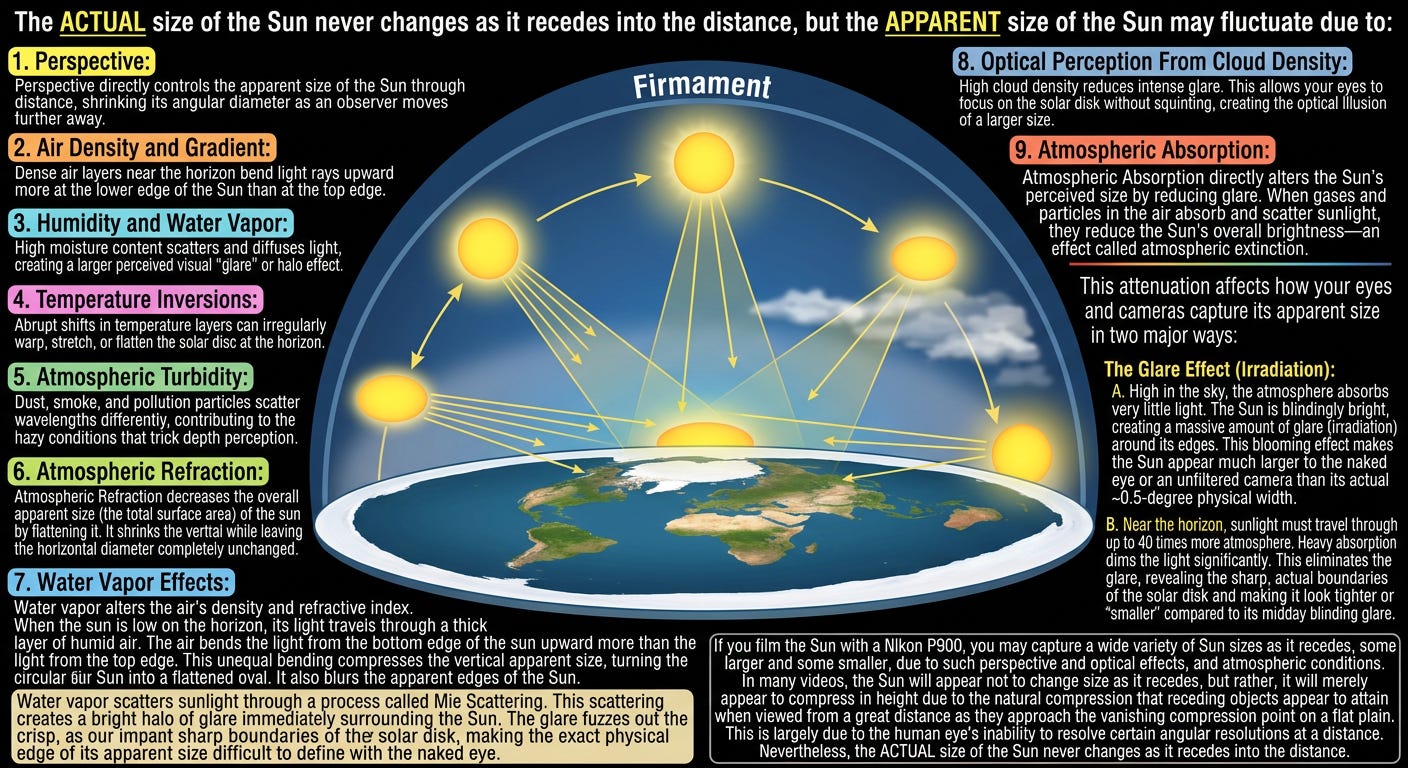
The ACTUAL size of the Sun never changes as it recedes into the distance, but the APPARENT size of the Sun may fluctuate due to:
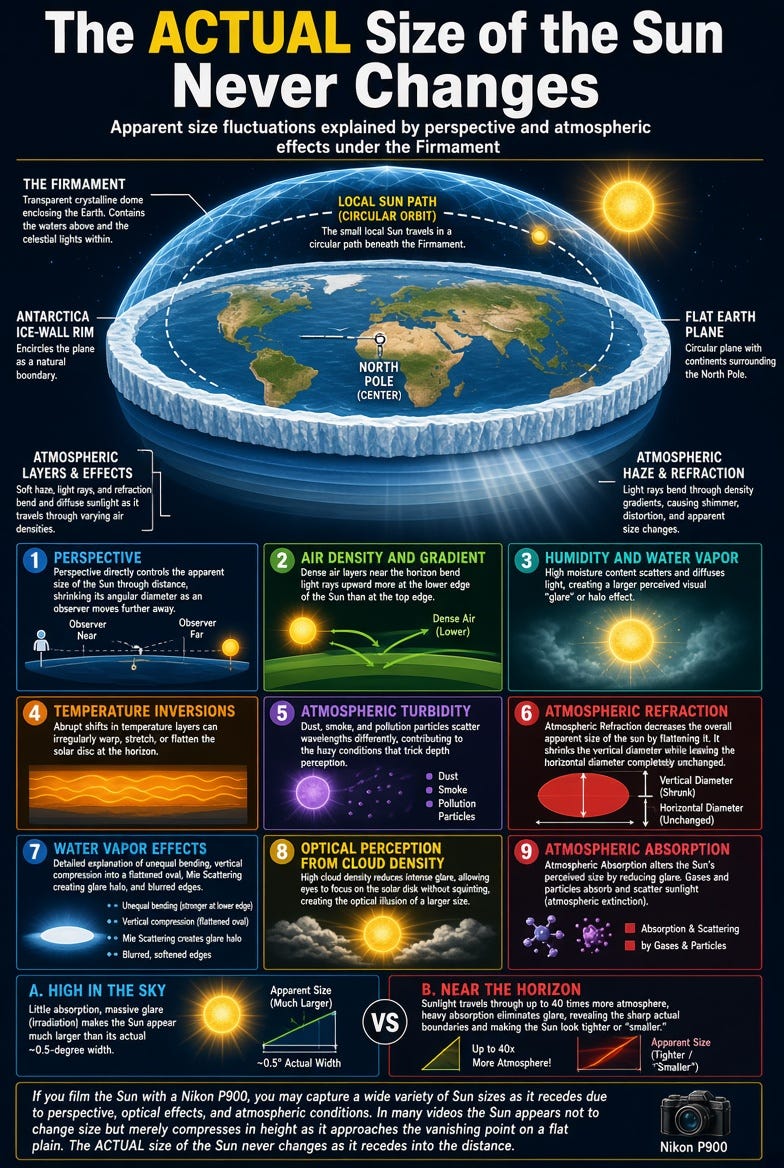
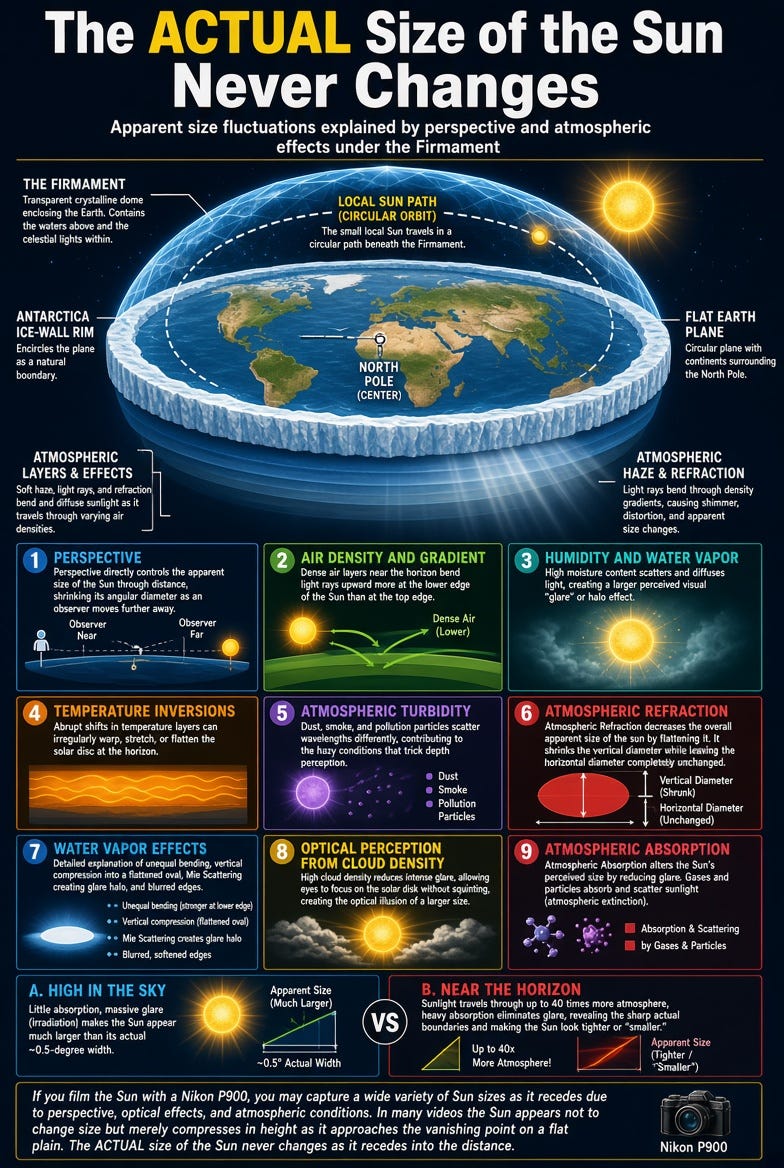
1. Perspective: Perspective directly controls the apparent size of the Sun through distance, shrinking its angular diameter as an observer moves further away.
2. Air Density and Gradient: Dense air layers near the horizon bend light rays upward more at the lower edge of the Sun than at the top edge.
3. Humidity and Water Vapor: High moisture content scatters and diffuses light, creating a larger perceived visual “glare” or halo effect.
4. Temperature Inversions: Abrupt shifts in temperature layers can irregularly warp, stretch, or flatten the solar disc at the horizon.
5. Atmospheric Turbidity: Dust, smoke, and pollution particles scatter wavelengths differently, contributing to the hazy conditions that trick depth perception.
6. Atmospheric Refraction: Atmospheric Refraction decreases the overall apparent size (the total surface area) of the sun by flattening it. It shrinks the vertical diameter while leaving the horizontal diameter completely unchanged.
7. Water Vapor Effects: Water vapor alters the air’s density and refractive index. When the sun is low on the horizon, its light travels through a thick layer of humid air. The air bends the light from the bottom edge of the sun upward more than the light from the top edge. This unequal bending compresses the vertical apparent size, turning the circular Sun into a flattened oval. It also blurs the apparent edges of the Sun. Water vapor scatters sunlight through a process called Mie Scattering. This scattering creates a bright halo of glare immediately surrounding the Sun. The glare fuzzes out the crisp, sharp boundaries of the solar disk, making the exact physical edge of its apparent size difficult to define with the naked eye.
8. Optical Perception From Cloud Density: High cloud density reduces intense glare. This allows your eyes to focus on the solar disk without squinting, creating the optical illusion of a larger size.
9. Atmospheric Absorption: Atmospheric Absorption directly alters the Sun’s perceived size by reducing glare. When gases and particles in the air absorb and scatter sunlight, they reduce the Sun’s overall brightness—an effect called Atmospheric Extinction.
This attenuation affects how your eyes and cameras capture its apparent size in two major ways:
The Glare Effect (Irradiation):
A. High in the sky, the atmosphere absorbs very little light. The Sun is blindingly bright, creating a massive amount of glare (irradiation) around its edges. This blooming effect makes the Sun appear much larger to the naked eye or an unfiltered camera than its actual ~0.5-degree physical width.
B. Near the horizon, sunlight must travel through up to 40 times more atmosphere. Heavy absorption dims the light significantly. This eliminates the glare, revealing the sharp, actual boundaries of the solar disk and making it look tighter or “smaller” compared to its midday blinding glare.

HOW DOES THE SUN SET ON FLAT EARTH?:

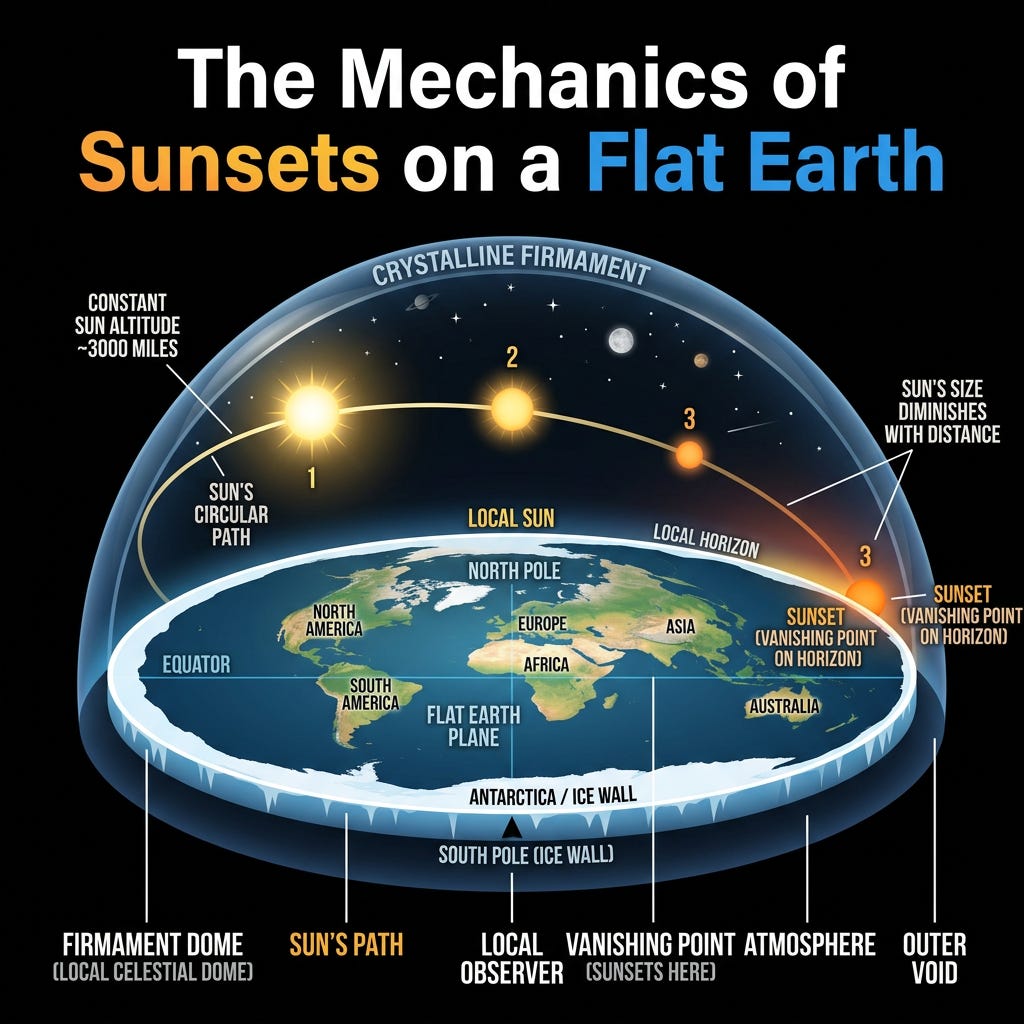
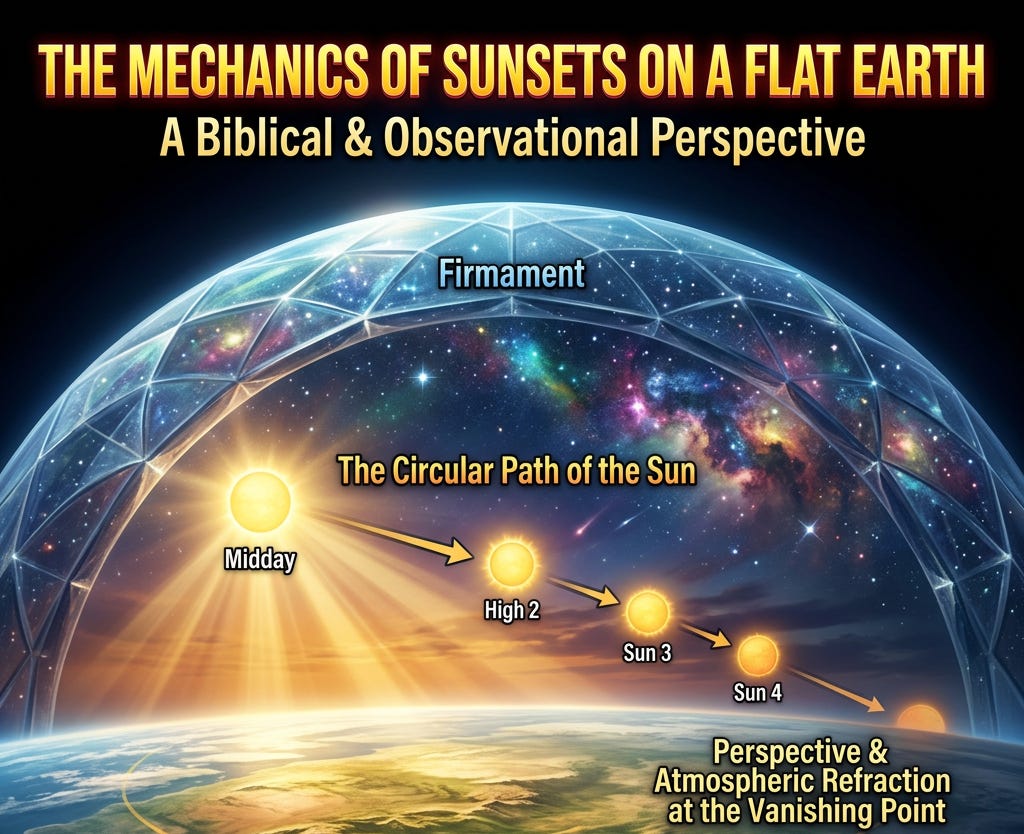
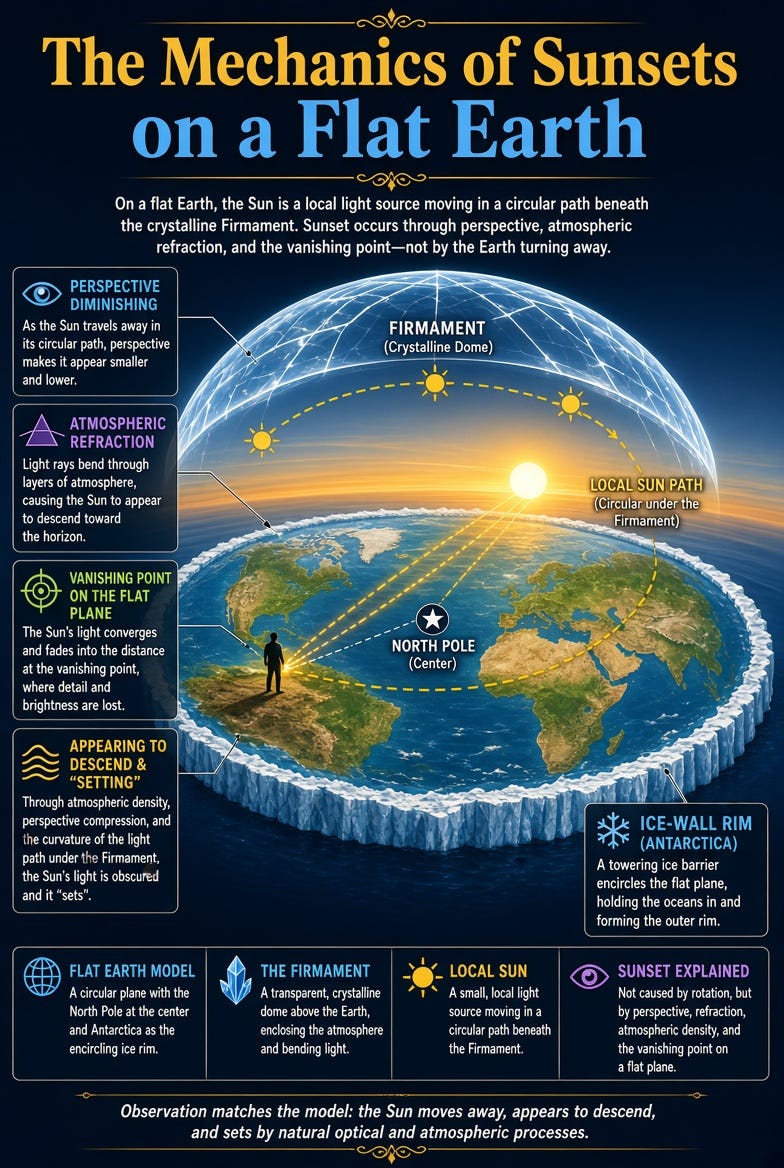
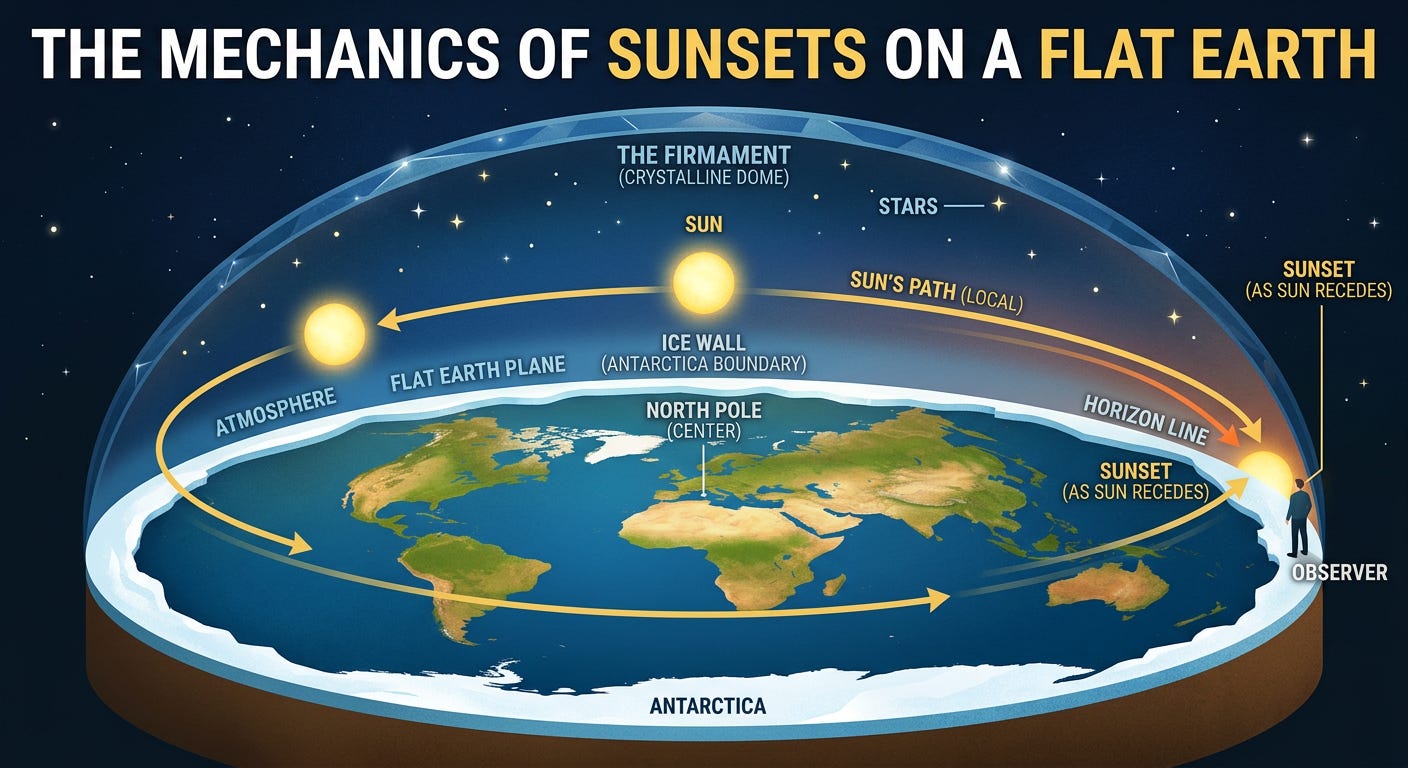
In Earth Not a Globe, the events of Sunrise and Sunset are attributed to a perspective effect. Although a geometrical assessment may suggest that the sun could never set, Rowbotham suggests that the behavior of perspective should be based on how we experience it rather than inferences. We do not have an object like the Sun to compare long-distance perspective to, and so we must submit to the possibility that it could be disappearing to perspective at that scale.
According to Rowbotham, the action of descent into the horizon is a phenomenon which arises from the operation of a simple and everywhere visible law of perspective. A flock of birds, when passing over a flat or marshy country, always appears to descend as it recedes; and if the flock is extensive, the first bird appears lower or nearer to the horizon than the last, although they are at the same actual altitude above the earth immediately beneath them.
Perspective and The Horizon on a Flat Plane: Perspective is Non-Euclidean.
The Sun’s Path Proves There is No Spinning Ball:
Astronomical Violations of Perspective:
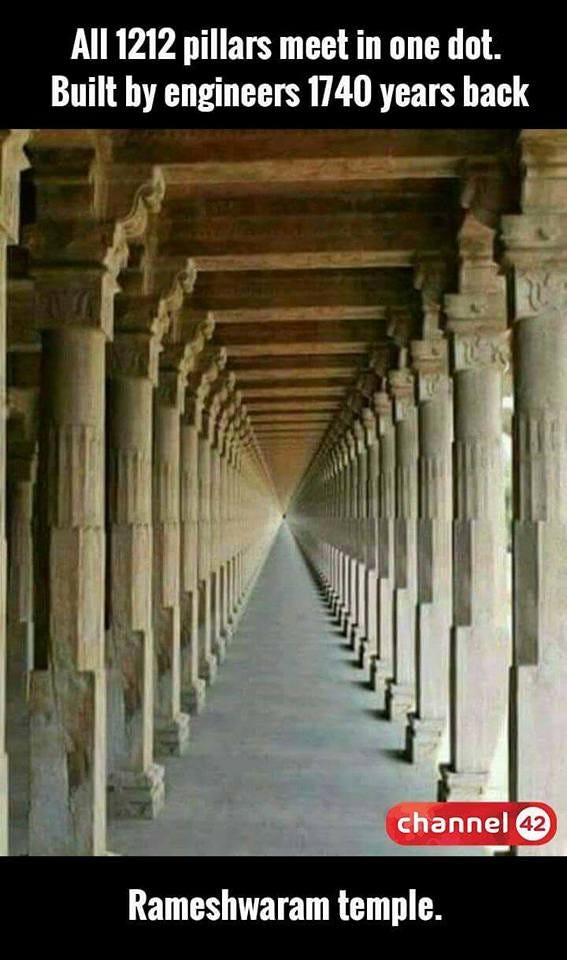
When a plane flies away from an observer, without increasing or decreasing its altitude, it appears to gradually approach the horizon. In a long row of lamps, the second, supposing the observer to stand at the beginning of the series, will appear lower than the first; the third lower than the second; and so on to the end of the row; the farthest away always appearing the lowest, although each one has the same altitude; and if such a straight line of lamps could be continued far enough, the lights would at length descend, apparently, to the horizon, or to a level with the eye of the observer. This explains how the sun descends into the horizon as it recedes.
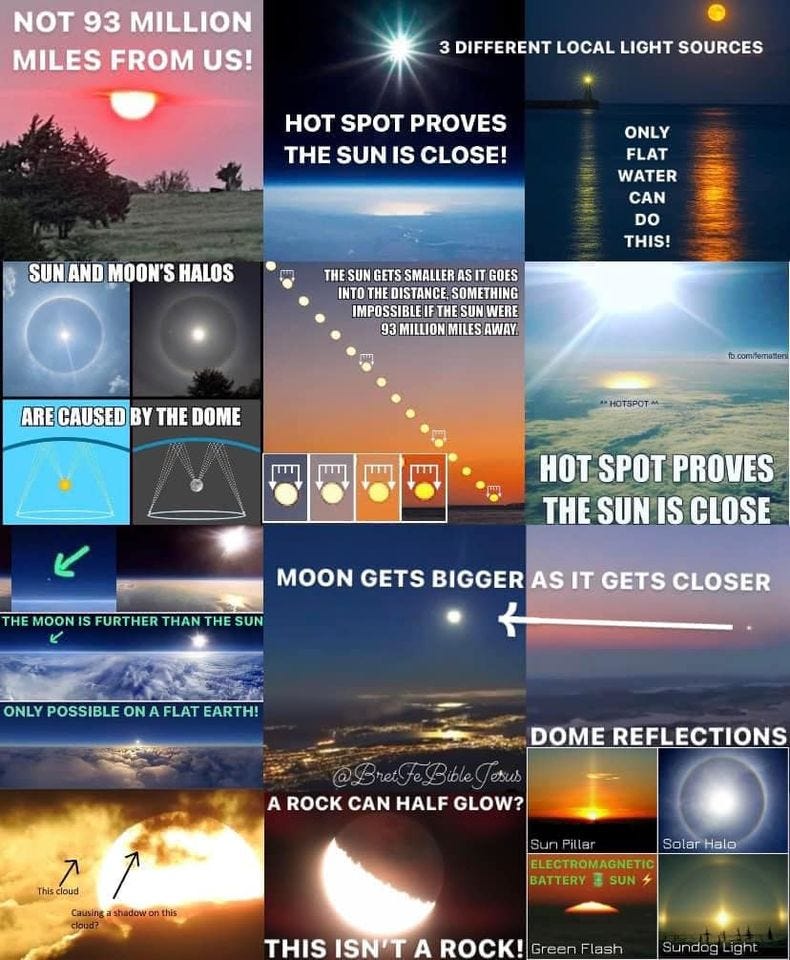
Nevertheless, time-lapse photography of the Sun getting bigger as it approaches and smaller as it recedes from the observer shows that the Sun actually does change in APPARENT size, under certain atmospheric conditions as it travels.
Flat Earth, 2019 HD Time Lapse Shrinking Sunset Compilation:
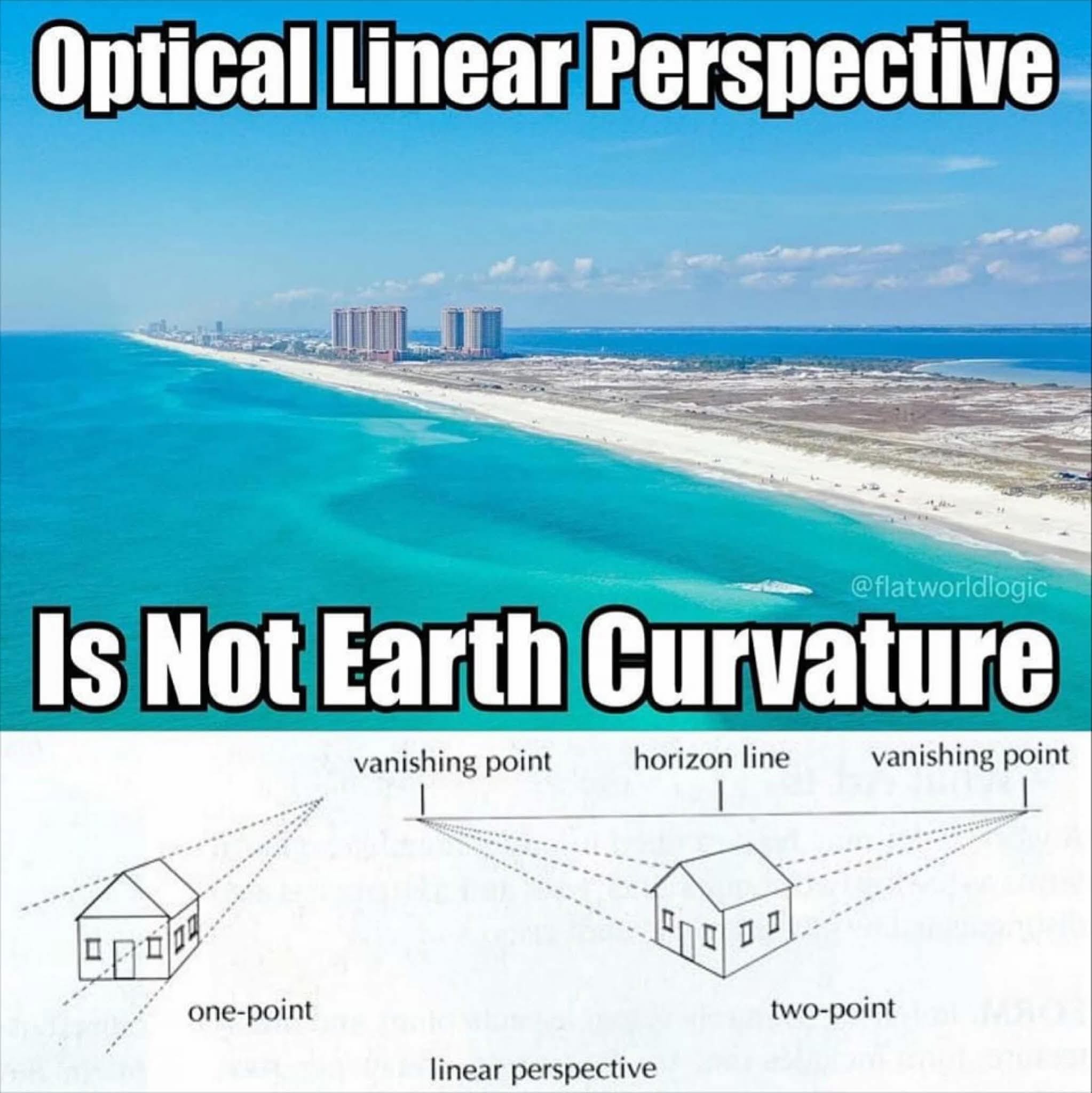
The Sun Sets Just Fine On A Flat Earth - The Maths Are Wrong Perspective:
Once the lower part of the Sun meets the horizon line, however, it will intersect with the vanishing point and become lost to human perception as the sun’s increasingly shallow path creates a tangent beyond the resolution of the human eye. The vanishing point is created when the perspective lines are angled less than one minute of a degree. Hence, this effectively places the vanishing point a finite distance away from the observer.
Usually, it is taught in art schools that the vanishing point is an infinite distance away from the observer. However, since man cannot perceive infinity due to human limitations, the perspective lines are modified and placed a finite distance away from the observer; thus, this finite distance to the vanishing point is what allows ships to ascend into the horizon and disappear as their hulls intersect with the vanishing point. Every receding star and celestial body in the night sky likewise disappears after intersecting with the vanishing point.
In addition to this modified law of perspective, the remaining light of the sun bouncing around in the atmosphere will be lost by the non-transparent atmosphere. After the sun sets, the sky is still relatively illuminated. It takes a couple of hours for the deep blackness of the night to set in. The cause of night is simply due to a non-transparent atmosphere. As the sun recedes, its light is dimmed and lost to the increasing number of atoms and molecules which intersect the light rays.
Take note that at sunset the sun is already dimmed by an order of magnitude compared to its intensity overhead at noonday. At sunset it is possible to look directly at the sun without a straining of the eye, while overhead at noon looking directly at the sun can be quite painful. This severe reduction of intensity at sunset is a striking example of how the atmosphere can reduce the intensity of an object with distance.
Summary:
As the sun descends, it will create a tangent into the horizon. The perspective lines nearly merge, causing the receding body to appear to intersect the horizon from the bottom up. Next, the light of the receding sun is dimmed to blackness by a non-transparent atmosphere.
“At these times it appears close to the horizon where the density of the air differs greatly. The air near the ground is denser than the layer of air just above it, and the layer of air above that is less dense still, and so on upwards until the Earth’s atmosphere peters out at some 400 km. Now consider what happens when the Sun is setting. When the Sun is at the horizon, light from the top of the disc is going through the air at a different angle than that from the lower part. So the rays are bent by different amounts before they reach the observer’s eye. The result is that the bottom part of the Sun’s disc appears to be lifted up. In consequence, the Sun’s disc appears slightly compressed. ” —Samuel Birley Rowbotham
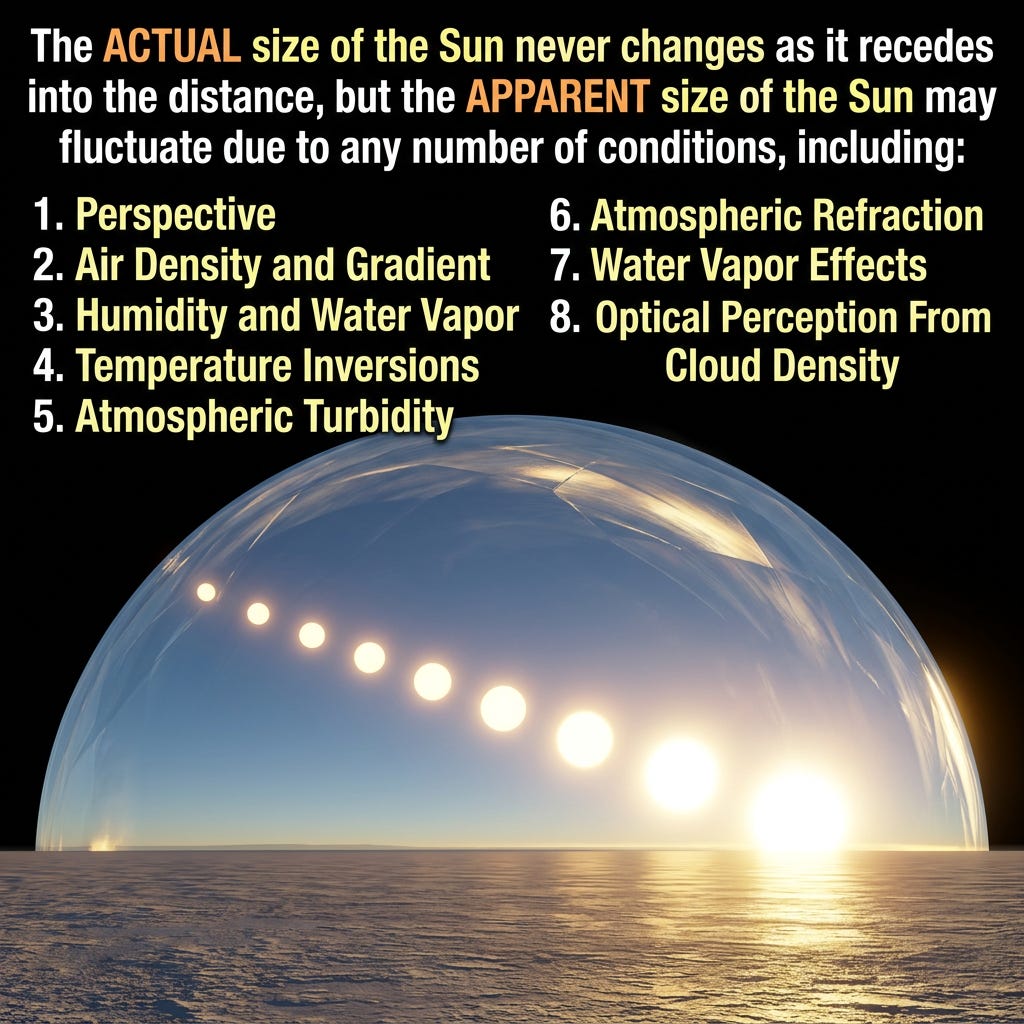
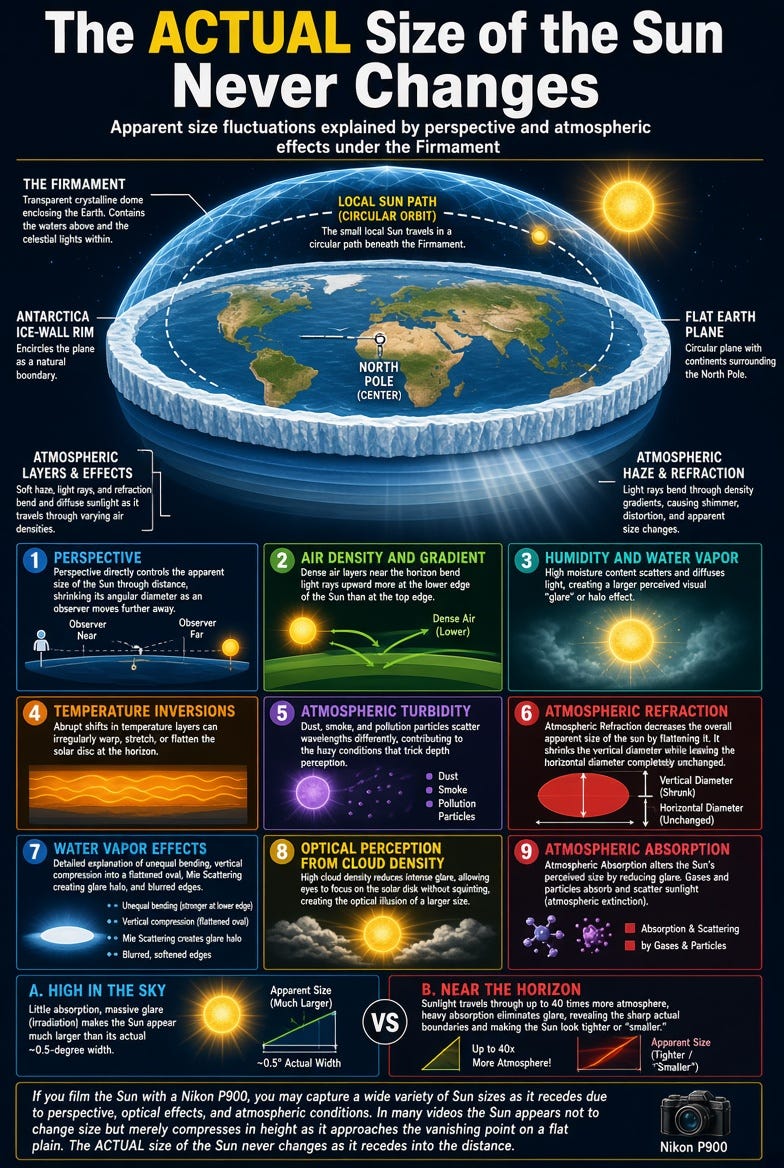
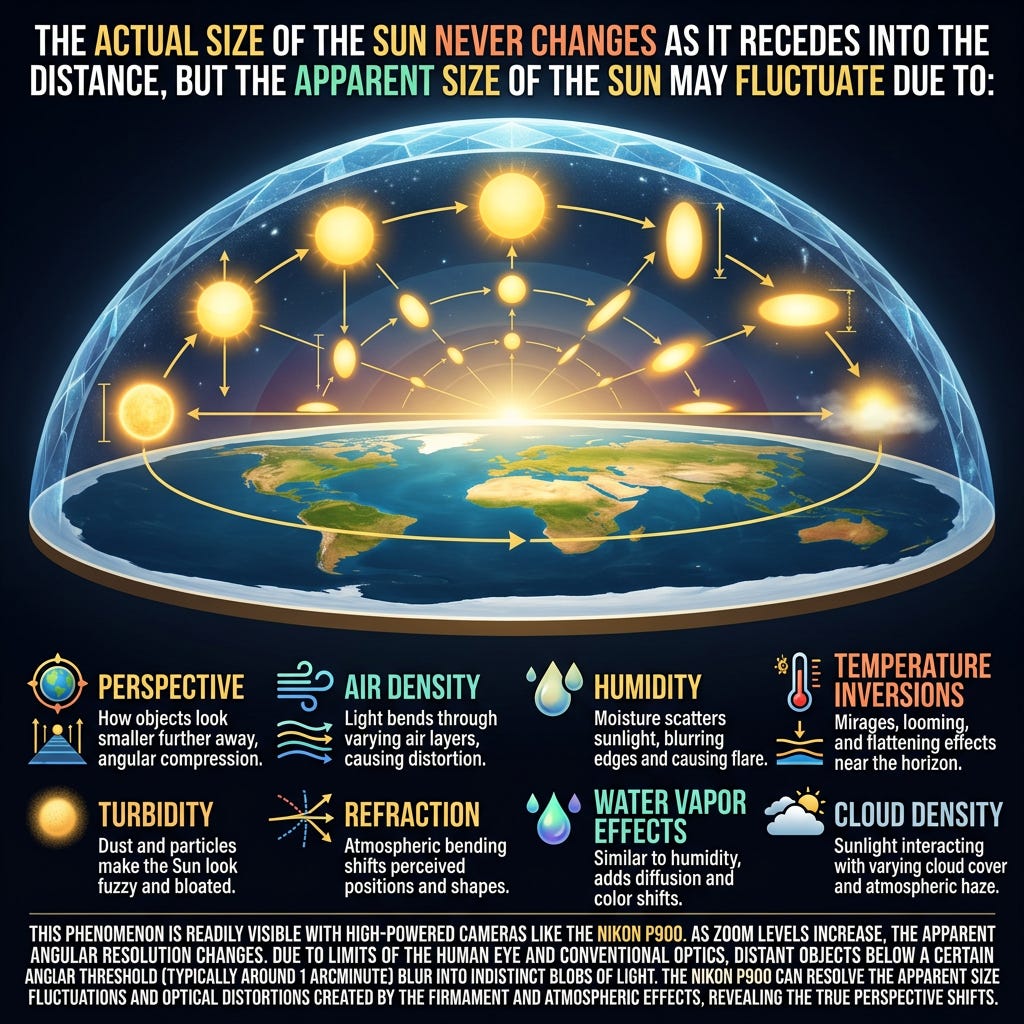
The ACTUAL size of the Sun never changes as it recedes into the distance, but the APPARENT size of the Sun may fluctuate due to:
1. Perspective: Perspective directly controls the apparent size of the Sun through distance, shrinking its angular diameter as an observer moves further away.
2. Air Density and Gradient: Dense air layers near the horizon bend light rays upward more at the lower edge of the Sun than at the top edge.
3. Humidity and Water Vapor: High moisture content scatters and diffuses light, creating a larger perceived visual “glare” or halo effect.
4. Temperature Inversions: Abrupt shifts in temperature layers can irregularly warp, stretch, or flatten the solar disc at the horizon.
5. Atmospheric Turbidity: Dust, smoke, and pollution particles scatter wavelengths differently, contributing to the hazy conditions that trick depth perception.
6. Atmospheric Refraction: Atmospheric Refraction decreases the overall apparent size (the total surface area) of the sun by flattening it. It shrinks the vertical diameter while leaving the horizontal diameter completely unchanged.
7. Water Vapor Effects: Water vapor alters the air’s density and refractive index. When the sun is low on the horizon, its light travels through a thick layer of humid air. The air bends the light from the bottom edge of the sun upward more than the light from the top edge. This unequal bending compresses the vertical apparent size, turning the circular Sun into a flattened oval. It also blurs the apparent edges of the Sun. Water vapor scatters sunlight through a process called Mie Scattering. This scattering creates a bright halo of glare immediately surrounding the Sun. The glare fuzzes out the crisp, sharp boundaries of the solar disk, making the exact physical edge of its apparent size difficult to define with the naked eye.
8. Optical Perception From Cloud Density: High cloud density reduces intense glare. This allows your eyes to focus on the solar disk without squinting, creating the optical illusion of a larger size.
9. Atmospheric Absorption: Atmospheric Absorption directly alters the Sun’s perceived size by reducing glare. When gases and particles in the air absorb and scatter sunlight, they reduce the Sun’s overall brightness—an effect called atmospheric extinction.
This attenuation affects how your eyes and cameras capture its apparent size in two major ways:
The Glare Effect (Irradiation):
A. High in the sky, the atmosphere absorbs very little light. The Sun is blindingly bright, creating a massive amount of glare (irradiation) around its edges. This blooming effect makes the Sun appear much larger to the naked eye or an unfiltered camera than its actual ~0.5-degree physical width.
B. Near the horizon, sunlight must travel through up to 40 times more atmosphere. Heavy absorption dims the light significantly. This eliminates the glare, revealing the sharp, actual boundaries of the solar disk and making it look tighter or “smaller” compared to its midday blinding glare.
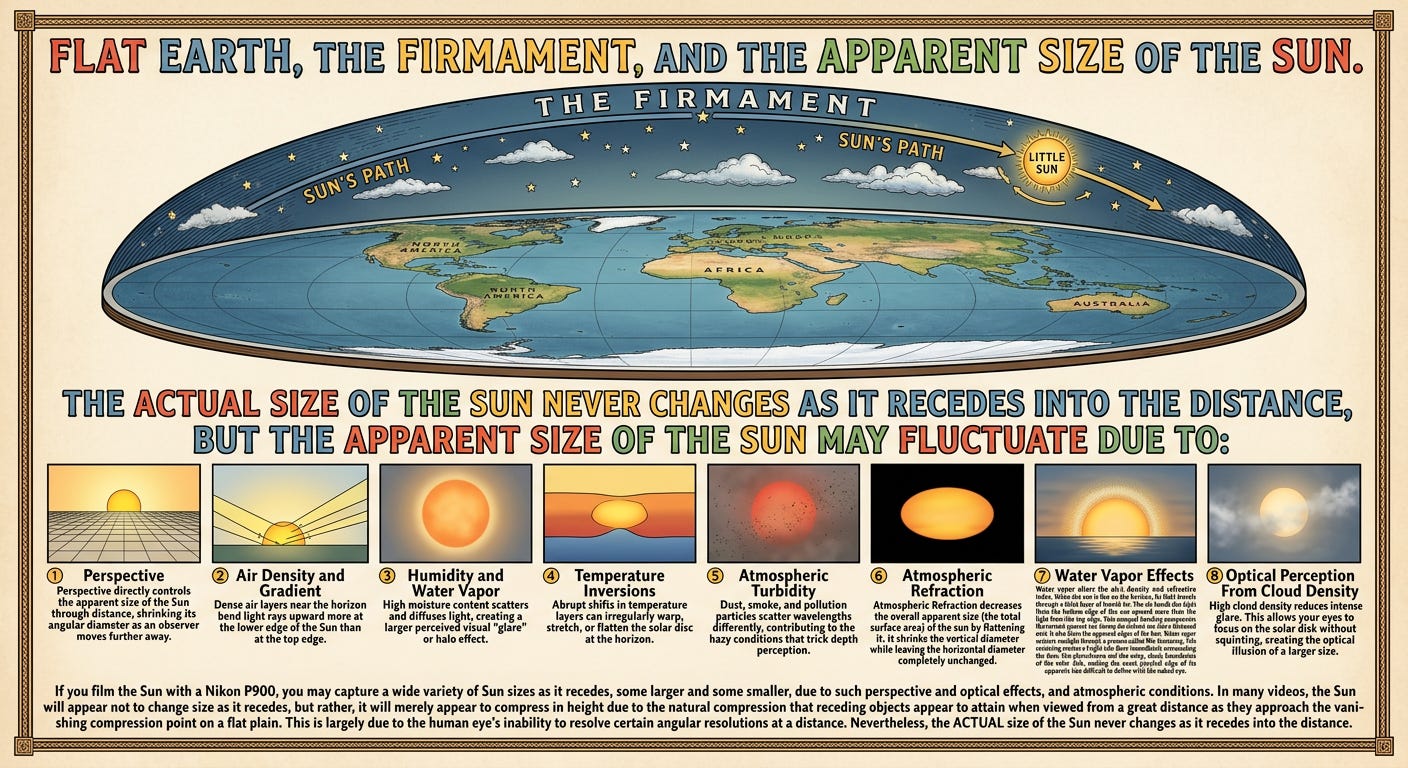
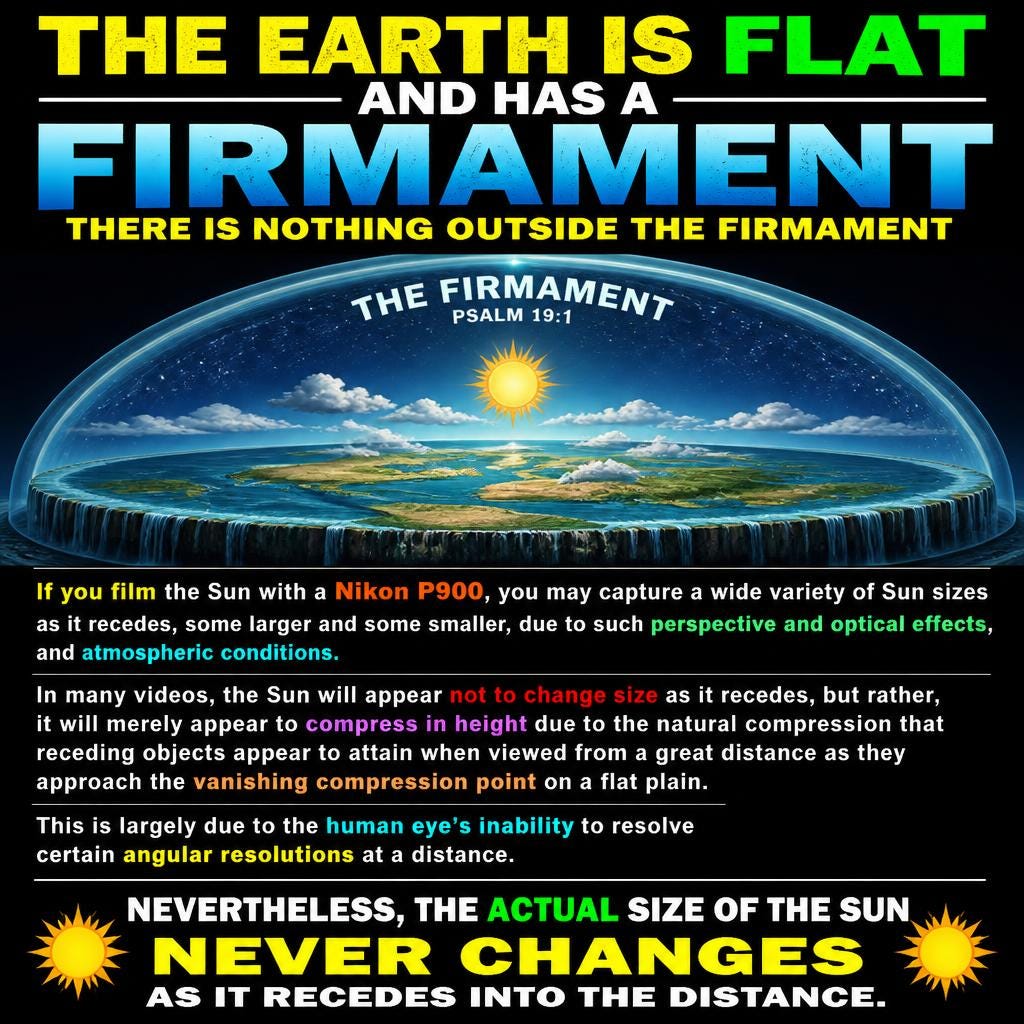
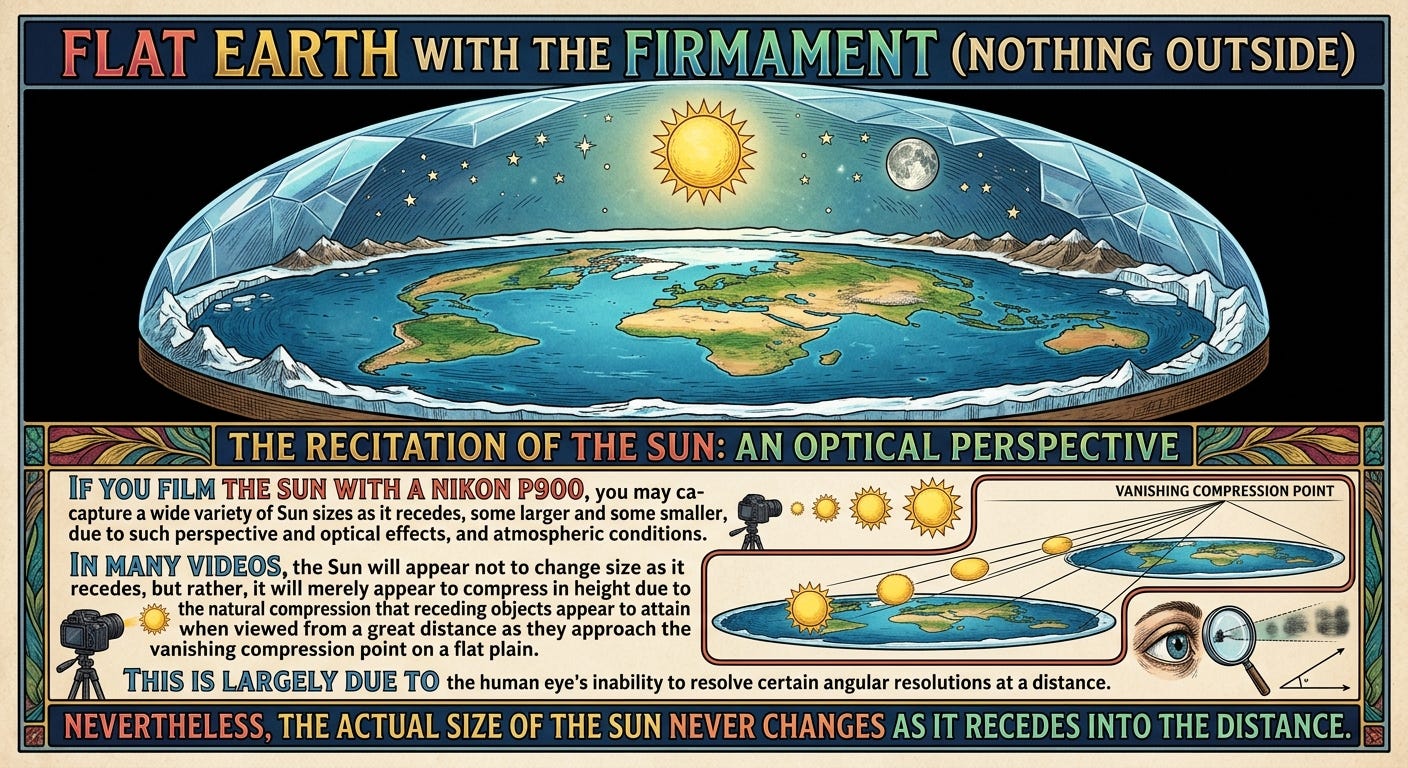
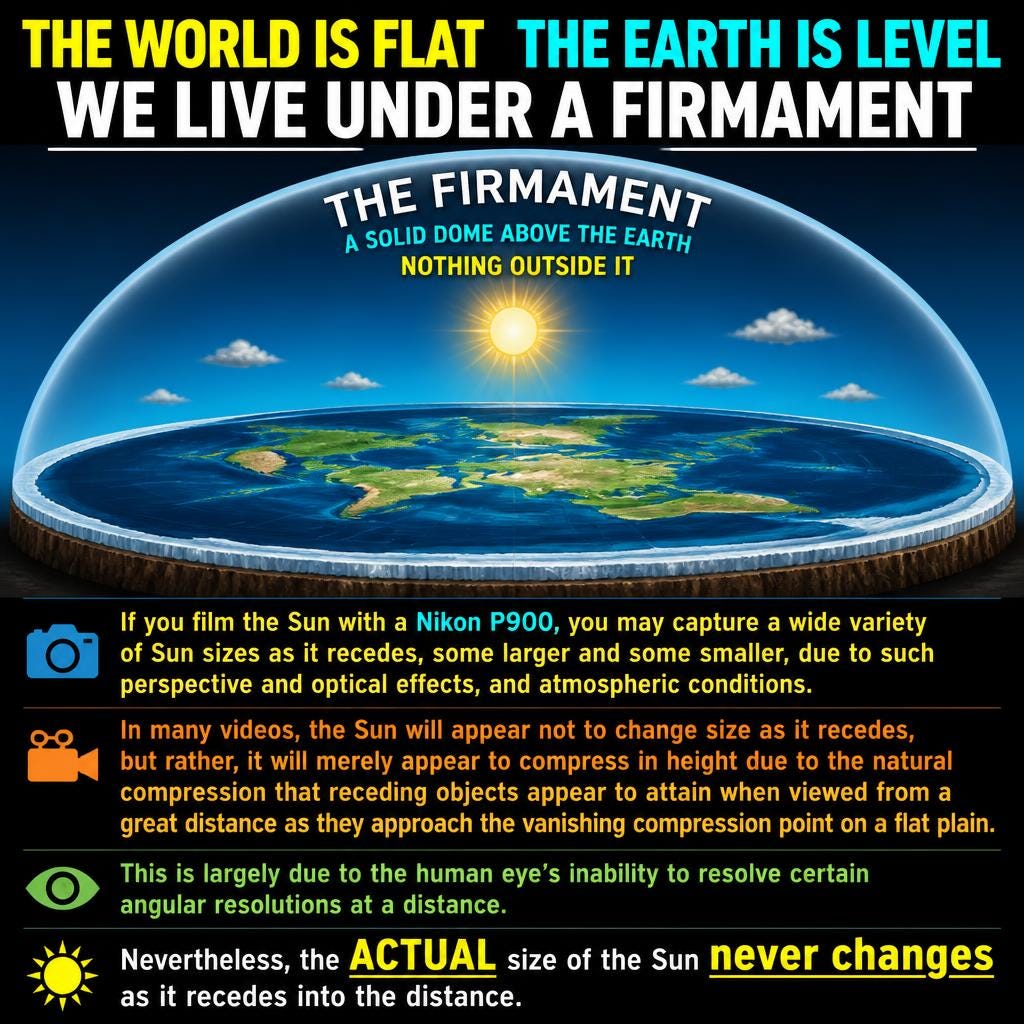
If you film the Sun with a Nikon P900, you may capture a wide variety of Sun sizes as it recedes, some larger and some smaller, due to such perspective and optical effects, and atmospheric conditions. In many videos, the Sun will appear not to change size as it recedes, but rather, it will merely appear to compress in height due to the natural compression that receding objects appear to attain when viewed from a great distance as they approach the vanishing compression point on a flat plain. This is largely due to the human eye’s inability to resolve certain angular resolutions at a distance. Nevertheless, the ACTUAL size of the Sun never changes as it recedes into the distance.
Comments
Nothing yet. Say the first thing.
Sign in to join the conversation.