
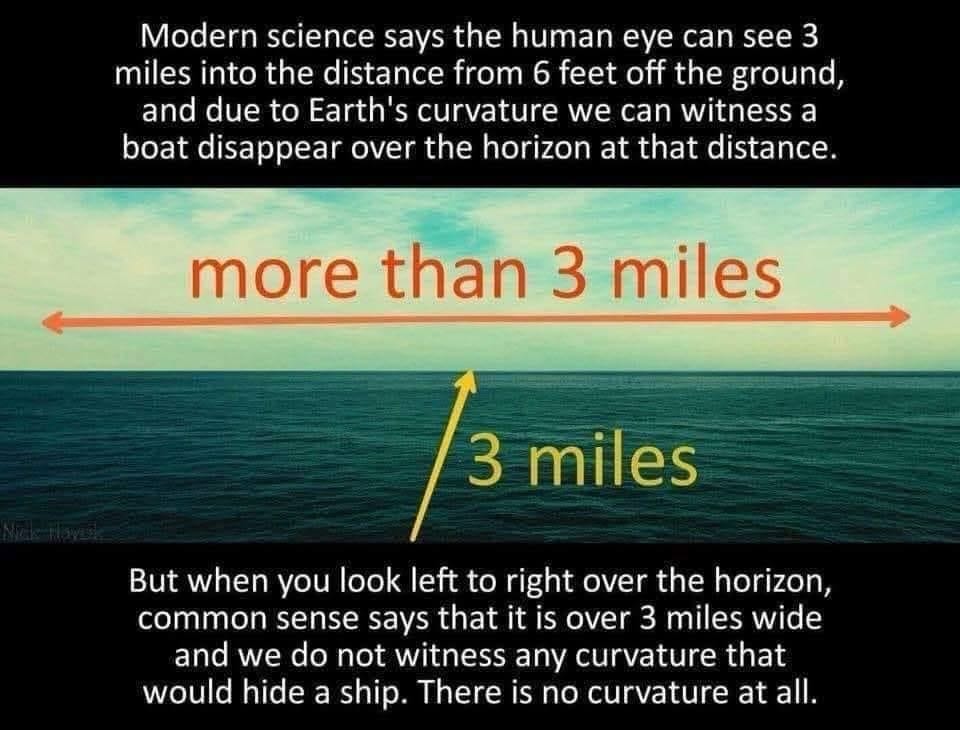
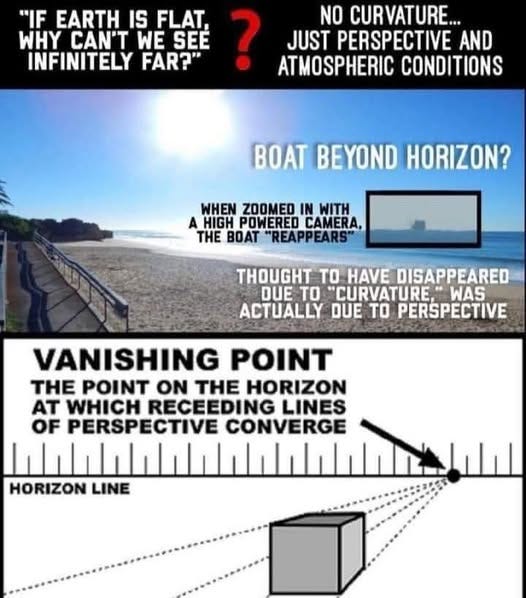
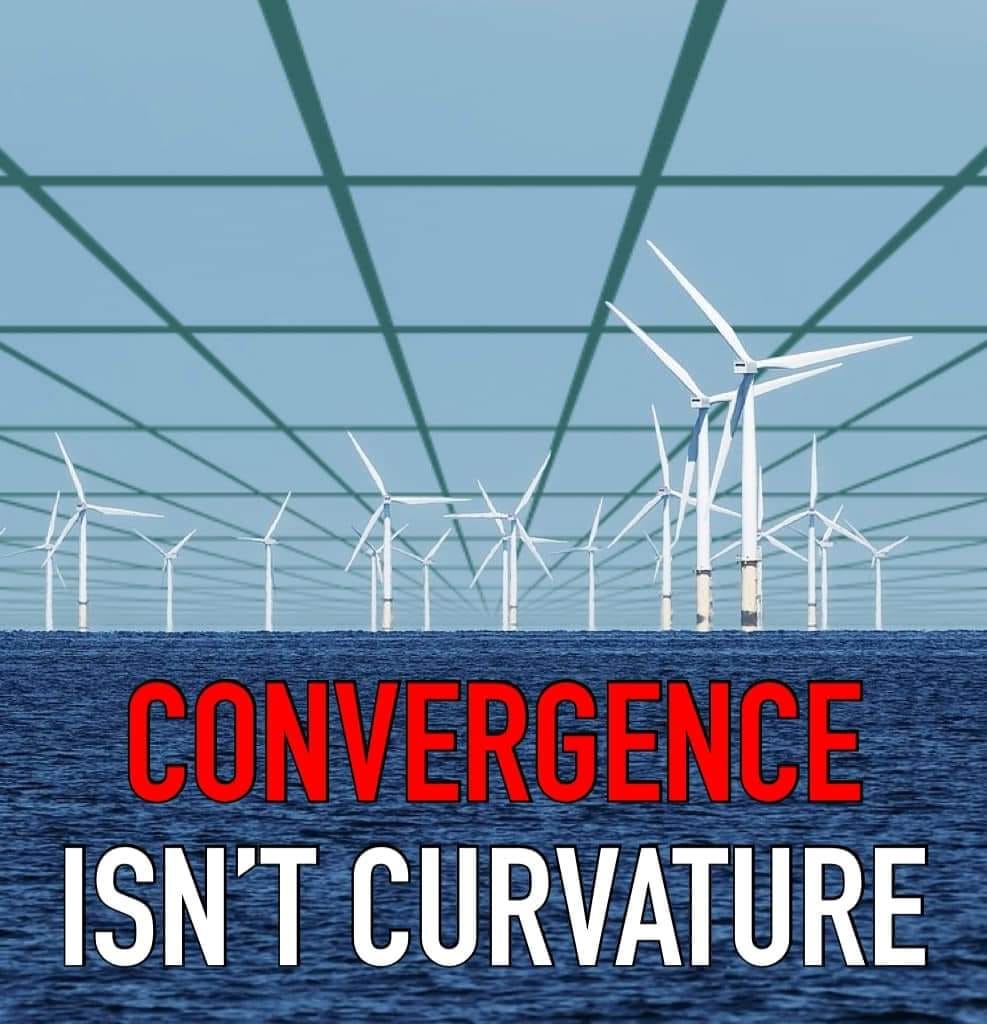
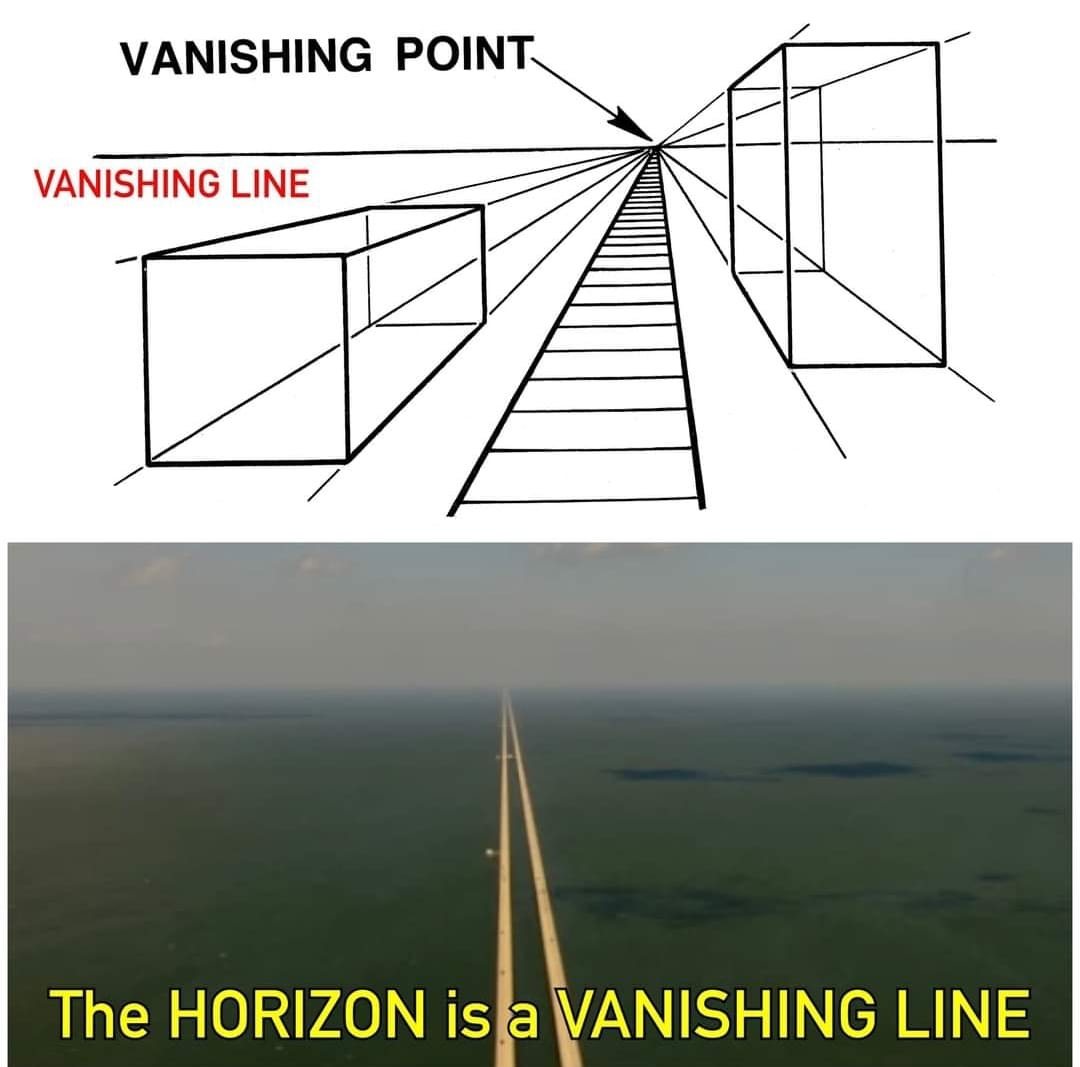
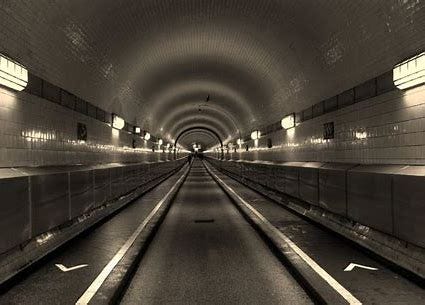
When you watch a ship or a building “disappear” in the distance, you aren’t looking at a curve. You are looking at the law of perspective. Just like a long hallway or railroad tracks, the ground and the sky meet at your eye-level horizon. Bring out a zoom lens, and the bottom comes right back into view.
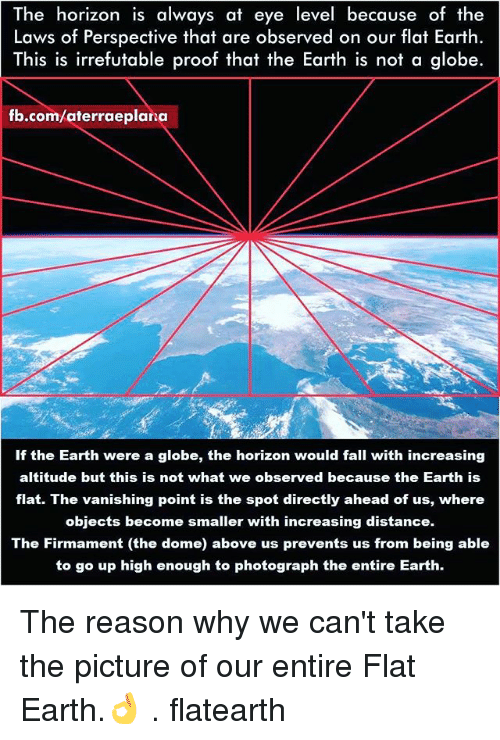
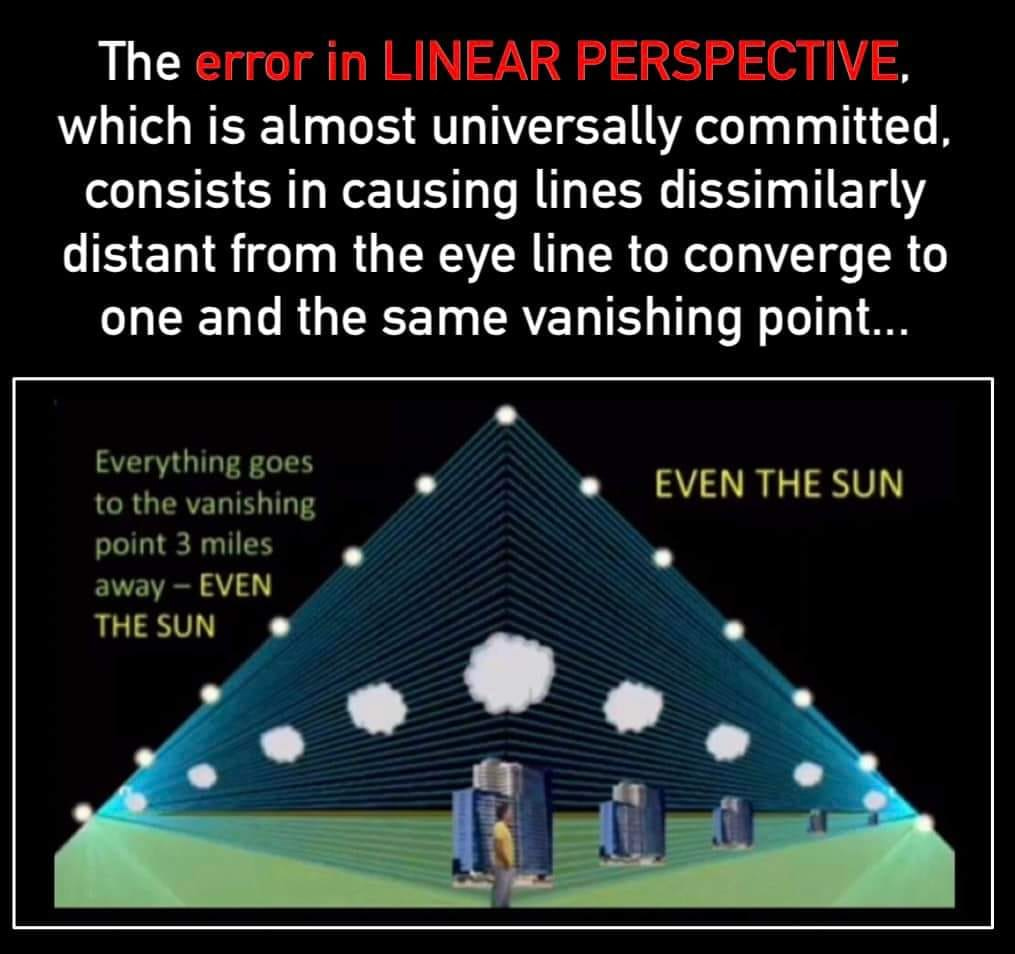
It’s all about perspective. Nobody denies it when they look down a long hallway or a long road. The same thing is happening with the ground and the sky...perspective creates a vanishing point. No matter how high you go, the horizon remains at eye level...because it is our horizon. The human eye can only see so far...that’s why our perspective converges into a vanishing point.
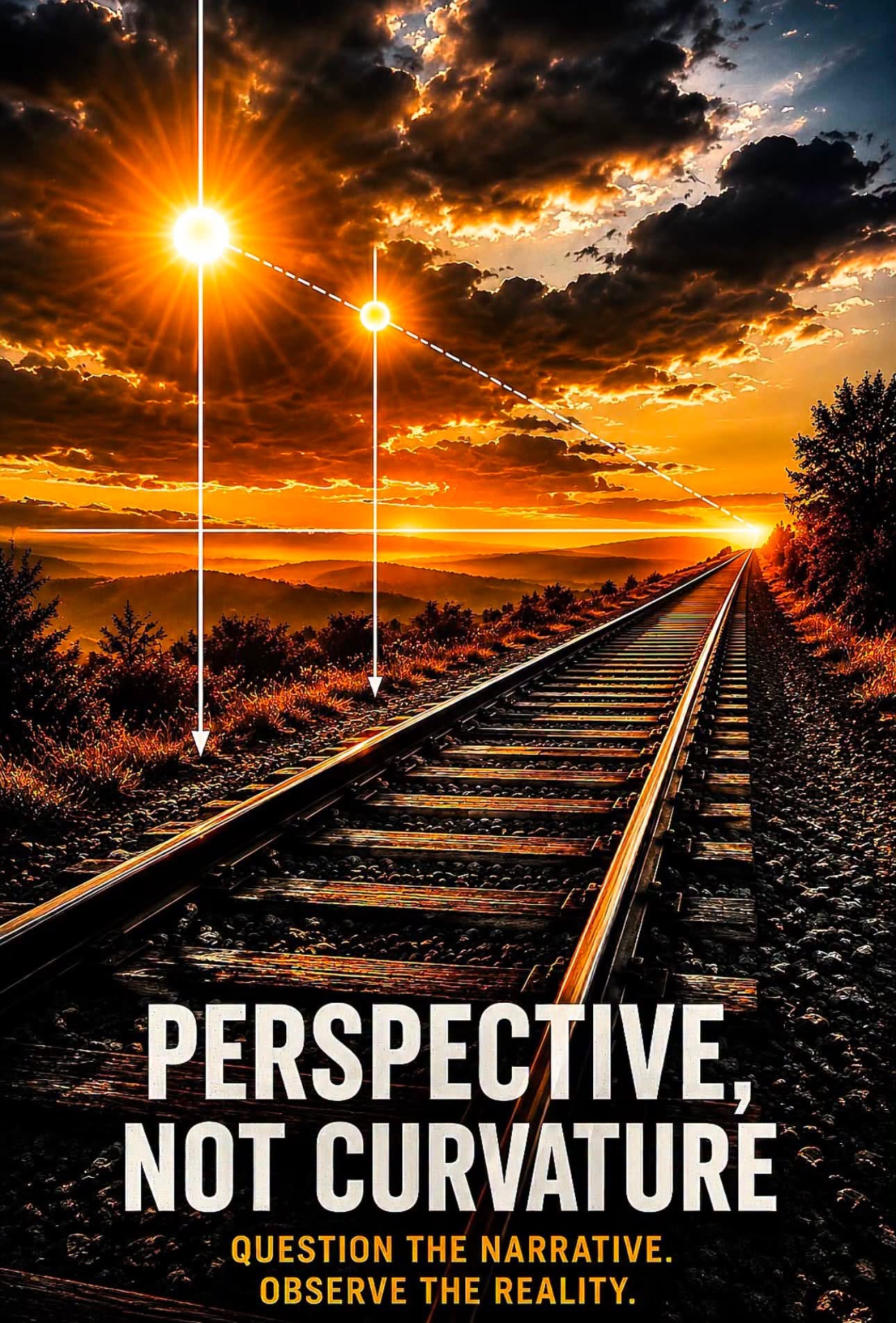
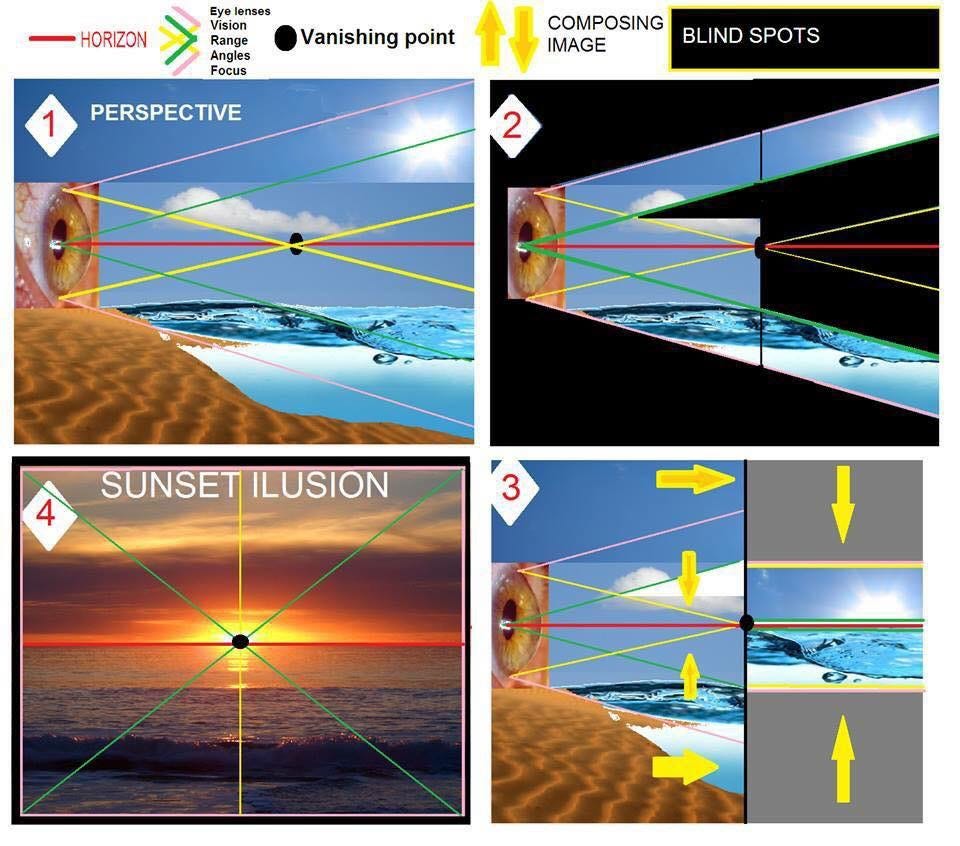
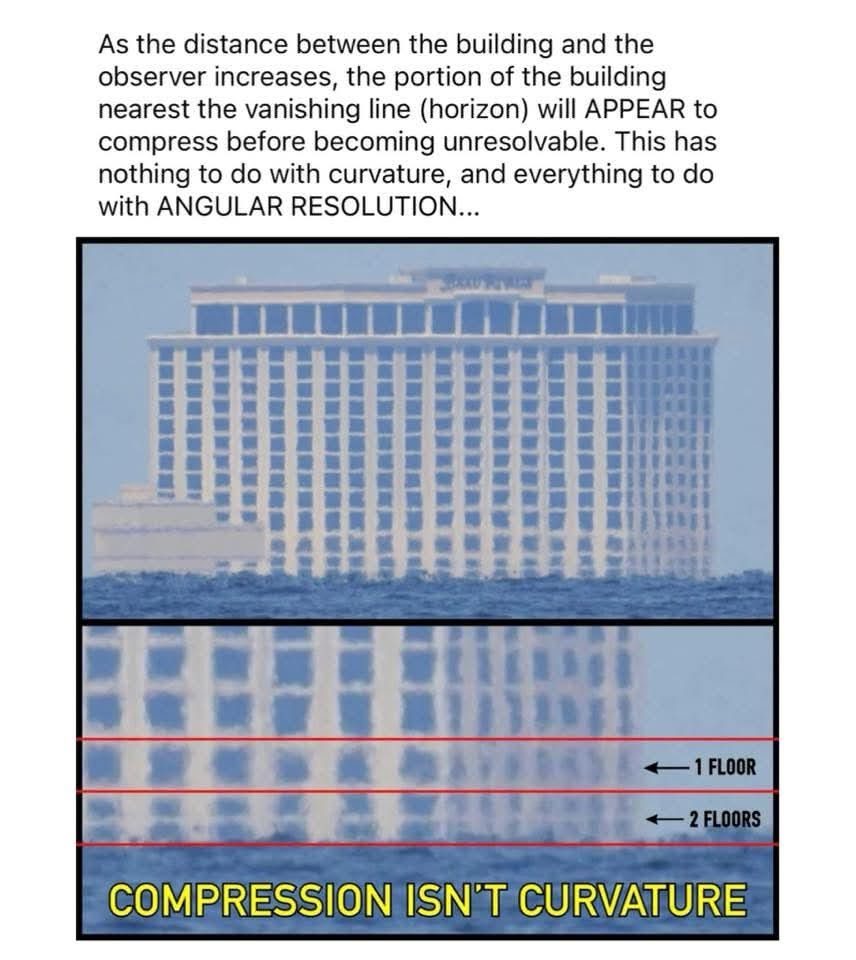
The horizon line, where the vanishing point is located, is a virtual line that corresponds to the height of your eyes. This means that the vanishing point for objects floating on the water is also at your eye level, whether you are standing on a boat, on the shore, or on a cliff. The vanishing point is the spot where parallel lines appear to converge and disappear. For example, the parallel edges of a boat’s wake extending far behind it will seem to meet at a single point on the horizon, and likewise, a ship’s angular resolution will become compressed, and all you will see is a wall of ocean water and the upper part of the ship. Eventually, you will just see a flat, compressed, unintelligible image of the ship, with a wall of ocean water in front of it the further the ship travels away from you. The higher your viewpoint, the farther the horizon, of course, while the vanishing point is always at eye level, and the actual distance to the geometric horizon depends on the observer’s height.
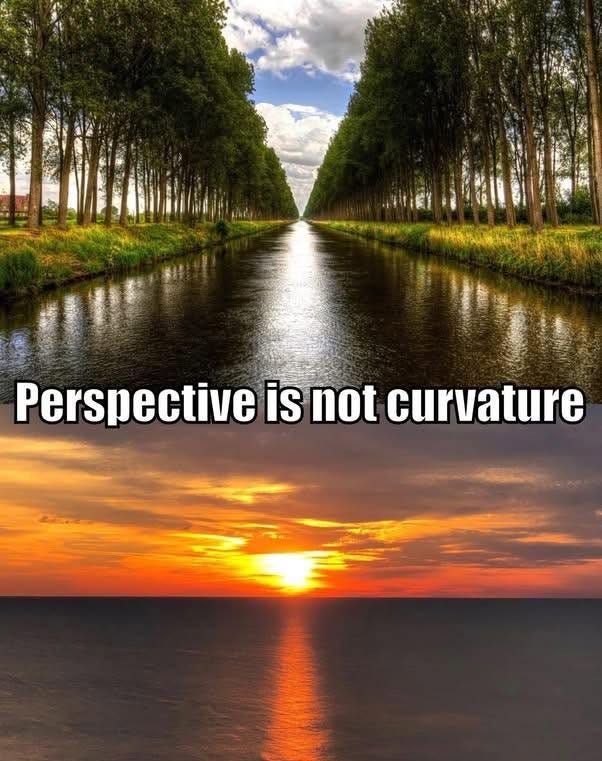
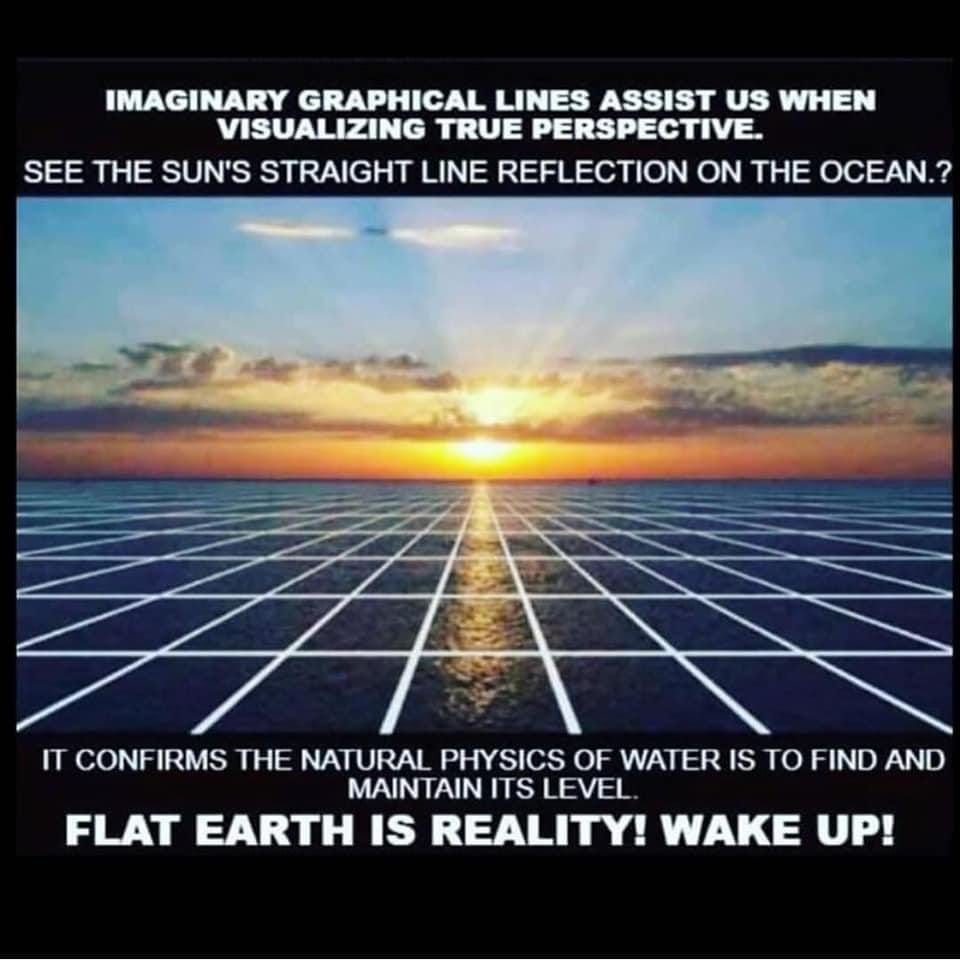
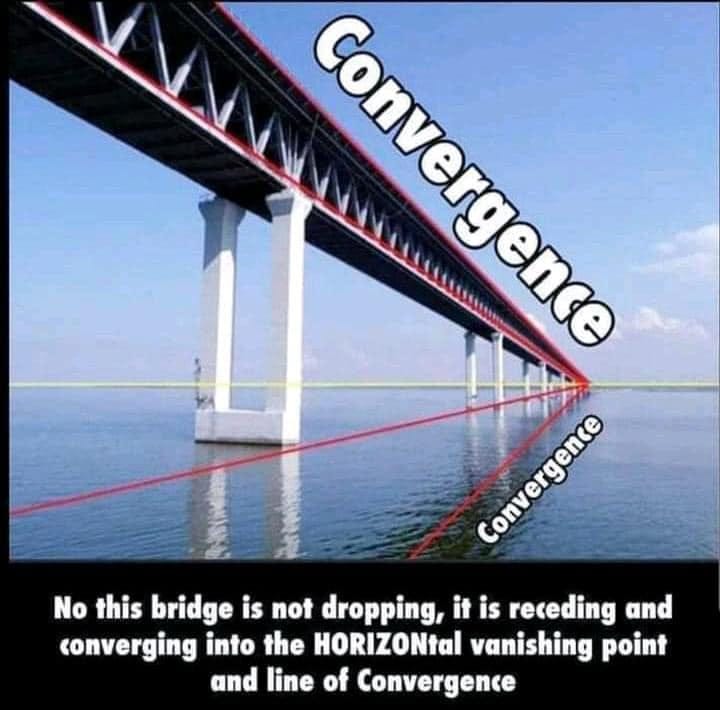
Perspective is something we can observe, whereas curvature is something we’re told should be there. We have to imagine it is there. When parallel lines, as in railroad tracks, meet at a vanishing point, nobody calls it curvature. We call it perspective. So when distant objects appear to converge, shrink, or disappear from view, it is not proof of a curved surface. It is self-evidently proof of how perspective works.
Perspective creates the illusion of depth on a 2D surface (or in vision) by making parallel lines appear to converge at one or more distant “vanishing points,” causing objects to look progressively smaller and “compressed” as they recede into the distance.
This compression happens both horizontally (left to right, toward a vanishing point on the horizon) and vertically (top to bottom, toward a vanishing point above or below, depending on the view). It’s a fundamental aspect of linear perspective, foreshortening, and how our eyes/brains interpret 3D space projected onto a 2D plane (like the retina or a canvas).
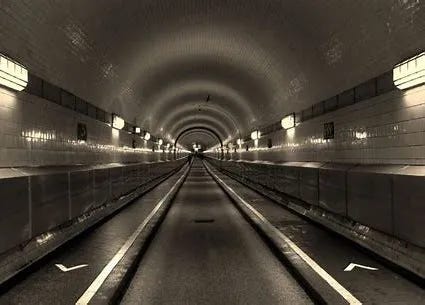
Horizontal Compression (Left to Right)
One-Point Or Two-Point Perspective:
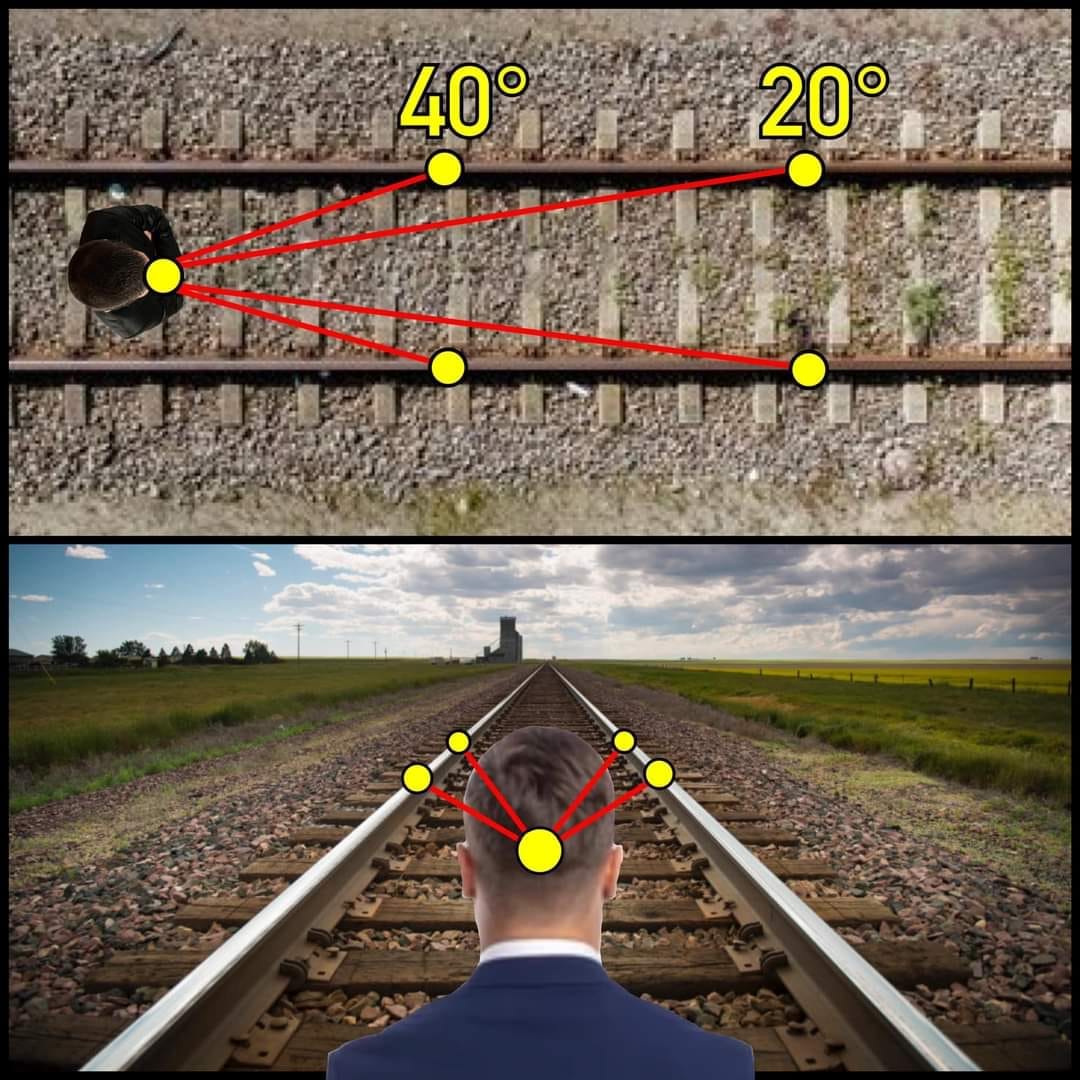
· Imagine railroad tracks or a long, straight road stretching away from you. The parallel rails (or road edges) appear to get closer together as they recede, eventually meeting at a single vanishing point on the horizon line (your eye level).
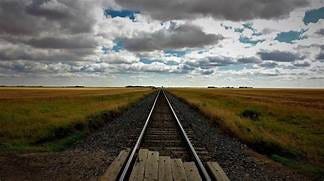
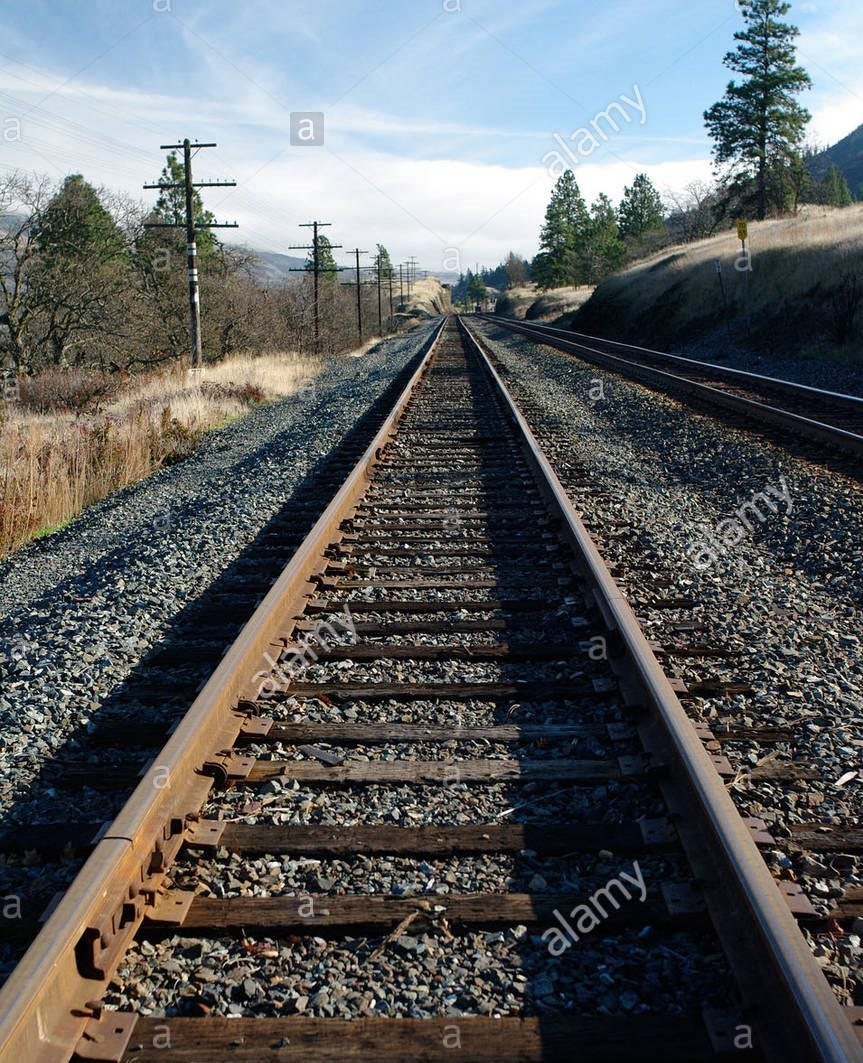
· Objects along this path (e.g., ties, cars, buildings) appear smaller and more closely spaced horizontally because the visual angle they subtend narrows with distance.
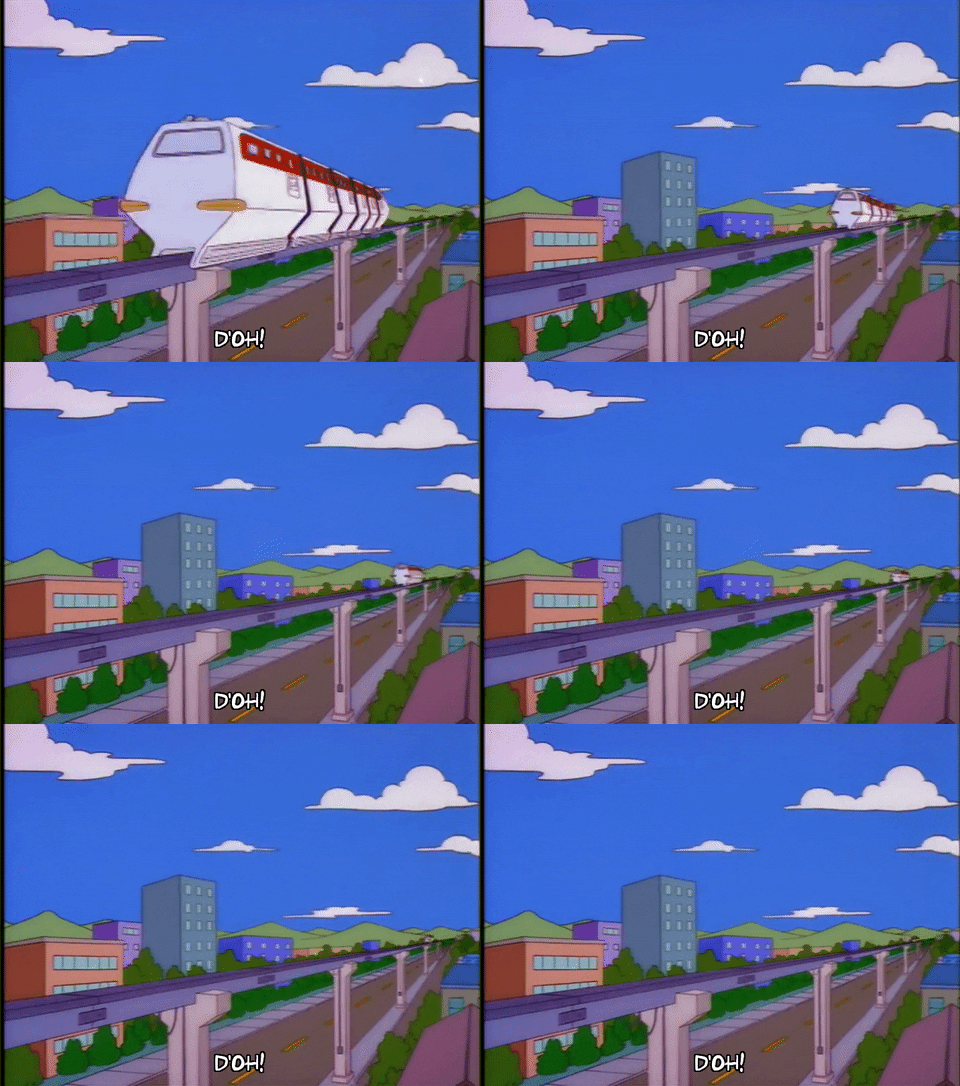

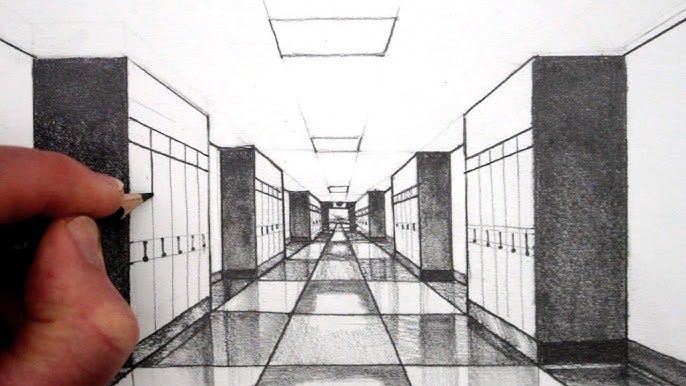
· In a scene with buildings on both sides of a street, the left sides of buildings converge toward a left vanishing point, and the right sides toward a right vanishing point. This creates left-to-right narrowing/compression in the distance.


· Why? Parallel lines in 3D that are not parallel to the picture plane (or your view) project as converging lines in 2D. The farther away, the more the rays from your eye to those points bunch up angularly.
This is why distant crowds or rows of trees look densely packed compared to nearby ones:

Vertical Compression (Top to Bottom):
Perspective isn’t limited to the horizontal plane. Vertical dimensions also compress with distance, especially when viewing surfaces that tilt away from you (like the ground, a wall, or a tall building).
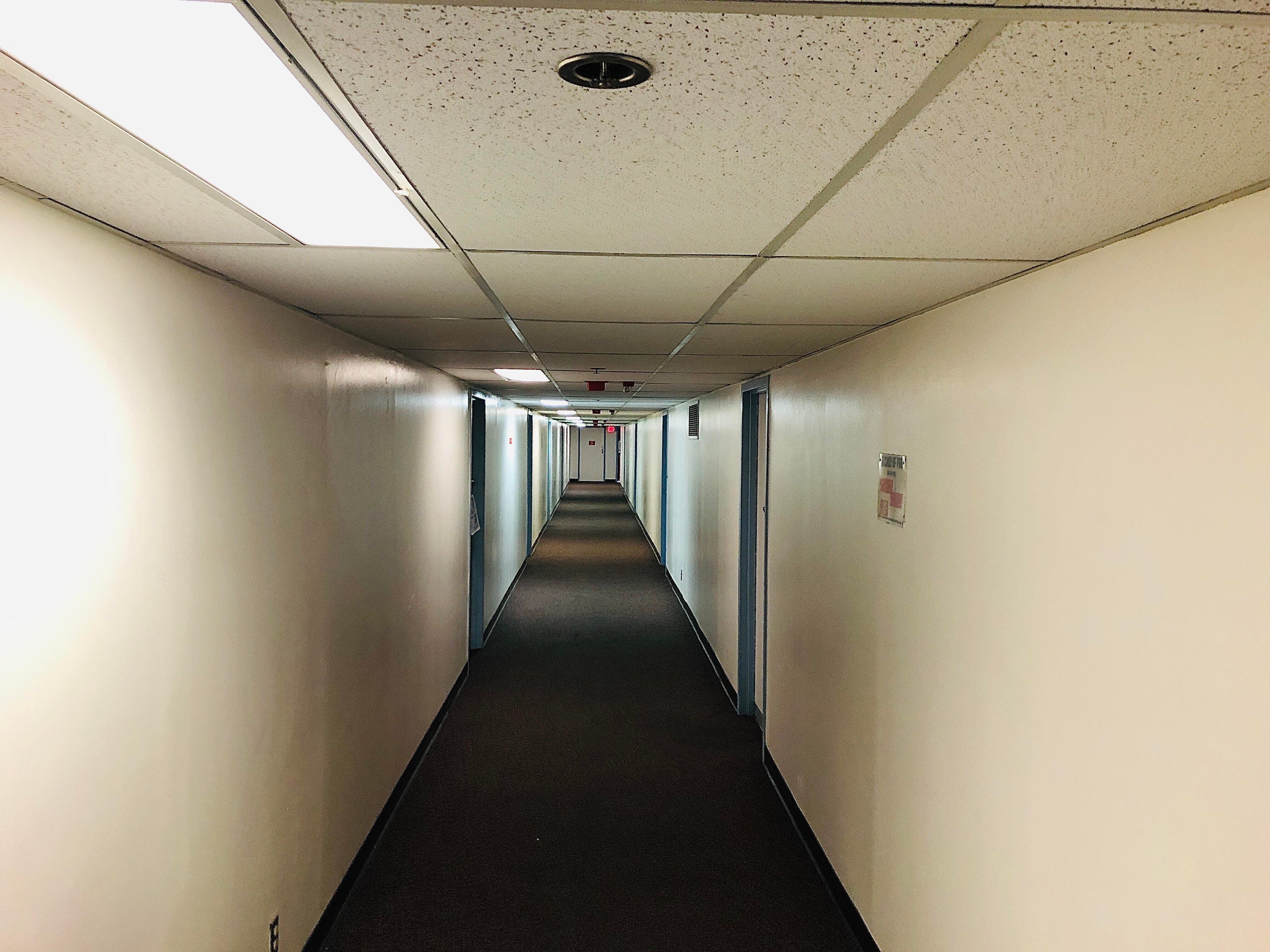

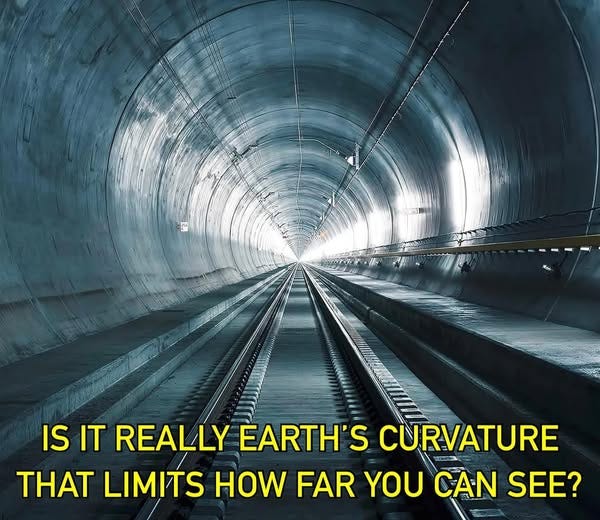
· Looking Straight Ahead or Slightly Down: The ground or floor tiles appear as squares or rectangles near you but become thinner, flatter, and more compressed (foreshortened) as they recede. Horizontal lines on the ground stay roughly parallel to the horizon, but the spacing between them (the depth dimension) squeezes dramatically toward the horizon.
· Looking Up (Worm ‘s-Eye View) or Down (Bird ‘s-Eye View): This introduces three-point perspective. Vertical lines (e.g., building edges) that are parallel in reality converge toward a vanishing point high above or low below the horizon. Tall objects appear to taper and compress vertically in the distance.
· Foreshortening Applies Here, Too: A tall building or a person’s height looks shorter when receding because the dimension along your line of sight is projected at an angle. Nearby verticals take up more of your visual field; distant ones are squeezed.
For example, in a photo of a tall skyscraper from the base, the top floors appear narrower and more bunched together vertically as they rise (converging to an upper vanishing point). The same principle applies when looking down a flight of stairs or across a tiled floor.
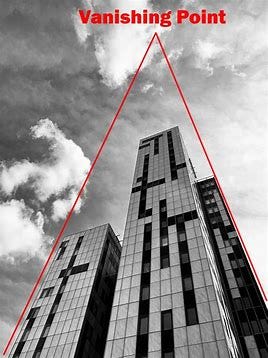
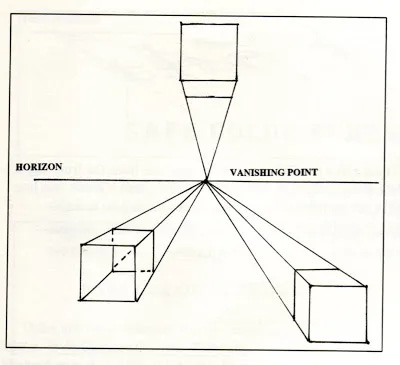
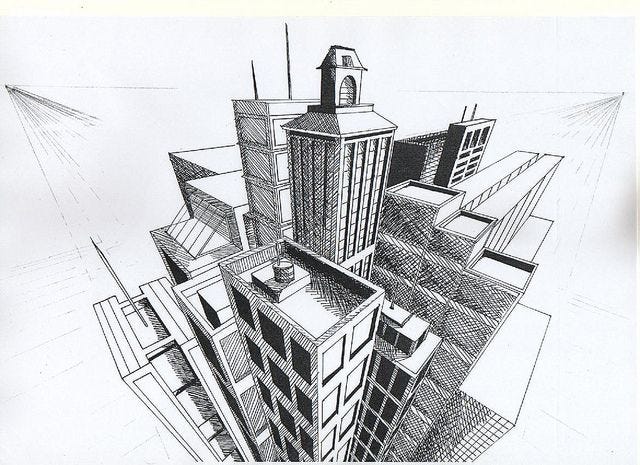
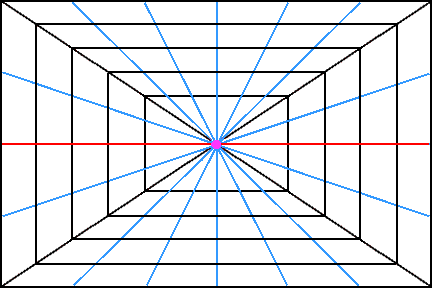
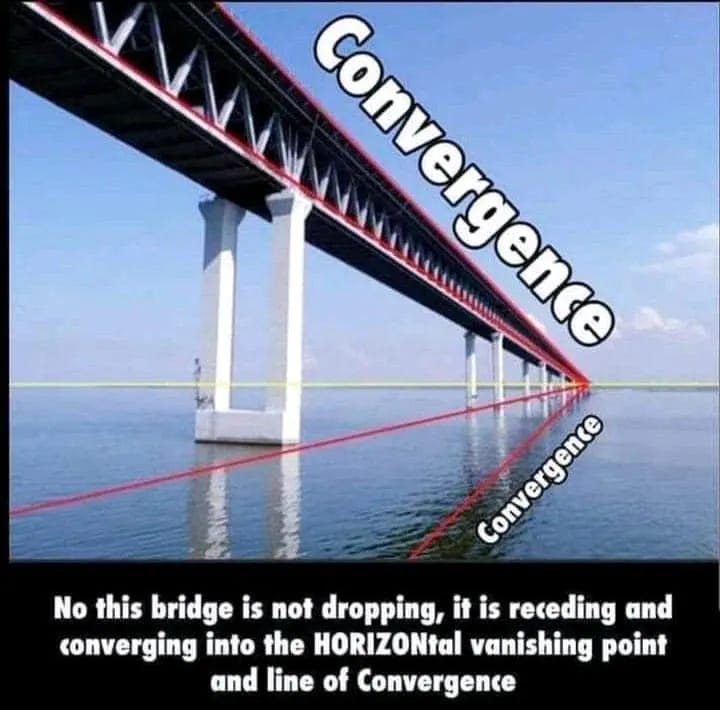
This building is a square but appears to be pointed upwards due to ones vantage point from the ground. This effect is due to the principles of Perpective:

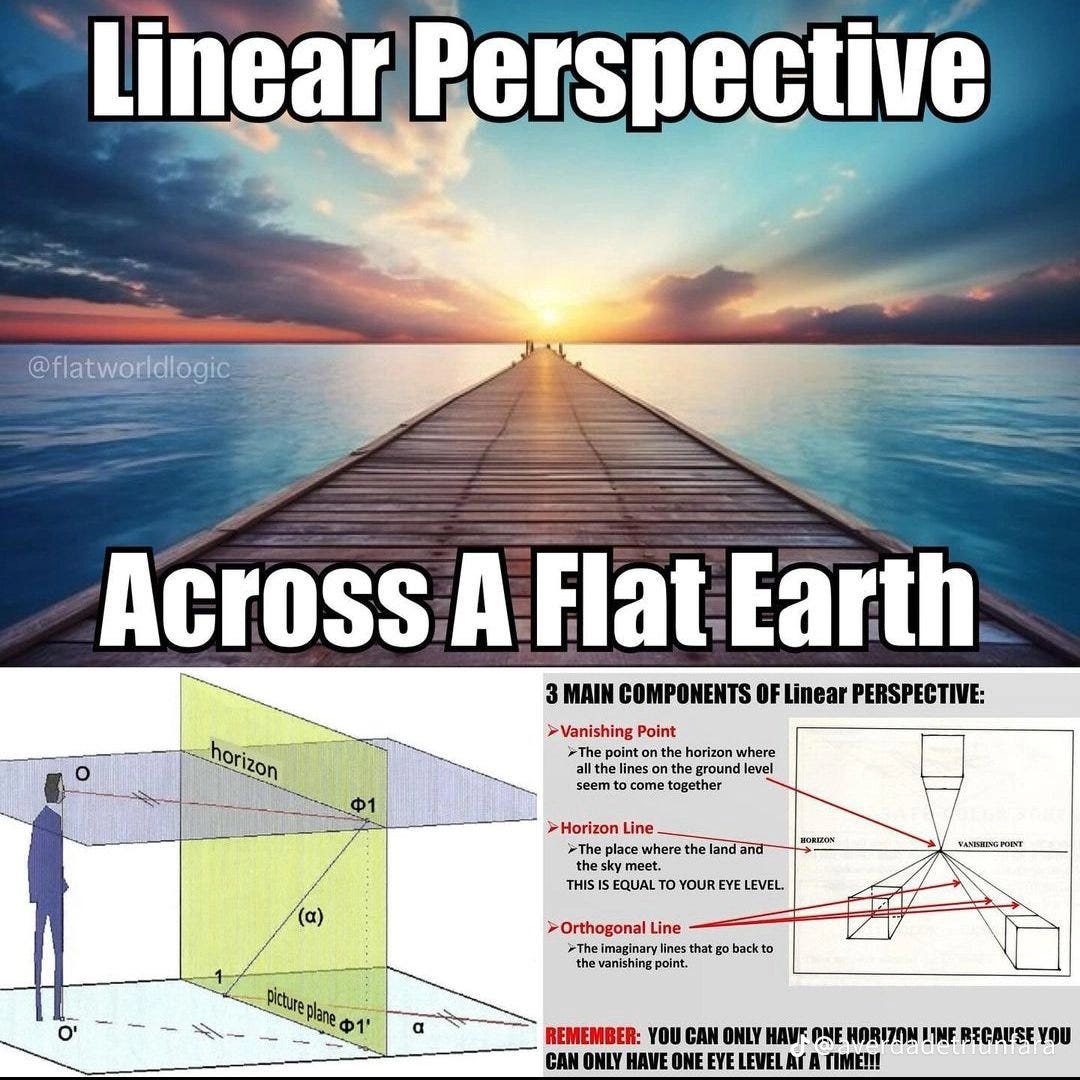
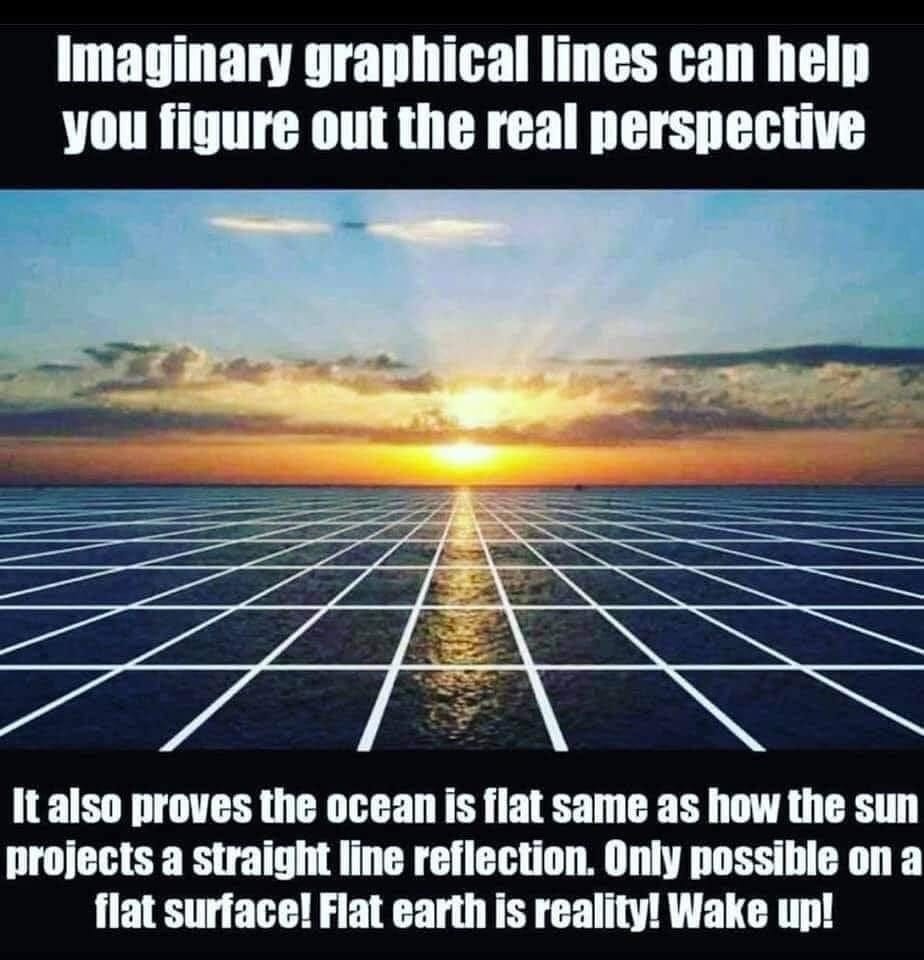
Both the Left and the Right and the Sea Meeting The Sky: Both are Compressed in the Distance at The Vanishing Point:

Because of Perspective, on the ocean horizon, clouds appear to be going downwards, and yet, they are parallel to the ocean. They are compressed downwards in the distance, just as the ocean is compressed upwards. Any ship in this distant convergence point will vanish and appear to have gone over a curve if you did not know that the ship is simply being squashed into disappearance at the distant vanishing point:

Why Both Directions? The Geometry of Vision:
· Our eyes act like a pinhole camera or central projection: Light rays from 3D points converge to a point (your eye), mapping onto a 2D surface (retina/canvas).
· Dimensions parallel to the picture plane (e.g., true horizontals at eye level or true verticals) show little distortion.
· Dimensions receding into depth (whether left-right along the ground or top-bottom on a receding surface) undergo perspective foreshortening: apparent size decreases roughly with 1/distance, and parallel elements converge.
· Compression gradients appear in textures too — e.g., cobblestones or grass get denser and smaller both across the width of your view (left-right) and into the depth (top-bottom in the image).
Near objects show stronger perspective effects (more dramatic size differences between near and far sides). Far objects look flatter and more “orthographic” (less compressed).
Practical Examples:
· Road With Buildings: Left-right convergence on the horizon + vertical compression of building heights and ground details.
· Figure Drawing: An outstretched arm toward the viewer is heavily foreshortened (compressed along its length).
· Photography: Wide-angle lenses exaggerate this (strong convergence); telephoto lenses compress depth overall (flattening the effect).
In art, you construct this by first drawing a horizon line (eye level), placing vanishing points on it (or off it for verticals), and drawing orthogonals (receding lines) that connect to those points. Sizes diminish proportionally along those lines.
This dual compression (horizontal + vertical) is what makes a flat image feel convincingly three-dimensional — it’s how our visual system naturally interprets the world. Understanding it lets artists, photographers, and designers control depth convincingly.
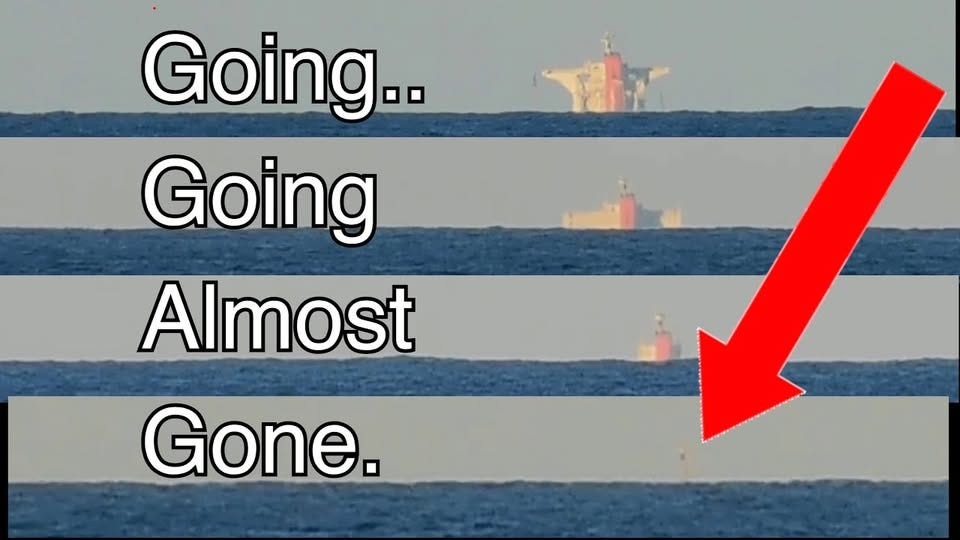
The ocean horizon appears to compress in the distance and hide ships, bottom first, due to perspective when you are viewing from the ground. But as your observation elevation increases, the ship comes back into view.
On a perfectly flat ocean, the standard laws of linear perspective explain the apparent compression and disappearance of distant objects like ships from the bottom up. This is not due to any physical obstruction or curvature, but how human vision and perspective work over vast distances.
Typical Scenario:
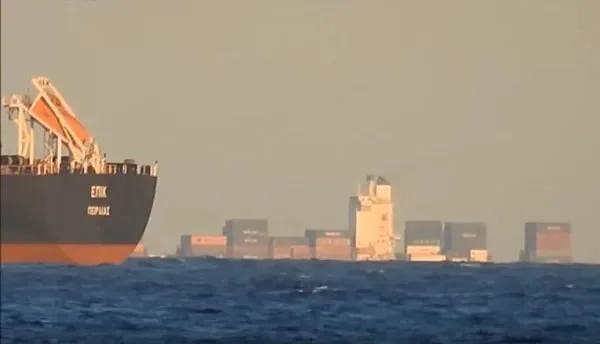
With a fixed camera at sea level looking across a perfectly calm ocean under clear daylight, a large cargo ship travels directly away from the camera toward the distant horizon. As the ship recedes, it becomes progressively smaller due to distance and atmospheric perspective. The lower portions of the hull appear increasingly compressed and difficult to resolve because of perspective, heat haze, atmospheric distortion, and limited angular resolution at long distances. The ship remains geometrically above the waterline and does not visibly pass behind a curved horizon. The apparent reduction in visible detail is due to a distance-compression effect rather than Earth-curvature concealment.
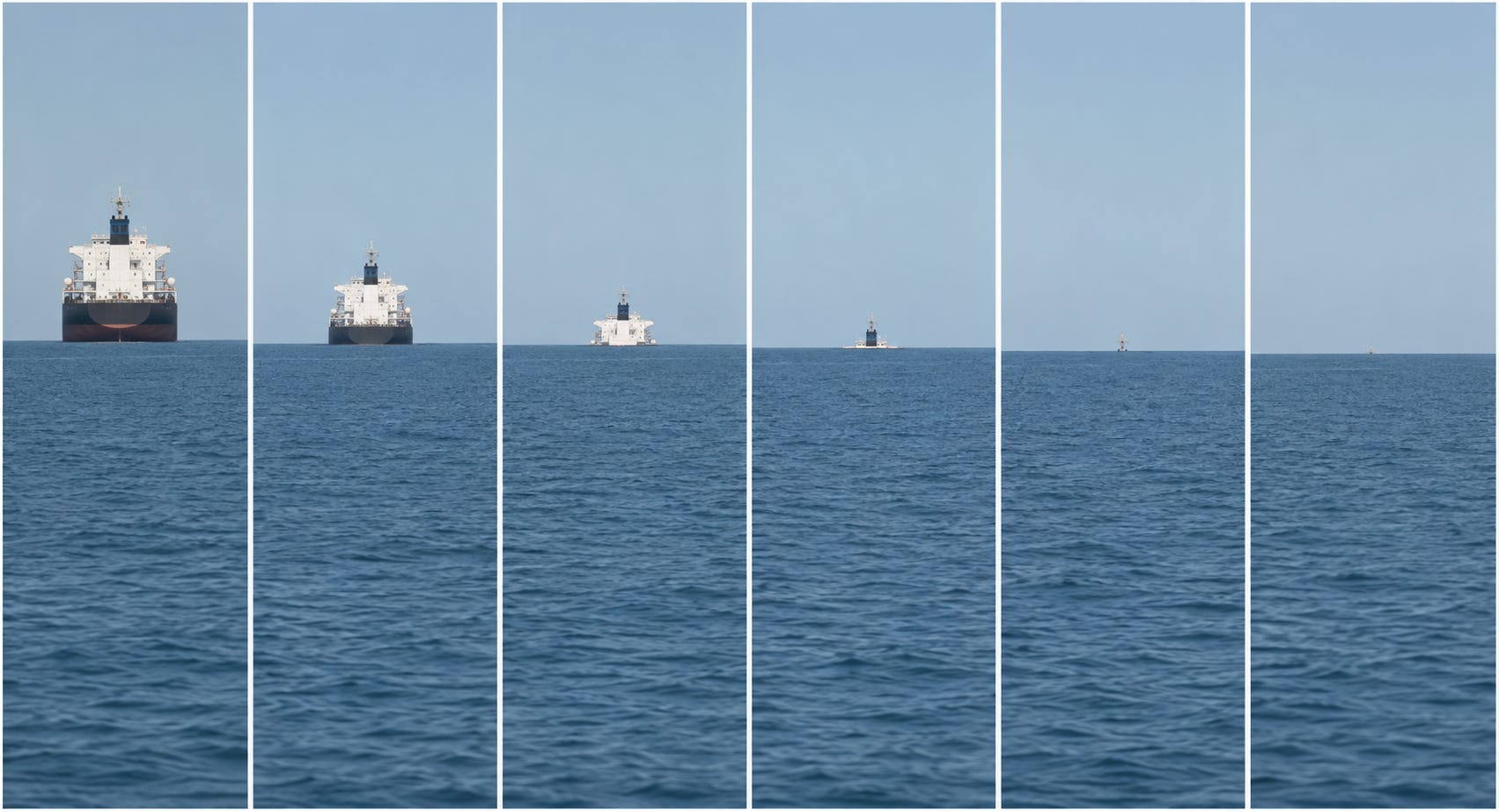
Brought back into view:
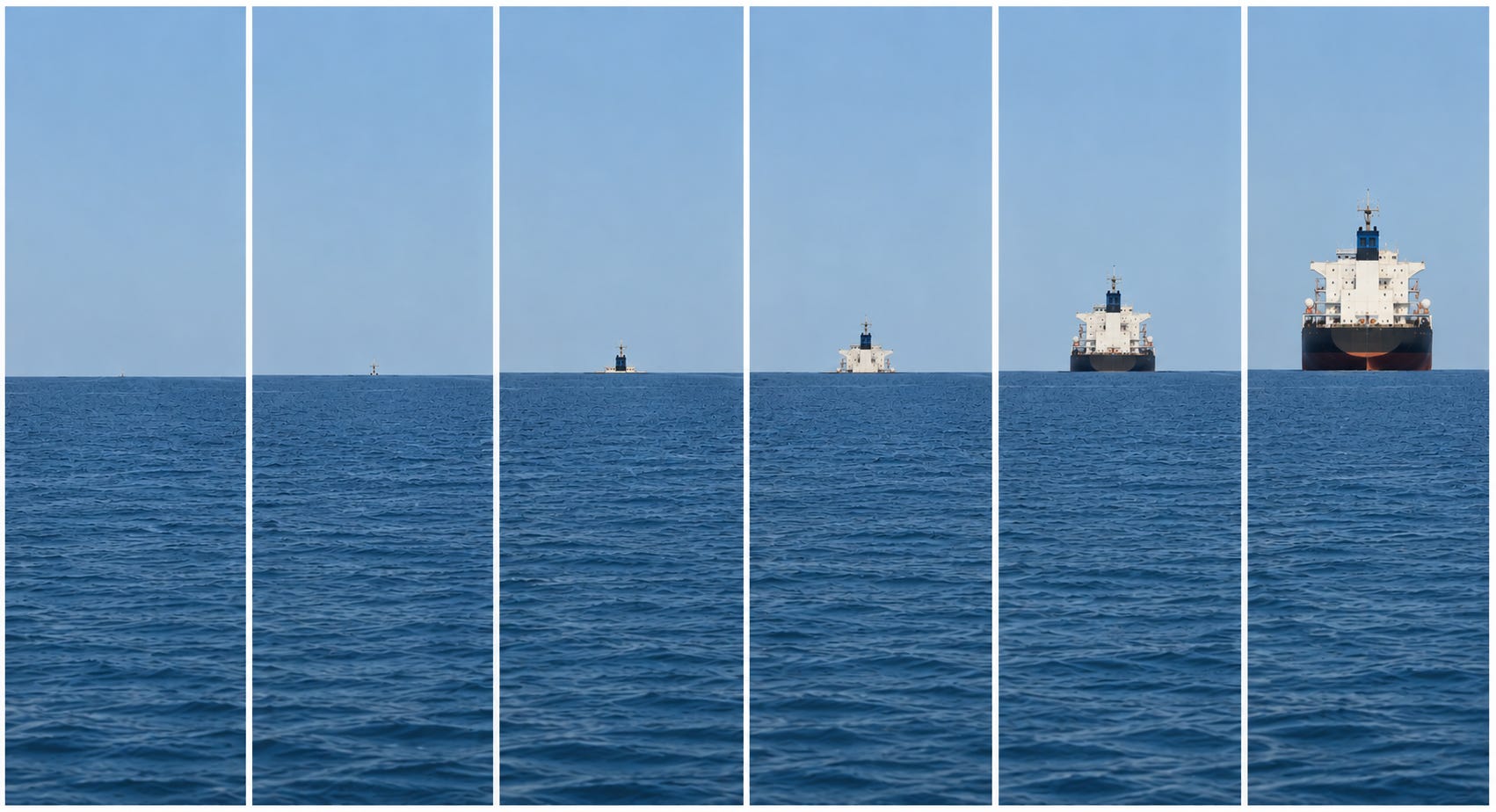
A ship in front of the horizon and one behind the line of the horizon on a flat ocean:
Because of compression, the farther away objects reveal fewer bottom elements. Compression of the horizon in the distance is an optical phenomenon where the physical space between foreground elements and the background seems squeezed or flattened. It is a fundamental property of how human vision interprets spatial relationships and depth.
At no time does Earth’s curvature come into play:
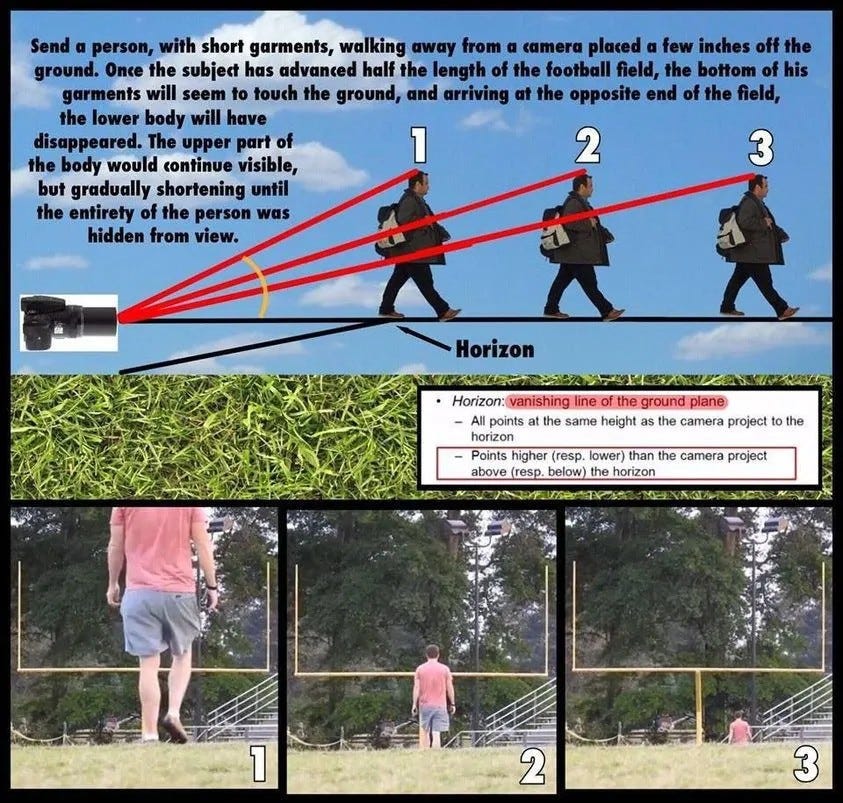
The Horizon Line, Vanishing Point, and Shrinking Effect:
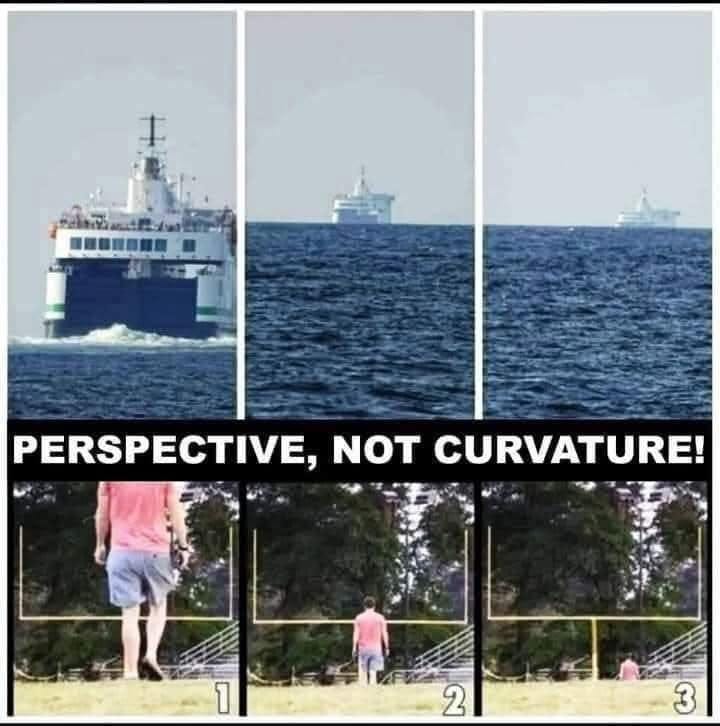
Ships are not going over anything; they are disappearing from view. It’s called The Vanishing Point and The Law of Perspective, the same when you’re viewing someone walking away from you. It appears they are sinking into the ground until they disappear. This perception is an optical illusion caused by linear perspective, which dictates how our eyes and brain interpret a three-dimensional world on a two-dimensional visual field. As a person walks away, or when a ship travels away from you, they appear to get smaller and closer to the horizon line, creating the illusion of them descending.
The Illusion is Governed by Two Key Principles of Linear Perspective< The Horizon Line and The Vanishing Points:
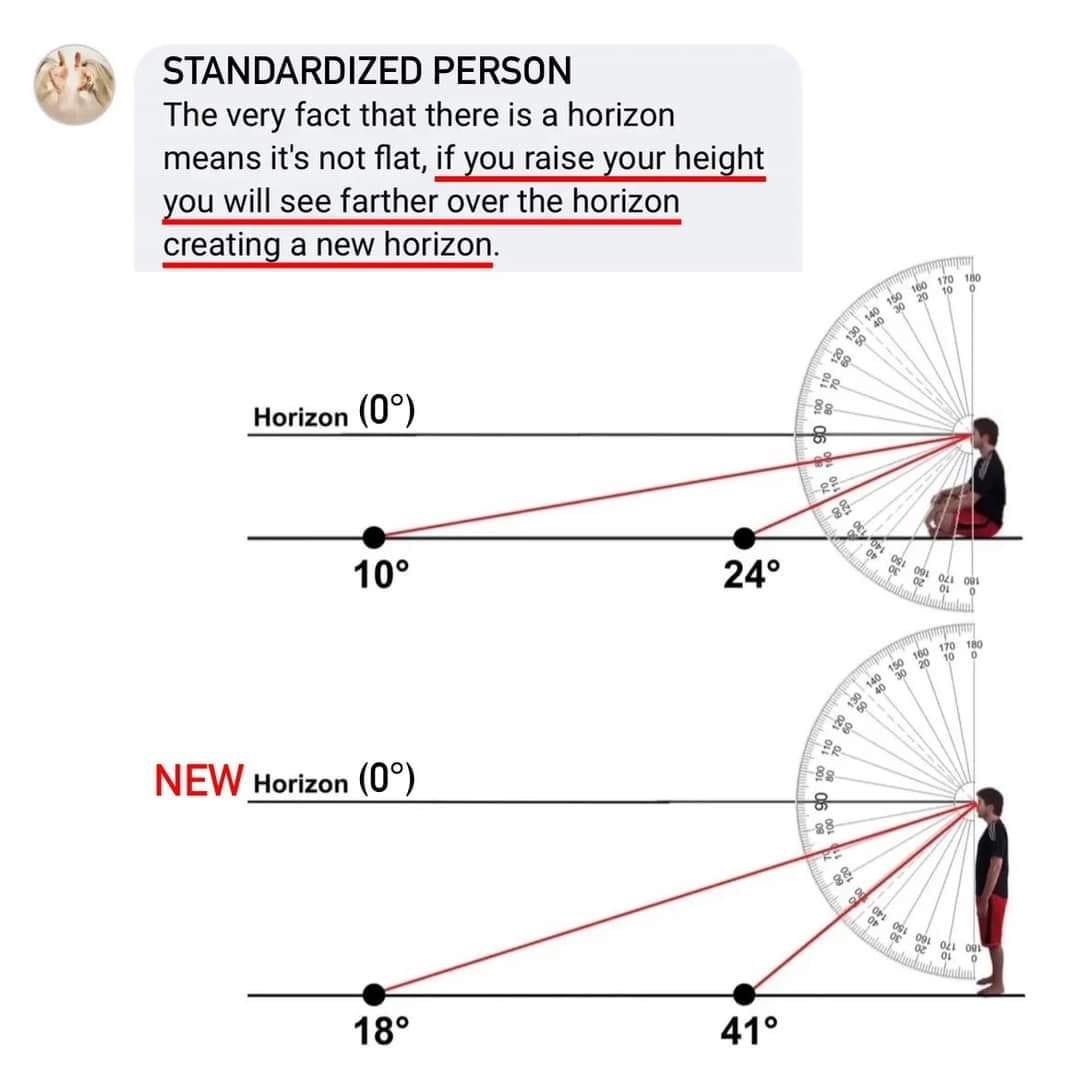
The Horizon Line: This is a horizontal line that represents your eye level. All objects in your field of vision are measured against this line, whether you are indoors, looking at a wall, or outdoors, viewing where the sky meets the ground. If you kneel, your eye level drops, and the horizon line drops with it.
The Vanishing Point: A point on the horizon line where all parallel lines in your field of vision appear to converge. For example, the parallel rails of a train track seem to meet at a single point in the distance.
When you see a person walking away, or a ship disappearing, their diminishing size and apparent sinking are the product of these principles working together.
The Shrinking Effect:
As the person moves farther away, they take up less of your visual field. The light rays from the top and bottom of the person subtend a smaller angle at your eye, which your brain interprets as a decrease in size. At the same time, the person’s feet appear to move closer to the horizon line. Since the horizon line is at your eye level, anything that appears closer to it seems farther away. This creates a powerful depth cue, making the person seem lower and lower in relation.
Key Principles of Perspective on a Flat Plane:
· Converging parallel lines and the vanishing point: Imagine railroad tracks on flat ground—they appear to get closer together and meet at a single point on the horizon (the vanishing point). The ocean surface acts like an infinite flat plane. Lines of sight from your eyes to points on the water converge toward this horizon line.
· Angular size and compression: As distance increases, objects shrink in apparent size because they subtend a smaller angle at your eye. Vertical features (like a ship’s hull) get “compressed” toward the horizon line. The lower parts of the ship, being closer to the water plane, align more quickly with this convergence and appear to merge into or sink toward the horizon first.
· Horizon as a visual limit: The horizon isn’t a fixed physical edge but the practical limit where the receding plane becomes indistinguishable due to perspective, atmospheric haze, scattering of light, and the limits of human visual resolution. Distant details blur and blend into the sky-water boundary.
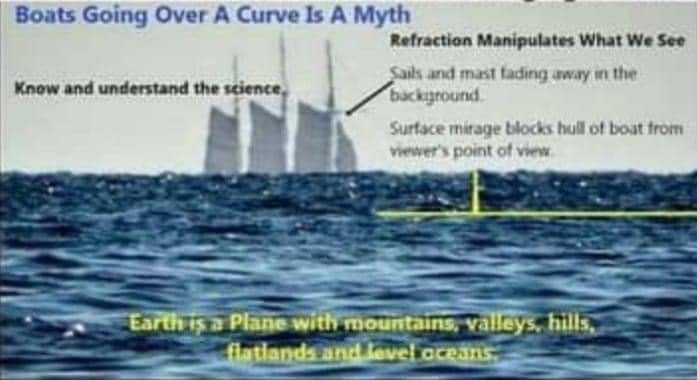
For a Ship Sailing Away:
· The hull (bottom) is nearest the water plane, so its lines of sight converge fastest toward the vanishing point. It appears to “descend” or get obscured first as it shrinks and merges with the horizon.
· The upper parts (masts, superstructure) are higher above the plane, so they remain visible longer—their convergence to the vanishing point happens at greater distances.
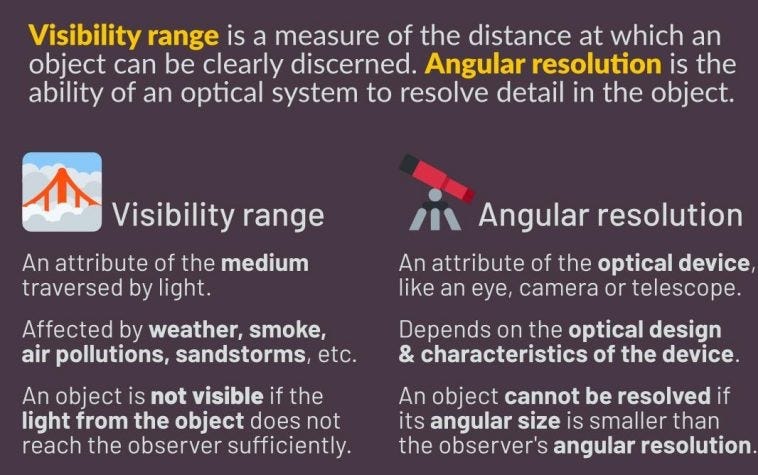
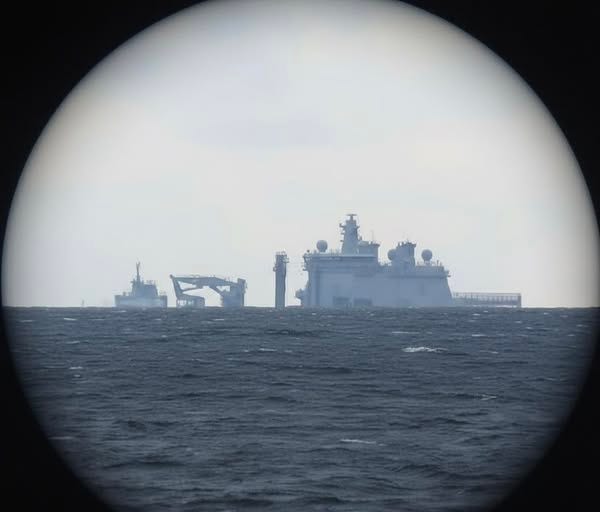
· Eventually, even the top disappears as the entire object shrinks below the resolution limit or fully reaches the vanishing point. Zooming in (with binoculars or a camera) can sometimes “restore” parts by improving angular resolution, bringing more detail back into view before full loss to distance/haze.
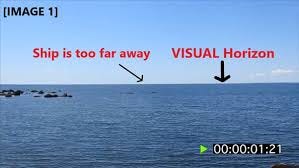
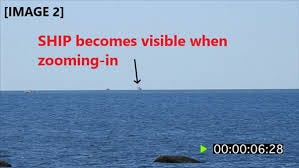
Effect of Increasing Your Observation Elevation:
Raising your eye height (climbing a hill, ladder, or going up in a balloon) changes the geometry of perspective:
· Your line of sight now starts higher above the flat plane. This pushes the apparent vanishing point (horizon) farther away because you can see over more of the receding surface before convergence and compression dominate.
· The “horizon line” in your field of view rises relative to distant objects. More of the lower parts of the distant ship now fall within your clearer lines of sight, so the hull reappears as the compression effect is delayed.
· You effectively see farther across the flat plane. A ship that had its bottom “sunk” into the perspective-vanishing horizon from ground level becomes fully or partially visible again from higher up, as the angular compression is reduced for that distance.
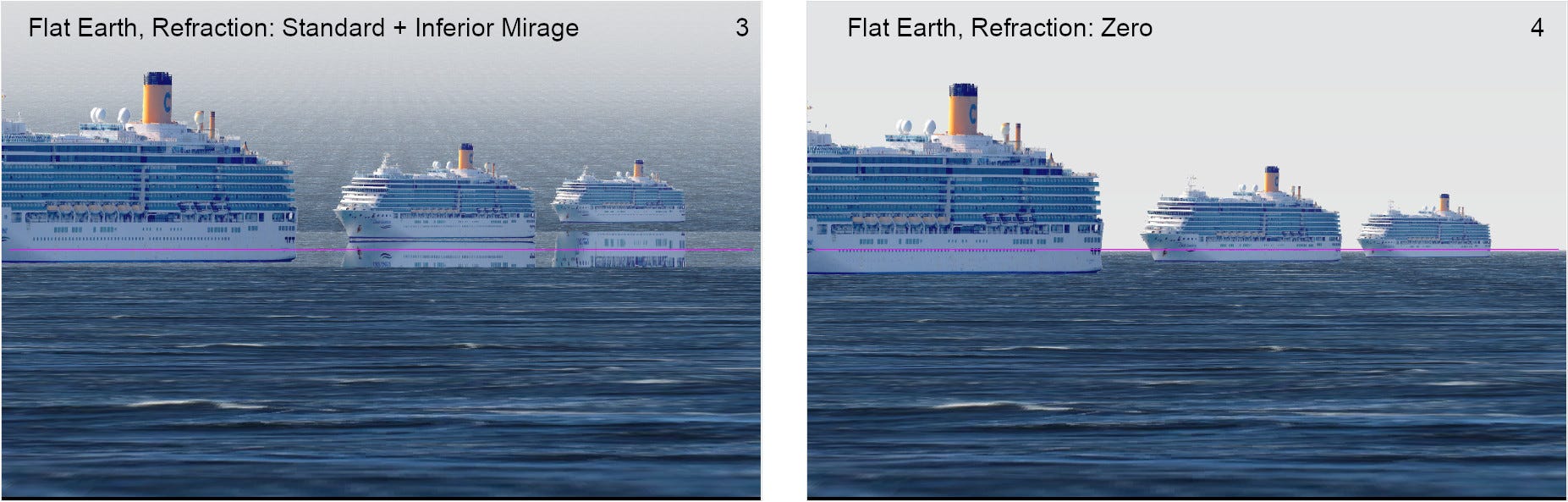
This Matches Everyday Experience:
Standing on the ground, a distant person or car seems to disappear legs-first into the horizon due to perspective. Climb higher, and you see more of them again. Atmospheric effects (mirages, refraction, haze) can enhance or distort this, sometimes making objects appear to “rise” or linger, but the core mechanism is geometric perspective on a flat surface. Proponents argue that this fully accounts for observations without needing a curved Earth. The “hiding” is an illusion of how vision projects the infinite plane.
(Note: In actual physics and observations, this bottom-first disappearance aligns precisely with calculations for a curved surface, where the horizon is a tangent to the sphere, and higher elevation extends the visible range geometrically. But per the query, this sticks to the flat-plane perspective model.)
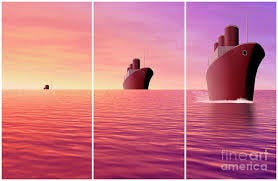
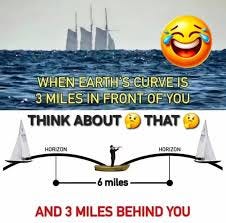
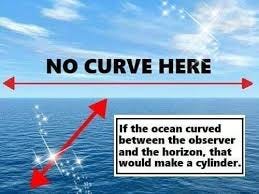
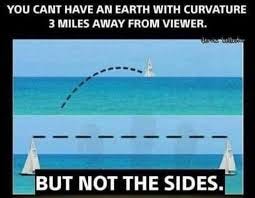
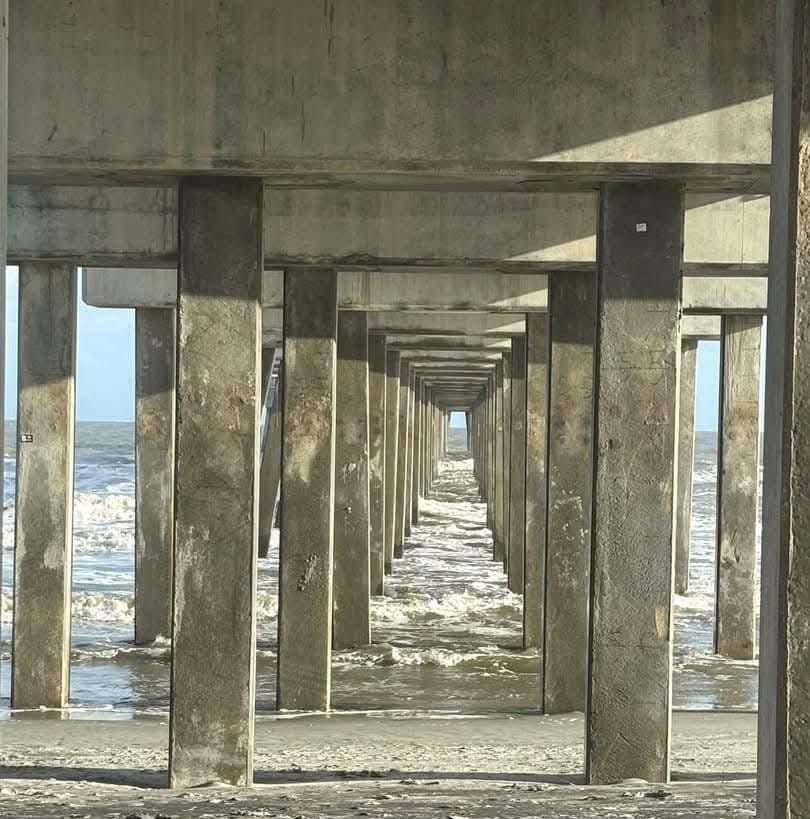
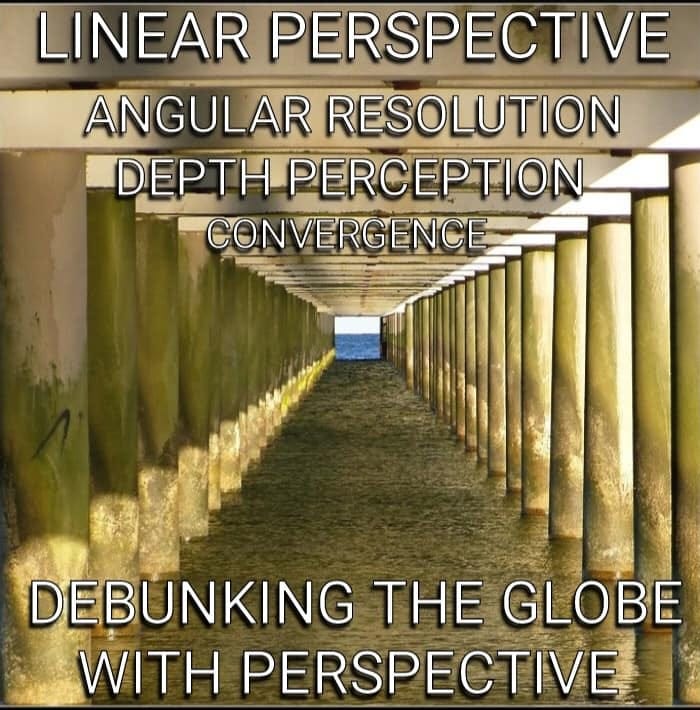
Note How All Sides of This Structure, Left, Right, Top, and Bottom, are Obviously Parallel to Each Other, and Yet, They Appear to Converge at The Compressed Vanishing Point in The Distance:
Extraordinary Claims Demand Extraordinary Evidence:
In discussions of The Flat Earth Model, the term “compression at the vanishing point” refers to Flat-Earthers using the optical effect of perspective to explain why distant objects appear to sink or become obscured and truncated from the bottom up.
The “truncated ship from the bottom” is a phrase used to describe the optical illusion of a ship’s lower portion disappearing first as it sails away towards the geometric horizon. This phenomenon is a visual proof of the natural optical compression of the horizon that we observe over a flat surface. This is also known as convergence. Flat Earthers admit that this optical effect is a result of “atmospheric compression” or “perspective compression” on a flat plane.
The Flat Earth Interpretation of Perspective:
Real-World Perspective states that objects appear to get smaller and closer to the horizon as they recede, eventually reaching a vanishing point, or horizon compression and convergence line, where they are too small to see. Where the sky and ocean appear to meet, anything that exists in that compression and convergence line at the horizon appears to be truncated, with the bottom of the object disappearing first, as if the object were going over a curve and “setting” over a curved horizon. This is an optical effect but not a real physical effect. The effect is observable with ships in the distance, as well. They appear to disappear bottom first, but in reality, the ship is merely being truncated by an apparent compressed horizon.
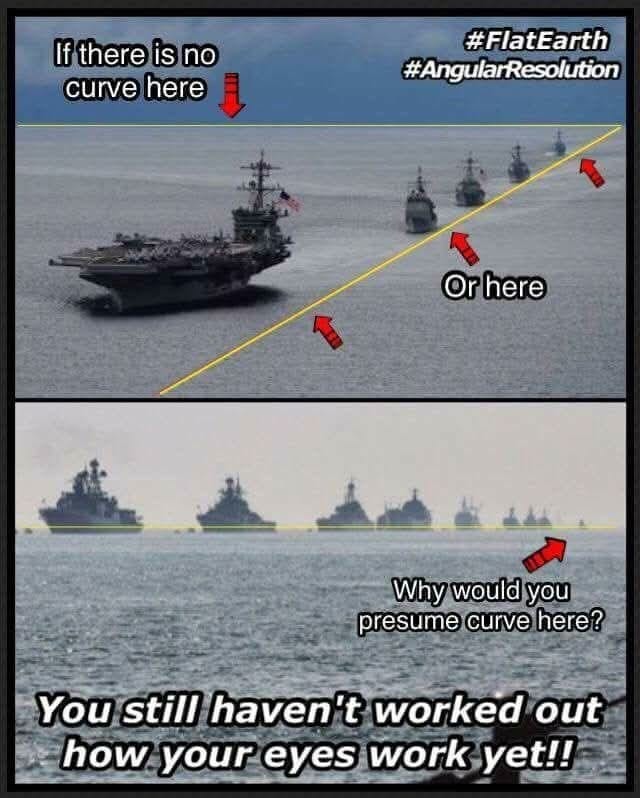
Perspective, Angular Resolution Limitations, and Compression Effects: In a Flat Earth Model, the hulls of ships are expected to disappear first due to perspective, angular resolution limitations, and compression effects as the water meets the sky. This is a widely known fact in science and perspective. But they can easily be brought back into view using the Nikon P-1000 camera, thereby, proving The Earth is Flat, which has been done thousands of times. A ships “sinking” over the apparent horizon bottom first is merely a trick of perspective, a “vanishing point” effect where distant objects appear to disappear bottom-up as they get farther away. Using a camera like the Nikon P-1000, you can zoom in on a ship that appears to have disappeared, bringing it back into view. This proves the ship was never hidden by a curve, as Heliocentrists like to assert.
How Real-World Phenomena Supports Flat Earth Claims: Extraordinary Claims Demand Extraordinary Evidence:
The Disappearing Hull First: The observation of ships disappearing hull-first over the geometric horizon is a classic example of this compression and convergence line.
Vantage Point and Visibility: Climbing to a higher vantage point on a Flat Earth allows you to see farther and brings objects that were previously hidden beyond the geometric horizon back into view, from the top down. In order to resolve the truncated and compressed horizon line more readily at the building’s base, you can simply elevate yourself up to a higher altitude, and then, the building’s lower compression line will extend itself out further, thereby resulting in the angular resolution of the lower section of the building falling back to normal dimensions. When you elevate yourself, you move the distant vanishing line/band of convergence line higher, which illustrates how vanishing point perspective optics are effecting your perception of the building’s lower portion and not Earth curvature.
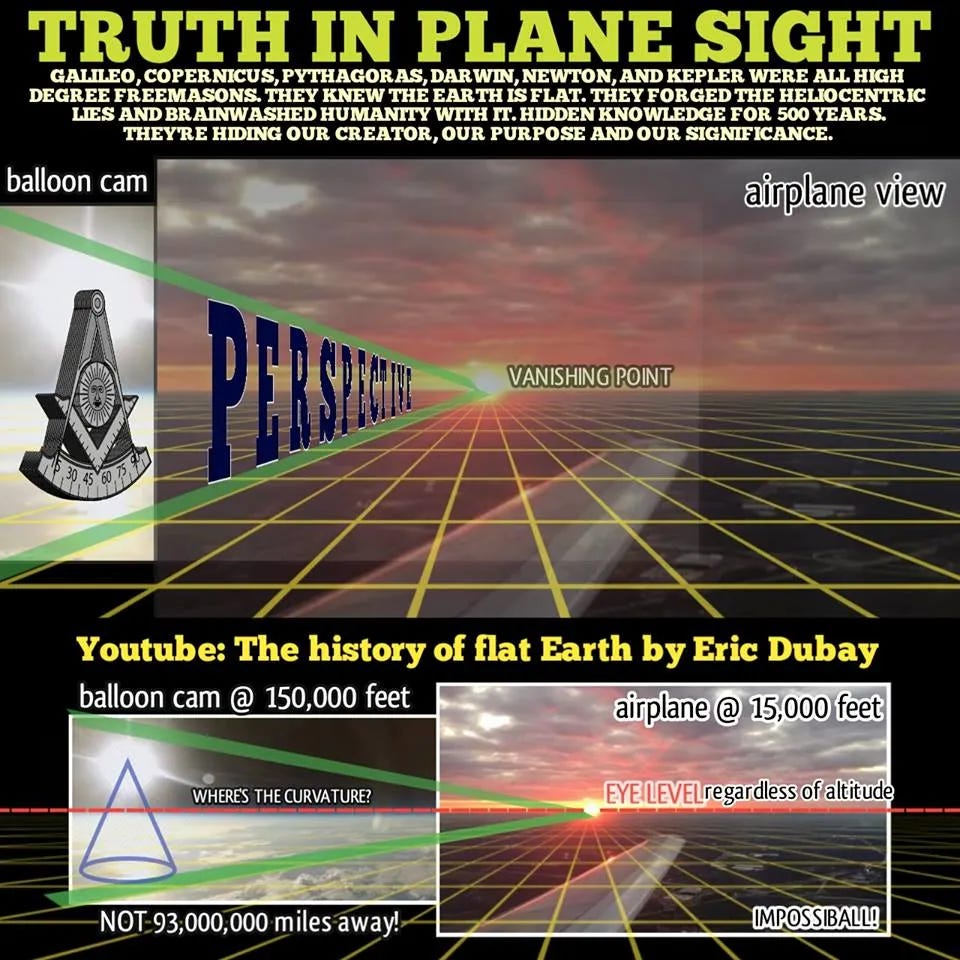
The Horizon Always Remains at Eye Level: On a Flat Earth, the horizon is always demonstrably at eye level, regardless of your altitude. From a high vantage point, the effect of perspective compression on a Flat Earth would be different than it is on a Spherical Earth. Flat Earth proponents claim that photographs from high altitudes correctly show a flat-looking horizon are evidence of a Flat Earth. Where there is not evidence of curvature and sphericity, none exists. Extraordinary claims demand extraordinary evidence.
How Perspective Compression Works on a Spherical Earth:
The Horizon Drops With Altitude: On a spherical Earth, the horizon is always below eye level. As you gain altitude, your line of sight extends further over the curved surface, causing the horizon to drop further down. Yet, we do not observe this in reality.
Perspective Creates The “Flat” Look: When filming from a high vantage point with a wide-angle lens, the immense scale of The Earth and the vast distance to the horizon can make it appear flat. In reality, the camera’s perspective creates an optical effect where objects appear compressed and the curvature becomes less obvious. Nevertheless, the absence of any curvature at any altitude illustrates the mistaken interpretation of perspective and vantage point compression by The Heliocentric viewpoint.
Visual Proof of Curvature: Heliocentrists claims that high-altitude footage and photographs prove The Earth’s curvature. They claims that videos from balloons and aircraft show the horizon dropping as the camera rises, as if they were one vast ball. They also claim that the use of special filters, as in the famous Flat Earth “evidence” photo of The Ryazan Region, reveals the actual curvature that was otherwise hidden by the effects of perspective and refraction. However, perspective and refraction have no correlation to Earth curvature. They are merely optical effects that bend and compress light somewhat. They do not parabolically curve light around a sphere.
Flat Earth Perspective:
Perspective Causes Objects to Disappear: Flat-Earthers propose that perspective causes objects to become truncated and vanish from the bottom up as they recede into the distance, as if they are sinking into the horizon. This corresponds to the real-world “Rules of Perspective”, where objects become truncated as they recede into the compression line of the geometric horizon when viewed from the planar surface of a Flat Earth.
A Horizon That Rises With You: In the Flat Earth model, the horizon is supposedly the vanishing point, meaning it should rise to the observer’s eye level regardless of altitude. This is demonstrably false; pilots and anyone with a precise instrument like a theodolite can measure the horizon dipping as they go higher.
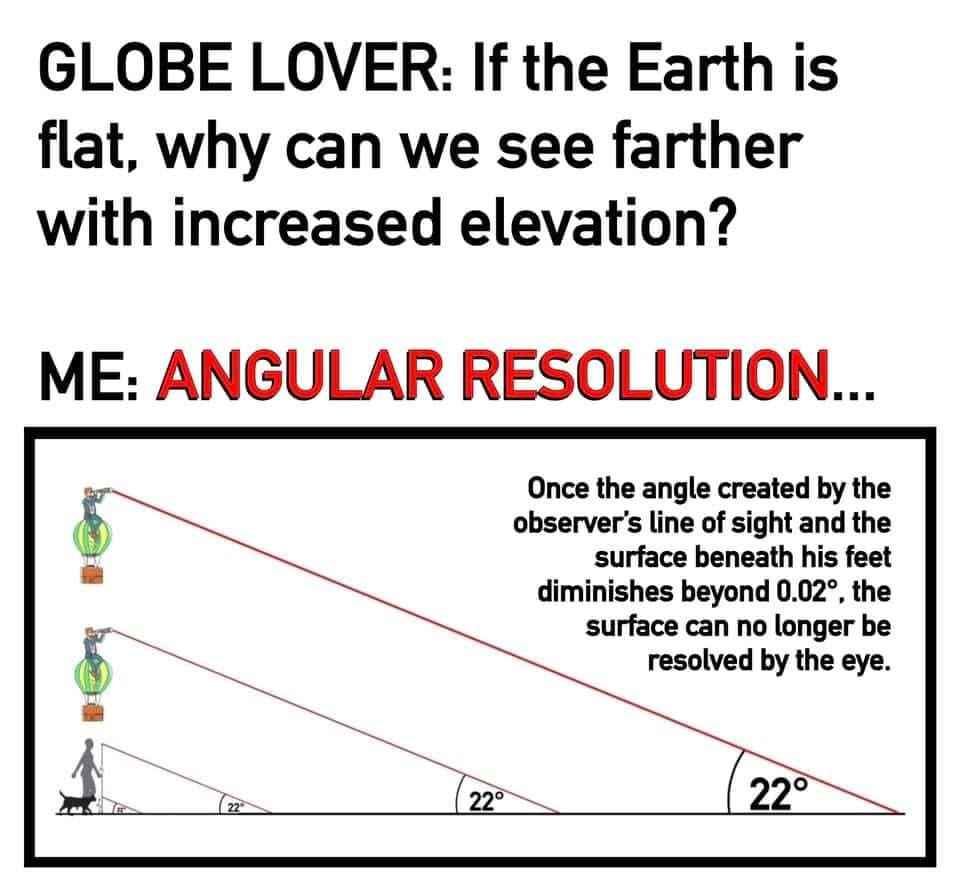
In a Flat Earth Model, the hulls of ships are expected to disappear first due to perspective, angular resolution limitations, and compression effects as the water meets the sky. This is a widely known fact in science and perspective. But they can easily be brought back into view using the Nikon P-1000 camera, thereby, proving The Earth is Flat, which has been done thousands of times. A ships “sinking” over the apparent horizon bottom first is merely a trick of perspective, a “vanishing point” effect where distant objects appear to disappear bottom-up as they get farther away. Using a camera like the Nikon P-1000, you can zoom in on a ship that appears to have disappeared, bringing it back into view. This proves the ship was never hidden by a curve, as Heliocentrists like to assert.
Flat Earth - Cargo Ship Out At Sea Proves Flat Earth Nikon P900 Digital Camera Video Footage:
Nikon P900 Zooming In On Buoy (Flat Earth Proof) No Drop:
Flat Earth - Ships Disappearing Over the Horizon:
Ships Disappear Beyond Earth’s Curvature?:
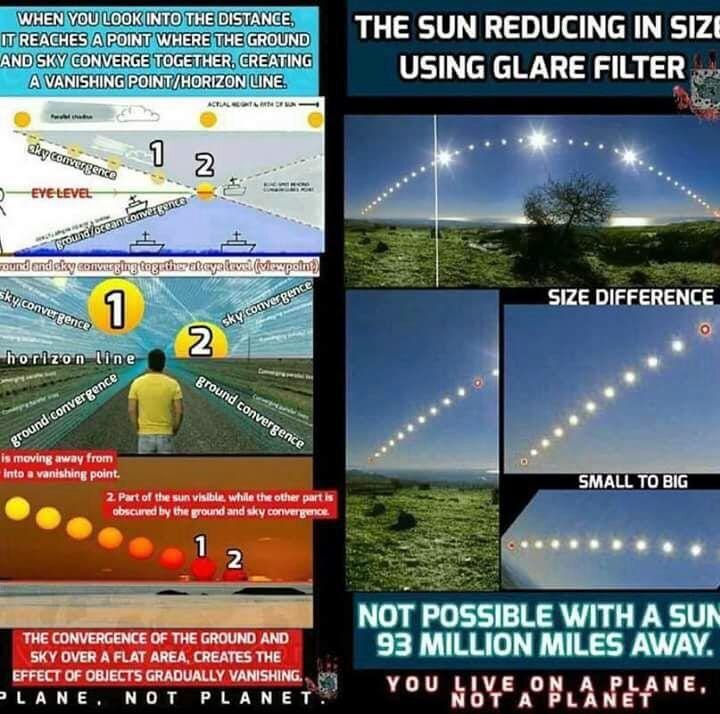
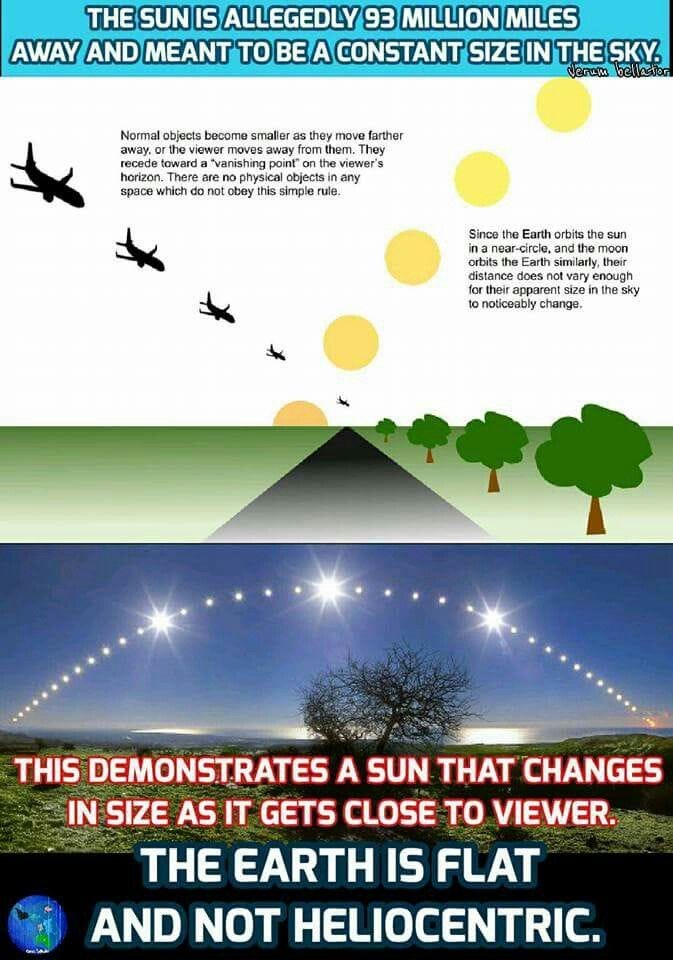
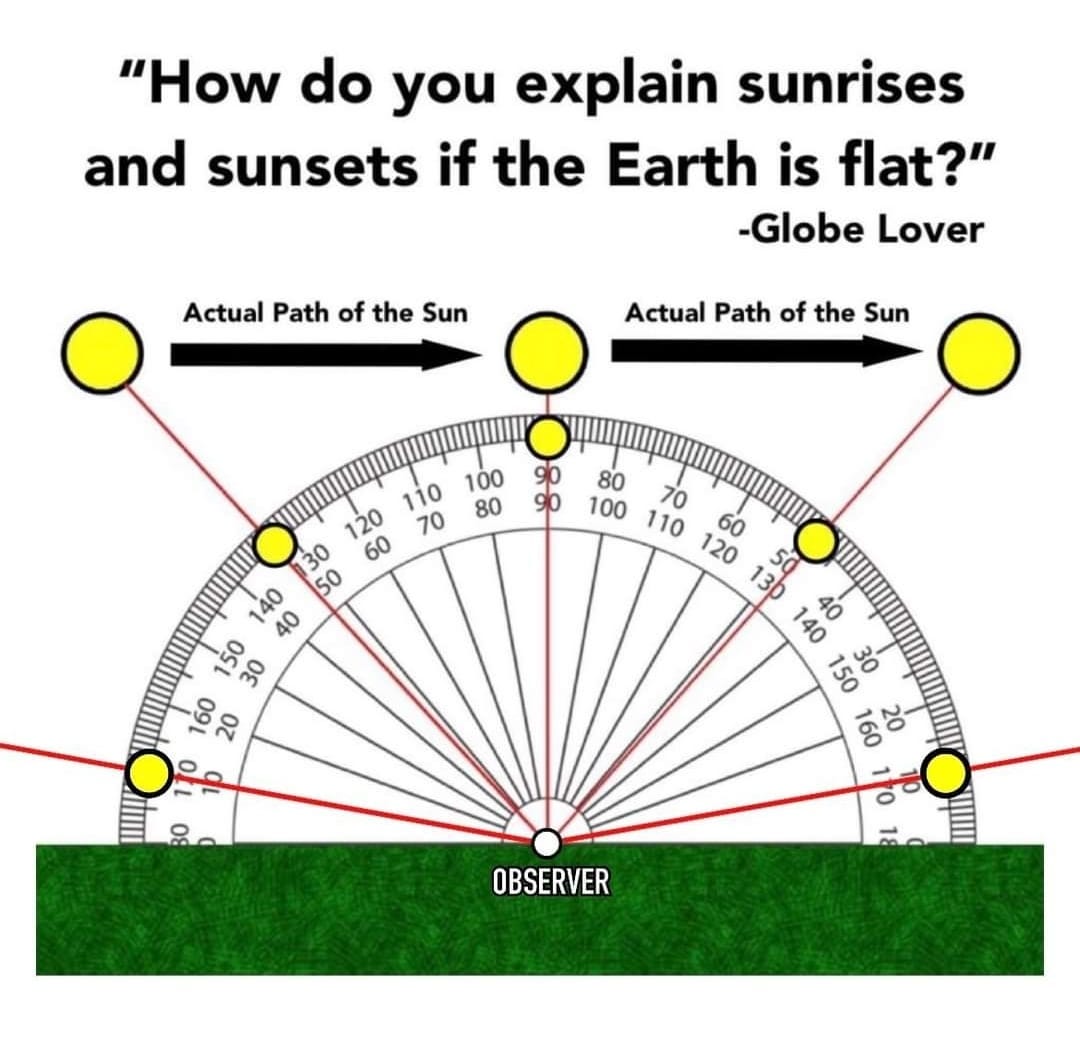
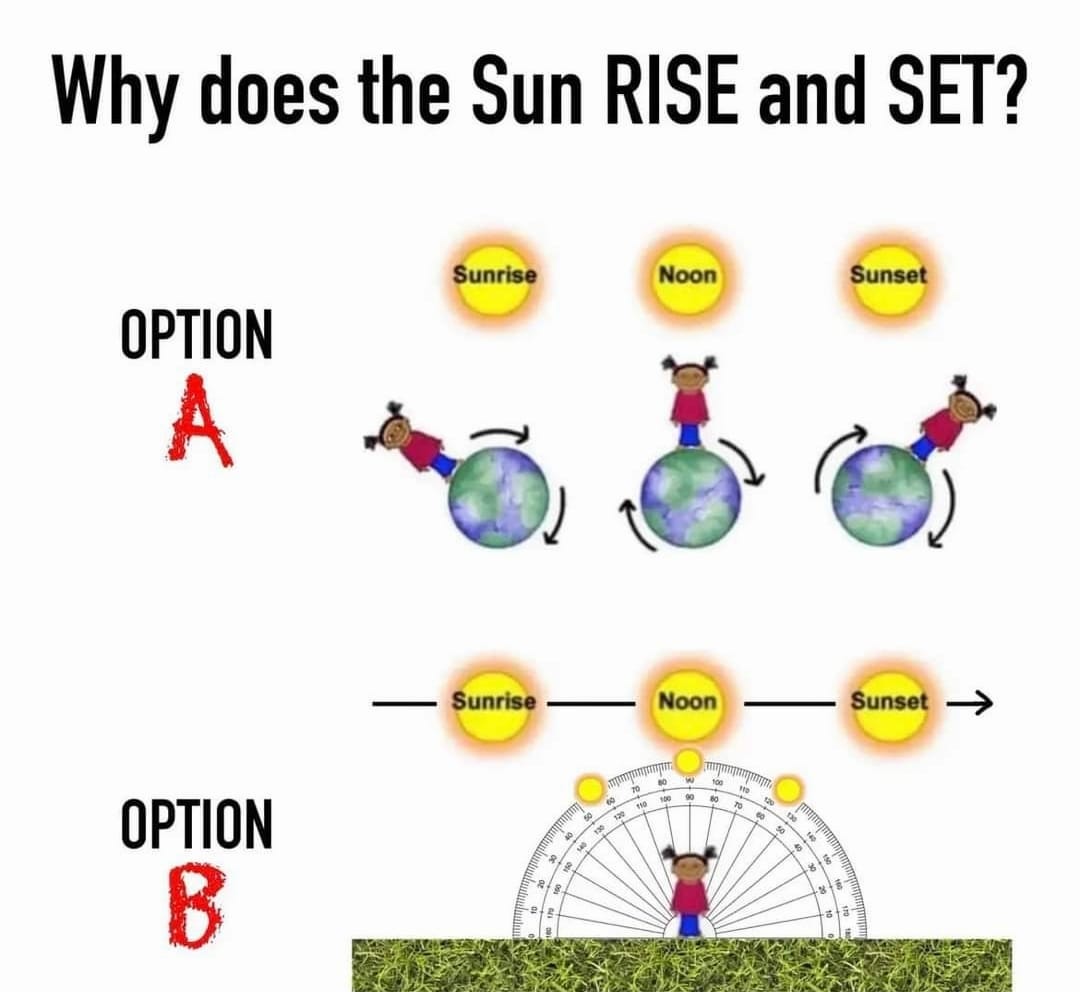
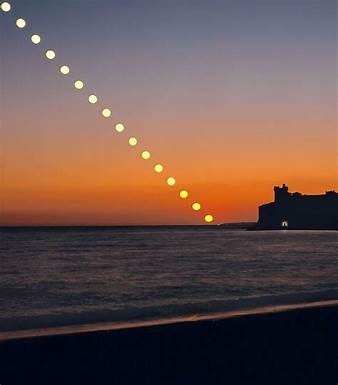
One factor, of several, that must be considered when viewing the Sun’s recession away from the observer is The Rayleigh Criterion. Among the many others factors include refraction, atmospheric distortion, and the apparent compression of objects on the horizon as they recede into the distance from the observer. The latter factor is revealed in the Laws of Perspective.
The human eye can only resolve objects as they move into the distance to a prescribed limit. Resolution limit describes how objects can appear to disappear and/or “blur out” into the distance, which is calculated using The Rayleigh Criterion. This is of particular importance when considering the apparent “setting” of The Sun over an imaginary curve, for The Rayleigh Criterion points out that before considering this apparent “setting” of the Sun, which is a Heliocentric claim, one must consider the role of the limitations of angular resolution, as they pertain to the naked human eye, as objects appear to disappear and/or “blur out” into the distance.
Angular Resolution and Horizons on Our Motionless Plane:






Comments
Nothing yet. Say the first thing.
Sign in to join the conversation.