
Adam Donaldson’s recent columns in Guelph Today lamenting the state of Guelph Transit and challenging the community to support public transit struck a chord with me.
When I launched my campaign for Ward 5, I made clear that improving public transit would be one of my priorities on council. Long before deciding to run, I served on the City’s Transit Advisory Committee and now sit on the board of the Transit Action Alliance of Guelph. I believe public transit is an essential universal public service, like public health and public education—services that work best when they have broad public buy-in and regular use from the community they serve.
As a Ward 5 resident, I have used Guelph Transit for years to travel downtown, as do many people who choose transit for convenience, cost, or sustainability—not just necessity. During the past year, I have taken transit home from my job at John F. Ross CVI on a weekly basis. Overall, my experience has been positive, and I have encouraged others to give transit a chance.
At one point I even said I had “no complaints.” Since then, however, I have heard a very different story from regular riders and longtime transit supporters.
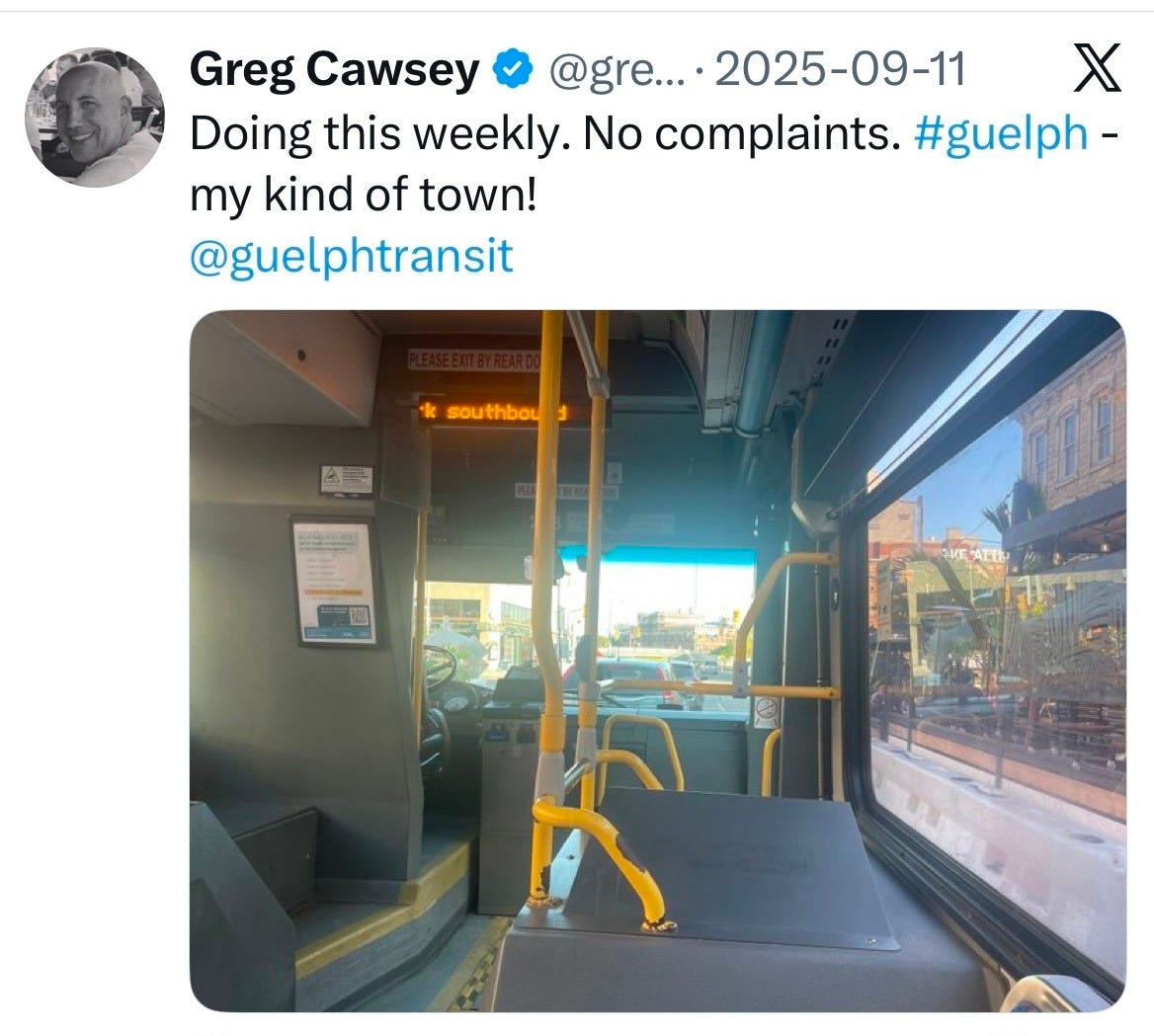
My own experience has shown that the system works reasonably well when my destination is flexible. But when I need to be somewhere at a specific time—a meeting or work—I still rely on my car or a ride from someone else.
The Route 99 Mainline is my usual trip home, but when university students return each fall it is routinely overcrowded. Too often, students—who already pay for transit through their student fees—are left behind to wait because buses arriving from downtown are already full. That simply isn’t acceptable.
Perhaps that is where we are today. As Adam points out, even the Downtown Guelph Business Association has not made public transit a priority, despite the role it can play in bringing more people downtown to shop, dine, and visit. I am equally disappointed that, despite my own advocacy, public transit rarely comes up when I speak with neighbours in Ward 5 about the issues they care about most.
As a candidate committed to listening to and empowering the voices of Ward 5 residents, that reality has forced me to think carefully about how I advocate for transit during this campaign and beyond.
I also believe there is a fine line between constructive criticism and publicly denigrating a public service. If people have the choice of whether to use transit—or support it through their tax dollars—constantly telling them the system is broken is unlikely to inspire confidence or build public support. Criticism may attract attention, but it won’t encourage people to ride the bus or invest in improving it.
At this point, I would not advocate for major new transit spending, even if the City had the financial capacity—which it currently does not. Guelph is already facing significant fiscal pressures simply to meet its existing obligations.
Before asking taxpayers for more, we need to ensure the current system delivers the service people expect.
My background in advertising taught me an important lesson: promoting a product that isn’t ready to meet customer expectations is a recipe for disappointment. Just ask Target Canada.
That is why my focus will be on improving the service we already have.
First, the University of Guelph should contribute more funding toward targeted peak-period service to ensure students receive the service they are paying for.
Second, Guelph Transit must improve reliability, communication, and accountability. It needs to demonstrate that it can consistently deliver on its existing commitments before expanding routes or adding new service. We need a model that works before we build upon it.
The current fare payment system illustrates the problem. The mobile payment option was launched and then withdrawn. Today, riders are largely left with cash or a transit card that requires signing up online and preloading funds. Why should paying to ride transit be so complicated? A simple tap-and-go option using debit or credit cards should be standard.
These aren’t staff issues. By and large I have found the drivers to be fantastic and have a good rapport with their riders. During a bad storm last winter - I greatly admired how the transit system was operational during a very challenging morning commute.

In time, I believe Guelph Transit will require additional investment, and I will support that investment when the system demonstrates it is delivering reliable, efficient service. I firmly believe that investing in public transit produces long-term economic, environmental, and community benefits for our city.
Until then, we must expect more from the current system. City staff should be focused on improving reliability, communication, and the rider experience so that current and potential users have confidence in public transit.
Right now, that confidence is lacking.
That has to change.

Comments
Nothing yet. Say the first thing.
Sign in to join the conversation.