
If you’re a sports parent, you know the routine.
Early mornings. Long drives. Weekends spent in hotels cheering on your child at baseball, hockey, soccer, volleyball, or basketball tournaments across Ontario.
Our family was no different. There was a time when I couldn’t even contemplate running for public office because our weekends were spent travelling all over the province for another baseball or hockey tournament.
The biggest irony was driving halfway across Ontario, only to discover our child was playing another team from Guelph or nearby Kitchener- Waterloo.
It always made me wonder: Why wasn’t Guelph hosting more of these tournaments?
The reality is that Guelph have decent recreational facilities, but many are not at the level needed to make our city the first choice for major tournaments and events. Tournament organizers and sports associations look for modern facilities, quality amenities, and a strong visitor experience. Too often, other communities are better positioned.
That represents a missed opportunity.
Some recent wonderful news underscores my point. The Jays Care Foundation announced funding to help improve Joe Kaine Field at Centennial Park. This is great news for our community, and I want to thank everyone involved for helping making this happen. But it also raises an important question.
While partnerships and grants are always welcome, they should not be our go-to strategy for sustainably funding improvements that make our facilities not just functional, but first-class.
Guelph should have a long-term plan to invest in the recreation infrastructure that helps attract visitors and generate economic activity.
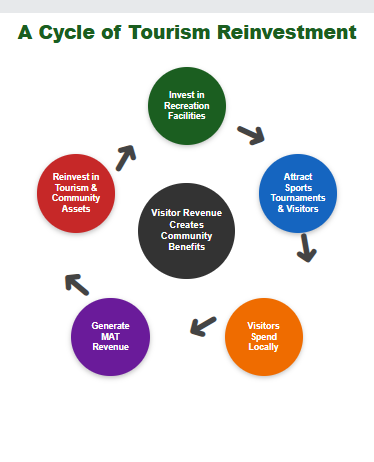
Every tournament brings visitors who stay in local hotels, eat in local restaurants, shop in local businesses, and contribute to our local economy. Those visitors also pay the Municipal Accommodation Tax (MAT), which is specifically intended to support tourism-related initiatives.
I believe investing MAT revenue into recreation facilities that attract sports tourism fits exactly within that purpose. Better fields, diamonds, arenas, and community facilities help bring more provincial and national tournaments to Guelph. Those visitors generate spending in our community while creating additional MAT revenue that can be reinvested into future tourism and recreation projects.
But my vision doesn’t stop there.
Great cities don’t become destinations overnight. They start with practical investments that build momentum and create opportunities for bigger ideas.
As Guelph grows its tourism economy, we should use that success to pursue transformative projects that showcase what makes our city unique. That could include working with provincial and federal partners to explore opportunities such as establishing the Canada Agriculture and Food Museum in Guelph, recognizing our city’s leadership in agriculture, research, and innovation.
It could also include exploring the creation of a small-scale, retro-inspired ballpark that provides a permanent home for the Guelph Royals while creating a unique venue for tournaments, community events, and special baseball experiences.
These ideas will take time, partnerships, and careful planning. They should not be funded by simply increasing property taxes. They require partnerships, careful planning, and a long-term vision.
But every ambitious idea starts with a practical first step.
By making strategic investments today that generate new revenue tomorrow, Guelph can strengthen its economy, support local businesses, improve community facilities, and reduce long-term pressure on property taxpayers.
We should not just ask how we maintain what we have.
We should ask how we build a Guelph that becomes a destination people want to visit.

Comments
Nothing yet. Say the first thing.
Sign in to join the conversation.