
Last month I ran a feature, Seven things you probably didn’t know about bats. It proved to be a popular post, so I thought I would try the same take on another topic. This time it’s chaparral, something I’ve grown quite familiar with since I live in Southern California.
In researching this topic, searching around on the internet, I found there was just as much, maybe more, misinformation about chaparral than useful information. I hope I can clear things up.
Chaparral is evergreen
Evergreen shrubs and small, evergreen trees constitute chaparral. It is distinct from another plant community, coastal sage scrub, which will grow adjacent to stands of chaparral. Coastal sage scrub is made up of smaller, usually waist high, shrubs, many of which are aromatic sages. A good percentage of coastal sage scrub plants are deciduous, meaning they drop their leaves for a period of time during the year.
Chaparral plants are somewhat taller than those found in coastal sage scrub, and include several species of scrub oaks as well as dozens of species of manzanita and ceanothus. Chamise (Adenostoma fasciculata), Toyon (Heteromeles arbutifolia), and Lemonadeberry (Rhus integrifolia) are other typical chaparral species.
Chaparral is not international
Some folks will tell you that chaparral spans the globe. They will tell you that chaparral grows pretty much wherever there is the goldilocks climate of cool summers, warm winters, and moderately low precipitation. They will point to Southern Africa, parts of South America, the Mediterranean and a few other regions of the globe and tell you that you will find chaparral there. These statements are wrong. When folks talk about chaparral in the Mediterranean, South Africa, and other places, they are referring to plant communities similar to chaparral.
The shrubs and small trees of these environments may resemble chaparral, but they are composed of different species that evolved separately from chaparral. The shrubland around the Mediterranean is called maquis; the shrubland at the southernmost region of South Africa is called fynbos. It is mallees in southwestern Australia and the matorral in central Chile.
California is chaparral
OK, California is a lot of things. The Golden State has deserts and forested mountains, giant redwoods and sequoias, but the dominant plant community that spans much of California is chaparral. Although chaparral stretches a bit into Baja California, Mexico, and north, into Oregon, the majority of chaparral is in California, and California is mostly covered with chaparral.
Chaparral is the most famous plant community in the world
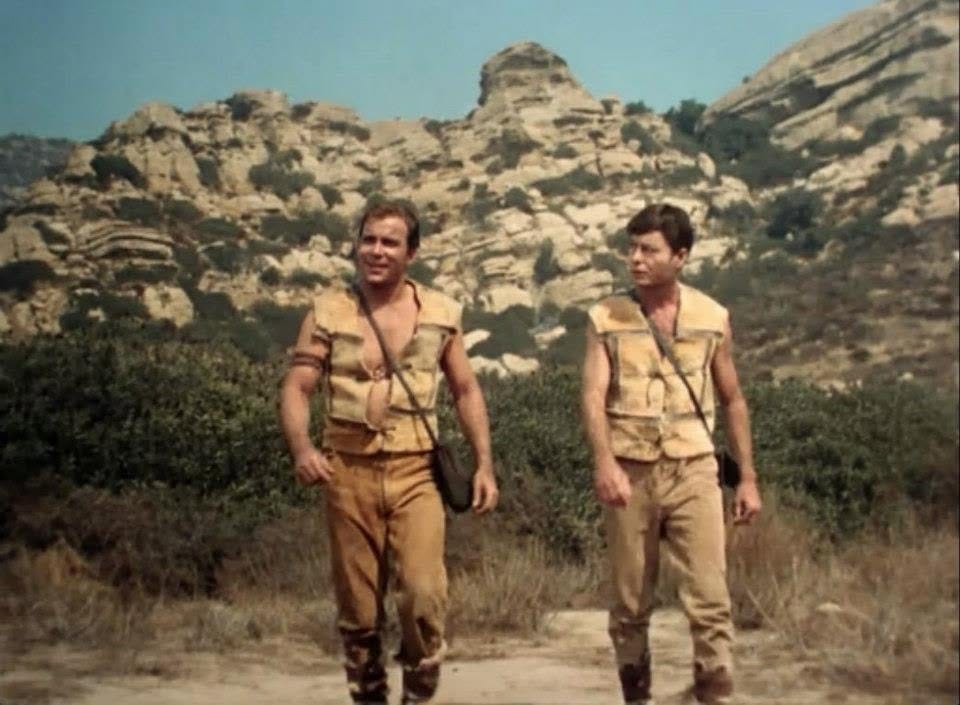
As Hollywood is in Southern California, and much of Southern California is clad in chaparral, this plant community has had at least a supporting role in a great number of films and television shows. Hollywood filmmakers have depicted Nazis driving their tanks through chaparral. Celluloid Roman soldiers have trekked through chaparral. Space aliens have landed their flying saucers in chaparral. And as Captain Kirk and crew boldly went where no man had boldly went before, they often went in chaparral.
Chaparral is not a single plant community
Just as the term “pine forest” can refer to different types of woodlands—one might be dominated by Jeffery pines, another by ponderosa pines—chaparral contains a number of plant communities that can vary widely depending on rainfall, elevation, soil types, and even the orientation of the landscape, whether a hillside or mountainside is north facing or south facing.
Chaparral is sometimes distinguished by the dominance of a single genus or species, such as redshanks. I have hiked through areas of San Diego County and found myself surrounded by chaparral made up entirely of chamise or manzanita.

Mixed chaparral, an assemblage of different species, blankets some regions. There is also maritime chaparral, which grows along the Pacific coast. Episodic chaparral crops up after forest fires and maintains an ecological balance until it is succeeded by the trees of a regenerated forest.
There is such a thing as old growth chaparral
We hear the term old growth when folks talk about aged forests, but there is such a thing as old growth chaparral, too. Undisturbed by fire for 60 years or more, old growth chaparral will contain plants we normally think of as shrubs growing as trees up to 50 feet or taller. Some stands of chaparral have not burned in over 200 years.
Before the Spaniards came to Mexico, California, and the rest of the western U.S., chaparral fires were infrequent. I know that seems odd, particularly to Californians who are used to seeing scrublands burn again and again over the years. But scientists looking into the history of fire in the west have found that, lacking sources of ignition, chaparral rarely burned.
I can hear folks say, “But the Native Americans managed chaparral landscapes by frequently burning them.” While people who lived in chaparral-dominated regions often used fire to clear vegetation around their homes and villages, there is no evidence that Native Americans practiced large-scale burning of chaparral.
It is true the plants of chaparral are adapted to surviving fires. This bit of half-knowledge has led folks to believe that fires have been historically frequent in chaparral. But that is yet another myth.
If you grew up watching the television show “High Chaparral,” you didn’t see chaparral
The television show, which aired from 1967 to 1971, was filmed in Tucson, Arizona, which is in the Sonoran Desert. While you watched the saga of the Cannon family, you saw plenty of saguaro cacti, but zero chaparral.
It’s the same for Chaparral High School in Las Vegas; there’s plenty of desert around the school, but nada when it comes to chaparral. Same for Chaparral High School in Scottsdale, Arizona, and Chaparral High School in Killeen, Texas. No chaparral there, either.
Have you experienced chaparral? Are you aware of the plant communities where you live? Please share by clicking the “Leave a comment” button below.
Previous Green Dispatches about chaparral:
In touch: Chaparral
·
January 31, 2025
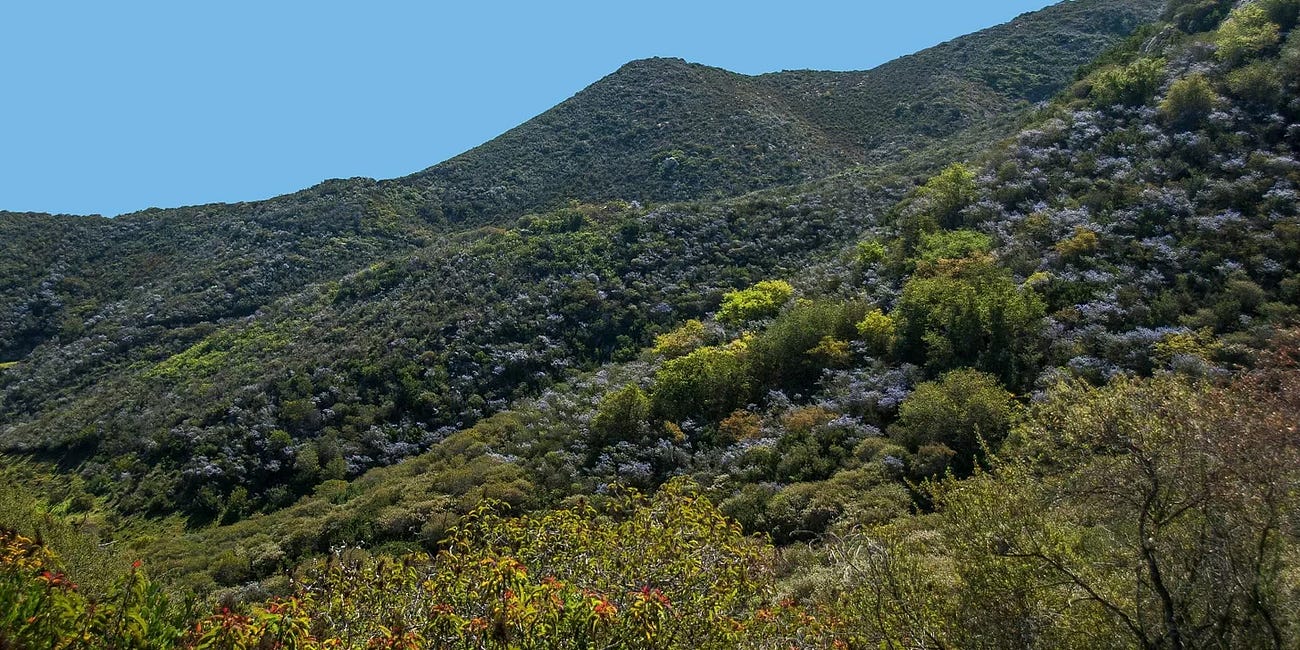
The eyes of the entire world were focused on Los Angeles in January 2025, as neighborhoods of the city were lost in conflagrations. While much of the reporting of these fires described the landscapes surrounding the burning communities as just brush or, incorrectly, forest, they are correctly identified as a mixture of coastal sage, chaparral, and invas…
Comments
Nothing yet. Say the first thing.
Sign in to join the conversation.