

Map Your Local Web
Identify other change makers in your bioregion
Create or join a regular meetup focused on regenerative projects
Map local resources, initiatives, and potential collaboration opportunities
Deepen Your Practice
Choose one regenerative skill to master this year (e.g., permaculture design, mushroom growing, empowering facilitation, natural systems thinking)
Start a learning circle with others interested in regenerative practices
Document and share your learning journey to inspire others
Start Small, Think Big
Launch a pilot project in your community that demonstrates regenerative principles
Partner with existing initiatives to enhance their regenerative impact
Create opportunities for others to experience regenerative practices firsthand
Build Regenerative Networks
Connect with other change makers through platforms and events
Join or create a local cooperative or regenerative business network
Foster cross-pollination between different sectors and initiatives
Cultivate Your Capacity
Practice personal regeneration through rest, reflection, and renewal
Develop your emotional resilience through community support
Balance action with contemplation to maintain sustainable engagement
Remember: The Regenerative Renaissance isn't just a movement—it's an emergence of new ways of being and doing. As a change maker, your role is both catalyst and participant in this global transformation.


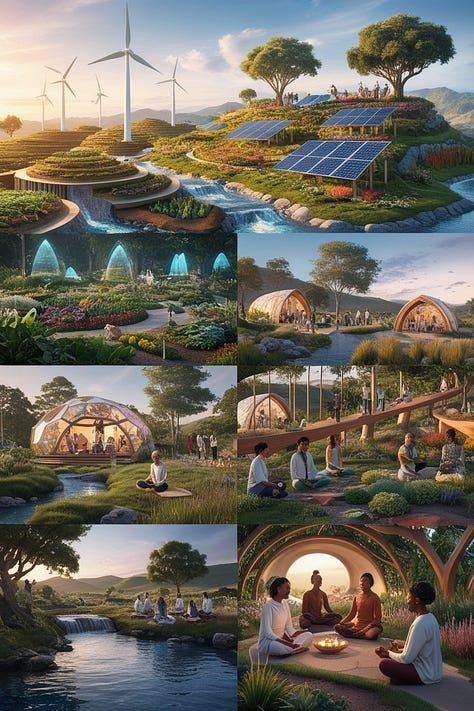
Choose one action point that resonates most strongly with you and commit to it this week. Start small, but start now. Connect with at least one other change maker in your area and explore possibilities for collaboration.
The world doesn't just need more solutions—it needs more people who approach challenges with regenerative mindsets and methods. Your natural inclinations as a change maker, combined with conscious action and collaboration, can create ripples of positive change that extend far beyond your immediate sphere.
Your journey as a conscious catalyst for change is an essential part of this unfolding story.
Here's a detailed implementation guide breaking down the action points into practical steps:
MAPPING YOUR LOCAL WEB: Building Your Regenerative Network
Initial Scanning Phase (First 30 Days)
Create a digital or physical map of your bioregion
List existing environmental groups, food cooperatives, community gardens
Research local indigenous knowledge keepers and community elders
Identify sustainability-focused businesses and social enterprises
Note regular community events and gathering spaces
Strategic Connection Building (60-90 Days)
Attend at least two local community events per month
Schedule "curious conversations" with three change makers
Join or create local environmental or community development groups
Create a simple database of contacts and initiatives
Start documenting potential collaboration opportunities
DEEPENING YOUR PRACTICE: Personal Development Pathway
Take this Skills Assessment and Planning questionnaire
Audit your current regenerative skills
Choose one primary skill focus:
Ecological (permaculture, biodiversity restoration, water management)
Social (facilitation, conflict resolution, community organizing)
Technical (renewable energy, green building, waste reduction)
Economic (cooperative development, local currencies, circular economy)
Learning Structure (6-Month Framework)
Month 1-2: Foundation Building
Take our online course or read key texts
Join related online communities
Start a learning journal
Month 3-4: Practical Application
Shadow an experienced practitioner
Start a small pilot project
Document your progress and insights
Month 5-6: Teaching and Sharing
Host a skill-share workshop
Create educational content
Mentor someone new to the field
STARTING SMALL, THINKING BIG: Project Implementation
Project Development Framework
Choose a focus area aligned with local needs
Start with a 90-day micro-project
Use this structure:
Week 1-2: Research and Design
Conduct community surveys
Identify resource needs
Draft project plan
Week 3-6: Initial Implementation
Gather necessary resources
Build core team
Launch pilot phase
Week 7-12: Evaluation and Scaling
Collect feedback
Document lessons learned
Plan next phase
Sample Starter Projects
Community composting network
Local food forest
Skill-sharing platform
Repair café
Seed library
Mushroom farm
Micro-greens greenhouse
Zero-waste initiative
BUILDING REGENERATIVE NETWORKS: Connection Strategy
Network Development (First 6 Months)
Monthly Focus Areas:
Month 1: Map existing networks
Month 2: Attend key events
Month 3: Identify collaboration opportunities
Month 4: Initiate joint projects
Month 5: Create communication channels
Month 6: Host network gathering
Collaboration Framework
Start monthly regenerative meetups
Create shared resource directory
Develop project collaboration guidelines
Establish regular knowledge-sharing sessions
CULTIVATING YOUR CAPACITY: Personal Sustainability
Daily Practices
Morning reflection (20 minutes)
Nature connection time (30 minutes)
Learning documentation (15 minutes)
Gratitude practice (10 minutes)
Weekly Rhythms
One deep work day on projects
One community engagement day
One rest and reflection day
One skill-building session
Monthly Integration
Review and adjust goals
Celebrate progress
Connect with mentors
Update project plans
MEASURING IMPACT: Tracking Progress
Create a simple tracking system for:
Network Growth
Number of active connections
Collaboration initiatives
Resource exchanges
Project Impact
Environmental metrics
Community engagement
Knowledge sharing
Resource mobilization
Personal Development
Skills acquired
Challenges overcome
Insights gained
Relationships built
Remember to:
Start with what energizes you most
Document your journey
Share learnings regularly
Celebrate small wins
Stay connected to your "why"
Maintain work-life balance
Comments
Nothing yet. Say the first thing.
Sign in to join the conversation.