
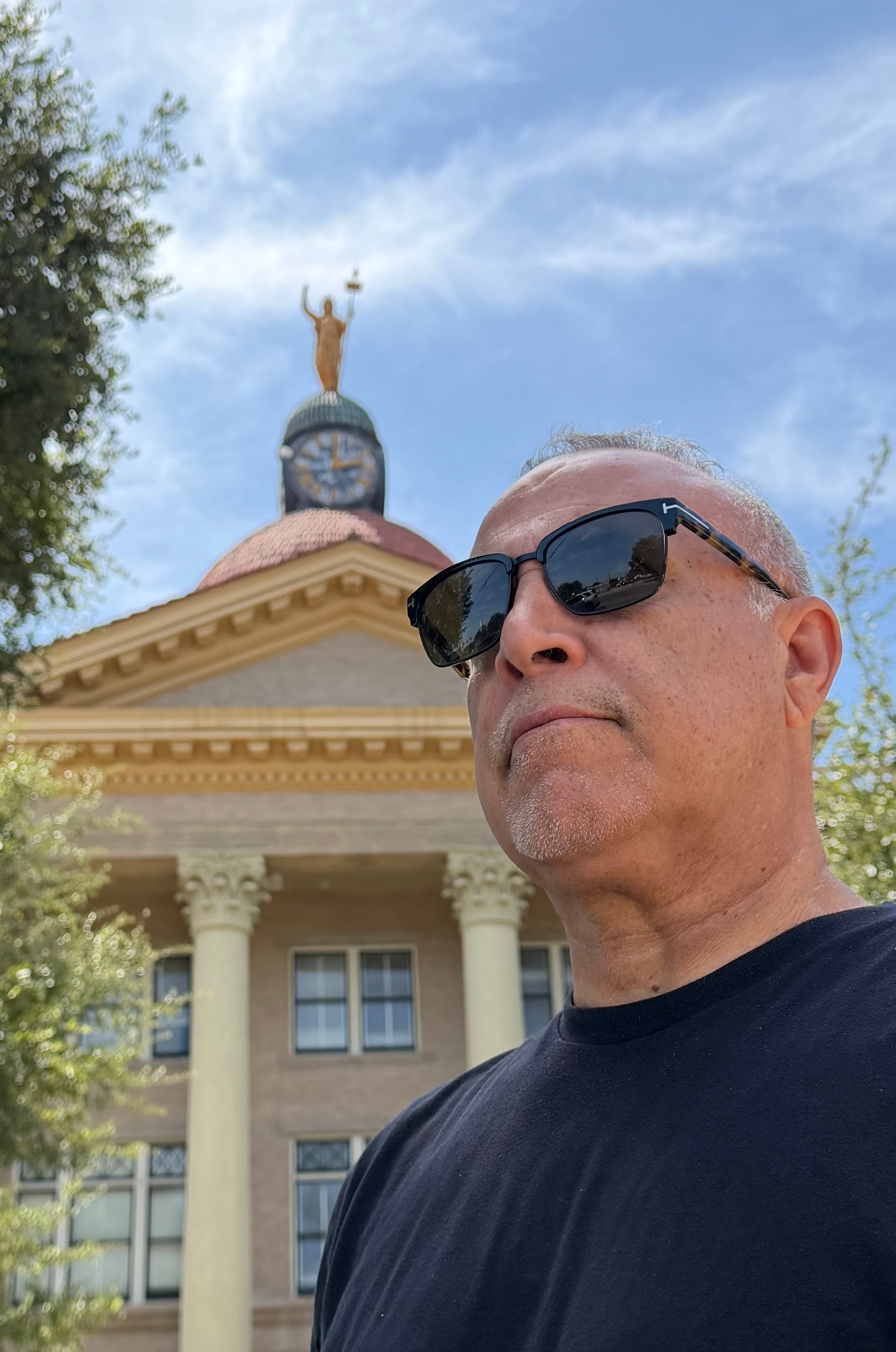
Beeville Texas sits about an hour northwest of Corpus Christi, one hundred miles southeast of San Antonio and a world away from Washington DC. It exists at the intersection of our current cultural wars, racial tension and a complex history that reminds us that nothing is new under the sun. Especially a Texas sun.
The small town can be found in the South Texas brush country where the coastal plain starts to give way to ranch land in the interior. Cotton is king here. It is the kind of small town most people drive through on their way to somewhere else. A place to get gas and keep going.
But I didn’t come here to pass through.
I came to south Texas in the dog days of August summer heat and humidity because Beeville is quietly becoming one of the most instructive places in America to understand the most consequential swing voters in America: Hispanics.
What is actually happening to Hispanic voters in America, as they bounce between ambivalence and disaffection, is a story about the intersection of race, class and partisanship that is both unique and novel and also a tale as old as time. It’s a reflection of how institutions tell the story from a singular perspective that misses the complex interaction of competing identities in American society that have been with us since our beginning. Latinos, or Hispanics as they prefer in south Texas, have always been dismissed as apathetic by a ruling class too lazy and far removed to understand these voters.
Here in Beeville, as they are across the country, Hispanics are doing something no other constituency in America is doing: They’re rejecting both parties at historic rates.
Hispanics have emerged as the fastest growing ethnic voting group in an America paralyzed by racial identity and partisan politics and are breaking all the rules of institutional understanding of both along the way.
But it wasn’t always this way in Beeville.
Or maybe it was.
The small town of 13,000 is nothing if not a story of contradictions, exceptions and qualifiers covered over by the thick layers of hand-picked history and syrupy mythology of good old Texas story telling. Texas, of course, perceived itself as a nation years before it became a state. And every nation requires a mythology about its origin story, however real or made up that story may be. Rome had Romulus and Remus. Texas has the Alamo.
Driving the lonely stretch from Corpus Christi to Beeville is an exercise in history, topography and reconciliation. Massive windmills dot the landscape through America’s largest oil producing state. Cotton is still grown en masse here, a remnant of the antebellum south that exploded with post civil war expansion, the unique top soil of the coastal bend near the Gulf of Mexico (or Gulf of America, depending on your politics) and the regions proximity to the port in Corpus Christi that now is back logged with oil tankers as its primary export.
This is brush country which looks like a blend of flat midwestern plains, green scrub oaks struggling to keep its life and color through the humid air and rain that falls during this time of year amidst the harsh land and red dirt that belies its southwestern desert location. It looks like the clash of all three intersecting in one place because that’s precisely what is happening here - a clash not unlike the Black, brown and white people who all have history here as well.
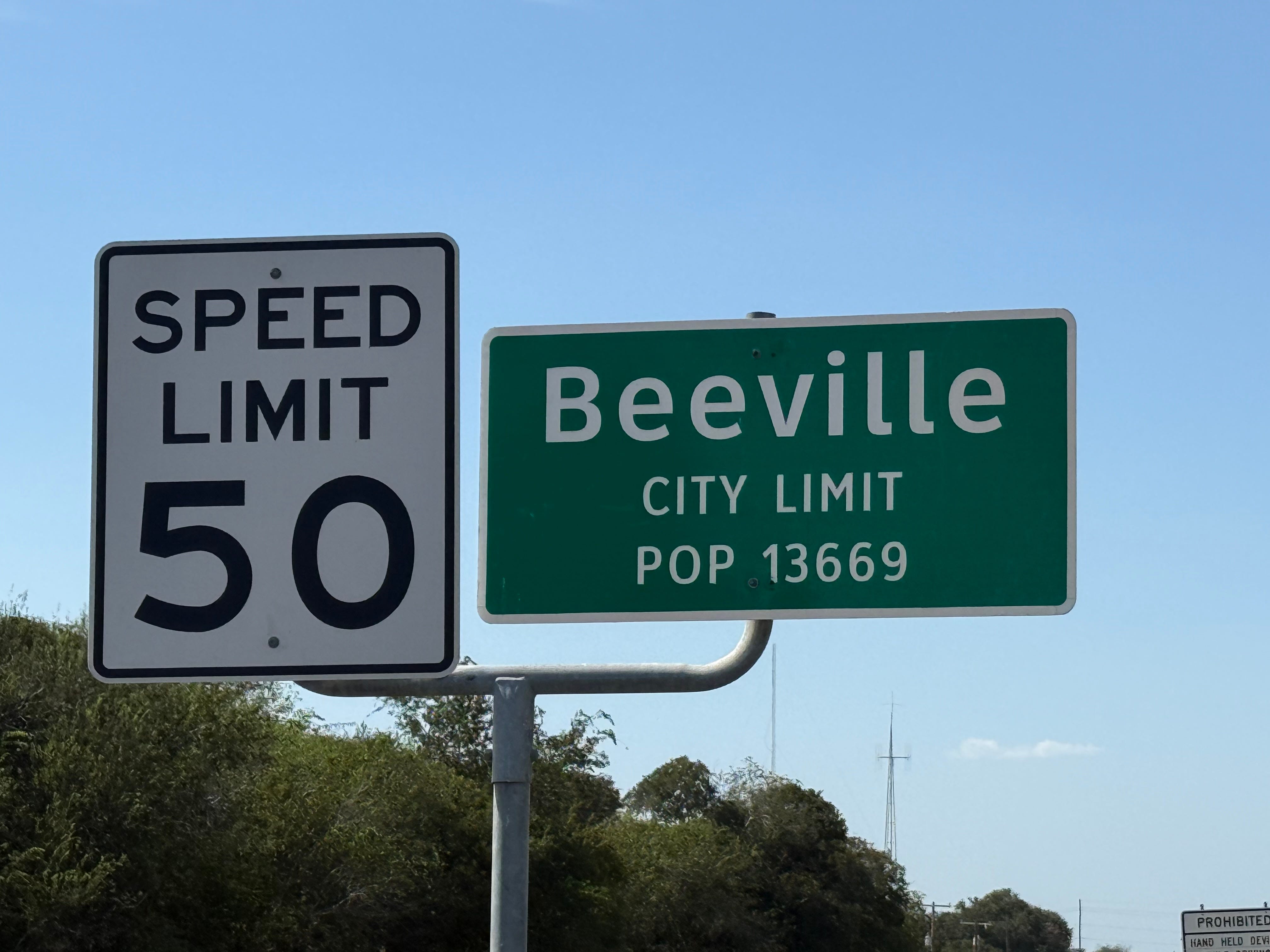
I arrived into Beeville the way you drive into most South Texas towns now, past a Whataburger, a Dollar General and a billboard for a personal injury lawyer, looking for a version of America that the history books insist should not exist anymore. Here in the brush country the early white pioneers laid out the towns thirty miles apart from each other - precisely a days ride by covered wagon. This insightful fact I pulled from a book titled The Last Sheriff in Texas written by one James McCollom, a 5th generation son of Beeville whose account of an infamous sheriff in the region I’ll recount shortly. From Beeville it was thirty miles north to Goliad, thirty miles north to Kenedy, thirty miles south to Sinton, thirty-two miles south to Refugio and thirty miles west to George West.
Everywhere in these parts is thirty miles from anywhere, which is thirty miles from everywhere.
Close observers will notice that most of these small towns, a day away from each other, are named after the white pioneers who ‘founded’ them. This stands in contrast to the Spanish friars who colonized California through the mission system and named their overnight stays after the Spanish idioms of Catholic saints in their own version of nation building.
This distinction isn’t a small one. It defines the perspective of who begins to tell the story and so long as that narrative lasts - the mythology, power structure and future flow from it.
I grew up in a small rural southern California community not too unlike Beeville. Small places where everyone knows each other and each others business - for better and worse. Places where still waters run deep and what’s on the surface is never what it seems.
Places that for a variety of reasons are frozen in time.
Downtown Beeville is struggling economically. It’s a Saturday and there’s no hustle and bustle anywhere. The streets are quiet. Storefronts are empty and gutted. There’s not much of an economy here and really hasn’t been since the naval base closed in 1993 as part of The BRAC (Base Realignment And Closure) process that restructured our defense spending after the Cold War. The loss of government spending killed the local economy and, ironically, gave rise to more anti-government spending sentiment.
Unlike all the other travelers exiting the offramp into Beeville, I’m not here to get gas, buy a diet coke or stretch my legs. Beeville is my destination.
I’m here to watch two Democrats try to solve a problem their party has not figured out how to solve anywhere else, and they are both trying to solve it in two very different ways, from different perspectives but they’re doing it together.
One is a Mexican-American cowboy Bobby Pulido. Pulido is a two time Latin Grammy winning singer with an uncanny connection to his audience, his fans and, increasingly, his voters. Pulido is not just a reflection of Hispanic culture in these parts. He is one of its architects.
The other is James Talarico, a rising star in Democratic politics who has emerged as much more than the latest great hope that Democrats will finally turn Texas blue. Talarico is the country’s most formidable fundraiser and a clear generational talent, primarily because his faith-based, blue collar populist message sounds like a Democratic Party that existed when my working poor Latino parents joined a generation ago but doesn’t anymore.
Two messengers, representing the two pillars of a Democratic coalition that has grown increasingly estranged from itself, are co-hosting a free concert in a Beeville dance hall - The Grand - and trying to reconnect with the Hispanic voters they have been losing for a decade through culture, the very way they lost them in this first place.
A white Harvard educated theologian and a Mexican-American Tejano singer at the forefront of Tejano culture - two candidates from the same party with the same objectives with two different personal perspectives of their state, nation and world.

I’ve been to thousands of political events, rallies and townhalls. But this one has the air of being different. It’s being held in a deep red county that is also 70% Hispanic. It’s economically depressed - “broke, not poor” I’m reminded by Mr. Pulido regularly.
When he invited me to Beeville I was hesitant. “I’ve been to a million political rallies Bobby,” I told him.
“Not like this one,” he said.
“If we make Beeville competitive, let alone win it, Texas finally turns blue and the state changes entirely…and with it the country”, he reminded me. “Beeville is the most important city in America in these midterms. Who wins the Hispanic vote wins control of congress and that sets up the fight for the White House in 2028. It all runs through Beeville.”
Convinced I bought a Southwest ticket, flew to Corpus Christi and found myself walking around Beeville a few hours before the show began. I showed up at The Grand dance hall for sound check and caught a few moments with Bobby Pulido as his team prepared for one of his final concerts and what might just be the concert tht catalyzes his political career and the countries future.
To understand why this concert matters in this Texas congressional race, why it’s so consequential in the 2026 midterms, and why it’s happening here of all places, you have to go back to the very beginning. To Beeville’s origin story. It’s mythology.
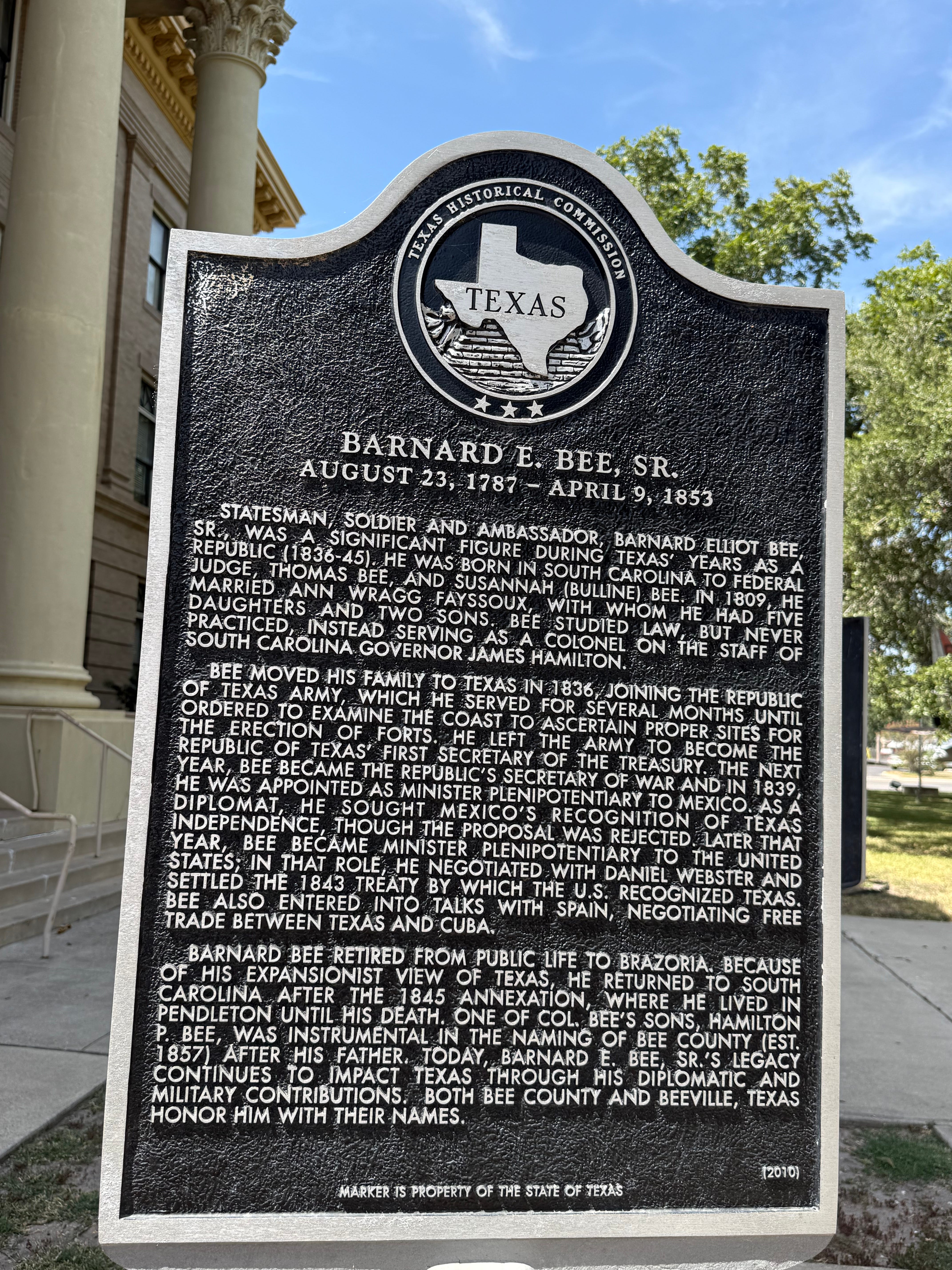
Beeville takes its name from Barnard E. Bee, Sr., a secretary of state and secretary of war for the Republic of Texas. Bee himself died in 1854, before the Civil War began, but his sons did not share his timing. Both Hamilton P. Bee and Barnard E. Bee, Jr. became Confederate generals, and it was Hamilton who pushed for naming the county after their father. The town was incorporated in 1890, a namesake tribute passed down from a family that fought to preserve slavery, sitting on land that would spend the next century and a half arguing about who belonged and who didn’t.
It did not take long for that argument to turn violent.
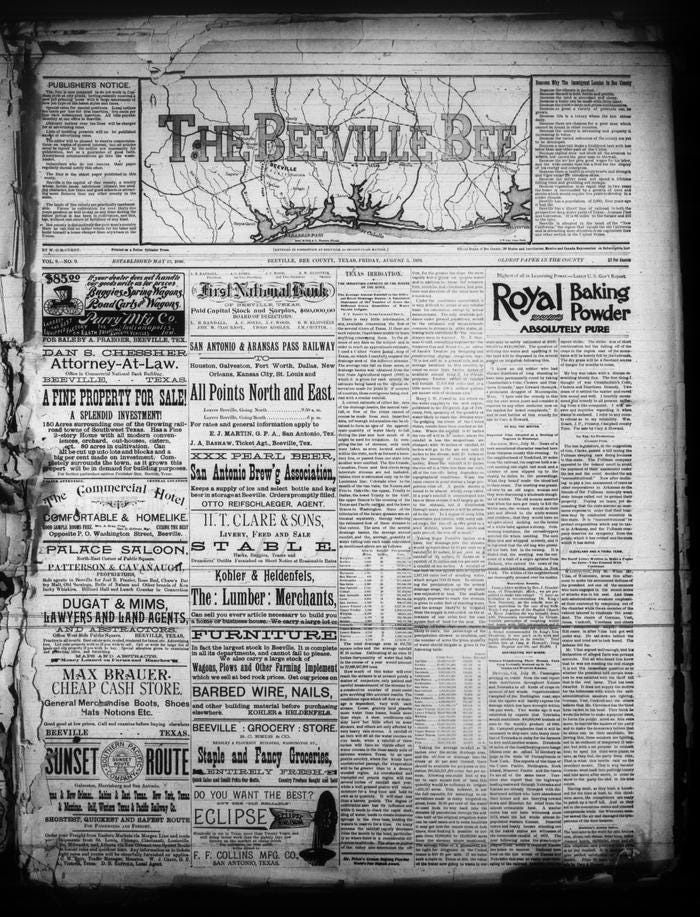
Shortly after Beeville’s official incorporation, in August 1894, a riot broke out that would come to define the region’s complicated intersection of race for the next century and up to the present day. Black men, angry that Mexican laborers and immigrants were willing to work for lower wages, attacked Mexican homes in the middle of the night. They were soon joined by white laborers, in a moment of Black-white class solidarity united against what they saw as a growing brown threat to their livelihoods.
Homes were stoned.
Residents were beaten and warned to leave town or face worse. The 1894 version of ‘Go back to where you came from’.
At least three Mexican residents were seriously hurt as they and their homes were violently attacked.
Let me repeat what happened in Beeville because this too is a history you did not learn about in school. Moreover it violates our modern sensibilities because we too often believe that we have arrived at some enlightened understanding of race and class conflict in our modern age.
A Black mob violently attacked Mexican and immigrant families.
The flash point was economic anxiety and duress but it manifested in racial violence.
And there is another fascinating piece of evidence from the same year that is even more uncomfortable and inconvenient. Research at Texas Christian University into the 1894 Texas elections found accusations that large numbers of Mexicans were being naturalized immediately before elections. Bee County naturalization records confirm substantial Mexican naturalization activity during this period.
That means Mexican residents weren’t merely becoming part of Beeville’s labor force. They were beginning to become part of its electorate.
And that means Black workers weren’t just resentful of wage competition - they were likely resentful of Hispanic immigrants voting and exercising political power.
Curiously, or perhaps not, the strongest defenders of the Mexican laborers’ presence in town were the wealthier whites, the farmers and businessmen who employed them. Their motivation wasn’t for our modern enlightened notions of a healthy pluralism, the benefits of diversity or an early flicker of social justice. It was that they liked having a workforce willing to work harder for less money, and they intended to keep it that way.
Mexican, Black, Anglo, Irish Catholic. Everyone in Beeville was competing for the same wages and the same footing, and the lines of who turned on whom never ran where you’d expect. The economy mattered. Race mattered. Ultimately the political outcomes mattered. Just not in the clean lines we’ve taught ourselves to believe in today because the lines have never been clean.
Not in 1894 and not in 2026.
The violent riot was Beeville’s introduction to race in America.
But Beeville would harbor a darker secret.
Juneteenth is often told as a story about emancipation news arriving late to Texas. That narrative is only partially true. On June 19, 1865, Union General Gordon Granger arrived in Galveston and announced that enslaved Texans were free, more than two years after the Emancipation Proclamation. But the deeper story is about enforcement. Freedom written into law meant little without the power to make it real.
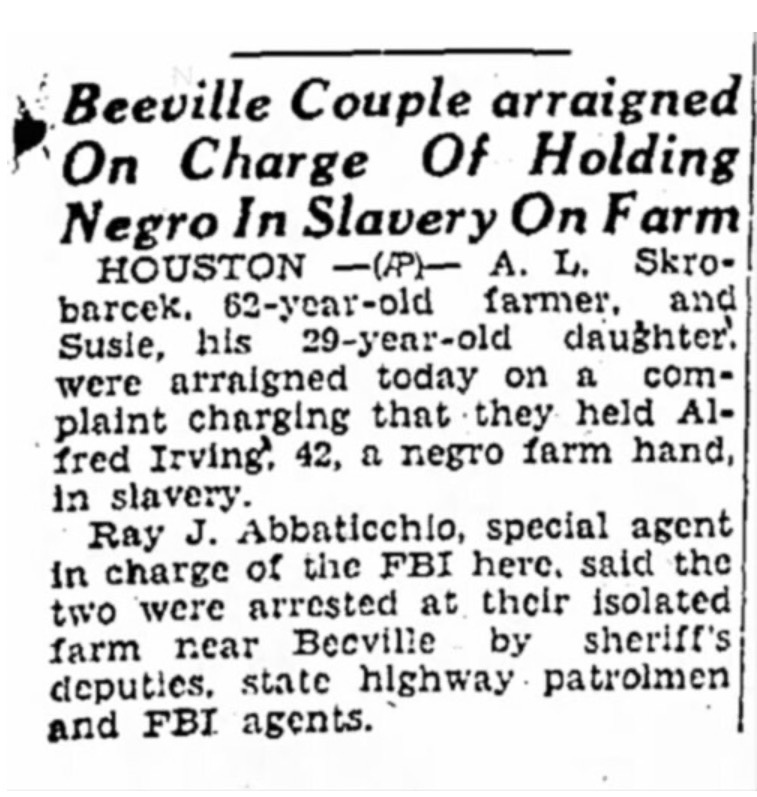
That history has an extraordinary connection to Beeville. Nearly eight decades later, federal authorities discovered Alfred Irving, a Black man born thirty years after emancipation, being held in involuntary servitude on a farm near the town. In September 1942, federal agents and Texas Highway Patrol officers drove out to a farm outside Beeville and freed Alfred Irving from a white farm family that had kept him in chains, starved him and beaten him with whips and ropes for years. His captors were tried and convicted, and historians still point to Irving’s case as the last documented instance of outright chattel slavery in America, seventy-seven years after the Thirteenth Amendment supposedly ended it.
Irving did not need someone to tell him slavery had ended. He needed someone to enforce the freedom the law had already promised him. In 1865, federal power arrived in Galveston to make emancipation real. In 1942, it arrived near Beeville to do much the same for Alfred Irving. The nearly eighty years separating those events reveal something essential about Juneteenth: freedom could be declared in a moment, but making it real could take generations.
It came to be known as a place where the last remaining vestige of slavery in America arrived later, much later and more shamefully, than modern sensibilities allow for. By the time Beeville made national news on race relations again the country had convinced itself the subject of race, and our original sin of slavery, was settled.
We had moved beyond that old understanding of race - or had we?
This was not Mississippi.
Not Alabama.
Bee County, Texas.
But wait. There’s more to Beeville’s story.
Five years after Alfred Irving was freed as a slave from an actual Texas plantation, Beeville produced the man who would make the town a household name across the country for entirely different reasons: a self-described straight-shooting lawman named Vail Ennis, whom TIME magazine nicknamed the Hellbent Sheriff after he survived a shootout and kept firing until both men who shot him were dead.
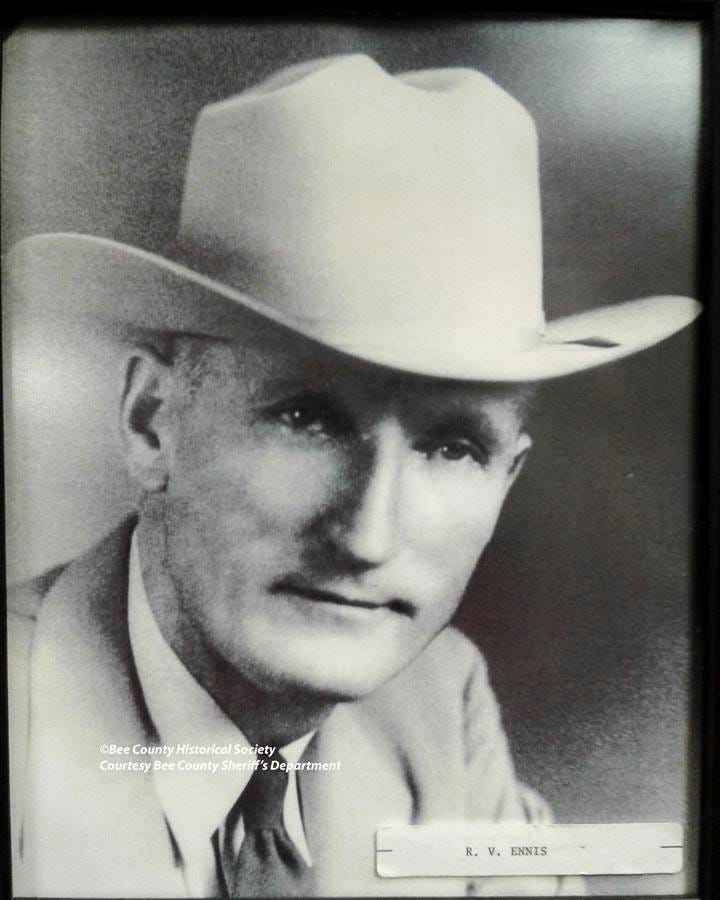
It wasn’t the first encounter that ended with smoke coming out of the barrel of his gun. Nor was it the first time the actual events of Ennis’ brand of south Texas justice would be suspect.
Ennis had already killed a Black prisoner in the county jail with no witnesses present. The man had tried to grab his gun, Ennis explained. Without the benefit of the dead man’s side of the story, there wasn’t much for anyone to do about it. Not that they would have in South Texas in the days of segregated schools and a country with separate drinking fountains anyway.
By the time of that questionable shooting, Ennis had also killed three Mexican American men on a ranch outside town, in a case so disputed that when a jury of his peers acquitted him, twenty-one of the county’s leading citizens petitioned for his removal.
The voters of Beeville reelected him anyway.
That’s right. Beeville kept Ennis in office because of his actions, not despite them.
That was the Beeville of 1947. A town where a sheriff could kill Black and Mexican American men in disputed circumstances and still win at the ballot box, because the ballot box did not really belong to the people he was killing.
It took a Mexican American community mobilization effort to end his career - five years and one more killing later. Over two thousand people showed up to a rally at the Bee county fairgrounds to hear a Spanish-language appeal to vote him out. In a county of eighteen thousand people, that is not just a rally. That is a movement. Louie Duffy beat Ennis by two hundred votes, and a certain kind of Texas ended that day.
Kinda.
Nearly three thousand people would turn out to the concert in Beeville to hear the Tejano music of Bobby Pulido and speeches by Pulido, James Talarico and Gina Hinojosa. The county is now three thousand people by population.
Today about 73 percent of Beeville is Hispanic or Latino. The Mexican American population that was approaching half of the community in the middle of the twentieth century is now an overwhelming majority.
Yet Beeville has not become more politically defined by its ethnicity as it has beome more Hispanic.
It has become less so.
Mexican Americans in Beeville today can be intensely proud of their Mexican ancestry and equally proud of being a Texan. He can speak Spanish with his parents and English with his children. She can be Catholic or evangelical, work in an oil field, own guns, serve in the military and have family on both sides of the border. After enough generations, Mexican and American identity cease being competing propositions.
They become intertwined. One in the same.
Most Hispanics in Beeville consider themselves conservative. For decades Hispanics here voted Democratic but as they emerged as the ethnic majority that all began to change. Slowly at first and the rapidly as both parties became consumed with cultural issues.
The political numbers are remarkable, that is, if you still believe race and ethnicity are indelibly linked to partisanship - that ones race determines ones political party and political beliefs. That’s a fading notion, and its fading is a defining feature of an increasingly pluralistic society. Race, or at least ethnicity, matters much less in a truly diverse society than previous generations once thought.
Elementary observations about race in America suggest that all non-white people must vote against whites - or at least white supremacy - which that line of thinking also suggests is one in the same. Beeville’s past and present don’t support that theory of racial understanding.
Mitt Romney carried Bee County in 2012. Donald Trump widened the Republican advantage in 2016. In 2020, Trump received 6,006 votes to Joe Biden’s 3,288. By 2024, Trump was approaching 70 percent of the presidential vote.
All of this matters because you cannot understand what Beeville has become without understanding what it was. This is not a town where the Mexican Americans here arrived recently and are still finding their footing. Families trace their lineage to a time before the United States and before the Texas Republic. They’re not immigrants and are likely further removed from that experience than most readers of this article.
This is a town named for a family that defended slavery, that watched Black and white laborers turn on Mexican neighbors within a few years of its own founding, that housed an actual chattel slave a generation later, that reelected a sheriff who killed with impunity, and that eventually organized itself into enough political power to remove him.
And today, in a town that is now seventy-three percent Hispanic, the county Vail Ennis once ran voted for Trump by more than two to one. And if youre surprised by that you can be disappointed but you shouldnt be surprised.
Beeville suggests something more consequential is occurring than simple party switching. It’s a complicated understanding of racial identity, power, hierarchy, class and culture that old models fall far short from expaining and always have. In 1952, Mexican American political organization helped end the career of a sheriff whose violence had fallen disproportionately on Mexican Americans and Blacks. Ethnic solidarity had an obvious political purpose then, because ethnicity shaped how people experienced power.
That is likely top happen again in 2026 after those same voters put that power in offie in the first place.
Seventy years later, the descendants of that mid-century community occupy a very different place. The great-grandchildren of children sent to the Mexican school can remember that history without experiencing America as their ancestors did. They can carry the same surnames, cook the same food, celebrate the same traditions and hold the same pride in their heritage, while increasingly organizing their politics around class, religion, occupation, education and culture instead.
Their ethnicity has not disappeared. It may simply be becoming less predictive of their politics - at least, in last centuries understanding of it. Unless or until it’s under attack when Hispanic ethnicity has often rallied around a common shared heritage regardless of immigration status, class or difference.
This is the difference between realignment and dealignment. Realignment means a voting bloc moves from one party to another. Dealignment means the bloc itself becomes less politically coherent.
Beeville is a remarkable place to watch that process, because it has been living through the American experiment in cultural integration for nearly a century and a half. It hasn’t done all that well with it - but could it unfold any other way?
In 1894, Mexican workers were attacked in the streets by their Black and white neighbors. In 1942, a Black man was freed from actual slavery on a farm just outside town. In 1945, three Mexican American men were killed by the county sheriff. In 1952, Mexican American voters helped remove that sheriff from office. Today, nearly three out of every four people in Beeville are Hispanic, and many (most) of their descendants are voting Republican…or were.
That progression does not tell a simple story about Republicans, Democrats or Independents. It doesn’t tell a simple story about being Black, white or brown. It tells a much larger American story about what happens to ethnic politics after generations of integration. It tells what happens when a minority becomes a majority. It tells about how no race is immune from racism and racist acts and that economic class has always been a factor in determining where and when race will play a role in our politics.
One final point was driven home to me be a political data expert on the Pulido campaign who knew south Texas as well as anyone, Donato Medina. “The further north one travels along the roads established by pioneers away from south Texas thirty miles at a time - the more conservative and white and Trump supporting they become,” he told me backstage as Bobby Pulido took the stage. “And that makes Beeville a bridge - between Brown and white, the past and the future.”
In fact, Beeville is the last stop on the road north where Hispanics make up such a large majority and are still voting with the Republican Party of Donald Trump. That’s telling us something that neither side wants to hear because the reason why doesn’t fit neatly into either parties moral high ground.
The Pulido campaign stated clearly that they believe Beeville will be key to winning a conservative Hispanic district. It’s also clear from the numbers that they’re right and not just about this congressional district because if a Democrat like Bobby Pulido can win Beeville, James Talarico can win south Texas and if he does that….well the Lone Star state goes blue and the entire country becomes a different place - at least politically - and at least for a while.
No posts
Comments
Nothing yet. Say the first thing.
Sign in to join the conversation.