
We don’t really need a Scene III, do we? The Committee did present a resolution, asking the Government of Canada to respectfully apologize for its wrongdoings against the people of Grise Fiord and Resolute, and suggested that it consider awarding financial compensation to them. The resolution was rejected.
William T. Vollmann, The Rifles, pg. 3381
How many last chances does the world get? How many excuses does mankind deserve for the wrongs it has wrought? Is there any point in a few last chapters — an entire new sequence— in the face of all that we have seen come before? These are the questions that take us into the final few chapters which make up the entirety of Part 3: Last Transit.
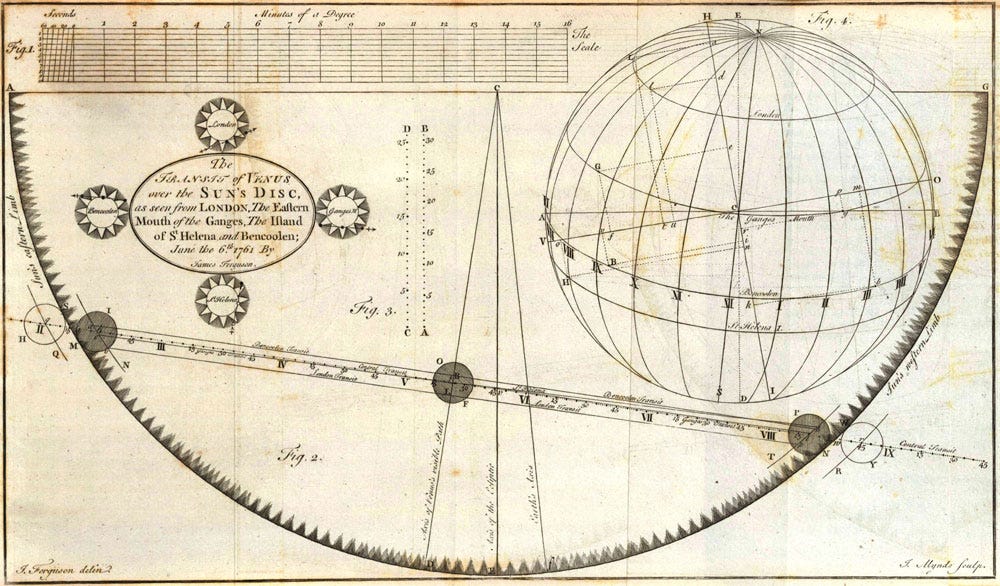
First and foremost, the title is clearly setting up one of the major astronomical events that will occur in Part 3, the next Transit of Venus. This alone takes us full circle — beginning the novel shortly before the June 6, 1761 Transit and ending the novel (at least Mason and Dixon’s story within it) shortly after the June 3/4, 1769 Transit.2 We are seeing here how much can be accomplished by this Western Hemisphere over the course of only eight short years. Eight short years where we followed just two mere underlings of those truly in power, traversing a few small tracts of land, completing a few jobs upon them. Eight short years; two men; three continents and one island; a few jobs. What else has been going on between these two Transits? Was the fate of our entire world decided in this short time?
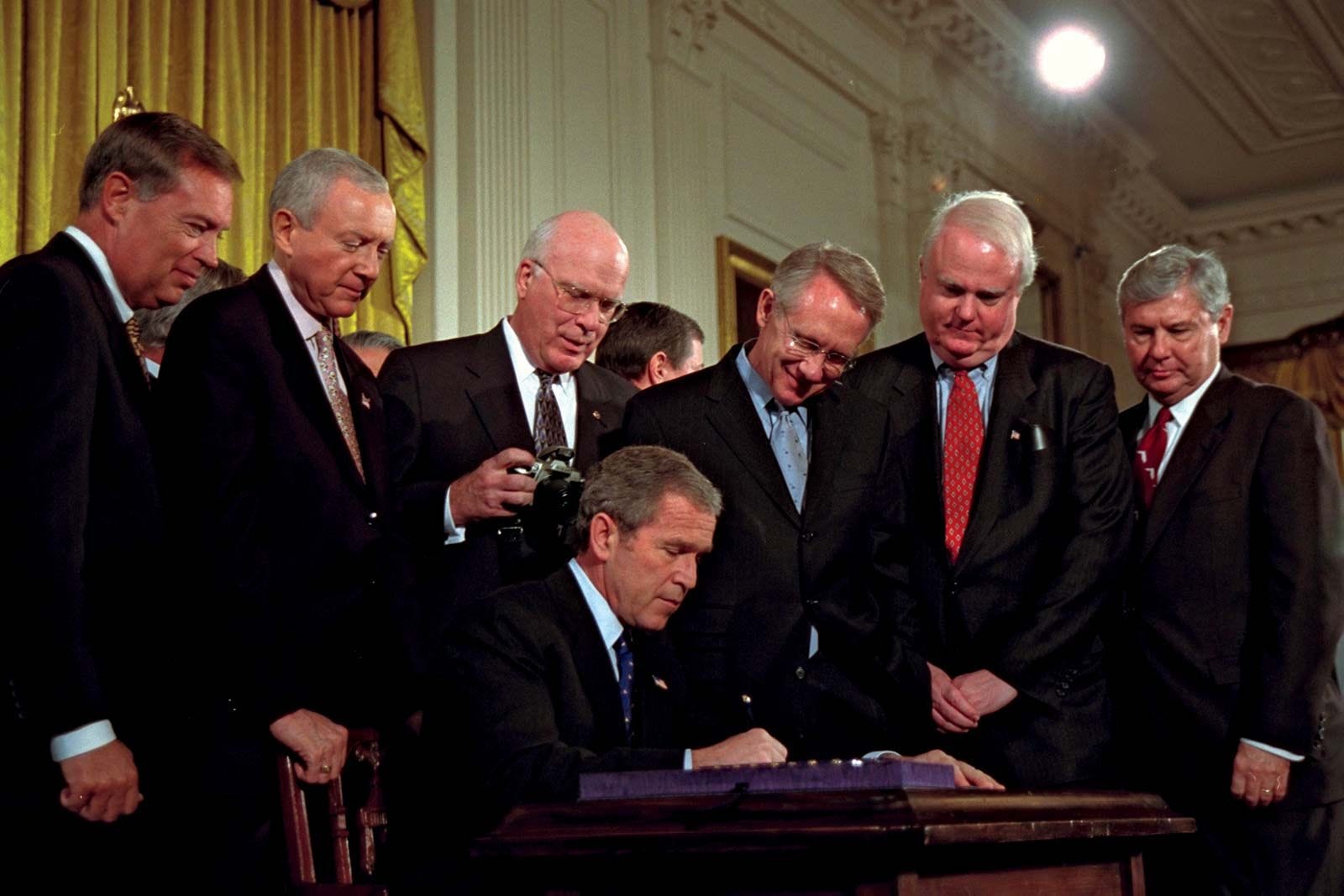
And, given this is the last Transit of Venus that the entire generation of then-currently living men will see,3 it is not just the last Transit of the century, but everyone’s last Transit. The next two will not occur until 1874 and 1882: what may occur in the time between them, or the time preceding, is incompressible to all who live in the time of Mason and Dixon. And after that, the next two will occur in 2004 and 2012: again, what implications of the Empire will occur in those years? In the former, we’ll see (just after the Civil War) the dissolution of the British East India Company, the invasion of Egypt by Britain, Edison testing the first light bulb (Byron?), and probably most importantly, the rising tide of true textbook capitalism. Though Pynchon could not have seen this coming, the latter Transits in 2004 and 2012, will directly follow 9/11, leading to the invasion of Iraq, the implications of the PATRIOT Act passing in 2001, and the rising tide of textbook fascism in the US of A.
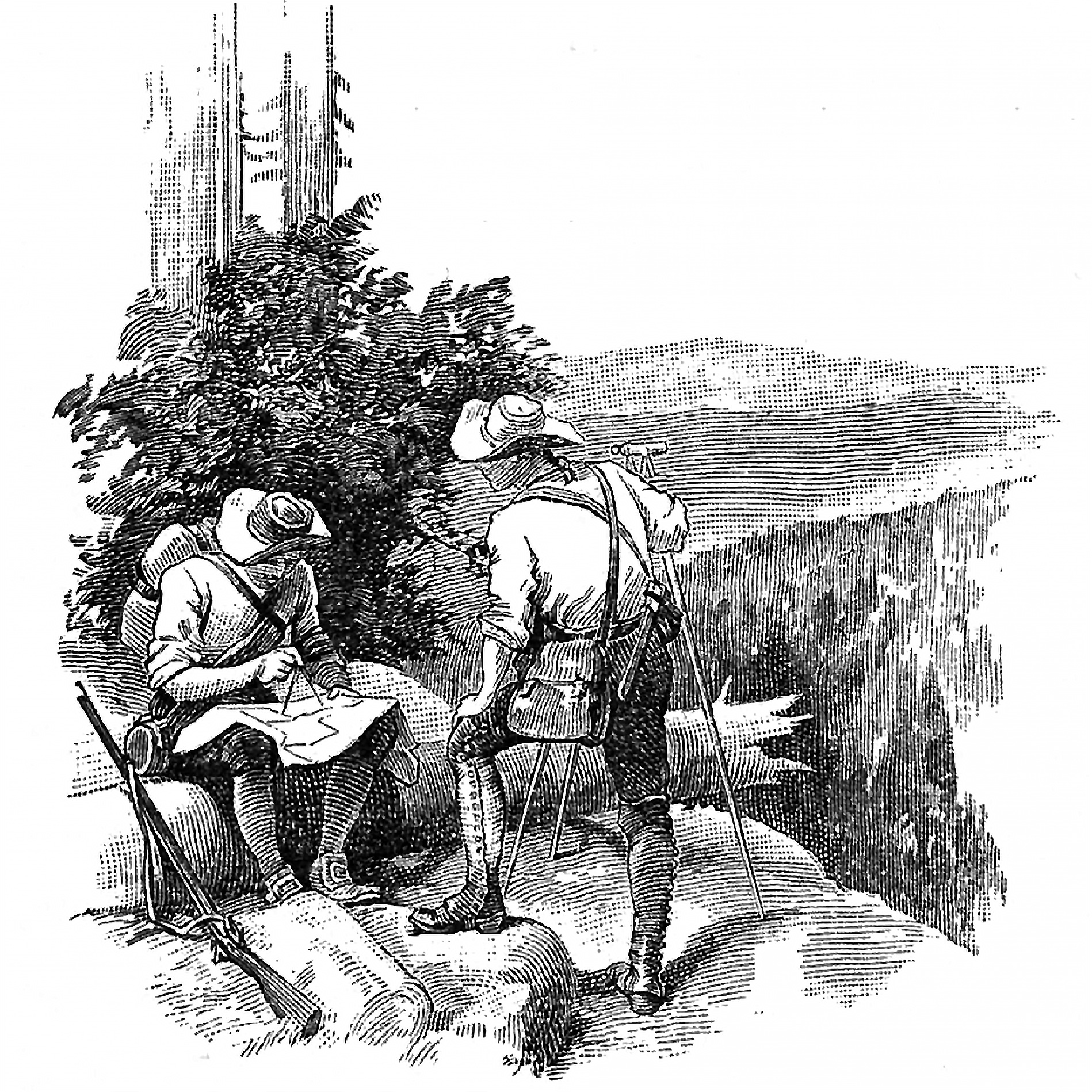
On top of all this, it is our main characters’ last transit around the sun — the final years of their lives. These final years are the last moments before Mason and Dixon (and extending the dates a bit, those like Maskelyne, the McCleans, the founding fathers, etc.) pass on from being real living people into history, story, and myth. These last passages will solidify their tales, will justify their actions, will name them as important, founding explorers in the creation of this ‘great’ country. They will find themselves, though they will not know it, lauded for their actions; they will not be remembered as true human beings with personalities, quirks, moral qualms, hobbies, friends, or family. Rather, they will be the names of men just as Christopher Columbus is the name of a man, known only for his ‘heroic’ journey and actions abroad.
In a way, this Part is similar to the final Part of Gravity’s Rainbow, especially 4.6. In it, we will see how the world has changed because of Mason and Dixon’s actions and what implications will arise in the future (just as in Gravity’s Rainbow we saw how the American post-WWII state will emerge despite the novel taking place only during and before WWII). We already know what all the implications, in Mason & Dixon, from Part 1 and 2 portended, so here we will see the post-American interactions between characters like Mason and Dixon, new discussions from and between entities like the Mechanickal Duck, evolving symbols such as that of the Hollow Earth, changing dichotomies or desires surrounding ideas like materiality and spirituality, further realized epiphanies that cannot be ignored in their old age, questions further surrounding the idea ‘when are realizations deemed too late,’ and finally, what coming generations may portend. Last Transit will observe how Mason and Dixon have changed the world and all the things — whether good, bad, or simply extant — within it.
Up Next: Part 3, Chapter 74
Vollmann, William T. The Rifles. New York, Viking Penguin, 1994.
Documentation makes it unclear if this transit occurred on the 3rd or the 4th.
If you want to see a more detailed explanation of the dates and timings of the Transits of Venus (past, present, and future), check out Footnote 2 in the post on 1.2.
Comments
Nothing yet. Say the first thing.
Sign in to join the conversation.