
By Charlie Summa
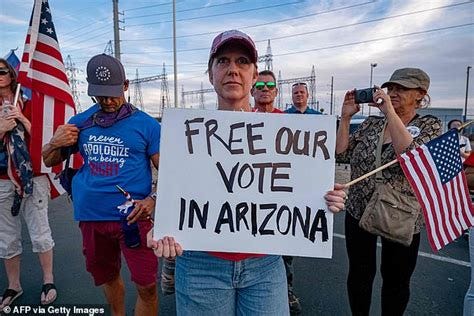
Every conversation about American election security eventually runs through one place: Maricopa County, Arizona. Home to Phoenix and more than 2.5 million registered voters, it is the largest swing-state jurisdiction in the country and the epicenter of the 2020 “Stop the Steal” campaign. Now the county official in charge of early voting, mail ballots, and voter registration is a man who built his political career questioning whether any of it can be trusted. His name is Justin Heap, and what he has done in nineteen months in office demands an immediate response from ordinary people who must help run elections themselves.
The good news is that this story is not new, and the last time Maricopa County faced it, ordinary people won. The county's 2020 results survived every recount, every review, and even the infamous Cyber Ninjas audit, which searched for months and found no stolen election at all. They survived because thousands of poll workers, ballot couriers, and volunteers from both parties did their jobs in plain view of each other. That machinery of neighbors is still standing, it is hiring right now, and it has a track record of outlasting the people who attack it. What follows is the current threat, and then the more important part: how to join the defense.
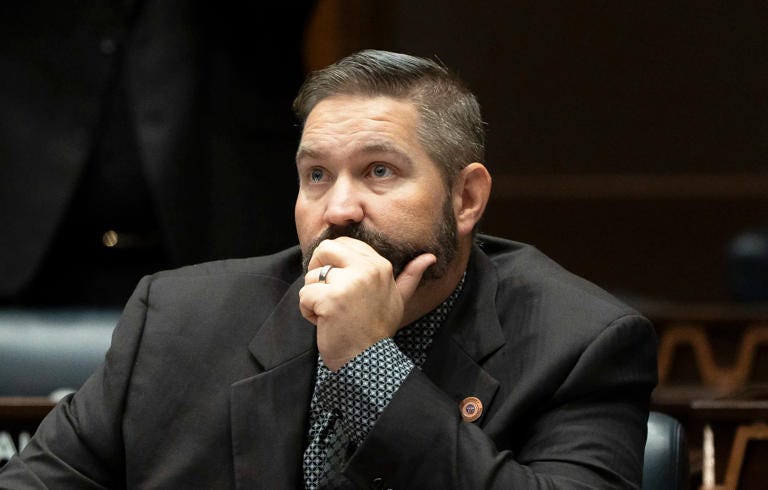
Heap, a Republican former state legislator, was elected Maricopa County Recorder in 2024 after defeating incumbent Stephen Richer, the Republican who became a national figure for defending the county’s 2020 results against MAGA conspiracy theories. Heap ran the other direction. He has falsely claimed the county’s 2020 results were rigged against Trump. That’s why the voting-rights organization “All Voting is Local” listed him among “America’s Top 10 Most Dangerous Election Deniers.” Heap’s legal representation in his ongoing court battles comes from America First Legal, the firm founded by Trump adviser Stephen Miller.
Before leaving office, Richer’s Recorder Office and the county’s Board of Supervisors, itself majority Republican, signed an agreement dividing election duties between the two offices. This was a routine housekeeping arrangement the county had used for years, but Heap denounced the deal as collusion designed to strip his authority, effectively tore it up, and in June 2025 sued his own county’s governing board. What has followed is institutional warfare in the jurisdiction that can least afford it.
Consider what that has looked like in practice. In March, as votes were being counted in a Tempe city council election, employees of Heap’s office removed a pre-tabulation scanner and provisional ballot envelopes from election headquarters. County supervisors say security cameras caught two employees, including Heap’s chief information officer, loading the equipment into the back of an unmarked pickup. The incident, the board said, created “grave chain-of-custody concerns” and forced the county to spend roughly $70,000 replacing the equipment. A special prosecutor is now investigating whether Heap’s staff broke state law. Heap says the scanner belonged to his office. Either way, election equipment left a tabulation center in a personal vehicle, in the middle of a count, in Maricopa County. That is the exact scenario conspiracy theorists spent six years inventing out of thin air, and it was made real by the man elected on those conspiracy theories.
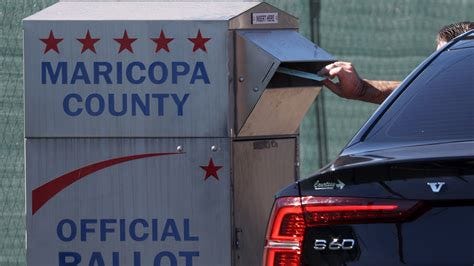
In May, with the July 21 primary approaching, Heap’s attorney sent the Board of Supervisors a letter claiming that early-voting drop boxes fall under the recorder’s exclusive authority. He warned that board members and even poll workers who handle ballots from “unauthorized” drop boxes could face felony charges. The board unanimously approved 237 vote centers and 12 monitored drop boxes anyway. An Arizona appeals court then stayed a lower-court ruling that had handed Heap expanded control, a decision one county official said “averts potential chaos at the polls.”
There is more. Last year, Heap’s office approved notices erroneously telling 83,000 voters their registrations would be canceled. Records obtained by the watchdog group American Oversight show he corresponded directly with the Trump Justice Department as it sought Arizona’s voter rolls and reopened investigations into the county’s past elections. These included elections that multiple reviews, including one commissioned by Republicans, found free of widespread fraud. Heap has also referred more than 200 alleged noncitizen voters to prosecutors and moved to alter their registration status through a process election-law experts have called legally dubious.
Meanwhile, the recorder and the board are no longer even meeting with a mediator. Early voting for the primary began June 24. The general election is November 3. Former Arizona Secretary of State Ken Bennett, a Republican, put it plainly: this fight does not end by increasing anyone’s confidence in elections.
That may be the most corrosive damage of all, and it isn’t any single lawsuit or seized scanner. It’s the erosion of the baseline assumption that the people running elections want them to succeed. When officials trade accusations of disenfranchisement and criminality, voters on every side find their worst suspicions confirmed.
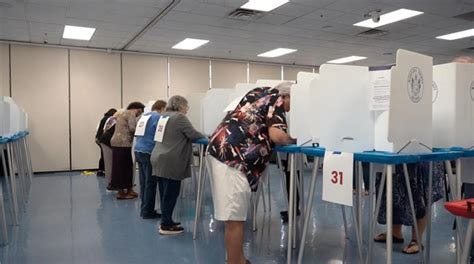
But the erosion points to its own remedy. Elections in Maricopa County are not run by Justin Heap alone. They are run by thousands of ordinary people: poll workers, ballot couriers, signature verifiers, and tabulation-center staff, operating under bipartisan rules, observed by representatives of both parties, on camera, in teams. Ballot couriers in Maricopa travel in pairs from different political parties. Every layer of that system is staffed by neighbors, and the more trustworthy people inside it, the harder it is to break and to lie about.
That is where readers come in. If you live in Maricopa County, or know someone who does, the county is hiring thousands of temporary election workers for 2026: poll workers, early-voting and tabulation staff, call-center workers, and couriers. These are paid positions, training included, open to any registered Arizona voter. Sign up at GetInvolved.Maricopa.Vote or through the Citizens Clean Elections Commission. Bilingual speakers are especially needed. Arizonans can also become credentialed poll observers through their county party or legislative district organization, watching voting and tabulation from the inside. Transparency is the antidote to conspiracy. Be the transparency.
Poll working is the deepest form of involvement, but not the only one. The quieter threat in Maricopa is to voter rolls themselves. The defense is unglamorous: check your registration NOW, not in October, through the Arizona Secretary of State’s voter portal or azcleanelections.gov. Then help the people around you check theirs. As the volunteers of “Mobilize the Vote NEO” told the Connector, most voters have no idea how to verify that their registration is still active, and no one tells them when it isn’t. A neighborhood registration checkup, at a farmers market table or a church coffee hour, is election security in its most literal form.
The same logic applies after ballots go out. Arizona law lets a voter fix, or cure, a mail ballot when a signature is questioned, and county parties recruit volunteers each cycle to work cure lists, calling voters whose ballots would otherwise be discarded. Sign up through your county party. VoteRiders helps voters obtain the identification Arizona requires, free of charge. And if you see something wrong at a vote center, resist the urge to post about it. Report it to the nonpartisan Election Protection hotline at 866-OUR-VOTE, where lawyers can actually act on it. Rumor is the interference; documentation is the defense.
For everyone else, Maricopa is the loudest version of a national story. Power the Polls matches volunteers with poll worker openings in all fifty states, and Election Protection needs hotline volunteers year-round.
The people who spent the last six years insisting American elections can’t be trusted now hold offices with the power to make that prophecy self-fulfilling. The counterweight is not a clever argument. It is a critical mass of citizens standing inside the process, watching it work. These citizens can say from firsthand knowledge: I was there. I counted. It was fair. Sign up before the general-election hiring window closes. Maricopa’s voters, and the country watching them, need witnesses.
Comments
Nothing yet. Say the first thing.
Sign in to join the conversation.