
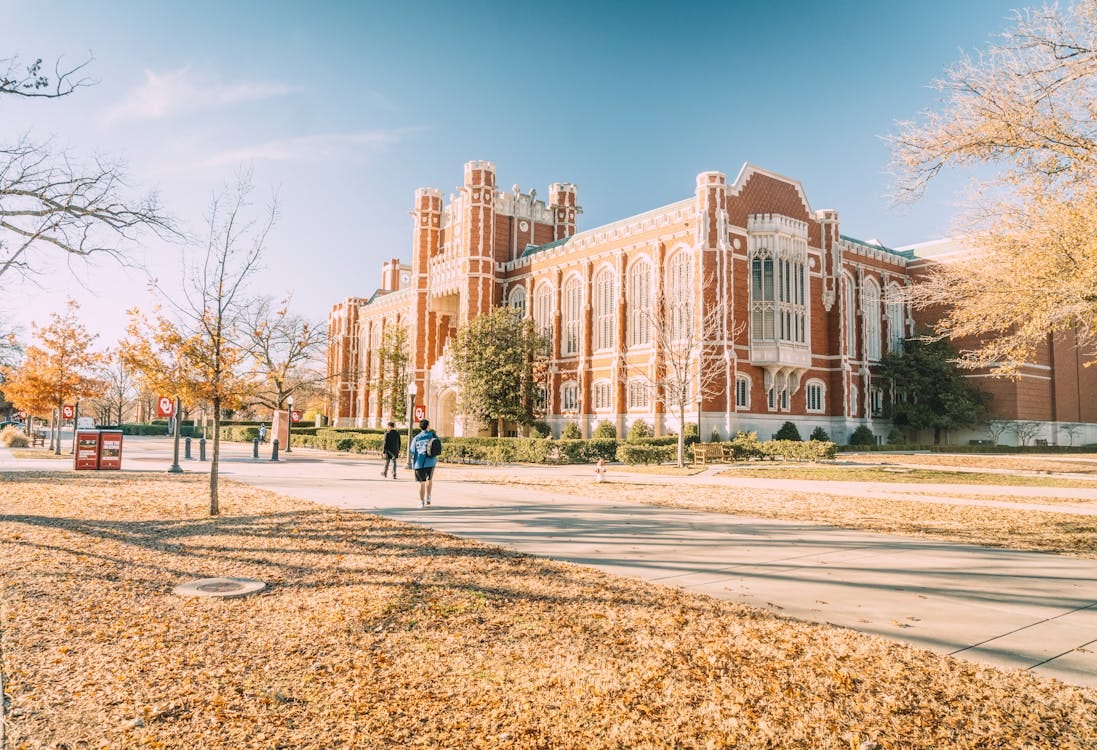
I think many American liberals believe that the decline of the university will be quite overt and dramatic. Flags of the new authoritarian state will be draped down across old main as the college quad is rapidly converted into a recruiting center for secret police and paramilitary brownshirts. Courses and books will be thrown out and supplanted with nationalistic fervor and propagandistic teachings predicated on intense militarism and violence. Most crucially, famous and outspoken professors will find themselves becoming captured by public show trials littered with inaccurate allegations and charges.
To many, the collapse of academic freedom is meant to resemble the intense narratives and images that we associate with the fall of the Weimar Republic. Vitally, it is slated as being theatrical and ostentatious. But, in our modern world, with the role of the state being increasingly infused with various private interests and their insane views, this kind of showing just isn’t that realistic. Illiberal evil is far more banal.
The decline of academic freedom and protections is indeed occurring, but the drivers behind this phenomenon are by no means flashy, nor are they individually driven by simple bad actors. The degradation of our academic system is structural. Procedures, long mundane and removed from the realm of politics, are being weaponized, as are research funds and institutions. Terms have been banned, chastised, and utilized to attack left organizations and students. Donors have been able to influence changes in curricula and hiring through the dangling of much-needed funds. None of this, of course, is really new, nor does it convey the sudden collapse of democratic values, but beyond the scenes, cumulative changes are beginning to emerge.
Take the reaction since 2023 to pro-Palestinian groups and professors. While attending Indiana University in 2023/2024, I saw firsthand what restrictions on speech and protest could mean for the average student. Overnight, campus administrators ruled that encampments and other kinds of structures were immediately banned, despite being fully legal since 1967. Rules established in the heyday of Vietnam and later utilized to protect students protesting South African apartheid found themselves smashing headfirst into the Palestinian exception. And its results, while not shocking, were still horrifying. Professors were thrown down, students were arrested, and various rights were violated wantonly. Police officers, armed with sniper rifles, sat atop our student memorial building, occasionally pointing them down to the quad. It felt threatening and direct.
Today, protests like this have been brushed aside through new campus policies, state laws, and ongoing intimidation. Direct acts of violence by the state still happen, but the main bludgeon against these fields and their public engagement have been institutional. Research funds, already under strain from federal disinvestment, are increasingly hard to come by, especially within contentious fields. Terminology, broad definitions, and even basic ideas can now be weaponized or turned into social vortexes which suck in external pressure and harassment.
One misconstrued argument, one emotionally charged online reaction, or even just one simple quote tweet from an anonymous right-wing account can now result in irrational blowback. For younger professionals, this kind of environment can fundamentally alter research pathways, and permanently halt all endeavors into disputed topics. Increasingly, academics within core areas of the humanities are having to tiptoe and be meticulous in nearly every approach to funding.
Procedurally, this kind of halt or change to research can result in long-term problems. Professors, to obtain tenure, need funding and need to publish. Papers, essays, book chapters, and contributions to their fields are often all requirements to obtain job security, and if they cannot be completed, the likelihood of professional advancement drops substantially. Professors, as individuals, must often engage in risk management and follow what incentives exist. Want to study genocide at an institution that doesn’t recognize the genocide in Gaza? Never mention anything about Palestine. Want to study the holocaust from a broader historical or sociological level? Better not use terms, ideas, or phrases we have deemed antisemitism and anti-Israel.
And even if research troubles can be surmounted, procedural rules and donor pressure can always cause trouble. University administrations, beyond just worrying about academic freedom, now have to consider how billionaire funders and energized state legislatures may delve into a professor’s work or public engagement. Political risk, moving beyond just Palestine, is now a social minefield littered with various controversies. Texas A&M, for example, amid pressure from right-wing culture warriors, recently banned the teaching of certain writings from Plato because of possible connections to racial and gender ideologies.
Using the term the “West Bank” is now banned in Florida and Arkansas for public colleges and state agencies; instead, Judea and Samaria are now mandated. The teaching of climate science has run into critiques that it is too negative, and that the positive aspects of it are being intentionally ignored. Some professors have even been told not to teach literature which has gay authors.
And even if academics can emerge from these cuts and legal challenges unscathed, there’s no telling what kinds of new procedures and rules could be enacted by states in the coming years to challenge and undermine tenure and academic autonomy.
Indiana recently passed a law which creates new conditions and systems of review which professors must participate with, and if they fail, tenure can then ultimately be removed. Another area of the law centers around creating environments of intellectual diversity and freedom of speech on campus, but the specifics behind these goals go entirely unaddressed. For example, how does one diversely teach about the Holocaust? Do Professors now have to take the opinions and fears of the Nazis into account, especially if a conservative class member pushes on that front? Or how about climate change? Is climate denialism now requiring reading?
New protocols now even allow people, including non-students, to submit anonymous complaints which must be reviewed. The confidential reporting is meant to address discrimination against students, but this system could also very likely be used by culture warriors and conservative groups to attack professors. Students, whether discriminated against or not, could now also cry wolf and get conservative organizations and legislators on their side all before an actual hearing takes place. Guiltiness, under this system, will always be assumed, and professors will face intense private and public pressure to resign even if they’ve done nothing wrong.
The point behind these various changes and reforms is to make it as difficult and opaque as possible for professors to resist and speak out against repression. Through these kinds of institutionalized procedures and requirements, professors can now be removed or denied tenure without much transparency or honesty. Some, if they’re lucky, might be able to resort to the legal system and hope for the best. But many will face enormous external pressures and financial challenges.
Under these emerging conditions, billionaire donors, conservative groups, and famous alumni will all sue professors and journalists for defamation and bog them down in legal fees. External groups will create enough controversy around courses and professors and ensure that others are otherwise afraid to speak out or challenge new policies. Professors will flee the most unhinged states and universities, quite logically. But overtime, this kind of fleeing to the free and safe frontiers will only be able to deliver so much. Many will struggle to find work and maintain their research. Some will have to resort to private think tanks and colleges which can support their work, but again with strings attached.
Broadly, Palestine has served as the fulcrum of this crisis, but as college and education become more politicized and weaponized, these kinds of institutional and legal hurdles will only grow in their use and scope. Rather than acting as an aberration, what we are seeing happening to various fields in the humanities is a broader warning of the banality of illiberal decline. The attacks, while sometimes making the news, will largely take place in course rooms, departmental meetings, and tenure hearings. Restrictions will not directly attack or ban entire subjects, and will instead, piece by piece, and page by page, break apart and cut out all the different terms and ideas which comprise fields.
Palestinian studies won’t be banned, it will just be whitewashed and sanitized into a field of propaganda where events and traumas are repressed. The same will likely happen to genocide studies, where horrors will only be fully acknowledged if they’re committed by villains or state enemies. And overtime, generations of new academics will face stark choices. Research and knowledge for many will change as new realities and restrictions gradually take place. Cutting-edge research will take a hit, especially as wealthy donors and alumni use conservative and personal ideologies to weaponize research and development for their own benefit.
Liberal and progressive alternatives, funded by sympathetic billionaires and groups, will likely emerge to create safer places for factual research, but even these institutions will come under strain. Research funding and donations will be targeted, investigations will be launched by state and federal governments, and much inter-class conflict will take place within the boardrooms of these institutions. Even liberal and progressive donors will want some things scrubbed and sanitized. Others will not want anti-capitalist or anti-corporate messages to grow, especially if they could potentially impact their bottom line.
In their entirety, procedural hurdles, tenure-track restrictions, opaque processes, decreased funding, and ever-present opportunities for politicization have all broadly begun to shape America’s university system in an illiberal direction. And if we’re not careful, they could overtime help to cumulatively deliver a system where various freedoms, protections, and forms of speech are regulated and silenced.
Most of this will not be overt. It will be both bureaucratic and boring, monotonous and largely uninteresting to most observers and commentators. But that is exactly the point. The strategy is death by a thousand cuts, and to make it increasingly difficult for us to unblur the lines between private and public interests. It is a process meant to depoliticize the politicization; to make a power grab seem almost natural and orderly.
This process can be resisted and reversed, but it will have to come, not just from students and professors, but from a political vehicle which recognizes the severity of the moment and what needs to be done to mitigate our growing challenges. Laws and protections will need to be emboldened and expanded. Academic unions will need to be buttressed and given broader autonomy over the ability to challenge institutional hurdles. Quite crucially, the influence of wealth and business will have to be challenged robustly, not just within the courts, but within the shops, workspaces, and classrooms of America as well. It will have to be a full-frontal message of democratic-labor power which is prepared to protect workers, students, professors, journalists, and all those who believe in the power of education and its important place within our democracy.
No posts
Comments
Nothing yet. Say the first thing.
Sign in to join the conversation.