
I was very inspired by Brooke Warner’s essay for our Mother’s Day Memoir Nation newsletter, Who Was Your Mother Before She Was Your Mother—to the extent that I’m using a fatherly version of her title for my thoughts about my father this Father’s Day.
My father is actually a significant part of Memoir Nation’s origin story. When he died at the age of 89, I kept thinking that if he’d only written a mere 10,000 words about his life, it would have been more valuable than anything else he left behind.
Someone once told me that the definition of a soul is the stories that live on after a person dies. I would like to know more about his soul.
He was born on a poor farm in Iowa in 1928, and there was one thing that he knew about himself early on: he didn’t want to be a farmer. His parents hadn’t gone past the ninth grade in school, but he became the first one in his family to graduate from high school, go to college, and then he went on to get his law degree (thanks to the GI bill and some loans from neighboring farmers).
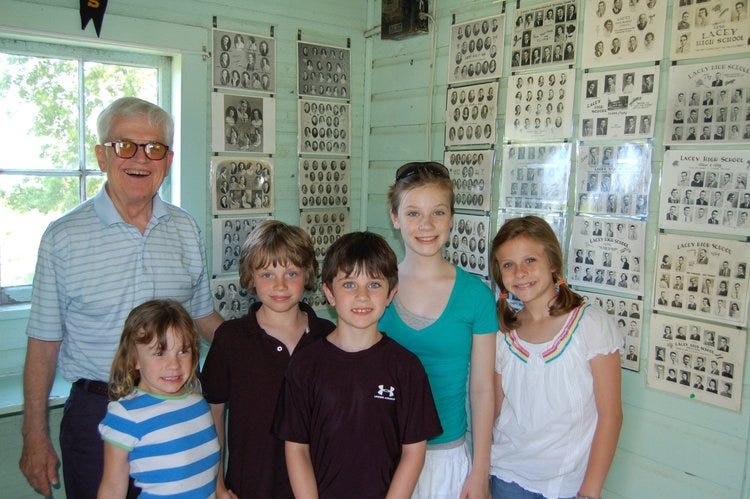
The photo above is of him and his grandchildren. We visited an old one-room schoolhouse on one summer visit, and it turned out that his class photo from kindergarten was on the wall.
He was wearing overalls in the photo, the same overalls he wore for his morning chores and the same overalls he wore for his evening chores. His father, Clifford, would march through the house every morning at 5 a.m. clanging a pot to wake everyone up, and then the four kids would stand in a line to drink a cup of coffee before going out to work (I have a bit of a complex—my life has been soft by comparison, and I feel like I can never work hard enough).
It’s hard to imagine him in a dusty corn row, the itchy chaff and pollen on his neck and arms. He looked uncomfortable in his overalls, even as a kid, as if he was yearning to wear a suit.
He was a man of suits, a man of ties. He owned literally hundreds of ties, dozens of suits. The tragedy: no one could fit into them when he died. I love that while he wasn’t an artist, he cultivated an artistry of style.
He just missed going to World War II, but he did serve in the Japanese Occupation. Since I live in the Bay Area, I often look at the Golden Gate Bridge and imagine him as an 18-year-old who had never travelled beyond his birthplace traveling on a ship with hundreds of others to a vastly different land.
He mentioned that he saw Billie Holiday in San Francisco before embarking on the trip. Or I think he said that. That’s a story I wish I knew—what an unworldly farm kid from Iowa thought of seeing Billie Holiday sing in a San Francisco night club.
When I became an adult and returned home for a visit, we had a tradition of sitting on the back porch and drinking gin and tonics. This is when alcohol comes in handy. I wouldn’t say the stories flowed, but we each tried to tell stories, we tried to talk. But sometimes men aren’t good at talking.
I think about this question often because it strikes me how few men I see when I teach or speak at writing conferences. The ratio is overwhelming: I generally teach to a class of 90% women.
I look around at all of the bold, daring, curious, creative women, and I ask myself over and over, “Where are the men? What are they doing?”
There is perhaps something about being a man—being raised to be “strong,” which too often means being repressed, unexpressive, and even lonely. Too many men are alone with their stories. Too many men might even be afraid of their stories.
I once asked Brooke where the men were, and she said that men weren’t typically joiners. That resonated with me because for so long I wasn’t a joiner, and in many ways I’m still not. My father also wasn’t a joiner: he loved social life, and he loved travel, but my mother was the one who instigated those sides of their life.
I’m obviously wired in the opposite way—I want to hear others’ stories and tell my own. Telling stories is the purest joy of all of my joys. I never want a good rollicking dinner party to end—because there are always more stories to be told. I want to die drenched in stories.
I will always be thankful that my father not only didn’t discourage me from being a writer, he was always proud of it, despite how it must have seemed like an impractical profession for someone who grew up as poor as he did.
Sometimes someone will compliment this Substack by telling me they appreciate how I make myself vulnerable. I’ve become more comfortable at being vulnerable only because it’s been my intention for so long, as a writer and a person, and I’ve had to practice vulnerability. It’s all of those years of practice that has helped me express myself. And I still need to practice more.
I want to ask you a special favor? Can you give the gift of writing to a man in your life—father, husband, son, grandfather, co-worker, son, friend, neighbor?
We just launched our gift certificates in the Memoir Nation store. I don’t want to lose any more stories. I think our world will be better if men can put words to their stories.
I collect moments now, trying to keep what little I know about my father.
His first job out of college was heading a team of Proctor & Gamble salesmen, and they traveled to nearly every state—which he always talked about with wonder and enthusiasm.
He took me to buy a blue blazer when I turned 16, as if it was a rite of passage into adulthood.
“He never made a dishonest call in tennis,” one of his friends told me at his funeral.
In our way, we’re always collecting stories of the dead. Our memory is the only gift we can give them. Memories are also the only gift they can give us.

“One of the saddest sentences I know is ‘I wish I had asked my mother about that.’ Or my father. Or my grandmother. Or my grandfather. … Memories too often die with their owner, and time too often surprises us by running out.”
—William Zinsser
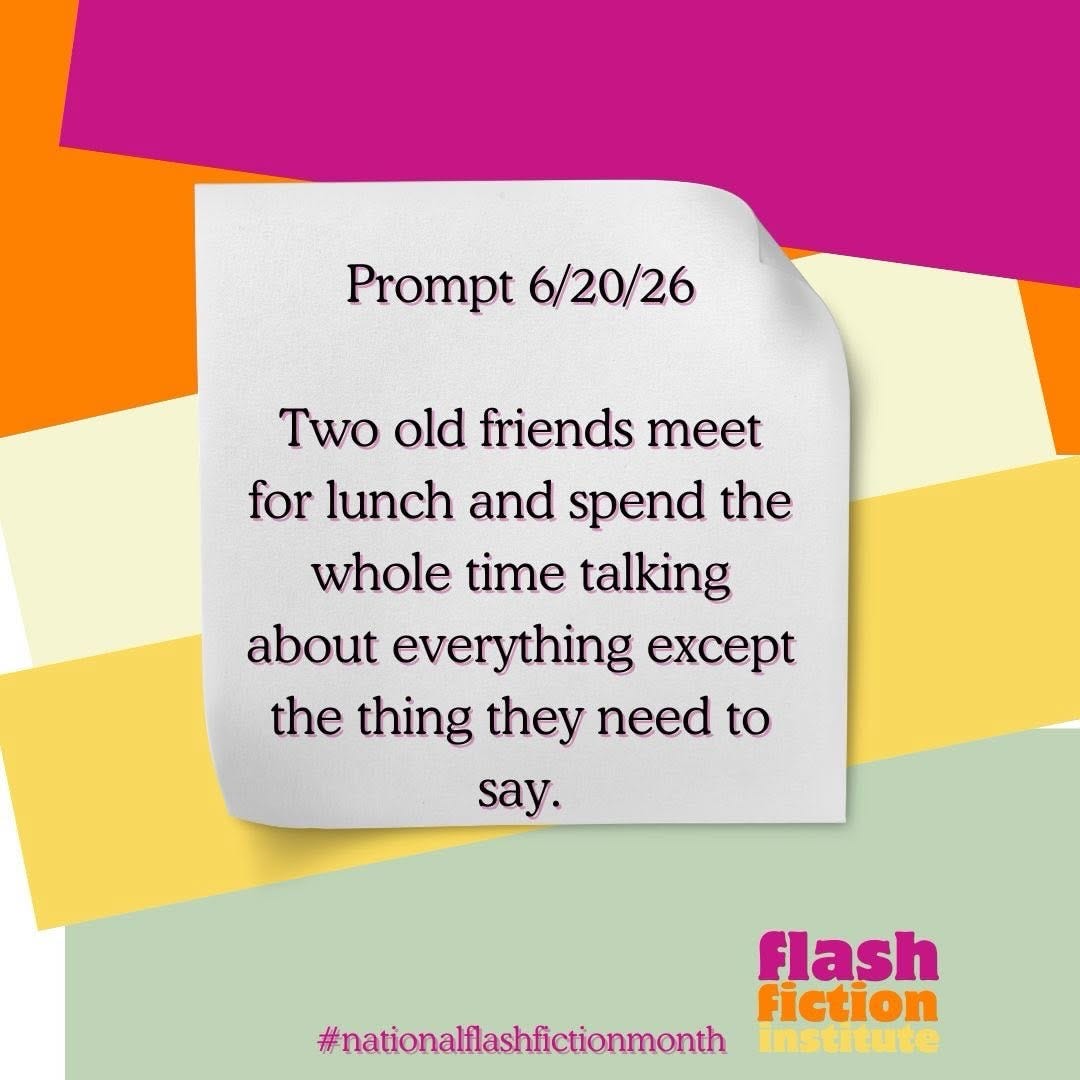
Write one flash fiction story every day for the rest of June! Find out more!
I love working with writers, and I have some space on my Writing Consult calendar if anyone’s looking!
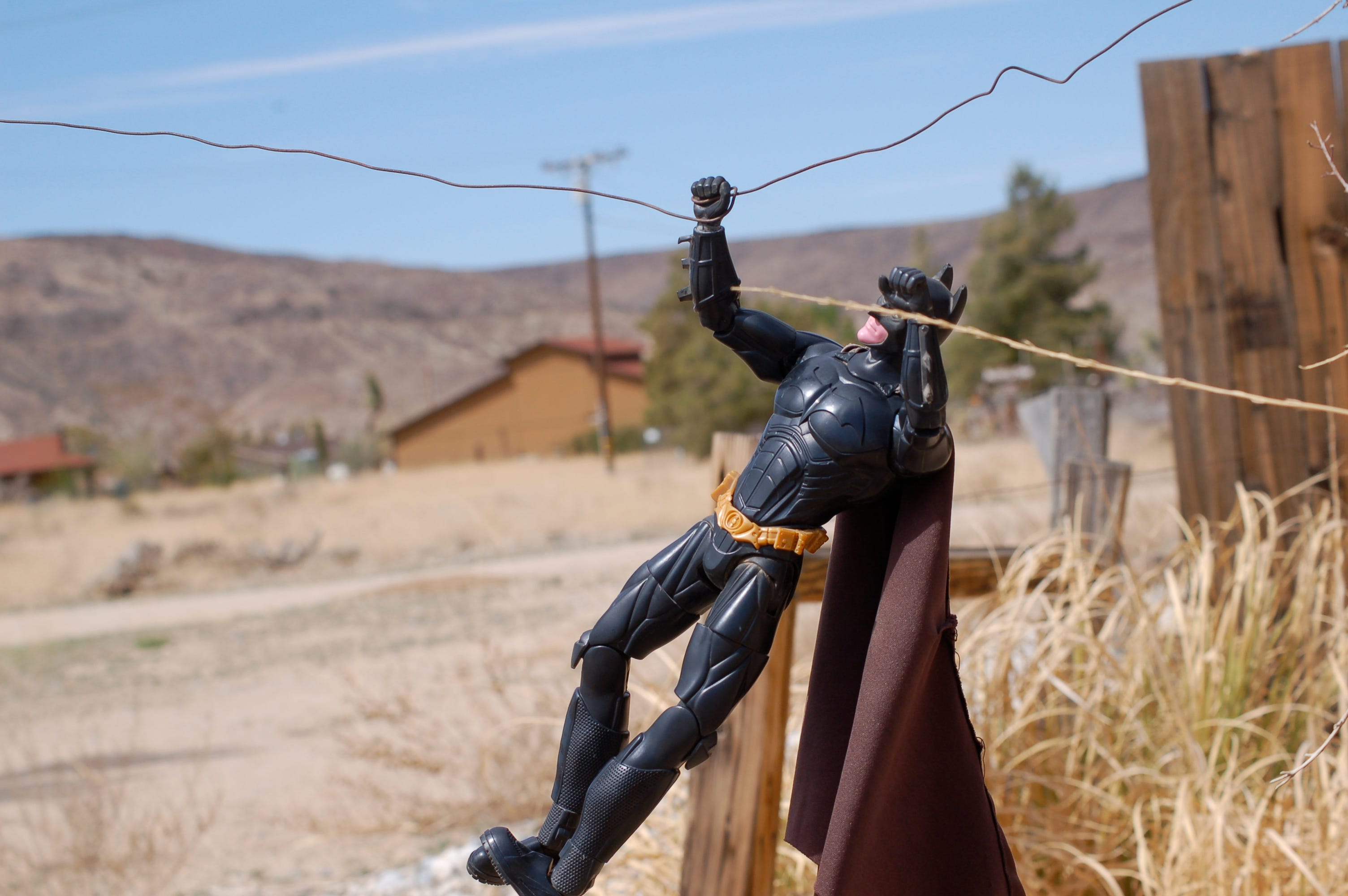
I’ve been wondering where our super heroes have been. Apparently they’re all tied up.
Thanks for reading Intimations: A Writer's Discourse! This post is public so feel free to share it.
Comments
Nothing yet. Say the first thing.
Sign in to join the conversation.