
A weekly newsletter on what I’ve written, read, and otherwise enjoyed.
At the link above, please find “The Noise That Colors Make,” the latest episode of The Invisible College, my literature podcast for paid subscribers. It’s about poet and classicist Anne Carson’s beloved novel in verse Autobiography of Red.1 There I discuss Carson’s bold theory (from her earlier Eros the Bittersweet) on the birth of the novel from the spirit of lyric poetry, her characteristically structuralist and poststructuralist 1990s poetics, and even Autobiography’s status as one the earliest high-culture western entries in the boys’ love canon of gay male love stories written by straight women.2 I even discuss the time I met Anne Carson! In the next three episodes, from the end of July to the end of August, we will discuss the three most celebrated Latin American novelists in the Anglosphere today after Borges: Clarice Lispector, Gabriel García Márquez, and Roberto Bolaño. You won’t want to miss it! Then, in the fall, the popular classics of the English novelistic canon from Frankenstein to Never Let Me Go. Please remember: a paid subscription buys you access to an archive of well over 100 episodes of two or more hours on powerful literature from Homer to Toni Morrison, including complete multi-part guides to great books like Middlemarch, Moby-Dick, Ulysses, Anna Karenina, The Brothers Karamazov, The Magic Mountain, Paradise Lost, The Divine Comedy, the plays of Shakespeare, the Greek tragedies, Romantic poetry, and more. Thanks to all my current and future paid subscribers!

Then there’s my recent novel, Major Arcana, which, as you can see from the screenshot above, continues to win readers and their plaudits over a year since its publication. This saga of magic, art, love, and death, which Ross Barkan called “the elusive great American novel for the 21st century,” is available in all formats (print, ebook, audio) here; you can also find it in print wherever books are sold online. You can buy it directly from Belt Publishing, or you might also suggest that your local library or independent bookstore acquire a copy. Please also leave a (constructive) Goodreads, Amazon, or other rating and review. Thanks to all my readers!
For today, I follow Henry Begler in essaying the venerable topic of the critic vs. the artist. Please enjoy!
Because three of the last four Invisible College episodes (Vidal, Sontag, Carson) treat authors who somehow combine the role of critic and artist, and because the episode before those concerned an author (Proust) whose life-work, often considered his century’s masterpiece, is a vast hybrid of essay and novel, and, finally, because next week’s episode will also deal with an author (Lispector) who struggled with the proper balance in her work between novel-writing and journalism,3 I want to say a few words in response to Henry Begler’s measured defense of criticism against the old charge of its inferiority to art. Henry cannily accepts the charge but then transvalues it with a counterclaim: as art’s superiority rests on an inarticulate and inarticulable sublime, neither reader nor writer can breathe its atmosphere long. It reminds me of Dr. Johnson on Paradise Lost: a work can be too great to be good, too remote in its very greatness to matter much to the reader. I quote Henry quoting Leo Robson:
Robson, in his interview, is not given to making inflated claims about his craft. “The writing in even the greatest reviews,” he admits, “is not in the same stratosphere as Absalom, Absalom!, Beloved, Moby-Dick, Tender is the Night, To the Lighthouse.” This is undeniably true; there is a high realm of art, a sort of pure, blinding transmission of experience and beauty, that is closed to the mere scribbler, whose subject is the mundane world and not our phantasmagorical interior landscapes. Yet the thing Robson doesn’t mention is that essays can live in your head in a way that these longer books don’t.
Faced with this, I admit, my own temptation is to check again to make sure the problem really is a problem. I notice, first, that four of the five stratospheric novels on Robson’s list are American. Every log cabin in early America had a copy of Paradise Lost on its rough-hewn shelf right next to the King James Bible and the farmer’s almanac—our Puritan republic!—so it’s no surprise that our literature favors the very sublimity the mother country somewhat rejected in the wise voice of its own most canonical critic. Do we deny greatness to Austen, to Dickens, to George Eliot, or to our own expatriate Henry James because it is of such a different quality than Melville’s or Faulkner’s apocalyptic grandeur?
But I want to query Robson’s claim on grounds other than its bias toward the American Sublime. And not just because Tender Is the Night isn’t as great a novel as the others, though I don’t think it is. In fact, Tender Is the Night may demonstrate that sublime rhetoric cannot make up for a default of substance, as that novel’s not always convincing hero (I don’t buy Fitz’s surrogate Dick as a Jungian psychiatrist) sinks to his purely personal doom under the author’s keening lyricism. But isn’t Moby-Dick, no less than Proust’s otherwise totally dissimilar Recherche, half an essay? And isn’t Virginia Woolf almost more widely regarded as her country’s and/or century’s best essayist rather than best novelist? (If I had a tuppence for every undergraduate who claimed to prefer the hard-headed wit of A Room of One’s Own to the streaming consciousness of To the Lighthouse…) More important even than this, To the Lighthouse’s literally central passage describes a house without any people in it, while its most moving moments come when its resident intellectual (Mr. Ramsay) and resident artist (Lily Briscoe) reflect on their respective callings. To the Lighthouse is an essay on art and thought. As for Absalom, Absalom! and Beloved, they share two features in common: 1. they are each novels about how the stories they have to tell cannot be told rather than novels that tell those stories; and 2. they are often remarkably discursive theory-fictions explicitly about the meaning of the stories they cannot quite tell.4 (Morrison, Faulkner, and Melville put sermons into their novels for a reason, as do Hawthorne, Joyce, and Ellison.)
I almost want to argue, though some will say I’m overstating an over-intellectual over-educated person’s case, that the most stratospheric fiction always offers a critical metatext on a story it encrypts rather than divulging—rather as Deleuze once said that literature begins where myth ends, that literature per se is a commentary on myth, as opposed to middling or low fictional fare, which just tells a little tale to pass the time. And Paradise Lost, like the Divine Comedy before it, is also a contribution to theology.
Henry’s controversial digression on disliking the short story may here be relevant. I share Henry’s impatience with the short story if it is a realistic slice-of-life, a mood piece that stops before it even gets started in a moment of over-pronounced arrest, i.e., the fabled “epiphany,” that has no time to develop stories, characters, or ideas, that even tends to forego, as excessively emphatic given the spatial constraint, any splendor of style. There’s a reason the Invisible College Chekhov episode was about one of his plays, not his stories. Chekhov is magnificent in the aggregate, but we need the aggregate, the collected stories, a book in the end as big as War and Peace, to attest to his magnificence. Can a single story be great, great as a novel is great? I would suggest it can, but only in the alternate tradition typified by Poe or Hawthorne or Kafka or Borges, because of this tradition’s kinship to the parable and the philosophical problem, its proximity to myth and mythography. On the Borges IC episode, I dismissed Harold Bloom’s and George Steiner’s misguided lament over Borges’s never having written a novel. What could length add to “The Circular Ruins” or “The Library of Babel” or “Funes the Memorious,” stories that feel so inevitable they might as well be in the Bible? Whereas Ulysses began as a story for Dubliners and in extension became a Bible, the bible of modernity. And doesn’t Borges, like Poe before him, often begin his stories for all the world as if they were essays? Aren’t the essays and stories in his oeuvre hard to tell apart? In other words, the nearer a story is to an idea, supposedly the métier of the critic rather than the artist, the better it is.
Art demands the spirit of criticism, then, rather than their being opposed, and more critics should make sure they don’t end up like Sontag on her deathbed saying she wished she’d written more fiction because actually she was good at it. (I maintain she was; I would reread The Volcano Lover before I would reread Tender Is the Night.) That I am essentially here paraphrasing Wilde, and that Wilde was a great critic who also wrote a masterpiece of drama, a masterpiece of fiction, and a masterpiece of confession, just proves the point. (We’ll give him a pass on the poetry, which is accomplished but derivative. And even his best poems—“The Harlot’s House,” “The Ballad of Reading Gaol”—are stirring and memorable.) Finally, Henry discriminates the character of the critic vs. that of the artist:
I don’t really worry about not being Bob Dylan, or Miles Davis, or Melville or Faulkner. I know there is an essential difference between them and me. I love writing, really love it, but I am not, so far as I can tell, driven by a hole in my soul that will never be healed. If some genie appeared to me and forced me to choose either my writing or my family and my girlfriend and all the people I love in this world, I would reluctantly put down the pen. I don’t think you can ever be great, like world-shakingly great, if that’s your answer.
Here, too, Robson’s list could furnish evidence: four of its five stratospheric authors exhibit the expected evidence of hole-in-the-soul: alcoholism, madness, flight, suicide. Only Morrison had no outward or obvious breakdown—or maybe we just think that because we haven’t read the unauthorized biography yet. Still, the critics haven’t been a very stable lot either, especially when it comes to raiding the pharmacopeia; intellectuals in general, holding the world to an ideal standard, are by definition eccentric, whether they are artists or critics. On the other hand, plenty of the artistic greats have been less obviously tortured than Melville or Woolf or Faulkner, as witness the outward stolidities, never mind the inward complications, of Hawthorne or Mann or Nabokov or George Eliot.
No life is perfect: even the optimized billionaire wants to kill himself every so often at three in the morning, and I am sure the most beautiful girl in the world cried herself to sleep last night. But by the same token, an artistic life need not necessarily end at the bottom of a bottle or a river. I write too much to deny I feel a compulsion, but I still wouldn’t call it a compulsion exactly; it’s more an activity of my nature. The genie’s offer wouldn’t make sense to me because without this nature I wouldn’t be what I am, and so I don’t know who would be left to experience the posited remainder of normality if I gave up “art” for “life.” On the one hand, this means I am not what they used to call “well-rounded” when justifying their insistence that you learn subjects you had no aptitude for, like calculus or chemistry. On the other hand, we could call this post a plea for more “well-roundedness,” for maintaining maximal awareness of the artistic side of criticism, the critical side of art, for being prepared at any time for art to steal upon the critic, for the critic’s art to steal upon the audience, for the planned essay on Sainte-Beuve to explode into In Search of Lost Time.
A timely excerpt from the edited episode transcript to whet your appetite, in which I speculate about the vicissitudes of Carson’s reputation, beloved of old-guard or vanguard male critics like Harold Bloom and Guy Davenport in the 1990s, a popular success with a largely “female-coded” audience since the 2000s, and now perhaps in slight peril:
And then I think in this decade there’s starting to be evidence of a slight turn against [Carson]. And I find evidence in this review of Wrong Norma by Emily Wilson in The Nation in 2024. […] Now there’s an initial irony right away here, which is that Wilson is going to take Carson to task for distorting Greek literature for her own purposes in her translations. This, of course, is what Wilson herself has been accused of in her translations of Homer, of taking liberties for her own purposes with the classics. So that’s the first irony we’re going to encounter in Wilson’s critique of Carson. The second irony we are going to encounter in Wilson’s critique of Carson is that it was said…that the criticisms of Emily Wilson’s translation are primarily motivated by sexism, by a sense of, “Who is this woman to translate the Odyssey and to take liberties with Homer for her feminist agenda?” […] Well, the second irony is that I think Wilson’s critique of Carson in this essay has a bit of a gendered overtone…
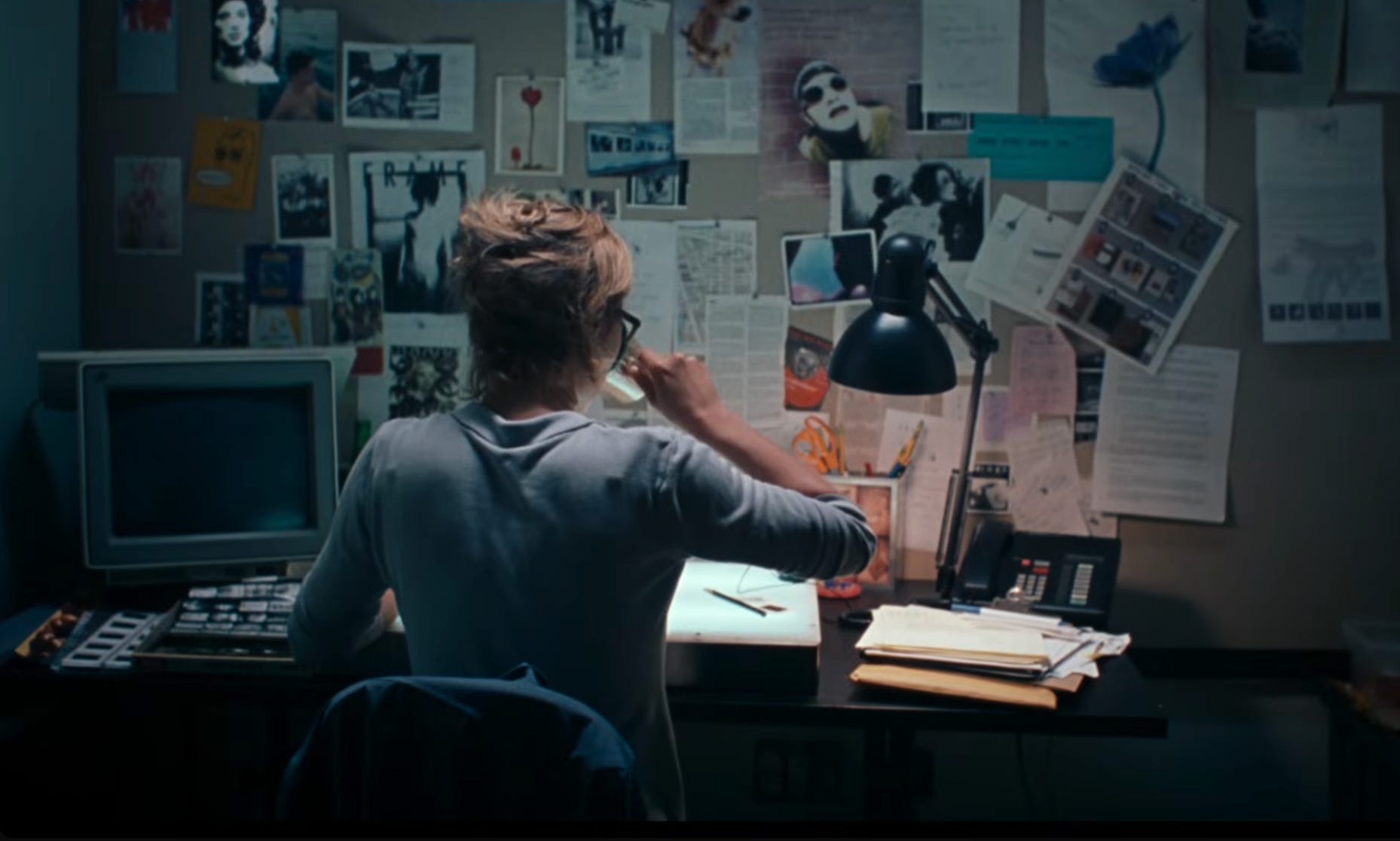
Mary Jane Eyre offers a riposte, “The Homoöptimism of Tom of Finland,” to my no doubt excessively utopic (“longhoused”?) reading in the episode of the fujoshi’s and the himedanshi’s crypto-Platonic homoeroticism, their or our cross-gendered homoeroticism qua cure for heteropessimism. In the episode, I compare Carson’s proto-YA adolescent gay-male romance of Autobiography of Red to roughly contemporaneous lesbian-focused or -adjacent straight-male-authored comics like Sandman, The Invisibles, Promethea, or Love and Rockets, though we can trace the latter phenomenon at least back to Baudelaire with his own tribute to Sappho and her cohort’s “stérile volupté.” Meanwhile, Carson, as Emily Wilson complains, has no interest in Sappho’s sapphism. Carson’s reading of Sappho in Eros the Bittersweet is a structuralist one, which allows us to insert people of any or no gender into her geometry of desire since object and subject of love are defined by their relation rather than their identity. This is either queer utopianism or sheer evasiveness; Wilson, concerned to draw out the inegalitarianism of the classics, and for whom even Christopher Nolan’s conscience-stricken Odysseus is too sentimental, likely opts for “evasiveness.” Of the male authors on my list, one got MeToo’d and one went they/them, but those divergent choices, dramatic assertion or dramatic rescission of phallic masculinity vis-à-vis the feminine (vide Paglia on Tom as quoted by MJE: “the penis is power”), are ways of cutting this Gordian knot rather than patiently unworking it, which latter the writer, because he has surrendered the sword for the pen, is obligated to do. Tell the himedanshi in your life, by the way, that they just put High Art on Tubi. I place this entire post under the sponsorship of the early scene where Syd and the magazine assistant argue about whether reading Dostoevsky or studying critical theory (“like cultural studies or semiotics…philosophy, you know? Foucault, Derrida, Kristeva, whatever?”) is the more “cerebral” activity. That film, of course, dramatizes the fatal exchange between theorist and artist qua editor and photographer qua sitter and portraitist qua lover and beloved.
I read in Benjamin Moser’s biography about Lispector’s almost lifelong journalistic travail. The newspaper—well-known alongside the novel as a nation-making commodity since Anderson’s Imagined Communities—held pride of place among Brazilian media in the early-to-mid 20th century; Lispector accordingly worked as a columnist, sometimes but not always under a pseudonym, almost all her professional life, even in genres like consumer and personal advice (what make-up to wear, how to clean the kitchen, etc). This was the main way she made money as an author, not from her novels. She sometimes likened it, Moser reports, to prostitution. I trust the similarity to today’s authors, who resent their (our) now almost mandatory Substack presence, is obvious. Even as sibylline an author as Lispector had to spend her days mining “discourse” for money. At least I’m not charging you to read this, though you are, to be frank, at the top of a sales funnel meant to lead down to your buying my books and/or a paid subscription to my podcast. What can I say? We all need to live.
Morrison believed the novel had an inherently didactic function, not in the sense of preaching moralistically at the audience, which no sophisticated writer would do and no sophisticated reader would put up with, but as a guidebook to manners and mores, rather as our beloved Odyssey (Morrison majored in classics) dramatizes proper guest-host etiquette. I quote her essay “Rootedness: The Ancestor as Foundation”:
My sense of the novel is that it has always functioned for the class or the group that wrote it. The history of the novel as a form began when there was a new class, a middle class, to read it; it was an art form that they needed. The lower classes didn’t need novels at that time because they had an art form already: they had songs, and dances, and ceremony, and gossip, and celebrations. The aristocracy didn’t need it because they had the art that they had patronized, they had their own pictures painted, their own houses built, and they made sure their art separated them from the rest of the world. But when the industrial revolution began, there emerged a new class of people who were neither peasants nor aristocrats. In large measure they had no art form to tell them how to behave in this new situation. So they produced an art form: we call it the novel of manners, an art form designed to tell people something they didn’t know. That is, how to behave in this new world, how to distinguish between the good guys and the bad guys. How to get married. What a good living was. What would happen if you strayed from the fold. So that early works such as Pamela, by Samuel Richardson, and the Jane Austen material provided social rules and explained behavior, identified outlaws, identified the people, habits, and customs that one should approve of. They were didactic in that sense. That, I think, is probably why the novel was not missed among the so-called peasant cultures. They didn’t need it, because they were clear about what their responsibilities were and who and where was evil, and where was good.
But when the peasant class, or lower class, or what have you, confronts the middle class, the city, or the upper classes, they are thrown a little bit into disarray. For a long time, the art form that was healing for Black people was music. That music is no longer exclusively ours; we don’t have exclusive rights to it. Other people sing it and play it; it is the mode of contemporary music everywhere. So another form has to take that place, and it seems to me that the novel is needed by African-Americans now in a way that it was not needed before—and it is following along the lines of the function of novels everywhere. We don’t live in places where we can hear those stories anymore; parents don’t sit around and tell their children those classical, mythological archetypal stories that we heard years ago. But new information has got to get out, and there are several ways to do it. One is in the novel.
This Marxist argument is a little too neat in its claim that the novel is a socially useful vehicle of self-help and class-consciousness—too neat, I mean, in the face of Morrison’s own novels, which often dare an amoralism exalted over collective ethics, as in Sula or Jazz, or a metaphysics beyond any human community, as in Song of Solomon or Paradise. It also under-specifies the particular virtue of the novel as against other didactic instruments, though we can supply our own obvious reasons: stories are usually more entertaining than treatises, etc.
But are stories more entertaining than treatises? Not online, as Sam Kahn observes in his end-of-art forecast, where “discourse” reliably outperforms fiction. But doesn’t online discourse support offline artforms that might otherwise have been totally obsolesced, as we see from the internet-driven Barnes and Noble expansion or the droves driven into the theater for Obsession or Backrooms or The Odyssey just to keep up with the chatter? As I always say, TV killed the novel, and, if anything, the internet brought the novel back to life. The Cold War canon of high-school dystopian fiction has over-trained us to extrapolate present conditions in a straight line rather than imagining how they will inevitably generate their own counters and complications. Even dystopia itself will not be as monochrome as reputed, will be Brave New World and Nineteen Eighty-Four at once rather than one or the other; in the meantime, we will have to read books and see movies to understand the internet.
As for the broader end-of-art claim, I will just repeat something I’ve said before: that Hegel proclaimed this end already, before Goethe had even finished Faust or Beethoven had died, decades before Moby-Dick and Middlemarch, before Impressionism or Wagnerian opera, a century before Picasso and Joyce, etc. Not to mention that the biggest names of the English Renaissance, for example, Spenser and Shakespeare and Milton, believed themselves to live in a belated and degenerated stone age whence all grace had fled. I am emphatically not making the poptimist claim that everything’s great, really, just kick back and relax to Olivia or whatever; I am only offering a caution about one’s inability to know one’s own era as latecomers will know it. They used to put a bell in the coffin in case they accidentally buried you alive, and no wonder!
(For one thing, we don’t often recognize our era’s artistic inventions, though they’re right in front of us, because we don’t know how to look at at them. See Henry’s “discourse” post with on the canonicity of Bob Dylan. Canonizing an artist in a new form requires theorizing the form itself properly rather than judging the artist by the standard of prior forms: Bob Dylan isn’t as good as Tolstoy in the abstract, whatever that would even mean, but he may be as good a songwriter-qua-auteur as Tolstoy is a novelist-qua-auteur, and so on for cinema, comics, etc., especially since Tolstoy’s novelistic seriousness was no less an invention in its time, and he was accordingly no less treated as a guru, than Bob Dylan’s songwriting seriousness was in its. On the back of the new Locas omnibus I mentioned last week, the publisher proclaims it “[o]ne of the great American novels of the last 40+ years, graphic or otherwise,” which I agree with, but the claim may prove misleading to readers who lack the requisite preparation to appreciate the graphic novelist’s inventive and intricate use of comics and will therefore only miss the novelist’s inventive and intricate use of prose.)
To return to Morrison, we will surely go on needing new tutelary arts, since each generation has to live for itself, and will also surely go on needing artworks that exceed their tutelary function in an access of anti-social energy, just as the classroom teacher is often more instructive in a profane digression on the difficulty of existence than when following the textbook. “Art always says ‘And yet!’ to life.”
No posts
Comments
Nothing yet. Say the first thing.
Sign in to join the conversation.