
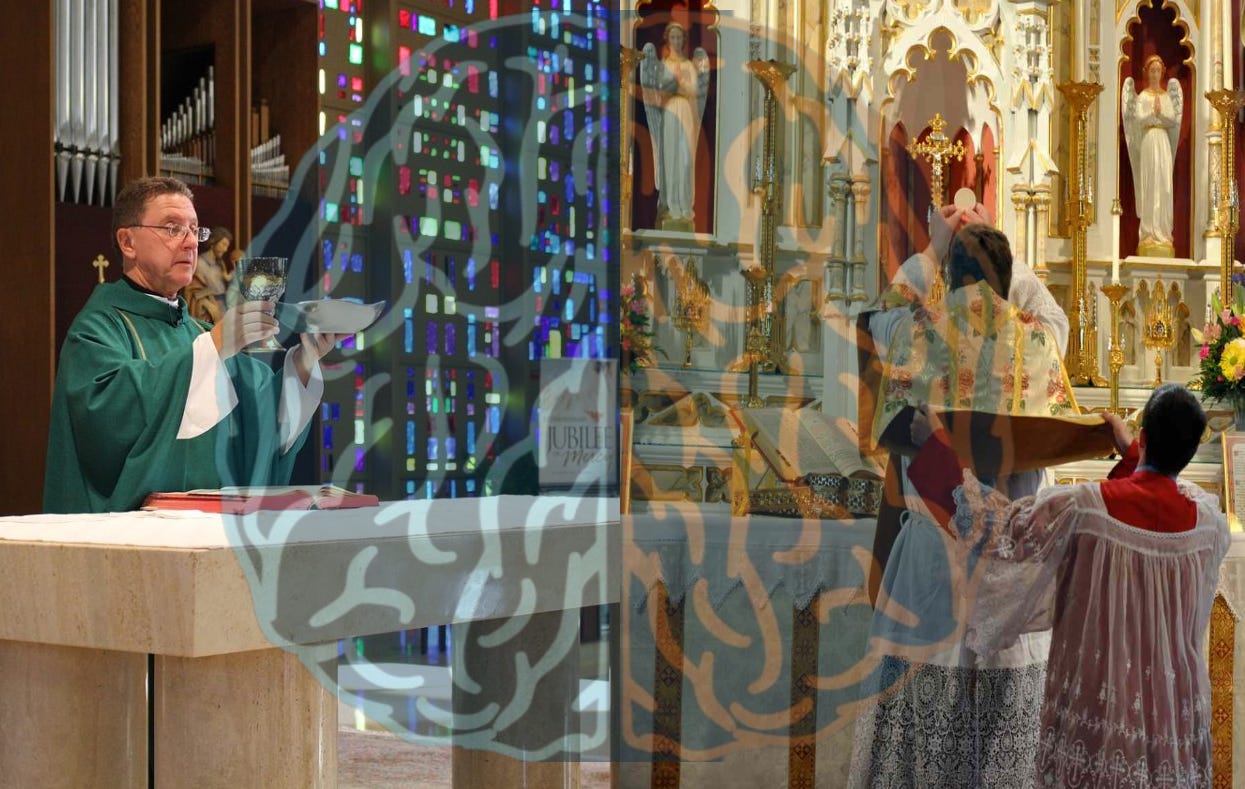
Nearly endless Catholic writing, with my attempts being no exception, attempts to explain why and how the rupture of the last century in the Church’s life, liturgy, and influence has occurred. How did revolutionaries seize control of the means of liturgical production in the 1960s? How did they seize control of the religious orders and seminaries? How did they seize influence over the habits, the mind, and the heart1 of the average Catholic, and why, unless they were literally trying to destroy the Church or literally insane, did they enact the revolution?
I’ve been no stranger to attempting to answer these questions in recent articles, between covering how liturgical revolutionaries used psychological tricks to enact the new liturgy, how the revolution filtered out many of the most faithful Catholics first, and was a product of managerial business practices invading the Church, how the Novus Ordo’s incentives work at cross purposes to human nature, how LSD influenced Vatican II and more.
But I’ve never yet found, nor been able to unify any of these narratives into a single account that feels like it gives a complete answer to the how and why of the revolution. That is, until I read two books very different in scope, but unified in import: Dr. Peter Kwasniewski’s Close the Workshop and Dr. Iain McGilchrist’s The Master and His Emissary. Together, they provide a shockingly simple yet profound account of the liturgical revolution and the doctrinal discord that we’re now facing.
Modernism isn’t, at its root, an ideology, political project, or philosophy. It produces these things, yes. But at its root, it’s a pathology, a neurological disease that’s been slowly infecting humanity for centuries, but which is now omnipresent, affecting even those who oppose it. The abuses, cringe, and devastation pouring forth from the liturgical reform, the modernist heresies, the naïveté of those who go along with them, and the corporatization and managerialization of the Faith are but effects of a larger physical, but, since our body and soul affect one another, also spiritual psychosis.
Based on the Kwasniewski and McGilchrist, this is the story of how left-brain psychosis drove man mad, literally out of living in reality, how the Novus Ordo is a fiat liturgy with the workshopping attitudes that come with it, inherently opposed to human nature.
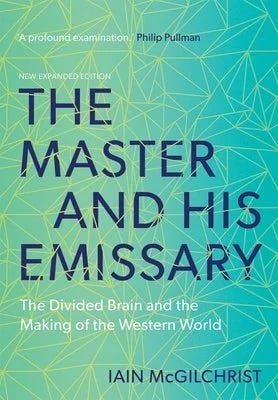
Many are generally familiar with the idea that the two hemispheres of our brains are distinct and better at different tasks: the left in analysis and reasoning, and the right in creativity or as “male vs. female brain”, with the left hemisphere, overall, seen as more powerful, intelligent, and useful. There’s some truth here, but no one attempted a comprehensive analysis of the distinction and relationship between the hemispheres of the brain until the neuroscientist and philosopher Iain McGilchrist’s voluminous The Master and His Emissary, built on his years of research on human behavior when one hemisphere is damaged or temporarily deactivated, turns some of these simplistic accounts on their head. As one reviewer summarizes McGilchrist’s conclusions:
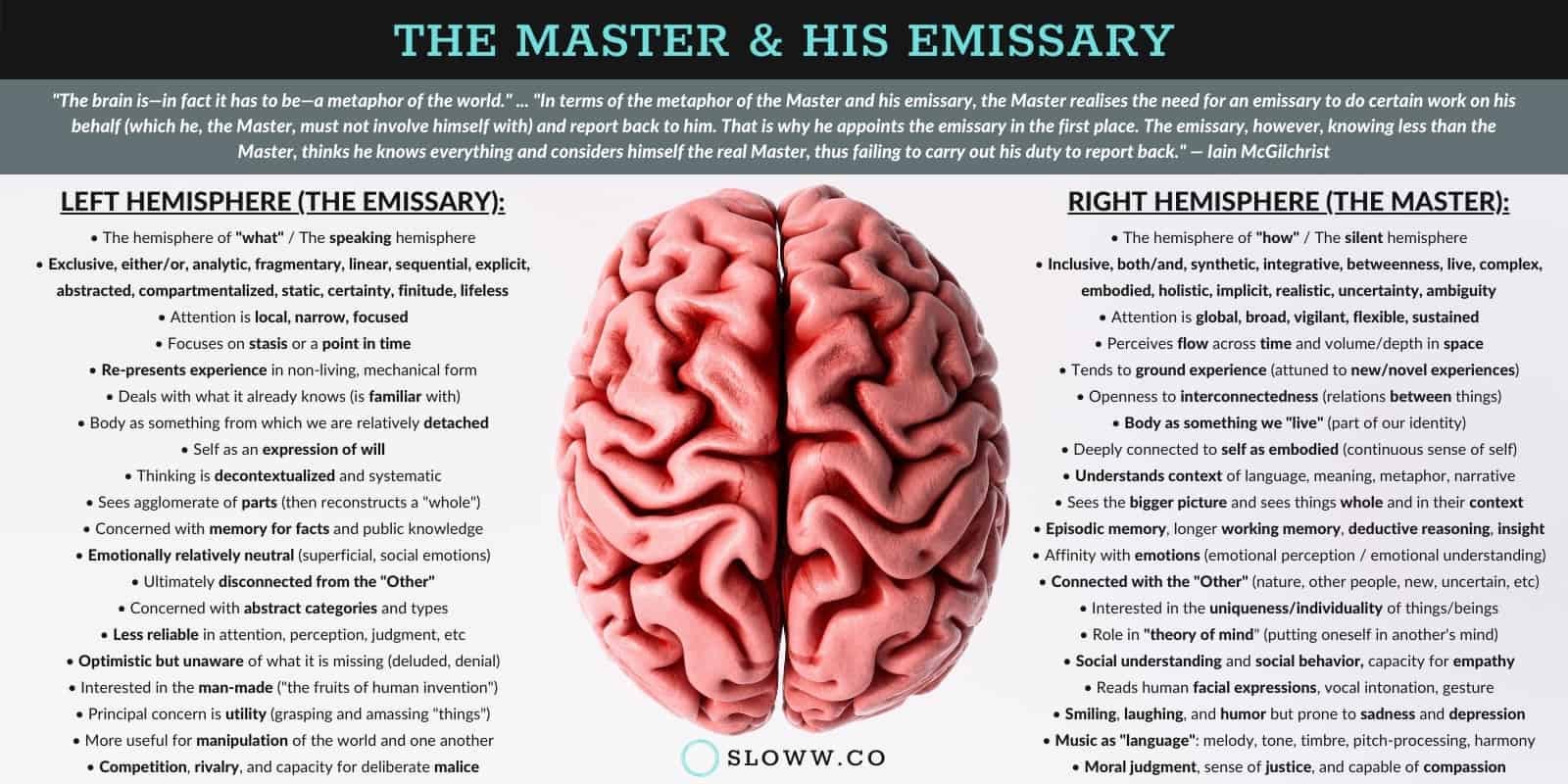
Generally speaking, the difference isn’t on “what” is done, but “how” is done. The left hemisphere deals with units, the right with aggregates. The left hemisphere is focused, and engaged with a goal in mind. The right does not have a “purpose”. The left hemisphere deals more with abstractions. Things that are clear, fixed, and explicit. On the other hand, the right hemisphere deals with the concrete, the individual, the evolved, interconnected, and implicit. They are two different takes on reality that work together to make a coherent understanding.2
From McGilchrist’s view, the left hemisphere is oriented inward on itself, focused on modelling the world through abstractions and working and analyzing within the closed loop of these models, while the right hemisphere is oriented outward toward the world, experiencing it, and relating to other human beings.
The two work together, yes, in our engagement with the world, but they, like two separate tools with different purposes built to better at different things, pull us, every time we use each of them, in opposing directions.
The left hemisphere is rationalist, focused on utility, what is useful, breaking reality down into parts, and building plans and schemes for manipulating these parts. It is logical to a fault, trusting more in the conclusions of its syllogisms than in the evidence of the senses and perceives living things, and the world as a whole, as machines. The left hemisphere cannot handle nuance and prefers absolute certainty, or at least the appearance of it, over admitting that there are any gaps in its knowledge
The right hemisphere is more relational, intuitive, and holistic. It is more capable of seeing living things as living, accepting a space for metaphor, uncertainty, and mystery. It understands beings as beings, purposes beyond mere utility, and practical knowledge, what is grounded in reality, over epistemic, what is derived from reason.
[A good, deeper summary of McGilchrist’s work is here]3
The two hemispheres of the brain don’t completely constrain our behavior to the negation of free will. Neither matter, nor the way our brains are arranged according to nature, are the sole causes of our behavior, thoughts, or actions.
But it’s equally absurd to say that our body, and the way that it is arranged, has no effect. Regardless of exactly how the interaction between the soul and the body works, the left and right hemispheres of the brain are tools that the human person uses for processing the world and relating to it.
The dichotomies of the hemispheres underlie and constrain the courses of action we can take.
Man needs both hemispheres to best apprehend the world and respond to it because the two hemispheres need each other. The right hemisphere, the master, has the better grasp on and relationship to reality and sends out the left hemisphere, the emissary, to analyze parts of it in order to make the overall brain more responsive to the world: the optimal scenario being a circular, or spiral, for human cognition that encompasses both hemispheres.
But this optimal balance, however, McGilchrist argues, has been lost as the left hemisphere’s need for certainty tempts it to grow habitually more and more isolated from the rest of the brain—and from the world. Beginning as a habit of one turning their left hemisphere into itself and its own systems of representation and leaving the right hemisphere to atrophy, it builds on itself through a feedback loop where man’s mind and attention finding certainty only in the left hemisphere’s constructed worldview grow more and more focused on models of reality than on the outside world, and more and more closed off to any experiences that might critique this worldview.

The brain, cut off from what makes it complete, becomes trapped in a psychotic feedback loop that takes it further and further from reality. This has devastating consequences for the sufferer, but what’s worse is that the left hemisphere’s way of thinking—or even of being—like an infectious disease in the world of interacting minds, spreads mimetically through a population like wildfire as it promises certainty, utility, and simplicity far better than the counterveiling promises of the more humble right hemisphere. Even worse, according to McGilchrist, as the right hemisphere atrophies from lack of use, the psychosis passes itself on epigenetically to the next generation, while as we construct—and live in—an ever more technologically artificial world, an external representation of the left hemisphere’s ways of thinking, it acts as an additional external feedback loop, making the left hemisphere’s worldview even more dominant.
For McGilchrist, ever since the 17th-century scientist René Descartes set philosophy onto a path of working within models of reality rather than with things themselves, for example, geometry using an abstract coordinate system rather than a construction-based approach focused on things themselves, we’ve been increasingly living in a world that the left hemisphere has created.
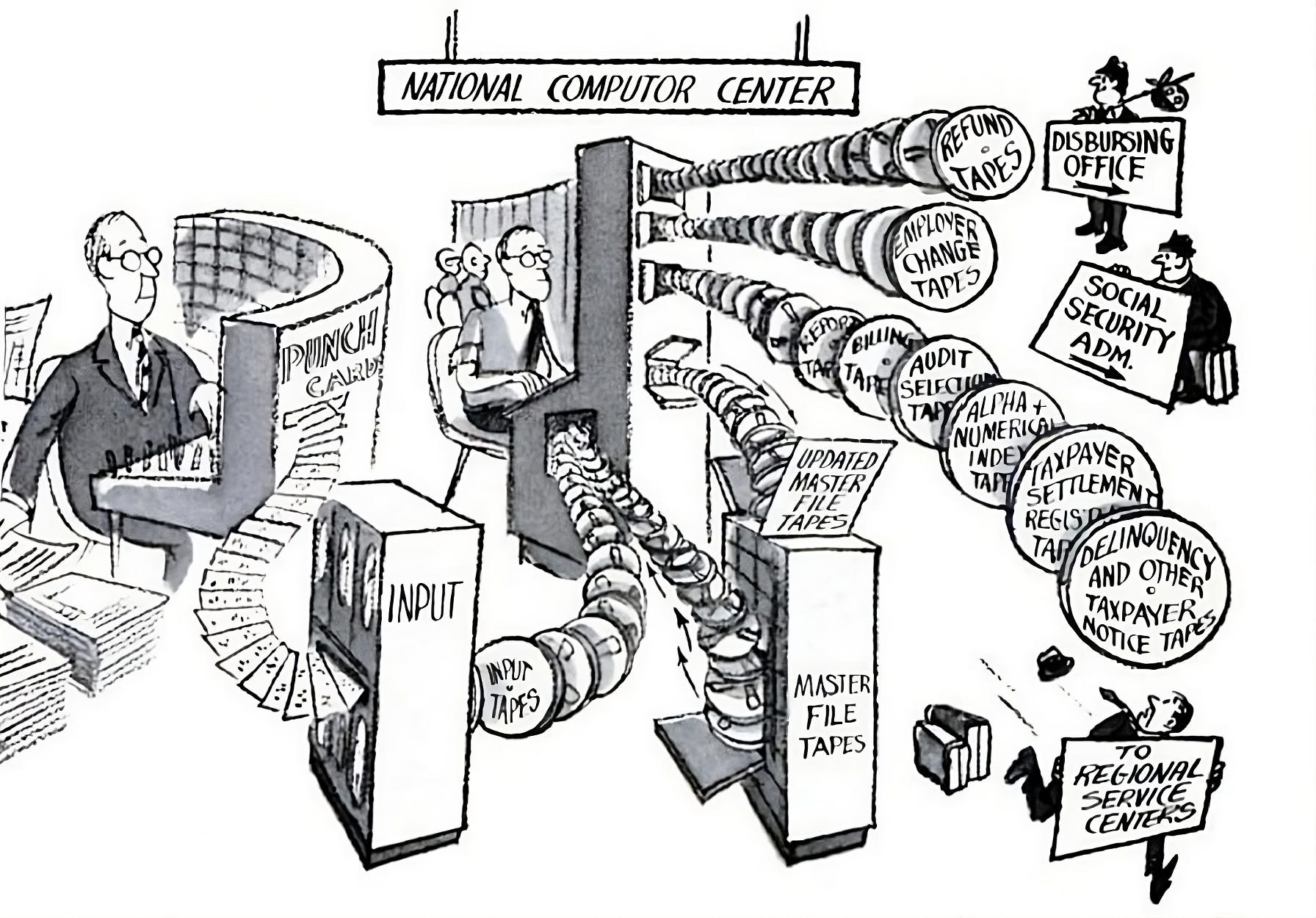
This world, increasingly secular, utilitarian in its politics, bureaucratic, run by impersonal managers (or impersonal computer systems), filled with utopian clean slate thinking, a cog-like view of man, a reductionistic approach to everything, and an efficiency for putting technologists in charge, is an external representation of the world of the left hemisphere. The left hemisphere, the one that today rules as master over the bulk of society, though it be by nature a mere emissary of the right, is schizophrenically delusional in running through its feedback loop of attempting to be ever more utilitarian but in the end only erratically shifting between conflicting, inconsistent, or disparate behaviors because it has lost any ultimate grounding sense of purpose on which it can calculate what to be utilitarian for.
On its own terms, within modelled reality, the left hemisphere will always fail, as without the broader view of the world given by the right hemisphere, it can’t put a purpose behind all its efforts to be more efficient, and, as if it’s been put under a spell, it is a Gnostic who can’t imagine going beyond itself back to an engagement with reality.
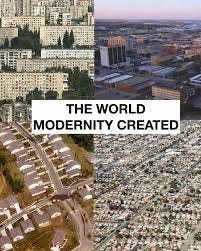
All the left hemisphere knows how to do and wills to do is to turn ever more of the outside world into itself, into a machine, into a process, into an ever more causally closed system, into ever more rigid dichotomies, into ever more abstract and universalized (simplified) abstractions, into ever more efficient bureaucracies for managing uncertainty, for increasing control of that which is beyond it, (and therefore to the ever more paranoid left hemisphere, dangerous). While imbalances have happened before—McGilchrist pointing to iconoclasm and the Protestant Reformation as examples of periods of left hemisphere psychosis in the past—technological change, ever since the Scientific Revolution and mass adoption of new technologies that favor left hemisphere ways of thinking, has reinforced the feedback loops of the left hemisphere and made this period of psychosis, for McGilchrist, humanity’s worst yet.
The world we’ve created is slowly driving us all mad.
With more and more of the population living with such a left hemisphere psychosis and atrophied right hemisphere, modernity and modernism are thus but the external effects of a paranoid schizophrenic pathology in our brains. Modernity is a mental illness that we’re all partaking in. No wonder people have so many mental illnesses, psychoses, and crises of meaning and hope these days. They’re all downstream of a fundamental mental illness, the brain tearing itself apart internally, from the left hemisphere fighting for dominance, pitching us out of balance, and sending us all into a corkscrew of a tailspin.
Ever more powerful bureaucracy and dominance by managers is the left hemisphere’s systematizing influence applied to government and business; globalism is the left hemisphere’s desire for a singular closed model of the world applied to geopolitics, modern monetary theory, and fiat currency is the left hemisphere’s gnostic constructed reality applied to economics. I may dive at some point into how McGilchrist’s view here explains so much of our political and cultural situation, but what was shocking to me in reading McGilchrist alongside Dr. Kwasniewski’s very different book, Close the Workshop on the liturgical revolution, is how Kwasniewski’s arguments about what drove the reform and what makes the Novus Ordo and the tinkeritis or “workshop mentality” that came with it, inconguous with human nature, is how they mirror McGilchrist’s.
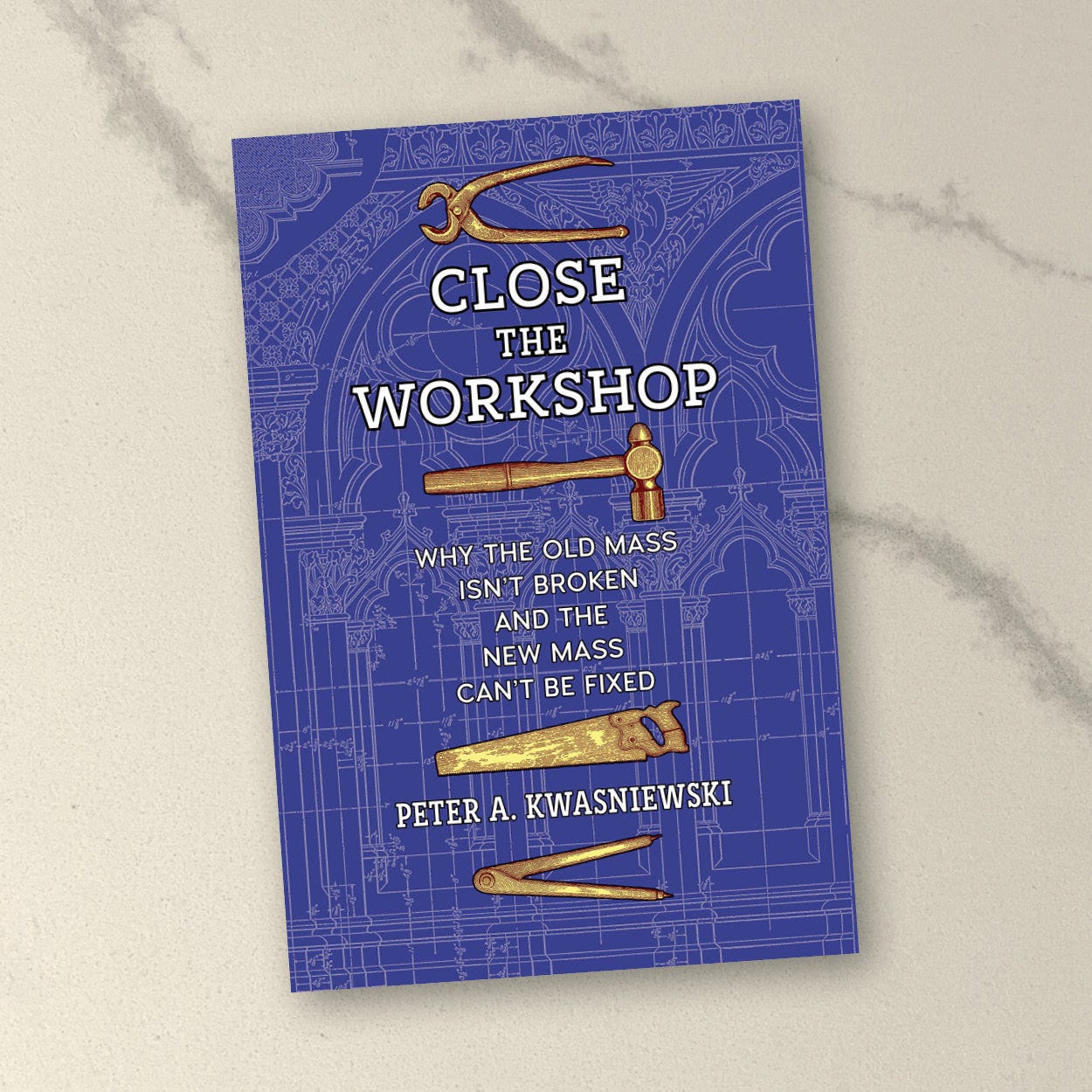
Though Kwasniewski doesn’t focus on neurology, reading Close the Workshop clinched for me the idea that the Novus Ordo—and the liturgical reform movement as a whole—was a left hemisphere product, incongruous with human nature by being built to solely serve the wishes and hallucinations of the left hemisphere, designed by “experts” experiencing the characteristics of left-hemisphere psychosis, put in place by bureaucracies that are external representations of left-hemisphere psychosis, and, in the end, failing to work even by the metrics of the left hemisphere.
Close the Workshop, as in its title, has a two-fold purpose: vindicating that the Traditional Latin Mass (TLM) wasn’t broken and that the new rite can’t be fixed, that there can be no viable “reform of the reform.”
He begins by drawing a comparison, sometimes missed in analyses of the Crisis that solely focus on the Church, with the broader utopianist and blank slate culture that had fully taken hold over the world by the mid-20th century, what McGilchrist saw as the psychotic world created by the left hemisphere:
On the whole, Sacrosanctum Concilium is marred by two errors: the rationalist assumption that things must always be easily understood by us, and the neo—Pelagian implication that we—or rather ther Pope and his favored commission—are the primary architects of our worship, the ones who can build a better liturgy by our own efforts, even as post-World War II statesmen flattered themselves into thinking they could build a better world under the benevolent guidance of the United Nations.4
Sacrosanctum Concilium (SC), Vatican II’s constitution on the liturgy, often portrayed as the liturgical good cop to the bad cop of Annibale Bugnini’s finished product, was a Trojan horse laying the groundwork for what was to come due to its soaking in rationalist, naive, and artificial views of the world, or as I, following McGilchrist, would call left hemisphere psychosis. Rather than treating liturgy as a supernatural gift in which man participates, SC, adopting the hubris of the left hemisphere, saw it as a corrupted machine that needed to be deconstructed, parts swapped out, and reconstructed by teams of experts to achieve perfect efficiency. Making the case still stronger for a neurological or psychological root to the crisis is Kwasniewski’s description of the attitude as a mania for rational method and how it came about:
A purge and fabrication of this magnitude arose from the belief that Modern Man is essentially different from his predecessors, to such an extent that what past generations possessed and made use of can no longer be assumed profitable to modern people. This belief, as false as the day is long, dovetailed with the mania for system and method characteristic of modern times: with enough taxpayer dollars and enough government committees, we can build a better world—or, in this case, with enough “experts” backed by conciliar and papal muscle, we can build a better worship.
There are multiple reasons for this mania, but they converge on one thing, the triumph of rational method and its (attempted) application to every domain of human life. By “rational method” I mean the sort of thing one find in rationalist thinkers such as Descartes, Bacon, Spinoza, Kant, or Comte: the attempt to dominate reality by a self-contained logical system of axioms, theorems, and corollaries. […] Romanticism was a failed response to the rationalist mania, and its failure was all the heavier because it bought the premise of the mania — namely, that system and method are the only ways to be rational. In reacting against rational method, romanticism thought it had to react against rationality itself.
The groundbreaking essay “Bishops Unbound“ by Bronwen Catherine McShea exemplified how this mania invaded the Church long ago. To respond to the rise of rationally organized states, the Church adopted the same type of rational organization herself, overriding and overwriting centuries of local, organic traditions. […] But in adopting the tactics of modernity, the Church began to drink in the view that system and method are the answer to every problem. We see that mentality extending to governing structures, seminaries, advice for confession, spiritual manuals, mass-produced artworks, you name it. The Church imitated the secular state in its absolutism, its legal codes, its proceduralism, and its regimentation.5
While giving justified reasons, yes, for why men in the Church would have considered it prudent, according to the rationalism of the left hemisphere, for adopting the rational methods of the left hemisphere into itself, Kwasniewski’s description of “the attempt to dominate reality by a self-contained logical system of axioms, theorems, and corollaries” once again gives a deeper level of analysis to the roots of the crisis. The left hemisphere, once it is fully in control, dominant over the other hemisphere, sees itself as a “new man” and “essentially different” from what came before, and is actually right in doing so. Man who lives by the left hemisphere and in the world that the left hemisphere creates—modern man—is, in some sense, a different man living in a different, more incomplete, artificial, and closed-off world.
Bugnini, as the ultimate bureaucrat who ran the Consilium with an eye for efficiency, a dependence on “experts” arranged with a tunnel vision that would make the government proud, a skill for manipulating committees, and a goal of making a didactic, simple liturgy from the ground up. As Kwasniewski, pulling on Yves Chiron’s biography notes throughout, Bugnini was a manipulator but not a visionary. He fell for the avant-garde and what he thought would make him popular, and was successful at bringing about what the self-appointed committees of liturgical experts like the “Liturgical Conference” organization, wanted, but, in the end, was not able to rise above the historical circumstances of the 1960s to produce something more enduring, lasting, and perfected to work with man’s nature.
He and the committee he ran were an example par excellence of the left-hemisphere man.
I have a lot more detailed analysis about Bugnini and the Consilium and the tricks that were played in the liturgical revolution here
Man—Bugnini and many of the Council fathers, being prime examples of victims of this psychosis or pathology—sees himself as a new man in a new world that exists in a new immanent frame where God has been shifted away from the center focus. He sees himself solely through the left hemisphere lens as having all power over the world and needing to reshape it to serve his utilitarian interests. This shift, equivalent to all of society, coming down with a mild case of schizophrenia, goes far beyond just liturgy to encompass all of the clean slate thinking we’ve seen prominent across society over the last century, including theological modernism and its latest iterations—synodality and ecumenism.6

The Novus Ordo Missae was a product of the same state of mind that invented fiat currency and fiat master planned cultural experiments like Roosevelt’s “New Deal” and Soviet “Five Year Plans”, Mao’s “Great Leap Forward”, Lyndon Johnson’s “Great Society”, and master planned cities like Brazil’s Brasilia and soulless modernist architecture. It was an attempt at creating a fiat liturgy, turning what had previously been taken as something given and turning it into a project to be managed. It was aimed at being more “intelligible” and simple, better optimized for modern man, thus more utilitarian,7 or as Kwasniewski describes the work of Bugnini’s Consilium, tasked with putting SC into practice and changing the liturgy, turning liturgy into a process or machine to be managed:
Approaching liturgy in this mechanistic, industrialized, compartmentalized way betrays [SC’s] fundamentally Baconian-Cartesian conception of reality. Bacon’s Novum Organum was the methodological template of the Novus Ordo. The Consilium’s workshop was like the laboratory of a chemist or a physicist, rather than the outdoor world of real organic beings studied by the botanist or zoologist. The liturgy was regarded and treated not as a mystery that grows with its own inner life principle, like a child in the womb of Holy Mother Church, but rather as a series of lifeless parts that have to be rigged up a certain way to get them to “function properly.” What is usually billed as the moment of the Spirit […] was in its very conception one huge exercise in the mania for system and method. 8
While simplicity, intelligibility, and utilitarianism were the goals of the reform, aligning with the manic goals of the left hemisphere when it enters a feedback loop, the worst part of the mania is that the left hemisphere, seeking a systematized rational liturgy, can never actually get there. The Novus Ordo is a liturgy that, by the left hemisphere’s standards, should be perfect: a simple vernacular, bare bones checklist of liturgical functions with options to adapt each part for the desires of each priest and local community.
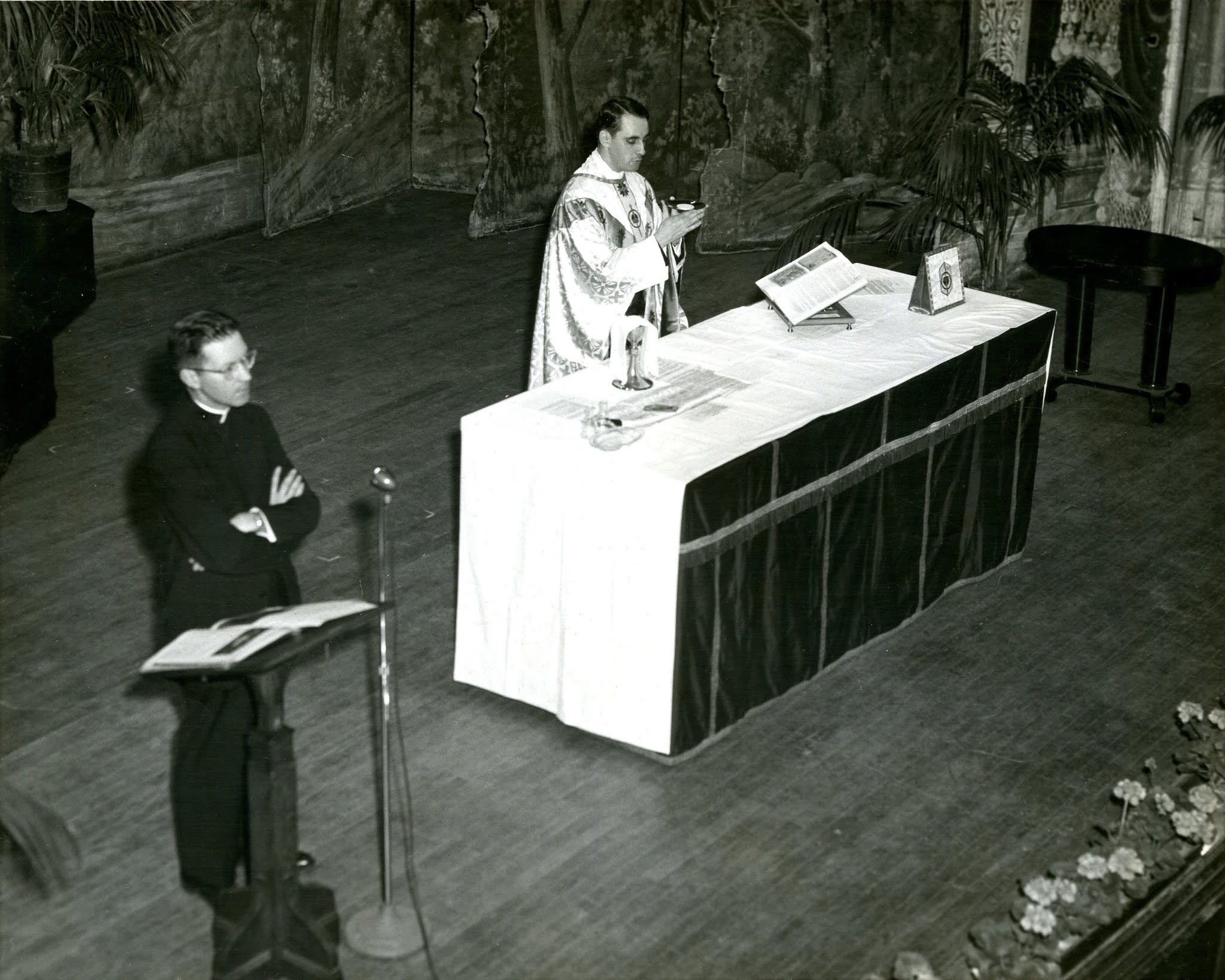
But it’s so stripped of meaning, so transparent, so beige, so bleak, literal and sterile that there’s nothing for the left hemisphere to understand and so never really ends up pleasing anybody, except on a brief emotional level. As Thomas Day accounts well in Why Catholics Can’t Sing?, the Novus Ordo is so artificial and stripped of content, so intentionally “deritualized” or turned into “an efficient machine for worship” and nothing else, that it creates a mental space that mimesis, imitation, soon fills up, either with the latest cringe trend or the egos of the participants—or both.9
The left hemisphere, by itself, cannot understand faith, nor liturgy. It is blind to these because it can only think in terms of utility. The right hemisphere can comprehend and think in transcendent terms. Yet the Novus Ordo does everything it can to smother the right hemisphere with beige banalities and dichotomizing distractions. The TLM, while not necessarily appealing to one hemisphere over another, is well balanced in leading man to both perceive transcendent truth while recognizing the enduring mystery that puts it beyond utilitarian rationalization. As Kwasniewski notes:
I have noticed the following about the modern rite of Paul VI, when studying the ponderous tomes of its architects and admirers: it may sometimes look good on paper, it may have rationale about which one can wax eloquent, but somehow it never works in practice. There it tends to look clumsy, limited in expressive range and impressive power; due to its modular linear construction, it suggests a list of tasks on an agenda, and most attendees may be forgiven their desire to see the agenda completed as expeditiously as possible.10
Much of the rest of Close the Workshop, though not phrased in neurological terms, is about Dr. Kwasniewski making this case that the TLM is well aligned with human nature and man’s needs, while the Novus Ordo is discordant with it, and any attempt to “reform the reform” will merely play into the very same problems that the Novus Ordo portends.
A few highlights follow. In parentheses are page numbers from Close the Workshop, where I found some of the most interesting ideas and passages, and how Kwasniewski’s liturgical observations reflect the left vs. right hemisphere dichotomy:
The Novus Ordo’s optionitis makes it psychologically destabilizing and ungrounding for the priest and the laity. (71)
The new cycle of readings for the Novus Ordo is built on the rationalist idea that more Scriptural knowledge must obviously be better, but paradoxically, even though more of the Bible is read, less of the variety and lessons of scripture are actually proclaimed. (90)
Bugnini once wanted to adapt the liturgy even further than the Novus Ordo, to completely subjectivize and deconstruct it to be completely different in each context. (98)
The Latin Novus Ordo is like trying to mix oil and water, as the Novus Ordo is not just a liturgy or even a process, but a mentality, making “reform of the reform” a contradiction in terms. (126)
There cannot be a stable ground between tradition and modernity, between the Novus Ordo and the TLM, because modernity is an attitude that will always corrode any context it’s added to, not a static set of ideas. (147)
The TLM emphasizes the liturgy as a sacrifice that the entire human person participates in and is sanctified by, the Novus Ordo, however, sees it as an intellectual act whereby we come to rationally know, again a clear sign of something oriented toward the left hemisphere (166)
Participatio actuousa (active participation) is not something that can be engineered but can only come from grace working on our hearts to bring about ecstatic charity for God. (212)
The 1962 and 1965 Roman missals, as well as the 1955 Holy Week Reforms, were already a break of continuity with liturgical tradition, as they participated in the left hemisphere mindset of seeing the liturgy as something engineered rather than something received as a Divine gift. (236)
The TLM is full of allegorical meaning, sometimes layers upon layers of it, something which only the right hemisphere can perceive, while the Novus Ordo’s attempts to be perspicuous leave it flat and feeling constrained and empty of any meaning at all. (256)
The Novus Ordo hyperregulates the laity as compared to what the TLM did, but leaves options so vague as to be meaningless for what the clergy ought to do. (364)
Kwasniewski sums up his argument in Close the Workshop eponymously: close the workshop. The TLM concorded well with human nature and wasn’t broken. It didn’t need to be fixed, and further tinkering with it, or tinkering with the Novus Ordo, to finally get real liturgical reform is a fruitless exercise. Only going back in full to the TLM, a liturgy that doesn’t encourage our modern neuroses, but which serves God and comports well with our whole human nature, will address the crises in the Church. Anything short of going back all the way is just perpetuating the left hemisphere thinking that caused the crisis to begin with, and which the Novus Ordo, as a left-brain liturgical experiment, perpetuates.
If anything, Dr. Kwasniewski notes, if Vatican II needed to do anything at all to the liturgy, it should have been to encourage it to go even deeper into itself, to encourage even greater natural (slow) development over time of additional layers of meaning, additional ritual, additional reverence, even less haste, more symbolism.
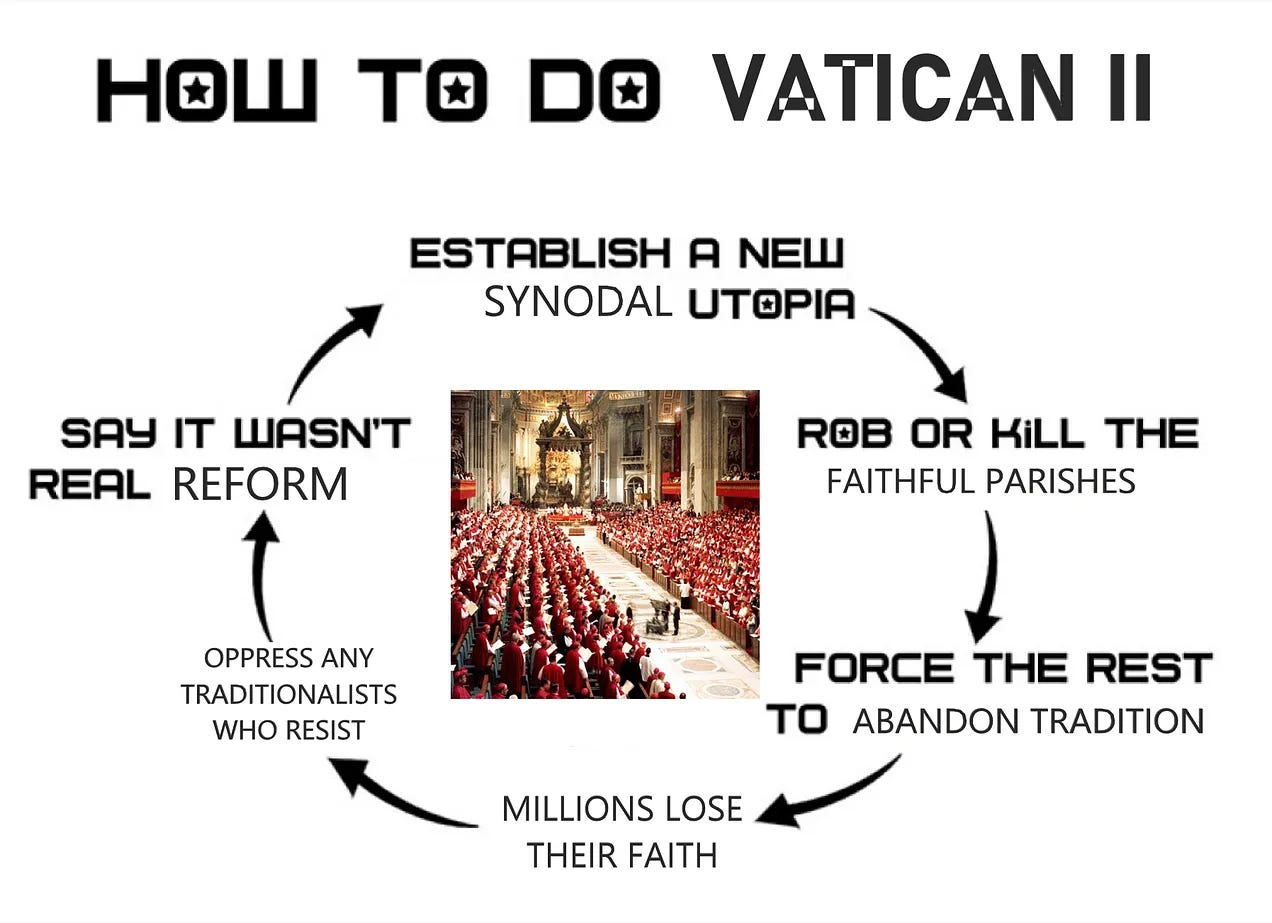
Man’s neural psychoses were going to be a problem regardless of what the Church did with the liturgy, of course. The problem has been building for centuries. But by upending the age-old liturgy and putting in a revolutionary, artificial, left hemisphere-centric model in its stead, the glue that held Catholicism together, that held Catholics back from being as affected by the psychoses of modernity as the rest of the world, was lost. Theological modernism and doctrinal discord were problems that had been building for a while before Vatican II, and it needed a response. The problem, theologically and liturgically, was that Vatican II’s response—as a surrender to many modern ways of thinking—was a surrender to the left hemisphere, and paradoxically, even though the left hemisphere claims to be rational, to irrationality and schizophrenic separation from reality.
As one person put it to me:
Christ is the truth, and setting Him aside as the only Way and Truth, and setting up false gods next to Him as other ways and other truths can only lead to greater and greater detachment from reality. It sets man in the place of God, the lower nature above the higher, this world over eternity, and lies and confusion instead of truth and clarity. Yeah. Schizophrenic may even be too mild of a descriptor.11
Parts of our brains are not solely to blame. People, and the spirits manipulating them, of course, are. The will is involved in choosing to live by a part of ourselves that has led us to become increasingly detached from reality and from its Creator. But thinking of modernism—theological, liturgical, and psychological—as a left hemisphere pathology is useful in how it reminds all of us that we’re potential victims of the sickness it brings.
Modernism isn’t something that just liberals fall for. It can affect all of us any time we fall into pridefully thinking that we’ve figured it all out by our own efforts, that our particular model of the crisis that we’ve come up with perfectly accounts for everything that’s gone wrong, and that everyone who disagrees with our own personal Magisterium is condemned.
Faith is not just holding the right set of intellectual propositions or congratulating ourselves on reciting the right formulas. Real faith is holding steadfast, not just in our mind, or a single part of our brain, but as a whole person, to the Divine Person, the Word Incarnate. The left hemisphere is blind to this, and living, as we do, in a technological left hemisphere-dominated world, it’s rather hard for all of us to see and live by faith since we’re all at least partially victims of left hemisphere pathology.
We traditionalists, if we fail to see tradition as something that we receive as a gift and instead see it as something we’ve produced and are sustaining by our own efforts, are also falling into the ultimate left hemisphere psychosis and vice: pride. The left hemisphere’s self-centered gnosticism sees itself as the center and shaper of reality. It drives us crazy for the same reason that it’s a sin, a peccatum, a falling short. The left hemisphere, and those who live by it, are closed off into themselves, bereft of an encounter with grace, being, God, and even just the real world.
The obvious solution posited by Iain McGilchrist to the left hemisphere’s psychoses is that we refocus on the right hemisphere of our brains, attempting to exercise that capacity which is outwardly directed, relational, oriented outwards toward encounter with other minds, with other persons in love for the other.
This solution can not be master planned, enforced from above, or tell us exactly what we need to do to solve any particular problem. As much as it is good that the work of those who have best pushed back against left hemisphere (modernist) thinking, like Dr. John Senior and Neil Postman be spread and that we do what we can to rebalance our own brains back towards reality, the ultimate solution to our psychoses can only, just like the liturgy and the love of God, be received and accepted individually as a gift.
David Graeber, The Utopia of Rules: On Technology, Stupidity, and the Secret Joys of Bureaucracy. Melville House, 2015
Dr. Peter Kwasniewski, Close the Workshop: Why the Old Mass Isn't Broken, and the New Mass Can't Be Fixed. Angelico Press, 2024.
Eric Voegelin, “Science, Politics and Gnosticism,” (2012, Regnery Publishing).pdf
Iain McGilchrist, The Master and His Emissary, Yale University Press, 2009
James C. Scott, Seeing Like A State: How Certain Schemes to Improve the Human Condition Have Failed. Yale University Press, 2008.
Sam Francis, Leviathan and Its Enemies. Washington Summit Publishers, 2016
Thomas Day, Why Catholics Can’t Sing. Crossroad Publishing, 1990.
As a book reviewer summarizes McGilchrist:
The LH (left-hemisphere) is more self-referential and independent, having more synaptic links within itself. The RH (right-hemisphere) on the other hand has more external links, and co-ordinates action between the two hemispheres. The RH can cope with LH tasks and approaches much better than the LH can cope with RH tasks. The LH tends to assume that objects will have enduring properties – it thinks in terms of types and categories. The RH, on the other hand, deals with each new experience afresh and treats every object or person as a unique individual. Meaning for the RH is contextual, whereas for the LH it is part of a closed system of representation.
LH is often thought to be the language hemisphere, but this is an over-simplification. It handles abstract and familiar language and connects language grammatically. The RH on the other hand deals with unique referents, unusual words, new words and metaphorical relationships. Everything in the LH is focused and explicit, whereas the RH specialises in diffuse, implicit and unconscious processing. The LH maintains memories of facts, the RH personal memories. The LH engages in explicit sequential argument, whilst the RH is better at reasoning with an unconscious element, especially problem solving and the spotting of anomalies.
The RH engages with others as persons and with other living things as autonomous alive things, whereas the LH is much more concerned with manipulation and will treat everything as a manipulable object. This is also related to the way that the LH divides things into parts whilst the RH sees things (or people) as wholes. The RH thus handles social relationships, is capable of empathy, and emotional arousal and perception. The LH can only offer superficial, ‘willed’ emotions and anger if its will is blocked. The general mood of the LH is superficial optimism, whilst the RH engages in any kind of pessimistic or ‘negative’ emotion, as well as the more profound positive ones.
The LH is dogmatic, drawing mistaken conclusions from limited evidence and sticking stubbornly to them, whilst RH is always open to new evidence. LH is rule governed and inflexible, whilst the RH can tolerate ambiguity and can hold different possibilities together imaginatively without premature judgement. The LH’s certainty is related to its narrowness of focus – it has to limit the options in order to focus effectively and act at one point. The RH’s openness, on the other hand, enables it to respond to unexpected dangers and difficulties.
I like political philosopher Sam Francis’s take on the broader shift in how the left hemisphere’s constrained worldview affected religion:
“Our century,” writes Herbert Wallace Schneider, “has created a number of religious societies whose outward appurtenances resemble the office buildings of big business more than they do church buildings. . . . During the last decades the work of the American religious bodies has become so specialized, organized, and practical, that the very life of religion seems to be shifting from worship to “service” and from altar to office.”
Sam Francis, Leviathan and Its Enemies, pg. 44. Available at https://ia600706.us.archive.org/1/items/LeviathanAndItsEnemiesSamuelT.Francis2016/Leviathan%20and%20Its%20Enemies%20-%20Samuel%20T.%20Francis%20%282016%29.pdf
One particularly interesting related story given by Dr. McGilchrist in The Master and His Emissary is how the liturgical reform’s doing away with much of Gregorian Chant, destroyed the physical health, literally, of a French monastery.
More on that story in particular to come.
A very prescient quote from Henry Sire sums it up like this:
What we find in the new liturgy is a counterpart of the tower blocks that in the 1960s were heralded as the beacons of the new age: soulless, jerry-built, and inspired by a totalitarianism all the more odious for its democratic pretensions.
Henry Sire, Phoenix From the Ashes, 375.
Comments
Nothing yet. Say the first thing.
Sign in to join the conversation.