
Three weeks ago, I attended a private conference on critical minerals at an undisclosed location.
I say “private”, because security was so high at the event, they didn’t even reveal the guest speakers or panel members publicly. To find out who was speaking or presenting, you had to pass through security and enter the event. And while I cannot reveal the names of the people I met there, I can tell you they include former ambassadors, members from the C-Suite at U.S. intelligence agencies, mining executives from critical minerals companies and more.
All these people met to share their insights on one gigantic problem…
How can the U.S. close the gap with China pertaining to the production, development, processing, and refining of critical minerals.
What is a critical mineral?
Critical mineral is a designation governments use for raw materials that are both economically essential and at risk of supply disruption. The exact list varies depending on the country, but the concept generally rests on two criteria:
Economic importance: the mineral is a necessary input for key industries (defense, energy, electronics, manufacturing) with no easy substitute.
Supply risk: the country has little or no domestic production and depends heavily on a small number of foreign sources, often geopolitical rivals or unstable regions.
We’re talking about things like Antimony, Boron, Lithium, Phosphate, Tungsten, Vanadium, etc.
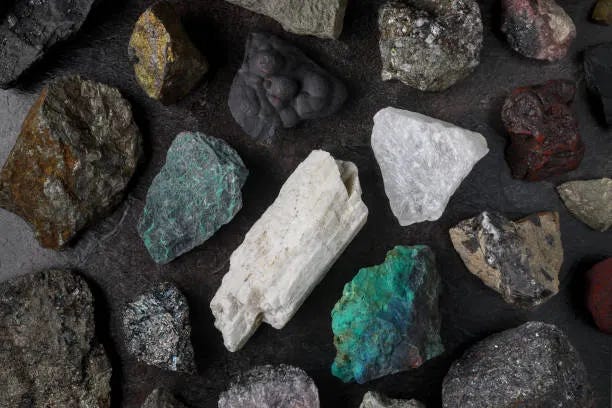
An array of critical minerals.
Why do these things matter?
Antimony hardens lead so bullets hold their shape, feed reliably through weapons, and don’t squish or deform when fired. Without it, you’d need to redesign ammunition around alternative materials (copper, steel, tungsten), which means retooling factories, requalifying ammo for existing weapons, and increasing costs… none of which can be done easily or quickly.

Thank antinomy that the bullet maintains its shape as it leaves the barrel.
What about Boron? Who cares about that?
Boron is the key ingredient in the strongest permanent magnets made (neodymium-iron-boron, NdFeB, or Neo-Magnets), which power EV motors, wind turbines, medical devices (MRIs) and precision-guided weapons and radar systems. It’s also critical in nuclear reactor control rods (it absorbs neutrons) and in specialty glass, semiconductors, and fertilizer.
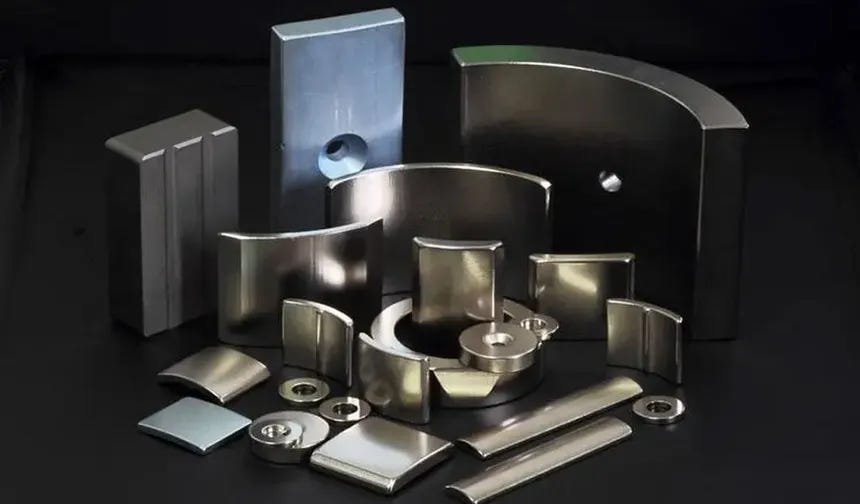
Some examples of NdFeB magnets.
Here again, you cannot swap out the critical mineral easily without REAL tradeoffs in performance or cost.
And on and on.
OK, so we have established what critical minerals are and why they matter. So, what’s the issue? There must be a ton of this stuff in the world.
The multi-TRILLION-dollar problem is that China controls the production, processing and refining for most of the world’s critical minerals.
I’m not exaggerating here.
China is the largest supplier of more than half of the roughly 27 key critical minerals most vital to U.S. national security.
That’s a huge problem, but relatively manageable in that there are plenty of critical mineral resources around the world in places like Australia, Indonesia, Argentina, etc. As one of the panelists noted during the critical minerals conference I attended, the U.S. can get its hands on these items if it needs to.
The much larger, and more complicated, problem is that you don’t simply extract critical minerals from the ground and start using them.
For example, copper ore, once mined, is crushed and concentrated at the mine site. The concentrate then goes through smelting (melting at extreme heat to separate copper from sulfur and other elements) and refining (usually electrolytic refining, where electricity is used to deposit pure copper onto cathodes).
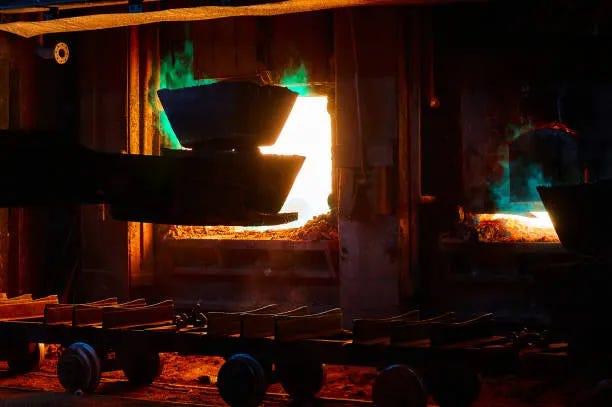
Copper smelting.
Lithium, another critical mineral that is used in EV batteries and nuclear weapons, comes from two sources: hard-rock ore (spodumene, mostly in Australia) or brine (salt flats, mostly the Lithium Triangle: Chile/Argentina/Bolivia). Once mined the ore has to be treated one of two ways: 1) the ore crushed, then roasted at high heat and treated with acid to convert it into lithium sulfate, which is then further processed into lithium carbonate or lithium hydroxide or 2) salty water is pumped into massive evaporation ponds, left in the sun for months to concentrate the lithium, then chemically treated to precipitate out lithium carbonate.
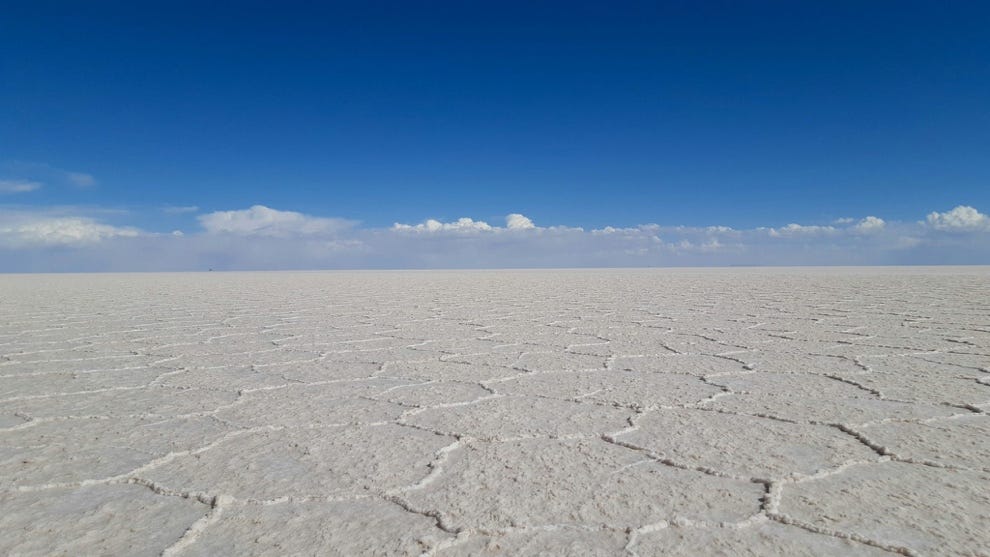
Lithium salt flats.
The point I’m making is that critical minerals, even if you own the resource, still need to be processed/ refined usually via complicated, multi-step process.
And therein lies the real problem from a critical minerals perspective: China is not only the dominant producer for many critical minerals, but it is also the dominant refiner. In fact, its dominance from a refining perspective far outweighs its dominance in production: according to the International Energy Agency (IEA) China is THE global leader for the refining of 19 out of 20 critical minerals, holding an average market share of around 70%.
This is a virtual monopoly.
You’re probably wondering how this happened. I mean, after all, if these minerals are CRITICAL to the production of advanced weapons systems, satellites, and other exquisite technologies that the U.S. NEEDS to produce to remain the dominant superpower of the world… how did U.S. policymakers allow China to A) become the world leader in terms of ownership of these things and even more importantly B) obtain a virtual monopoly on the most critical bottleneck in critical mineral production, namely refining?
On the U.S.’s side, critical minerals are not a consistent political pressure point. There are brief periods where Americans grow concerned about them, primarily during periods of armed conflict or when political upheaval abroad leads to shortages… but by and large, Americans are more concerned with social issues as opposed to strategic issues.
Moreover, the production and refining of critical minerals is a dirty business. As one panelist stated during the conference I attended, “you think people don’t want data centers near their homes, try getting them to sign off on a copper smelter!”
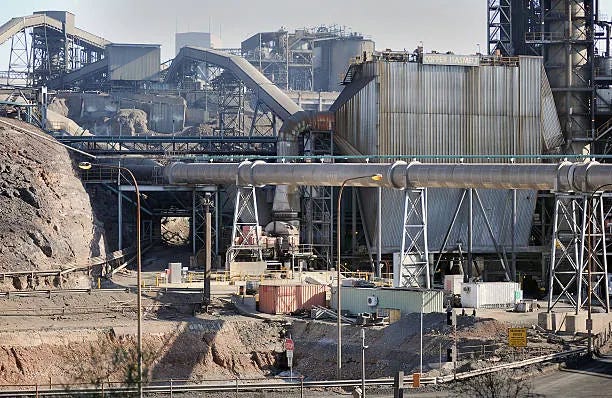
This makes a data center appear quite appealing by comparison.
The reason China became THE dominant producer of critical minerals is also political in nature. China, for all its claims of “opening the markets” or “capitalism” is essentially a command-style economy in which the ruling party dictates the country’s economic agenda. And starting in the late 1970s/ early 1980s, China’s leadership decided that they wanted the country to become self-sufficient in critical minerals. So, they used the classic “command-style” economic framework to do so.
This involved:
· Providing export tax rebates to subsidize domestic producers so they could sell rare earths cheaper than anyone else in the world, undercutting U.S. and other competitors out of the market (1980s).
· Declaring critical minerals a “strategic resource,” thereby banning foreign companies from owning or controlling rare earth mining and production in China (1990).
· Permitting lax environmental enforcement, allowing domestic producers to get away with heavy pollution and toxic waste from mining/refining that Western countries wouldn’t tolerate, which kept costs artificially low (1980s-1990s).
· Aggressively building up domestic processing and refining capabilities using state-backed debt at below market interest rates (1980s onward).
This trend went into overdrive in the aftermath of the Great Financial Crisis of 2008. While most of the developed world was deep in the throes of a recession, China pushed a rapid consolidation of rare earths producers, merging a messy, fragmented industry of small private and often illegal operators into a handful of tightly controlled, state-run giants (the “Big 6” groups).
Comments
Nothing yet. Say the first thing.
Sign in to join the conversation.