
Real estate gave me my first break. I achieved financial independence by taking advantage of some smart deals, and even my YouTube channel that let me live life by my own terms was possible only because I shared what I had learned. But I have to be honest about something.
When you see early success with something, you get to a point where it’s hard to tell apart the success of the outcome from the success of your approach. I did everything right on paper. I bought years ago, locked in low rates, and held through the real estate boom. So I saw the benefits. But over the last couple of years, I’ve been thinking…
Is real estate really worth it for someone getting into it today?
And I think the answer is maybe not. But it’s not a simple yes or no answer — there are so many things I learned in the process of buying and selling properties that don’t show up in the conversation around real estate. Today I’m going to share everything I learned so that you can keep these in mind when making your own decisions.
40,000+ investors subscribe to this newsletter and stay ahead of the market by getting these reports right in their inbox. Join for free here:
In 2008, I got my real estate license and began working as a real estate agent. I saved up my commissions, and in 2011, I had made enough to buy my first property — a bank-owned foreclosure in San Bernardino for $59,500. I fixed it up, rented it, and from that point on, I was hooked on the idea of renovating run-down houses and turning them into livable properties.
I also had this unique edge, because I was living and breathing real estate every hour of the day. I could see properties the second they came on the market, represent myself, and write up an offer in less than an hour. So I could get some pretty good deals, in theory. At first, it worked. My earnings increased, and I bought 7 properties in Southern California, locked in at 3% mortgage rates for 30 years. The markets went up, the rents covered the costs, and I thought I had it all figured out. Here’s where it’s at today:
The first home I bought for $60,000 is now worth $400,000
I sold two in San Bernardino for a 300% return a few years ago
The home I bought in West LA for $780,000 is now worth $1.3 Million
I sold my last home for $500,000 more than I paid for it, 7 months ago
But like I said, even though I was able to score some good deals, a lot of my success came from buying in the perfect window. Prices were low, rates were cheap, and rents were strong. Those conditions don’t exist today! The rising market ended up doing a lot of the heavy lifting, and it came to bite me later on.
So let me talk about my biggest mistakes in order. The first one is the most important.
Everyone told me to raise the rent, but I never did. My philosophy was this: I had a great deal locked in, and I could afford to not maximize every dollar possible. Instead, I could just pick the best tenant I found, keep them there as long as possible, and never raise the rent. My priority was to find someone easy, who would pay on time, and treat it like their own. For years, that worked. Until it didn’t.
The problem with LA real estate is that a lot of properties are under rent control. You can only raise rent by a small amount each year, and if you don’t, then you can’t make it up later. Instead, your future rent increases will always be based on the lower amount! One missed year can compound into thousands of dollars over time, and I fell right into that.
For many years, I kept the rent unchanged. Then 2021 came around, and boom – all of a sudden, my expenses went through the roof: insurance, repairs, materials all doubled in cost and utilities went up by 50%. Some years I literally broke even when a major repair wiped out entire years worth of profit. So yes, I had to raise rents to keep up with this. But I couldn’t! Because the city of LA imposed a 3 year ban on raising rents. I had never anticipated that a city could ask you to absorb every cost of ownership while having zero recourse against my own rising expenses.
By the time I did finally raise rent — by a measly 3% — it was a fraction of how much my own costs had gone up. If I had consistently increased rents every single year, there wouldn’t have been as much of an issue, but my overheads just shot past my rents. And that’s on me.
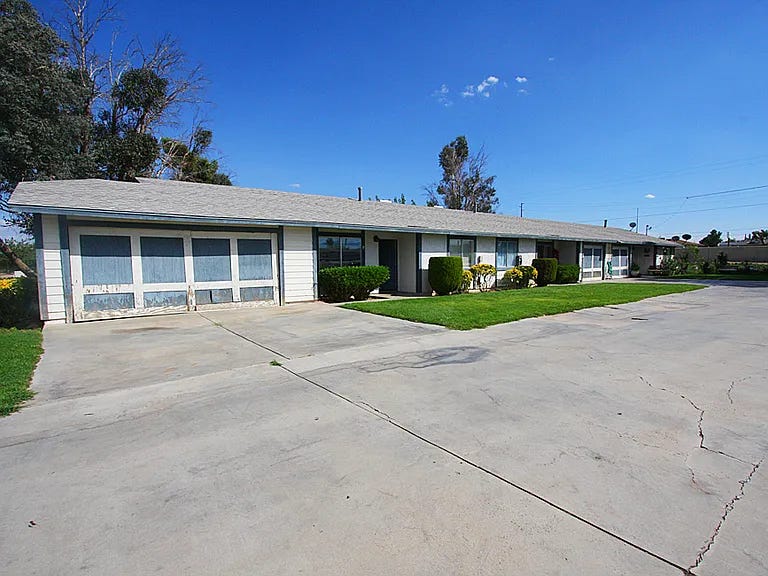


When the time came to finally sell these properties, the lower rent didn’t just hurt my monthly cash flow, it hurt the entire value of the property. Investors usually value rental properties based on how much income they produce. If your rents are capped far below market rates, the property looks a lot less profitable on paper. So the building itself might be worth more, but the lower rent can lower the sale price.
Initially, I thought this wouldn’t matter. I thought I’d never sell, the tenant would move out, and I’d be able to reset the rent back to market rates. But things change. When I finally listed it for sale, that decision to not raise the rent by 3% cost me not a few hundred dollars a month compounded over 6 years, but about $100,000 in the final sale price. Every real estate investor had told me I was being an idiot for not raising rents, and you know what? They were right.
The lesson here is that being a good landlord doesn’t mean ignoring the math. You can still be fair, reasonable, and treat your tenants well, while keeping the property financially sustainable.
This is the one that very few people emphasize, and the one that will cost you more than anything else. Everyone knows repairs exist and say “budget 1% for maintenance.” But you don’t truly understand what that means until you’ve owned a property for 10-15 years.
In any year or two, there might be a few small things, here and there. But then there’s one year where:
The roof needs replacing
There’s a plumbing situation that balloons into a major issue
The AC goes out in the middle of August when the heat is rising
And the only person available charges double the cost to fix it immediately. You have years of zero maintenance — years! — and then $20k for something you could not have predicted wipes out a year of profit. Sometimes you bring in the contractor for one issue and find two more and think, “might as well fix it while they’re there.” Even with a property manager in the loop, all of this is still work.
Here’s one memory I can’t get out of my mind: The ice-maker in the refrigerator wasn’t working, and the tenant complained. The property manager sent a repair person out and I got an $800 bill. To fix an ice maker! You could literally buy a brand new refrigerator for that price. It was common-sense. Or this other time where to fix a crack in a sewer line, the city asked me to replace the entire section — $20,000 — but to do that I needed to dig up the side-walk, permits took months, and a $5,000 fix turned into $40,000! Even if your annual repair budget seems reasonable, sometimes the most unpredictable thing can break and set you back by a lot.
If you missed that story, it’s here:
This was one of my biggest blind spots. Usually when people asked me how real estate was performing, I’d point to the appreciation. They’re all worth way more than I paid. But that appreciation is worth nothing until you actually sell it.
Once I backed out every repair, vacancy, insurance increase, utility bill, and maintenance call, the actual return was only around 4 to 5% a year. At that point, when a Treasury bond could pay something similar without tenants, repairs, liability, or surprise expenses, I had to ask myself: Why am I still doing this?
I was taking on the risk of:
Lawsuits
Property damage
Legislative changes
All for a return I could have gotten from a “set-it-and-forget-it” index fund, or even a high-yield savings account. Even with leverage, I’d have made just as much indexing in the stock market. Once you take into account all the time spent on renovations, phone calls, notices, headaches, negotiations with contractors, etc. I was basically taking on a part-time job, while also assuming all the liability!
So I started selling, and that’s when it turned out to be expensive.
If you want to get top dollar for your property, you have to make it as turn-key as possible to appeal to the widest buyer demographic. In the last few months, I’ve spent nearly $100,000 between three properties on remodeling, painting, new landscape, staging, and other expenses. I even offered one tenant a voluntary buyout so I can sell the unit without it being tenant occupied — it was expensive, but the cleanest way out for all of us. (I’m fortunate that I have that option. Most small landlords can’t just write a check to solve that problem, and selling a tenant-occupied property is really, really difficult).
So yes, you could do the bare minimum to sell a home. But to get the highest selling price, you need the house to be in the best possible shape. When these places have had tenants for the last 8 years, things WILL need to be upgraded. So that’s what I did. So far, every single place has gotten multiple offers significantly over asking price. Thanks to Jason Oppenheim and Shelton Wilder, whom I highly recommend if you’re in LA. Tell them I sent you, no joke. I was a full-time real estate agent for 12 years, and these are the people I’d trust my own places with.
This is a secret limitation. When you own a rental property, the IRS lets you write off the value of the building over 27.5 years. Your income looks a lot lower on paper, and you pay less in taxes. The catch is that when you sell, the IRS comes back for “deprecation recapture” taxed at 25%. Those early tax deductions need to be repaid when you sell, unless you 1031 those profits into another property to keep the process going. But if you’re looking to completely exit the real estate game like me, that’s a significant tax bill.
On top of this, my properties were in California. So I’m paying an additional 10% tax on all profits to the franchise tax board on top of the Federal Capital Gains Tax. Now, the ability to offset rental income through paper losses is a genuine benefit of real estate that you don’t get with stocks. If you never realize those gains, these could be extremely valuable. But depreciation is a deferral, not a cancellation. If you eventually do sell and exit, the taxes will need to be paid.
This one never shows up in a spreadsheet or a projection, unfortunately.
When you own property, you’ll usually have to budget some time, every single month, to make sure everything runs smoothly. Even with a property manager, you’re still getting calls and making the final decisions. You’re still the one responsible for everything that goes wrong, the property manager is just the first point of contact.
A lot of passive overhead never goes away:
Insurance renewals
City inspections
Property tax bills
Permits
City compliance
Rent registries that have to be filed
Utility notices
None of these are catastrophic, but they all add up in bits to take up mental inventory that never goes away. It adds up to a level of background stress that I just didn’t account for, when I started.
So what am I trying to say here? Is this me warning people to stay away from real estate? Not at all. I want to be clear about something:
This isn’t me complaining. I’m just showing you that even when real estate goes right, people still underestimate the hidden costs, time, taxes, repairs, and opportunity cost.
I’m also not saying real estate is a bad investment. The early properties were great. They worked because I bought in at the right time, in markets that appreciated significantly, with locked-in cheap debt, and for that I’m genuinely grateful because it’s why I am where I am today.
But if I don’t explain the full picture from start to finish, I’m doing you a disservice. Now that I’m nearly done selling everything off, here’s the truth: the returns were not as good as I initially expected them to be. Some of this is my fault for not listening to everyone’s warnings, but a lot of it was also just outside my control! Policies were implemented without any warning, things broke suddenly… You just have to expect the unexpected sometimes.
If I was starting over today with what I know now, would I still buy real estate?
I would, if I were buying it for myself, in an area I lived in full-time, assuming I had the capacity to handle the mental day-to-day management. But that profile no longer fits me. I live out of state, I last occupied one of the duplexes in 2019, and I’m so busy every waking moment that I can’t afford any more distractions.

For everyone watching though, here’s my advice: Unfortunately, if your property is rent-controlled or there’s the chance it will be rent-controlled, you have to raise rent every year to stay at or near market rate, even if you don’t want to. Budget aggressively for repairs – estimate it will cost you at least 30% more than you expect. Then factor in the cost of your time in dealing with all the random little surprises that come up.
Finally, compare if this opportunity cost is real against the returns of buying an index fund and answer for yourself — is it really worth it? It’s a call you have to take.
There’s a world in which it still makes sense. But a lot of people expect real estate to be passive. In reality, it’s customer service with property taxes.
If you found that useful, hit like, restack, and share it with a friend:
I’ll see you next week.
— Graham
No posts
Comments
Nothing yet. Say the first thing.
Sign in to join the conversation.