
This is going to sound insane, but what if I told you that it’s a mathematical truth that the stock market will literally never go down again?
A viral thread on Reddit laid out a very convincing argument last week. Though the post was removed after it went viral, here’s the gist:
Stonks go up is no longer a meme, it is a law, like gravity, only in reverse with money
We owe 40 trillion in debt. Our interest payments are about to exceed our GDP. This means that the only way to make our interest payments ALONE is to print enough money to cover the interest
This will cause hyper inflation. But who cares if you own PLTR or TESLA stock? Those will inflate proportionally. You see, it’s actually mathematically impossible for stocks to go down at this point. If they do, then the entire world economy will collapse
This is why you see any “crash” instantly recover within half a trading day. The stock market can LITERALLY NOT GO DOWN. These are not famous last words. This is the new law of the land.
This isn’t the first time that a thesis like this has come up, but the economic conditions this time make it worth some serious thought. So we need to discuss exactly what’s going on, why the government is now forced to continue printing more money than we ever imagined – and what the implications are if this theory is correct.
Because if this theory is correct, then we could witness the largest wealth transfer in history. If not, it’s a rug pull.
Before we dive in, if it’s your first time here, join 40,000+ investors who stay ahead of the market by subscribing. You’ll get one email every week, and it’s totally free:
The idea that “stonks only go up” is based on a theory economists call “The Great Melt-up.” It works like this: Every bull market keeps going up until it reaches a euphoric phase. Prices stop being driven by fundamentals like earnings and cash flows, and they start being driven almost entirely by momentum. At this point, there’s the feeling that everyone around you is getting rich – while you’re being left behind.
The simple belief is that prices will keep going up because they have been so far. This isn’t as rare as you’d think. The returns during these “melt-ups” can be insane – except until they aren’t.
In the late 90s, the dot-com bubble happened: From 1995 through March 2000, the Nasdaq rose 400% with the final year alone up nearly 90%. Companies with no revenue, no earnings, and sometimes no actual product were being valued at hundreds of millions of dollars. When the CAPE ratio peaked at 44 in Dec 1999 – the highest in 140 years – investors believed the Internet had changed the laws of the market. (“AI will change everything.” Sounds familiar?) Then the Nasdaq suddenly lost 78% over the next 2.5 years. It didn’t recover for more than a decade.
Or look at Japan: Their market rose 900% between 1975 and 1989. At the top, their P/E ratio was as high as 60x earnings. Their land was so valuable that the Imperial palace grounds were worth more than all the land in California! It was ridiculous, but nobody wanted to exit first and miss out on the rally. When Japan started to raise rates, the whole economy broke, and the stock market fell 60% in under 2 years. Their economy took 34 years just to break even.
However, this doesn’t necessarily mean every rally is a melt-up.
The early stages of every melt-up are always driven by something real – a new technology, actual economic growth, different policy – but when FOMO and leverage kick in, valuations get stretched and everyone starts thinking the good times won’t end. To understand if we’re in a meltup now, let’s look at the 2026 stock market.
The theory on Reddit is based on debt. If the US government owes $40 trillion while running an annual deficit of $2 trillion, how do we get out from under it without absolutely destroying our economy?
The easiest path is to inflate away the debt. The dollar loses purchasing power until that $39 trillion is worth less in real terms. This neat trick is called “financial repression” because it destroys the wealth created by the population (I wrote more about how the US government has already used this once – after WWII):
But when a government inflates its currency, anything priced in that currency rises with it – stocks, hard assets – and though the assets become more valuable on paper, they are worth less in reality because the dollar’s worth has gone down. So when Goldman Sachs raised their year-end target for the S&P 500 to 8,000 recently, it’s not a simple win even if it turns out true.
The alternative to an indefinite rally is to actually crash the stock market, which no one is crazy enough to do. But here’s where the numbers get a bit scary:
By every major valuation measure, the stock market isn’t cheap. In fact, the price people are paying for every dollar of earnings is now near some of the highest levels ever recorded – roughly double what investors have paid historically.
The CAPE ratio has only gone above 40 twice. Once was during the dot-com bubble in 1999. And the other time is now.
The current market isn’t just pricing in a debt-driven melt-up, but rather acting in a way that’s been recorded only once in 140 years of market history. So how do we check whether the “Great Melt-up Theory” holds or falls apart?
There are some claims being thrown around in that Reddit Post we need to examine a little closely:
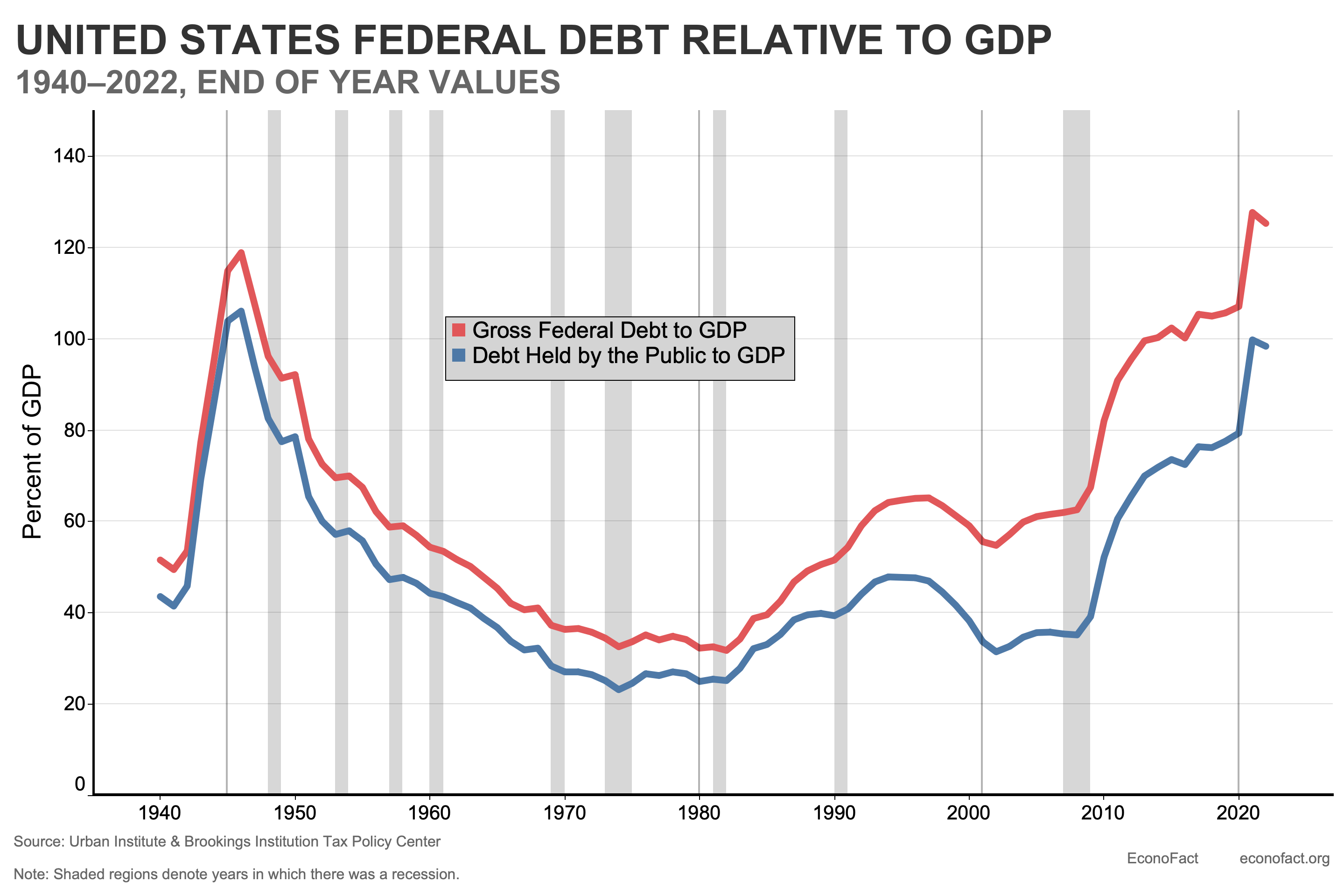
Interest payments are about to exceed GDP – False. The debt-to-GDP ratio is exceeding 100%, but that’s not the same thing. It’s happened before, and they were able to “print their way out of it” causing markets to recover and go higher.
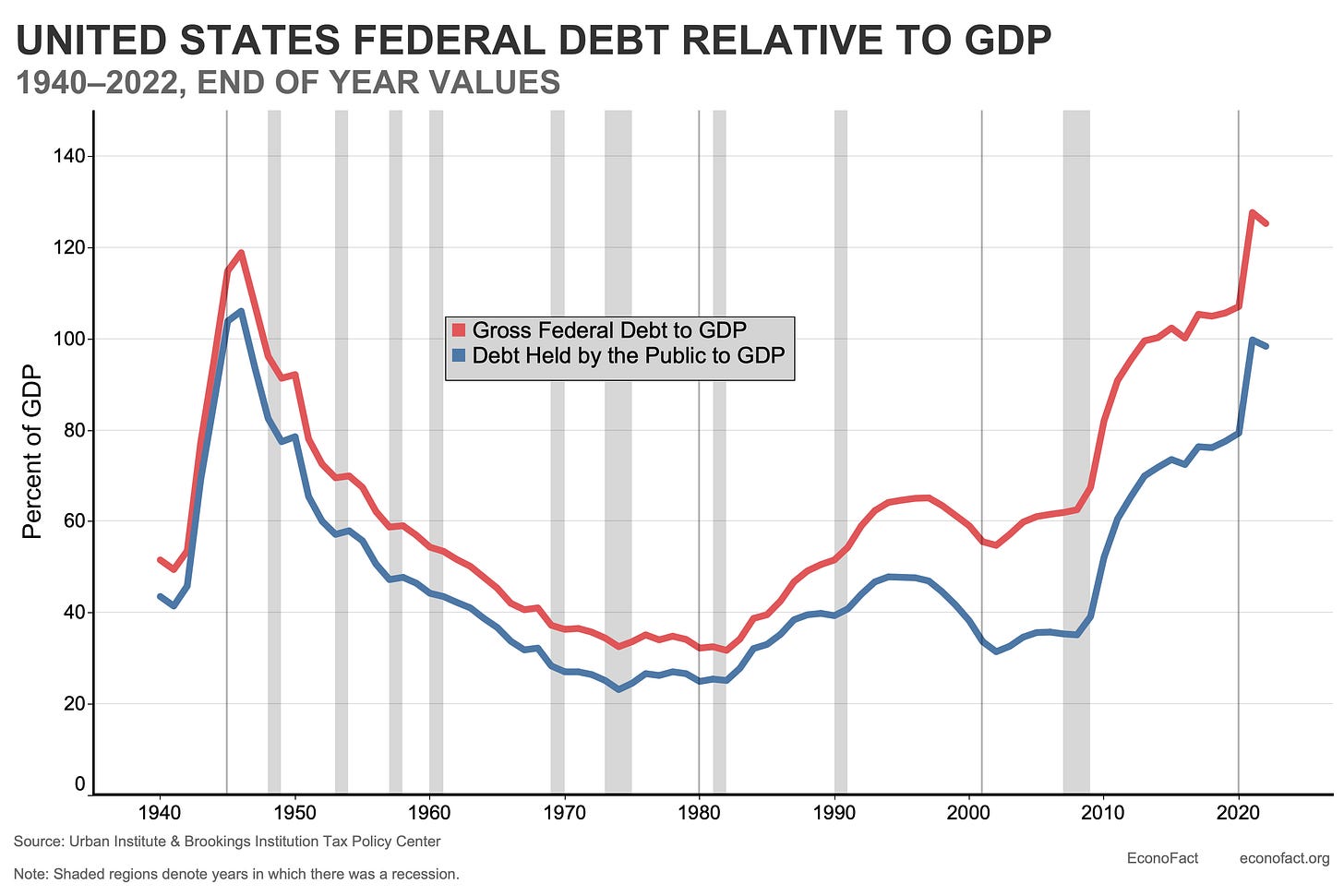
The only way to make interest payments is to print more money – False. The government can also borrow by selling treasuries to investors, pension funds, governments, and institutions. Of course, this isn’t sustainable forever.
Stocks inflate proportionally with hyperinflation – False. Historically, this has not been the case. Between 1918 and 1922, the German Stock Market lost 97% of its value before the hyper-inflationary peak. Most people were forced to sell at the bottom just to pay for rent and food. In Zimbabwe, the market rose 500-fold while the currency dropped 99.8% in dollar terms. Similar things happened in Venezuela in 2018.
Basically, here’s what you need to know: The Great Melt-up isn’t a boon for stockholders. Stocks can rise during inflation, but that doesn’t automatically mean you’re getting richer. If your portfolio goes up 10%, but everything you buy costs 10% more, you didn’t gain anything. So in terms of what you need to know, here’s what you can actually do about all this:
History shows us that most likely: The US does not default on its debt, does not experience unprecedented hyper-inflation, and neither do we see a melt-up based on endless money printing caused by the national debt.
The more realistic outcome is a long, slow period of financial repression where inflation runs a little higher than the interest rate, the debt becomes easier to manage, and the dollar is worth less than it used to be.
The tradeoff is that savers quietly get squeezed. Cash loses value. Prices keep moving higher. Asset prices rise in dollar terms, but after inflation, real returns could be a lot lower than what investors got used to over the last decade.
For the stock market specifically, prices will probably keep drifting higher over the long run, because that’s what usually happens when the dollar loses purchasing power. But just because they go up over time doesn’t mean they can’t crash along the way. The market could still fall 30, 40, or even 60% from current levels. But it could go on to make new highs later. Both these contradictory truths can be true at different times:
The market is expensive, and one event could cause a 20% sell-off. Nothing is risk-free.
But on the flip-side, high debt doesn’t automatically mean high-inflation or pumping the stock market.
The bottomline is that you shouldn’t build your entire financial future around the hope that the next bailout is guaranteed.
The way I see it, the Reddit post is directionally right, but it gets the steps wrong in terms of what it takes to get there.
In a high-debt world, the government has a strong incentive to let inflation do the heavy lifting.
Over long periods of time, that tends to favor assets over cash.
BUT that does not mean it’s “mathematically impossible for stocks to go down.” That’s a dangerous assumption.
This kind of assumption makes people jump at every bit of hype thinking it’s their last opportunity to get rich. They buy in at extreme valuations, with no margin of safety, no diversification, and no plan for what happens if the market repeats what it has done many times before – which is to fall.
And I’m not sitting here calling for a crash. Plenty of really smart people think the market could keep going higher.
But throughout history, the people who came out ahead during inflationary periods were usually not the ones who went all-in on the most expensive, highest multiple stocks. It was the people who owned a mix of productive assets – stocks, real estate, some cash, maybe some gold, short-term bonds – and were not forced to sell when things got ugly. Stocks might beat cash over the very long run in a high-debt world, but that can mean 10, 15, or even 20 years where your portfolio goes nowhere after inflation. So instead of being hopeful about your willpower getting you through decades of inactivity, build systems that let you not fall back on hope as a strategy.
So to sum it up – the answer is not to panic or sell everything. But it’s also not to go all-in, use leverage, and assume every dip is getting rescued. These are highly emotional times where you might be tempted with betting everything on a “once-in-a-lifetime opportunity.” But risk cuts both ways.
I think most people are best off staying diversified and not over-concentrating in the most expensive names. Keep enough cash so you’re never forced to sell at the worst possible time. And please DO NOT build your entire financial future around a viral Reddit post.
So stick to your regular investing plan, stay diversified, and please, if you found this useful, like, restack, and share this post with a friend you don’t want to get left behind.
I’ll see you next week,
– Graham
No posts
Comments
Nothing yet. Say the first thing.
Sign in to join the conversation.