
This year, we skipped the parade.
Not because we are anti-parade. I am very much pro-parade. I support small flags, children on scooters, fire trucks moving at ceremonial speeds, and the general concept of a marching band giving it their all before 10 a.m.
But we packed up all three children, the dog, and enough snacks to survive a minor geopolitical event, and drove north to Michigan instead.
The kids are on the water. There is a dock. There are boats. There are inflatable objects being dragged behind boats at speeds I am confident their manufacturers did not intend.
It is the Fourth of July and we are exactly where we are supposed to be.
Which is wonderful.
And yet has not helped me at all.
For years, when we did go to the parade, I tried very hard to behave like a normal person. We brought the chairs. We wore matching outfits. We found our spot on the curb.
And then somewhere around the second block, my attention would slide right off the marching band and onto the houses behind it.
A fire truck would roll by and I would be looking over it at a cornice one bad winter from coming down. A convertible would carry someone important and I would be thinking about the person who wrapped a perfectly good porch column in vinyl and how they planned to answer for that. Somebody’s child would hand me a flyer and I would take it without looking, because three houses up, a leaded window had been swapped for a vinyl unit from a big box store and I needed a minute.
So yes.
Michigan was probably the healthier choice this year.

Although apparently, not a cure.
Because even here, on this beautiful lake, with my children happily occupied and the dog living out what appears to be his personal retirement fantasy, my brain has spent part of this morning thinking about a house on Sheridan Road with a slate roof that someone is about to ruin with asphalt shingles because a roofer told them slate was a headache.
A headache.
Imagine saying that about slate.
The lake is lovely. The children are happy. The boats are out.
And still, some unreasonable part of my brain is standing on a curb, worrying about somebody else’s roof.
But apparently, I am not the only one with this condition. Some of you seem to have it, too.
My phone is mostly photographs of houses. Pretty rooms. Listing screenshots. Paint samples. Kitchen layouts. Construction war zones. Exterior shots taken from the sidewalk by people trying very hard not to look suspicious.
All sent from people, perhaps like you, who share my condition.
The texts read:
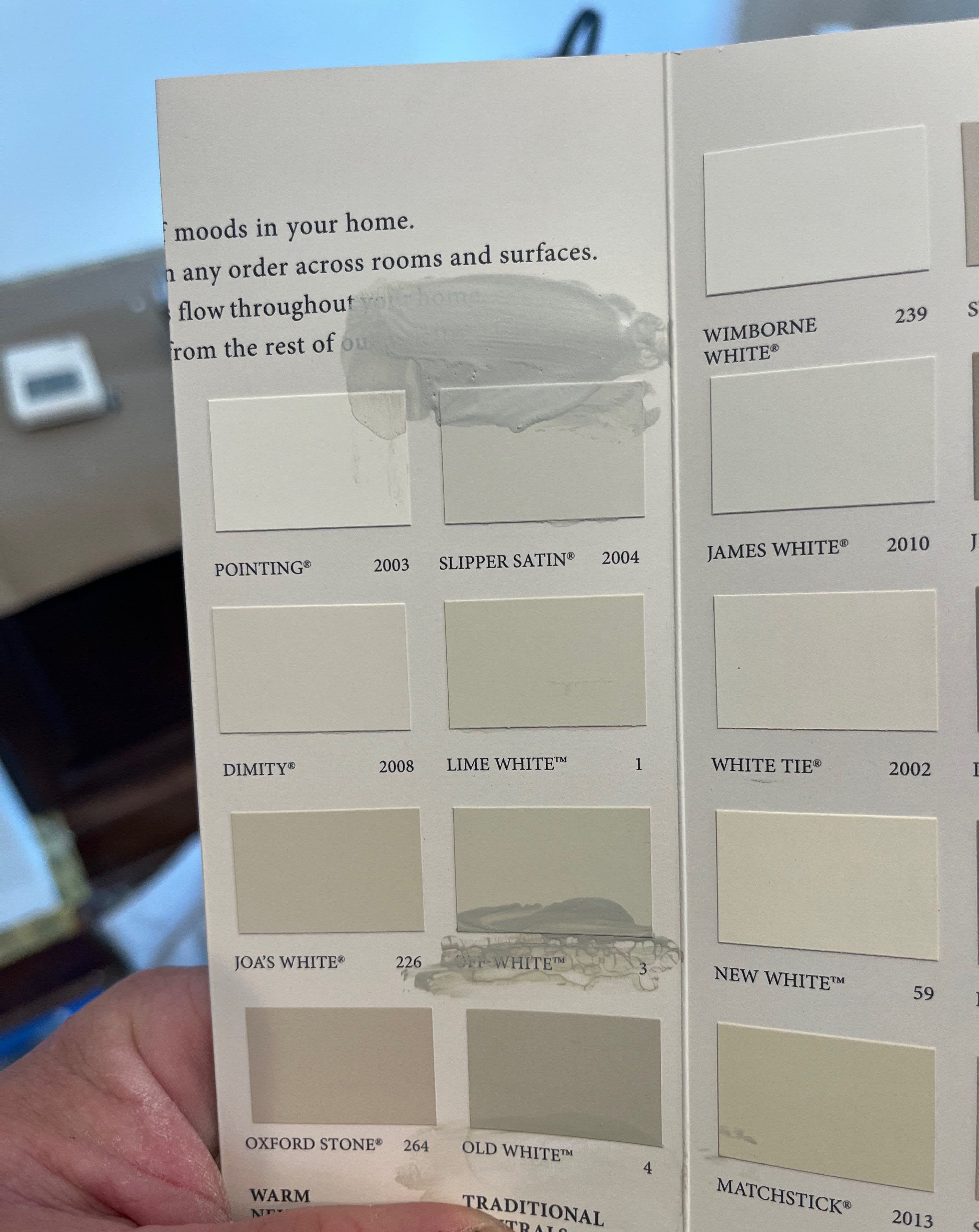
We are reconsidering Old White and thinking of going with Slipper Satin. I know it is a last-minute change, but thoughts?
Or:
How many years do you think we have left on our roof? It’s cedar.
Or, last week:
Do you have to underpin if you’re digging out a basement?
I love these texts.
They are evidence that I am not alone in my love of old homes.
But I suppose the reason I get so many of them is because, for better or worse, I notice things.
Sometimes useful things.
Sometimes deeply inconvenient things.
When I look at a house, I am not looking only at whether it is pretty. Pretty is where most people stop looking.
I am reading it. And what I am mostly trying to understand is whether the house is telling the truth.
Because houses lie.
Or rather, people lie about houses, and the house is where the evidence is kept.
Let me show you what I mean, because it is more useful than anything else I could tell you today.
Walk up to an old brick house, something built before about 1930, and look at the mortar between the bricks. If it is soft and pale and slightly recessed and looks like it has always been there, someone has been kind to that house. Old masonry was laid in lime mortar, which is soft on purpose. It is the sacrificial part, meant to weather and crack and be repaired every few generations so the brick, the expensive and irreplaceable part, never takes the stress itself.
The mortar is supposed to be weaker than the brick.
Now find the house repointed in hard gray Portland cement, the dense stuff you see holding up a highway. Someone fixed that house with the wrong material, probably because it was faster and the crew did it that way on the last job.
And that house is now quietly dying.
Most people cannot see it yet.
Water still gets in, the way water always does, but now it cannot get back out through the joints the way it was meant to. So it leaves through the face of the brick instead, freezing and thawing and popping the faces off one winter at a time. In ten years, those bricks will be spalling and crumbling and the owners will blame the age of the house.
It was not the age.
It was the repair.
Someone loved that house incorrectly, which is its own kind of tragedy, and I can see it from across the street.
Windows are the next most popular topic in my inbox.
You will be told, by someone holding a brochure, that your original wood windows are drafty and should come out. That they can be affordably replaced with vinyl.
Here is what that person will not tell you.
Your originals are old-growth wood, cut from trees that grew slowly over a century, dense and tight-grained and rot-resistant in a way nothing at a lumberyard today can match. They have already lasted a hundred years. Restored, reglazed, paired with a good storm, they will last another hundred and perform far better than most people have been led to believe.
Vinyl has a lifespan, cannot be repaired in the same way, and will be landfill before your youngest finishes college. And the wavy old glass that got thrown out, the kind with the faint ripple that catches the late afternoon light, cannot be bought at any price, because they do not make it and never will again.
People trade a hundred-year asset for a twenty-year expense and call it an upgrade.
Inside, the lies turn cosmetic.
Somebody rips out original plaster, which is three coats thick and hard as stone and quiet in a way you feel more than hear, and puts up drywall because drywall is fast and a crew can hang a room in a day.
The plaster could almost always have been saved.
Cracks in plaster are not structural confessions. A house that has stood for a century has earned the right to move a little. You repair it.
You do not haul hundred-year-old craftsmanship to a dumpster because the faster option is easier to explain on a bid.
Every one of these things is legible.
A house wears its history honestly if you know the alphabet.
You can tell the difference between a house that was restored and a house that was merely disguised. Between real repair and a fast coat of paint over a problem. Between a home someone loved on purpose and a home someone dressed up to sell.
It is all right there, in the mortar and the glass and the way a floor meets a wall.
Most people never learn to read it, which is completely reasonable.
They should not have to.
That is what we are here for.
And here is what a decade of taking hundred-year-old houses apart teaches you:
You learn exactly what makes a house last, and what makes it timeless, and why the good ones are still standing and still loved while the disposable ones got torn down and forgotten. And once you know that, you physically cannot hand the building of a house to someone who does not.
I tried.
I watched decisions I had agonized over get quietly cheapened by people who had never once put a hand on an original newel post and understood what they were holding.
I watched proportion and materials get adjusted because something was easier, faster, or easier to explain. I watched the things that make a house feel inevitable get treated like decorative preferences.
So we decided to stop handing it off.
People sometimes ask when we became a design-build firm.
The truth is, we did not really become one. We became incapable of doing it any other way.
We have always offered design services. And real estate services. For years, people have hired us to find the house, study the house, draw the plans, choose the materials, and make the decisions that shape how a home will feel.
But when we are also responsible for the build, KC is at the helm.
He manages our trades. Runs the billing. Negotiates the terms. Oversees the timeline. Protects the plan.
All these years, it has been the only arrangement that lets me sleep. KC handles our builds with the calm, exacting intensity of someone who got his MBA from Notre Dame and believes details are not suggestions.
And now you understand why we’ve been together for 20 years.
We are simply not the kind of people who can care about a house up to a point and then let go of the wheel.
So these days we are pretty firm on it: when we design the house, we carry it through construction.
Because the whole point is making sure the thing we drew is the thing that actually gets built.
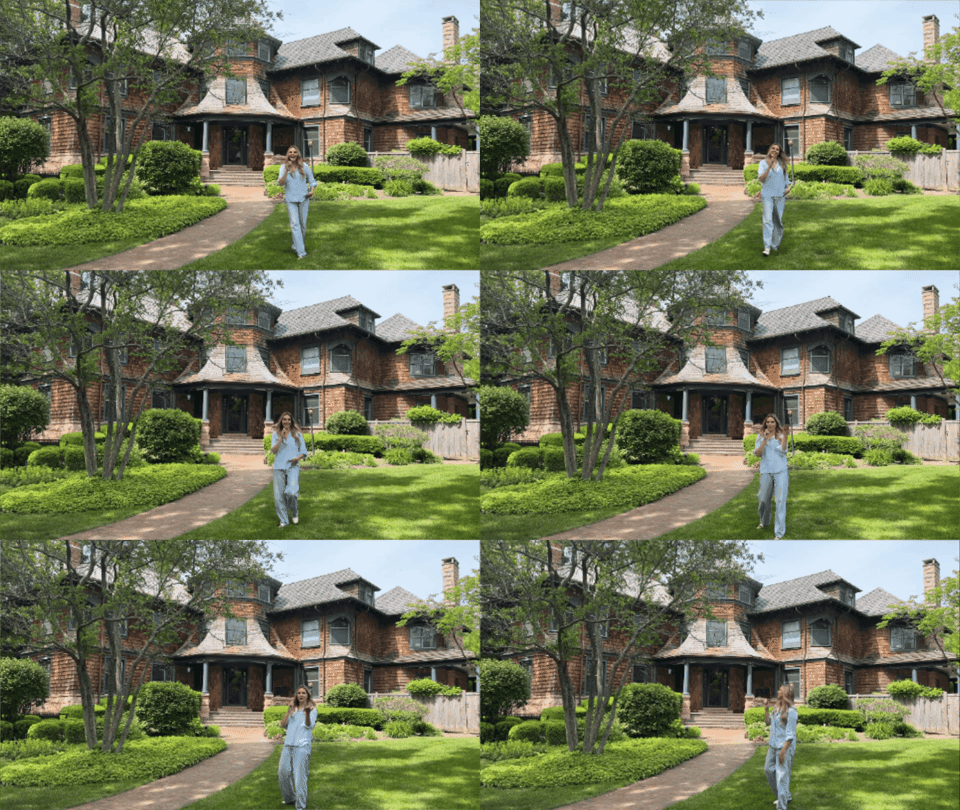
Speaking of building, we have slowly begun sharing glimpses of the work we’ll do on our next personal project. Our own home.
It was designed by Benjamin Marshall, the architect behind the Drake Hotel, and since Home Alone aired, the neighborhood has known it as Old Man Marley’s house. The one with the staircase most reasonable people expect us to tear out.
We will not. Probably.
Every original feature. Every intricate edge profile. Every mark that proves the house lived long before us. It stays.
The disjointed heating systems. The mismatched windows. The dropped soffits. The doorknobs that fall off and the tired cabinetry.
Those go.
And that is the work.
Whether we are restoring an old house, combining two Gold Coast units into one home, renovating the main floor in a French Manor on the east side of town, or building something new in a historic language, the question is always the same:
Will this still feel right in a hundred years?
Old houses and new work, the same knowledge poured into both.
And now, because it is nearly buying season, here’s one more useful thing before I go back to pretending to relax:
Fourth of July marks the start of what KC and I call buying season.
It’s the time of year when houses that once felt out of your price point begin to move into the realm of possibility.
Listings that didn’t sell in spring start to soften. Sellers who held firm begin to get reasonable. And if there is a historic house you have loved from the sidewalk all year, this is the season when you might actually get it.
Spring is when sellers list aspirationally.
Summer is when the market gently informs them their home is not, in fact, the Taj Mahal.
And by fall?
Fall is when reality and possibility finally sit down at the same table.
So fire up those searches, my friends. While everyone else is celebrating Independence Day, we are (also) celebrating the beginning of buying season.
A very happy occasion, for those who observe.
So, anyway, that is my Fourth.
A dock, a lake, several children currently doing something to a jet ski that I have decided not to investigate. I am not at the parade, and it is better this way. My heart was never really on the parade route.
It was always on the houses behind it.
And if one of those houses is about to become yours, send me a text.
I will come, wheels screeching, to tell you what you are not seeing.
And then we’ll build it for you, too.
Happy Fourth. Off I go on the pontoon.
Until next Sunday,
Grace
P.S. Our Workshoppe Grand Opening is July 16 and you’re invited. Come see the place where we help people design and build homes with character, intention, and a fighting chance of being loved a hundred years from now.
No posts
Comments
Nothing yet. Say the first thing.
Sign in to join the conversation.