
The front door was unlocked.
Which was expected. The listing agent had told us to let ourselves in, and she said it in a completely normal, professional tone, the way a person says a thing that is not going to matter later.
It mattered later.
The year was 2020. A strange year, by any measure.
And during that strange year, KC and I let ourselves into a very large, very empty, very old house in Logan Square on a Tuesday afternoon.
I should establish that I do not get frightened inside houses. Houses are where I am calmest. I have walked through houses with no floor. I have been in places that clearly hosted animals in a management capacity. I have stood in a stranger’s crawlspace by myself, on purpose, for eleven minutes.
The house had been vacant a while. Ornate entry hall. Dark heavy original millwork. Ten-foot ceilings. Pocket doors that still worked, which always feels like being handed a compliment.
We walked the first floor. Living room, dining room, a parlor somebody ruined in 1987 and that could be unruined for a reasonable number.
We walked the second. Four bedrooms and a bathroom that had been tiled by someone in an emotional state. Then up to the attic, because in an old house the top floor is where you learn what you are actually dealing with.
A vacant hundred-year-old house on a weekday afternoon is not quiet. Quiet is a house with a refrigerator in it.
The plaster takes every sound in the room and hands you back nothing, and you become aware of the noise your own jeans make.
KC was across the room with a flashlight, doing the thing where he presses on something, looks concerned, and does not tell me why.
And then, from somewhere below us, at a volume I would describe as a low growl:
Friends.
I have never left my body so fast.
Every hair on both arms went up. I looked at KC. KC looked at me. Two adults who make a living inside other people’s houses, standing in one we had every legal right to be in, silently agreeing that this was where it ended for us.
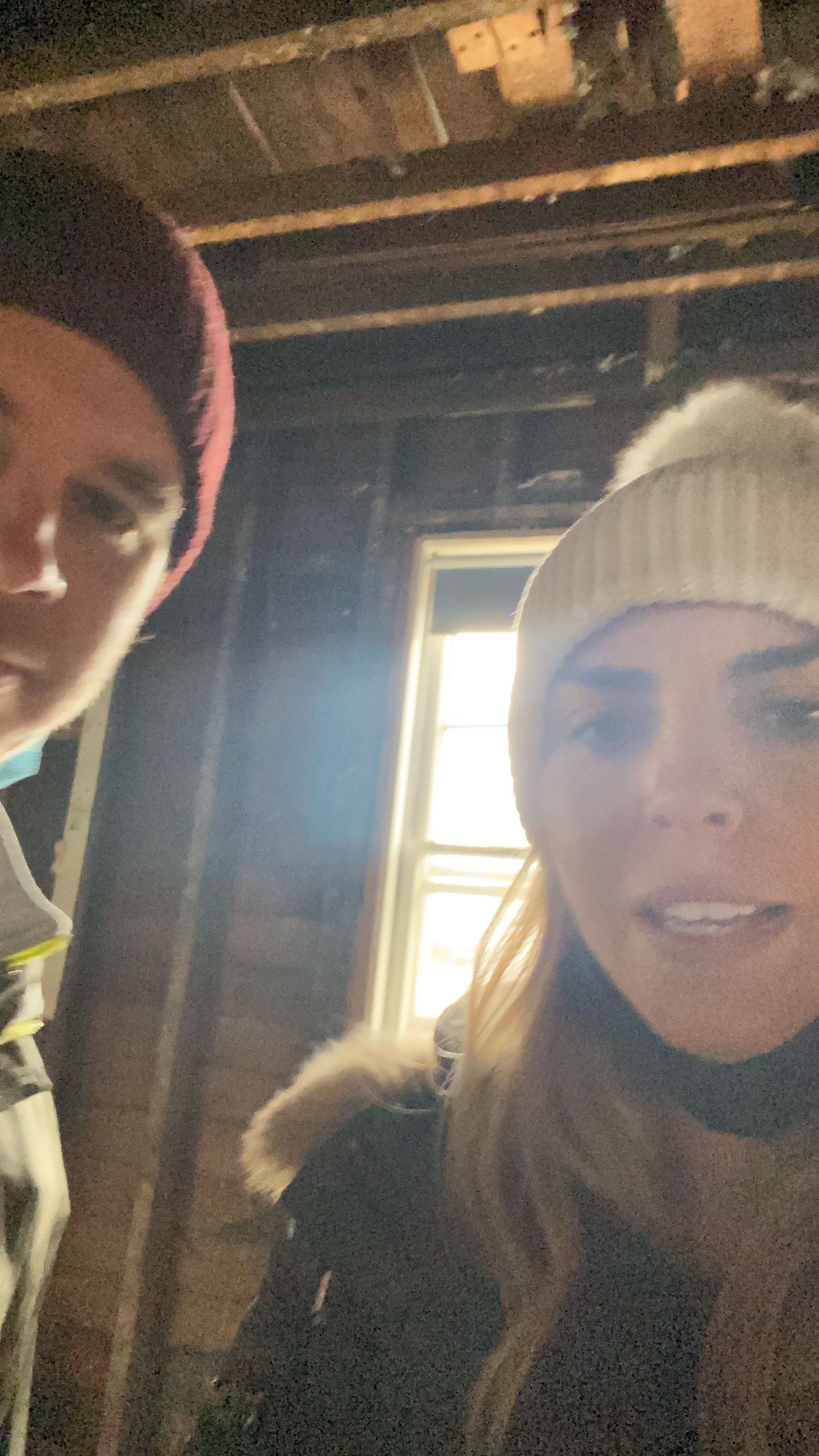
Then the footsteps started.
Coming up. Not fast. That was the worst part. A fast footstep is a person in a hurry. A slow footstep is a person who knows the house better than you do.
Or, and this is precisely where my mind went, not a someone at all.
A something.
I would like to tell you that I did something useful.
What I did, all I could think to do, was shush KC. He had not made a sound. The thing downstairs had already announced itself, out loud, in English. But I shushed him.
It was the listing agent.
Her schedule had opened up, so she drove over, and she let herself in through the unlocked front door she had told us to let ourselves in through, and then she called up the stairs like a normal woman in a house she had a key to.
She was lovely.
She had a folder.
Would have loved a text.
I keep coming back to that afternoon, and not only because I still occasionally hear “helloooooooo” while trying to fall asleep.
I come back to it because that house, the one that nearly ended me on a Tuesday, was one of the better houses I saw all year.
That is the pattern.
Dark. Dated. Vacant. Gutted. There is a smell you decide not to identify. There are tarps. There is a room that used to be a different room, and a staircase in a spot that can only be described as a decision.
Buyers walk in, feel the temperature of the place, and start narrating their exit.
I walk in and start doing math.
Now. I refuse to be the woman who romanticizes a disaster, so.
Not every wreck is a hidden gem.
Some houses are just bad ideas with original millwork.
And they are dangerous precisely because they are charming. A beautiful newel post will carry a house a remarkable distance in a person’s imagination. It will not carry a bad lot, a mangled floor plan, or a foundation with a… story.
After more than a decade of taking these apart, my useful skill is not loving old houses. Anyone can love an old house. That takes four seconds and a bay window.
The skill is knowing the difference.
People assume I walk into a listing and start assessing the kitchen. I could not tell you what most of those kitchens looked like.
An ugly kitchen. Don’t care.
Paint. Don’t care.
Bad tile, strange light fixtures, wallpaper that has clearly been through something. Don’t care, don’t care, don’t care.
The furniture, which is not staying and is not yours, although I will admit a truly upsetting sectional can hold my attention. But still, don’t care.
What I am looking at, while most people are looking at the kitchen:
The lot. Its size, its shape, which way it faces, what is beside it and behind it.
The location, which I cannot renovate.
Scale and proportion, which is the thing you feel in a room before you can name it.
Ceiling heights, floor by floor.
The windows. How many, facing where, how much light gets in and at what hour.
And the math.
Always the math.
Almost everything inside a house can change.
With enough budget and enough engineering the interior is essentially a suggestion. What I cannot change is where it sits, which way it faces, and where the light comes from.
Which brings me to the most useful questions I know how to ask:
The first is:
Almost always, yes. With the right budget I can make an aggressively unpromising house sing. This is not bragging. It is also the least interesting fact about my job.
The second is:
Should is where real estate, design, and construction have to be honest with each other. Should accounts for what the house is worth finished, what you have to spend to get there, and whether the problem you are about to solve for four hundred thousand dollars is a problem a different house simply does not have.
Plenty of houses can be transformed.
Not every transformation should happen.
Helping people tell those apart before the money moves is one of the most valuable things I do, and also the least glamorous.
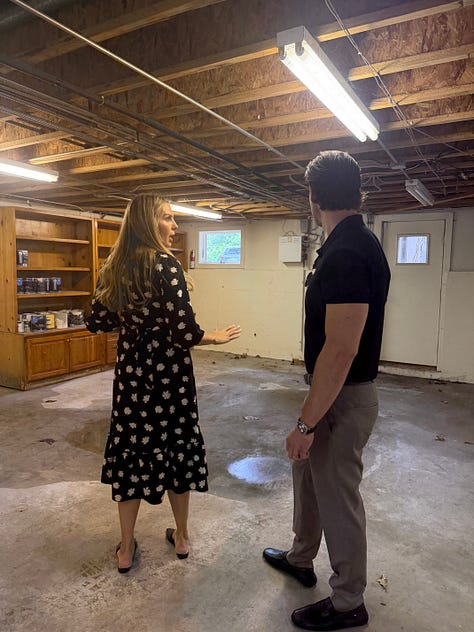
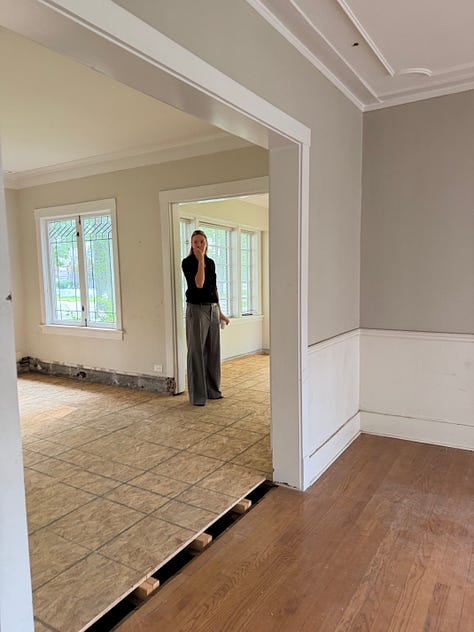
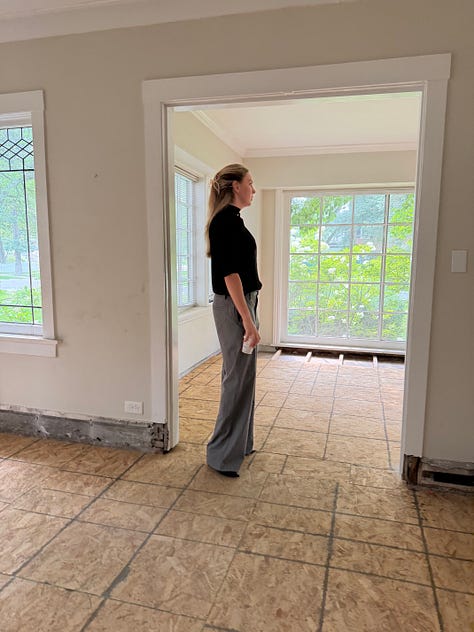
One of the agents on our real estate team brought me one of her pocket listings.
It is not listed anywhere and you will not find it, so please do not go looking. You will just drive around Kenilworth being sad about how nice everything is.
It is an old house, and a beautiful one, on a great lot. Nearly half an acre.
A genuinely great lot, which as we have established is the part I cannot manufacture later.
It is already gutted. There is mold. The curb appeal leaves something to be desired… for now.
This is not a refresh. Not a weekend.
It’s order-a-dumpster-and-then-order-another-dumpster work.
But when our team brought it to me, I fell so in love with it that I did not evaluate it as an agent.
I evaluated it because I wanted to buy it.
Our own project. Our own financing. Something we would restore and sell ourselves. That’s how much I love this house.
I know where the kitchen wants to be, and what the stair situation demands, and how you get from a car to that kitchen carrying groceries without completing a small pilgrimage.
I know how to fence the yard so it feels as big as it actually is.
I know how to fix that horrible stucco and give it the curb appeal it so desperately needs.
I know how to add square footage and where the addition would frame out.
It is very annoying.
Because we cannot take it on.
Our own house is in progress. We have several major client builds underway. We are selling out 60-single family home lots. Our teams are helping countless families into new homes while also reimagining historic ones.
I have tried approximately 47 ways to convince myself that we can take this one on too.
We cannot.
So I am doing the responsible thing, which is handing it to someone else and then thinking about it forever.
If you have been waiting for a special old Kenilworth house, the one with real bones and a real lot and a real reason to fall in love, this may be the one you were waiting for.
And you would not be buying a scary shell and a question mark.
You would be buying a scary shell with a vision and my thinking attached, worked out by somebody who wanted it badly enough to do the whole evaluation on her own dime.
I can show you what I see.
Reply KENILWORTH and I will send photos, details, and the honest version of the numbers.
Or we can just talk about it, which is my preferred activity regardless.
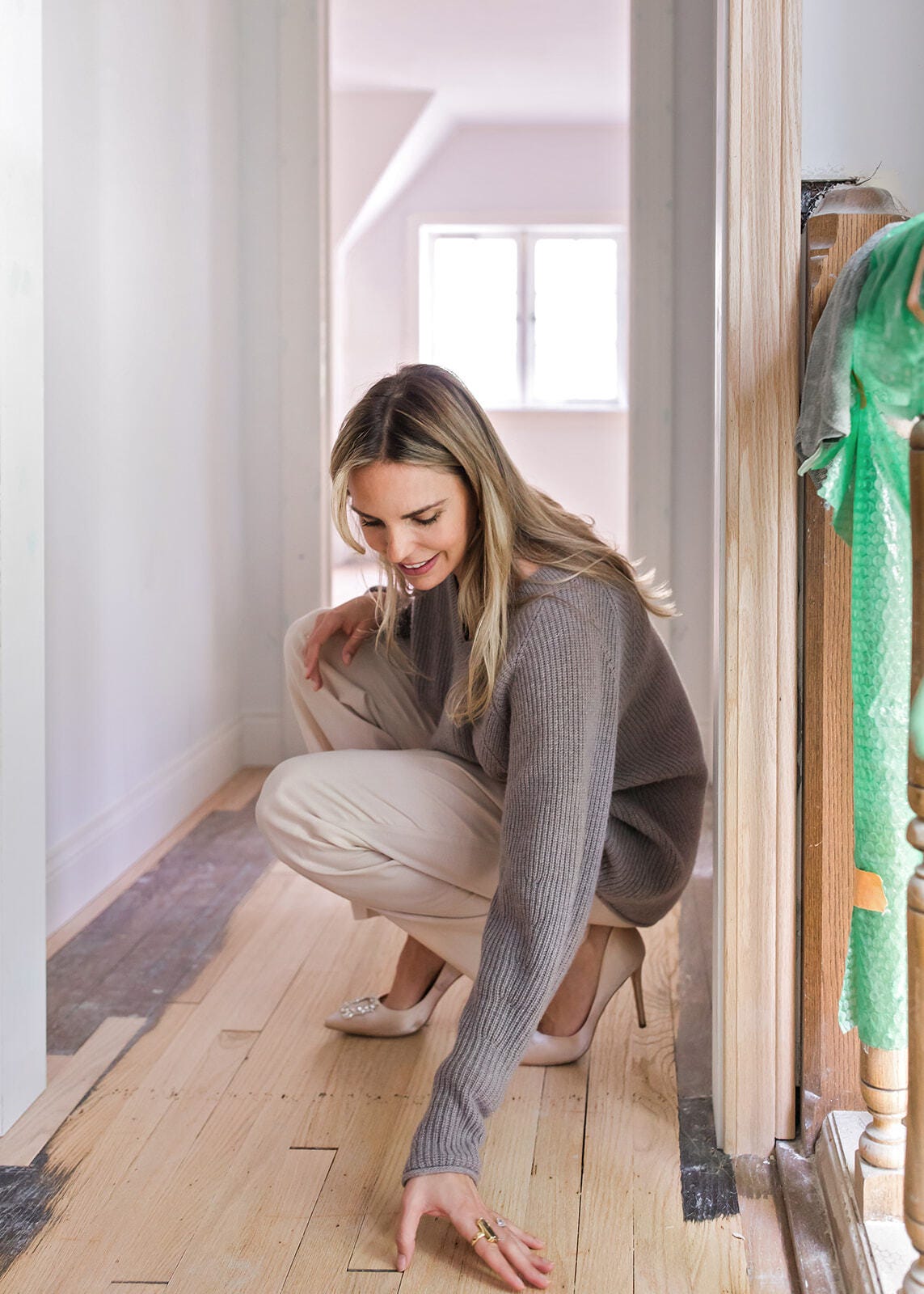
I have been turning that sentence over all summer, because it is what I actually do for a living, and because so many of you ask me about your own projects. Which I love. Never stop doing that.
You send me the Zillow listing.
You send me the floor plan.
You send me the photo of the bizarre addition and ask:
Some of you will hire us to design the house.
I hope you do.
Some of you already have architects and designers and builders you love. That’s great, too.
But most of you are still standing in the house you might buy, trying to decide whether any of this makes sense in the first place.
And what I have realized is that not everyone who needs our way of thinking truly needs a full-service Kaage Homes engagement.
Sometimes what you need is to understand how we would look at the problem. And what we would do in your shoes.
I can’t personally design every one of those houses.
But I can show you what I see.

Not a curriculum I invented for a course, and not seven hours of recorded video you will never finish.
It is the process we use professionally, on real houses, with real money on the line. A playbook that was handed down to me over three generations.
I am teaching it live, with office hours, so you can learn how to do what we do on your own house. Virtually, so it does not matter where you live.
A beautiful house is the entire point. It is also the last thing that happens.
Before you get there, somebody has to decide whether the project makes sense at all, what the floor plan needs to do, what deserves to be preserved and what should change, and where the money belongs.
Somebody has to settle which architectural decisions have to happen before anyone is allowed to discuss finishes, who belongs on the team, how to read three bids that do not match, and what has to be selected this month versus what can safely wait until February.
And somebody has to catch the seemingly innocent decision that costs you nothing today and forty thousand dollars in March.
There is an enormous amount of advice in the world about choosing the paint, and almost none about how to decide.
So that is what the seven weeks are for. I want you evaluating a project before you commit to it, making the expensive decisions in the right order, and sitting at a table with your architect and your builder knowing enough about plans and proportion and materials and budgets to hold a real conversation about any of it.
And more than anything, I want you to become very hard to surprise.
I want to teach you to see what I see. I want you running your renovation instead of surviving it.
I want you to be the CEO of the whole thing.
Enrollment opens September 28.
I’m not opening it today, because today was mostly a ghost story.
I’ll tell you exactly what we’re doing, who it’s for, who it absolutely isn’t for, and more very soon.
If you want it first, get on the list here: JOIN THE WAITLIST.
Anyway.
If you want to learn to evaluate houses like this one, get on The Design Office list and I will walk you through all of it this fall.
And if you would rather skip the lesson entirely and just buy the terrifying gutted house and get started in Kenilworth today, we have the perfect project for you.
Save me from myself.
Until next Sunday,
Grace
P.S. I did apologize to the listing agent for the look on my face. She was gracious about it. She also described the house as “quiet,” a word I now hear differently.
P.P.S. Separately, and less dramatically: our team is growing and taking on new projects. If you have a house you want us to sell, design or build, call us. I want to hear about it.
Thanks for reading Sunday Strategy(ish) by Grace Kaage! This post is public so feel free to share it.
No posts
Comments
Nothing yet. Say the first thing.
Sign in to join the conversation.