
This week, we’re lucky to have a conversation with veteran art critic Johanna Fateman who currently edits the Critic’s Table at Cultured. Her writing has appeared in The New Yorker, 4columns, Artforum, Bookforum and everywhere else and she is, of course, a founding member of Le Tigre.
With the closure of 4columns, I wondered if you’d want to reflect on your time writing about art there. I admired so many of your pieces there and it seemed like such a special outlet. I loved your piece on the Whitney Biennial in 2024 and I remember reading your piece on Puppies Puppies with great anticipation.
The end of 4Columns does feel like a real loss. A unicorn—nonprofit, free to read, well-paying, and brilliantly commissioned, if I do say so myself (I wrote 58 reviews over eight years). And it was carefully edited, copyedited, and fact-checked, what a luxury! I will miss it as a reader as well as a writer. It’s funny, the thousand-word length was never easy for me, it didn’t get easier, but I suppose I began to learn what subjects made sense for me to write on at that length. Most of the time I was contributing to 4C, I was also writing for the Goings On section of The New Yorker, so I had another outlet for capsule reviewing, and I loved that contrast of forms.
Thank you, I’m glad you liked my 2024 White Biennial review, which was, of course, difficult to write, but quite a special opportunity because I was able to file pretty late in the show’s run, after the big outlets had published their (mostly terrible) takes. 4C did not generally operate on a fast turnaround principle, but had more of a print ethos even though it was online (another luxury!) so I was able to, in my review, respond to the discourse and critical climate as well as the exhibition itself. The Puppies Puppies show at the New Museum was a strange one to review because it was a durational performance by an elusive artist. Because she was mostly not inhabiting the staged environment when I went to observe, it was hard to know if I was “getting it.” I think the resulting review is neither positive nor negative nor a cop out. I had to work to stay open to the piece through my frustration.
How do you decide what to write about? Obviously there’s some shows that are so big Cultured has to cover them---the Biennial, Greater New York, certain shows at MOMA, but what kinds of work catches your attention? Do you find that certain themes or feelings recur? I find ambivalence to be either really interesting to get down on the page for example.
Right, I think it’s about striking a balance between writing about whatever everyone is writing about, and thus staking out a position for yourself in relationship to other voices (ie something like my Biennial review) and also looking for the gaps—what’s not being covered? And then, of course, mostly, there’s the question of what calls to you. Ultimately, that’s the most important thing—to write about things that engage and fascinate you, where there’s a personal intellectual reward. Because no one does art criticism for the money…
Ambivalence is a great starting point; it almost gives you a narrative structure. You use the review to tell the story of your own grappling, and there’s a sense suspense, even for you as a writer. I wonder where I’m going to land with that last paragraph and often surprise myself. Also I’ve found, even with something I think I don’t like, once I start writing about it, I develop a sympathy for it, there’s an intimacy that follows from my concentration on it, from figuring out how it works. That’s something I love about reviewing.
How do you think about the state of art writing more generally with the boycott of Artforum, the closure of many arts outlets like Document and elsewhere, and the sort of PR machine that keeps whirring with less places to get coverage?
This is a hard one to answer. I know from my own community of artist and art-world friends that there is a real sense that quality criticism (“press”) is no longer realistically attainable. Getting your show reviewed is a long shot. I guess that’s why many people who you think might be made of stronger stuff feel they can’t let go of Artforum: scarcity. (Honestly, it seems like just me and 10 to 20 of my friends are boycotting, so I’m not sure how much that impacts the landscape.)
That said, there is plenty of good art writing, but with the disappearance of magazines (and the disappearance of art criticism from magazines), it’s scattered around the internet, underfunded, under-edited, hard to find, not useful for readers (or artists’ CVs). The substackery of it all is pretty dispiriting. I just don’t see that this model is working for anyone (except Substack), and yet—again—there is good stuff to be found if you’re willing to spend a lot of time/money to sift through the great grab bag. Artlance, a new initiative/platform for art galleries/institutions to blind commission pieces, is trying to work within this self-publishing ecosystem, and there are some downsides to it from my perspective (reliance on Substack, for one). But at least its founder, Jonathan T.D. Neil, is figuring out a way to get money to writers. And the commissioners are guaranteed some kind of critical consideration for their investment, which is arguably better than paying a PR firm to get…nothing at all. It’s an interesting experiment.
I believe in magazines, though. I would love to be able to expand the Critics’ Table (the art-criticism vertical I edit at Cultured) so that the coverage could be more comprehensive, with more regularly published short-form reviews of exhibitions currently on view. I’d love to give writers a monthly gig, and to commission big pieces farther out. I’m really pleased by the attention we’ve gotten, but we need subscribers! People are out of the habit of supporting magazines whereas Substack writers have a certain indie/underdog appeal, I think, and subscribing feels like a social good, right? (I’m questioning this as I write, I don’t actually know.)
Are there subjects or outlets you still want to conquer?
Well, I’d like to write a book, which would require me to conquer a few of my own demons.
What do you think the elements of a good review are?
I think an art review is like a pop song, or any form. You might end up discarding the structure, but it’s good to know what you are rejecting and why. Description is a good place to start. What is it that you are writing about? What does it look like? And what context do we need to orient ourselves as readers/viewers? A lot of review-writing is elevated summarizing, sorry! Hopefully all of that is suffused, inflected, shaped by voice, style, point of view. It depends on your subject how much space you really need to reserve to go off. Not as much as people think, usually. I probably shouldn’t have attempted to answer this one. I think each person has to figure it out for themself.
Over/Under
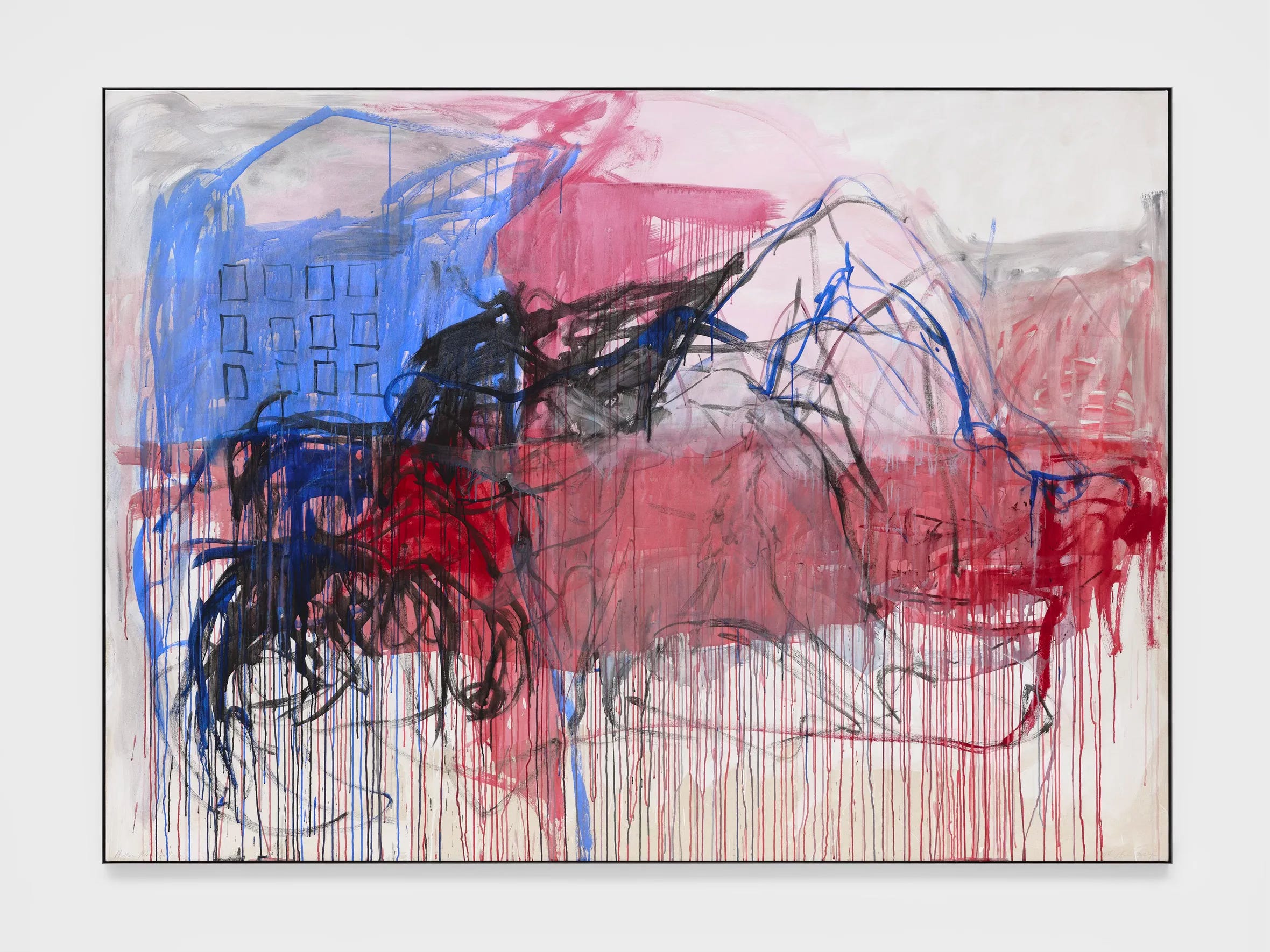
1. Tracey Emin
Look, she’s a market darling and all of that, but I don’t hold it against her. The paintings she’s churning out still have an honesty and daring that I find compelling. At the end of the day, she was early innovator-perfecter of the third-wave TMI aesthetic/philosophy and she really told everyone to suck it! The early installation and video work is more my thing.
2. Pans/negative reviews
Sometimes important and fun to read. I believe in telling your truth. But there are a lot of things to consider, for example: Maybe you don’t understand the work or you’re simply wrong. Being wrong in a pan is a lot worse than being wrong in a rave. I mean, you can’t claim you were being generous.
3. Matcha lattes
The new pumpkin spice, right?
4. Literal white walls in a gallery
Often the right choice.
5. (Natural) Orange wine
Never met her!
Image: Tracey Emin. Recent pieces/announcements:
I’m teaching a class on political reporting for Study Hall!
My paperback launch for Herculine is October 8th at McNally Jackson with the New Yorker’s Alexandra Schwartz. Come! I’ll also be doing a few other small East Coast events including at Stanza Books, Symposium, and Franklin Park.
I appear on Writer’s Digest Presents to talk about literary criticism. It’s a great talk.
For better or worse, I wrote about not liking astrology for Pioneer Works.
No posts
Comments
Nothing yet. Say the first thing.
Sign in to join the conversation.