
This week’s guest post is from Dr Andrew Boswell, founder of the Carbon Reckoning Legal Project.
As the Rosebank and Jackdaw consultations close, lobbyists promoting Carbon Capture and Storage (CCS) have argued that new North Sea licences should be linked to CCS. The plan is to make North Sea polluters pay to store a rising share of the carbon dioxide (CO2) their oil and gas would produce.
After our summer of heatwaves, drought and wildfires, the Government should follow the only principle consistent with climate science: “we will not create new sources of emissions”. This Government must reject both new North Sea drilling and this flawed “storage obligation” proposal.
The North Sea decision will define Labour’s climate legacy. This is the moment for the Government to show global leadership and prove the UK is matching its rhetoric on climate breakdown with action. It would be a historic move after the UK joined countries in Santa Marta earlier this year to discuss pathways away from fossil-fuel production.
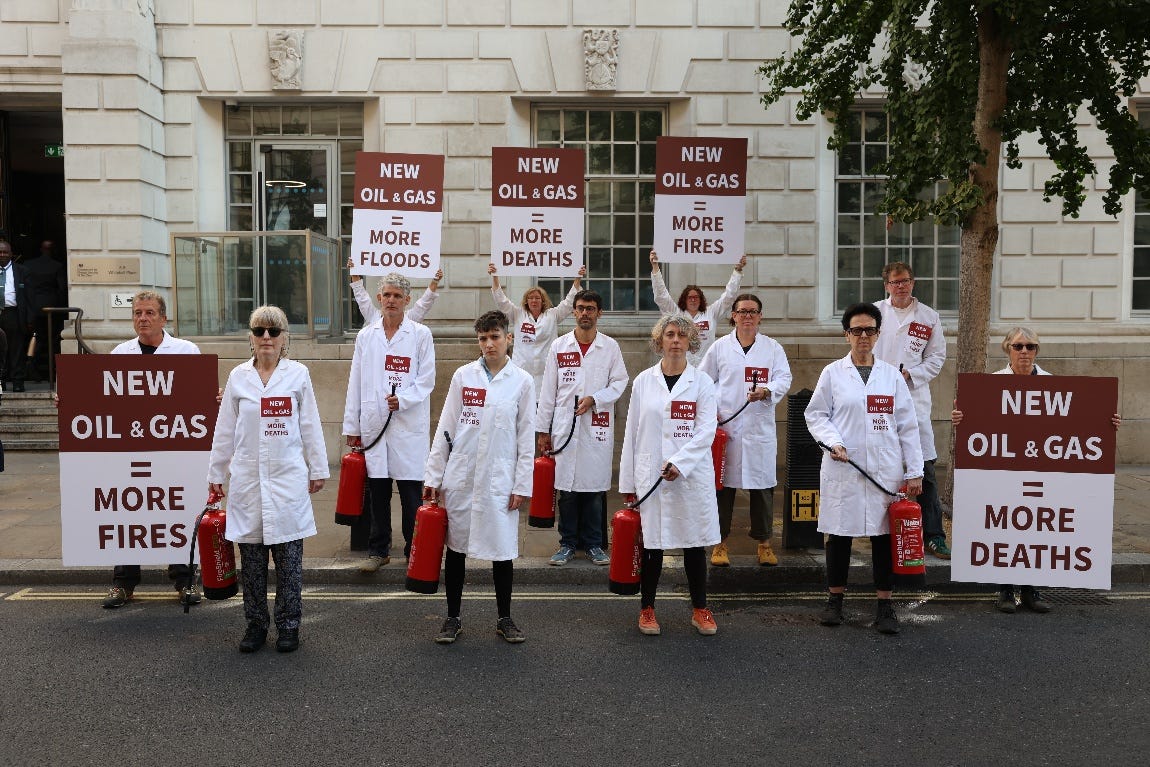
The CCS proposal is a nonstarter, because only a small share of the emissions from new North Sea drilling would ever be covered by the storage obligation. The proposal only works if each tonne of CO₂ emitted by drilling is matched by a tonne permanently stored elsewhere.
But the scheme does not even attempt to achieve this goal before 2050. Until then, drilling would generate much more climate-heating CO₂ pollution than could be stored. The remaining emissions would simply fall outside the scheme’s accounting.
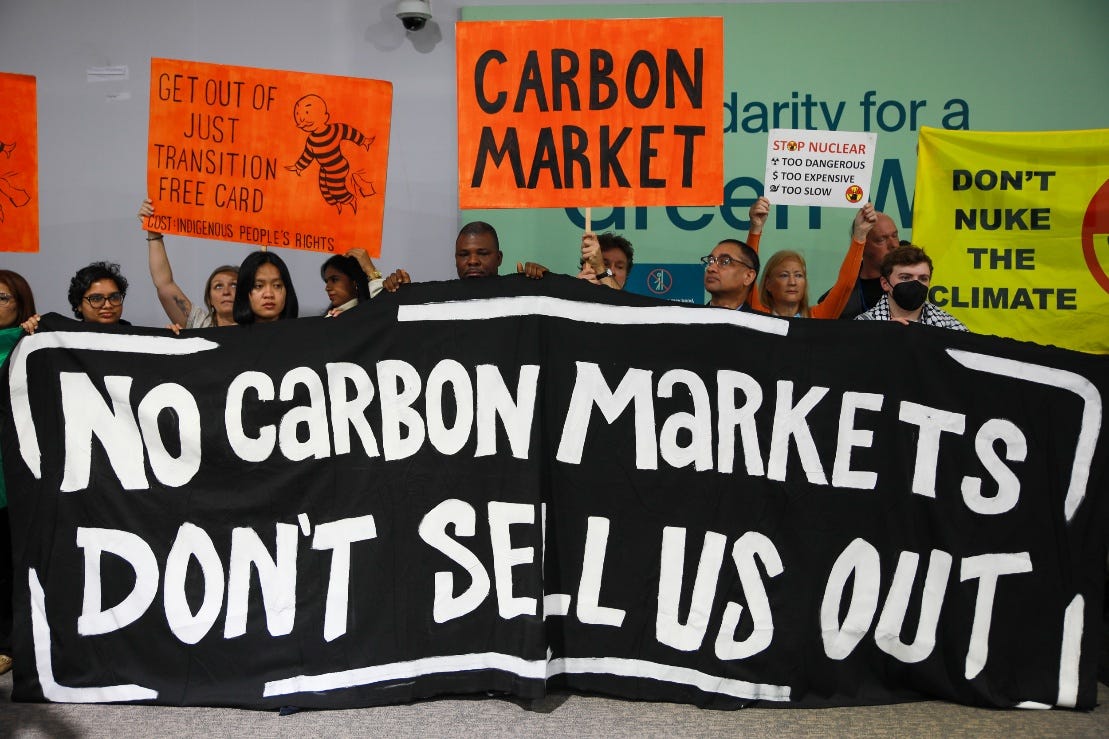
These issues are why countries on the front line of climate breakdown have rejected CCS and CO2-trading approaches, such as offsetting, as “false solutions” at Santa Marta and climate COPs.
A recent article from the Institute for Public Policy Research (IPPR) puts Rosebank’s peak storage obligation at around 2.5 million tonnes (Mt) of CO₂ a year. That falls far short of Rosebank’s emissions. Even at its peak, the storage obligation (about 2.5 Mt a year) would cover only a quarter of Rosebank’s 10 Mt annual emissions. Over 25 years the field would emit roughly 250 Mt – only a fraction of which would be stored.
Most of that carbon would be stored only in later years, as the obligation gradually rises. North Sea emissions are front-loaded and storage is back-loaded. In other words, the emissions come first; the storage comes later, if at all.
Supporters of CCS say that the obligation would pay for storage from “hard-to-abate” sectors such as cement. However, CO₂ storage facilities can take emissions from a variety of sources and cannot distinguish between them.
The IPPR article uses the example of the HyNet CCS cluster, which would store 1.18 Mt a year from Heidelberg Materials’ cement works and Encyclis’s waste incinerator. But this project also includes 3.2 Mt a year from three energy projects, which are not hard-to-abate industrial processes.
The gas power and blue-hydrogen projects also carry substantial upstream methane emissions, adding significant near-term climate heating, and together account for most of HyNet’s projected storage capacity. If the obligation paid for storage at HyNet, these wider supply-chain emissions would not count.
Storing CO₂ first requires it to be captured, compressed, transported and injected into geological formations. This process is characterised by underperformance, cost escalation and risk from start to finish. Each stage uses energy and creates emissions that are not counted in the scheme.
The promoters say the scheme aligns North Sea drilling “with the goals of the Paris Agreement”. But they have not shown their workings.
In 2023, the IPCC concluded that emissions from existing fossil-fuel infrastructure alone would already exceed the remaining carbon budget for the 1.5°C Paris temperature goal. As shown, the proposed obligation leaves substantial emissions outside its accounting and provides little genuine abatement before 2050. And the scheme has not been tested as a justification for new North Sea drilling against the current global 1.5°C carbon budget, which has shrunk sharply since 2023.
Andy Burnham wants “pragmatism”, but this scheme is so flawed that it cannot provide it. After what looks set to be the hottest summer on record, Burnham and Energy Secretary Miatta Fahnbulleh must show they are serious about decarbonization. They must say “no” to new drilling – with or without a carbon storage obligation.
Dr Andrew Boswell researches science-based legal strategies against fossil fuel based CCS and for stronger UK climate action, and is founder of the Carbon Reckoning Legal Project.
Comments
Nothing yet. Say the first thing.
Sign in to join the conversation.