
The members of Stirchley co-op did everything right. They wanted to improve their local area, provide homes for local people, and premises for local businesses – so they identified a disused plot of land on the high street and set about turning it into a block of flats. After a long and drawn-out process, the project was approved, and the co-op received support from the community, the local MP, and Birmingham City Council. The only thing standing in the way of a new and improved high street in Stirchley was the greed and incompetence of one housing association: GreenSquareAccord (GSA).
Having partnered with GSA to build the premises, the co-op now faces demands from the housing association to pay an extra £2.5 million above what was initially agreed. The members can’t afford that – so they’ve been hung out to dry. Some of the people who were supposed to move into the new flats are now sleeping on sofas and in spare rooms. The bakery that was meant to serve the community has already been evicted from its old premises.
“From their perspective, we’re just an ideal cash cow,” says Sean, one of the co-operative’s founding members.
“It doesn’t matter how slowly or badly you do something – the community will pay. And if the community doesn’t pay, then hopefully the city council or the combined authority will.”
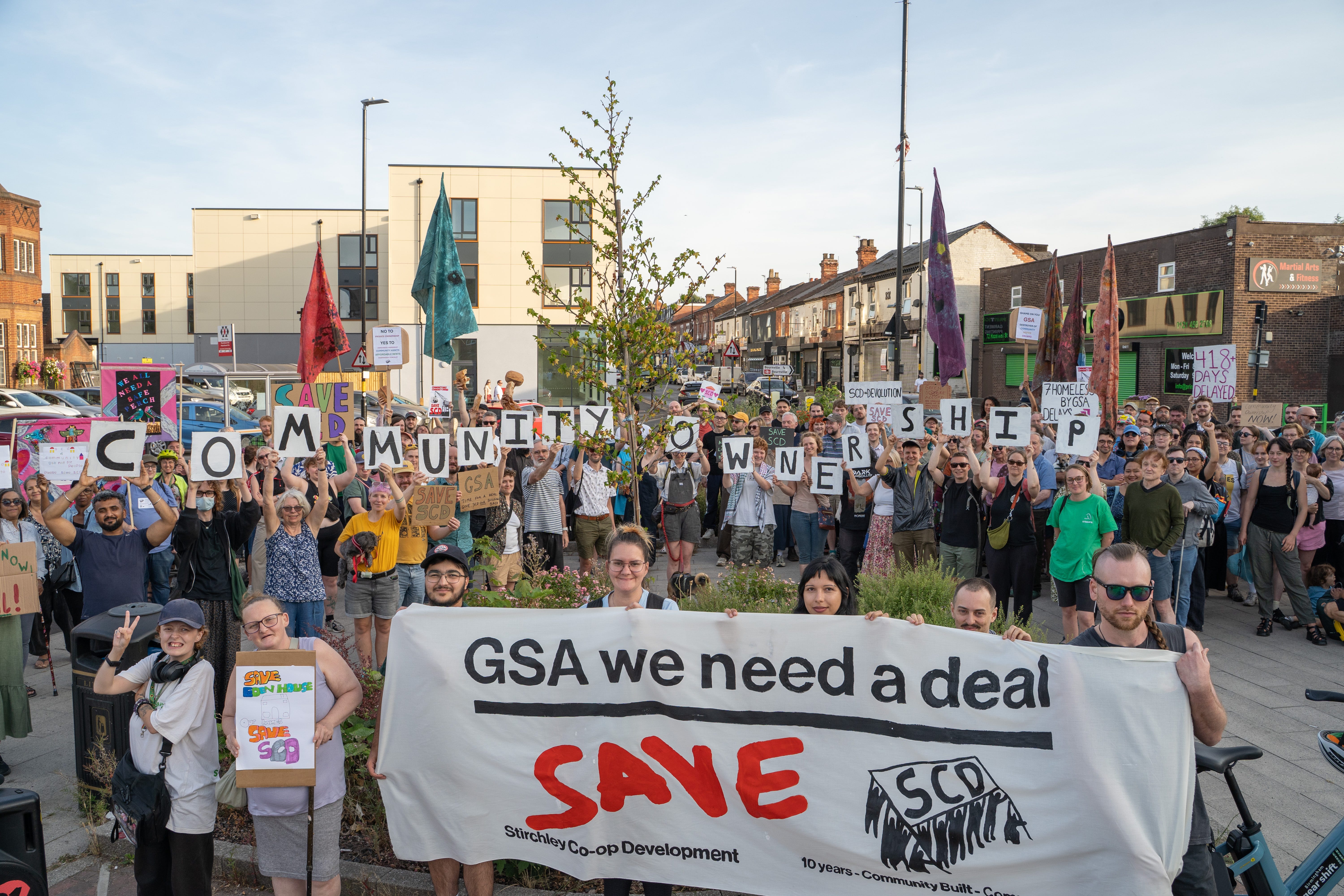
Stirchley Co-op began with three worker co-operatives on Stirchley High Street: Bike Foundry, a bike shop; Loaf, a bakery and cookery school; and Artefact, a gallery. About a decade ago, these worker co-ops came together to develop a plan to improve their local area. They identified a prominent plot on the high street and drew up plans to turn it into a block of thirty-nine flats, the three workspaces, and shared community space. The housing would be let at genuinely affordable social rent. The whole thing would be owned and run co-operatively.
The one thing they lacked was the cash to see it through. So, the fledgling co-op partnered with the local housing association, GSA. The idea was that GSA would fund the development, drawing on government grants, and the co-op would raise the cash to buy the finished building. Stirchley’s model of community ownership is radical, and – if it succeeds – could set a precedent for the cooperative movement in the UK.
“I can’t overstate how much owning our building means to movement building in Birmingham,” says Mikaela, another of the co-ops founding members.
“What we’re building here is a space akin to Pelican House [a social centre in London] - except we will actually own it (and live there)!”
After jumping through a lot of bureaucratic hoops, the building received planning permission in 2023. But just a few months later, the contractor tasked with constructing the building went bust in the wake of Liz Truss’ mini-budget. GSA’s own construction arm took over the project, promising that the building would be complete by June 2025.
In early 2025, families were told they would be able to move in within 12 months. It’s now August 2026, and the building is still nowhere near finished. Many of these families are now homeless as a result of the delays. Loaf, the bakery, handed in its notice on its old premises. Now, with nowhere to go, the company has lost at least £100,000 in revenue and burned through nearly £80,000 worth of reserves.
“If we’d just been told, ‘it’s actually going to be a year late,’ we would have made decisions differently. Now, seven of our members are homeless,” Sean says.
GSA’s conduct only deteriorated after the delays were announced. In January 2026, the company informed the co-op’s members that the price of construction was rising by £1.8 million – and that the co-op would have to cover the costs. Since then, the bill has risen by a further £700,000, so that the co-op is now expected to pay £2.5 million more than originally agreed.
“Groups like ours should be able to work with housing associations to deliver community-led housing,” Mikaela tells me.
“We’re setting a precedent for what the future of housing in this country could look like – if we’re given the chance to get off the ground.”
GSA’s intransigence and mismanagement is currently the main thing standing in the co-op’s way. The power imbalance between the co-op on the one hand, and GSA on the other, is palpable. The members of the co-op have sunk about 10,000 hours of unpaid work into the project. They’re relying on its completion for their homes and their livelihoods. But for GSA, these people are just numbers on a spreadsheet.
“People on the housing register who are in really high need, who are fleeing domestic violence – they don’t really matter to GSA, because they’re just a number. GSA would only find out who they are the week before they’re supposed to move in.”
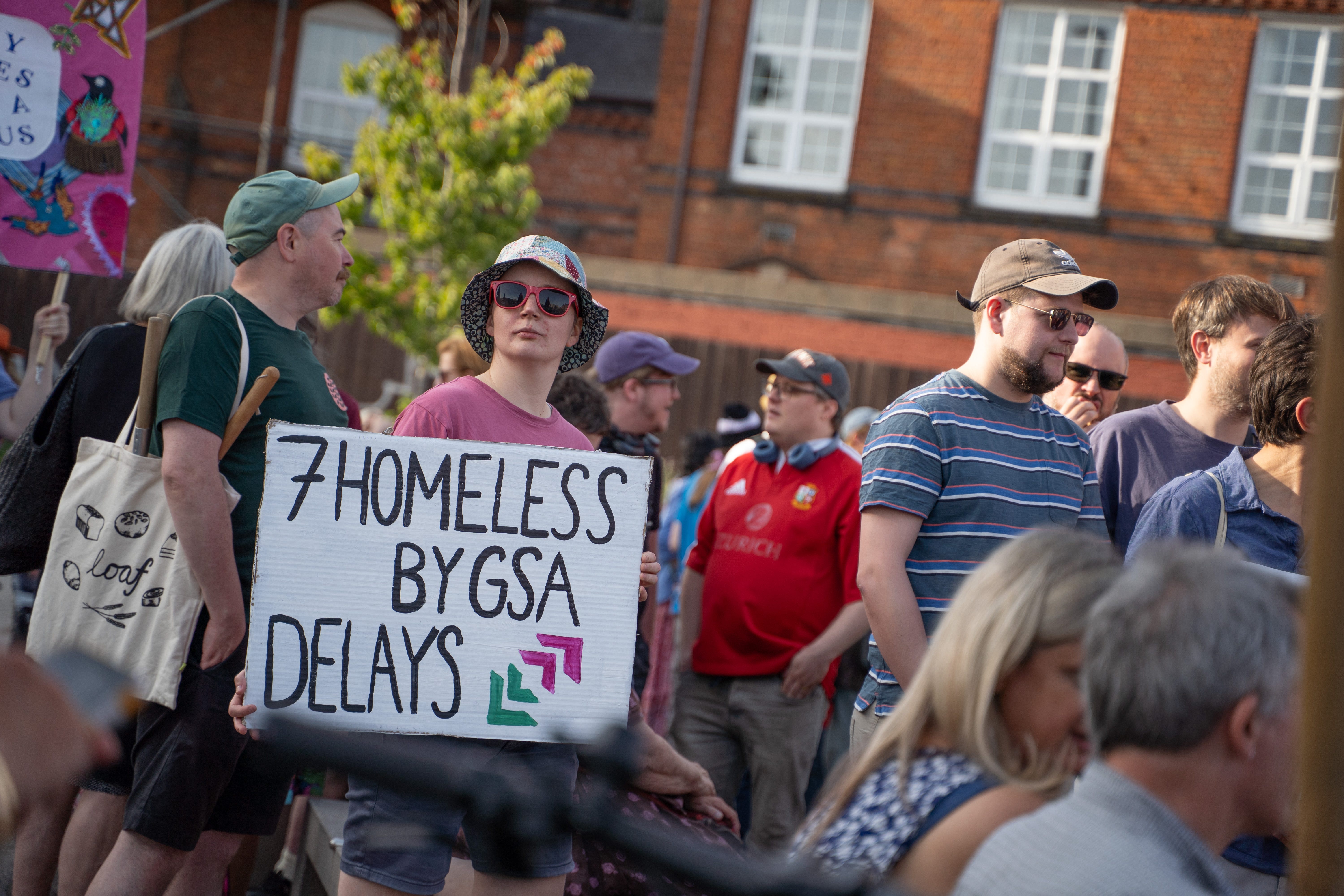
The co-operative is trying to fight back. They recently organised a protest against GSA, which was attended by over 400 people. Sean described the protest as “the biggest social mobilisation the high street had ever seen”. They have the backing of the City Council, the Combined Authority, and the local MP. And they’ve placed signs outside the development saying “homeless by GSA”. But they just don’t have the firepower to fight such a large organisation.
“They have £54 million in reserves. They have CEOs on £300,000 a year, hundreds of staff, tens of thousands of homes. And we were just trying to buy one block with 39 units. We had no employed staff. We didn’t have the capacity or capital to force contracts and the protections we’d have needed.”
When the first contractor collapsed, the co-op asked for a proper contract with GSA’s construction arm, which would have made the developer, not the co-op, liable for any delays.
“They told us, ‘that’s not the setup here. We’re both the construction company and the developer, and you’re just our partner, so it wouldn’t make sense to give you a contract.’”
The co-op realised that they would have needed to take out insurance worth around £1 million to mitigate the risk of delays with the construction process – and they didn’t have that kind of money. So, they went ahead without the insurance, or the contract, and GSA took advantage of the co-op’s weakness to force them to pay for the company’s own mismanagement.
“Our feeling has always been they’ve been trying to essentially just squeeze us, not give us any certainty until the last minute, get rid of our tenants, and then just fill the building with their own social residency tenants.”
GSA insists that it’s not trying to extract excess profits from the co-op – it’s merely trying to cover its costs. But the co-op has taken a look at how the company calculates its costs and found that GSA is using some questionable accounting techniques.
“They’ve included ‘development interest’, which is basically the opportunity cost of spending money on this site when they could have kept that money in the bank.”
Including development interest is standard practice for developers. But GSA received a capital grant worth £4.5 million from Homes England to fund the development. This money has been sitting in the bank, earning interest, since the start of the project – yet GSA hasn’t netted the interest they have received against their calculations of development interest. If they had, the costs of the project would be £550,000 lower.
“Isn’t it their job as a housing association to build housing?” Sean asks. “Or is it their job to have money in the bank and earn interest?”
Despite all these issues, the co-op has tried to find a way to meet GSA halfway. After all, the homes and livelihoods of their members depend on the project.
“We tried negotiating with them, but then in March they just cut us off, and deleted us from their website. They issued a press release saying they were going to be our landlords.”
Since negotiations broke down, GSA has continued to add money to the final bill. Sean thinks that the company is betting that, if the co-op can’t pay, Birmingham City Council or West Midlands Combined Authority will come up with the cash. GSA has already received £900,000 worth of grant money from Birmingham City Council, but Sean worries that the more the company is able to extract from local government, the more they’ll demand.
“If this building was sold on the open market, it would be sold at valuation price. They are trying to make us pay millions above the RICS valuation.”
The company is already under investigation from the social housing regulator. Last year, one of GSA’s subsidiaries – a company that produced panels for use in their buildings – went into liquidation. The subsidiary’s collapse was investigated by the regulator for cost control and governance issues – and GSA received a warning. Then, this year, the regulator opened another review into the company, which has yet to conclude. Sean thinks that the regulator hasn’t gone far enough, and now GSA thinks its untouchable.
“You have this unaccountable housing association. The regulator is a bit afraid to intervene too heavily. The council, the mayor and the MP have all come out vocally against it, but they’re like, ‘We can’t tell them what to do, because they’re a separate organisation.’”
The members of Stirchley co-op have followed all the rules. They’ve developed a plan for their local neighbourhood, consulted local residents and businesses, gained approval from all the relevant bodies, and received backing from all the important local stakeholders. They are exactly the type of project that the government should be supporting as part of its stated aim to expand the co-operative sector and build more social housing. But that support just hasn’t been there.
“Look at what Andy Burnham is saying about community wealth building, devolution, the collapse of the high street. We’re a project focused on revitalising a high street, it’s going to be co-operatively run, it’s got three local businesses in there, it’s providing affordable social rent housing.”
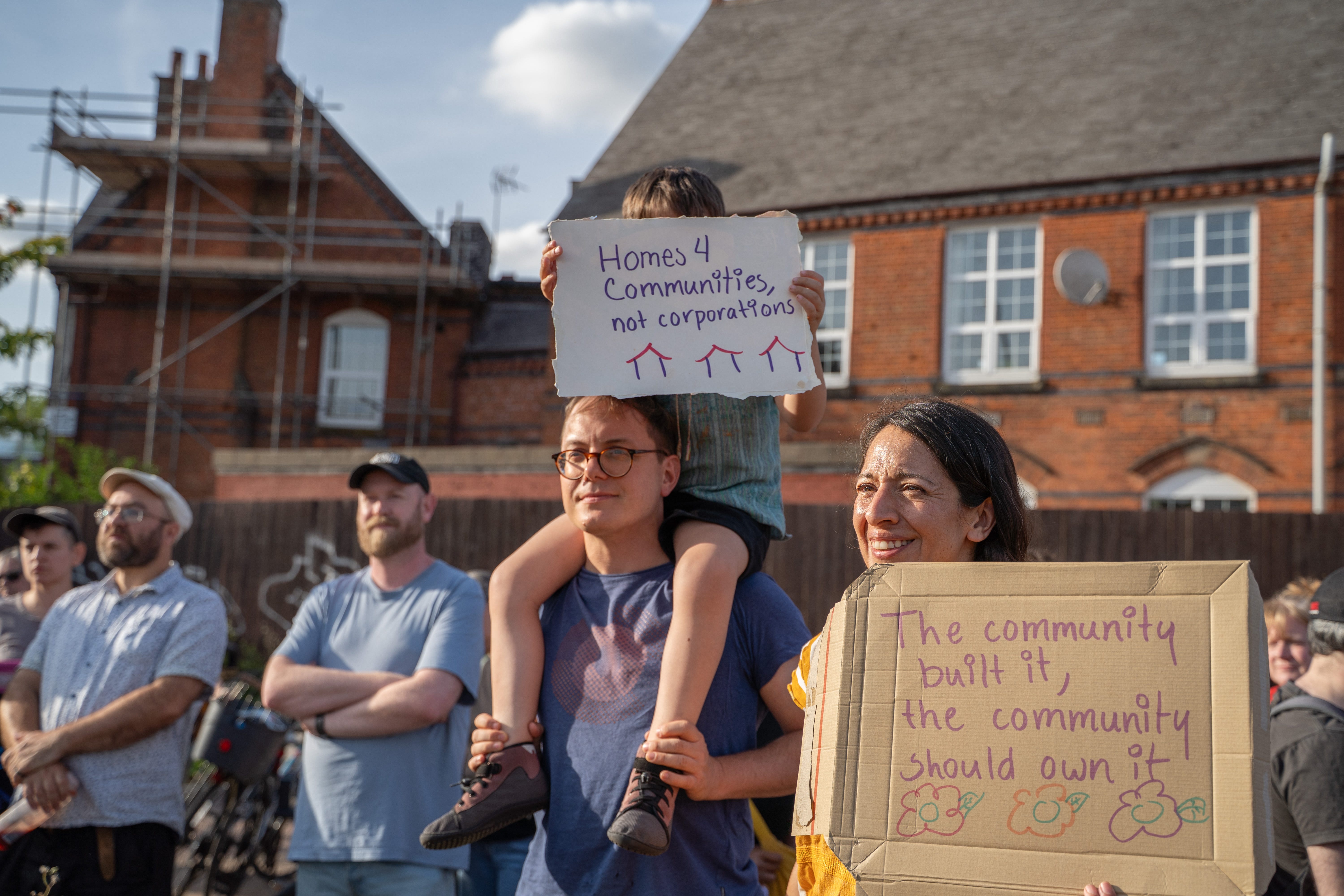
One of the saddest parts of this story is that it is likely to have a chilling effect on future community development projects. Members have sunk so much time and energy into getting this project over the line, only to be exploited by a powerful organisation trying to extract as much cash as possible.
“Seeing the fallout from this project, what’s the incentive for people to get involved in the future? There needs to be a backstop for supporting people in this situation – a strategic plan to support co-operatives. All of this new development that’s being proposed by Andy Burnham is just going to be corporate capture unless there’s a backstop to help community development.”
Members of the co-op had big plans for the future of their community once the building was complete. They had identified a site on the high street, which McDonald’s was attempting to secure for a drive-through. The co-op members developed an alternative community plan for the site, including new social housing and spaces for local businesses. But they’re facing so much uncertainty that they don’t think they’re going to be able to go ahead with any of their plans. Now, all they’re hoping for is for members to move into their new homes.
“Success would look like all our residents and work co-ops being able to move in. Just survival. Real long-term success would be getting an agreement to purchase and being able to mobilise the capital to do it.”
Sean is not describing some utopian fantasy. He just wants GSA to stick to the terms of the agreement it made years ago. What’s at stake isn’t just the future of one community, but the future of the co-operative movement as a whole. Because if organisations like GSA keep getting away with exploiting people just trying to make a difference in their local area, people are just going to give up trying.
Comments
Nothing yet. Say the first thing.
Sign in to join the conversation.