
August 25, 2026
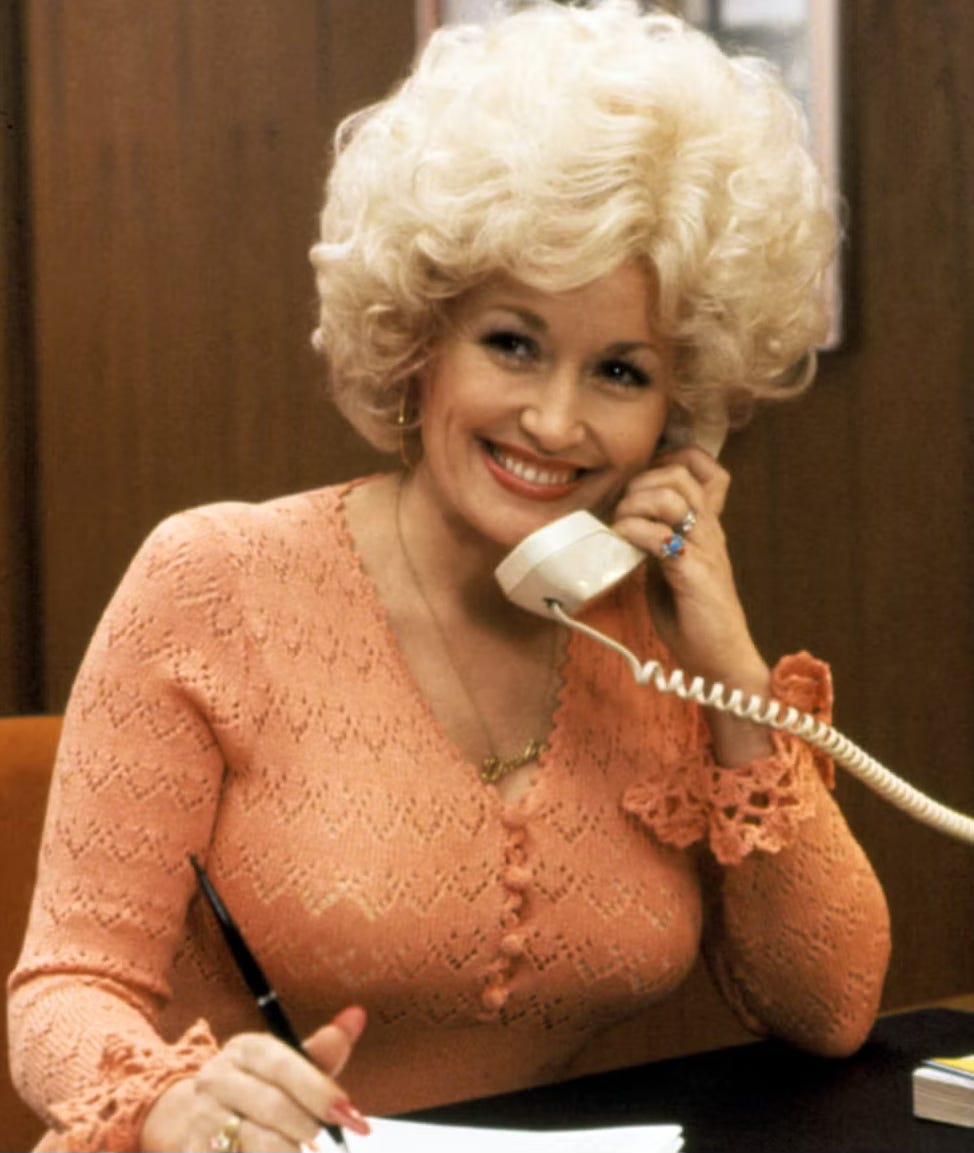
Dolly Parton, the Queen of Country Music, has died at 80.
Her passing on Tuesday in Nashville was announced by her nephew, who said, “Dolly has lived in the light and is in the arms of Jesus,” saying she was now with her late husband Carl, who died just last year after 59 years of marriage.
“By her example, we believe that anything is possible,” he said, and it is hard to think of many other entertainers who have touched a broader spectrum of fans.
She was beloved by old-school country fans, but crossed over to indelibly imprint her unique and personal brand on the mainstream. Though she frequently positioned herself as a centrist on controversial topics — saying she didn’t believe in walking away from half of one’s fanbase — she was, for an icon embraced by conservatives, remarkably outspoken in favor of LGBTQ+ people and general fairness.
In a final video to fans about the addition of a new Dollywood ride posted 11 days ago, Dolly said: “I’ve had a few little health issues,” noting that her doctor said she was too dehydrated to travel for the event.
“I continue workin’ away,” she said pluckily.
Just four days ago, in what is being called her final interview, Dolly said, “I still have so many things I want to achieve.” With as big a legacy as she has cultivated so carefully over the years, it is hard to believe she is gone — and harder to believe that the things she hoped to achieve will not be achieved in her name.
Dolly Parton had been performing nearly 70 years, having cut her first record way back in 1959.
Ever since her first singles with Porter Wagoner in 1967, she had been a household name, instantly relatable for her down-home wit and self-deprecation, and immediately memorable for her oversized personality, hair and bust.
When it came to her appearance, she was fond of telling the story — including in a 2022 TikTok — in which she said she admired “the town tramp” when she was a little girl:
“This woman that used to walk the streets, had all this makeup and hair, high-heeled shoes and I thought she was so beautiful, and everybody used to say, ‘Ohhh, she ain’t nothin’ but trash.' And I used to say, ‘Well, that]s what I’m gonna be when I grow up — trash.’ And that’s kinda how I look, but I like to think I’m a little more than that.”
She was born January 19, 1946, in Pittman Center, Tennessee, growing up in abject poverty as one of a dozen kids.
She sang throughout her childhood, including in church, and gave her very first TV and radio performances before the age of 10.
She went to Nashville right after high school, where she was signed to a writing deal, crafting hits for Kitty Wells and Hank Williams Jr., among many others, before her own first semi-hits — “Dumb Blonde” in 1966 would set the tone for her self-deprecating brand —came along.
Singing duets with Wagoner took her to a whole new level. Their country hits “The Last Thing on My Mind” (1967), “Holding on to Nothin’” (1968), “We'll Get Ahead Someday” (1968), “Just Someone I Used to Know” (1969), “If Teardrops Were Pennies” (1973) and the #1 hit “Please Don't Stop Loving Me” (1974) helped establish her as a new country queen.
Few could have guessed her solo career would explode as it did. She logged massive country hits like “Mule Skinner Blues (Blue Yodel No. 8)” (1970) and “Joshua” (1970), which became her first solo #1.
In 1971, her iconic “Coat of Many Colors” truly introduced who she was becoming as an artist, and she hit #1 again with one of her most famous songs of all, “Jolene,” which in 1973 became her first of many songs to cross over into the pop world. Now, 50+ years later, it’s widely known to even younger generations, in part due to Beyoncé’s embrace of the track.
The best was yet to come.
In 1974, Parton’s single “I Will Always Love You” charted. It would later become the most successful single ever written by a woman when it was covered by Whitney Houston as part of the 1992 soundtrack to The Bodyguard.
By 1977, Parton had established a foothold on the pop charts, ascending to #3 with “Here You Come Again, and in 1979 she teamed with Carol Burnett for Dolly & Carol in Nashville, a smash-hit TV special.
Parton’s biggest single of her career came via her acting debut as Doralee in 9 to 5 (1980). Her theme song went 3x platinum and was Oscar-nominated. It became yet another pop #1 hit, and the movie was a box-office bonanza. For decades, fans hoped a sequel might be in the works, but while the ladies often discussed it and Jennifer Aniston was at one point considering making it, it has yet to arrive.
Parton’s next massive hit was “Islands in the Stream” (1983), a duet with her cherished friend Kenny Rogers.
She never stopped recording, even if her acting career was always on the back burner. Still, she was marvelous in The Best Little Whorehouse in Texas (1982) with Burt Reynolds and the star-saturated Steel Magnolias (1989), and also appeared in Rhinestone (1984) with Sylvester Stallone and Joyful Noise (2012) with Queen Latifah.
Parton was long an LGBTQ+ ally, a risky position for a country queen in the ‘70s and ‘80s. In 1994, she contributed a song to the AIDS charity album Red Hot + Country, and she was also quick to speak up for her queer fans, even though she had a strict no-politics policy.
She was a supporter of the trans community, too. Jane Fonda, her 9 to 5 co-star, wrote in part:
“To her gay and trans fans, I want you to know that she loved you. You know that without me telling you. She loved all her fans and they are legion. And you know she doesn’t want y’all to mourn now. Dress up and celebrate her spirit.”
Parton wrote “Travelin’ Thru” for the trans-themed Transamerica in 2005, earning an Oscar nomination — but no win.
She received many accolades, among them induction into the Rock and Roll Hall of Fame, which she accepted (only after initially demurring) by simultaneously releasing her first rock record, Rockstar (2023).
Dolly Parton avoided direct politics, but led with her heart, guided by an infallible moral compass. Even in death, her heart of gold was shining brightly — her family asked for donations to be made in her name to ImagationLibrary.com.
Dolly was preceded in death just last year by her husband of 59 years, Carl Dean. She’s survived by a large family, including her brothers and sisters.⚡️
Thanks for reading GR8ERDAYS! This post is public so feel free to share it.
No posts
Comments
Nothing yet. Say the first thing.
Sign in to join the conversation.