
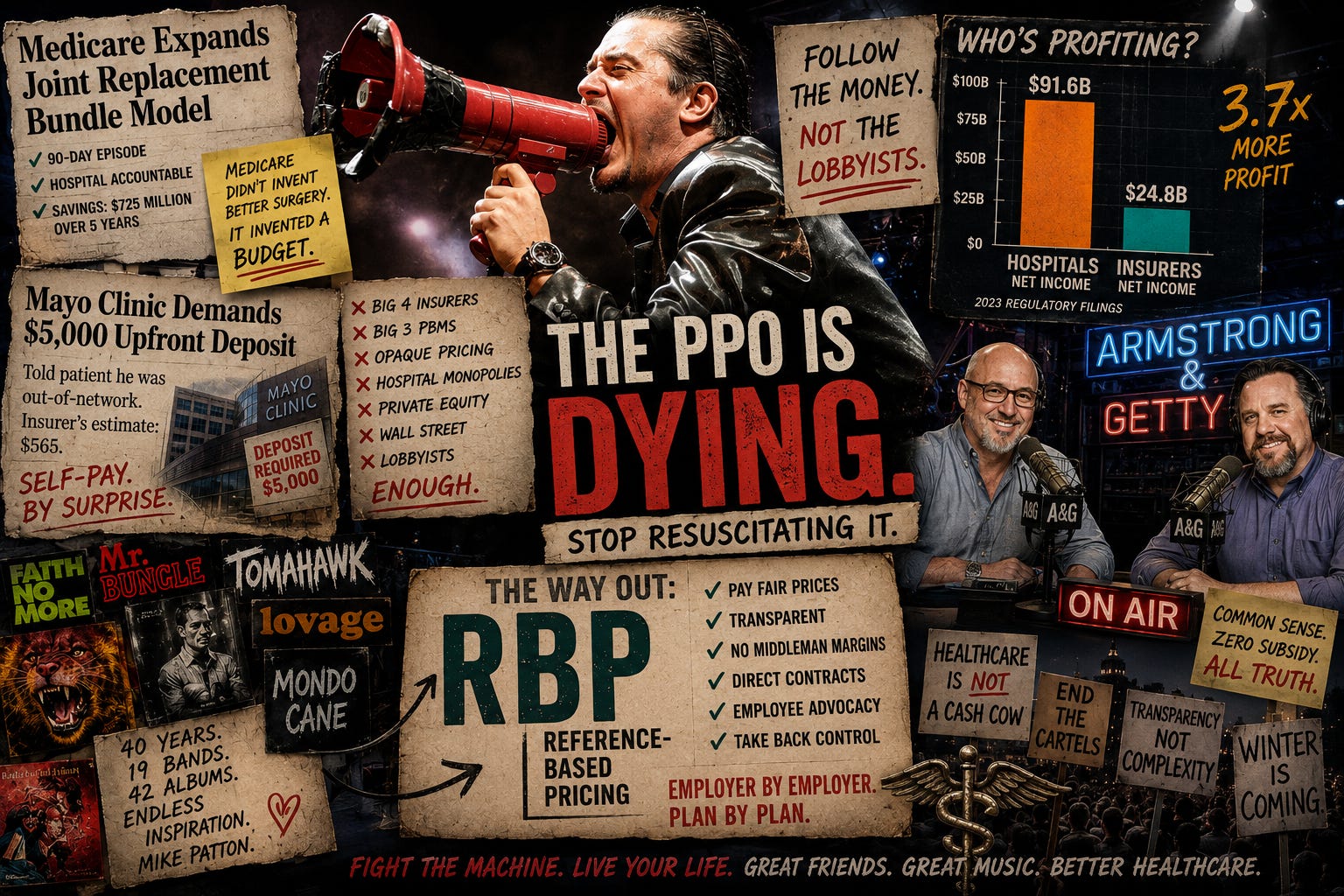
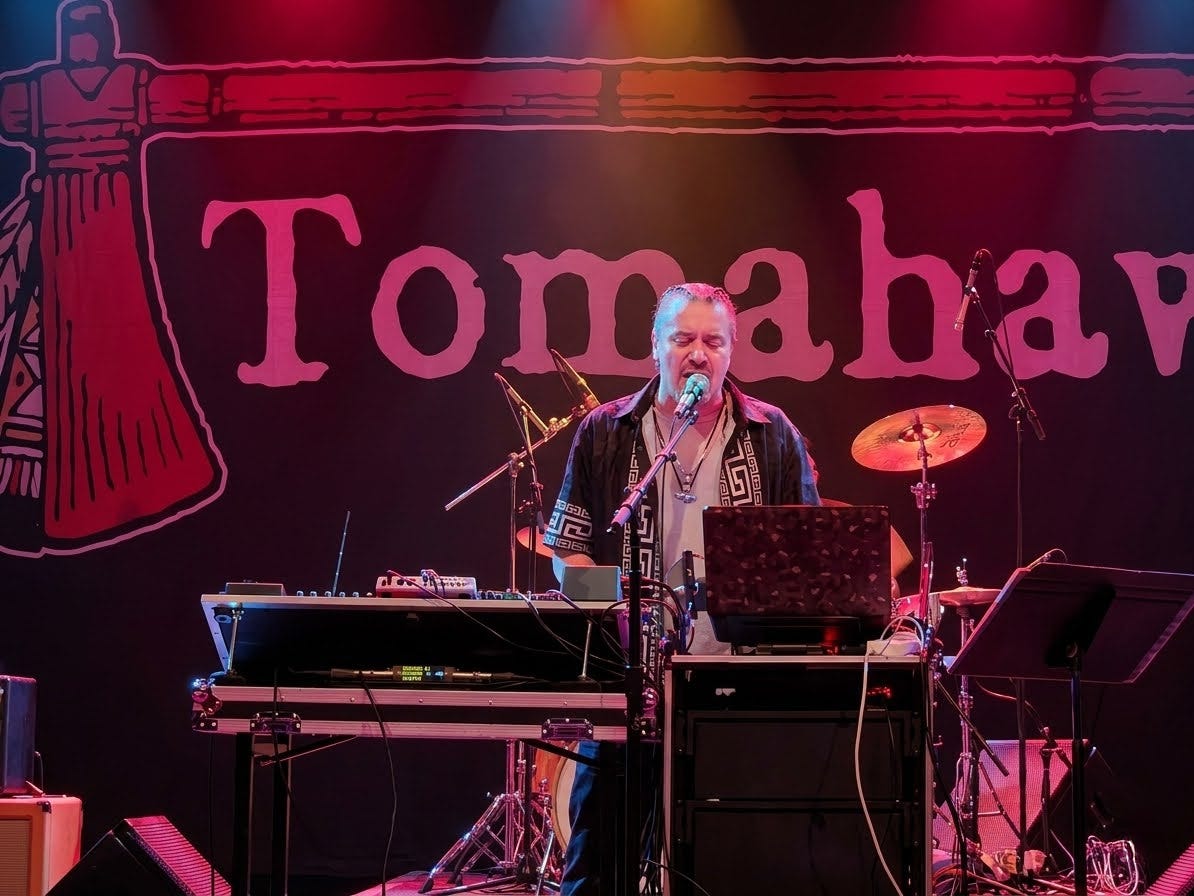
Friday night, I rolled down to San Francisco with one of my best friends of 33 years to see Tomahawk at the Warfield.
For the uninitiated, Mike Patton has fronted 42 albums for 19 different bands and projects, ranging from funk-thrash-metal insanity to an Italian orchestra covering mostly 1950s and 1960s pop.
Calling Patton my favorite musician and artist would be an epic understatement. His music, bands, words, and seemingly impossible vocal range have permeated my life for 40 years. There is an album, genre, mood, or bizarre sonic experiment for almost every phase of my existence.
Whether I’m working out to Mr. Bungle, biking to Faith No More, writing to Mondo Cane, or enjoying a nightcap with my wife to Loveage, his music is the soundtrack to my life.
By Friday, I needed it.
Two days earlier, I joined my friend Joe Getty on Armstrong & Getty. Joe introduced me as a longtime friend of the show, “Craig the Healthcare Guru,” and someone who studies this maddening system voraciously enough to make complicated subjects understandable. That was generous. It is also a polite way of saying I’m the kind of weirdo who reads hospital cost reports, PBM contracts, regulations, and health-plan claims so normal people don’t have to.
We opened with the sunny forecast that healthcare cost increases for 2027 will be the worst in 16 years. After allowing everyone a moment to absorb that punch in the stomach, he asked what was driving it.
My answer? Hospitals.
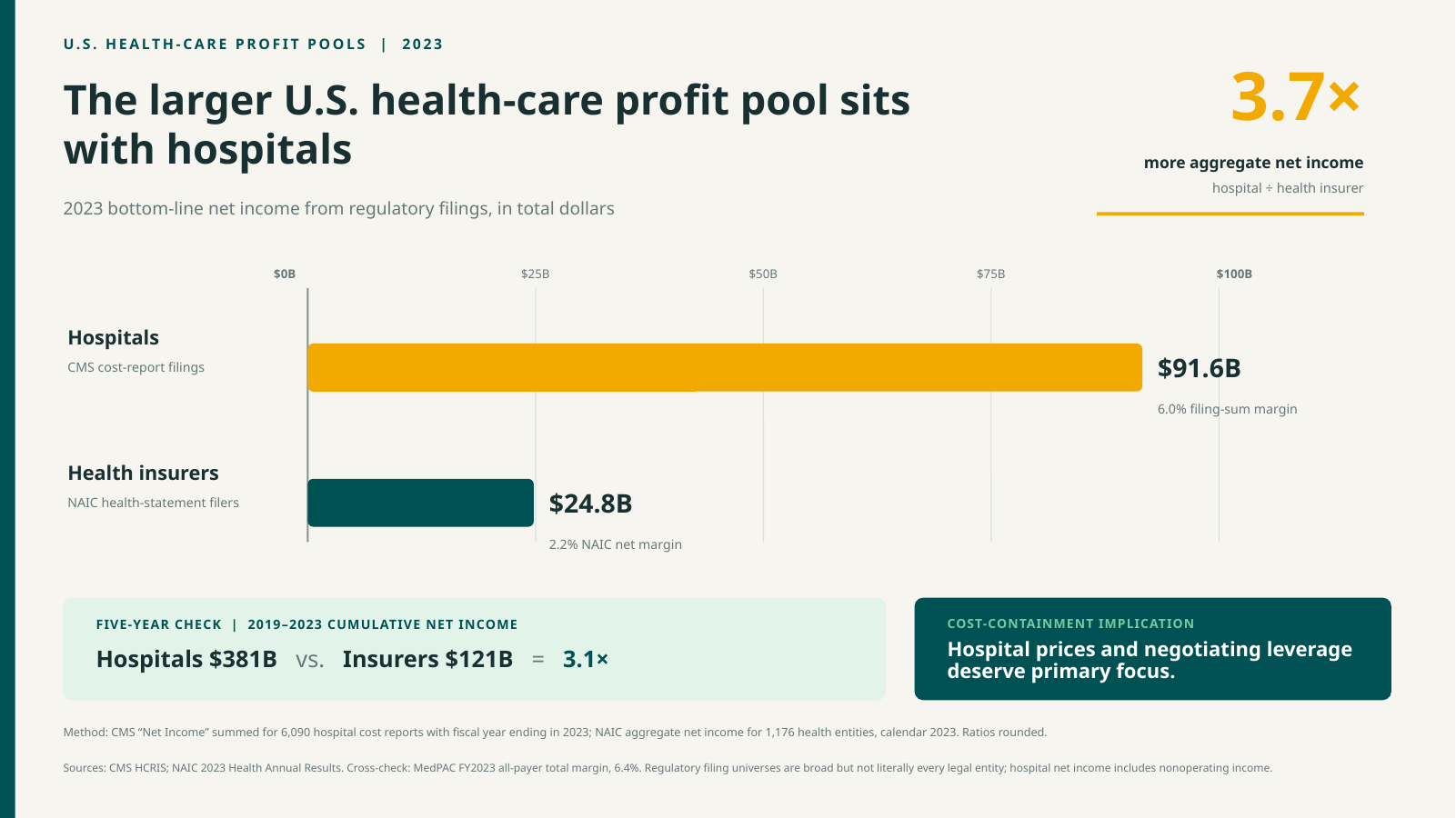
Not because insurers, PBMs, pharma, private equity, lobbyists, and politicians are benevolent bystanders. They most certainly aren’t. But the largest profit pool sits with hospitals, and commercial employer plans often pay facilities two and a half to three times what Medicare pays for the same care. On air, I used a rough comparison of approximately $75 billion in hospital profits against $25 billion for insurers. The more specific 2023 filing analysis I had just completed was even starker: $91.6 billion versus $24.8 billion.
Joe then made the distinction too many policy debates miss. This is not the free market producing an untenable result. It is cronyism and concentrated power masquerading as competition. I added that a family health plan will approach $30,000 a year in 2027, which is “a new car every year just to insure your family.” Employees may not see the entire number, but it still comes out of the economic pool that funds wages, retirement, staffing, and growth.
Then we turned to solutions, because Joe had wisely reserved time for something more useful than communal despair.
I told him this will not be fixed patient by patient or politician by politician. Employers still control enough healthcare purchasing to matter. They can self-fund, remove conflicted intermediaries, negotiate directly where practical, and use reference-based pricing where the market refuses to produce a rational price. The on-air example was straightforward: stop renting a PPO that may pay a hospital roughly 300% of Medicare and establish an objective payment closer to 150%. The roughly 30% first-year savings figure I discussed is achievable with the right population, vendors, plan language, and execution.
And because it was Armstrong & Getty, we then careened from hospital cartels into California’s recurring attempts to regulate self-checkout lanes. I described grocer clients who tell legislators they have loss prevention under control, only to be patted on the head and told government knows how to run their stores better than they do. Different industry, same disease: employers carry the risk while politically connected outsiders dictate the rules.
Some weeks, Wednesday involves hospital oligopolies, reference-based pricing, and self-checkout laws. Friday involves Mike Patton.
Balance.
The radio appearance was the spoken version of what I had been mired in all week.
One story involved Medicare’s expanded bundled-payment model for hip, knee, and ankle replacements. Instead of rewarding every separate service, facility charge, handoff, and post-surgical encounter, Medicare establishes a target for the entire episode and measures quality. Beat the target while caring for the patient properly, and the hospital can earn money. Miss it, and the hospital may owe money back.
The great policy revelation was not that Medicare discovered a new form of orthopedic surgery.
It discovered a budget.
Fee-for-service rewards activity. A bundled episode rewards coordination and makes somebody accountable for the total result. In every other industry, a customer setting a maximum price and demanding measurable quality is called purchasing. In healthcare, the hospital lobby calls it a draconian payment cut.
Another story involved an insured patient who flew from Denver to Phoenix for a neurosurgical consultation after being told the clinic was in-network. When he arrived, he was redesignated as self-pay and told to deposit $5,000 before seeing the doctor. He refused, and the appointment was canceled. His insurer’s portal had estimated his cost at $565.
That is the traditional PPO model distilled into one miserable transaction. The employer funds the plan. The employee pays contributions, deductibles, and coinsurance. The carrier rents out its logo and network. The hospital controls the unit price.
Everyone has a contract except the person who needs care.
The Big Four carriers and Big Three PBMs are not going to disappear next Tuesday. What is dying rapidly is the claim that their bundled arrangement remains the only prudent choice for employers.
What did we buy? What was the unit price? Who was paid? What did every intermediary earn? Did the celebrated “discount” reduce the cost, or merely reduce a fictional chargemaster number?
The carrier negotiates a confidential discount from a hospital-created price and calls the result savings. The PBM layers in rebates, spreads, affiliated pharmacies, specialty arrangements, and definitions requiring their own secret decoder ring. The Big Three PBMs administer about 80% of U.S. prescriptions while sitting inside vertically integrated conglomerates. The FTC found that affiliated pharmacies generated more than $7.3 billion in dispensing revenue above estimated acquisition costs on the specialty generics it analyzed from 2017 through 2022.
Then the employer is told the renewal is unavoidable because healthcare costs are rising.
Healthcare costs do not rise by themselves. Someone raises them. Someone approves them. Someone profits from them. Someone else pays them.
Usually, that last someone is the employer and the employee.
Patton has spent a career refusing to stay in one musical lane. His body of work makes no sense if your organizing principle is category, brand consistency, or focus-group comfort.
The healthcare machine wants the opposite. Select a giant carrier, accept the bundled PBM, renew the PPO, shift more cost to employees, and repeat next year with a slightly more apologetic PowerPoint.
Stay in your lane. Do not ask what the hospital was paid. Do not ask who owns the specialty pharmacy. Do not ask whether the network discount is a discount from reality. Do not ask which private equity firm has bought your brokerage, and the secret revenue deals they’ve negotiated with PBMs, PPOs and TPAs.
Employers need a little more genre defiance.
They need to stop asking whether the renewal is tolerable and start asking what they are actually purchasing.
Reference-based pricing replaces the carrier’s secret hospital contract with an objective payment methodology, commonly tied to Medicare plus a reasonable margin. The plan decides what it will pay. The hospital no longer creates both the opening number and the negotiating terrain.
Done correctly, RBP is an operating system requiring an independent TPA, defensible plan language, properly structured stop-loss, claim auditing, provider outreach, navigation, balance-bill advocacy, and legal support. It should be paired with direct contracts, independent ambulatory surgery centers, centers of excellence, direct primary care, and a transparent pass-through PBM.
· Pro tip: RBP without baked-in employee advocacy is simply outsourcing the fight to your workforce. Be very wary of the RBP repricer that tells you advocacy is either unnecessary or can be outsourced to a third party.
The objective is to delete tollbooths. Remove the carrier where it adds no value. Remove the opaque PBM. Route appropriate care away from monopolistic hospitals. Keep private equity and Wall Street from inserting another yield-extraction layer.
This will not be solved by one sweeping speech in Washington. It will be solved in procurement meetings, plan documents, stop-loss contracts, claims audits, direct-provider negotiations, and brutally honest renewal conversations.
Employer by employer may sound small. It is not.
At the Warfield, none of those problems disappeared.
They simply returned to their proper scale.
That is what great art and old friendship can do. They remind you that you are not your inbox, your claims report, your renewal deck, your radio hit, or the latest absurd facility charge.
Thirty-three years of friendship is its own kind of longitudinal data set. A person who has known you that long remembers versions of you that your current calendar has forgotten. Music has a way of opening all those files at once.
Friday was a break from railing against the Government-Healthcare Industrial Complex, but it was also a reminder of why the railing matters.
We are not trying to fix employer healthcare so people can admire a better spreadsheet. We are trying to preserve enough of their paychecks, time, energy, and health for them to live actual lives.
Lives with spouses and old friends. Great meals. Bike rides. Strange records. Loud concerts. Quiet nightcaps. Art that moves them. Time that belongs to them.
Every unnecessary dollar absorbed by an opaque fee, inflated hospital price, rebate trap, or intermediary conflict is a dollar that cannot go to wages, retirement, family, travel, food, or whatever music has served as that employee’s filing system for the last 40 years.
Renewal season is coming. Winter is coming.
Demand the data. Challenge the unit prices. Audit the PBM. Question the network. Build the advocacy. Stop resuscitating a PPO model that cannot explain what it bought or why it cost so much.
Then call your oldest friend. Buy the ticket. Have dinner with your spouse. Put on the album that takes you back to a version of yourself you have not visited lately.
The machine is hungry. It will take every dollar and every waking hour you give it, then bill you for the privilege.
The PPO is dying. Mike Patton is still screaming.
I’ll keep helping employers pull money and control out of the machine, while making sure the machine does not pull the life out of me.
Comments
Nothing yet. Say the first thing.
Sign in to join the conversation.