
Modern strata schemes generate an extraordinary amount of activity. Viewed from the outside, many appear exceptionally well governed. Meetings are held, consultants engaged, reports commissioned, notices issued, motions debated, votes conducted and legal obligations satisfied. Yet many strata schemes continue to experience recurring disputes, deferred maintenance, deteriorating relationships and declining owner confidence.
This article explores why.
It argues that modern strata systems increasingly evaluate governance through procedural activity rather than substantive outcomes. Process becomes evidence that governance has occurred rather than a means of achieving it. This shift is not primarily the result of poor intentions or individual failures. It is a structural adaptation that makes governance more measurable, defensible and administratively manageable while often weakening the system’s ability to resolve the very problems it exists to address.
[a 15:25 minute read, with 4212 words]
One of the more curious characteristics of modern strata governance is that buildings can appear extraordinarily busy while remaining remarkably difficult to govern.
Committee meetings are held with regularity. Agendas are prepared and circulated. Consultants produce increasingly sophisticated reports. Lawyers provide detailed advice. Managers issue notices, maintain registers and oversee compliance obligations. Owners are invited to meetings, consulted on proposals and asked to vote on increasingly complex decisions.
From the outside, very little appears to be missing. And, it is often difficult to identify an obvious absence of governance.
Decisions are being made. Professional advice is being obtained. Administrative processes continue to operate.
Every visible indicator suggests that the system is functioning as intended.
Yet owners frequently ask a deceptively simple question.
If so much is happening, why do the same problems keep returning?
Why do maintenance backlogs continue to grow despite years of reports and resolutions?
Why do the same strata governance disputes reappear meeting after meeting?
Why do building defects remain unresolved long after consultants have been appointed and legal advice obtained?
Why do levy increases continue while confidence in governance continues to decline?
The paradox is striking.
Many strata schemes appear increasingly active while becoming no more effective at resolving the issues that matter most to the communities they govern.
This article suggests that the answer may lie in an important but often overlooked distinction.
Governance can be judged in two fundamentally different ways.
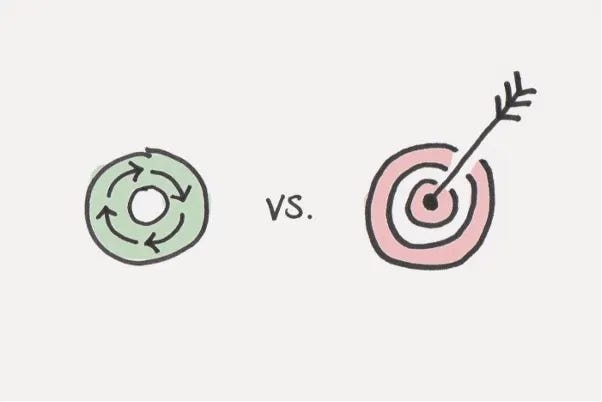
One asks whether the correct processes were followed. The other asks whether those processes actually produced better outcomes.
Those two questions often overlap. But they are not the same question.
Understanding the difference helps explain why strata governance systems can gradually become better at demonstrating activity while becoming progressively less capable of delivering resolution.
Procedural success and governance success are not the same thing.
Every governance system can be assessed through two very different lenses.
The first examines how decisions are made.
Were meetings properly convened?
Were owners given adequate notice?
Were statutory procedures followed?
Were conflicts disclosed?
Were motions drafted correctly?
Were records maintained?
Were consultation requirements satisfied?
These questions matter because procedural fairness is fundamental to legitimate governance. Decisions affecting large groups of people should be transparent, consistent and capable of independent verification. Fair process protects participants from arbitrary decision-making and gives collective decisions their legitimacy.
The second lens asks something quite different.
Did the decision actually improve the building?
Was the maintenance problem resolved?
Did governance become more effective?
Were disputes reduced?
Did owners become better informed?
Was the building’s long-term financial position strengthened?
Did confidence improve?
These questions are concerned not with the mechanics of governance but with its purpose, asking whether governance actually achieved what it existed to achieve.
The distinction may seem subtle. In practice, it is profound.
Process measures whether governance was conducted appropriately. Outcome measures whether governance was successful.
Neither can replace the other.
A strata scheme may satisfy every procedural requirement while continuing to suffer deteriorating infrastructure, escalating conflict, declining owner participation and increasing financial pressure.
Equally, a practical solution that successfully resolves a longstanding problem may have involved procedural imperfections that, while undesirable, did not prevent the underlying issue from being addressed.
Good governance seeks both procedural integrity and substantive effectiveness.
The difficulty is that one is significantly easier to observe (or assess) than the other.
The distinction becomes even clearer when governance is viewed through three related but separate concepts.
These are the activities that governance systems undertake.
Meetings.
Committee papers.
Consultant reports.
Budgets.
Legal advice.
Notices.
Disclosure documents.
Administrative effort.
Inputs demonstrate that work is occurring. They tell us that resources are being devoted to governance.
They do not, by themselves, tell us whether governance is succeeding.
Outputs are the immediate products generated by those inputs.
Resolutions are passed.
Budgets are adopted.
By-laws are made.
Maintenance plans are approved.
Contracts are executed.
Policies are implemented.
Outputs demonstrate that decisions have been made.
Again, however, they tell us remarkably little about whether those decisions ultimately improve the building.
Outcomes are the enduring consequences that governance exists to produce.
A safer building.
Better maintenance.
More resilient finances.
Higher owner confidence.
Reduced conflict.
Better decision-making.
Greater trust between participants.
Long-term preservation of collective capital.
These are the measures by which owners ultimately judge whether strata governance has been worthwhile.
Unlike inputs and outputs, however, outcomes are often difficult to observe.
They emerge slowly, and they are influenced by many different factors.
Reasonable people may disagree about whether a particular outcome represents success.
Some outcomes may not become fully apparent for many years.
This creates a quiet but powerful structural tendency.
Inputs can be counted. Outputs can be documented. Outcomes often cannot.
As strata governance systems become larger and more administratively complex, they naturally become increasingly comfortable measuring the things that are easiest to measure.
Meetings are easily counted.
Reports are easily catalogued.
Compliance obligations are readily verified.
Outcomes resist that kind of certainty.
Gradually—and often without any deliberate decision—attention begins to shift.
What is measured increasingly becomes what is valued. What is visible increasingly becomes what is rewarded. And what is rewarded gradually begins to shape the behaviour of the system itself.
Modern strata systems increasingly report inputs and outputs because they are visible and immediately measurable.
Owners ultimately experience outcomes because they determine whether governance has improved everyday life within the building.
This transition is rarely noticed while it is occurring. Yet it has profound consequences for how governance evolves.
This tendency is not unique to strata.
Governments exhibit it.
Corporations exhibit it.
Universities, regulators, charities and professional organisations exhibit it.
Wherever governance becomes sufficiently large or sufficiently complex, process begins to assume increasing importance.
The reasons are not difficult to understand. Process possesses characteristics that institutions naturally value.
It is visible.
Repeatable.
Standardised.
Auditable.
Transferable between participants.
Capable of being documented.
Capable of being defended.
Perhaps most importantly, process provides certainty.
Whether a meeting was properly convened is usually capable of objective verification.
Whether notice requirements were satisfied can normally be demonstrated.
Whether a report was commissioned is rarely controversial.
Outcomes possess very different characteristics.
They are uncertain. Often delayed. Frequently contested.
Success may depend upon circumstances outside the control of decision-makers. Different participants may legitimately disagree about whether a particular decision represented a good outcome. Some consequences may not become visible until years after the decision itself was made.
Resolving a difficult strata building defect, for example, is inherently more uncertain than demonstrating that the statutory notice period for the meeting discussing that defect was correctly observed.
One question can usually be answered immediately. The other may remain debated long after the paperwork has been completed.
Institutions therefore face a quiet but persistent temptation.
Not because they are poorly designed.
Not because participants lack integrity.
But, because they gradually optimise for the things they can reliably observe.
Over time, strata governance systems rarely optimise for what is most important. They optimise for what they are expected to measure.
And that is where an important transition begins.
Once strata governance systems begin measuring procedural performance more consistently than substantive outcomes, a subtle but important transition begins to occur.
At first, process simply supports governance.
Meetings provide a forum for decisions. Reports inform judgement. Consultation improves understanding. Legal advice clarifies authority. Records preserve institutional memory.
In this role, process performs exactly the function it is intended to perform. It enables better strata governance by making collective decision-making more transparent, more consistent and more accountable.
Few would argue with that objective.
The transition begins when the process gradually becomes more than a tool and becomes the principal way governance itself is evaluated.
When that happens, questions slowly begin to change.
Instead of asking whether maintenance has improved, attention shifts towards whether the maintenance process was properly followed.
Instead of asking whether owner consultation genuinely improved the quality of a decision, the discussion increasingly centres on whether consultation occurred.
Instead of asking whether owners now better understand the financial position of their strata scheme, attention turns towards whether disclosure obligations were technically satisfied.
Instead of asking whether a by-law resolved the behavioural problem that prompted it, discussion increasingly focuses upon whether the by-law was correctly adopted, properly enforced and consistently administered.
None of these procedural questions are inappropriate.
Each serves an important governance purpose.
The difficulty arises when satisfactory answers to those questions begin to stand as evidence that strata governance itself has been successful.
Process gradually ceases to be the means through which governance is exercised. It increasingly becomes the measure by which governance is judged.
This is rarely the consequence of a single policy or reform.
Rather, it emerges through hundreds of small institutional adjustments over many years. Each adjustment appears sensible in isolation.
A new disclosure obligation.
An additional consultation requirement.
Another reporting standard.
A more comprehensive approval process.
A further compliance obligation.
Collectively, however, these incremental changes begin to reshape the way institutions understand strata governance itself.
Success becomes progressively easier to demonstrate through evidence of procedural compliance than through evidence of durable problem-solving.
The distinction is subtle.
Procedural compliance demonstrates that the governance system operated. Substantive resolution demonstrates that the governance system achieved its purpose.
The two frequently coincide. But, they should never be confused.
Perhaps the most significant consequence of this transition is that procedural compliance gradually becomes accepted as a proxy for strata governance quality.
This is not because participants consciously decide that process is more important than outcomes. Rather, compliance becomes the most practical evidence available that governance responsibilities have been discharged.
A committee confronted with criticism can demonstrate that meetings were held, reports obtained and legal advice considered.
A strata manager can demonstrate that statutory notices were issued, agendas circulated and records maintained.
Professional advisers can demonstrate that appropriate recommendations were provided and recognised procedures followed.
Regulators can demonstrate that legislative requirements were observed.
Each strata participant can point to legitimate evidence that their respective responsibilities were performed. Collectively, however, a different question begins to receive less attention.
Did all of this actually improve the governance of the strata scheme?
The existence of procedural evidence can unintentionally displace the need to examine substantive performance. And, strata governance increasingly becomes something that is evidenced through documentation rather than demonstrated through outcomes.
The practical consequences become visible across many aspects of strata administration.
Maintenance programs are judged by whether inspections occurred rather than whether maintenance backlogs declined.
Financial management is assessed through budgets and reporting rather than the long-term preservation of building capital.
Consultation exercises become successful because participation targets were achieved rather than because better decisions emerged.
Dispute processes conclude because procedural steps have been completed even where the underlying conflict continues to divide the community.
The strata governance system remains highly active. The underlying problems often remain remarkably persistent.
This evolution has another consequence that is less immediately visible but ultimately more significant.
As procedural compliance increasingly becomes accepted as evidence of effective strata governance, the relationship between governance and process quietly begins to reverse.
Originally, process exists to support judgement. It assists decision-makers in exercising collective responsibility fairly and consistently. Gradually, however, judgement begins adapting itself to the requirements of process.
In the first model, governance remains primary. Process exists because good governance requires structure.
In the second model, process increasingly becomes the organising framework within which governance operates.
Decision-makers become progressively more concerned with demonstrating that recognised procedures have been observed than with exercising the difficult judgement necessary to resolve contested issues.
Governance has not disappeared. But its centre of gravity has begun to move. Collective judgement gradually gives way to procedural administration.
This transition is seldom recognised because every individual component continues to appear reasonable.
Committees continue meeting.
Managers continue administering.
Professionals continue advising.
Owners continue voting.
Regulators continue supervising.
Nothing appears obviously absent. Indeed, viewed individually, many participants may be performing their respective roles extremely well.
The transformation only becomes visible when viewed across the strata governance system as a whole. The cumulative effect is that procedural activity increasingly becomes mistaken for governance effectiveness.
So, strata governance increasingly becomes expressed through process. The visible architecture of governance remains intact while the practical exercise of collective judgement gradually contracts.
This helps explain one of the most persistent paradoxes within modern strata schemes.
Institutions often become increasingly confident that governance is functioning appropriately at precisely the same time many owners become increasingly frustrated by the practical outcomes.
Both perspectives can be entirely genuine.
They are simply measuring different things.
Institutional participants naturally experience reassurance when recognised procedures have been followed.
Meetings occurred.
Independent reports were obtained.
Legal advice was considered.
Votes were conducted.
Statutory obligations were satisfied.
Documentation exists.
From an institutional perspective, these are all indicators that strata governance has been exercised responsibly.
Owners, however, often evaluate governance differently.
Leaking roofs.
Recurring defects.
Escalating levies.
Deferred maintenance.
Persistent neighbour disputes.
Lengthy approval processes.
Projects that appear never to progress or conclude.
From their perspective, strata governance has not succeeded because the practical condition of the building has not materially improved.
The resulting tension is entirely predictable.
The institution experiences procedural certainty. Owners continue experiencing substantive uncertainty. One group sees evidence that governance occurred. The other continues waiting for evidence that governance worked.
Neither perspective is necessarily wrong. They are simply applying different measures of success.
That distinction is one of the defining characteristics of contemporary strata governance. It also helps explain why debates about governance often become so difficult to resolve.
Participants are frequently arguing about different things without realising it. One side is defending the integrity of the process. The other is questioning the effectiveness of the outcome.
Until those two conversations are separated, they frequently appear to contradict one another while both remain internally coherent.
There is one further consequence of this evolution that also deserves careful attention.
Once procedural compliance becomes the accepted evidence of good strata governance, institutional attention naturally begins to concentrate on maintaining visible procedural completeness.
Documentation becomes increasingly important.
Reporting expands.
Consultation becomes more extensive.
Approval pathways become more elaborate.
Evidence of compliance becomes progressively richer.
Each development may be entirely legitimate. Collectively, however, they create another possibility.
The visible performance of strata governance can gradually become easier to demonstrate than the practical effectiveness of governance itself.
The strata system may therefore become increasingly sophisticated at displaying the characteristics of good governance without necessarily improving its capacity to resolve collective problems.
That possibility should not be overstated. Nor should it be dismissed. It represents one of the more subtle ways in which complex governance systems evolve over time.
Understanding that evolution is important because it shifts attention away from the conduct of individual participants and towards the structural incentives shaping the strata system itself.
Those incentives help explain why this transition persists even where the people involved are acting conscientiously, professionally and in good faith.
This does not mean governance becomes insincere. It means visible procedural performance gradually becomes easier to evaluate than substantive governance performance.
If this evolution were simply the result of poor leadership, inattentive committees or ineffective managers, the solution would be comparatively straightforward.
Elect better committees.
Appoint better managers.
Provide better training.
Improve professional standards.
Each of these measures may produce worthwhile improvements.
None, however, adequately explains why the same patterns continue to emerge across thousands of different strata schemes involving thousands of different participants operating under different personalities, different managers and different professional advisers.
The consistency of the pattern suggests something deeper. It suggests that the behaviour is not simply individual. It is structural.
Most participants within a strata scheme are responding rationally to the environment in which they operate.
Committees are expected to make increasingly complex decisions with limited information, limited authority and significant personal scrutiny.
Managers operate within detailed legislative frameworks that reward consistency, documentation and procedural compliance.
Professional advisers understandably seek to minimise uncertainty, reduce legal risk and ensure decisions can withstand later examination.
Regulators and tribunals require decisions that can be assessed objectively against recognised standards.
Each participant is responding sensibly to the incentives immediately before them.
The result is that procedural compliance becomes individually rational. Judgement, by contrast, remains individually risky.
Good outcomes create collective benefits. Poor outcomes create identifiable criticism.
Procedural compliance offers something different. It distributes responsibility.
When decisions are questioned, participants can point to meeting notices, consultant reports, legal advice, committee resolutions, disclosure documents and compliance records.
Those documents demonstrate that recognised governance processes were followed. Whether those processes ultimately produced better governance becomes a different question.
This is precisely why the evolution described throughout this article should not be understood as a moral failure.
It is a structural adaptation. The system gradually rewards behaviour that can be demonstrated more easily than behaviour that can only be evaluated over time.
From the perspective of individual participants, this behaviour is often entirely rational. From the perspective of the governance system as a whole, it can nevertheless produce progressively weaker outcomes.
The legal system further strengthens this tendency, although not because it intends to.
Courts and tribunals are generally well equipped to assess procedural legality. They can determine whether statutory powers were exercised correctly.
Whether meetings were validly convened.
Whether procedural fairness was observed.
Whether legislation was complied with.
Whether legal authority existed.
These are questions capable of objective judicial determination.
However, Courts are far less equipped to answer a different question.
Was this ultimately the best governance decision for the long-term wellbeing of the building?
Reasonable people may disagree. And, alternative decisions may each have produced different advantages and disadvantages.
The judiciary has never been intended to become the ongoing manager of collective strata governance decisions.
Consequently, legal scrutiny naturally concentrates upon whether recognised procedures have been observed rather than whether governance itself produced the optimal outcome.
That is entirely appropriate. It is also significant.
Over time, governance participants learn an important institutional lesson. That demonstrating procedural integrity is considerably easier than demonstrating substantive governance success.
This does not diminish the importance of legal process. It simply reinforces why procedural thinking becomes increasingly influential throughout the strata governance system.
This perspective also helps explain one of the more persistent frustrations within strata reform.
Many strata reforms are introduced with entirely legitimate objectives.
Greater transparency.
More consultation.
Improved disclosure.
Expanded reporting.
Additional record keeping.
More detailed approval pathways.
Enhanced compliance obligations.
Each reform seeks to improve strata governance.
Many successfully improve particular aspects of procedural fairness.
Collectively, however, they often produce an unintended consequence: Governance becomes procedurally richer, but not necessarily substantively stronger.
Each additional procedural safeguard increases administrative sophistication. Few directly improve the quality of judgement. Fewer still alter the incentives shaping decision-making. Very few improve accountability for strata governance outcomes.
As a consequence, strata reform frequently adds further layers of process to systems that are already heavily process-oriented.
The governance architecture becomes increasingly comprehensive.
Owners receive more documents.
Committees receive more guidance.
Managers undertake more administration.
Professionals produce more reports.
Yet the recurring questions often remain remarkably familiar.
Why are maintenance problems still unresolved?
Why are the same disputes recurring?
Why do owners continue losing confidence?
Why do difficult decisions continue being deferred?
The answer is not that strata reform has failed.
Rather, many reforms have successfully improved procedural governance without materially changing the structural conditions that determine governance outcomes.
That distinction is subtle. It is also profoundly important.
This also helps explain why many strata reforms successfully improve procedural governance while leaving the deeper structural characteristics of strata systems largely unchanged.
None of this should be understood as an argument against process in strata systems. Quite the opposite.
Good strata governance depends upon good process.
Without procedural fairness there can be no legitimacy.
Without transparency there can be no confidence.
Without proper records there can be no institutional memory.
Without consistency there can be no trust.
Process remains indispensable.
The mistake arises only when process gradually becomes confused with governance itself.
Good governance requires three separate elements working together.
The first is procedural integrity: Decisions should be lawful, transparent, fair and consistently administered.
The second is informed judgement: Participants must still exercise discretion, weigh competing interests and make difficult collective decisions. No procedure can remove that responsibility.
The third is substantive outcomes:
Buildings should become safer.
Maintenance should improve.
Collective capital should be preserved.
Communities should become more resilient.
Owner confidence should strengthen.
These three elements are complementary.
Process supports judgement.
Judgement converts information into decisions.
Decisions should produce outcomes.
When all three remain connected, governance performs its intended function.
Difficulty begins only when one part gradually displaces the others.
If process becomes the principal measure of success, judgement naturally contracts. If judgement contracts, outcomes become increasingly uncertain. The governance system continues operating.
But its purpose slowly becomes obscured.
Perhaps the most important lesson is therefore not that strata systems contain too much process. Many probably contain exactly as much process as complex collective governance requires.
The more important question is different.
What purpose is that process ultimately intended to serve?
If meetings, reports, consultation, disclosure and compliance become ends in themselves, strata governance risks becoming progressively detached from the practical improvement of the communities it exists to serve.
But if processes remain tools employed in the service of better judgement and better outcomes, process retains its proper role.
The distinction appears modest. Its implications are anything but.
It changes how strata governance is evaluated. How strata reforms are designed. How strata scheme success is measured.
And ultimately, how collective responsibility is understood.
Modern strata systems have become increasingly sophisticated. Few would dispute that as they possess:
More legislation.
More regulation.
More procedural safeguards.
More professional advisers.
More reporting.
More consultation.
More compliance requirements.
In many respects strata systems have become more administratively capable than ever before.
The question this article poses is not whether these developments have value. Most clearly do.
Procedural success and governance success are not the same thing.
So, the question is whether procedural sophistication has gradually become mistaken for governance effectiveness in strata title.
A strata governance system may demonstrate impeccable procedural integrity while continuing to struggle with deteriorating buildings, deferred maintenance, declining owner confidence and unresolved collective disputes.
Equally, improvements in strata governance ultimately reveal themselves not through the quantity of procedural activity but through the quality of the outcomes that communities experience over time.
Process remains indispensable.
It protects fairness.
It protects legitimacy.
It protects consistency.
It protects accountability.
But strata governance is ultimately judged not by whether procedures occurred, but by whether collective problems or outcomes were successfully resolved or achieved.
Modern strata systems have become increasingly adept at demonstrating that governance occurred.
The more important question—and one that will become increasingly significant throughout the next phase of the GoStrata ARC—is whether they remain equally capable of demonstrating that governance actually succeeded.
That distinction may ultimately prove to be one of the defining questions for the future of strata governance.
July 13, 2026
Francesco Andreone
Comments
Nothing yet. Say the first thing.
Sign in to join the conversation.