
I count just five times over the past 250 years when pervasive inequality and unfairness in American life gave rise to political movements that succeeded in forcing far-reaching and long-lasting social change.
The first was the abolitionist movement that ended slavery and provided African-Americans with equal rights under the law. It took a civil war — still the bloodiest conflict in our history — and the rewriting of the U.S. constitution to accomplish those goals, albeit for men only.
The second was the women’s rights movement, which began in earnest in the 1840s. Generations of activists fought for the right to vote, which wasn’t won until 1920; and the right to reproductive freedom, tentatively won in 1965 through 1973 (partially repealed by the reactionary Roberts Court in the 2022 Dobbs decision). That movement continues today, not just in efforts to restore reproductive health rights, but in demands to narrow the yawning gap between women and men in compensation and economic opportunity.
The third was the rise of the progressive, populist and nascent trade union movements of the late 1800s and early 1900s. During the first Gilded Age, when monopolists seized control of the newly industrialized nation’s economy and politics, those organizations succeeded in passing federal laws establishing the nation’s first regulatory agencies. They broke up trusts, regulated banks, taxed exorbitant incomes and inheritances, established the first rules for food and drugs, established national parks, protected federal lands, and helped farmers. States passed laws providing limited insurance for workers enduring unemployment and when injured on the job.
These measures, always limited in scope due to the economic elite’s intractable opposition, proved inadequate to the challenges posed by the Great Depression, which began with the unregulated stock market’s crash in October 1929. The ensuing economic collapse was worsened by unaddressed wealth and income inequality, wrong-headed tariffs, and the ruling Republican Party’s refusal to embrace government intervention.
That economic catastrophe triggered the fourth great social movement in U.S. history — the rise of industrial trade unions. The pitched battles of the 1930s eventually gave way to institutional acceptance. At their peak in the 1950s, unions represented one-third of the American workforce. They succeeded in winning higher wages, better working conditions, longer vacations, and greater benefits, including pensions and health insurance, both for their members and the broader society. Labor economists dubbed the post-WWII era “the great compression,” a time when income inequality was greatly reduced and prosperity broadly shared.
But not for all, which was the economic backdrop for the fifth great social movement in U.S. history — the Civil Rights Movement. African-American soldiers, who had fought abroad to preserve democracy, returned to a country that denied it to them. Southern states, in reaction to gains made after the Civil War, had legally imposed a segregated and inferior education system on the families of former slaves. They were denied access to public facilities and denied the right to vote and participate in civic life. Southern states enforced their apartheid regime through extralegal terror: public lynchings that took the lives of more than 4,000 souls in the first half of the 20th century.
Led by preachers and lawyers, the broad-based civil rights movement succeeded in winning the support of a significant share of the white population. A Democratic Congress in the mid-1960s passed laws restoring and enforcing the legal, voting and equal access rights that had been eliminated after Reconstruction. Higher education and corporate America began accepting previously excluded groups, which diversified and enlarged the middle class. Expanded government programs reduced poverty among those left behind, both white and black. The Civil Rights movement also inspired the anti-Vietnam war and environmental movements, many of whose leaders had participated in the lunch counter sit-ins and voting registration drives of the early 1960s.
But, during the 1970s, a decade marred by three recessions and two bouts of oil price shock-led inflation, progress stalled. Previous gains were threatened and then lost. Corporate America abandoned its social compact with the communities that had spawned them. To avoid unions, they moved their factories to the largely non-union south, the precursor to moving abroad.
The corporate assault on broadly shared prosperity began in earnest after Ronald Reagan was elected president in 1980. They demanded and won lower corporate taxes to bolster profits. They rigged the income tax code to favor the well-to-do. They defeated almost all new environmental, food, drug, and worker safety regulations; and rolled back many already on the books. They defeated higher minimum wage laws that would have helped the low-wage workers in the service economy rapidly replacing the manufacturing economy. Their consultants, with connivance from an industry-controlled National Labor Relations Board, devised ever more devious ways of defeating union organizing drives among the growing service worker underclass.
Is it any wonder than we now live in an economy dominated by a small handful of billionaires? Is it any wonder we are living a level of income and wealth inequality that surpasses the first Gilded Age? Is it any wonder that the ultra-rich dominate the nation’s political system through dark money contributions and their corporate political action committees, both facilitated by the Supreme Court’s 2010 decision in Citizens United v. FEC? Our political system is far more corrupt today than it was nearly a century-and-a-half ago when New York’s Republican senator William Stewart strode onto the Senate floor with wads of cash to solicit votes from his confreres.
Many centrist Democrats running for Congress this fall are portraying the current occupant of the White House as an aberration. Implicit in this characterization is the idea that things will miraculously return to normal once he leaves office and the current out-party is returned to power. I wish that were true.
Such thinking underestimates the serious damage that Donald Trump has done to American institutions. The media focus endlessly on how he uses the White House to financially benefit his family, those who kiss his ring, and the billionaire class that has flocked to his side. His personal incompetence amid all this corruption — the Lincoln Memorial reflecting pool fiasco being the latest example — provides comic relief.
But an end to the grift won’t correct the damage done by his losing war against Iran, which has inflicted serious damage to the U.S. economy and shredded whatever good will the country retains in the eyes of the rest of the world. Our military, which has seen dozens of its senior leaders forced out for no reason other than their sex, the color of their skin or their temerity to ask questions, has been institutionally weakened in unprecedented ways. The feckless television talking head that poses as Secretary of War is demanding $80 billion to restore its depleted armaments. (I should add, since this is usually a health care blog, that the request is twice as much as is needed to restore the lost Obamacare subsidies.)
When he leaves office, Trump will leave behind a U.S. government in shambles, incapable of carrying out many of its core functions. Thousands of competent lawyers, accountants, foreign policy experts, scientists, engineers, physicians, epidemiologists, investigators, economists and more have left DOJ, the State Dept., USAID, NIH, FDA, CDC, EPA, OSHA, NOAA, CFTC, SEC, CFPB and more. These agencies weren’t built in a day. It will take years, some say decades, to hire, rehire and train competent people willing to work for a government that pays less and, as this administration has repeatedly proved, offers less job security than what they can find in the private sector.
A quarter century ago, Grover Norquist, the pro-corporate, anti-tax Republican operative, told NPR that “I don't want to abolish government. I simply want to reduce it to the size where I can drag it into the bathroom and drown it in the bathtub.” Under Trump, the plug is in and the water is running. It will take more than pulling that plug to restore young professionals’ belief in the value of public service, a must if we’re going to rebuild the agencies that protect the public from private sector predators like Elon Musk, Jeff Bezos, Mark Zuckerberg and their ilk.
In the decade-and-a-half since the 2008-09 financial crisis and Great Recession, we’ve seen several movements spring up among young Americans who saw the nation galloping down the wrong path: Occupy Wall Street, Me-Too, Black Lives Matter. There’s also been an upsurge in pro-union sentiment. Support for single-payer health care has never been higher. In many left-leaning areas of the country, the socialism of Democratic socialists like New York Mayor Zohran Mamdani is no longer a dirty word.
The Sanders-AOC-Mamdani wing of the Democratic coalition is not proposing anything out of the mainstream of U.S. political history. Free buses and single-payer health care are simply the modern manifestations of the “sewer socialism” that bloomed during the Progressive era, another time when private sector failure led to the election of socialist leaders in many cities and states. They created municipality-owned water, sewer and electricity utilities, infrastructure projects and farm co-ops, most of which are still around today.
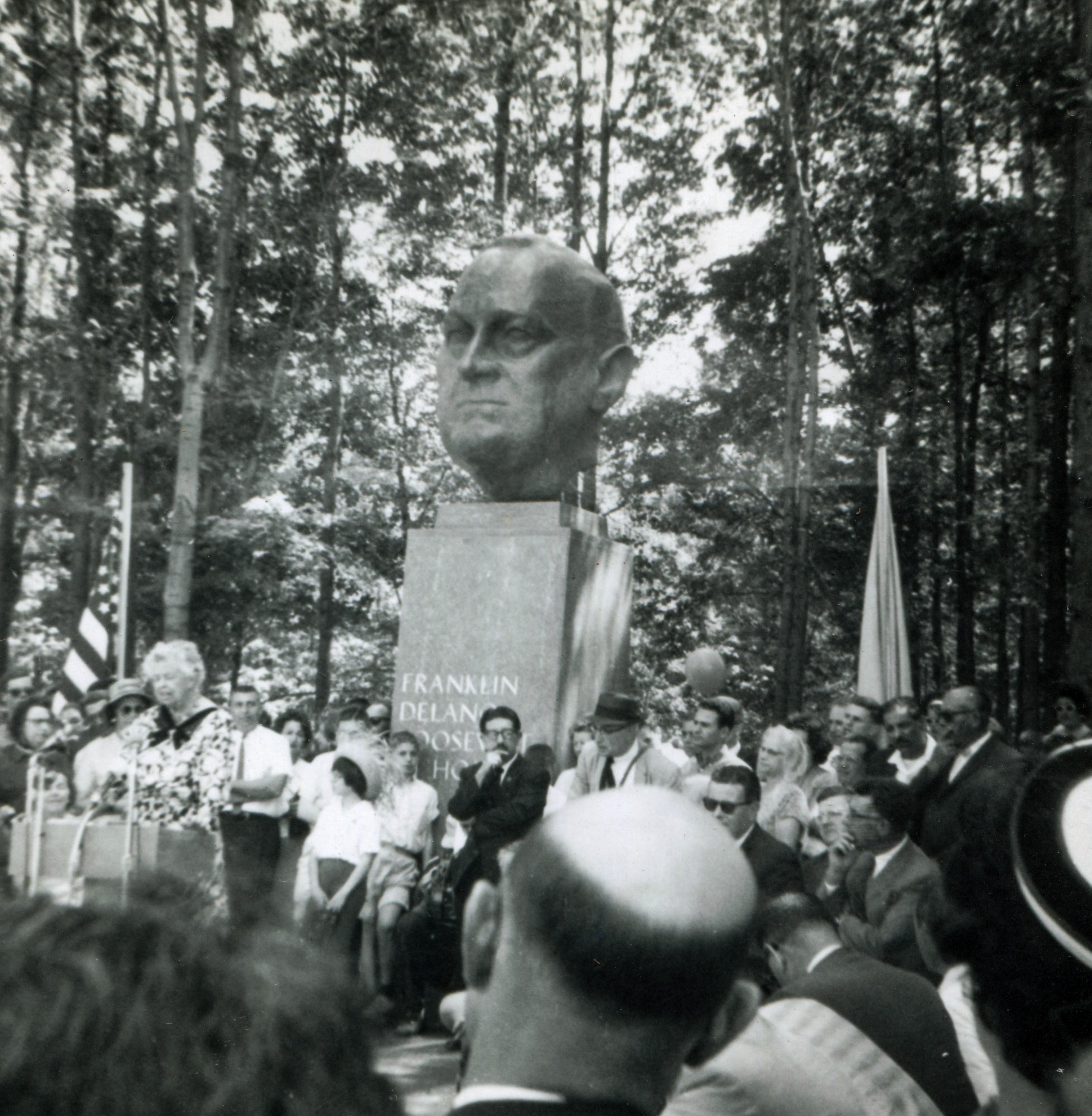
But in order to create lasting change, Democrats need a broader vision. They need a set of principles that inspire people to form and sustain a movement that unites the many disparate groups pushing specific programs and policies. That broader vision should be something like the economic security message FDR proposed in his second inaugural address. “We must find practical controls over blind economic forces and blindly selfish men,” he said. It could mirror his four freedoms speech issued on the eve of WWII, which included freedom of speech and expression, freedom of worship, freedom from want, and freedom from fear.
I must admit I am stumped when I try to articulate the principles that will inspire people to build a unified, mass movement that calls for:
* Guaranteed economic, social and personal security (universal adequate pensions, guaranteed annual income, universal and affordable health care coverage, family leave and daycare, the right to abortion and reproductive health services, safe communities with no gun violence);
* A return to legality with deference to democratic norms in governance, and an end to money’s domination of politics;
* An end to the proliferation of greenhouse gas emissions that cause global warming, and a preserved environment;
* Equal justice and opportunity for all people, no matter their race, gender, age, physical limitations or sexual orientation;
* Turning the U.S. into a force for peace by putting an end to nuclear weapons and withdrawing support from authoritarian regimes; and
* Becoming a leader in the fight against global disease, poverty and hunger.
If history teaches us anything, it is that only movements, united around basic principles and active over long periods of time, are capable of generating the demands for change that politicians cannot ignore or deflect. It is important to elect leaders who offer verbal support for progressive programs. But given the political realities of a divided nation, those elected leaders will not be able to achieve significant change without a movement pushing those principles forward and convincing a majority of Americans of their wisdom.
As we approach the 250th anniversary of the nation’s founding, I invite my readers, most of whom will probably be averting their eyes from the Trump regime’s mass spectacles, to suggest what should go into a four freedoms-style speech for the rest of the 21st century. Put them in the comments section or write to me personally, and I will later elevate them through a separate blog post.
Thanks for reading GoozNews! This post is public so feel free to share it.
No posts
Comments
Nothing yet. Say the first thing.
Sign in to join the conversation.