
None of this is financial advice. Do your own research. By reading this newsletter, you acknowledge and accept the terms and conditions outlined in our disclaimer.
GM Investors
Bitcoin continues to consolidate on the weekly chart near $64,000–$65,000 with RSI printing lower highs. Strategy’s recent sales and the Clarity Act’s delayed timeline have produced almost no lasting downside. Bad news has stopped moving the market.
The real driver has shifted. Crypto-native catalysts no longer set the tone. The market is taking its cues from the AI capital expenditure surge and the settlement rails that AI agents require. Nvidia has organized more than $500 billion in third-party financing with BlackRock, Blackstone, Goldman Sachs, and peers to treat AI compute as an investable asset class.
That spending is routing directly through crypto infrastructure. Stablecoins, high-throughput settlement layers, and agent payment standards such as x402 sit closer to the actual dollars than most pure software equities. Our desk reads this as a structural re-rating of crypto rails rather than another sentiment cycle. Here’s what our desk is watching.
$30B ARR. Anthropic overtook OpenAI in April. Not hype. Revenue.
Rain Trade: Anthropic 64% | OpenAI 11.5% | Google 11%
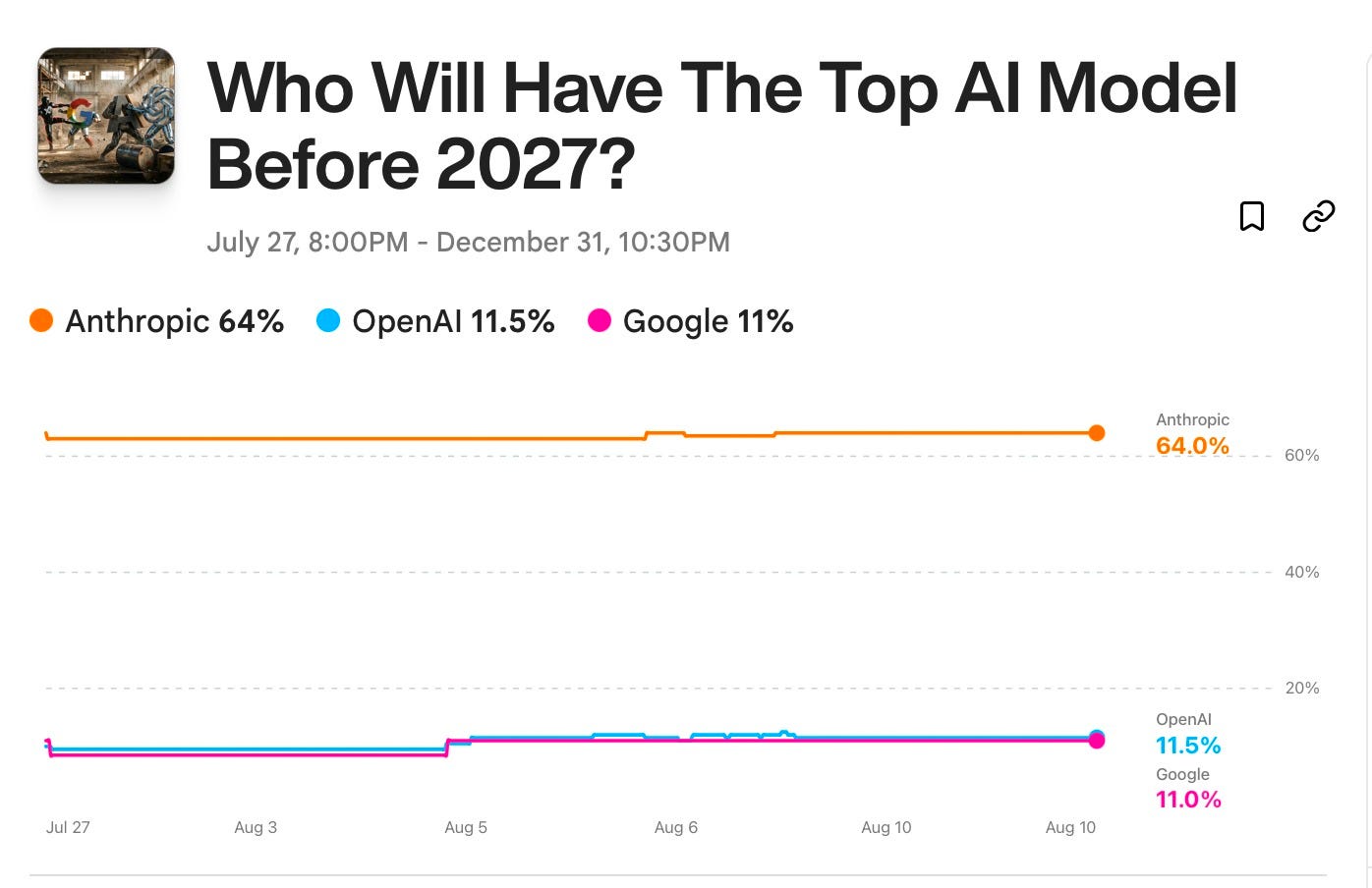
Claude FABLE 5 leads coding at 80.8% SWE-bench. 1M context standard. Enterprises switching for regulated work.
OpenAI at 11.5%? GPT-5.5 landed, but revenue doesn’t lie. Google at 11%? Owns compute, lacks narrative.
This market asks, Does revenue predict model quality, or the other way around?
NVIDIA just organized a staggering $500 billion in third-party financing to build out compute. Jensen Huang and Larry Fink are treating AI compute as an entirely new investable asset class. This deal proves the AI story stopped being a simple narrative. It has rapidly escalated into a massive global balance sheet event.
The urgency is palpable across the entire tech sector. Fink explicitly stated they need to raise money as fast as they can. Our research shows hyperscaler capex expectations for 2026 have exploded from $460 billion to $789 billion in just six months. Alphabet alone just pushed its 2026 capex guidance to an astronomical $205 billion.
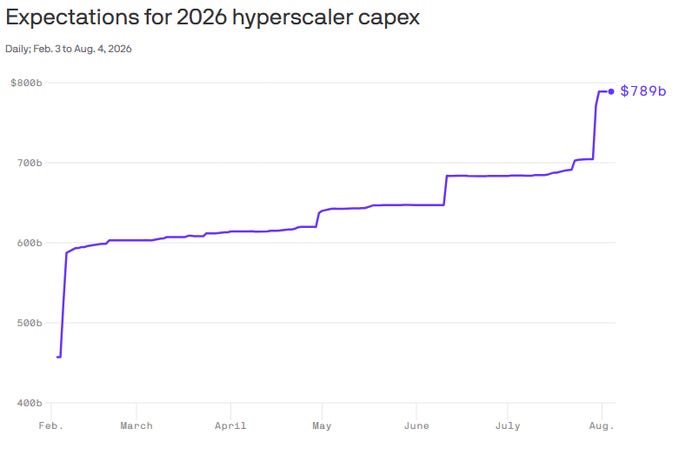
This massive capital flood is structurally altering the macroeconomic landscape. S&P 500 earnings are now projected to surge 32% in 2026. This is more than double the 15% growth that analysts expected at the start of the year. Global investment in AI is fully on track to exceed $1 trillion by 2026.
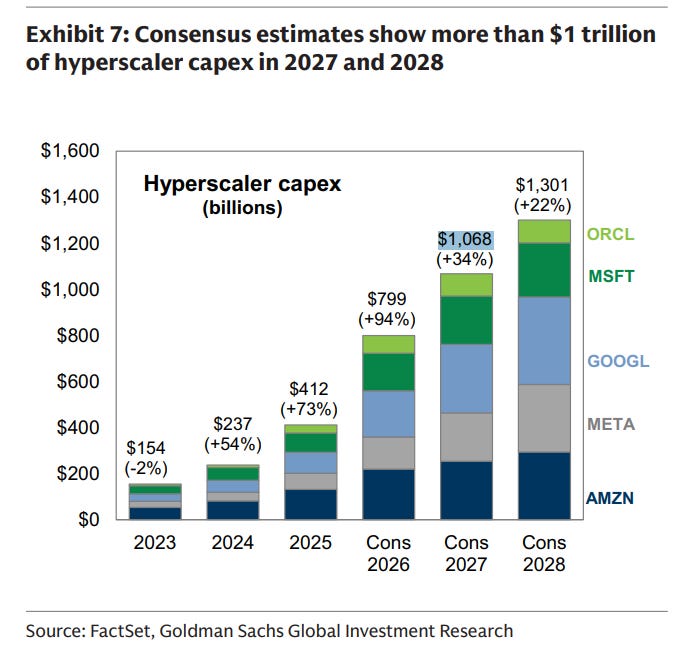
Many argue that US would already be in a recession without this aggressive spending. This infrastructure boom acts as a massive economic stimulus. It effectively dwarfs the historical railroad boom, currently sitting at roughly 2.8% of GDP and actively rising.
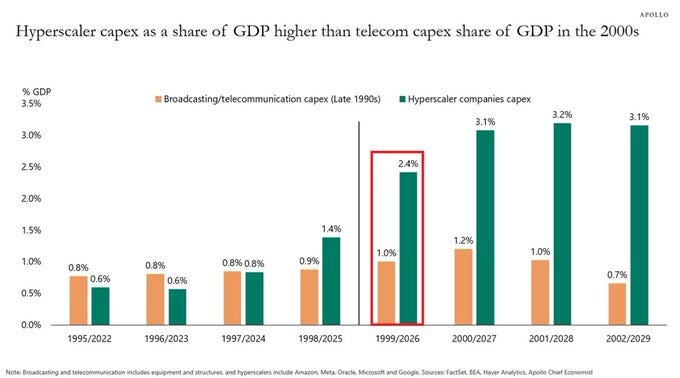
Bears often compare this to the dot-com era, which notoriously priced companies that had absolutely nothing to sell for years. However, that comparison is fundamentally flawed according to our desk. This time around, companies are making enough earnings immediately through their AI operations.
The foundational spending is completely reshaping the global economy. As hyperscalers expand, this capex flows directly into crypto to fund decentralized compute networks, stablecoin liquidity, and agentic payment rails. AI being a megatrend takes absolutely nothing away from crypto, it makes on-chain architecture the ultimate backend foundation.
The sheer scale of this AI buildout is actively shifting the fundamental mechanics of the internet. More than half of the traffic crossing Cloudflare’s network last quarter came directly from machines, not humans. This monumental crossover arrived months ahead of the company’s own internal forecasts. Elon Musk recently noted similar massive spikes in AI agent traffic across his networks.
This structural shift in digital traffic is completely unprecedented in internet history. Our desk is tracking exactly how staggering this exponential growth really is right now:
Daily AI agent requests have skyrocketed by more than 1,700% in a single year.
Cloudflare’s CEO initially expected non-human traffic to surpass human traffic much later, specifically in the second half of 2027.
In May 2026, the data team confirmed that non-human traffic had officially passed human traffic online.
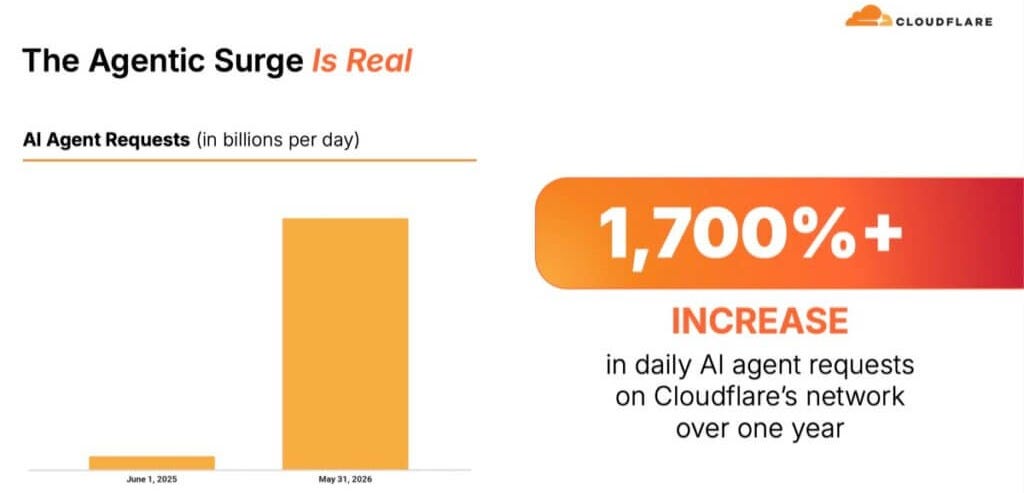
If current trends hold, non-human traffic will outpace human traffic by 1,000 times within five short years.
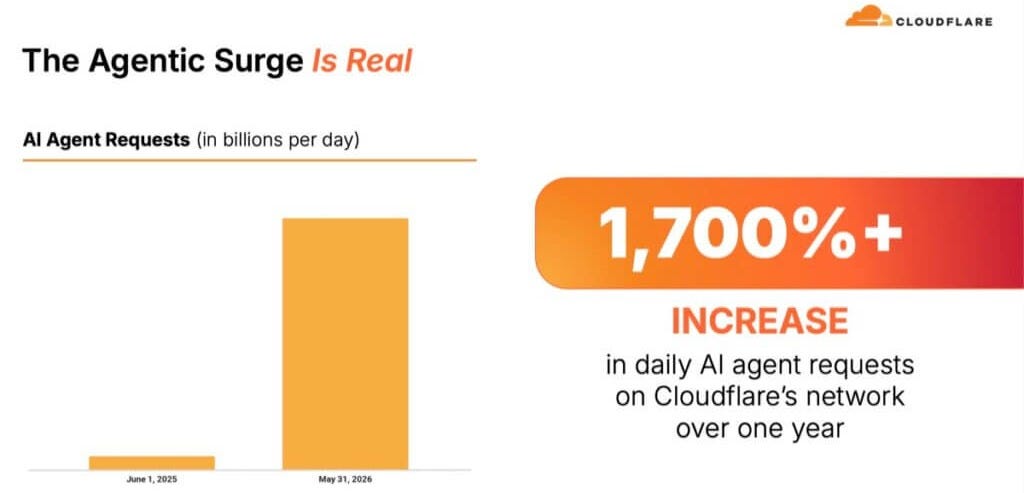
This is not a hypothetical future problem; it is happening right now across multiple networks. Cloudflare is even announcing programmable wallets specifically designed for the agentic internet. The pace of model development is accelerating dramatically across the globe as competition intensifies.
OpenRouter CEO Alex Temiz noted that Chinese labs are actively outpacing US competitors right now. In July alone, they launched 70 new models, which averages out to about one model every 10 hours. With 84% of humans having never used AI, there is still a massive untapped market left to capture. Ultimately, this on-chain data proves these autonomous agents need native digital environments to interact.
These autonomous entities cannot rely on legacy financial rails for high-frequency interactions. Traditional systems are too slow, heavily fragmented, and completely misaligned with automated machine operations. This is exactly why the foundational architecture of the internet is currently being rewritten in real-time.
AI agents automate digital commerce, and stablecoins are their native settlement rails. Coinbase built the x402 protocol as the primary bridge, enabling instant, autonomous stablecoin payments for AI agents. It directly integrates Chainlink to feed real-time off-chain data to these machine systems.
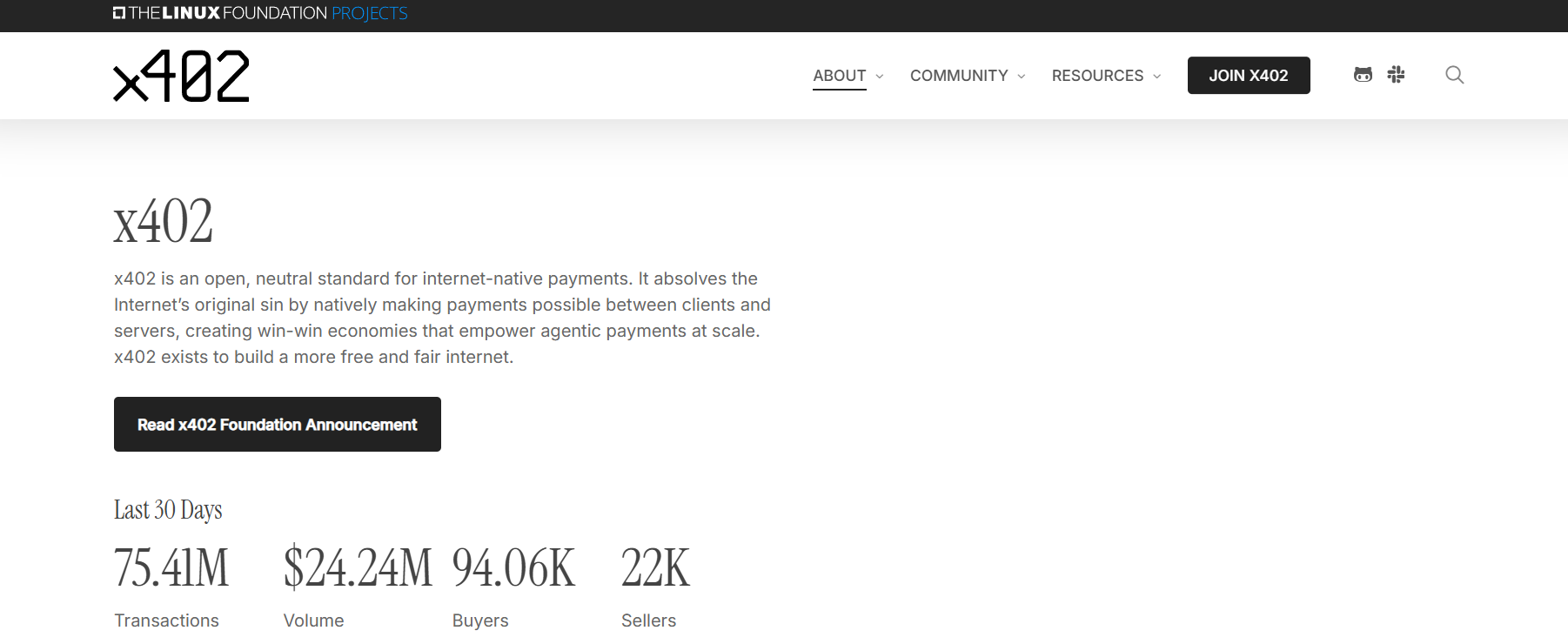
Google went a layer higher by introducing AP2, an authorization layer sitting beneath traditional cards and crypto rails. Whichever payment rail wins, the underlying permission slip belongs to Google. Meanwhile, stablecoin issuers like Circle capture baseline float on reserves regardless of which chain or standard wins.
Circle is building ARC, a Layer-1 launching in September 2026 designed specifically for agents. ARC uses native stablecoin gas fees, meaning every agentic payment is denominated in Circle liabilities.
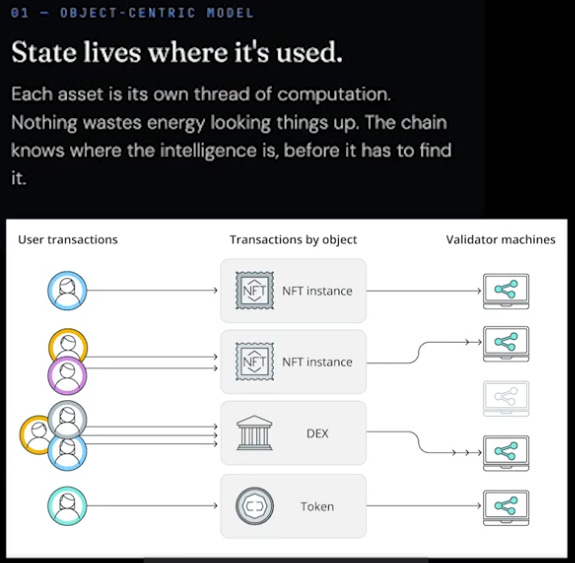
High-throughput altcoins are actively battling for this influx of machine volume. Sui targets over 100 million transactions per second using an object-centric consensus mechanism. Solana joined Mastercard’s Agent Pay for Machines and built an agent town square using USDC via x402.
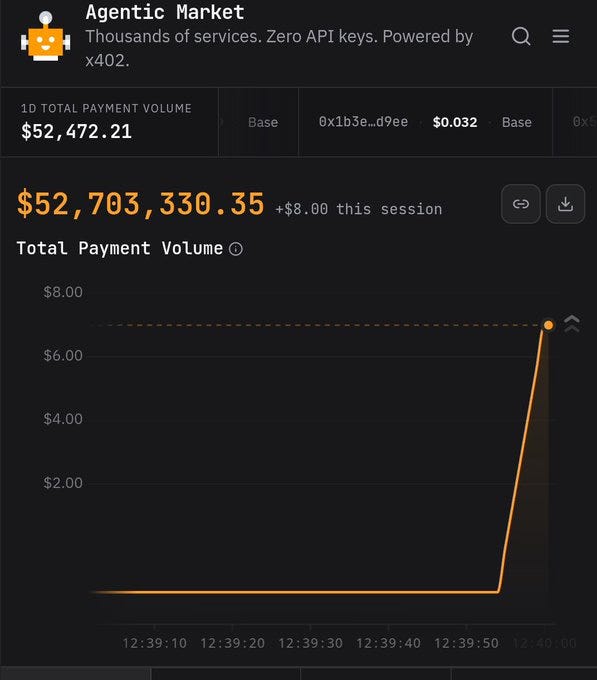
Liquidity venues are capturing massive value from this structural shift. Hyperliquid’s fully on-chain central limit order book is inherently agent-friendly. Virtuals Protocol functions as a vital launchpad, handling an impressive 47.3% of all agentic transactions on Base.
Our desk treats crypto infrastructure as a direct beneficiary of AI capex rather than a speculative asset class. Traditional crypto market analysis models and liquidity cycles are completely outdated. Altcoins, stablecoin issuers, and payment layers sit closer to real AI spending than most equities.
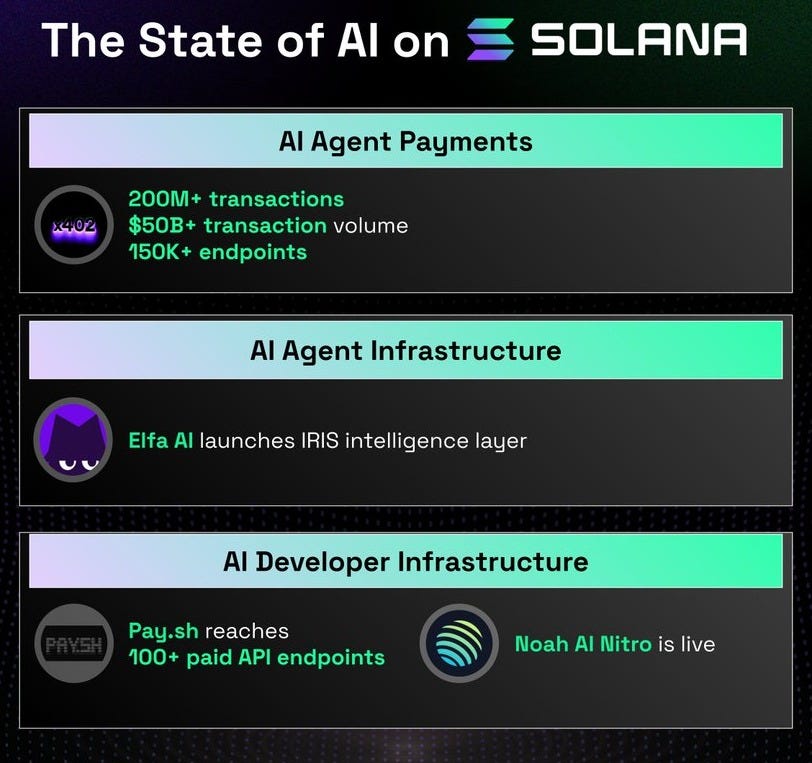
The core risk is pricing in agent transaction volumes that take years to materialize. We must track whether real usage numbers keep scaling upward. Solana’s 200 million weekly transactions and Virtuals’ Base share cannot stall once financing headlines fade. The machines are here, and they brought programmable wallets.
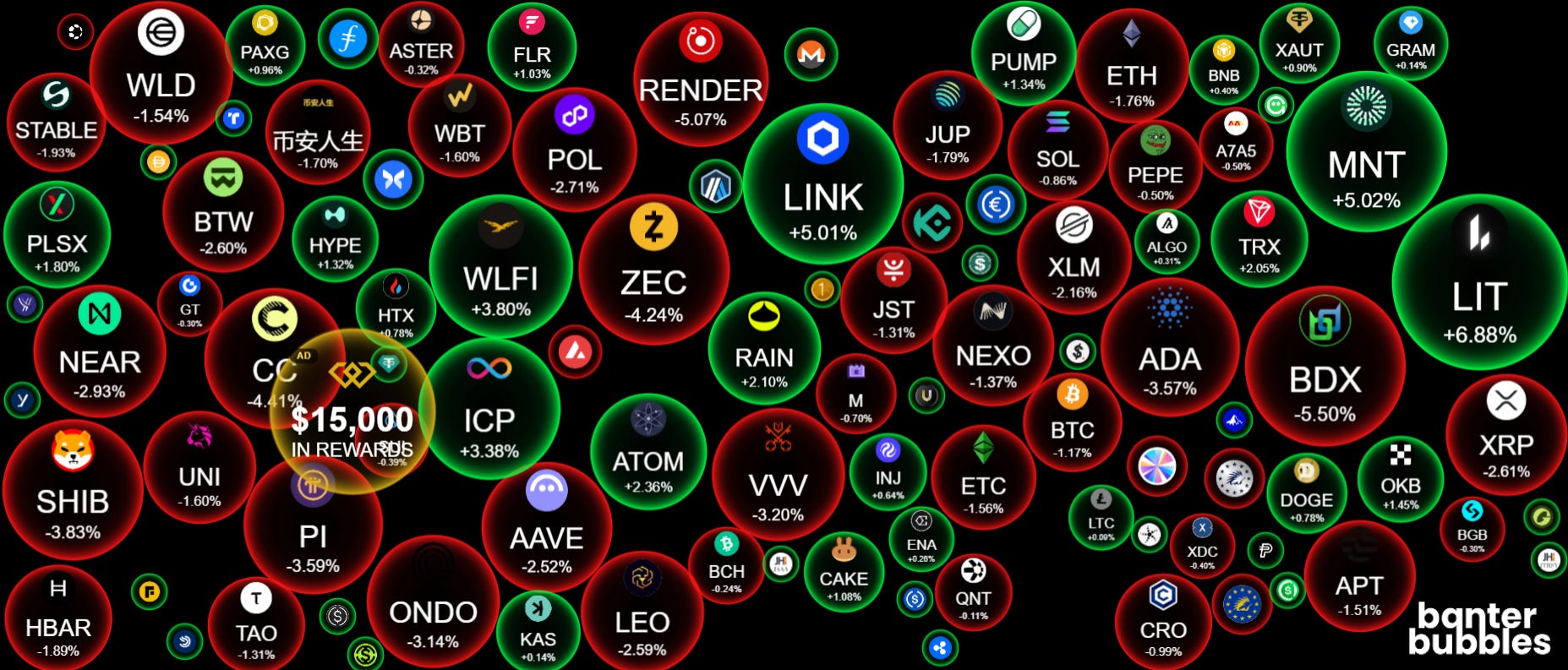
The crypto market is showing a mixed sentiment today, characterized by selective strength in altcoins like LINK and LIT alongside widespread red across major tokens. Overall, the balanced mix of green and red bubbles points to a cautious, sideways trading session across the board.

Forget waiting around for Fed policy cuts or chasing exhausted, sentiment-driven altcoins. Our research sees a massive structural regime shift as $789 billion in hyperscaler capex fundamentally rewrites our crypto market analysis. Macro capital is bypassing speculative retail hype and flowing directly into the on-chain rails powering autonomous machine commerce.
Our desk is positioning decisively in the foundational picks and shovels backing agentic settlement. We are accumulating high-throughput L1s like Sui, liquidity venues like Hyperliquid, and payment protocols like x402. With over 50% of global internet traffic now non-human, networks actively capturing real machine transactions will win by default.
Dot-com skeptics will warn of structural overhype, but on-chain data confirms these AI agents are already executing millions of transactions weekly. This isn’t a distant cycle thesis; it is an active macro trading event re-pricing crypto infrastructure right now. Position for the machines before the crowd realizes who is actually using the rails.
In an environment where political noise is high but actual liquidity and conviction remain low, having the right execution tools matters more than ever. That’s why we’ve partnered with Rain Trade, a platform built for traders who need speed, precision, and clean betting odds in volatile conditions like these.

None of this is financial advice.
Do your own research.
As a valued subscriber to Good Morning Crypto, you are part of the wider Crypto Banter ecosystem - and that means you get first access to something we’ve been building behind the scenes. We’re thrilled to announce the launch of The Insider, Crypto Banter’s brand new publication designed to give our community a deeper, closer look at everything happening across our network. As an existing Good Morning Crypto reader, you’ve been added to The Insider as part of our founding subscriber rollout. You’ll continue to receive Good Morning Crypto as normal - The Insider is an exciting addition to your inbox, not a replacement.
Comments
Nothing yet. Say the first thing.
Sign in to join the conversation.