
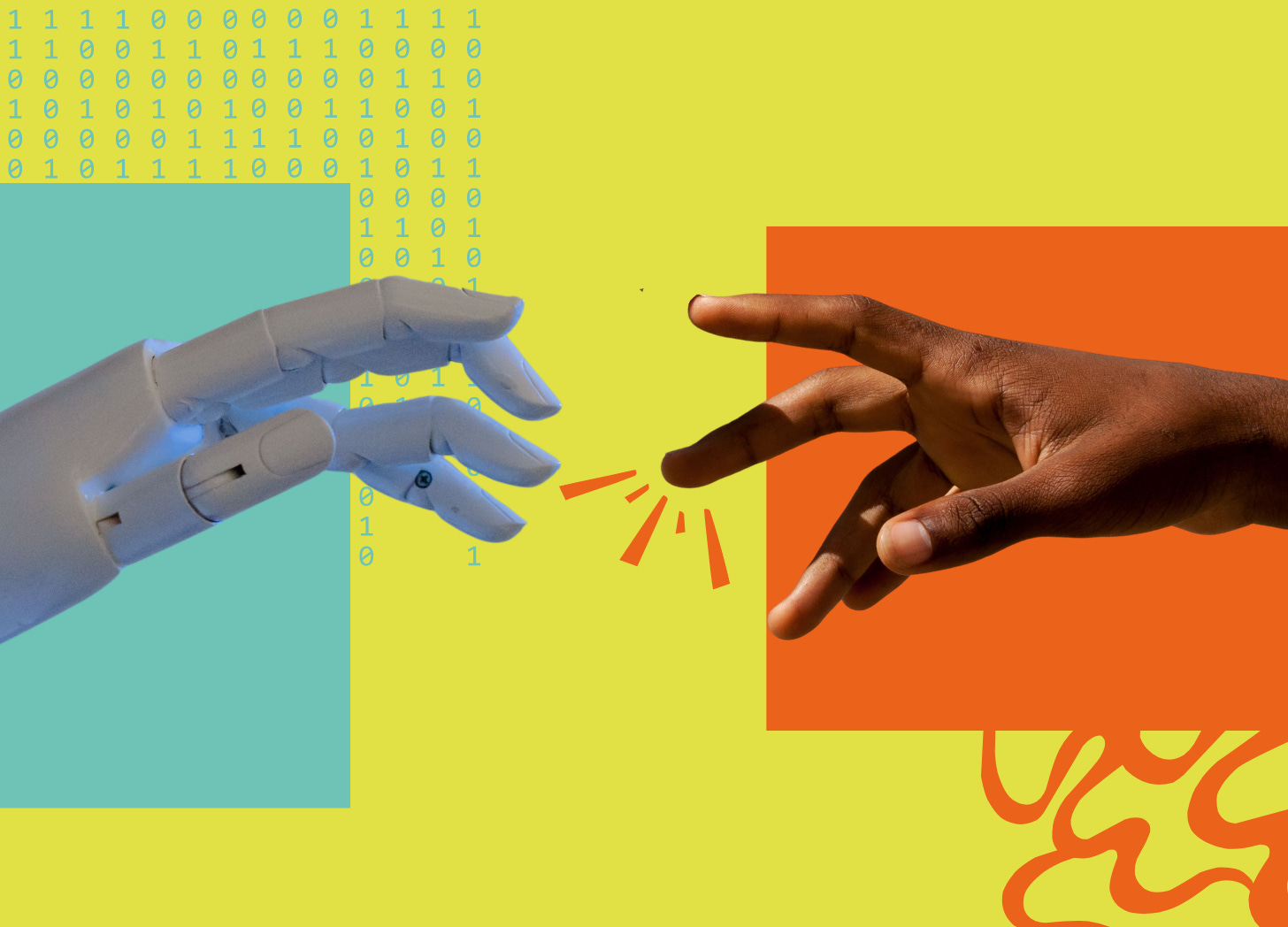
In early 2025, Microsoft called Artificial Intelligence (AI) the ‘electricity of our age’ and meant it as a compliment. A compelling metaphor for something that holds the power to change how we work, how cities are built, how we understand time and distance; something that has already started reshaping, well, everything.
People have been using AI for far longer than we realise. AI is in your GPS that guides you to the newest cafe in town, in the autocorrect that insists you spell “nangi” as “Nancy.” While traditional AI analyses data to find patterns, generative AI (gen AI) is actually what people are referring to in today’s zeitgeist. Gen AI scrapes the internet and builds on existing data to find answers to your ChatGPT prompt, “10 Cutting-edge Campaign Strategies,” using advanced machine learning. (Did I mention data that already exists?)
Over the past three years, OpenAI’s ChatGPT and Anthropic’s Claude have been adopted at an unprecedented pace by millions of non-experts like you and me, making these AI companies a lot of money. By the end of February, OpenAI had reportedly made above $25 billion in annualized revenue, while Anthropic’s revenue run rate had crossed $30 billion in early April. (Forbes, AI 50) With the success of this shiny new technology, everyone wants a piece of the pie. Today, we are still early enough in the age of Gen AI that the systems, habits, and assumptions being built right now will define what this technology becomes and for whom. So

When Representative Alexandria Ocasio-Cortez (AOC) went viral recently for bringing a jar of murky brown well water to an EPA hearing, she accused Meta’s massive data center construction in Morgan County, Georgia, of contributing to the contamination of local drinking water.
So what does this really mean? It means that the infrastructure that supports AI is extractive by design.
In 2025, AI systems consumed an estimated 765 billion liters of water: more than the entire global consumption of bottled water that year.
Asking ChatGPT between ten and fifty questions uses roughly the equivalent of a 500ml bottle. (Patterns by Alex de Vries-Gao, 2025)
AI might be an invisible, even abstract concept to most of us, but it is one of the most resource-intensive technologies ever created. While we may enjoy the small pleasures of generating the Studio Ghibli illustrations of ourselves in seconds, behind the scenes sits a vast and demanding physical system that makes it possible: data centers, GPU clusters, cooling systems, high-bandwidth networks, and global supply chains of rare earth minerals and semiconductors.
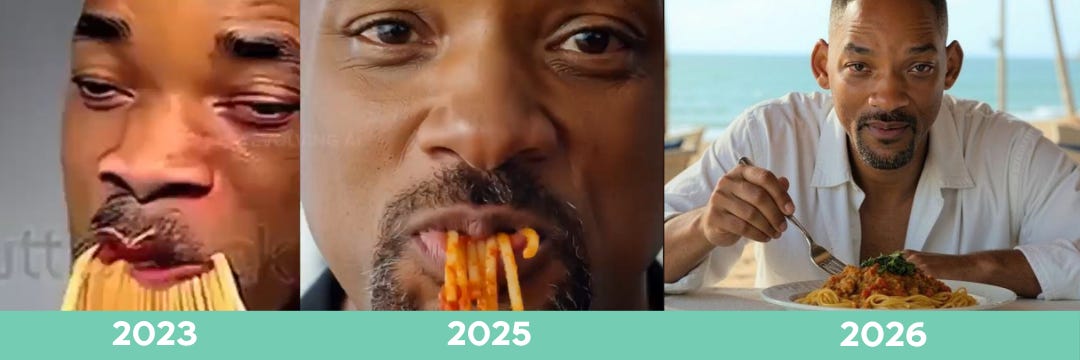
The most uncanny example many use to talk about the rapid advances of AI is the 2023 disfigured deepfake of Will Smith compared to the hyper-realistic, undetectable version of 2026. The truth is, we scroll past way more AI-generated content than human-made content in today’s feed. We just don’t realise it because that’s how far we’ve come from six-fingered AI-generated humans in Nano Banana images in just a wink of time.
We are now living in an age where the dominance of influencer marketing itself is being challenged by non-human AI influencers and AI musicians with a strikingly similar resemblance to existing public figures, with major platforms like Meta and Spotify seemingly having no control over the spawn of such entities.
It’s not just about having to remove em dashes and the word “delve” from this article anymore to avoid AI allegations that should concern you (God forbid a girl knows her English!); it’s that the infrastructure required for advanced Gen AI to scale, expand, and ironically, sustain is rapidly evolving, backed by investments worth tens of billions of dollars. To cater to this insatiable demand, AI data center initiatives are sprouting across Europe and are projected to expand towards the Middle East and even Sri Lanka, according to the Deputy Minister of Digital Economy.
But the hunger doesn’t stop at land, water, and energy. To build AI models, tech companies need something else entirely: the accumulated creative output of human civilisation. Your writing. Your music. Your art. Without asking.

In the 2025 Gotham Awards stage, esteemed Hollywood Director Guillermo del Toro made a bold statement about AI that may have included profanity, following which the Oscars imposed a ban on awards for Gen-AI-based acting and writing. Similarly, Hayao Miyazaki, of the beloved Japanese animation studio Studio Ghibli, described AI as “an insult to life itself.” His views echo the sentiments of many creatives around the world, who argue that the value of human artistry and empathy in the creative process is something that technology simply cannot replicate.
Whatever your stance may be on the co-existence between technology and human creativity, Gen AI, as it currently stands, objectively blurs the line between ethics of authorship, infringement, and ownership of a work.
Every AI model in existence was trained on existing human creativity and intellectual output: writing, art, music, code, conversation, and academic research. The entire accumulated commons of human expression online has become, without credit, negotiation, or compensation, the raw material for this new industry, causing major class-action lawsuits and IP infringement claims filed by authors, artists, and even news outlets.
Global IP guardians like the World Intellectual Property Organization (WIPO) are actively working to build better, more inclusive, and transparent frameworks that balance innovation and protection of human creators. At the cusp of this new world order, what would this mean for businesses using and producing Gen AI models?
Behind the sleek interfaces of the world’s most celebrated AI tools is a workforce most users will never see and most companies would rather not discuss.
AI systems do not train themselves. According to the International Labour Organisation, the median earnings of crowdworkers performing AI-related tasks in developing countries sit at approximately $2 per hour. A 2022 study found that roughly 34% of all time spent on these platforms is unpaid.
Some of the extraction is more subtle. There is growing speculation that major tech platforms have quietly tuned their algorithms to surface trends that help AI models learn what they still struggle with: human emotion and speech. You may have scrolled past the viral #VoiceActingChallenge or the “Say it different ways” trend on TikTok and Instagram Reels, where people perform a phrase in different emotional registers. Clara Jane Fulks, Founder and CEO of North Star Strategies, argues these trends are being actively amplified by the algorithm — not because they are entertaining, but because millions of people performing them for free is unpaid emotional intelligence training for AI.
Conspiracy? Maybe. But given everything else we now know about how these models are built, it is not exactly hard to believe.
The AI boom did not happen by accident, nor was it the result of technological necessity. It happened through a series of deliberate decisions: about what to scale, what to measure, what to ignore, and who to leave behind. Those choices were made with efficiency and productivity being the only factors in mind in the early years of an industry that is now reshaping everything.
Which raises a question worth asking: does it have to be this way? If every prompt extracts the Earth’s resources, exploits human labour and takes from creative agency without compensation, does that make the way AI is currently built “inevitable?”
Any design choice can be taken apart, rethought, and rebuilt if enough people are willing to name what is wrong with the current blueprint and imagine a different one.
We have been here before. About 250 years ago, during the Industrial Revolution, we built a global civilisation on coal and fossil fuels because they were powerful, profitable, and available.
The warning signs came early.
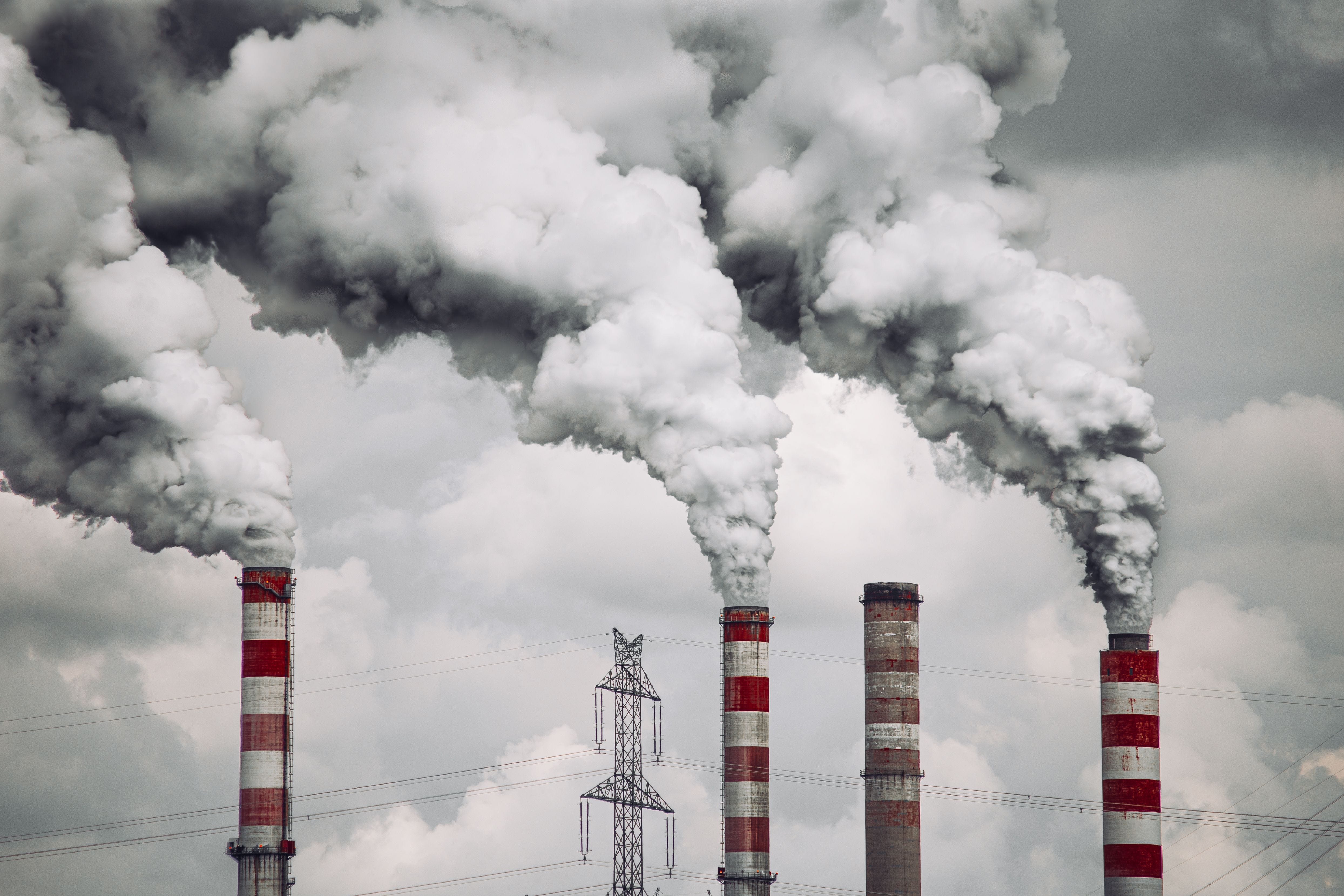
As far back as 1661, writers published works referring to London’s air quality as “hellish and dismal cloud of sea-coal.” By the 1830s, social reformers were sounding the alarm about the devastating impacts of coal pollution on working-class communities. We saw it. We kept going anyway. By the time we developed the knowledge and technology for renewable energy, we were already so deeply locked into this old infrastructure economically, politically, and physically that the switch became one of the hardest collective actions in human history; a shift that’s still taking place, slowly, against enormous resistance from industries that profit from keeping things exactly as they are.
The first step towards a regenerative future with AI is refusing to make the same mistake twice: by simply refusing the idea that the way things are built now is the only way they could be built. We are still early enough in this boom for different choices to be possible. But the window to get ahead of them is narrowing, and it closes faster than we think.

At Good Life X, we believe that any organisation that is regenerative by design will thrive.
What would it look like if an AI company were designed the way a regenerative business is designed, where profit and purpose are not a trade-off, where value flows to the most vulnerable rather than away from them, where the system gives back more than it takes?
In Part II of ‘The Age of Extractive Intelligence’, we imagine the answer to this question against the THRIVE Canvas: Good Life X’s Regenerative and Inclusive Business Model Canvas, our roadmap for businesses ready to make the transition from extraction to regeneration.
By Dinithi Gunasekera
New here? Good Life X designs regenerative solutions for South Asia’s transition from extractive to thriving systems. We have worked with over 200 businesses and entrepreneurs across food, agriculture, textiles, wellness, technology, and tourism to build models where profit and purpose grow together - like nature intended.
Comments
Nothing yet. Say the first thing.
Sign in to join the conversation.