
Welcome new readers! This is Good Govermont, a newsletter tracking developments in Vermont climate, land-use and environmental policy. As always, nothing in this newsletter is legal advice.
Vermont Governor Phil Scott signaled last week that he might veto a law creating a new state program to encourage the people who keep roads and sidewalks clear of ice and snow to use less salt as they do so. The Governor mentioned two different critiques that sort of got mixed together in his answer and reporting. This post seeks to untangle them and explain the proposed law.
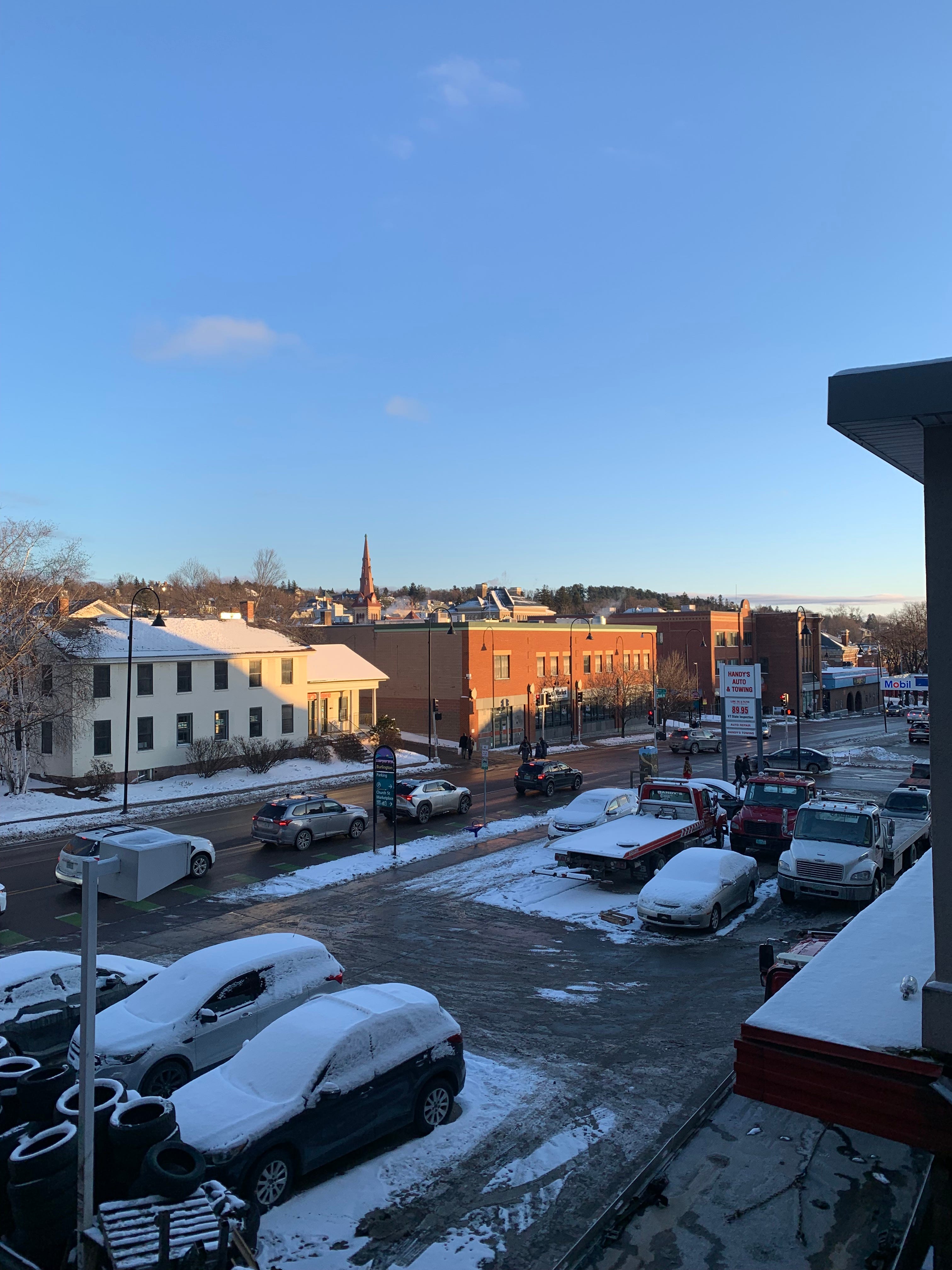
By melting ice on roads and sidewalks, road salt keeps all of us safer. But at the scale currently used, it’s contributing to excessive chloride levels in some state waters, including tributaries flowing to Lake Champlain, causing harm to wildlife and corroding bridges, pipes and cars, creating additional public and private costs. This problem has been understood for a long time and previous legislative attempts to address it fizzled.
To try to achieve a better balance, the Vermont legislature passed a law earlier this month that would create voluntary certification programs for both private parties who use a lot of road salt—on parking lots or sidewalks of housing or commercial developments, say—and for cities and towns. The programs would train participants to use road salt more efficiently and require them to keep detailed records, hopefully reducing the problem of chloride contamination.
Anticipating one fear that could deter participation—that if a road salt “applicator,” to use the fancy term, uses less salt and someone slips or has a road accident, they could be sued—the law creates an “affirmative defense” that certified applicators could raise in such a lawsuit. It’s not a get-out-of-jail-free card by any means, but it does reduce the liability risk for such parties.
In tackling the excess chloride problem, the legislature could have gone with a “command and control” approach, limiting the amount of road salt that could be used per square mile, or taxing it to encourage more efficient usage. Instead, it created the sort of voluntary, inform-and-incentivize program Gov. Scott has endorsed as a means of dealing with other environmental issues.
But Scott still publicly opposed the law at a press conference last week, saying it likely doesn’t go far enough to shield towns and private salt applicators from liability.
At one point in his answer, while discussing his own experience as a plow operator, Gov. Scott suggested overall “tort reform” should be coupled with the legislation—meaning making it harder for plaintiffs to sue any entity responsible for maintaining roads or sidewalks. But later on, he referred to specifically those entities that would choose to use less salt under the new program taking on new risk (including inaccurately suggesting at one point that they would be “forced to not use salt.”).
Mixing these disparate concerns—existing tort liability on the one hand and specific protections for those who choose to less salt on the other—was also reflected in some reporting on the measure, such as Vermont Public’s, which attributed to Scott the concern that “the measure could expose municipalities and private companies to heightened legal risks.”
Let’s be clear—the law as written wouldn’t itself expose anybody to a heightened risk. People or towns who choose to participate in the certification program set up under the law might conceivably face more risk, though that risk will be mitigated to some degree via the new affirmative legal defense. If the critique is that that new affirmative defense isn’t robust enough—or, as the Governor suggested, that tort reform for ordinary slip-and-falls ought to be packaged with this legislation—that should be made clear, so that any of those policy ideas can be debated on their merits. But saying a law doesn’t fix an existing “problem” (tort liability for slip and falls) is (or at least ought to be) completely different from saying that the law created or worsened that problem.
The second story this week is very insider baseball-y and meta—the story of pursuing a non-story. I include it here to highlight some of the interesting things I learned and also for anyone interested in a peek behind the curtain.
Last week, in response to a request from the regional power grid operator, but with little debate or testimony, a Vermont House committee agreed to amend the draft plug-in solar legislation that passed the Senate and now sits before it.
The change will effectively require any plug-in photovoltaic (PV) system sold in the state to contain an advanced, or smart microinverter. These inverters have all sorts of cool capabilities we’ll get into, but they are understandably more expensive than less sophisticated models.
It had all the makings of a great story—a little understood or noticed legislative change whose significance depends on a web of complicated facts, yet was coming right at the very last minute (Committee Chair Kathleen James told me she hopes the committee will vote the bill out this week)
The change is tough to decipher, because it stems from adding another technical standard—”IEEE 1547.2018” if you’re a fan of alpha-numeric soup—to the list that plug-in solar devices must be certified to in Vermont to qualify for permitting exemptions, chiefly Underwriter Laboratories (UL) 3700. (What made the change so hard to parse is that UL 3700 cross-references the IEEE standard, and its predecessor, in several places).
I pored through those standards and commentaries on them, received emailed responses to some of my questions from the grid operator, ISO-New England, and interviewed Rep. James and Mads Almassalkhi, a professor of electrical engineering at the University of Vermont and expert in grid-load interfaces.
This research showed that there is a real change here, because without this amendment, plug-in PV systems not capable of exporting power to the grid (which is an option both technologically and legally) would not need to include an advanced inverter.
These advanced inverters have several incredible capabilities. Most relevant to the concerns ISO-NE voiced is the ability to “ride through” small fluctuations in the voltage or frequency of the electrical current coming off the grid—meaning the inverter would not shut off the PV system in response to such minor changes (even though it would turn the system off in response to a power outage). The inverters also must be able to change the voltage and frequency of the electrical current produced by the solar panels based on grid conditions—and even to absorb some excess power from the electric grid. In other words, they can actively help prevent and heal minor disturbances on the grid while keeping the lights on. Pretty cool, right?
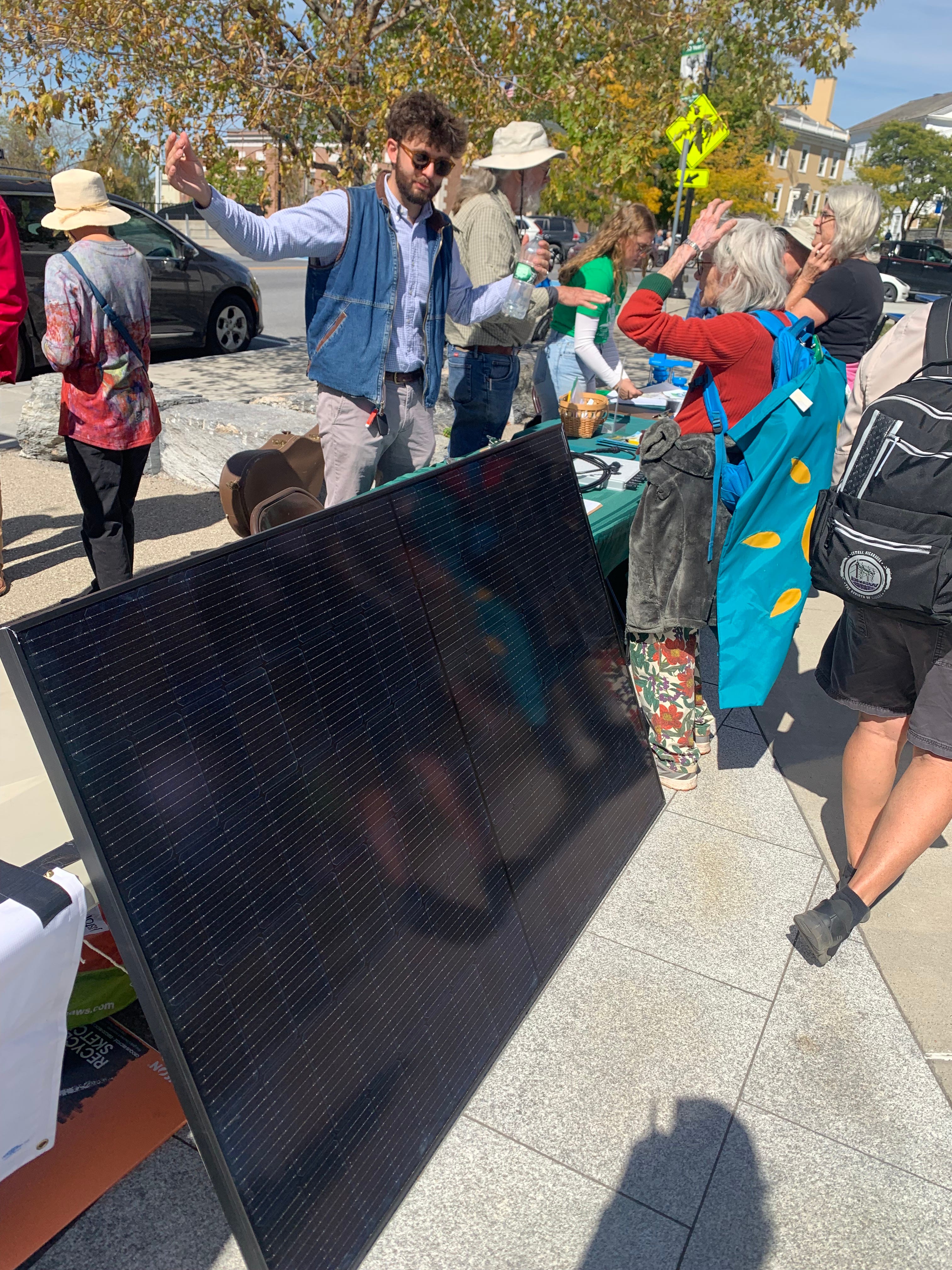
Requiring all these advanced features for PV systems that could be as small as 400 watts seemed, to borrow a term from transmission debates, potentially like “gold-plating”—requiring systems to have fancier, more expensive equipment than they truly needed—especially with plug-in solar still in its infancy. Some of the concerns ISO-NE was voicing would only plausibly appear once large numbers of these systems are installed. And other states who have passed laws to facilitate plug-in solar (Virginia and Maine have joined Utah since our last coverage) have not included this requirement (A spokesperson for ISO-NE told me that by the time they became aware of this potential issue, Maine’s law had already passed).
Early on in my reporting, I did try to get a sense of what practical effect this change would have on consumers—namely how much more expensive it would make a plug-in PV system. I found figures to suggest that for much larger inverters—those installed with rooftop or ground-mounted solar arrays—the smart options could be upwards of a thousand dollars more expensive than their older counterparts. But because the technologies for plug-in solar are so new, and because I was still getting my head around the fact that this one requirement was really what the legislative change amounted to, I didn’t get very far looking for how much more expensive smart microinverters are.
Turns out you can find an advanced (UL 1741-SB certified) microinverter compatible with up to 1200 watts of power for about $250. That’s $250 total, not extra. This matches what Almassalkhi told me; he estimated the advanced inverters might be about 10% more expensive.
Every dollar counts, but clearly this one piece of technology won’t be what makes or breaks someone’s decision to get one of these systems.
One other implication of the change is that because it requires systems to be “installed and operated in accordance with” the IEEE standard, it arguably reinforces the requirement that a professional electrician handle installation. As I wrote before, however, that requirement is already baked into UL 3700, and therefore into the law as currently written, and responds to some real safety concerns with larger plug-in systems.
So, to sum up, although this amendment is meaningful, it is not likely to meaningfully impact consumers—and could prove beneficial if plug-in solar really takes off in Vermont. A stirring headline it is not.
Think I missed something? Please post it in the comments below! I’d love to be proven wrong and to have actually discovered a “real” story.
Thanks for reading Good Govermont! This post is public so feel free to share it.
No posts
Comments
Nothing yet. Say the first thing.
Sign in to join the conversation.