





This month has been one for the record books. We received 25 submissions and gave out 23 awards, both the highest we’ve ever seen in a single month, and we couldn’t be more delighted. It’s because these are schools in the thick of the end-of-year rush, finding a moment to pause and take stock of just how far they’ve come in embedding AI thoughtfully and responsibly into their setting. For many, it will have been a pleasant surprise to see how much progress they’ve made over the course of the school year.
And regardless of which level the award sits at, every single one of these is worth celebrating. In a school environment where time is precious and every initiative competes for attention, choosing to engage seriously with AI, to interrogate it, shape it, and get it right for your community, is no small commitment. These schools made that choice, and it shows.
None of this would be possible without our assessor team, who give their time and expertise generously and bring care and rigour to every submission they review. A record-breaking month for the AI Quality Mark is a record-breaking month for them too, and we are deeply grateful.
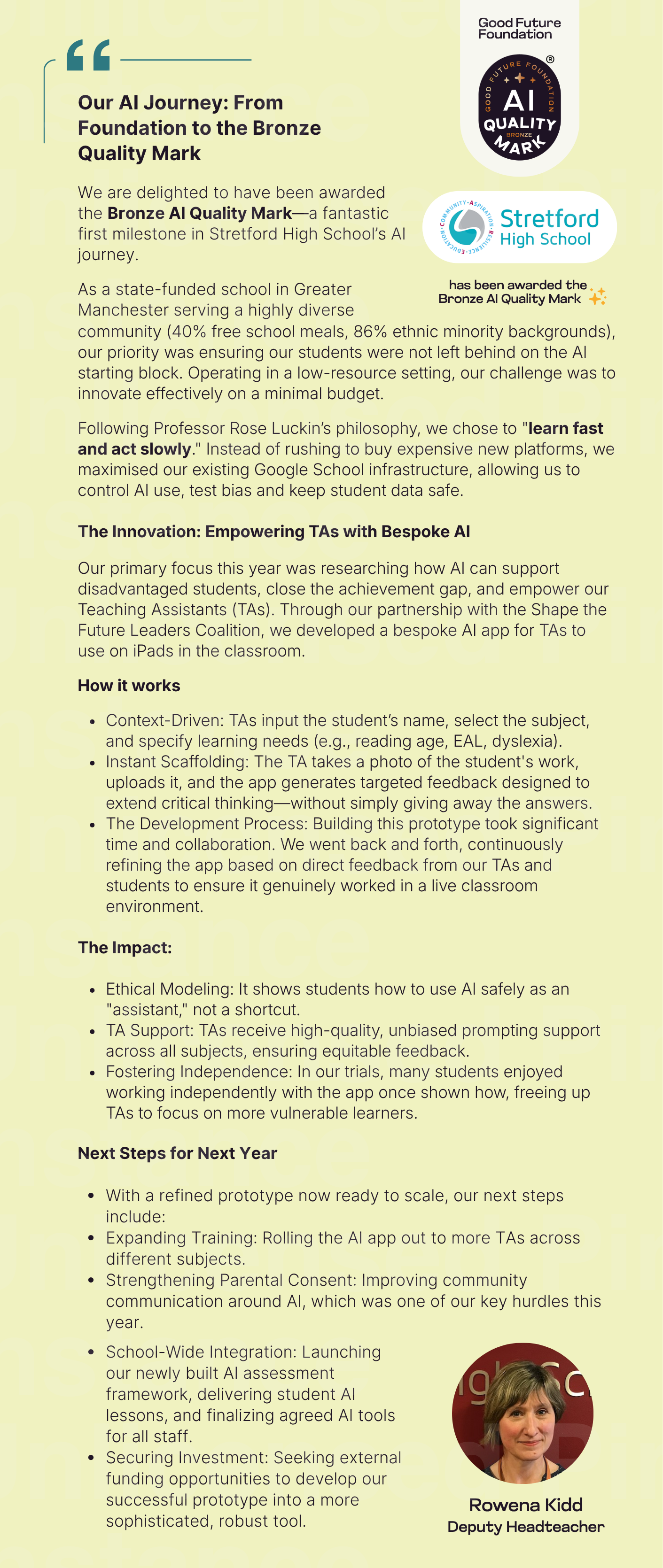
Congratulations to all 23 award recipients this month, including Cambridge School of Bucharest in Romania and Dwight School in South Korea:
Gold Award: Cambridge School of Bucharest
Silver Award: Benenden School, Tettenhall College, Mount Kelly
Bronze Award: Thinking Schools Academy Trust, Springhill Catholic Primary School, Stretford High School, Thwaites School, Copnor Primary School, Hamstead Hall Academy, Plymouth High School for Girls
Progress Award: Gaskell Primary School, St Francis Catholic Primary School, Dwight School Seoul, Crofty Education Trust, St Anne’s Catholic School, Salesian School Chertsey, Colton Hills Community School, St. Thomas of Canterbury School, Richmond Avenue Primary School, Yenton Primary School, Bedales School
Learn more about AI Quality Mark

Last month we shared the news of our partnership in Ghana. This month, we have three more to announce: with Eleva in Argentina, LearningSpark in South Korea, and Eduboard in South Africa. Three new partnerships across three continents, and each one a reminder that the questions schools are grappling with around AI are not unique to any one country or context.
Each of our partners brings deep knowledge of their own education landscapes, and that local expertise is everything. They are shaping how AI Quality Mark takes root there, adapting the framework to reflect the realities schools in their regions face, and building communities of practice that give educators somewhere to connect, share and learn together. We know the insights that emerge from these communities will enrich the whole GFF network in return, and we couldn’t be more proud to be building this together.

There’s a lot happening over the coming weeks, and we wanted to bring it all together in one place for you.
We were taken aback by this year’s AI Summer School applications in both number and quality. There are so many remarkable young people out there already thinking seriously about AI, what it means for their futures, and what they want to say about it. We couldn’t bring ourselves to turn more of them away than we had to, so we’ve expanded our bursary from 30 to 40 students.
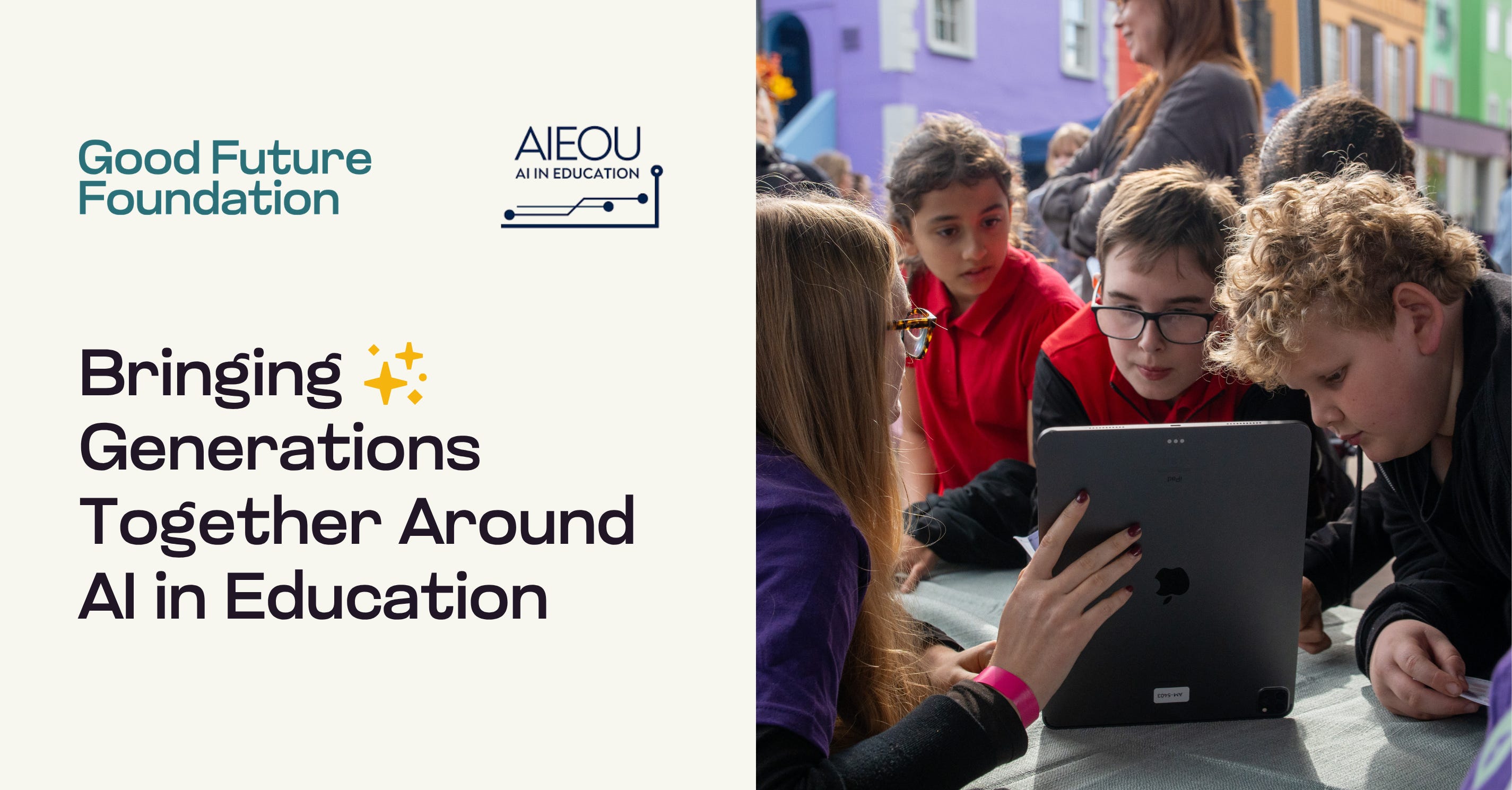
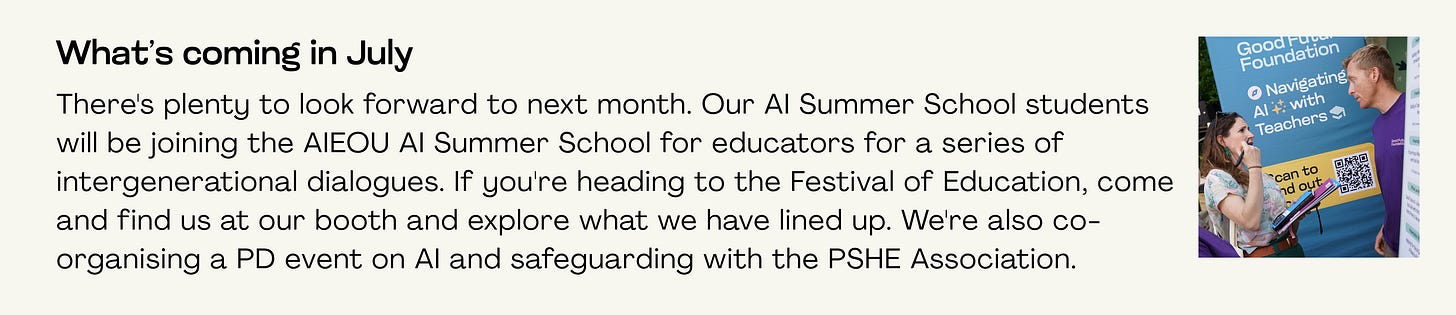
We’re also delighted to share our collaboration with AI in Education at Oxford University (AIEOU) which will be hosting their own summer school for educators, researchers, policymakers, and industry leaders to examine the opportunities and challenges AI presents. Our two summer schools will run in parallel, and each day participants from both will connect through a digital exchange to share what they’ve been discussing, hear each other’s perspectives, and set one another a challenge to carry into the next day’s work. It’s a format built around intergenerational dialogue, and that spirit is at the heart of why this programme exists. Our AI Summer School was born from a conviction that young people who will be most shaped by AI deserve a seat at the table, and not just a consultation after the fact.
We can’t wait to tell you how it goes!

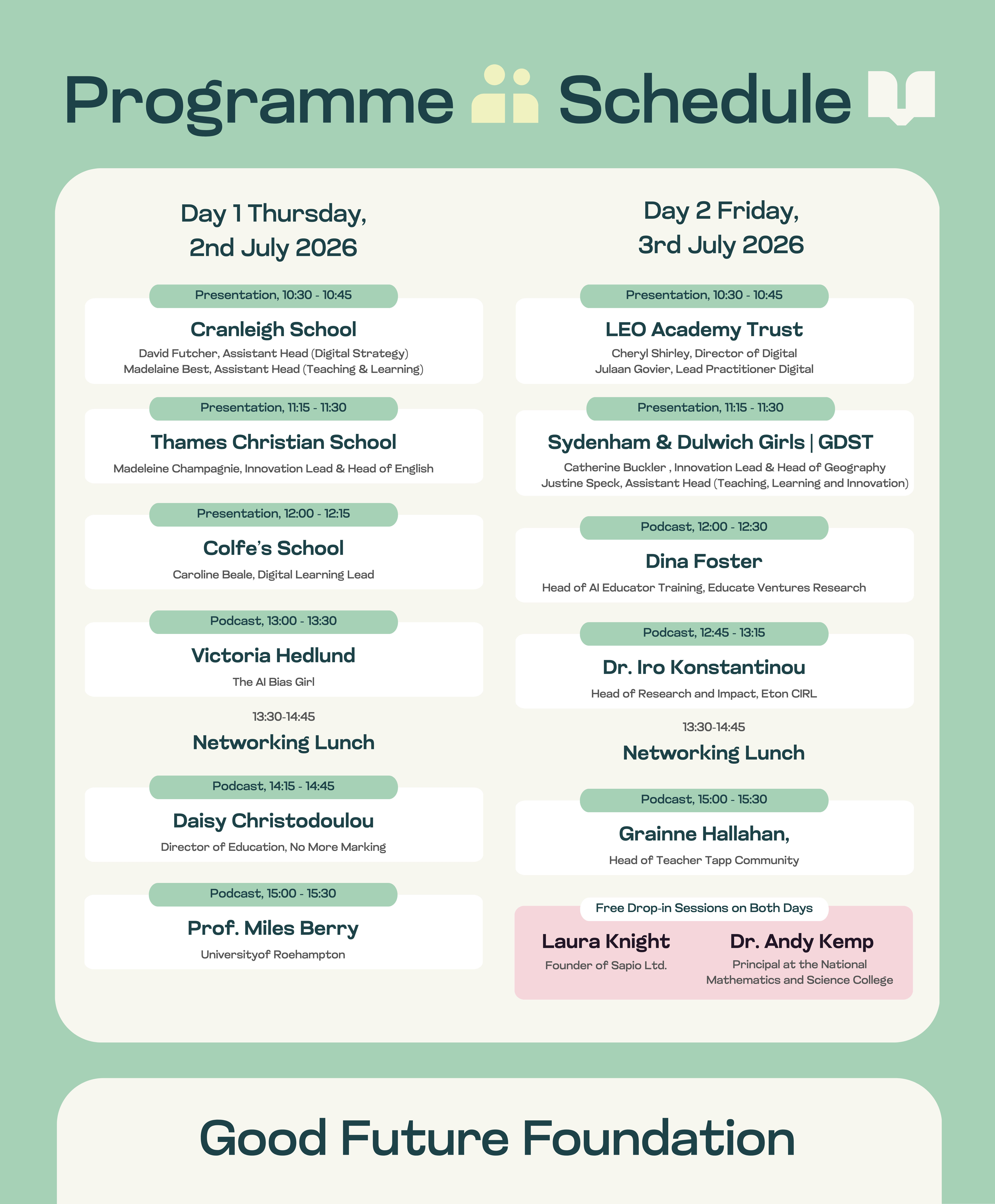
We’re just a few days away from the Festival of Education! You can find us at Booth D3-4 at Chapel Green, and here’s a flavour of what we have on throughout the day:
Free drop-in sessions with our advisors Laura Knight (Founder of Sapio Ltd) and Dr Andy Kemp (Principal at the National Mathematics and Science College)
AI Quality Mark schools sharing their experiences, including what’s worked, what hasn’t, and what they’ve learned along the way
Live podcast recordings with brilliant guests who have been putting AI to work in education, inside and outside the classroom
Networking lunch to connect with fellow educators, with food and drinks provided
You can find the full programme for both days here. If you’re coming, please do stop by and say hello!
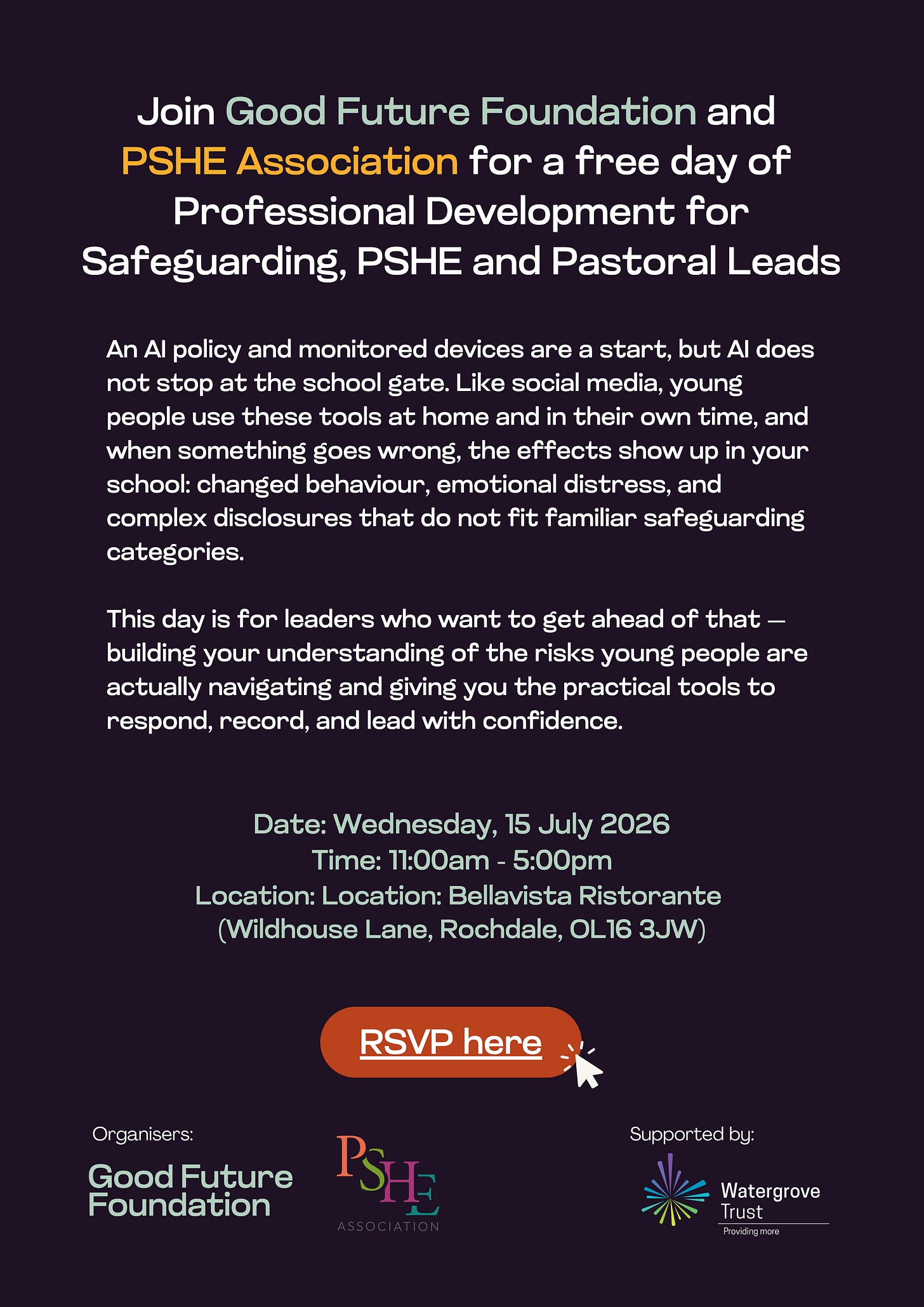
AI doesn’t stop at the school gate. Young people are using these tools at home and in their own time, and when something goes wrong, it tends to show up in school. Sometimes through behaviour, through disclosures, or through situations that don’t quite fit the familiar categories.
We’re therefore partnering with the PSHE Association to bring together Safeguarding, PSHE, and Pastoral Leads for a free day built entirely around this challenge. A huge thank you also to the team at Watergrove Trust, who helped us think through what a professional development event like this should actually offer schools, and who have put enormous care and work into the planning and organisation behind it.
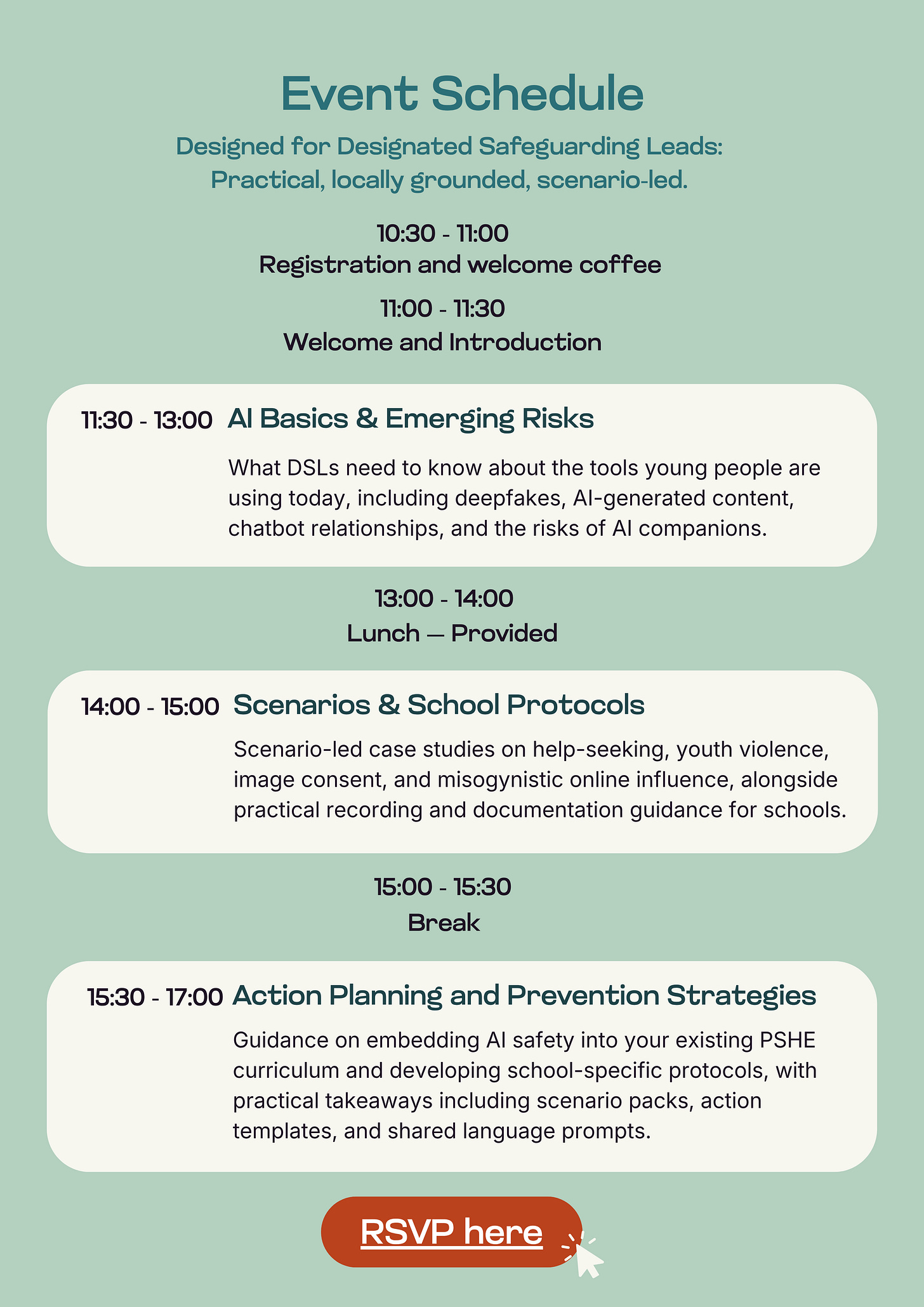
The day is practical and scenario-led, and is designed to build school leaders’ confidence and readiness to respond whatever situation arises. If you work in safeguarding, PSHE, or pastoral care, please join us and register for this event below.
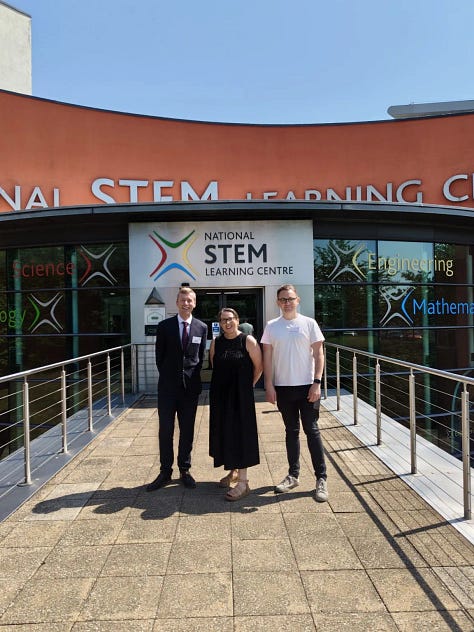
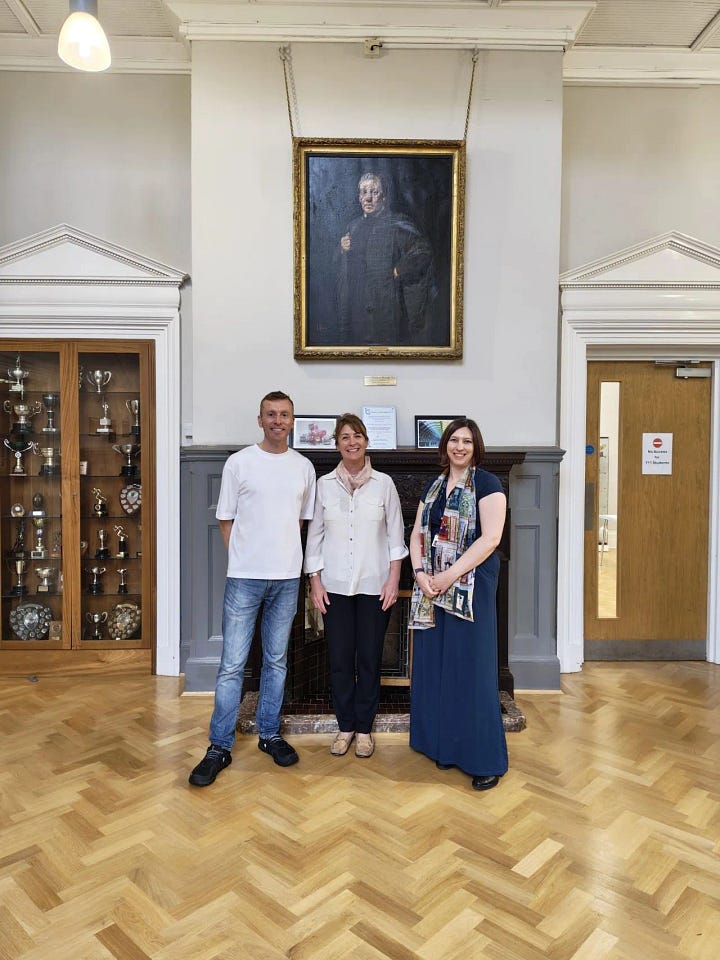
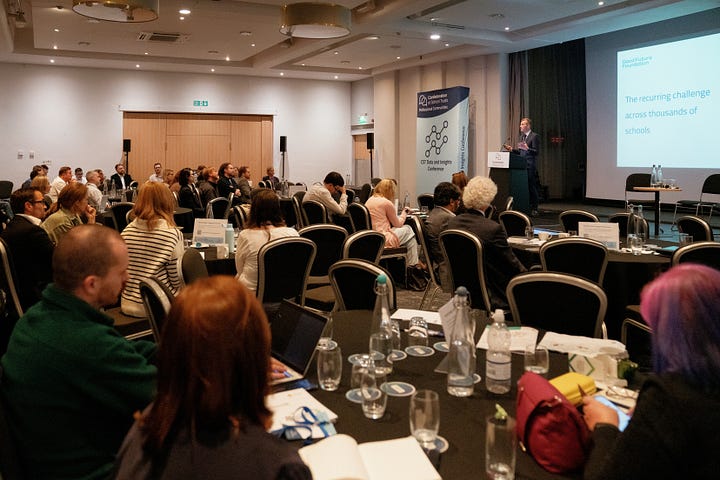
One of the things we believe most strongly is that the work of getting AI right in education has to be a collective effort. This month, our Executive Director Daniel Emmerson was grateful to contribute to two major sector conferences and join communities of educators and leaders who are tackling the same challenges.
At the STEM Learning Digital Conference in York, Daniel spoke about AI, curriculum, assessment, product safety, and the importance of protecting thinking in education. STEM Learning is doing inspiring work for schools from CPD and residentials to hands-on support for their 25,000 members who showed up with such commitment to bringing good things back to their schools.
The Chief Executive of STEM Learning, Severine Trouillet reflected on the day:
Thank you very much Daniel for such a thought provoking keynote on AI in education. Talking about AI as a product and ensuring that we make the distinction between being useful and being safe for schools were some of the key takeaways I took from it but there are many more. Our team at STEM Learning UK are doing an incredible job as you say and I am so glad you could explore the National STEM Learning centre and meet our education experts. Your words mean a lot to us especially as we strive to support amazing teachers willing to do the best for young people in an ever changing world.
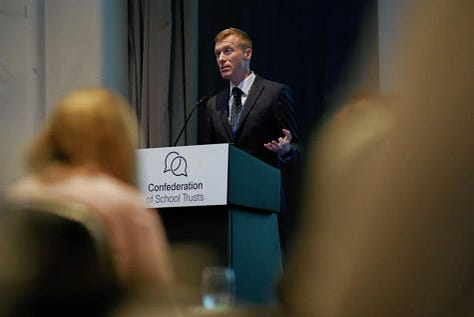
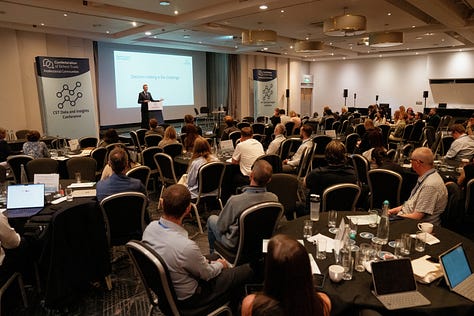
Daniel also closed the Confederation of School Trusts’ Data and Digital Transformation Conference in Birmingham, where trust leaders and digital practitioners spent the day exploring what it takes to embed digital practice at scale. It was a timely and thoughtful gathering, and we’re glad to play a part in conversations that are shaping how the sector moves forward.
Daniel's closing keynote provided a particularly thought-provoking conclusion to this year’s conference. His exploration of the leadership, culture and organisational capability needed to harness AI effectively provided our audience of data and digital trust leaders with fresh perspectives on the strategic choices they face as AI continues to reshape education.
Closer to home, we also had a fantastic day with HFL Education at Presdales School which brought school leaders and educators in Hertfordshire together to explore AI literacy, capability, and strategic adoption. Conversations ranged from how schools define different levels of AI confidence among staff, to governance, safeguarding, and responsible adoption.
If you’d like us to speak at your event or lead an INSET day for your Trust, please get in touch with us at info@goodfuture.foundation.

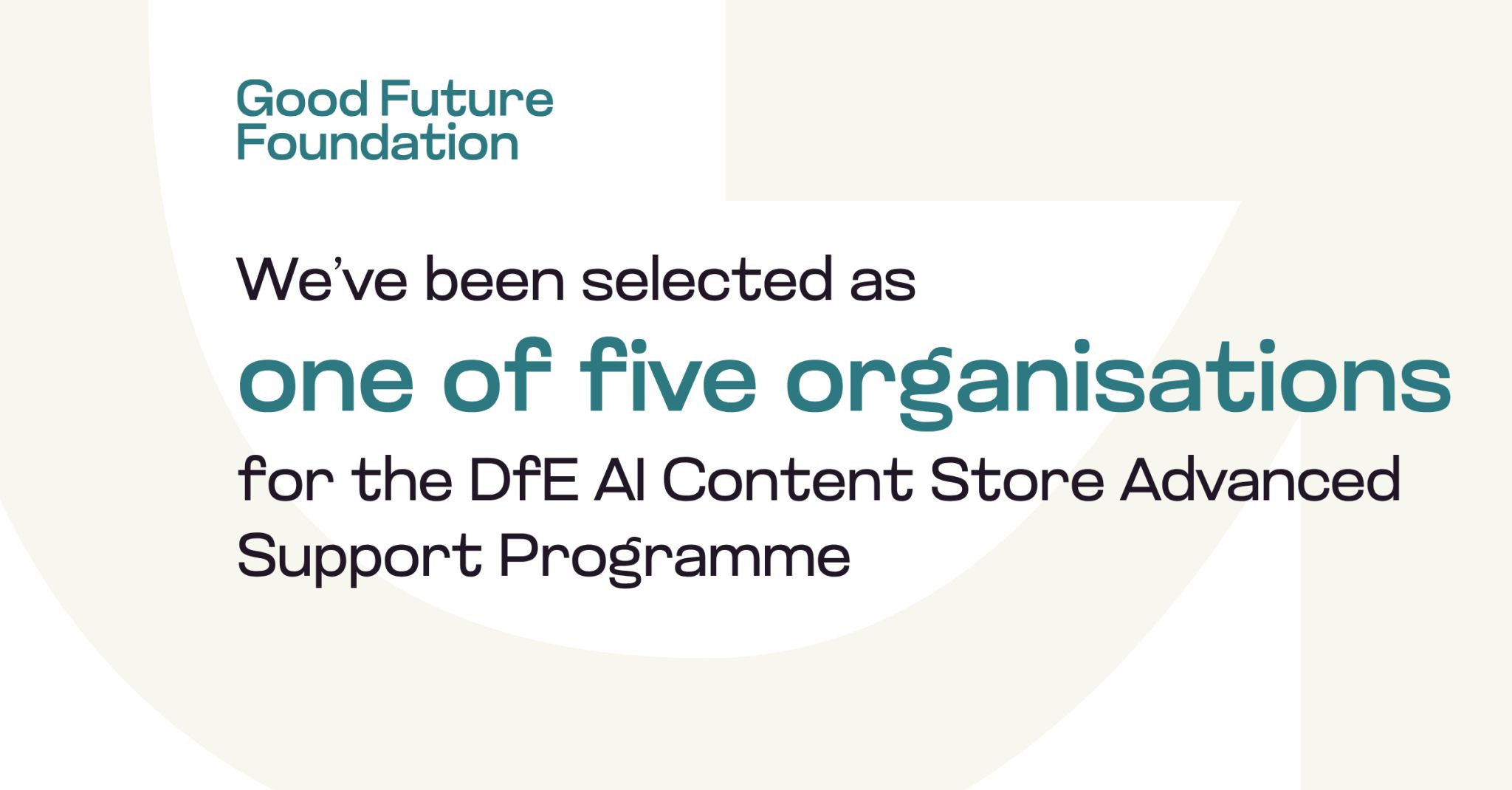
We're pleased to share that we’ve been selected as one of five organisations to receive support through the Department for Education's AI Content Store Advanced Support Programme. For us, this matters because of what it means for teachers. Good Future AI already gives educators a free, privacy-first space to experiment AI and using it to create classroom resources. Teachers tell us that finding reliable, curriculum-appropriate material to work with is often the biggest friction point before they can make use of the tools. The support from DfE gives us the opportunity to address that directly, by making it easier for teachers to access curriculum-aligned content within the platform itself.
This summer, we will be launching an updated version of Good Future AI that connects its teachers facing tools with the Crown copyright materials published by the Department for Education, Ofsted, the Standards and Testing Agency, and the Education Endowment Foundation, as well as Oak National Academy content. We are looking for educators to try the platform and share their experience with us and with the DfE AI Content Store. If you’d be interested in being one of the first to test it out, please get in touch at info@goodfuture.foundation. We look forward to sharing more about this project as the work progresses.

We’ve also been building something new on Good Future AI that we’re particularly excited about. The AI Product Safety Checker is our most sophisticated tool to date, built specifically to help schools evaluate AI products against the DfE’s Generative AI Product Safety Standards before bringing them into their setting.
The checker works by taking a product URL, the intended audience, and any relevant context, and then generating a detailed safety report based on publicly available information about that product. The report covers data privacy, safeguarding, data retention, cognitive development considerations such as productive friction, and filtering and monitoring, all mapped against those standards. Schools can also add their own policies as an additional source, so the report speaks to their specific context rather than offering a one-size-fits-all assessment.
It’s also worth being clear about how the tool is intended to be used. It is not a binary pass or fail verdict on any product, but a risk mitigation resource. It is a way of surfacing what schools need to be aware of and prepared for before they proceed. That framing reflects the approach taken in the DfE’s own consultation on these standards.
If you’d like to try the AI Product Safety Checker, you can find it on Good Future AI.


At Sydenham and Dulwich Girls GDST our goal is to ensure pupils leave school with the knowledge, skills and confidence to thrive in a rapidly changing world. This includes preparing them to engage thoughtfully and effectively with artificial intelligence, both as a learning tool and as a defining technology of their future pathways.
We want our pupils to use AI in ways that enhance their learning while maintaining academic rigour and subject mastery, particularly in preparation for public examinations. Alongside this, we place equal emphasis on understanding AI’s wider societal impact, including its limitations, ethical challenges, and questions of fairness and bias.
Ethical understanding and safeguarding are central to our approach and are embedded across both the curriculum and our wider school life. For example, in Computer Science, pupils in Years 8 and 9 explore machine learning, data bias and how biases can become embedded within AI systems. In Religious Studies, Year 8 pupils take a more philosophical approach, using units on robotics and AI to consider questions of personhood, responsibility and moral decision-making.
Our PSHE programme builds a sustained understanding of digital wellbeing and online safety from Years 7 to 13. This includes critical discussion of algorithms, deepfakes, data use, and the impact of AI on future employment and society.
From September, we are introducing a bespoke AI Bias Awareness course for all Year 9 pupils that sits within our pioneering Futures Curriculum, Elevate. The AI bias course will be delivered over six timetabled lessons and is designed to give pupils a structured and confident understanding of how bias emerges in AI systems and why this matters. This leads into the Year 10 unit, AI for Impact, that adopts a media literacy perspective. The unit culminates in a workplace simulation where pupils use AI to create a product for a brief.
As a girls’ school, this work is particularly significant. We want our pupils not only to be confident users of emerging technologies, but also to see themselves as future creators, leaders and innovators in fields such as computer science and AI. Addressing bias directly helps ensure that confidence is grounded in critical awareness, not assumption.
Our approach is underpinned by a clear and consistent digital culture. Our unique SPARK framework guides pupil interactions with technology, ensuring that all use of edtech, including AI, is Skilful, Purposeful, Accountable,Responsible and Kind. Whole-school assemblies and enrichment activities reinforce these principles, including Safer Internet Day tutor time sessions and a sixth form programme on AI in revision and independent learning. In addition, a ‘digital geographies’ elective ran with partner schools, in which a group of Year 12 pupils chose to explore questions such as whether AI can be sustainable and how algorithms create new forms of spatial injustice in urban environments.
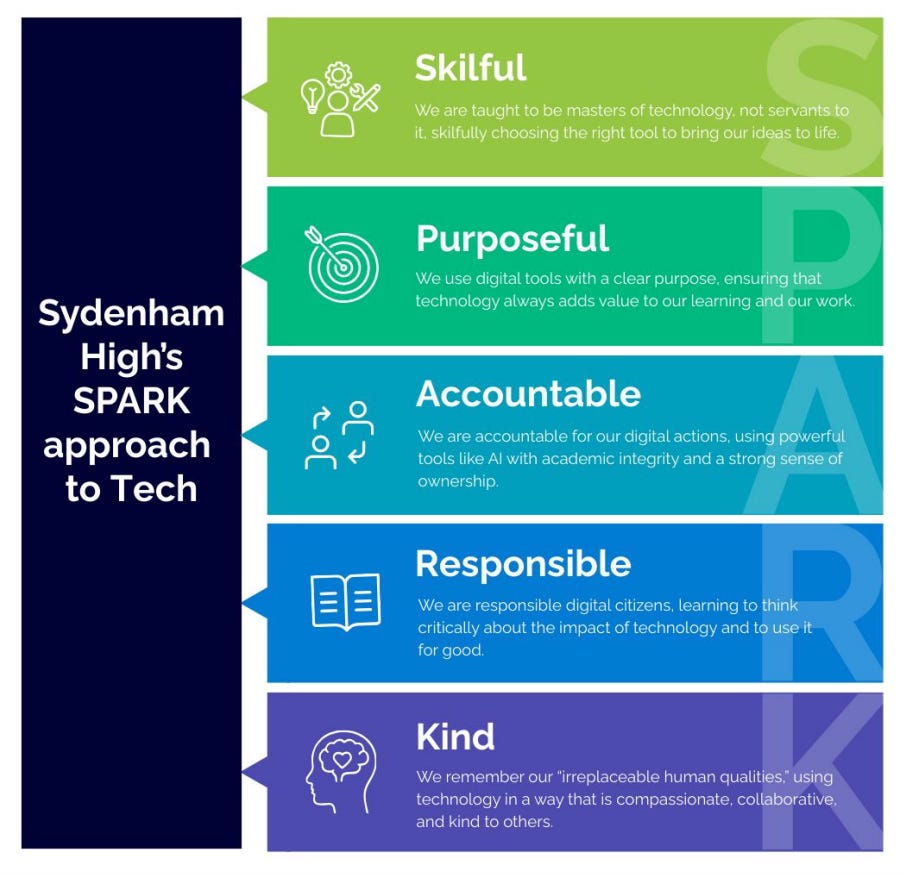
This culture is underpinned by clear governance that ensures pupil safety and wellbeing remain central to decision-making. A clear Generative AI Risk Assessment sets out defined use cases and mitigations, including the risks of pupils over-relying on AI for emotional support or turning to it for health-related advice. We have invested significantly in CPD over the last three years to ensure all staff are confident to have meaningful conversations with pupils about AI, and as part of the GDST we also draw on trust-wide professional development focused specifically on AI and girls’ experiences.
Ultimately, our work with AI is guided by a simple principle: technology should expand opportunity, not narrow it. By combining strong ethical foundations with forward-looking practice, we aim to equip pupils with the confidence to engage critically and creatively with AI, now and in the future.


In Short:
To be educated once meant you could produce the work — write the essay, solve the problem, sit the exam. A machine can now produce all of it. So exam season asks the question underneath: what can this student actually do, and how do we know?
Generative AI did not remove the need to prove skill; it removed our cheapest proofs. The answer is not better detection — that game is unwinnable — but redesigning assessment so the student is visible again.
Three principles do that: assess raw human performance with the AI stripped away, test often and in the open, and judge take-home work across several artefacts rather than one. Let AI in on the way to learning, and keep it out of the moment we measure what a student can do.


Education has always graded proxies. An essay stands in for can this student think; a problem set for can this student reason; an exam for does this student know. We trusted them because producing the work required the skill — you could not write a good essay without being able to think.
Agents sever that link. An excellent paper can now exist without a student who could have written it. Calculators, Wikipedia and Google Translate each broke a single proxy, and each time we moved assessment somewhere the tool could not reach. Agents are different: they break every proxy that can be produced on a computer.
Rather than a moral crisis around plagiarism, this is a design problem. If our old proofs of skill no longer work, how do we design new ones? Not by chasing detectors — Andrej Karpathy and a lengthening list of universities have concluded that fight is lost — but by rebuilding assessment around the one thing agents cannot fake: the student in front of you.
Until now, we assumed a student’s work was their own unless shown otherwise. It’s time to reverse it: assume anything taken home may have been produced by an agent, and grade accordingly — this is fairer than an AI ban, which only serves to punish students who follow the rules, and reward those who are good at prompting AI for plagiarism. AI can still be kept out of the hall exam, the viva, the live defence, in environments that the school can control, but many traditional proxies for student skill have been broken, and we need to react accordingly.
Students will use AI — and they should — to revise, to make flashcards, to generate practice papers. None of that changes the expectation that they can still perform without it, because that personal capability is the wall everything else leans on. A randomised study this year had 52 programmers learn to use a new software library; those using AI were no faster, yet scored 17% lower on a mastery test afterwards. You cannot catch a hallucination in a subject you never learned, and advanced AI systems mask a students’ actual capability.
The most reliable way to see that capability is to remove the AI and watch. Closed-book sit-down exams are expensive and can be problematic, but they are still among the best assessment instruments we have against AI plagiarism. The same holds for anything performed live — presentations, debates, vivas, a speech prepared in thirty minutes and delivered from the podium. It can be recorded, timed and questioned on the spot, and no agent can sit it for the student. When a Yale undergraduate was placed on disciplinary leave this March, what settled the case was re-sitting the work without AI, where he did worse on exactly the questions AI would have answered.
A course built on a midterm, a final, and one essay rests on three data points. That was always thin, and now that AI agents exist, it is reckless. Teachers need more data points with which to evaluate whether a student’s submission actually reflects their subject matter knowledge, or if it’s from a Claude or ChatGPT subscription. The quickest fix any teacher can implement now is more formative assessment — frequent, in-class checks that you can trust because you can see them work in front of you. It’s good practice anyway, with Black and Wiliam’s review finding that strengthening this kind of frequent feedback produces some of the largest gains in the education literature, and Roediger and Karpicke showed that testing itself deepens memory rather than merely measuring it.
Recall the many rows over suspected AI plagiarism? If the teachers and students had a weekly record of the student’s quiz performance over the term, that may have diffused much suspicion. Nor need it add to a teacher’s workload: AI can write quiz questions from your slides, mark short answers against a rubric, and flag the student whose classroom performance and homework do not match.
However, it doesn’t mean we have to cut AI out of all homework and assessment. By the time our students enter the job market, no company would hire workers who are AI illiterate, so assessment needs an appropriate ratio between authentic human-only work, and AI-augmented output. For example, basing 80% of course grade on authentic in-person assessment, formative snapshots, and other human-only work, while 20% belongs to homework, where AI use is assumed (and welcome). I’d adjust the ratio over time also, giving older students (high school and above) more space to use AI, while the youngest students may not need to have AI in their curriculum at all.
But what does that AI-enriched homework look like? To gauge understanding of a topic, I’d want the student to submit several artefacts in different forms: a presentation, a piece to camera, an infographic, so that I can triangulate among them to see hints of the student’s actual understanding. Here’s an example of vibe-coding game design as assessment:
In this course, students are invited to create games for each other to play, with the objective that through playing this game, their peers would learn something about a UN SDG of their choice (you can play the games by clicking on the links). Heritage Hunt is a geoguessr game over Hong Kong’s 263 graded historic buildings, which is fun but doesn’t reflect a lot of subject matter understanding. Hong Kong Waters is a marine conservation simulation set in Hong Kong waters, where you weigh budgets and policy as the ecosystem responds.
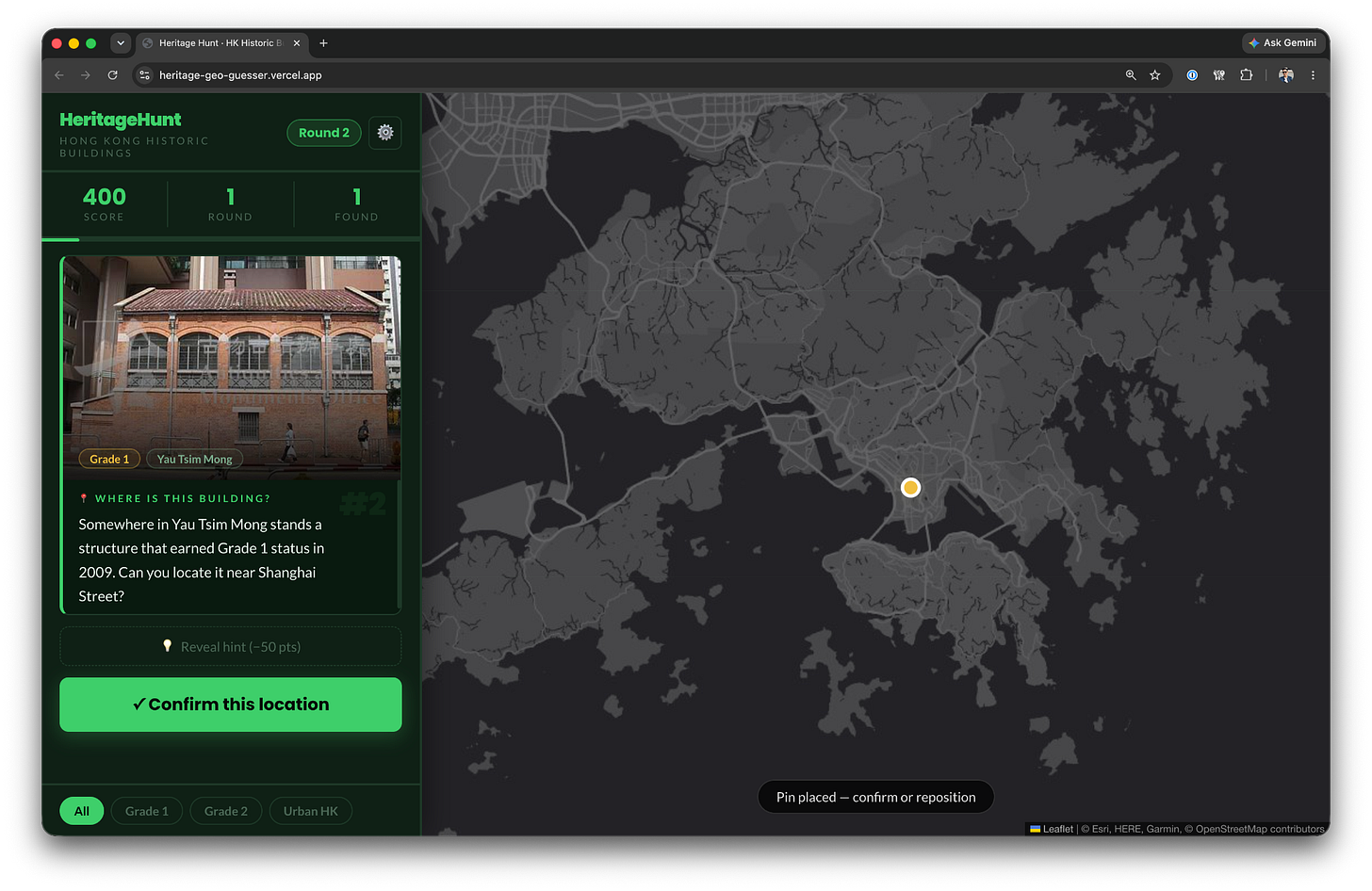
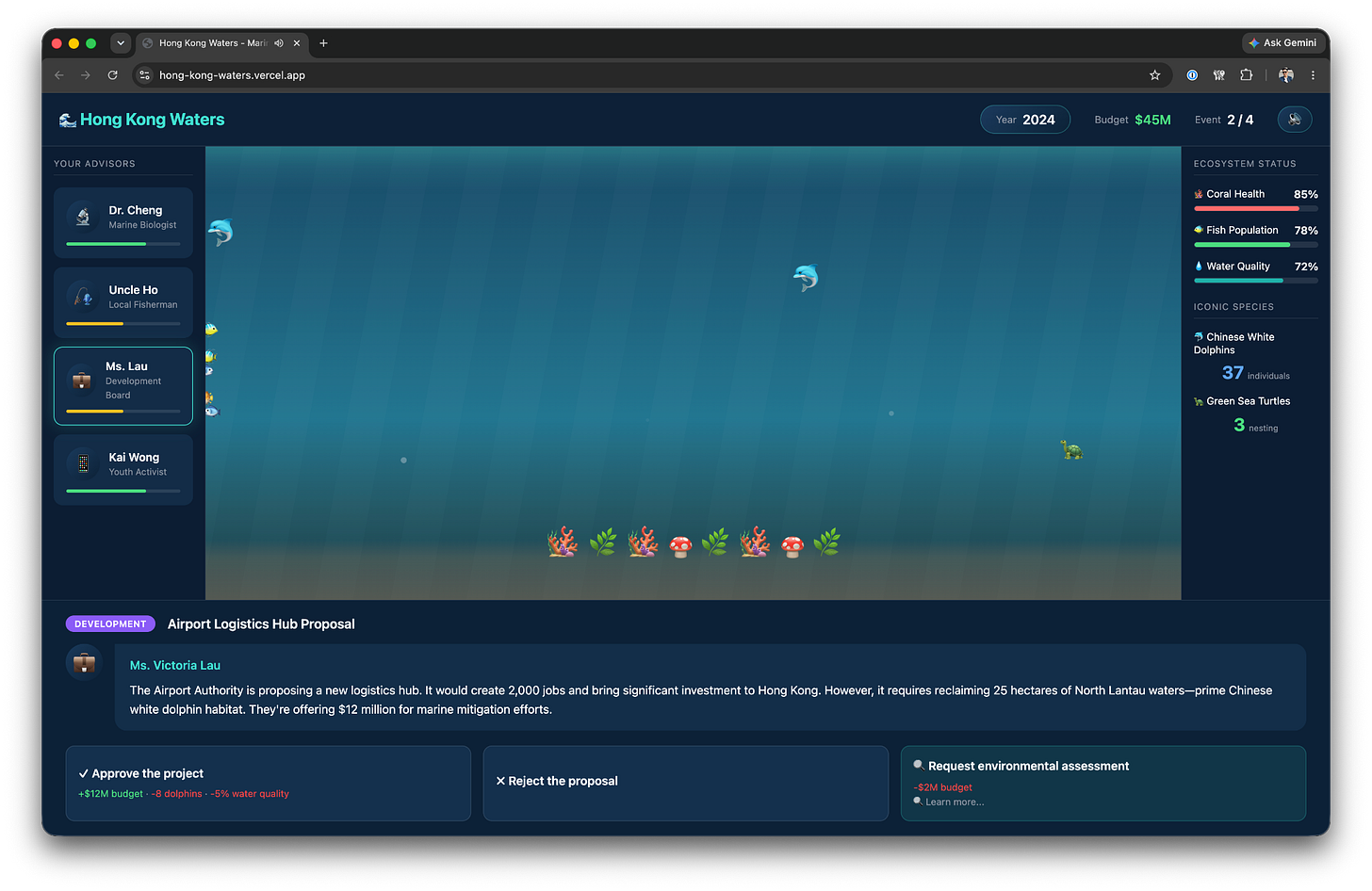
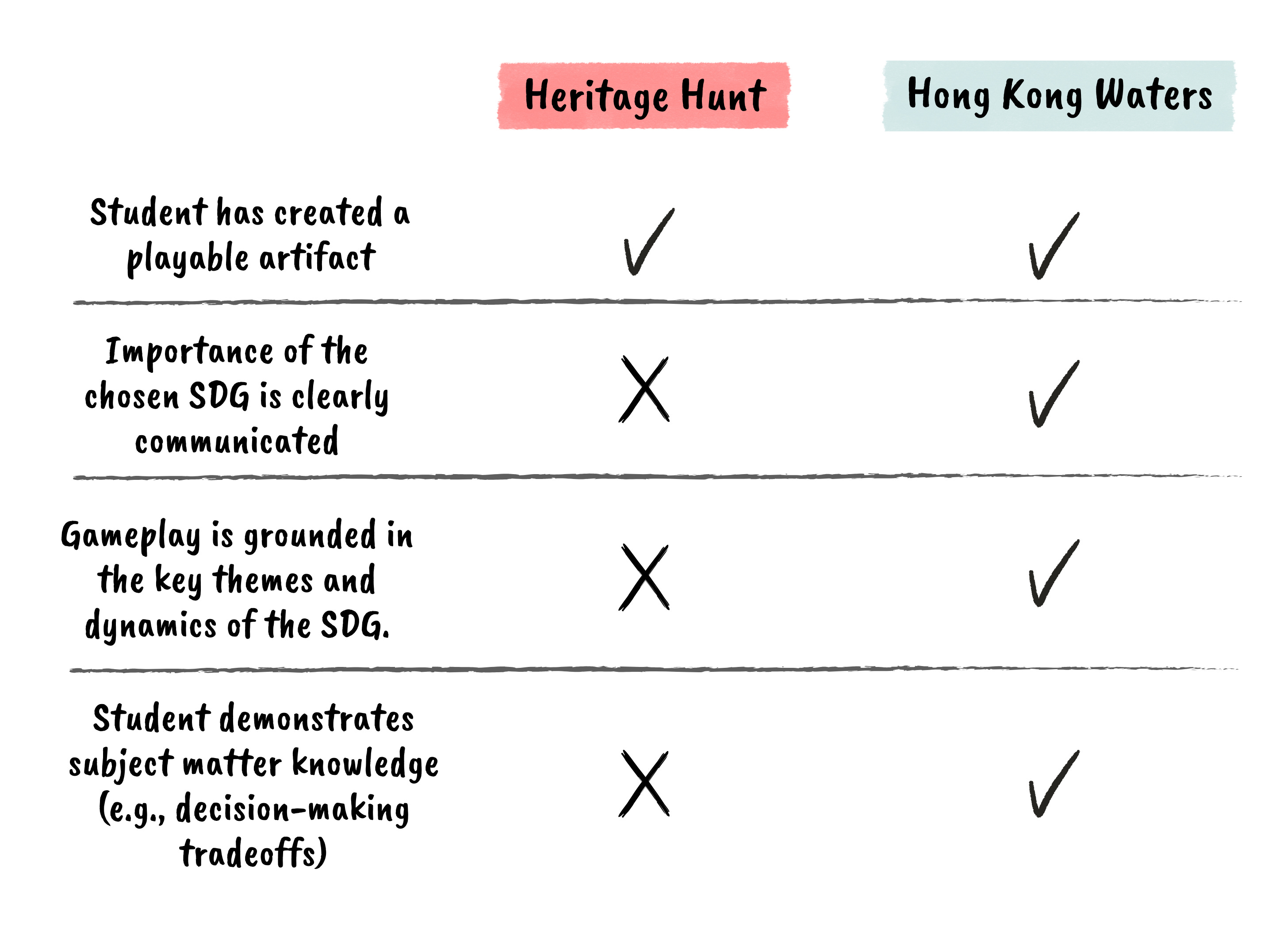
You do not need the source code to know which student understood more. Pairing this with a presentation, infographic, report, or simple Q&A will let you triangulate: It’s hard to gauge a student’s understanding based on a single piece of work, but if a concept is misapplied across formats, that’d reveal far more than any single tidy submission. This does ask more of students, but they’d be doing this with powerful AI systems on their side. The same systems are on teachers’ sides too, to help us assess and monitor student progress across all the quiz answers, presentation transcripts, debate videos, pitch decks, essays, and other artefacts that combine to paint a rich picture of the students’ real proof of skill.
When an agent can produce any single artefact a student hands in, trust in teachers’ judgement become essential for holding the integrity of our assessment system together. The teacher who can tell who actually understands — who is bluffing, whose eyes light up when the question gets harder — becomes the thing the whole system depends on.
For a century, to be educated meant you could produce the work. That definition is quietly ending, because producing the work is exactly what machines now do. What remains is harder to fake and easier to recognise: what a student genuinely understands, what they can defend unaided, and the judgment to know when to lean on the tools and when to put them down. That is what assessment has to look for now — and what it means to be an educated person is changing under our feet.

Some of the most thoughtful conversations about AI in education are happening in places you might not expect.
Our latest guest on Foundational Impact is Jane Mann, Managing Director of the Partnership for Education at Cambridge University Press and Assessment. Jane works across more than 30 countries, from well-established national systems to contexts where resources, stability, and access to education vary enormously. And what she’s found, across all of them, is that getting AI right is far more a question of intention than resources.
n
We hope you enjoy this conversation as much as we did. Click below to listen to the full episode:
Comments
Nothing yet. Say the first thing.
Sign in to join the conversation.