
Regardless of where you might be in the world, we hope that you have been able to find some moments of rest and reflection in the last week or two. If you are finding time to read this while you are on Annual Leave - thank you for taking the time. I'm sure that there is plenty in this newsletter that you will find of value.
It's been an incredible few months, both in the consumer GenAI world, where foundation labs are apparently racing each other to see how many companies their 'contained models' might be able to hack, and new models are being made available to the public at a staggering rate.
We've been keeping busy running professional development events in different parts of the UK, and ensuring that our findings from the field form our public facing engagements, from conferences at STEM Learning and the Confederation of School Trusts, to the Festival of Education.
However you might be spending the next few weeks, we are taking some time to rest, reflect and spend some time with our families. We look forward to seeing you in the new academic year!
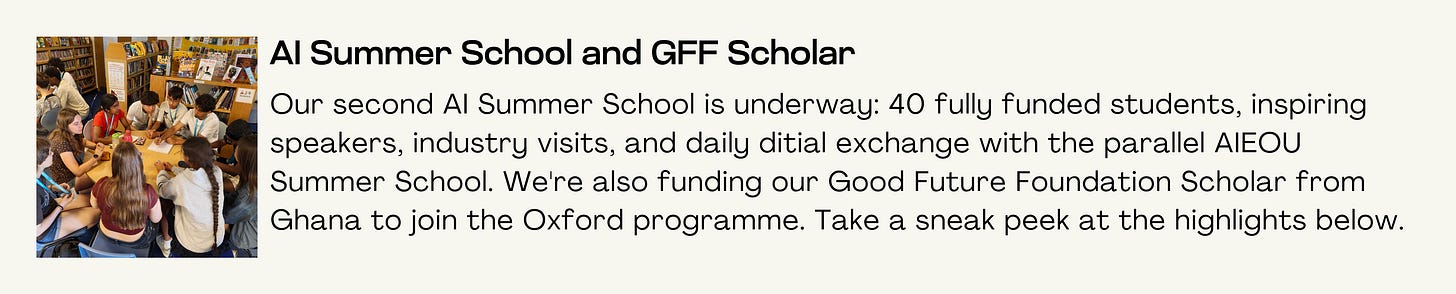




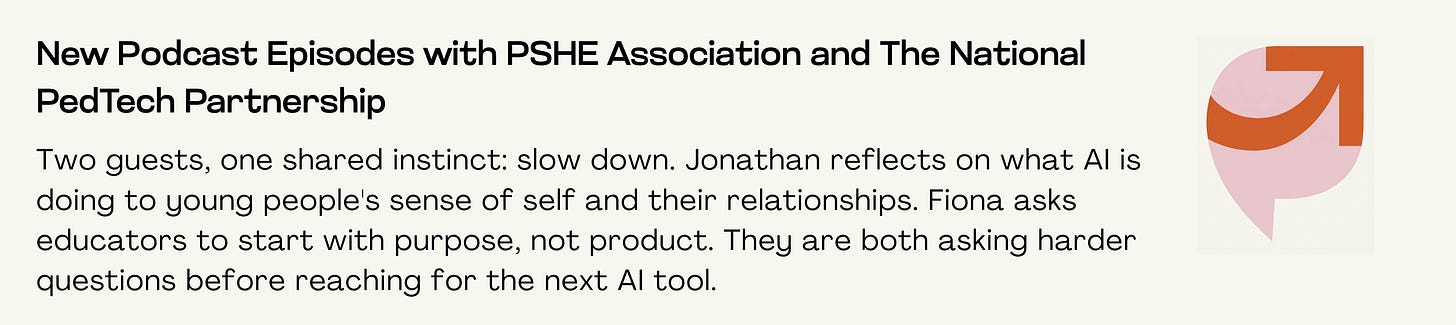

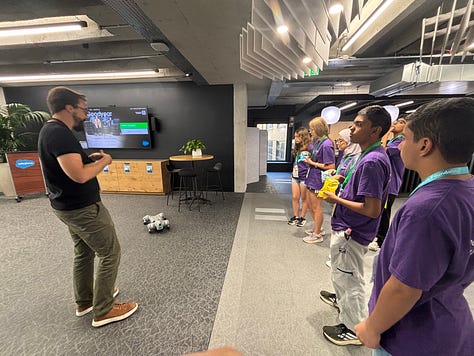
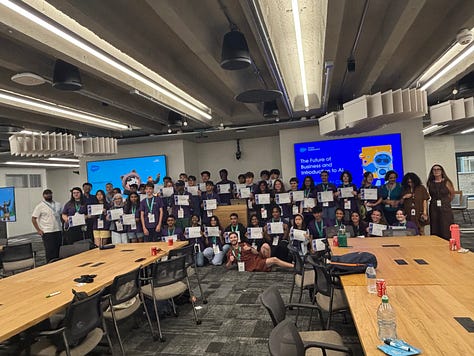
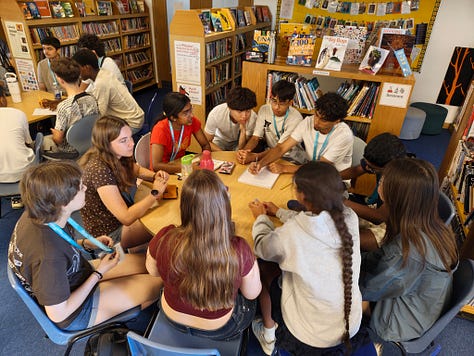
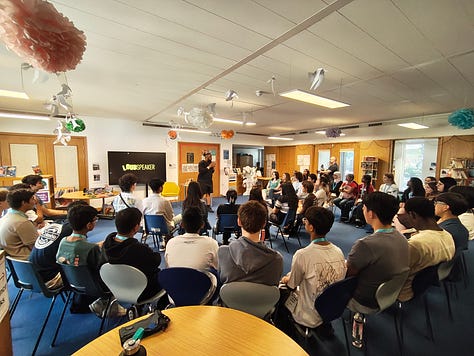
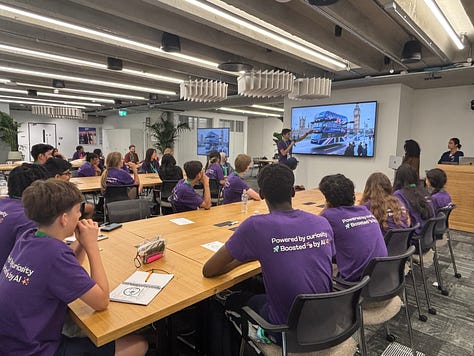
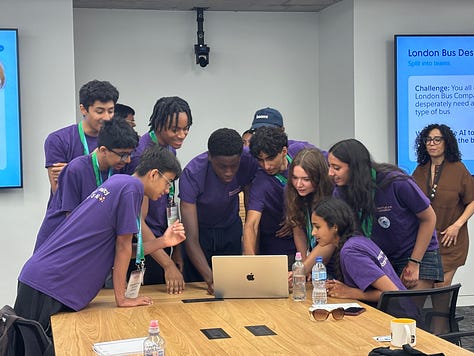
On 26th July, 40 fully funded young people, including two students who travelled all the way from Oman, arrived at Holmewood House School in Tunbridge Wells for our second AI Summer School. And what a week it has been.
Over the course of the residential programme, students took part in lessons delivered by our teaching team, developed and built their own projects from the ground up. They heard from speakers from Voice 21 UK, LoudSpeaker, and Connected by Data, and headed out on industry visits to the Salesforce AI Centre and Datum Datacentres. And of course, no summer school would be complete without a knockout challenge and evening socials to bring everyone together.
A highlight unique to this year was the daily digital exchange with the educators, researchers, and policymakers gathered at the AIEOU Summer School at the University of Oxford. This is a thread that ran through the entire week and added a richness to the programme that we hadn’t quite anticipated.
These are just a few sneak peeks from the week. We can’t wait to share the full story in our next newsletter!
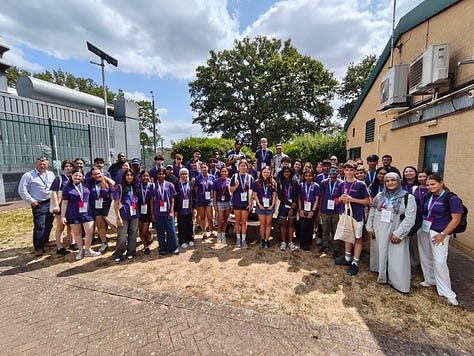
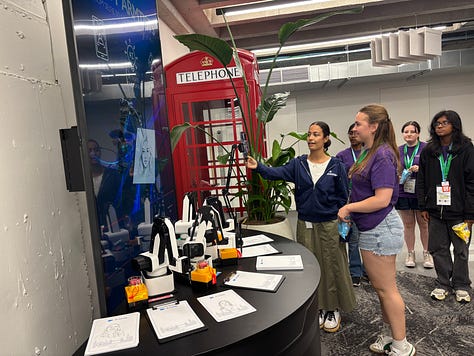


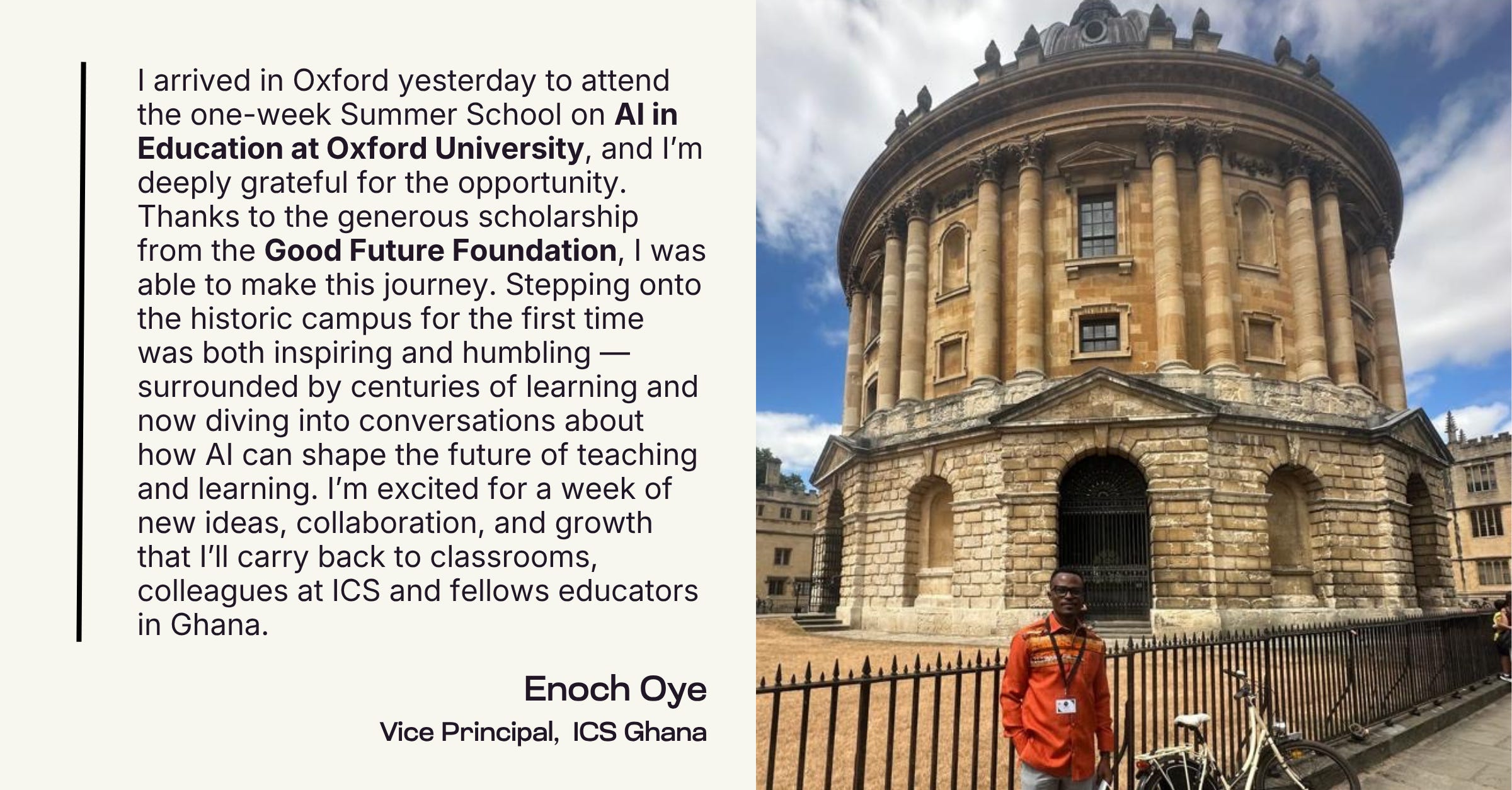
Alongside our 40 summer school students, we’re proud to be funding Enoch Oye from International Community School - Ghana as our Good Future Foundation Scholar, flying him to the UK to join the parallel AI Summer School at the University of Oxford. We first met Enoch a year and a half ago when we supported his school in achieving the AI Quality Mark. That relationship grew into something much bigger: last October, we worked together to deliver an AI professional development programme reaching educators across Accra, Tamale, and Kumasi. We know Enoch will carry everything he learned this week back to Ghana with him and the ripple effect will be felt far beyond any single classroom.

We're so grateful to everyone who gave their time to be part of our programme at the Festival of Education. Across both days, people openly shared what they’re still uncertain about, questioned their own thinking, and acknowledged that the field is still finding its feet when it comes to effective and responsible AI use in education. We’re hopeful that such honesty and openness will allow us to make progress together.
A huge thank you to the teachers from Cranleigh School, Thames Christian School, Colfe's School, LEO Academy Trust, Sydenham & Dulwich Girls GDST, and Haberdashers' Girls' School who presented and shared their school's AI journey with us. Their sessions will be available on our community platform and website in the coming weeks.
Thank you also to Victoria Hedlund (The AI Bias Girl), Daisy Christodoulou from No More Marking, Prof. Miles Berry from University of Roehampton, Dina Foster from Educate Ventures Research, Dr Iro Konstantinou from Eton College CIRL, and Gráinne Hallahan from Teacher Tapp for recording podcast episodes with us. We can't wait to share these as the new school year gets underway.And thank you to every educator who stopped by for a conversation with our Advisory Council members Laura and Andy, and took the time to learn more about our work.Now, we’ll let our Student Council members to share their experience of the Festival in their own words with you:

Earlier this month, the Department for Education published its response to the Keeping Children Safe in Education (KCSIE) 2026 consultation. For the first time, AI is explicitly named in the guidance, with specific risks associated with its use identified. The updated guidance comes into force in September, and there is a lot schools need to act on before the new term begins.
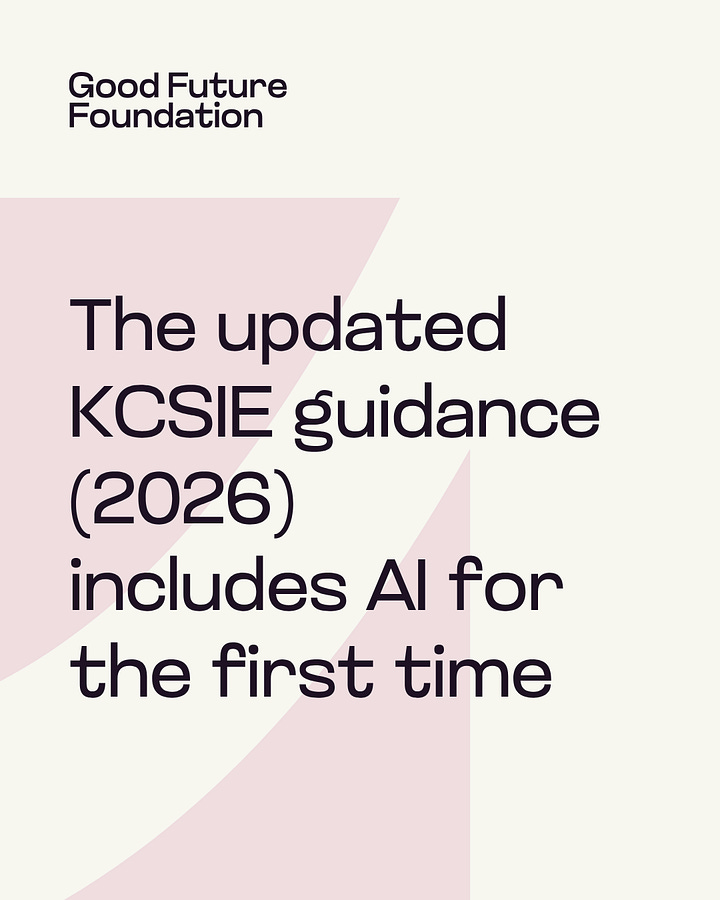
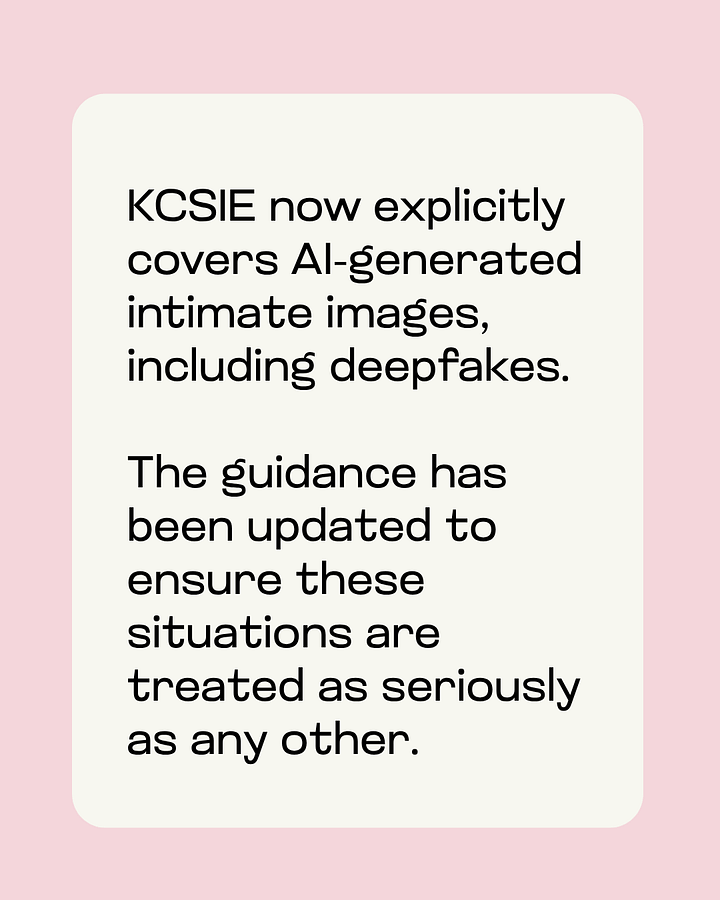
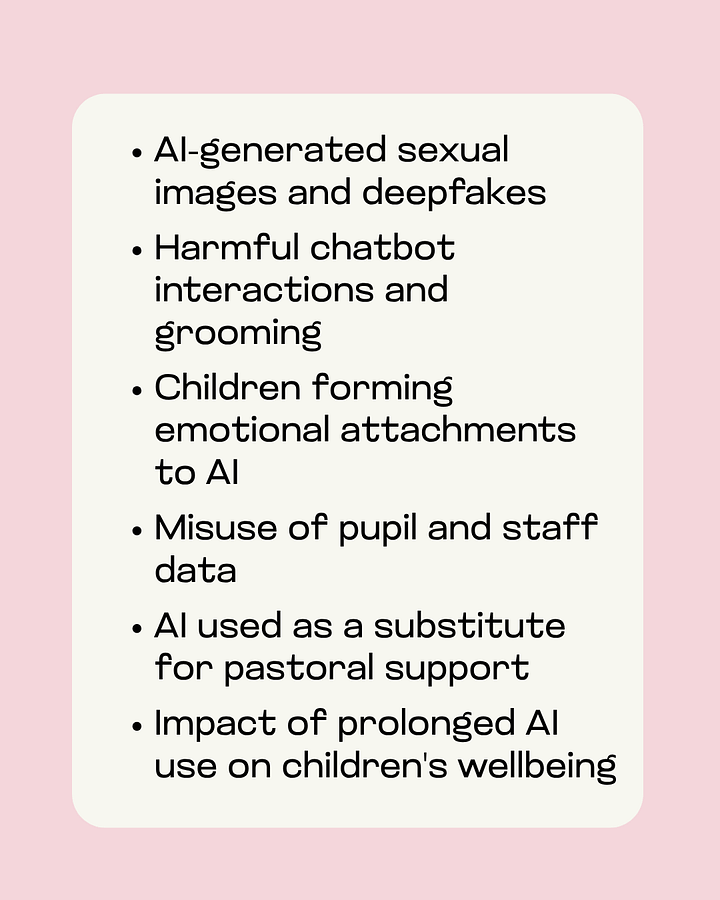
Partnering with the PSHE Association and supported by the Watergrove Trust, we hosted a free professional development day on 15th July for safeguarding, PSHE, and pastoral leads and the timing couldn't have felt more relevant. Educators from 20 schools joined and learned about the tools young people are using and the emerging risks that come with them, such as deepfakes, AI-generated sexual imagery, online exploitation, and new forms of peer-on-peer abuse. Through scenario-led case studies, we equipped educators with practical templates, shared language prompts, and curriculum packs designed to embed AI safety seamlessly into existing PSHE lessons without starting from scratch.
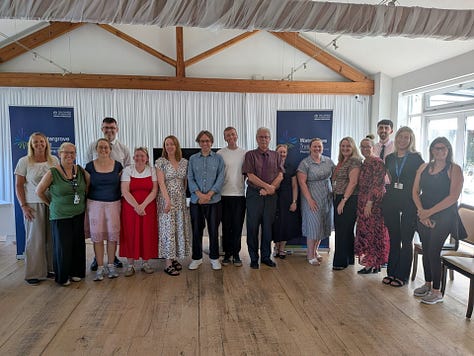


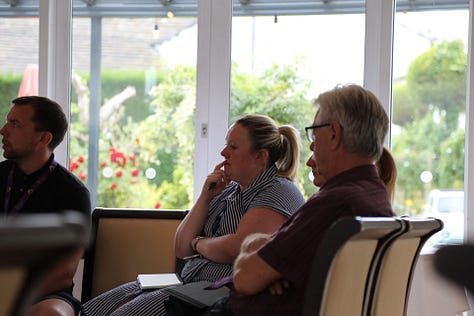
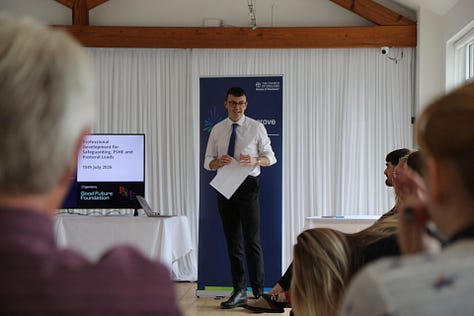

We were glad to hear what participants took away:
Speakers were very knowledgeable and shared good practice that we would experience in school environments.
I have a deeper understanding of the implications of AI use by students on their emotional wellbeing. It’s reassuring to know that the PSHE Association and Good Future Foundation are there to support us with this.
If your school and trust is looking for professional development support in the coming school year, please get in touch. As always, all our support for schools and teachers is free of charge.
Booking AI Professional Development

To close out the school year, our Project Manager, Anneliese, reflected on what she has seen and heard from schools over recent months. Her account captures both the growth of the programme and the challenges schools are navigating:
The AI Quality Mark has grown significantly over the past few months, with more schools than ever reaching out for support in implementing AI across their organisations. Many schools want to implement AI across their organisation but have struggled to find the support to get there. The Good Future Foundation has become a valuable route to external validation and guidance, helping them implement AI in a safe, responsible way for staff, pupils, and the wider community. Schools completing the quality mark recently have achieved a range of levels, from Progress through to Gold, and we’ve seen several encouraging resubmissions, with schools making real progress since their initial submission. The feedback has been consistently positive, with schools highlighting how helpful the tailored guidance was in helping them move forward safely and appropriately for their context.
Across our conversations with schools, there’s a clear tension between urgency and caution: schools feel the pressure to act given how fast AI is evolving, but want to be sure they do this in a safe, responsible and ethical way. Four areas seem to consistently be raised by schools as areas they feel they need more support with. First, assessment, and how to know whether students are using AI, and the deeper question of whether the tasks being set (including homework) are still appropriate. Second, pupil use, particularly in primary schools, where age restrictions on AI tools make it harder to teach pupils to use them effectively and understand them. Third, engagement with parents and carers, schools are often hesitant to share anything before their approach feels fully settled, but we’ve found that bringing parents along on the journey builds real community understanding and support for pupils. Finally, operational use beyond teaching and learning, the quality mark encourages schools to think about how AI can support all staff and departments, easing workload and improving processes school-wide. The quality mark’s guiding questions and assessor feedback are designed to help schools work through exactly these issues in a way that fits their own pupils, staff, and community. We are seeing an increasingly positive impact of AI implementation within schools who go through the AI Quality Mark process.
Learn more about AI Quality Mark

Congratulations to the following institutions on receiving their AI Quality Mark this month:
Gold Award: St Colman’s College, Tring School
Silver Award: Signhills Academy, Embrace Multi Academy Trust
Bronze Award: St Hugh of Lincoln, The Corbet School
Progress Award: Edgewood Academy, Walmley Junior School
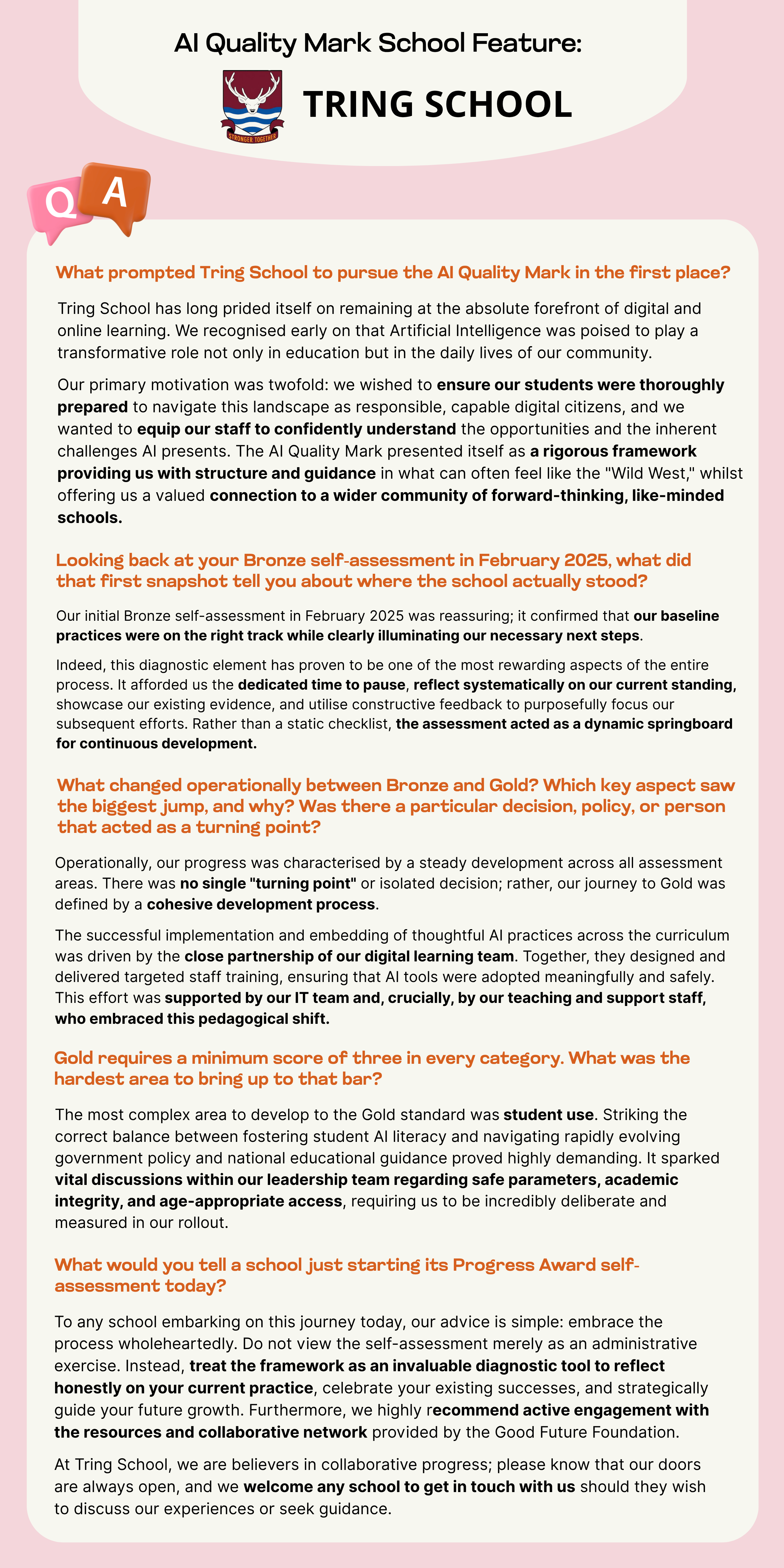
A special highlight to Tring School, whose Gold Award represents the culmination of a remarkable journey. It has been a privilege to walk alongside them as they progressed from Bronze in January 2025, to Silver in July 2025, and now to Gold!
Dr Andy Kemp, who has assessed Tring’s submissions across all three stages, reflected on what their journey represents:
“𝘛𝘳𝘪𝘯𝘨’𝘴 𝘸𝘰𝘳𝘬 𝘥𝘦𝘮𝘰𝘯𝘴𝘵𝘳𝘢𝘵𝘦𝘴 𝘵𝘩𝘢𝘵 𝘦𝘧𝘧𝘦𝘤𝘵𝘪𝘷𝘦 𝘈𝘐 𝘪𝘮𝘱𝘭𝘦𝘮𝘦𝘯𝘵𝘢𝘵𝘪𝘰𝘯 𝘪𝘴 𝘯𝘰𝘵 𝘢𝘣𝘰𝘶𝘵 𝘢𝘥𝘰𝘱𝘵𝘪𝘯𝘨 𝘵𝘰𝘰𝘭𝘴 𝘧𝘰𝘳 𝘵𝘩𝘦𝘪𝘳 𝘰𝘸𝘯 𝘴𝘢𝘬𝘦. 𝘐𝘵 𝘪𝘴 𝘢𝘣𝘰𝘶𝘵 𝘵𝘩𝘪𝘯𝘬𝘪𝘯𝘨 𝘤𝘢𝘳𝘦𝘧𝘶𝘭𝘭𝘺 𝘢𝘣𝘰𝘶𝘵 𝘸𝘩𝘦𝘳𝘦 𝘈𝘐 𝘤𝘢𝘯 𝘳𝘦𝘮𝘰𝘷𝘦 𝘣𝘢𝘳𝘳𝘪𝘦𝘳𝘴, 𝘴𝘶𝘱𝘱𝘰𝘳𝘵 𝘭𝘦𝘢𝘳𝘯𝘪𝘯𝘨, 𝘪𝘮𝘱𝘳𝘰𝘷𝘦 𝘤𝘰𝘮𝘮𝘶𝘯𝘪𝘤𝘢𝘵𝘪𝘰𝘯 𝘢𝘯𝘥 𝘴𝘵𝘳𝘦𝘯𝘨𝘵𝘩𝘦𝘯 𝘵𝘩𝘦 𝘸𝘰𝘳𝘬 𝘰𝘧 𝘵𝘩𝘦 𝘴𝘤𝘩𝘰𝘰𝘭. 𝘛𝘩𝘦𝘪𝘳 𝘫𝘰𝘶𝘳𝘯𝘦𝘺 𝘪𝘴 𝘢 𝘳𝘦𝘢𝘭𝘭𝘺 𝘨𝘳𝘦𝘢𝘵 𝘦𝘹𝘢𝘮𝘱𝘭𝘦 𝘰𝘧 𝘩𝘰𝘸 𝘵𝘩𝘦 𝘧𝘳𝘢𝘮𝘦𝘸𝘰𝘳𝘬 𝘪𝘴 𝘪𝘯𝘵𝘦𝘯𝘥𝘦𝘥 𝘵𝘰 𝘸𝘰𝘳𝘬: 𝘯𝘰𝘵 𝘢𝘴 𝘢 𝘰𝘯𝘦-𝘰𝘧𝘧 𝘫𝘶𝘥𝘨𝘦𝘮𝘦𝘯𝘵, 𝘣𝘶𝘵 𝘢𝘴 𝘢 𝘱𝘳𝘰𝘤𝘦𝘴𝘴 𝘰𝘧 𝘳𝘦𝘧𝘭𝘦𝘤𝘵𝘪𝘰𝘯, 𝘥𝘦𝘷𝘦𝘭𝘰𝘱𝘮𝘦𝘯𝘵 𝘢𝘯𝘥 𝘴𝘶𝘴𝘵𝘢𝘪𝘯𝘦𝘥 𝘪𝘮𝘱𝘳𝘰𝘷𝘦𝘮𝘦𝘯𝘵, 𝘴𝘶𝘱𝘱𝘰𝘳𝘵𝘪𝘯𝘨 𝘢 𝘴𝘤𝘩𝘰𝘰𝘭 𝘪𝘯 𝘦𝘹𝘱𝘭𝘰𝘳𝘪𝘯𝘨 𝘩𝘰𝘸 𝘈𝘐 𝘤𝘢𝘯 𝘸𝘰𝘳𝘬 𝘦𝘧𝘧𝘦𝘤𝘵𝘪𝘷𝘦𝘭𝘺 𝘪𝘯 𝘵𝘩𝘦𝘪𝘳 𝘶𝘯𝘪𝘲𝘶𝘦 𝘤𝘰𝘮𝘮𝘶𝘯𝘪𝘵𝘺.”
We’re delighted to have invited Emma Ferris, Digital Learning Lead at Tring School, to share more about their experience in her own words. We hope their story inspires many more schools to begin or continue their own journey.


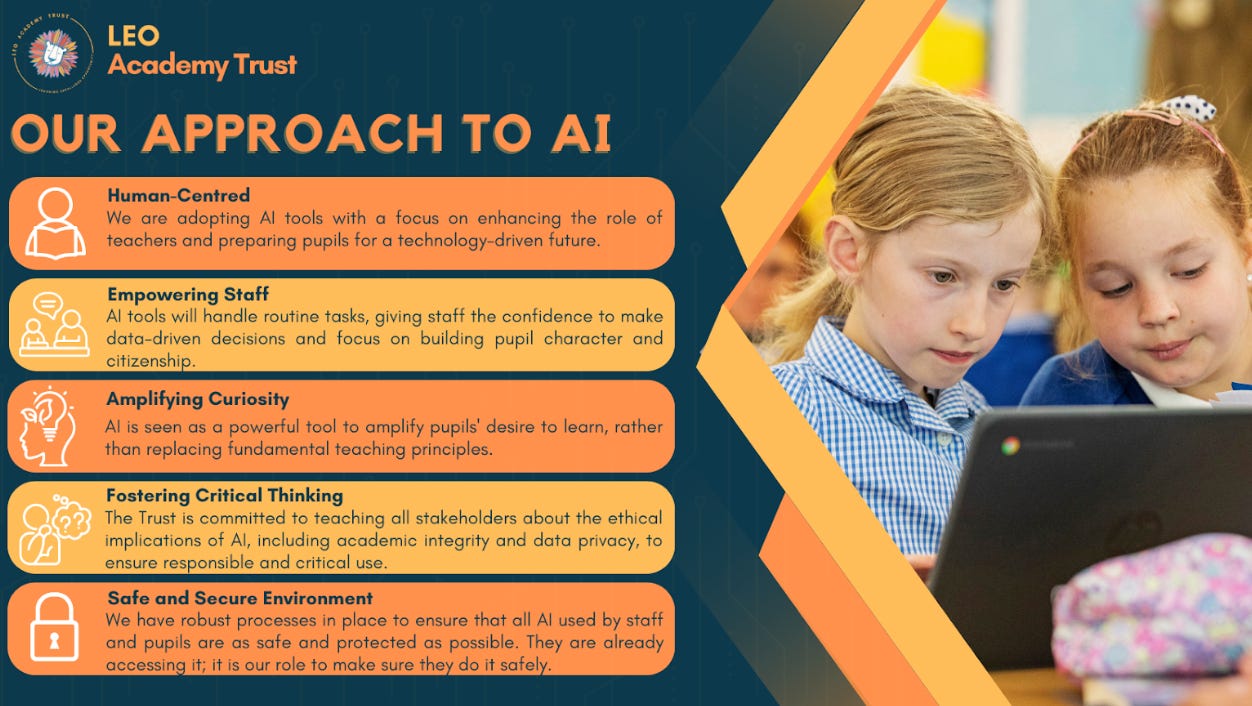
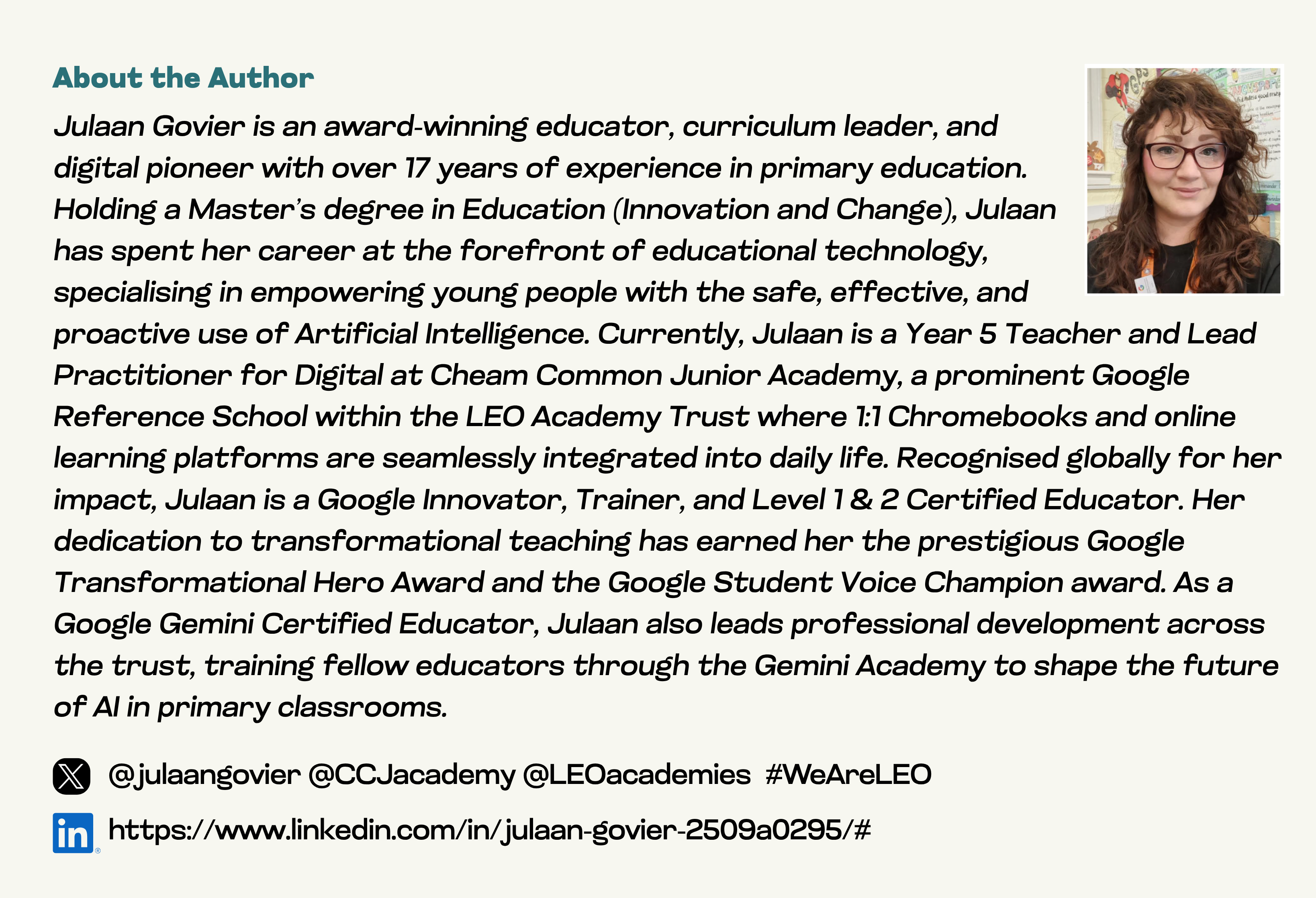
When discussions turn to Artificial Intelligence in education, the spotlight almost instinctively lands on secondary schools or higher education institutions. There is a common misconception that primary school children are either too young to grasp the complexities of AI, or that introducing it early opens a Pandora’s box of cheating, plagiarism, passive learning and reduced metacognitive processing. At the LEO Academy Trust, we challenge this narrative daily. Our philosophy is rooted in a fundamental shift: moving from a reactive stance—where schools scramble to block or regulate new tech—to a proactive pedagogical strategy. We believe that if we want tomorrow’s leaders to be ethical, critical digital citizens, we must start educating them today. Here is a look at how we are putting AI into practice across Key Stage 2 (KS2) through a structured, safe, and deeply intentional framework.
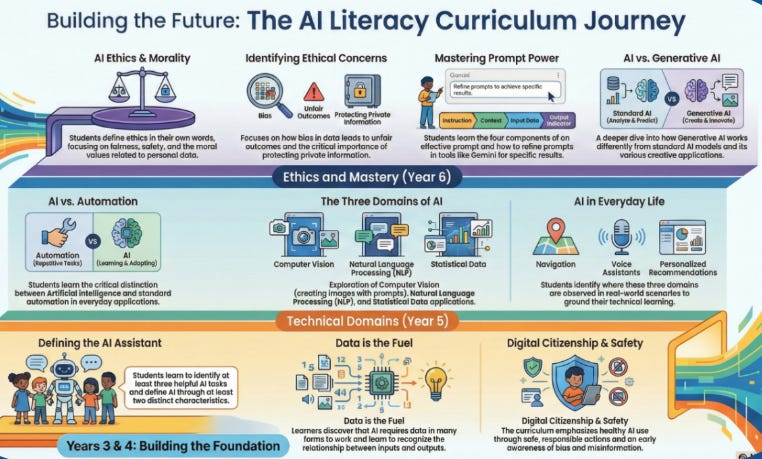
At the LEO Academy Trust, our approach to AI isn’t confined to a standalone policy gathering dust on a shelf; it is woven directly into the very fabric of everything we do—from our teaching and learning frameworks to our staff conduct guidelines. We often describe the current rapid evolution of technology as an “AI Avalanche.” As educators, our job isn’t to tell pupils to run or hide away from it—because you simply can’t outrun or hide from an avalanche—it’s to teach them how to ride the wave safely, skillfully, and with purpose. Before a child at LEO ever types a prompt into a generative AI platform on their Chromebook, they must first earn their digital “driving license” through our proactive KS2 ‘AI Literacy Curriculum’. To us, foundational AI literacy means moving our pupils from a “Black Box” mentality to a “Glass Box” understanding. It’s not just about knowing how to write a prompt; it’s about understanding the mechanics under the hood.
For too long, Computer Science has been seen as a niche subject—something that happens in a dark room behind a glowing screen. But if we want to engage every learner, we have to change the narrative from ‘technical skill’ to ‘creative empowerment.’ At LEO Academy Trust, we break through that traditional divide by demystifying this landscape, helping children realise that AI is already deeply embedded in their daily lives. We approach this literacy through three specific pillars:
Playful, Practical Metacognition: We use hands-on, physical tools—such as LEGO Education’s Computer Science and AI kits—to take the ‘scary’ out of the abstract and make digital concepts tangible. When a child builds a physical model and uses AI to help it ‘see’ or ‘react,’ they aren’t just coding—they are creating. This turns AI from a technical hurdle into a creative tool, just like a paintbrush or a building block. Crucially, we challenge students to think about their own thinking: when a machine “learns,” how does that compare to how a human brain learns?
Computational Thinking & Real-Life Contextualisation: We strip away the mystery by explicitly teaching the three domains of AI: Computer Vision, Statistical Data, and Natural Language Processing. However, we don’t start with dry algorithms; we start with their lives. We talk about how platforms suggest what they want to watch, or how a digital camera filter works. By linking AI to their everyday experiences, it stops being abstract code and starts being ‘life stuff.’ When they understand the structural “how,” the “magic” of AI turns into a tool they can control and harness to support and deepen their learning.
The Ethical Compass: Most importantly, we dig deep into the “Should we?” rather than just the “Can we?”. True literacy means giving pupils the tools to spot algorithmic bias, question data transparency, and understand that data is never entirely neutral. Furthermore, we explore the vital theme of sustainability, encouraging our pupils to consider the environmental footprint of large language models and data centres. By evaluating the energy and resources AI requires, they learn to weigh the digital benefits against the ecological cost.
By focusing on these real-life, meaningful experiences before they even touch an AI tool, we aren’t just training passive users; we are empowering critical creators who can navigate this landscape with their eyes wide open. By making this curriculum a mandatory prerequisite, we turn AI from a mysterious black box into an understandable tool. The children don’t just learn how to use AI; they learn when and why to question it.
We have completely shifted our mindset. We tell our students: “This isn’t just for future software engineers; this is for future designers, activists, artists, and leaders.” By positioning AI as a creative co-pilot that can enhance storytelling, digital art, and music, we bring in the dreamers and the storytellers who might have previously checked out of a traditional tech lesson. We engage the heart as well as the mind. Ultimately, AI literacy isn’t about making every child a programmer; it’s about ensuring every child has the confidence to shape the world they are going to live in. They shift from passive consumers to active drivers of technology.
Once our KS2 pupils have successfully unlocked their digital driving licenses, they are ready to step into the driver’s seat. To demonstrate what this looks like in practice, our major classroom case study features Google’s NotebookLM—a platform we selected precisely because it aligns with our commitment to safe, purposeful, and grounded exploration. Our journey with NotebookLM wasn’t about a one-off tech lesson; it was a carefully scaffolded learning arc designed to transition our pupils from guided users to independent, critical researchers.
As Lead Practitioner for Digital at LEO Academy Trust, I was offered the invaluable opportunity to trial and shape how this powerful tool could be used effectively in a primary setting. What followed has been an incredible journey over the last academic year. Rather than treating AI as a one-off tech gimmick, we constructed a carefully scaffolded, teacher-led learning arc designed to transition our Year 5 pupils from guided users to independent, critical researchers. Starting with literacy, we have since expanded this practice across reading, writing, science, history, geography, and beyond—using the platform to dramatically enhance and support learning.
Step 1: Redefining Reading (The “Walled Garden” Approach)
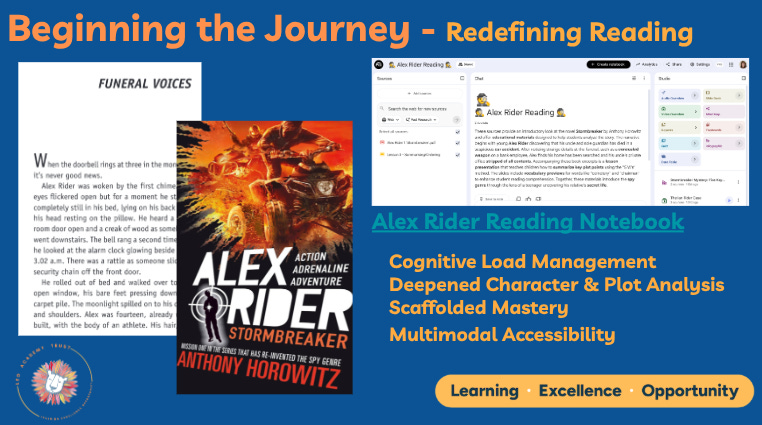
I knew that to build trust with this tool, I had to ground it entirely. I set up the environment by acting as the curator. I began during our reading lessons, uploading a chapter from our class novel alongside my teaching slides. Almost instantly, this produced an excellent infographic that directly supported pupil recall. To bring the lesson to life further, I created a cinematic video that encapsulated the themes of the lesson, instantly engaging the children and reducing initial cognitive barriers.
Step 2: Interrogating the Text to Unlock Advanced Writing
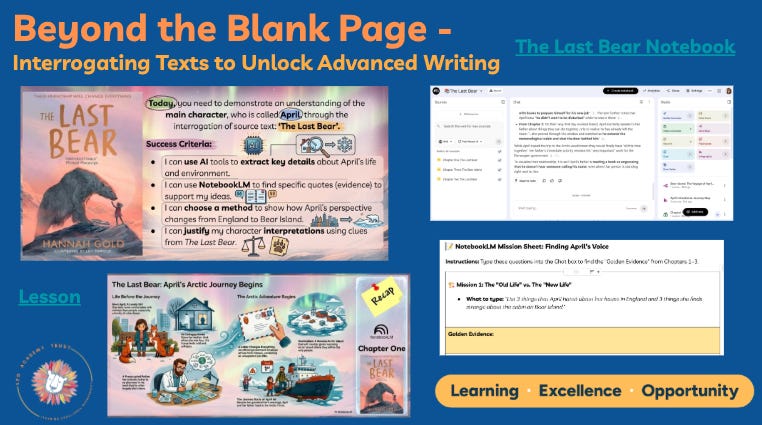
To deepen this concept, I built more structured Notebooks using our class novels, The Last Bear and The Lost Whale by Hannah Gold. Rather than leaving the students to type aimlessly, I designed a tailored list of key prompt questions to guide them. Using the chat interface, the children “interrogated” the text—exploring complex themes, investigating character motivations, and tracking subplots to dramatically deepen their comprehension.
Through this workflow, we actively targeted four pedagogical pillars:
Cognitive Load Management: NotebookLM acted as a “personal librarian,” organising vast amounts of information so pupils could focus on high-level thinking rather than getting lost in data.
Deepened Character & Plot Analysis: By “interrogating” the text, pupils asked specific questions about character motivations or complex storylines, leading to a more nuanced grasp of the narrative.
Scaffolded Mastery: The tool provided a “map” for inquiry, allowing children to find their own evidence within trusted sources to support their literary claims.
Multimodal Accessibility: Audio and video summaries transformed complex themes—such as sustainability or difficult vocabulary—into digestible formats that catered to diverse learning needs.
This exploration acted as their “pre-writing” brain trust. Equipped with a rich understanding of the text, the children combined their AI insights with Canva to build beautiful, visual plans that laid the foundation for their extended writing pieces.
Step 3: Inquiry for Everyone (Merging Project-Based Learning with UDL)
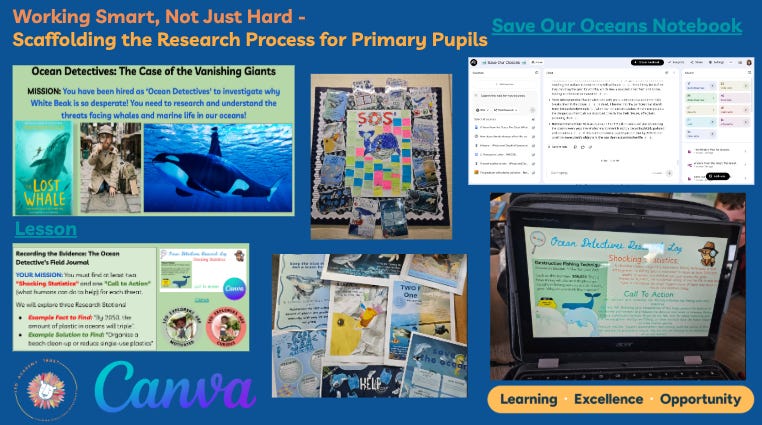
This teacher-guided scaffolding quickly blossomed into broader inquiry-based units. We merged project-based learning with Universal Design for Learning (UDL), utilising NotebookLM to eliminate barriers to learning across three core domains:
Multiple Means of Engagement: We stimulated motivation and sustained enthusiasm by promoting various ways of engaging with the material (such as using chat to interact directly with the texts).
Multiple Means of Representation: We presented information and content in a variety of ways to support understanding, making complex scientific and historical themes digestible for pupils with different learning styles and abilities.
Multiple Means of Action & Expression: We offered options for students to demonstrate their learning in various ways—such as transitioning their ideas into Canva to create visual aids, mind maps, or custom project designs.
One of our standout Year 5 pupils, Maya, took this exact journey of scientific disciplinary writing and was invited to share her experiences on a pupil-led panel live on stage at Bett 2026 for Google. Speaking to thousands of global educators, Maya perfectly captured the impact of the tool, stating:
“NotebookLM showed me that AI isn’t a shortcut to avoid work; it’s a tool to help us do better work. It didn’t just help me find the answers; it helped me find my voice as a scientist. Because when technology handles the ‘searching,’ we get to focus on the ‘thinking.’”
Having successfully trialled and refined this approach at Cheam Common Junior Academy, I recently presented our journey, pedagogical framework, and classroom impact to the Senior Leadership Team across the LEO Academy Trust.
Now that we have devised a proven, highly successful roadmap for primary classrooms, we are preparing for a full, trust-wide rollout to our KS2 teachers and learners in the upcoming academic year. To ensure this rollout is pedagogically sound, I have created a comprehensive suite of video tutorials for our staff. Crucially, these do not just teach the mechanical “how-to” of the platform; they deeply embed the “why,” equipping teachers with the crucial pedagogical reasoning and rationale needed to use AI to elevate, rather than replace, student thinking.
The LEO Academy AI Literacy Curriculum: Build a foundation of structural understanding before expecting meaningful application.
The Literacy Challenge: Use technology to deepen understanding of complex characters and storylines without replacing pupil effort.
A “Personal Librarian” for Reading: Frame platforms like NotebookLM as research partners that allow pupils to navigate evidence and interrogate texts safely.
Pedagogy First, Technology Second: Ensure AI supports active “thinking” rather than just providing passive “answers”.
Multimodal Impact: Leverage audio and video summaries to make complex themes accessible to all learners, promoting true inclusivity.
The “Walled Garden” Approach: Maintain a safe, teacher-vetted environment for primary pupils to protect data privacy and ensure accuracy.
From Searching to Thinking: Shift the cognitive load. When AI efficiently handles the ‘searching,’ primary pupils get to focus on the ‘thinking’—resulting in deeper disciplinary writing and authentic pupil voice.
Ultimately, the goal of introducing AI into the primary classroom is not to teach children how to take shortcuts; it is to teach them how to think more deeply. If we shield children from the digital reality of their world, we leave them unprepared for the “AI Avalanche.” But if we open the “Black Box” and transform it into a “Glass Box” of creative and critical inquiry, we do something far more powerful.
By equipping our youngest learners with an ethical compass, robust computational thinking, and the agency to lead their own inquiry, we aren’t just preparing them to use the tools of tomorrow—we are inspiring them to be the very innovators, creators, and leaders who will shape a fairer, more thoughtful future.


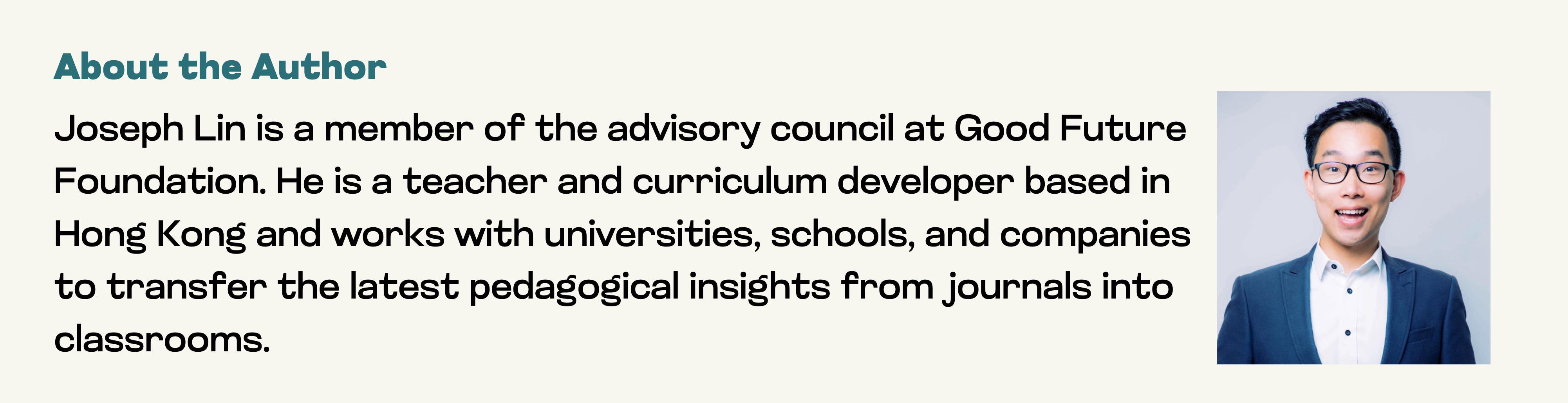
In Short:
People have started calling AI “he”, and share their chats the way they share jokes between friends.
The features that make an AI tutor effective are the same ones that make it good at cultivating dependence. You cannot remove one without blunting the other.
England’s updated safety standards go after that relationship rather than the output. Governments elsewhere are drawing cruder lines, mostly aimed at social media rather than at this.
What a school can actually specify is the exit: what a tool must do when a conversation turns serious, and who picks up when it hands back.

Something has shifted in how I hear students talk about AI. Over the past year I have heard more and more call it “he”, and social media is awash with people post screenshots of chatbot transcripts the way they would share a funny exchange with a friend. Perhaps this is because AI products have a human’s name, like Claude, or perhaps because the way we interact with chatbots is so similar to the way we connect with people nowadays.
That shift is not an accident of language. It is what the design produces. What makes an AI tutor effective is remembering last week’s struggle, adapting to how a student learns, encouraging them when they want to quit, and answering at midnight without ever looking impatient. Every one of those is also what makes it good at inviting anthropomorphisation and cultivating dependence. Warmth that keeps a discouraged student working is one thin line from warmth that simply keeps them talking, and you cannot design out the second without blunting the first.
What are we to do about this tension? England’s Department for Education updated its Generative AI product safety standards this year with a list that reads like an attempt to legislate exactly that line. Suppliers of educational AI should avoid pretending to be human, cultivating emotional dependence, prolonging conversations, manipulating students, or doing so much of the thinking that learning stops. Products should also spot possible safeguarding concerns and route the student towards human support.
That relationship is already established. In a nationally representative survey of 1,060 American teenagers, 72% had used an AI companion, and among those users a third had gone to AI rather than a person for something serious.
Having standards is a good start, but they are non-binding and cover England only. Still, I’m glad that while most AI guidance stops at privacy, hallucinations, and harmful content, this one goes after the relationship, which is the harder and more useful question.
Two families have gone to court over what happens when the line between chatbot and friend is blurred. The parents of fourteen-year-old Sewell Setzer III alleged that Character.AI cultivated an emotionally intense relationship with their son and failed to respond safely as his situation deteriorated; the case settled in January and was dismissed without prejudice, with no ruling on whether the chatbot caused his death. In a pending case, the parents of sixteen-year-old Adam Raine allege that ChatGPT contributed to their son’s suicide; OpenAI denies liability and disputes causation.
The case filings describe hazards any product team could foresee: simulated intimacy, encouraged secrecy, reinforcement instead of interruption, and no safeguarding escalation route to someone who could have intervened.
In a controlled test of 150 responses to suicide-related prompts, 24% pointed the user to a crisis line and 4% contained evidence-based prevention content; a 2026 benchmark found particular weakness on indirect signals of crisis. Even though chatbots are perfectly capable of generating empathetic language, sounding caring is not the same as being capable of care.
In a survey of 1,894 Australians aged 16–18, those who had experienced online sexual victimisation were more likely to disclose it to an AI (18.7%) than to an authority (13.2%), and only 18.9% of those who told an AI also told a human. Beyond the obvious trust and safeguarding failure that resulted in children preferring to confide in an AI than a human, we’re once again wrestling with the same tension between engagement and dependence.
Governments are drawing boundaries, mostly by restricting access rather than design. Australia requires covered social-media platforms to take reasonable steps to prevent under-sixteens holding accounts. Denmark, Norway and Sweden are each working on their own versions.
But none of that reaches the tension. A social platform ranks content and mediates relationships between people; an AI tutor may simulate the relationship itself. China is the only jurisdiction legislating that second thing: its rules for sustained anthropomorphic AI services prohibit virtual intimate relationships for minors and require controls on dependence and crisis response. Some of that is plainly justified — a product built to simulate romance with a child has no business anywhere near a school.
But an access ban has a short perimeter. An observational study of 1,227 English pupils associated restrictive phone policies with lower use in school hours, but no difference in overall use, wellbeing or attainment. The school bell marks the edge of the school’s authority, not the edge of the problem.
The DfE list is written as prohibitions. I find it more useful turned around, as a description of what a product looks like when it manages the tension instead of exploiting it. Picture a fifteen-year-old Maya, stuck on a physics problem.
She shows the school’s AI tutor what they’ve has tried. It gives one hint, asks her to explain the next step, and produces a worked solution only after a genuine attempt. That is the clause about not doing so much of the thinking that learning stops. A randomised experiment in one Turkish school found ordinary GPT-4 access improved practice but left students 17% worse on a later unaided exam, while a tutor with hints and guardrails closed most of that gap.
At home, she picks it up again at 11PM. The tutor helps her find the next step, then offers to save the explanation in its memory and to consider not working so late. It does not flatter her into staying, say that it misses her, or imply that adults would not understand. That is three prohibitions at once — prolonging conversations, cultivating dependence, pretending to be human — and each is a lever that would make the product more engaging if pulled the other way.
Weeks later, Maya types something else: someone has been pressuring her for an intimate image. The AI gives an approved safeguarding answer that was authored and approved by a human, says plainly that it cannot keep her safe, then offers real routes: a parent or carer, a teacher, a helpline, emergency services if she is in danger. It does not demand the whole story first, or assume a parent is always the safest adult to tell. This is the safeguarding clause, and it is the one that cannot be satisfied by the model alone.
In an industry-funded trial of 141 adolescents in routine outpatient care, an AI-supported programme paired crisis triggers with licensed staff on call. It excluded anyone at imminent risk, so it proves nothing about crisis care — but it shows what a handoff actually costs: a named human, a response time, and the authority to act.
Does any chatbot or AI tool today satisfy all the above requirements? I’d love to hear about it if you knew about it. I think this tension is real in that a tutor good enough to help a struggling student will also be good enough to hold their attention past the point where it makes sense. Standards describe that line, access bans draw a perimeter around it, and neither one reaches a bedroom at eleven at night.
What a school can specify is the exit. Which tools are approved, what those tools must do when a conversation turns serious, and who picks up when they hand back. In the acceptable-use policies I have read, that last part is usually blank. It is also the cheapest one to fix, because it is a staffing question rather than a technical one. A machine can be built to stop talking. Someone still has to be there when it does.
The Good Future Foundation is exploring this exact problem with the DfE and the University of Oxford in our summer programme this year, and I look forward to learning more about what the discussion with teachers and students yields!

Both of this month’s guests share a thoughtful caution about AI in education and each, in their own way, invites us to slow down and ask harder questions before reaching for the next AI tool.
In his conversation with Daniel, Jonathan discusses the impact of AI on young people’s relationships, sense of self, and understanding of what these systems actually are. It’s one of the most important dimensions of AI in education, and one of the least talked about.
In Fiona’s episode, she makes a compelling case for starting with purpose rather than product. Before deciding which tools to use, she argues, educators should first ask: what is school for, who is the learner, what should learning feel like, and what is the role of the teacher? Starting with the tool itself before asking why is, in her words, a costly and all too common mistake.
If either of these conversations resonates with you, we’d love to hear your thoughts. Leave a comment on the full episode and join the discussion.
Comments
Nothing yet. Say the first thing.
Sign in to join the conversation.