
Heatwave after heatwave, and even without a heatwave it’s hot in the uk right now. To add to the heat, there’s no rain. It’s exhausting, fairly frightening and if you have your feet in two worlds (online and offline) rather confusing.
Conversations offline revolve around how harsh the landscape is looking, rules around hosepipe bans, concern for our wildlife. Yesterday I saw someone watering street trees, I think I might start doing the same. Online feels like a different story, whilst the news channels show wildfires, at best on social media it’s a positive spin on what to plant, at worst on yesterday I saw a video joking that 28 degrees feels cold now. I find it hard to joke about the extreme change in our climate (maybe it’s because I get home in a puddle of my former self after outside working in it). However, I think humans naturally blend humour and a positive spin to deal with hard things - our very own adaptation perhaps?
Another layer to confusion is the terms being batted around online, plants that thrive in heatwaves, resistant plants, plants that tolerate. It’s not even just social media to point the finger at, even fairly reputable sources use the terms interchangeably. But for me drought-tolerant and drought-resistant group different plants together, those that will tolerate prolonged heat through coping mechanisms and those that are resistant will be generally unaffected thanks to their key characteristics.
All plants physiologically have a tolerance range when it comes to heat. There will be an ideal range of temperatures to conduct our favourite activity - seed production (through flowering), below that plants will focus on root activity and if cool enough, safe dormancy. When we get above the ideal range, the drop-off is sharp, blooming periods shortened, leaf wilt, anything to help protect the plant from extreme damage. The tolerance range varies from species to species, but generally it is accepted the ideal range is 15-25c for temperate garden plants in the UK. Although I will note, some will be higher, some will be lower and then you can consider the fact that plants acclimatise and adapt.


Of course, it’s never straight-forward. Perennials, are the go to example when it comes to talking about this subject, looking towards the prairie or the Mediterranean for inspiration - but of course, this island still has it’s wet, it’s just seemingly more condensed into a few winter months instead. Not all perennials can cope with soggy feet, so it’s worth still adopting an all-round approach to gardens, including trees & shrubs.
Drought-resistant plants adapted for the heat
Plants that are resistant to long periods of heat tend to have quite recognisable characteristics to help them breeze through. Things like silver foliage, reflecting back the sun rays. Or hairy leaves, creating a microclimate around their pores (stomata). Waxy leaves of succulents store water for periods of drought. And then there is reduced leaves, the less surface there is the less lost to transpiration.
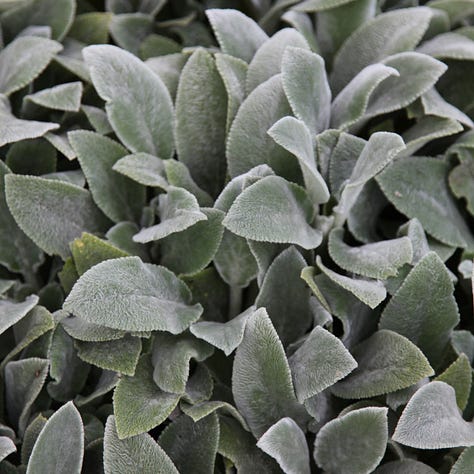
Stachys byzantina ‘Silver Carpet’ - you have a couple of choices when it comes to how to cover your bare soil, mulch, dense plant or use ground-cover spreaders. This one is of one my absolute favourites. It’s so dense to the fact that it will completely cover every spot it takes over - it helps retain water and it’s furry silver leaves feel really great breaking up a mass of green. Plus, there’s a bee that uses it’s hairs for it’s nest and it’s the sweetest thing to witness it harvesting.
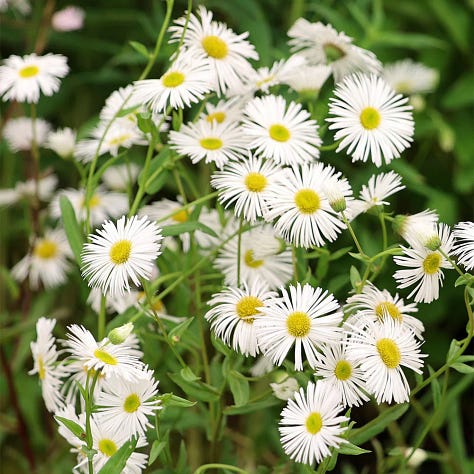
Erigeron ‘Schneewittchen’ - I love Erigeron, I’m always on the hunt for different cultivars. This one has taken my eye, it has slightly more thin petals which makes for a good contrast with the classic Erigeron karvinskianus. Let this freely self-seed, filling in the gaps so you don’t have to.
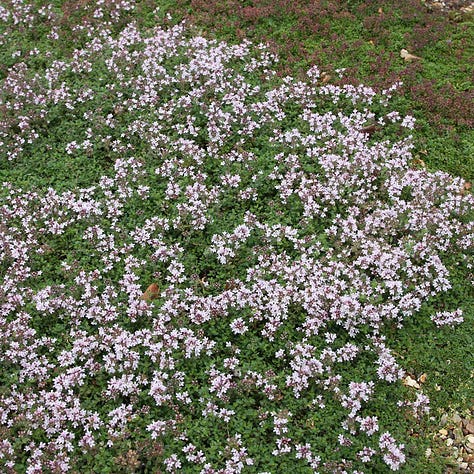
Thymus serpyllum ‘Pink Chintz’ - Creeping thyme is another perfect dense forming ground-cover. It is quite low in comparison to others, which works well for blending into gravel or pathways. The little flowers are a fun benefit too, you can pick from a few cultivars to get the right shade.
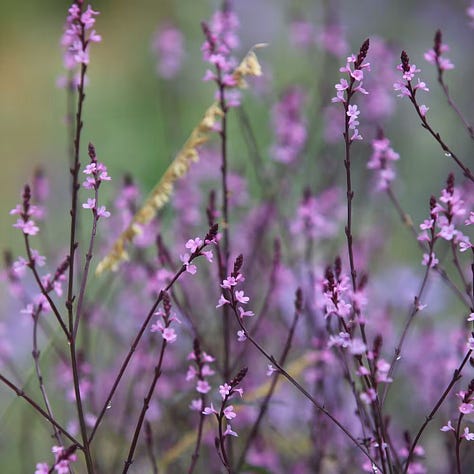
Verbena officinalis var. grandiflora ‘Bampton’ - I’ll never stop singing this plant’s praises, there’s not really a Verbena that I’m not fond of, but this one feels so unique and so interesting to peer through mid-border. It holds it’s structure well and self-seeds freely.
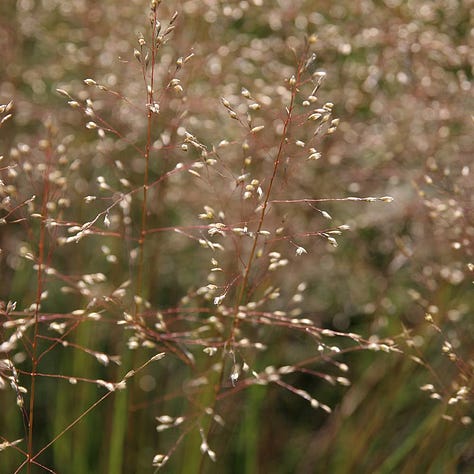
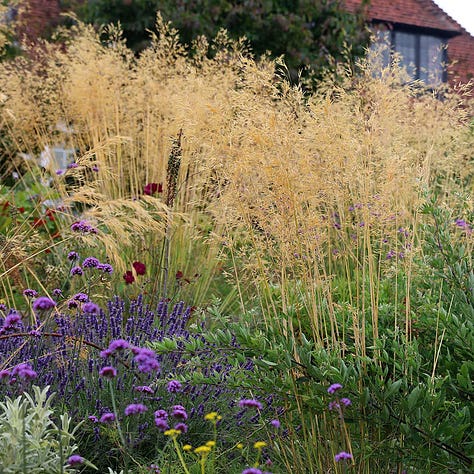
Sporobolus heterolepis - Most grasses made for full-sun work well for drought-resistance, it’s more about picking ones which can tolerate the winter wet. This grass like Stipa works well in both, but forms a more sweet little mound of green before creating wafts of beautiful seed heads. One to add to the mix of grasses for sure.
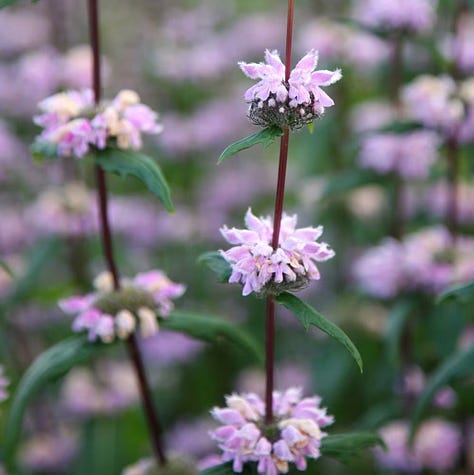
Phlomoides tuberosa ‘Amazone’ - I love anything structural, like Phlomis, these have beautiful whorls of flowers that go up tall stems. After flowering the seed heads stay strong and hold up the border structure well.
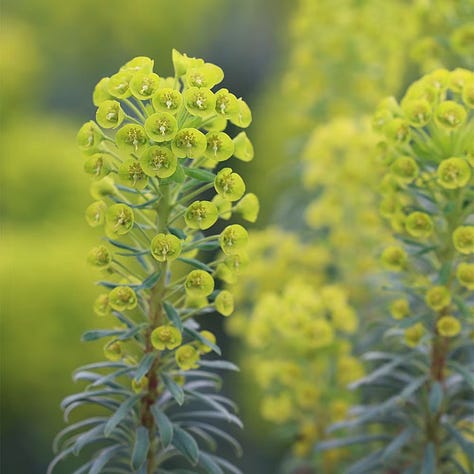
Euphorbia characias subsp. wulfenii - Sometimes it’s a little daunting writing a plant that most people are aware of, but the thing is with planting schemes, choosing well-known and tested plants isn’t a failure - it’s somewhat sensible. This Euphorbia is popular for a reason, it brings brilliant structure, it can deal with the wet, the heat and it flowers at a time when nothing else is going on. Worth-while spot in the garden.
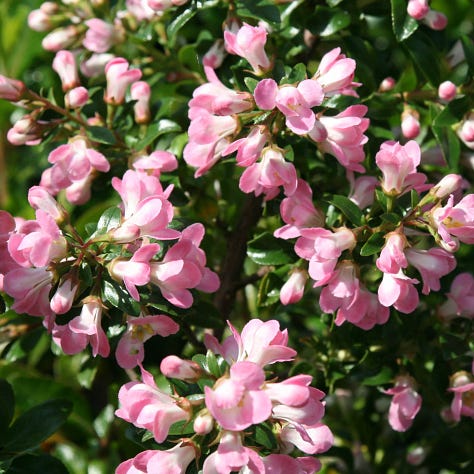
Escallonia ‘Apple Blossom’ - When we think of heat-tolerance, it’s easy for the brain to flip to perennials, but a big part of creating a climate resilient garden is having a good mix of plants from trees to annuals. This Escallonia provides a perfect windbreak, back of border hedge situation. A good space for habitat and grows pretty tall casting some nice shade for you too.
Stipa gigantica - There’s no escaping another favourite, the wafty-queen herself. It’s a plant that dances above all others, not really caring too much for little rain once established.

In terms of the survivors, many of us will already know them, see them currently dealing with the lack of rain - things like Roses, Hydrangea, Fatsia - they’re coping, absolutely, but thriving? Not necessarily. So rather than them being a recommendation, it’s more learning how to give them a better life really. An example that comes to mind is the fact Hydrangeas (I’ll take H. paniculata as an example) often comes with advice to plant in full sun, in my garden in the South-East that would spell in demise pretty quickly. Instead mine are planted in the part-shade, receiving about 4/5 hours of sun a day. Their leaves do drop every few days, but they power through.
For the survivors it’s about mulching well, even now I’ve been topping up in those spaces with some bark. Priority watering, I don’t really water the borders much as I’ve tried to pick tolerant species, but these spots will receive water every so often. A bit of feed for recovery, after Roses bloom I tend to add a bit of slow-release chicken manure and water it in to help them find some energy to go again. And of course, using other plants to shade them where possible, not all of them love to be moved so adding some dappled shade can help.
Through-out all of the content going round about heat-tolerance, I think it’s probably important to note that this climate change is wild, and rapid. You’ll see a lot of successes with the resistant species, but I doubt many people have spaces that are not suffering to a degree. It’s not a failure on you, it’s a chance to learn and adapt, but also to push back and put your feelings into your daily conversation. People will try to normalise what is happening, but nature does need us to push change.
Anyway, here’s to hoping for a drop of rain soon eh?

Thank you for reading, allie x
Hopefully, you enjoyed this post, if you did, I would be eternally grateful if you would share/restack so I can reach more people like you.
Also, you can find me on other parts of the internet, if you fancy: IG, TikTok.
I use affiliate links on this Substack - if you order anything from my list, I’ll earn a small commission (which I will probably put towards more plants & tools! )
Comments
Nothing yet. Say the first thing.
Sign in to join the conversation.