
My biggest fear, waiting to become a father, was that it would plunge me into a giant vat of anxiety. I pictured myself unwilling to let our daughter out of my sight, worrying constantly that she’d get sick or harmed. The beautiful surprise, in those early weeks and months, was that there wasn’t much of that at all. Rather than expose me as a wobbly jelly of fear, I found having a baby made me feel both stronger and lighter. I felt a surge of confidence in my ability to face life head on, a deepening trust in my relationship with my partner and myself.
But in the background, quietly at first then growing louder, a different kind of dread was taking form. It was about what was happening in the world outside, on the TV and on my phone. Stuff I was too nihilistic or distracted to pay much attention to in my twenties and thirties suddenly had me in a mental chokehold. Now, I often go to bed feeling like a foreign hand is squeezing my heart. My stomach lurches in my torso like a train drunk. I am lowkey terrified, all the time.
It started during the 2024 US election. We were just a month away from our due date and knew we were expecting a little girl. I became obsessed with TV news and listening to obscure American political podcasts. The Hill’s ‘Harris vs. Trump poll tracker’ I checked every morning is still bookmarked on my laptop. Like everyone else, I was paying closest attention to sources that confirmed my own bias, and so was sure Kamala was going to win. My daughter, I decided, would be born the year a woman became POTUS for the first time, and history bent decisively away from the division and madness of life since 2016. Instead, I woke up like everyone else to see his face – the one we’ve had to look at and think about and recoil from every day for a fucking decade now – smirking and gloating (but never laughing, never looking like it understands joy). The era she’d be born into would be characterised by more dull cruelty and chaos. I felt sick, switched off the TV and didn’t look at the news again for months.
Slowly, the world crept back in. Over the 18 months since, I have lived a kind of double consciousness. When I am focused on Olive, on our home, on the small world she knows of picture books and walks in the park and being wrapped up in a towel and rolled about giggling, I feel at peace. Then, once she is asleep, I collapse onto our bed and open the portal. War and economic collapse. Technology, invented by weirdos and misanthropes, degrading our ability to be human. Every single waterway in Britain – check this one out! – the seas I swam in as a kid, the rivers my granddad fished in before I was born – now polluted1. Was the world always this terrible? Hasn’t everyone in history always thought that? Or on the flip side, are we just more aware of it than ever?
It’s not just politics. I am haunted, on a daily basis, by the theory artificial intelligence will multiply beyond our comprehension, until it is to us what we are to bugs. That it will seize the means of production, shut down our infrastructure, and assemble an army of robots to exterminate us. This sounds utterly insane. It is also being predicted on some of the world’s biggest podcasts, served up to me on TikTok in nasty little shards.
If it wasn’t for Olive, I’m pretty sure I’d contemplate the robot apocalypse with at least some form of brittle bravado. If I die, what does it really matter? I’ve had plenty of fun out of life. Hand me a stick with a nail in it and I’ll take my chances. But with her asleep in the next room – visible, just a swipe of my thumb away, in the grainy footage of our baby monitor app, sucking her thumb and caressing the edge of her mattress with the other… that I may be unable to protect her from the future changes everything. Instead of brave I feel a rush of the very worst things: feeble, helpless, afraid.
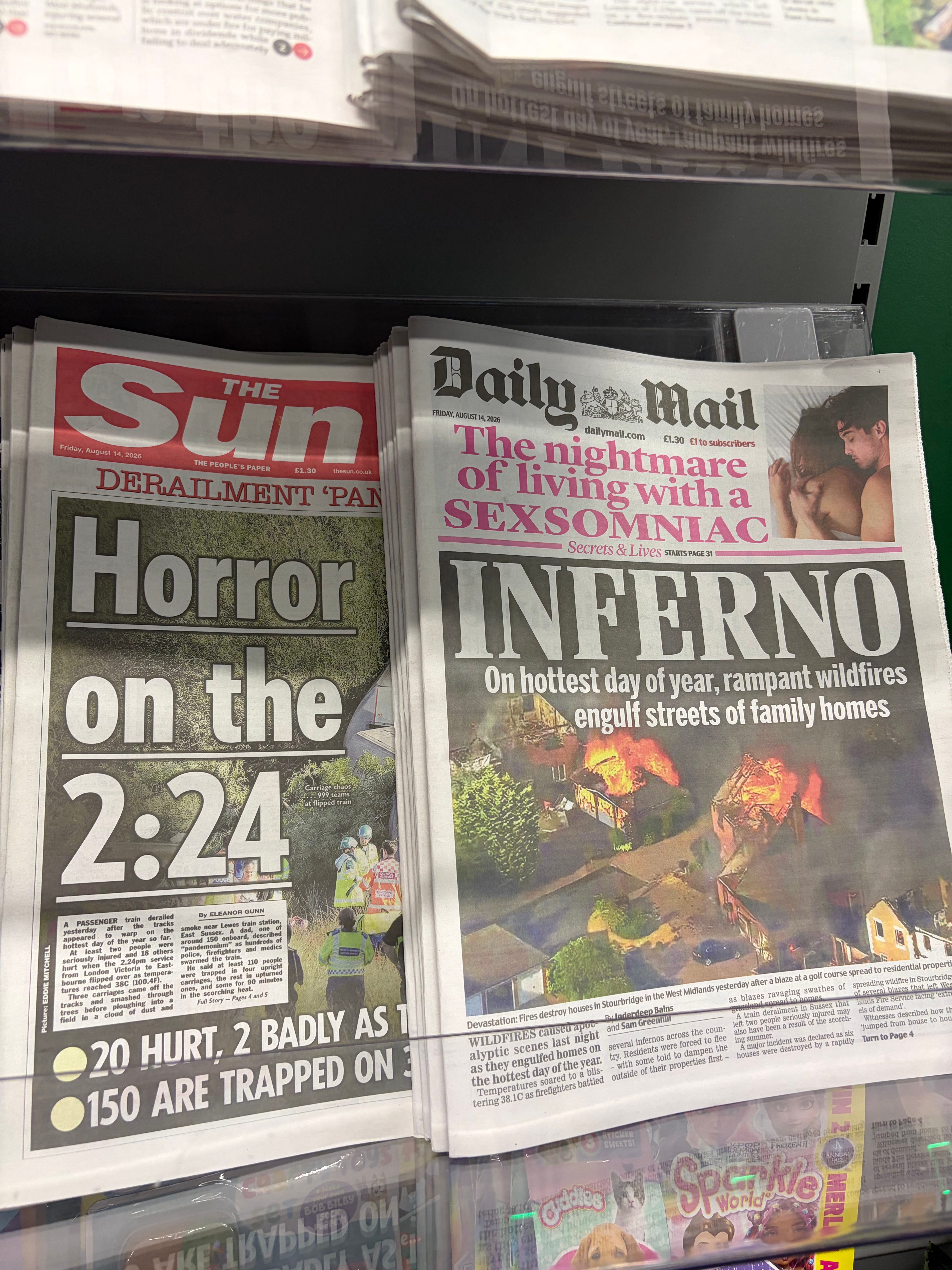
Then there’s the grass. Or rather, what used to be the few square feet of grass in our back garden. It’s no longer green but an arid, sickly yellow. It’s grown spiky weeds that hurt to walk on. It’s too hot to plonk Olive down so she can feel the vibrations of the earth through her tiny toes. Instead, we cower inside under the hum of fans. Her soft new hair sticks to her neck in sweaty clumps. “Drink,” we tell her, holding out a beaker. “Drink”, like she’s a wilting plant. On the screens, the scene expands to horrifying degrees. Entire parks scorched. Plants and crops dying. Forests and houses on fire. More talking heads on podcasts, this time explaining that – actually – this will be the mildest summer any of us ever know again.
How can I explain to my daughter that the seasons I grew up with, the ones painted in her favourite picture books, have been obliterated? That the distinct colours and mood of autumn and spring have been replaced by only ‘hot’ and ‘dangerously hot’ months? That the adults she’s supposed to look to for safety let all this happen because the effort of stopping it was too… annoying, I guess? When we go out for a walk, I hold her up to trees and plants so she can pat them curiously, and feel like a hypocrite. (“It’s important to appreciate nature, my darling, but no – not enough to actually save it”). Will she even be able to go outside by the time she is my age? How will we be living? The other night, I asked ChatGPT for reassurance about green technologies then remembered it is powered by data centres draining the planet of its water resources. I throw empty jars of peanut butter straight in the bin because I’m too tired to soak and clean them for recycling and because I’ve read hardly any of it gets recycled anyway. Everything feels broken, hopeless.
She still has so much life left to live.
I land upon a desperate theory. What if fatherhood has meant my response to the world’s problems is being somehow heightened, or bent out of shape? Maybe all this terror is simply the price you pay for the love that enters your life. Newton’s Third Law of Motion: every action has an equal and opposite reaction.
In neurobiology, there is the theory of the ‘overactive smoke detector’. During matrescence, the amygdala – the part of the brain that processes emotion and threat – actually expands, and becomes hyperactive. Mothers develop a form of hypervigilance to risk. As always, research into fathers is considerably more scarce. But engaging actively in caring for babies is thought to produce similar results in men too. Then there are the hormones. Healthy, engaged parents are flooded with oxytocin, famously the ‘love and bonding’ chemical. But the darker side of oxytocin is that it also makes the outside world look more hostile, to keep you on your toes. Then there’s our old friend sleep – or the lack of it. When we don’t get enough rest, our bodies stay flooded with cortisol and adrenaline. It starts looking for threats in the shadows.
Wherever the truth lies, I know I am not alone. In some studies, up to 100% of new parents report having intrusive thoughts, even if they’ve never suffered from anxiety before2. These thoughts can range from visions of harming their baby themselves, to an irrational fear that loves ones might, to a phenomenon called Headline Stress Disorder, where we endlessly catastrophise the news. Right now, 84% of parents of young children worry about the climate, including feeling ‘Moral Injury’: a form of grief and shame about their culpability and powerlessness to stop it. An entire paper into environmental anxiety in new parents was published earlier this year.3 It’s key finding? We simply can’t cope with absorbing news about climate collapse on the global scale. The best response is to either disengage entirely, as I did after the 2024 election, or focus on “issues [that are] locally relevant and solution oriented.”
In 2019, Jonathan Safran Foer wrote a book about the environment called We Are the Weather. In it he argues that we lack a unifying narrative around the threat of climate change, a sense of it as a shared ‘enemy’ that could inspire us to make big, collective sacrifices. He used the example of the Blitz in London, when people en masse accepted rations and covered up their windows at night to repel the Germans. Maybe this summer, as we sweat through heatwave number five, we will finally all feel ‘in it together’. Maybe there’s still time to climb out of our isolated chambers of torpor and turns some of this stuff around.
I hold Olive before she goes to bed, feeling her tiny, sticky chest rising and falling against mine, and clutch at these straws. They tell you about the sleepless nights, the loss of energy and time. They even tell you, sometimes, about the joy and pride – at least I do, whenever I speak to someone waiting for their child to be born. But no one tells you about the helpless, existential dread of fatherhood – the only bit of it I’d change for the world.
If you liked this story, you might like my book. It’s called Good Anger: Why We Shouldn’t Fear Our Rage and it’s a blend of psychology, history and memoir about how embracing a taboo emotion can help people pleasers, conflict avoiders and anyone suffering with depression or anxiety. There is also a new chapter on handling anger in parenting.
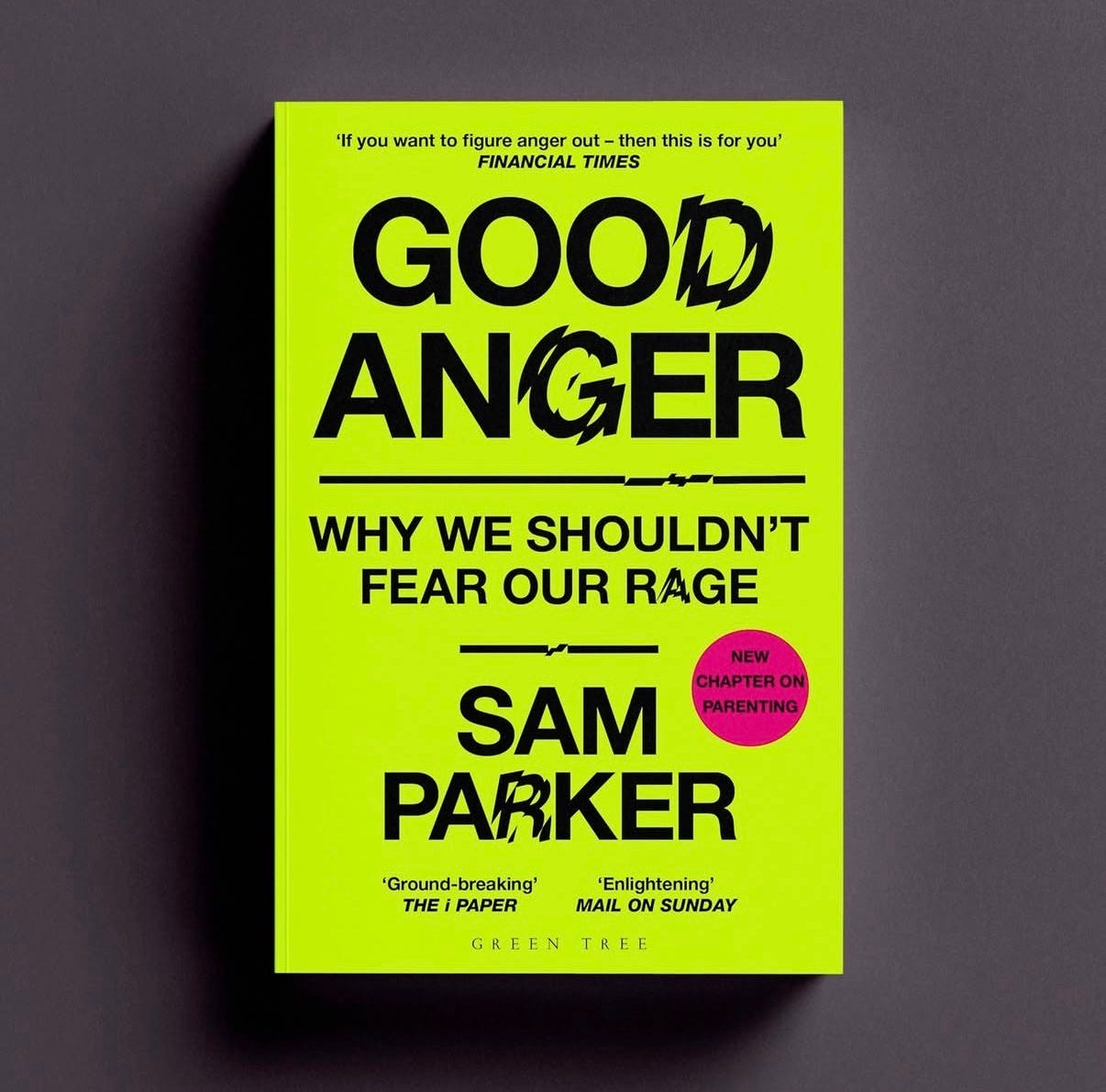
Good Anger was named a book of the year by The Independent, GQ, Glamour, Esquire and The Next Big Idea Club and featured in the Guardian, Observer, Sunday Times, Mail on Sunday and more.
It can be ordered online at Amazon or Waterstones.
Comments
Nothing yet. Say the first thing.
Sign in to join the conversation.