
One of the strangest things about living through permanent crisis is how powerless it can make us feel. The shocks keep coming; Westminster lurches from one emergency to the next; and resilience starts to sound like something we hope the government is handling on our behalf. But if resilience depends on the centre, and the centre is fragile, then resilience is fragile too.
Over the next few days, British politics will once again be consumed by a question that’s become all too familiar over the last decade: whether the Prime Minister survives the week.
But the real story here isn’t about one politician, or Westminster’s latest febrile moment. It’s about something much deeper and more important: how brittle our systems have become in an age of permanent crisis, and what it would actually mean to build resilience in this kind of world.
So it’s striking that, just last week, Keir Starmer argued that resilience should be the organising principle of government, writing in a piece in the Guardian that
The world today is more volatile and dangerous than at any other point in my lifetime. That will test and test again every element of our security. And over the years, that is a test for which Britain has too often been found wanting.
That’s why resilience has been at the heart of my government’s approach – our approach to the conflict in Iran, yes, but also our approach to preserving the national interest at home.
It’s a timely argument (perhaps ironically so). But it’s also incomplete — because you and I aren’t in it. And in an age of permanent crisis, the most dangerous thing isn’t instability. It’s the feeling that there’s nothing we can do about it.
Starmer’s diagnosis in his Guardian piece was spot on in three ways.
First, it correctly identifies how global risks keep hitting home here in the UK:
Britain has been buffeted by crises for nearly two decades now. And from the 2008 financial crash, through austerity, to Brexit, Covid, the Ukraine war and Liz Truss, the response from Westminster has always been the same. Manage the crisis, find a sticking plaster and then desperately try to reassert the status quo.
Second, it argues that building resilience involves a both/and: both collective action internationally (“We work with allies, not alone”) and action at home (e.g. the nod towards “invest[ing] heavily in the homegrown energy that can free us from the tyrants who manipulate gas prices”).
And third, there’s clear recognition that resilience also means protecting the most vulnerable - for instance in recognising that the government’s plans to lift half a million children out of child poverty are a key part of resilience.
All three of these points are fundamental. It’s already a more complete and integrated way of thinking about resilience than any other British government has managed in recent decades.
But here’s the problem: it’s still all about what happens in Westminster. And Westminster, as we’re seeing yet again this week, is not exactly a stable foundation.
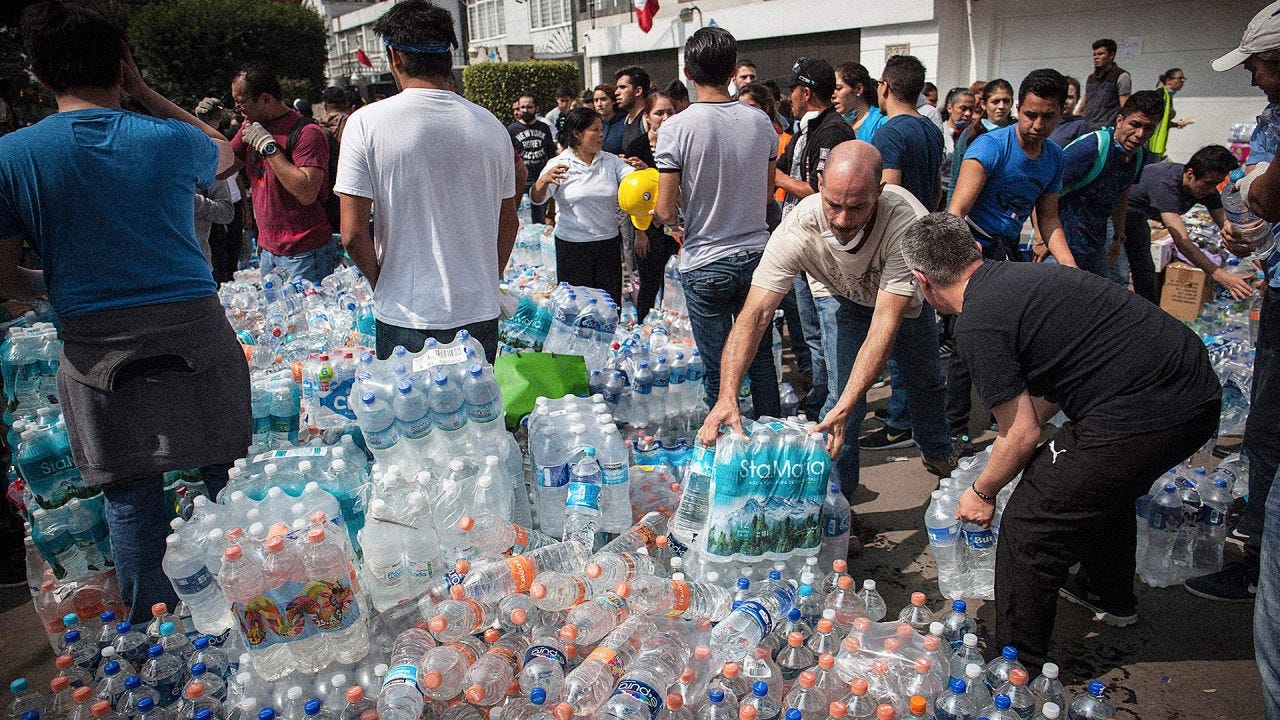
Luckily, there’s an alternative to the centralised version that Starmer set out. It’s a far more distributed variant, that recognises this as an all hands on deck moment and brings all of us in, on the basis that if we really want to build resilience, we need a larger us.
It’s a tension that David Steven and I explored in two of the four ‘long crisis scenarios’ that we created at the height of the pandemic (and which I’ve written about before on the Good Apocalypse Guide here).
One scenario, “Big Mother”, imagines a world in which — just as in Starmer’s op-ed — government tries to do everything itself. It’s fine if it works. But there are two big problems. One is that an approach this centralised misses out on a huge amount of innovation. The other is that we’re putting all our eggs in the central government basket — meaning that if government fails, then we’re in real trouble.
Our “Winning Ugly” scenario, on the other hand, points in a different direction: one where resilience is distributed rather than centralised. Where mutual aid networks become core infrastructure. Where local government shifts from provider to enabler. Where national government works in partnership with citizens and civil society. And where internationally, cooperation focuses on the essentials: security, stability, and a future people can believe in.
This is what Starmer’s op-ed missed. It’s a lot like the difference that Jon Alexander highlights between being ‘Subjects’ or ‘Consumers’ — where we either mutely do what government tells us, or pay someone else to sort things out — versus being ‘Citizens’, where we step up and actually exercise our agency.
So what would this look like in practice — if we took seriously the idea that resilience depends on whether people feel like agents, not spectators? Three key areas come to mind.
First, getting serious about subsidiarity — the principle that social and political issues should be handled at the most local level possible, only getting escalated upwards when it’s really essential. This goes far beyond devolving power to ‘metro mayors’. It’s about empowering actual people, not just a different layer of professional politicians.
Second, deliberative democracy. Elections every five years are no more than a snapshot of a set of disagreements at a particular moment in time. As Catherine Day, founder of the National Strategy Project, put it in the Financial Times last week,
A vote tells us who wins — not what the country actually wants, why it wants it, or what trade-offs people would accept.
We can do better, and smarter, than this, especially now that we have technology platforms that can, as she observes, “give millions of people a real voice” and “turn that vote into a considered judgement on complex issues”.
And third, we need to apply this kind of approach to our fiscal nightmare. We’re drifting steadily towards some kind of moment of reckoning on our parlous fiscal condition. Growth was sputtering even before the Iran crisis. Each crisis leaves the government with less “headroom”. Public debt is now close to 100% of GDP, and the interest payments are eye-watering. It’s really hard to see how we maintain current public spending levels while taking on whole new areas of spending that are crucial for resilience, like rebuilding defence or decarbonising the economy at pace.
There are huge trade-offs here, and none of the political parties is really being honest about them. So if we wanted to get serious about deliberative democracy as part of a national resilience strategy, this might be a really good place to start — by meeting the mother of all trade-offs with the mother of all participatory budgeting exercises that actually treats voters like grown-ups for a change.
Brits love to talk about the “Blitz Spirit” — a mythical (and perhaps rose-tinted) folk memory of resilience at a time of existential crisis.
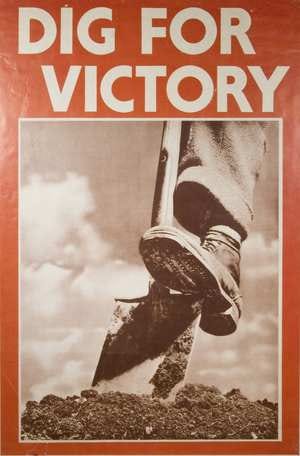
In one way, of course, our approach to resilience back then was ultra-centralised, from a national unity government and war cabinet to air raid wardens haranguing families whose blackout blinds weren’t properly closed. But in another way, it was incredibly distributed — from “doing your bit” to “digging for victory”.
Eighty years later, in our 21st century polycrisis, taking a distributed response to resilience in the face of shocks, stresses, crises, and apocalypses — as a larger us — has never been more important.
Partly because centralised government responses simply can’t keep up: too much complexity, too much speed, too little bandwidth, too little fiscal space.
But also because feeling like we actually have agency in an apocalypse is so important, both for our individual states of mind, and to resist the sense of powerlessness that turbocharges populism and division — the absolute last thing we need if we want to build resilience.
Seeing ourselves — and acting — as a larger us isn’t just a nice-to-have. It’s how we make this a good apocalypse. Especially when Westminster keeps showing us the limitations of a centralised approach.
Gillian Tett had a smart piece in the FT a couple of days go welcoming us to the new age of hoarding as a national policy strategy.
Viktor Orban is no longer running Hungary — whew! But now comes the hard part, as Yascha Mounk unpacks.
Sebastian Mallaby had a really good piece in the New York Times exploring why the US and China now need to put together an AI equivalent of the Nuclear Non Proliferation Treaty.
No posts
Comments
Nothing yet. Say the first thing.
Sign in to join the conversation.