
Like much else in Keir Starmer’s ill-starred premiership, the progress of his social media ban has been deeply tortured. It is an irony that what is likely to be the signature achievement of his government is something about which he has been, until recently, reportedly sceptical. As ever, with Keir Starmer, he is vaguely good at being against something, right up to the point he is good at being vaguely for it. This latest episode has all the potential of being a total microcosm of the false starts and failed lifts of his administration.
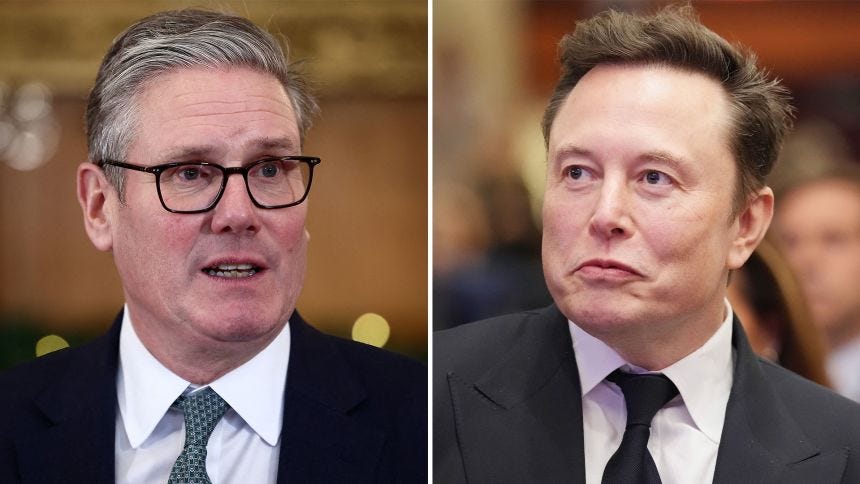
Any starting position for a progressive government, concerned about concentrated and unaccountable power, ought to be a capacious scepticism about the Silicon Valley tech giants. Through their pernicious algorithmic based politics and refusal to accept responsibility as publishers and media providers, I believe they are gradually boiling our democratic politics. I’ve just got back from Belfast where we saw race riots in a British city, partly fuelled by Elon Musk’s feckless use of his own social media power. A city shut down by AI generated images threatening violence, street by street. More prosaically but no less importantly, children are deeply anxious and there’s plenty of evidence social media has more than its share of blame. I worry that I am from the last generation to grow up without an attentional atomic bomb in our pockets at every moment of every day. Online grooming is now ubiquitous, to an extent I can scarcely credit. Governments have for too long looked away from all this and there is much that is creditable in the proposals to deal with.
But is this the answer, and is it the answer right now? Many of the details trouble me as rushed and ill-considered. Does anybody believe that Starmer would be acting so precipitously, without a white paper, unless he was legacy shopping? Is it really credible to say that 16 year olds are able to vote and marry, but prohibited from posting about it on Instagram after 8pm? What will happen with the data which is collected? How will the age verification actually work and can it be done in such a way which is not onerous for adults? And do we really think it’s credible or desirable to ban YouTube for teenagers, which is basically just their…TV?
The exact application of the details matter as do good answers to all these questions because if they are not ironclad, ironically enough, it is now on social media that they are pulled apart and discredited in dog-year time. For a case study in exactly what I mean, we need look no further than digital ID cards, proposed by the government last September. That was, until Keir Starmer advocated it, a very popular proposal. The PM came out in favour of it, just before party conference, to get himself out of the latest political hole in which he found himself. It was announced out of the blue, with virtually no real plan for how it would be affected or explained to the country, certainly not a comms strategy. It was torn apart online, conspiracy about government control quickly spread, propelled by eccentric but influential accounts with the algorithms on their side- and virtually nothing was done at the top of government to stop it. Within weeks, its polling collapsed. In the broadcast era, governments could roll out technocratic reforms through institutional trust and message discipline. In the algorithmic era, every enforcement mechanism, every minor controversy instantly becomes content — clipped, distorted, radicalised and fed back into politics at scale. With the weird fusion of political content and the hothouse of Westminster, there is increasingly a third body of the British Parliament. A sort of algorithmic veto. One of the explanations as to how and why the Starmer government has struggled, is because it hasn’t been able, through political skill, to combat and overcome it.
Social media ban starts with greater cross-party and public support than digital-ID. It also has the benefit of being a project of the impressive 2024 intake Josh McAllister, who has done much of the legwork. The PM himself is also said to have become immersed. But I can imagine three political headwinds crashing into it. Firstly, for all intents and purposes, digital ID or digital verification will be required to enforce a social media ban. They’re interconnected policies, which will resurrect all of the problems we saw last September. As I say, digital ID is now deeply unpopular and is easy to misrepresent (see Elon Musk’s tweets tonight). Conspiracy (sitting alongside legitimate concerns) will soon be everywhere. Secondly, the social media companies will use their algorithmic power to boost those outrages and delegitimise the policy.
As a result of all of this, for a flagship policy like this, with the headwinds coming its way a government would need a detailed content and comms policy and key communicators to sell it, with the full energy of a government in its prime. Instead, it is being thrown out by an administration at the ember and ash stage of its fag end. Which brings me to the third headwind, there is the horrible possibility that Starmer is so unpopular, that an otherwise popular policy is sullied by association.
In 2026, the algorithmic era makes fringe positions popular and popular positions fringe. Though I’m not convinced by the wisdom of the policy overall, with the government’s position so parlous, I fear we’re about to see it again. It is a lesson for Andy Burnham, if he is soon to take over: in the algorithmic age, governments do not merely have to design policy. They have to survive it.
No posts
Comments
Nothing yet. Say the first thing.
Sign in to join the conversation.