
I sat in two rooms that had nothing in common. One was a conference room where the College of Science’s AI Competency Industry Advisory Board worked through what an “AI-ready” science graduate actually is. The other was a semiconductor fab, where I stood at a window watching students in bunny suits run process steps on equipment most universities can only show in a video.
Different rooms, different people, different questions. They gave the same answer.
Both started on AI tools and quickly left them behind. What they kept circling back to was judgment, domain expertise, and — unprompted, in both rooms — control of data. I’ve spent the last year arguing that as models commoditize, value migrates to the constraints: power, capacity, and trust. These two rooms were that thesis wearing different clothes. When intelligence gets cheap, the scarce thing is the human who understands the physical world well enough to direct it.
I should say up front: I’m a Purdue alum. I came with pride — and left with a clearer view of the strategic signal underneath it.
The board was as cross-industry as it gets: NVIDIA, Google, Eli Lilly, ExxonMobil, Cook Medical, Elanco, Argonne National Laboratory, IBM/Red Hat — and my own firm, Good AI Capital, alongside them. A group you’d expect to pull in ten directions.
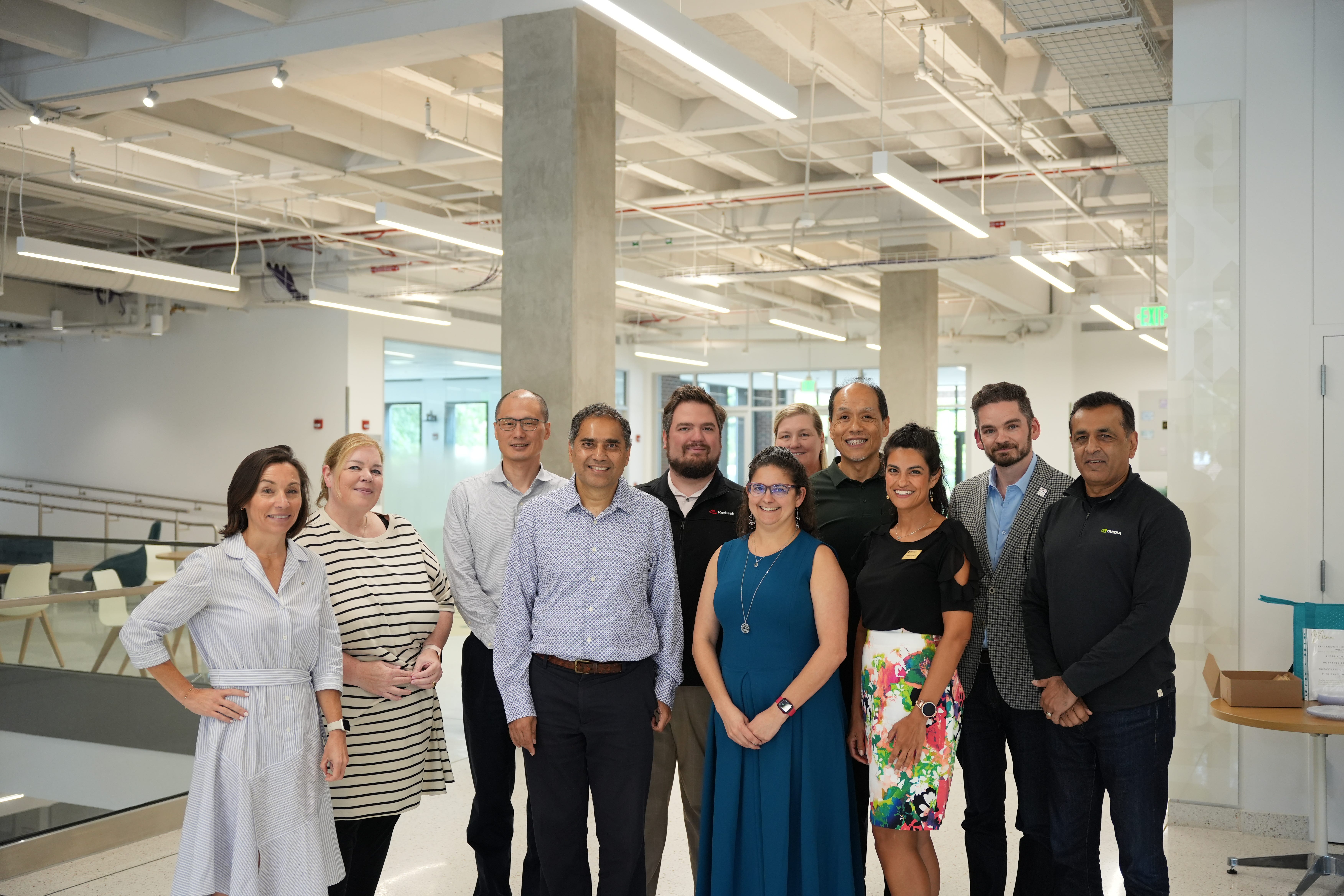
Instead, they converged. NVIDIA’s Ronnie Vasishta put it most directly: the scarce asset is deep domain expertise — the engineer who understands a problem well enough to know what to ask of the machine, and whether its answer is any good. Everyone else landed in the same place. And one theme the board kept pressing was data governance: students have to understand where data comes from, who owns it, and how it’s stewarded — because, as they put it,
AI literacy without data literacy is dangerous.
The day’s summary reads like a single voice:
AI accelerates expertise; it does not replace it.
AI readiness is about judgment.
Teach the domain. Coach the AI.
That advisors from industries sharing nothing arrived there unprompted isn’t an opinion — it’s a signal.
A couple of days later I was at Birck, Purdue’s nanotechnology center — a working, customer-serving cleanroom, not a classroom simulation. Full-time staff, industry veterans, real customers, an eight-inch line. You don’t walk onto the floor; it’s reserved for people doing live work. I watched through the glass.
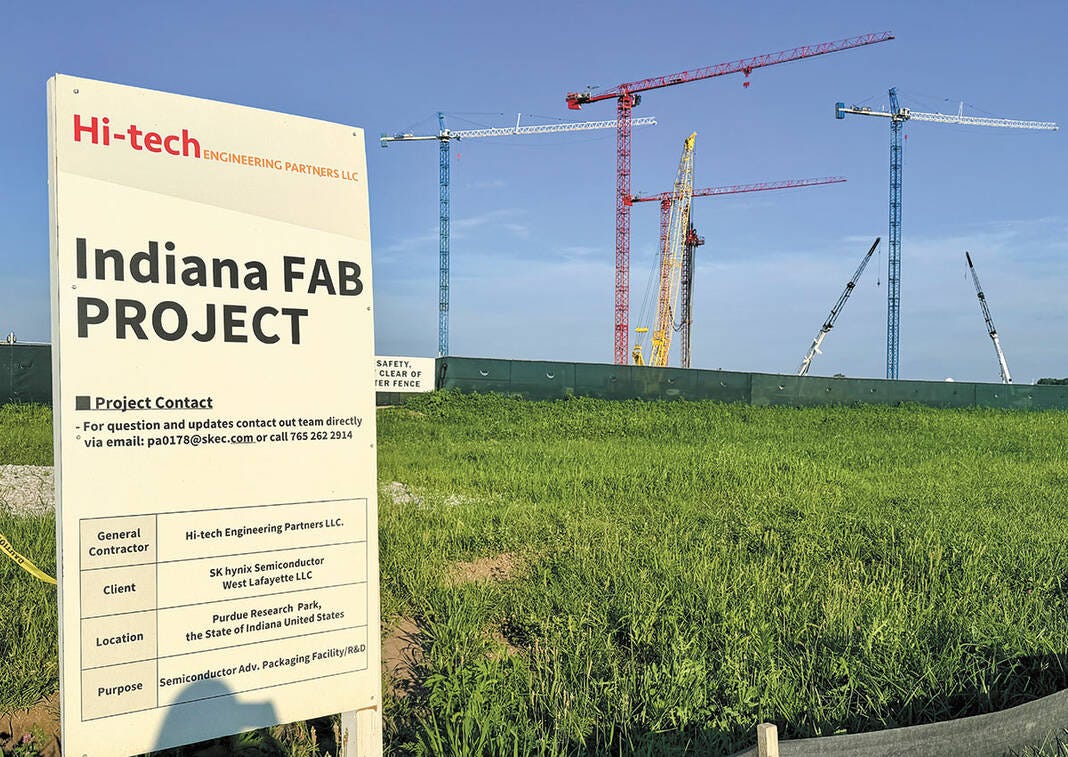
And Birck isn’t the whole of it. A few miles away, SK hynix is building its first U.S. advanced-packaging fab — a nearly $4 billion facility for high-bandwidth memory, the kind that sits alongside many of today's leading AI accelerators, with production slated for 2028. The memory bottleneck the whole industry is racing to solve is being poured, in concrete, next to the university training the people who will run it.
What Birck does with students is the physical version of what the boardroom concluded. It runs on Purdue's Semiconductor Degrees Program — a large-scale workforce pipeline guided by an industry leadership board of some forty companies. Its most hands-on piece is the Vertically Integrated Projects program, which puts undergraduates in the cleanroom for two-plus semesters, on real unit processes, metrology, and statistical process control — the disciplines a fab actually runs on. It is hard, unglamorous, unforgiving work. Equipment doesn't grade on a curve.
That difficulty is the point. It’s what Purdue’s computer science chair, Petros Drineas, calls #PurdueGrit — the willingness to stay with a hard problem until you understand it. Welcoming the largest incoming class in the department’s history, he put it plainly:
Fundamentals first, AI skills on top. And the ability to keep learning throughout a career.
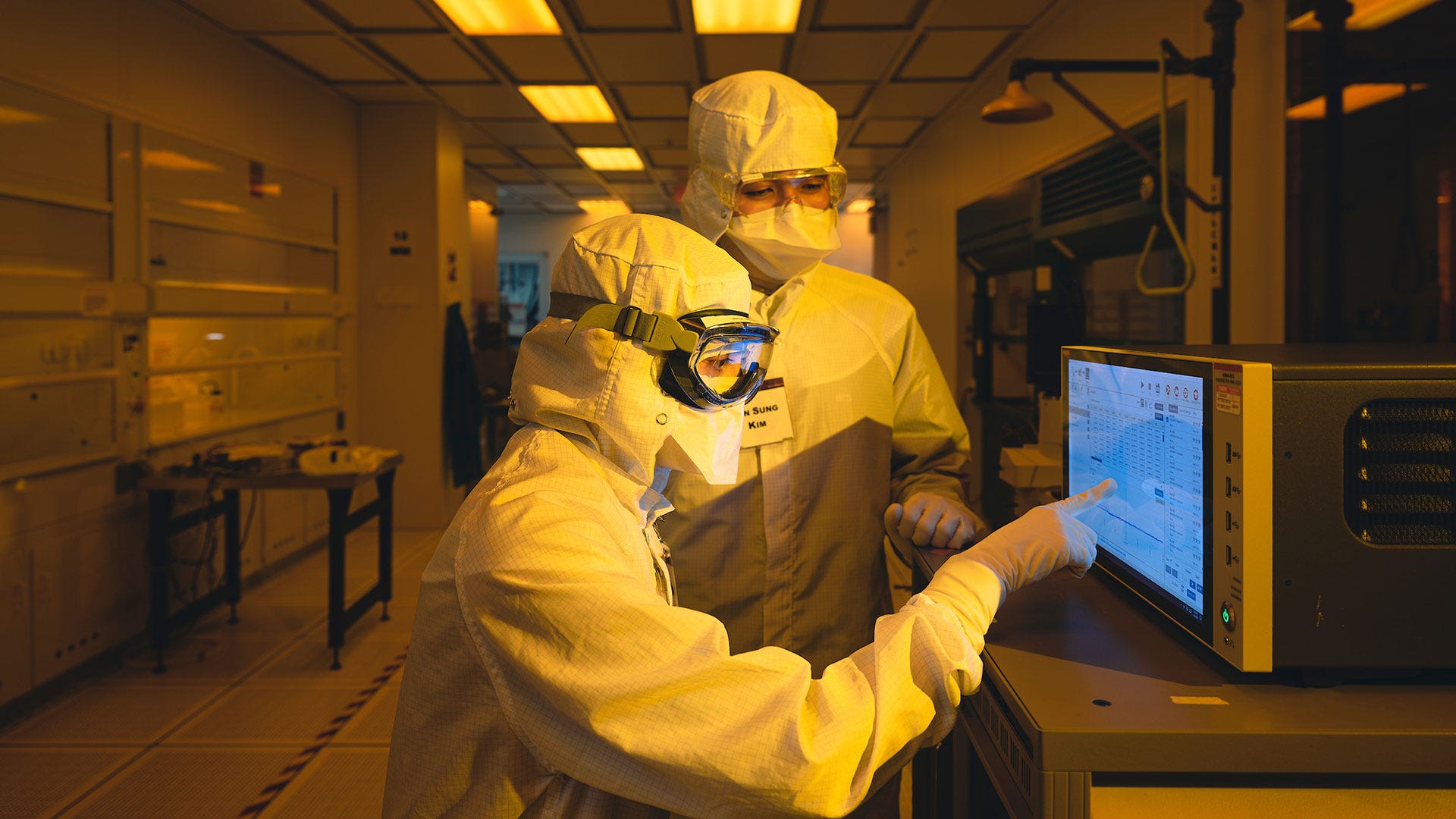
In an era when AI hands you a fluent answer in seconds, that muscle is what still separates people. Purdue’s partnership with Taiwan Semiconductor Manufacturing Company (TSMC) spans semiconductor research and workforce development — and TSMC has been hiring these students into its Arizona fab. (The exact count stays with TSMC, but the people I spoke to, from industry to the fab’s own faculty, lit up talking about it.)
The Birck VIP was an extraordinary experience both for my personal and professional growth. This VIP program has had by far the most influence over my academic career.
Darbin Oh, VIP alumna
And the detail I love: Ronnie Vasishta — the same NVIDIA executive who named domain expertise as the scarce asset — had himself taught “Changing the World with Chips,” Purdue’s semiconductor-awareness course. The person advising on the pipeline had stood in front of it. The boardroom and the cleanroom aren’t two stories. They’re the same people.
Birck's newest VIP track, Virtual Twins@Birck, pairs each physical tool with a digital twin, so students learn the machine in simulation before the real line. AI there isn't replacing the hands; it's training them faster. It’s the same thing Lisa Su, AMD’s CEO, told students when she visited campus:
In the AI era, human judgment matters more, not less.
The boardroom’s warning about data governance had a physical twin on the fab floor. The hardest problem the researchers described wasn’t the science — it was control of data. The moment a user pulls results out of the governed system onto their own machine, they can quietly change the numbers, and the lab can no longer certify what was actually measured. Picture a fabrication run whose measurements get “cleaned up” on a laptop before they go back in: months later, when a device fails, no one can tell whether the process was flawed or the data was edited to look right. That broken chain of custody is the whole ballgame — and a company-building opportunity: make provenance and custody automatic, so a result can prove where it came from and that no one touched it, and you own a layer that only compounds as the data multiplies. It’s the board’s “data literacy” warning rendered in stainless steel — and the exact reason I think trust is one of the durable constraints value collects around.
If intelligence is becoming a commodity — and the collapse in token prices says it is — the value doesn’t disappear. It moves down into the physical layer cheap intelligence runs on (capacity, power, high-bandwidth memory), up into trust (who can govern the data and prove what happened), and into the one input you can’t download: people with the judgment to direct the whole thing. Purdue is quietly assembling all three — cultivating the governance and the graduates, and drawing the fabs to its doorstep — which is why a venture investor spent two days there taking notes.
The constraint layer was never only silicon and megawatts. It’s also the people who can run it, and the discipline to keep the data honest. Two rooms at Purdue, two days, one answer.
And a last, unanalytical word: I’m a Purdue alum, and I spent those two days grinning. My school has become a place the industry hires from, builds next to, and sends its CEOs to visit — and getting to play even a small part in it has been one of the real privileges of this work. Boiler up.
Good AI Capital invests in the constraint layer of AI: power, capacity, and trust.
No posts
Comments
Nothing yet. Say the first thing.
Sign in to join the conversation.