

“The cost of convenience is often paid in the currency of privacy”
Timsux Wales
Another day, another Mark-manifesto. This one, titled The Future is for Everyone: The Path to a Positive AI Future, FZuck’ presents us with more peaches and rainbow visions of our AI-future:
Everyone will have incredible tools for creation to express your ideas.
Everyone will have powerful tools to create new businesses
Everyone will have an exceptionally capable personal agent that understands you, your goals, and everything you care about…It will have strong privacy and security options so you can trust it to handle all of your personal content.
Hmm, there are those words again. Privacy and Trust.
I’m not going to revisit why trusting Meta of all companies, asking us to trust it will get our AI privacy right, is rich given its history.
But my question is,
We’ve gotten used to the idea that the convenience of modern tech comes with a tradeoff… our privacy. In the form of the data we allow it to collect about us, we enjoy the convenience of tailored feeds, For You lists, and recommendations based on what we’ve allowed to be collected about us.
But as that tech has expanded, so too has the potential for it to capture information about others without their consent. As an example, my Ring camera provides me with a view of my house no matter where I am, including the front of my house. This view includes my mail carrier, any deliveries, and if I choose, anyone who is just walking by on the sidewalk.
Still, that’s just an audience of one household. Now combine that with a potential network of 32 million homes* plus AI that can identify even a lost pet, and it doesn’t take too much imagination to see how this convenience can also become costly.
*74.9 million homes have indoor or outdoor security cameras. Ring is the dominant home security brand, identified by 43% of users as their primary system or camera brand.
Finding our dog without having to wander all over the neighborhood yelling his name might be convenient to me. It’s also convenient to local law enforcement.
Beyond doorbell and house cameras, police departments are signing up for automated license plate reader (ALPR) or “Flock cameras”, after the leading provider, Flock. The cameras capture every single license plate driving by into an extensive database that police can access to track the movement of a vehicle.
According to Flock, the leading company contracting the cameras and systems to local law enforcement, nearly 100,000 cameras are in place across more than 6,000 communities in 49 states.
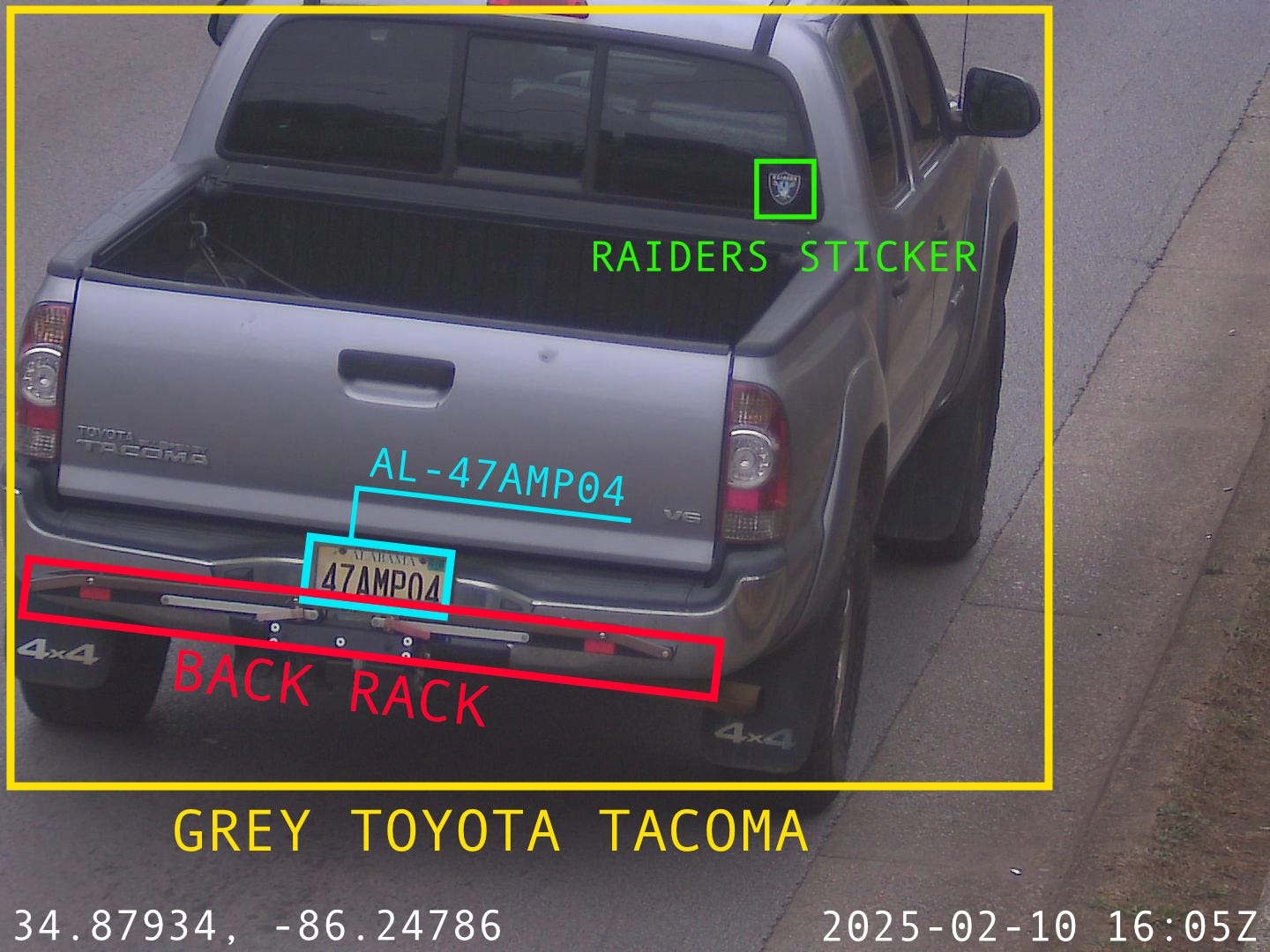
This is convenient for law enforcement to find someone who is wanted or a vehicle involved in a crime.

Not so convenient for those who have committed no crime, other than becoming a romantic interest of an officer with access to the system to track them down.
Marci Bakely couldn’t understand how her ex-boyfriend always seemed to know where she was. When she went to buy groceries or on a date or to the doctor, he’d text her about it, sometimes within minutes, despite working 15 miles from her home as a police chief in a small town in the Atlanta suburbs.
From Washington Post: How rogue officers turned a nationwide camera network into a tool for stalking
Even beyond its convenience for stalking unrequited love, this tracking is raising concerns about its potential for other misuse. From tracking vehicles based on where they attended religious services, to crossing state lines in order to receive healthcare outlawed in their residing state, the privacy concerns are uniting citizens across ideological divides.
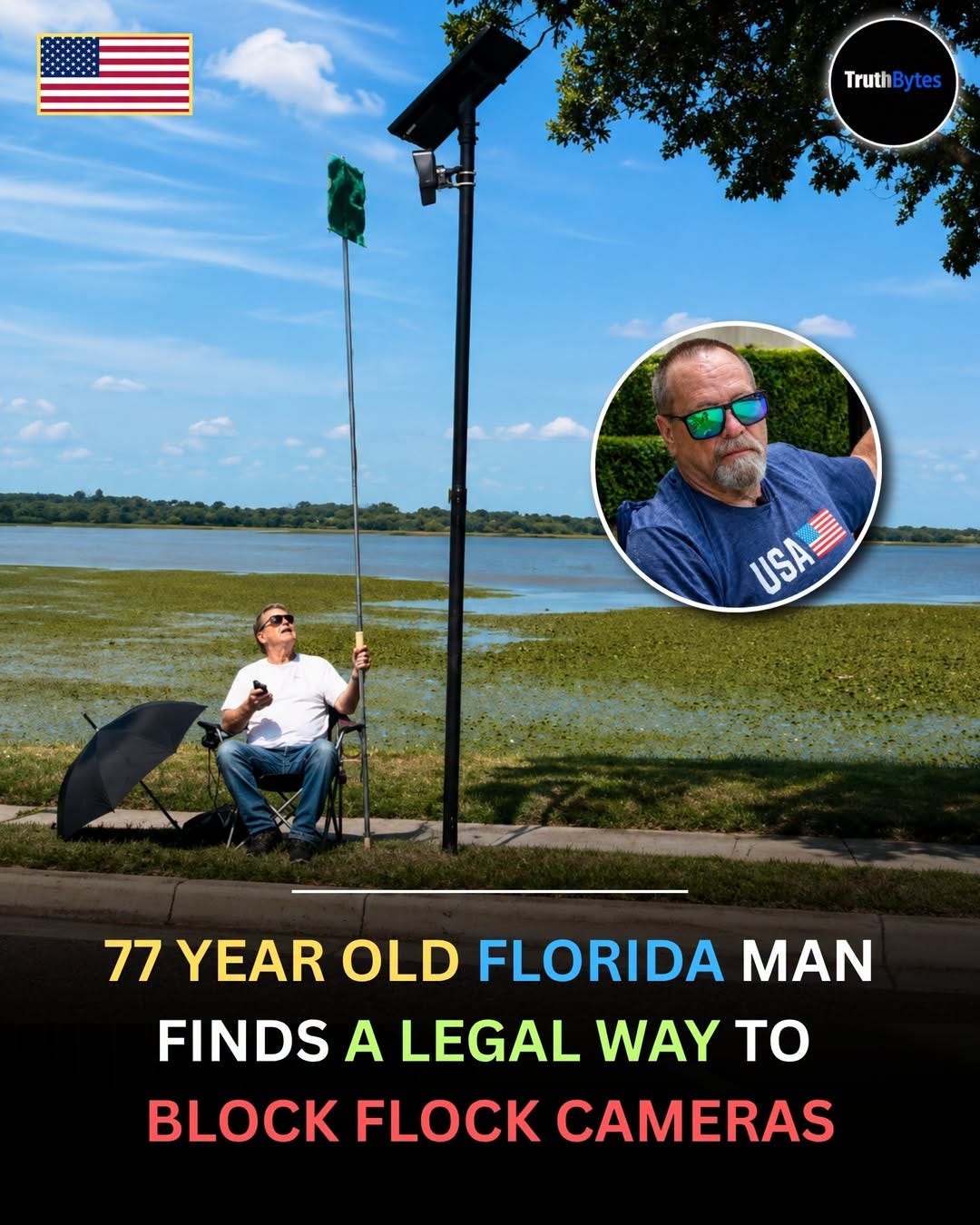
You don’t need a camera to violate everyone’s privacy around you. Sometimes you just need a mic.
We’ve all had that experience by now; the Zoom call is about to begin when a voice alerts the meeting is being recorded for an AI-transcript report later.
This same convenience is being marketed for your everyday. Through devices like recording earbuds, AI note takers, and wearable devices that list ‘always on’ listening as a feature. You never need to worry about forgetting anything, because these have potentially heard everything.
The other feature. No screen necessary. You can pull out your phone and start recording, but it’ll also be pretty evident to anyone around you. An innocuous tap of an earbud or something the size and shape of a credit card in your pocket? Maybe not so much.
While there’s a cost to our privacy for convenience, tech companies have done a pretty good job of convincing us it’s worth it. We’re almost immune to the amount of intrusive surveillance we’ve invited into our lives, because it makes our lives more convenient.
Maybe this is a bridge too far.

The benefits of this tech are clear for the user who finds them beneficial. Being able to get information, grab a photo, or translate on the fly, all without the need to take a phone out could be great. Particularly for people with disabilities or limited capacity.
However, the burden of control is not distributed equally. As a user, I can opt out of the data collection. Forfeiting some of the benefits as a consequence, but I retain some agency. With AI-enabled tech, I have no way to opt out or even potentially be made aware so as to filter my own private information. And even if some sort of automatic notification were provided (ex, a recording light or sound), the burden is still put at my feet and not the user.
Protecting privacy requires vigilance and sometimes vigilante-type behavior. Whether that’s blocking a Flock camera with a sign, helping map their locations, or outright defacing them. Publicly confronting unwanted monitoring in public, or breaking out your favorite copyrighted Disney tune to trigger immediate removal on social media. Perhaps most importantly, it’s bringing back the power of shame. Being blasted publicly as a possible pervert is perhaps one of the worst violations of privacy and maybe the best weapon we have right now to protect our own.
‘I don’t think the answer is necessarily to prohibit recording technology. It’s to stop presenting recording as an ordinary, consequence-free convenience’ - Lauren Hendry Parsons, Mozilla
/G4T/

Privacy browser DuckDuckGo and sunglass maker Knockaround have met Meta with its own pair of ‘Just F*cking Dumb Glasses’ that don’t spy or send data to advertisers.
If it didn’t matter, it wouldn’t be a point of focus, which means we’re really close to having critical mass of products into the market. (from Wired)
I’m going to go with ‘no’ at this point.
/G4T/
“You’re going to have to constantly push and advocate for things that people don’t think, until they think it.”
Chanpreet Singh, Democratic Socialist leader
Other Stuff
It’s an article of faith that America is polarized…But what if that idea doesn’t quite sum it up?
Social scientists are considering that our society is splitting, not into distinct groups but rather into countless smaller tribes. Driven by algorithmic curation and the loss of shared media and institutions, this split is driving everything from civic disillusionment and plummeting trust in institutions and each other; to the end of our monoculture media environment and a dark, paranoid pop culture that reflects our unease. (from NY Times)
*****
Center lower left?

Nine groups show the conflicting values underlying today’s polarized politics.
Cited in the NY Times piece above, Pew’s study shows the classic Left-Center-Right spectrum doesn’t quite fit the realities of today’s voting public. (Pew Research)
Curious where you actually fit? Take Pews quiz and see for yourse.f
*****
For years now, Google has been tweaking its search formula to prop up AI and bury actual links. Now it’s rounding into its final form—and changing the internet forever.
Inbound traffic from Google is cratering, and with it the audience most publishers need to sustain operations via ad dollars. It’s making some consider the unthinkable: not allowing Google to index their webpages lest its AI summarily scrawl and condense it into a bite size answer to a search query that never necessitates one to visit the actual source site. (From The Ringer)
*****
*****
We still own MySpace. We are stewards of the MySpace brand at this point and we are going to relaunch MySpace. We’re just waiting for the right time to do it. And if that one doesn’t work, we’ll do it again. - Tim and Chris Vanderhook, owners of Myspace
MySpace, once the most popular social media platform in the world in the mid-2000s, could be returning soon. It comes as many social media users are returning to nostalgic, analog experiences, instead of algorithm-driven ones. (various)
*****
Our mission is to make exceptional quality accessible to everyone. While Quince respects “valid intellectual property,” he adds, “competition should be won on product, quality, and real innovation. Where it is not, we will stand up for consumers.”
Joel Dion, head of legal at Quince
The Iron Snail has a great exploration into how Quince is able to copy fashion at much lower prices.
*****
One man’s trash is another man’s treasure
The non-profit Goodwill takes in over 120 million donations each year. And resellers have made a living off (some a fortune) off combing through these items, looking for the gems worth more to resell online. That’s changed now that Goodwill has caught on and is deploying its own tech to pre-sort the good vs the junk.
Meanwhile, live shopping is taking off as resellers are pivoting to platforms like Whatnot to help push their used or repurposed finds. It’s helped push Whatnot to overtake even Goodwill in total gross volume (GMV) to $8B+ last year or $1B more than Goodwill Industries. The company this week was valued at $20B following a Series G funding round.
*****
He lives now in the Bardo of the algorithm…He’s a chain-smoking Odysseus, a merry Sisyphus. Choose your myth; it hardly matters. Every time someone reposts one of his quotes about traveling, they add another brick to the building of a complex that both capitalizes on and obscures the real Bourdain.
Every once in a while, I’ll put on an episode of Bourdain’s shows (from NY Mag)
*****
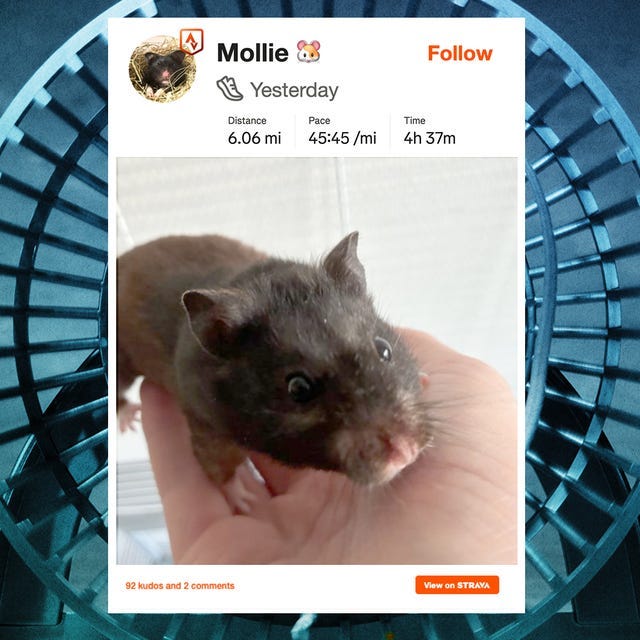
Mollie also has a weirdly consistent schedule for a hamster… He tends to run in short bursts, sometimes reaching about 4 to 5 kilometers per hour on the live monitor, then hops off for water.
(from Runner’s World)
/G4T/
Thanks for reading The Good Troublemakers Companion! This post is public, so feel free to share it.
Comments
Nothing yet. Say the first thing.
Sign in to join the conversation.