

“I’m a weirdo. What the hell am I doing here? I don’t belong here”
Radiohead, ‘Creep’
This week…
Meta asks us to trust in AI, without answering why we should trust Meta
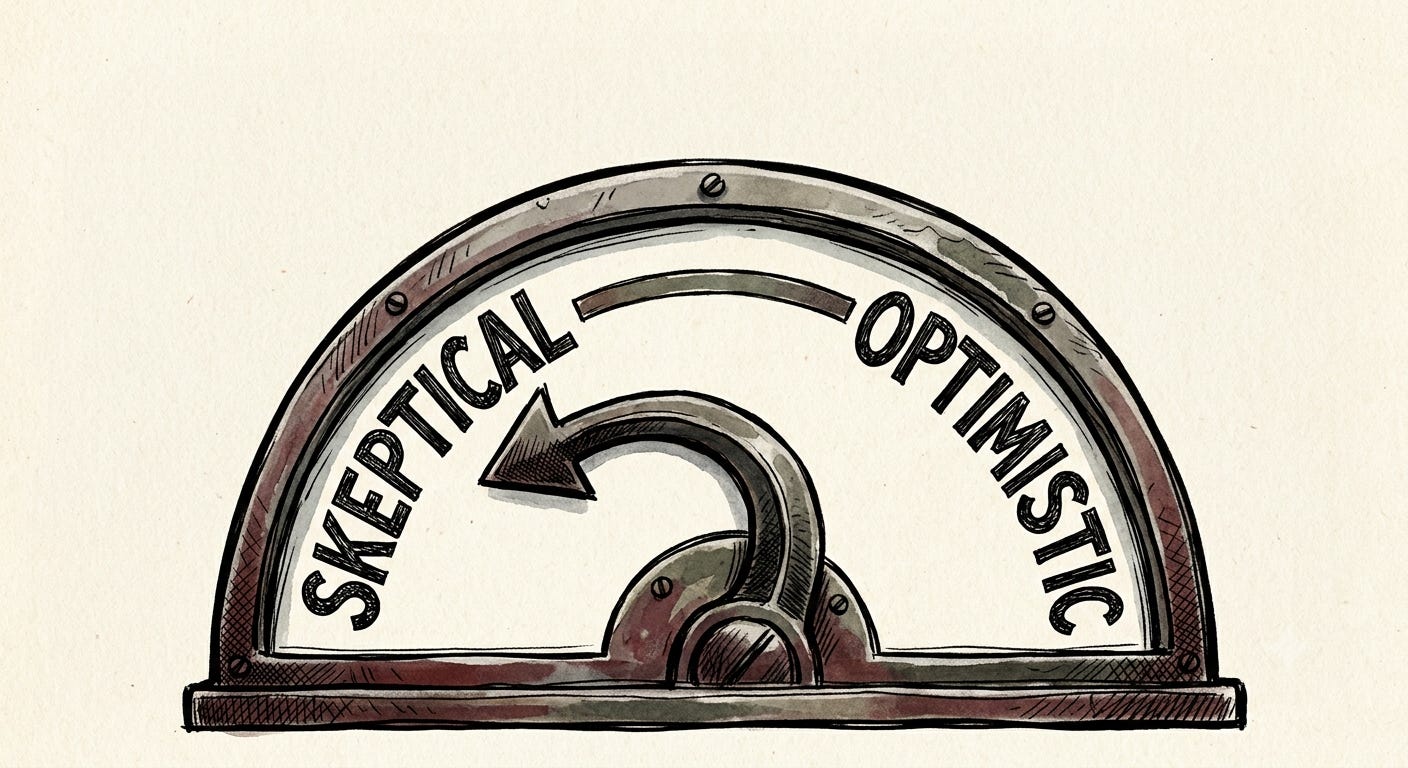
Meta wants you and me to just chill the f* out.
To try being a bit more optimistic about our inevitable AI-future. To believe that it won’t drive us further apart, but somehow closer together.
Oh, I bet you are.
Just maybe not their own people.
Meta slashes 8,000 jobs as it pivots towards AI (NPR)
Meta’s months-old AI unit is a soul-crushing gulag, say the engineers stuck inside it (Techcrunch)
The PR plug for a more positive view of AI comes along with a Wall Street Journal op-ed by FZuck himself, in which he laid out his own rainbows and unicorn view of a democratized AI for all:
-Mark Zuckerberg, CEO of Meta
Rather than centralizing this power, we believe that delivering personal superintelligence to everyone is the way to answer this question. This has the potential to begin a new era of personal empowerment, in which individuals have greater freedom to pursue their interests and reach their full potential.
I’m also betting the reaction hasn’t been what Meta/FZuck were hoping for, which has landed largely on:
Meta's new ad is a Lisa Frank wet dream. There are rainbows, butterflies, bear hugs, and smash-cuts between three grinning children. (Business Insider)
Meta choosing this specific song (David Bowie’s “Five Years”) where the context for human connection is the apocalypse seems either really ignorant or really insidious.
The ad also takes special care to highlight use cases for its controversial smart glasses that are not, say, harassing women while surreptitiously recording them. (Wired)
Regardless of the message, it’s the numbers that really haven’t impressed the ones who maybe matter most: investors.
On Wednesday, Meta’s Q2 earnings report was announced, and it’s become clear…they may really be betting it all on AI:
Meta’s AI bets are swallowing almost all its free cash flow
Meta said on its Wednesday earnings call that its free cash flow — the money left from operating cash after capital investments — plunged 91% from a year ago …
The collapse wasn't because Meta's business stopped delivering. Net cash from operating activities rose 25% year-over-year to $31.86 billion. Meanwhile, capital expenditures on servers, data centers, and networking — which all power Meta's AI systems — surged 83% to $31.08 billion, nearly wiping out its free cash flow. (Business Insider)
Meta’s stock tumbled 10 percent the same day as FZuck and team failed to convince Wall Street that despite the initial positive returns on advertising revenue, the overall AI investment would ever pay off.
Meta isn’t alone here. AI hype and all of its major players are being questioned right now as to whether any of this will pay off, in profits or for the planet.
But Meta’s situation is a bit unique because with them it always seems to come to a question of MATURITY, or a lack thereof depending on your perspective.
From a market perspective, Meta might be banking on portraying it still has a bit of ‘immaturity’ie, room to grow. The company is 22 years old and has grown into a trillion+ $ company with nearly 4 billion using its apps. But the market doesn’t care how big you are; it cares how much you can continue to grow. That elevated stock price, in turn, gives companies the ability to raise capital, fund acquisitions
and bring in and retain top talent.
Meta Raids $12B AI Startup Thinking Machines Lab, Snags Founding Engineers in Talent War (Tech Times)
In the case of Meta, it needs to convince investors there’s more money to be made.
-Alex Heath, Sources
Meta is relatively unique among the AI players in that Meta is the only one using AI to defend and optimize a business built off ad revenue.*
Alphabet (Google) operates a massive B2B Cloud infrastructure alongside its ad business
In this, they’re nearly unmatched. Of Meta’s $200+ billion in annual revenue, ~98 percent comes from advertising.
Meta this year is projected to capture nearly 27% of total global ad spend this year, leapfrogging Google as the market leader in the process.

This model helps explain Meta’s perspective on AI. Whereas the others need to convince people to sign up to build the destination, Meta already controls the daily internet experience for many people (3.6+ billion daily) and businesses (200+ million maintain a presence and 10+ million actively run ads).
Meta’s big bet is that the combination of hardware (smart glasses), Meta AI, and its huge user base ultimately creates a self-reinforcing flywheel by:
Escaping the ‘Apple & Google tax’
Meta may have the most eyeballs, but those eyeballs are ultimately on devices through apps at the mercy of Apple and Android policies. Apple, for example, was able to wipe out $10B in ad revenue in one year through a privacy change.
Meta AI opens the opportunity to own the next phase in smart tech, in the form of hardware (smart glasses) and a ubiquitous operating system they own; Meta ensures no one can ever cut them off from their users again.
Multimodal Data Flywheel
This move to hardware gives Meta another advantage: a continuous real-time sensory link to the real world. Wearable tech sees and hears what its user sees and hears. This continuous stream makes Meta’s AI significantly smarter and more contextual; and harder to match for screen-bound competitors like Open Ai.
Hands Free as Default
Right now, the smartphone is the default interface, primarily opt-in through touch. With the smartglasses and AI, the integration is seamless; they’re already on your face. Potentially making users more reliant on Meta AI throughout the day, driving even more usage frequency while locking people into Meta’s ecosytem.
Turn all of this into a multi-tier growth ladder via
Hardware sales (Meta Ray Ban display go for $799)
Ad Revenue (all of this data from real-world context through wearables to the info users share to its AI makes ad delivery radically more targeted and valuable to advertisers)
Micro-commerce & Agents (Meta can insert itself and charge a small free for enabling any number of autonomous and hands-free transactions between users and small businesses)
Which all sounds rosy, until your bike seat has an extra set of handlebars on it.
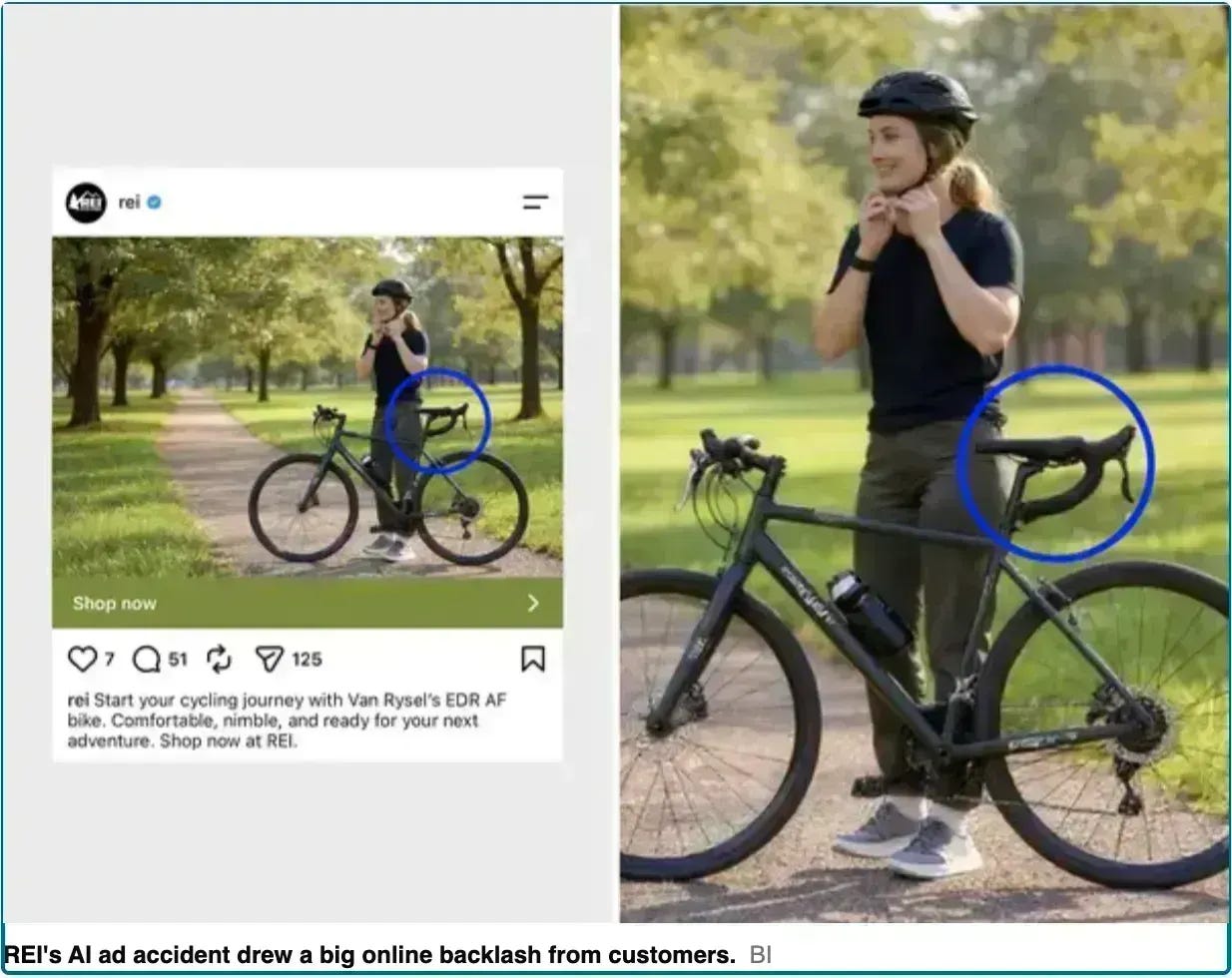
Every one of Meta’s major growth lanes now carries a trust toll.
AI-generated advertising raises new brand-control concerns, smart glasses create new privacy questions, youth safety remains under intense scrutiny and employee-tracking initiatives spark data-collection backlash. - Mike Proulx, VP and Research Dir. at Forrester Research:
My assumption is that the audience for most of this PR blitz this week was Wall Street investors, as well as to head off possible government regulation.
But if Meta’s ambition this week was to get the rest of us onboard with the inevitable AI-future, well maybe they missed the mark.
Because while broadly, the public may be skeptical of AI
My guess is, the public concern over Meta’s AI (Muse Spark) isn’t whether it gets loose and starts running amok. Or around it eventually taking our jobs (unless you personally work at Meta).
It’s not a question of whether to trust AI. It’s a question of
Meta seems to be inviting audiences to evaluate AI through the lens of the company’s original identity rather than its more recent reputation. The imagery and language in this video evoke an earlier era when Facebook promised to connect friends and family and make the world feel smaller.” - Ana Babic Rosario, Prof of Marketing at U. of Denver
Time and again, it seems like Meta doesn’t get it. Or doesn’t care to get it until forced to.
Meta yanked its new Instagram AI image feature – which automatically opted in photos from all public accounts – just a few days after launch following heated backlash over privacy concerns.
“Our intent was to provide a useful creative tool and to give people control over whether their public content could be referenced in this way,” Meta said in a statement Friday.
“We’ve heard the feedback that this feature missed the mark, so it’s no longer available.” (NY Post)
The company’s ‘move fast and ask for forgiveness later’ might serve the company’s own internal needs, but it rarely serves the needs of its user base over its own.
Particularly when it comes to protecting their privacy.
Meta's own AI support chatbot handed hackers the passwords to more than 20,000 Instagram accounts. No phishing links. No malware. No technical skill required. The attackers just asked. (All About Cookies.org)
This ambivalence to our privacy is now being quite literally shoved in our face as Meta pushes into wearables.
US Woman Secretly Filmed Using Smartglasses By Influencer: “This Is Violating”
‘I was secretly filmed with smart glasses and then trolled online’
Initial versions allowed early creepy adopters to surreptitiously film other people.
Then, so-called ‘man-influencers’ found the next obvious use for the glasses - to make content. Filming themselves using pick up lines on women and then posting them online without the subject’s awareness or consent.

All the while, Meta plays a game of ‘cat and mouse’ with users hacking the glasses’ recording light and uploading the videos onto their own platforms.
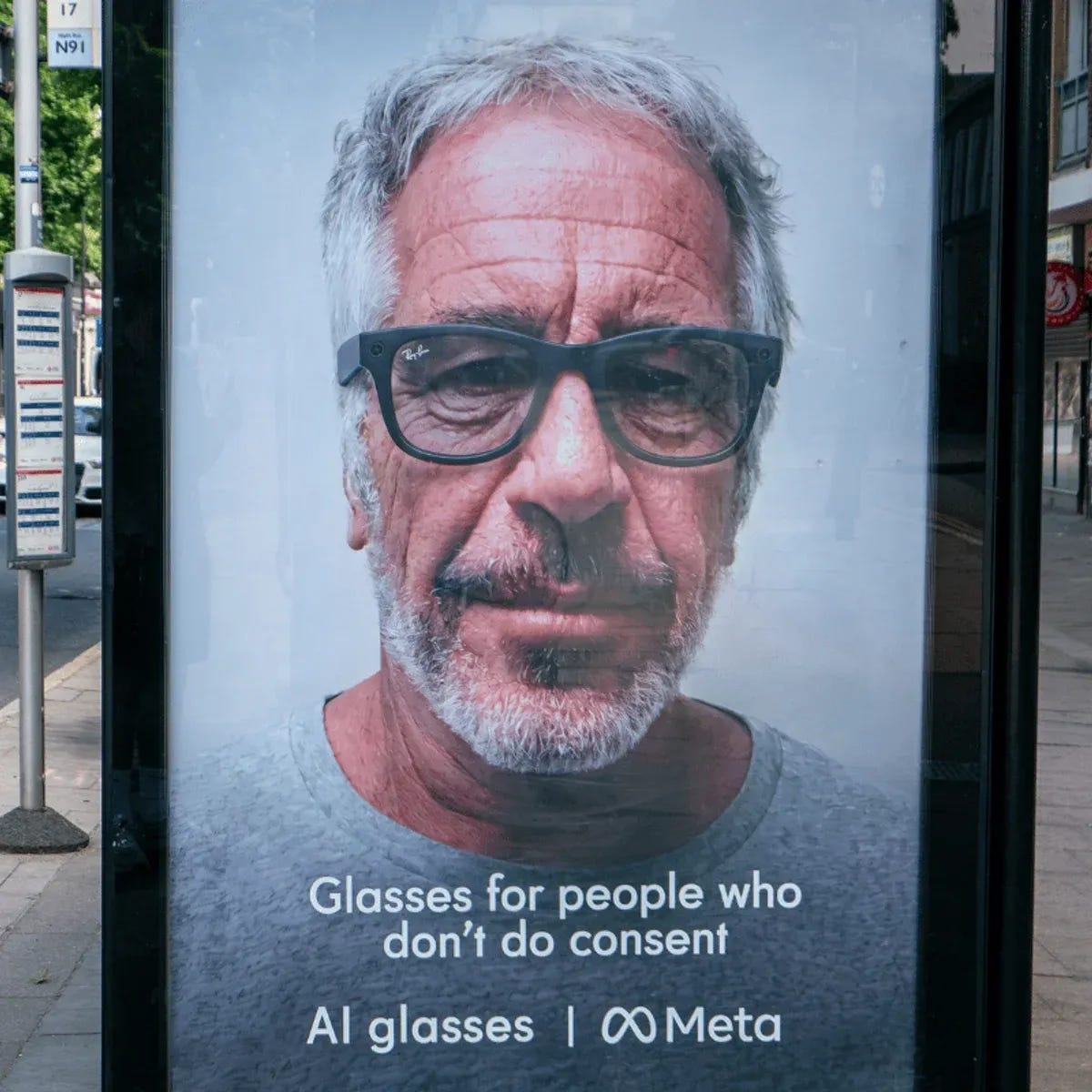
This isn’t to suggest the only use cases to date for Meta glasses are to spy on others or be creepy.
But the reputation as ‘pervert glasses’ is starting to impact even appropriate users.
As one positive review notes:
This will only be compounded now that Meta has released its own line of glasses with its AI-enabled feature.
If this were all just unexpected consequences of a new technology, that might be one thing. But it’s not; it’s Meta.
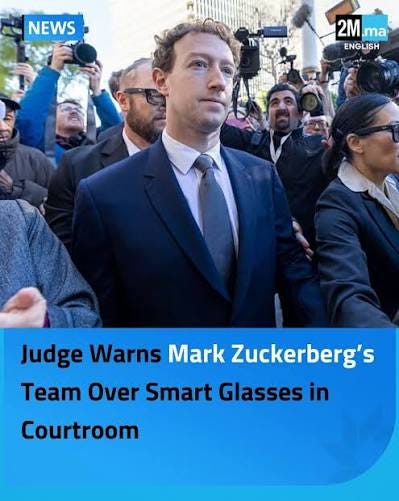
Which has shown an inability to learn from past missteps or, if anything, to act only when confronted with evidence and threatened with regulatory action.

16 years ago, Aaron Sorkin* released ‘The Social Network’, telling the origin story of Facebook through two lawsuits over its control (spoiler alert, it’s Zuckerberg in the end).
“If you guys were the inventors of Facebook, you’d have invented Facebook”.
* Sorkins “The Social Reckoning” revisits the Facebook story this October. This time, its focus is the 2021 leak and subsequent congressional hearings.
But the heart and soul of the company may well have been captured in the promotion around the movie. The trailer (and subsequent commercial cuts), set against Radiohead’s Creep as sung by a women’s choir.

Creep was a perfect metaphor then, and one could argue continues til now, for the company that has come to be defined by misuse and disregard for people’s privacy.
I said earlier, the MATURITY is the question at the heart of what Meta is today and tomorrow.
Wall Street wonders: is this a mature company that has reached its full growth potential?
The public at large has to wonder: will this company’s culture EVER mature? Learn its lessons and start to take our privacy seriously from the jump, instead of waiting to be caught and cornered by a judge or a lawsuit?
AI, particularly the agentic side of it, offers exponential potential that the ‘move fast’ culture within Meta must love. And I have no doubt Mark’s right about some of the impact its AI will have; Meta’s already created millions of micro-entrepreneurs out there and helped many more small businesses scale.
It’s the ‘break stuff and ask forgiveness later’ side that the rest of us must worry about.
/G4T/
“It’s easy to feel like the future is heading toward less connection and less agency. We’re taking a different stance: we think AI will empower people.”
Denise Moreno, Meta’s new CMO
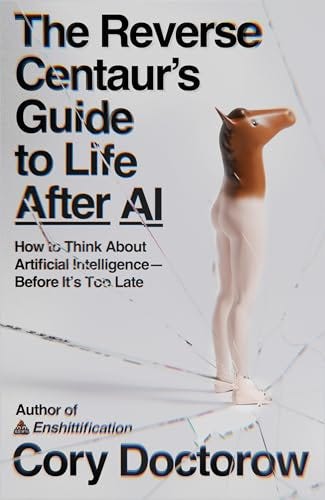
In automation theory, a “centaur” is a person who is assisted by a machine. Driving a car makes you a centaur, and so does using autocomplete.
A reverse centaur is a machine head on a human body, a person who is serving as a squishy meat appendage for an uncaring machine.
Cory Doctorow, author of Enshittification: Why Everything Suddenly Got Worse and What to Do About It, is back with a new book: The Reverse Centaur’s Guide to Life After AI, which argues that evaluating AI based purely on its technical capabilities or some philosophical existential risk misses the point. Instead of asking "What can this technology do?” we should be asking:
By acknowledging the power dynamics at play, you begin to see much of AI hype is staged for bosses and investors to justify investments. In the process, the value of labor is degraded while consumers ultimately receive lower-quality services.
USEFUL HACK: You can listen to this and other books on Spotify if you’re a premium subscriber. Cory narrates the book himself.
/G4T/
We should never forget that the product of work isn’t only the work — it’s also the worker.
Other Stuff

If Meta glasses being rebranded as ‘pervert glasses’ is a perfect metaphor of that company’s troubles, then what does a SpaceX rocket crashing into the moon say about it?
After a month, SpaceX’s stock has dropped around half of its early value and is now trading below its initial $135 offer price and has stayed below that the better part of two weeks.
In the process, $1 Trillion in market value has been erased since the pre-IPO high. Still, Wall Street analysts continue to be bullish about SpaceX (the consensus 12-month price target is $235, 90% above Friday’s close).
Much like that errant rock No one ever said it was going to be a straight trip higher for SpaceX.
*****
The Dead Internet Theory:
Suggests that much of today’s internet, particularly social media, is dominated by non-human activity, AI-generated content, and corporate agendas, leading to a decline in authentic human interaction.
AI agents are eating the Web, growing by nearly 8,000% and rewiring the Internet’s business model
This is changing the way the web operates. For example, bots don’t register as human so they don’t trigger ad (ad revenue); yet the traffic still taxes the server capacity. Meanwhile, the bots are dredging the content to serve up an answer instead a list of the cited links for the human to visit. (Futurism / Fortune)
*****
It used to be that only cinephiles cared how a movie was made. But in our authenticity era — when anybody can create a short AI film by typing prompts — the story behind the film’s creation is gaining value.
This year, the movie market is flipping. Out are franch (from The Hollywood Reporter)
*****
Many of today’s most popular games involve a style of play unlike any that parents might have seen before, if they were raised on Super Mario Bros. and Tetris. The games have cartoony graphics that may look innocuous, especially when compared with hyperrealistic first-person shooters. But in many cases, their design and interactive elements are less Zelda, more Vegas.
Variable-reward loops, the ones that are so addictive and effective in hooking adults into slot machines and sports-betting apps, are also being deployed in many kids-targeted video games in the name of Engagement. (from the Atlantic)
*****
Welcome to the college programs turning students into influencers. (from The Hollywood Reporter)
*****
Inspired by the plot of ‘Margo’s Got Money Troubles’ a group of researchers have turned to Onlyfans to help fund their research of marmots in Colorado
*****
With smart glasses, the privacy calculus changes. You’re the person risking others’ privacy, possibly without consent — the perpetrator.
(from The Verge)
*****
In New York, we are setting the rules of the road instead of letting AI run the show
Ads that don’t conspicuously disclose that they have used a synthetic performer will be subject to $1-$5k fines. (from the AP)
*****
“We all study the same disease” — inflammation is involved with everything.”
Acute inflammation is good. It’s how your body fights off many infections or repairs injuries. Chronic inflammation is bad. And we’re now starting to see that chronic inflammation may not just be a symptom; it could be a cause of many maladies from cancer to heart disease to even Alzheimers and Parkinsons. This could help explain some of the unintended benefits people are seeing from GLP-1s which have a way of turning off some of this inflammation in the body. Still too early to tell (despite the miracle diets and regimines you’ll find on TikTok’s etal), but promising news nonetheless. (from NY Times)
*****
So if the bad news is that your vagina won’t make you live forever, the good news is that it’s probably not going to kill you either.
An advancement in equality? It seems the MAHA movement is now prioritizing vaginal health. (from Vanity Fair)
/G4T/
“Move fast and break things. Unless you are breaking stuff, you are not moving fast enough.”
Mark Zuckerberg
Resources:
Zuckerberg’s WSJ Op-Ed Casts AI as Personal, Not Centralized (AI Weekly)
Mark Zuckerberg launches AI optimism campaign (Axios)
Meta takes on AI skepticism in defiant new video (Ad Age)
Meta is dying. It’s about time (NYT Opinion)
Peaches and rAInbows! A new wave of ads puts AI companies on the defensive. Can they win back trust? (Business Insider)
Meta’s AI optimism campaign is set to a song about human extinction, echoing Anthropic’s tone-deaf ad trend (ProvenBrief)
What does Meta actually do now? (YT/Goodwork)
Is Meta’s AI Strategy… Lowkey Genius? (YT/Breaking Even)
Thanks for reading The Good Troublemakers Companion! This post is public, so feel free to share it.
Comments
Nothing yet. Say the first thing.
Sign in to join the conversation.