
Spring has sprung, and with it the market continues to maintain the heated activity we’ve been witnessing over the last few quarters. There’s been a sustained pickup in searches, faster interview cycles, and a lot more urgency from founders who want to land people quickly. In some cases it’s starting to feel a bit like 2021 again, particularly in the Bay Area, with compressed timelines and frequent competitive offer situations.
It also continues to be a difficult market for folks who have been out of the game for a few years (e.g., took a sabbatical) or are looking for a career pivot (e.g., new function, breaking into AI without tech/technical experience). Before digging into the compensation data below, we also wanted to share a few observations from what we’ve been seeing in the market over the past couple of months.
TL;DR - compensation dynamics right now are a little unusual, largely driven by what’s happening in AI. A small group of mega-funded AI startups are paying extremely aggressive cash packages - and it’s definitely influencing expectations across the rest of the market. In practice, it feels like there are really two compensation markets happening:
1. Late-stage / heavily funded AI companies
Compensation is coming around ~$200k base for candidates with only 2-3 years of experience or $300K+ for those with 5-10 years.
Significantly higher cash and equity compensation ($), but obviously at much higher current valuations (e.g., $10B instead of $100M).
2. Earlier-stage startups (AI and non-AI)
Offers are landing closer to the $150-170k base range for candidates with 2-3 years of experience and low $200ks for those with 5-10 years.
Lower base salaries, but meaningfully larger equity stakes.
Both can be great opportunities, but they’re fundamentally different bets, and candidates are increasingly having to decide which game they want to play.
Geography is also a factor at play. The SF talent market in particular has gotten pretty intense again, with fast processes, quick second round follow throughs, and some bidding wars with mega-funded AI labs. Many companies can’t (and shouldn’t) try to match those offers. A better path to compete is on flexibility: hiring in other cities, using multi-hub or remote-first models, and enabling periodic travel or co-working meetups instead of relying solely on SF cash levels.
With that context, below is our 2025 Startup Compensation Survey and a few of the trends that stood out.
❤️ Phil and the Golden Gate team
We’ve had about 400 people respond to our 2025 Compensation Survey, and are highlighting some of the major takeaways below.
**As a quick reminder, we collected data for our “2025 Survey” at the end of 2025 through January 2026.
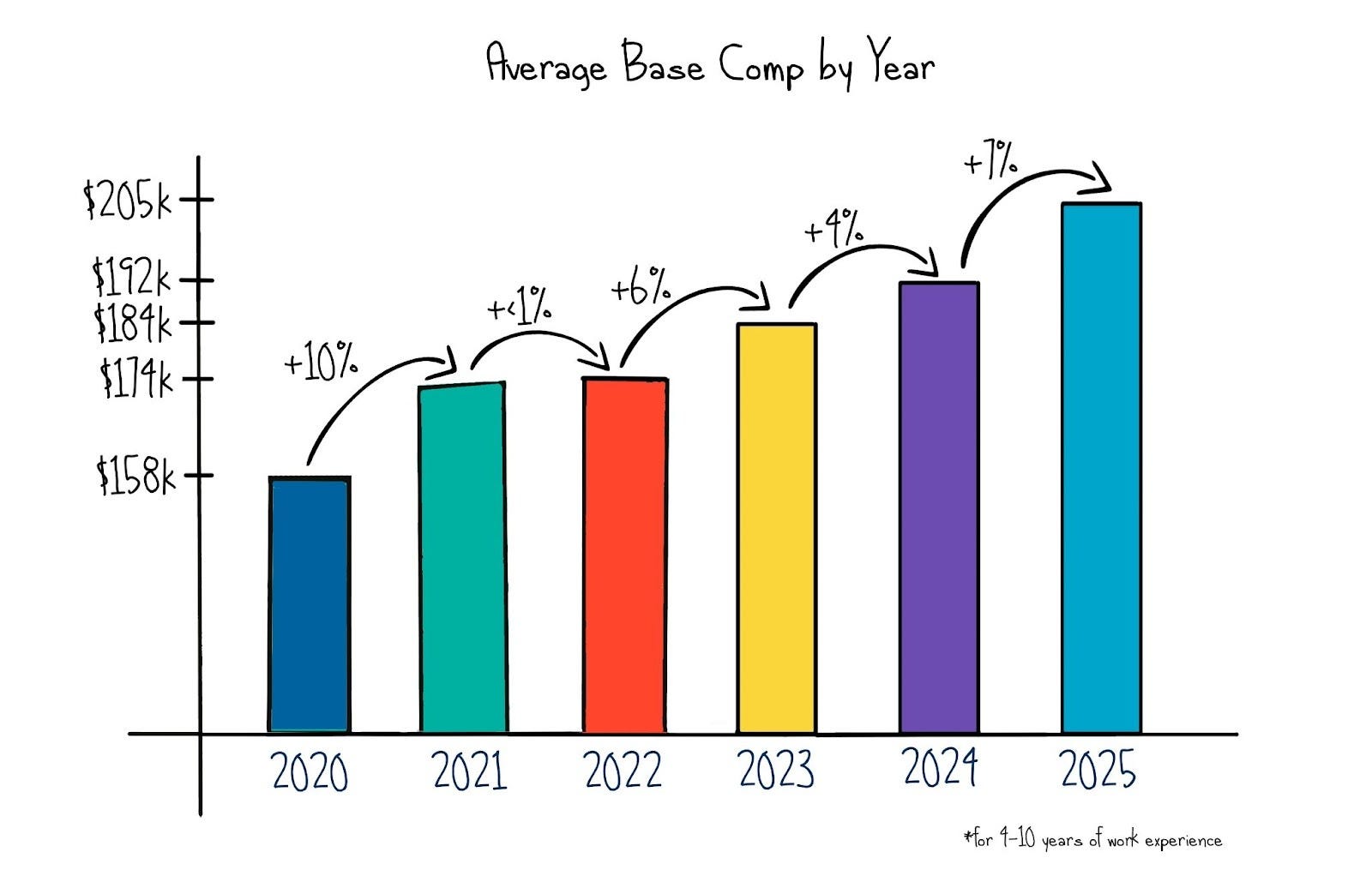
After several years of relatively modest movement, base compensation jumped 7% this year. That’s the largest increase we’ve seen since the post-2021 slowdown and lines up with what we’re seeing in the hiring market: more searches, faster timelines, and companies competing more actively for candidates.
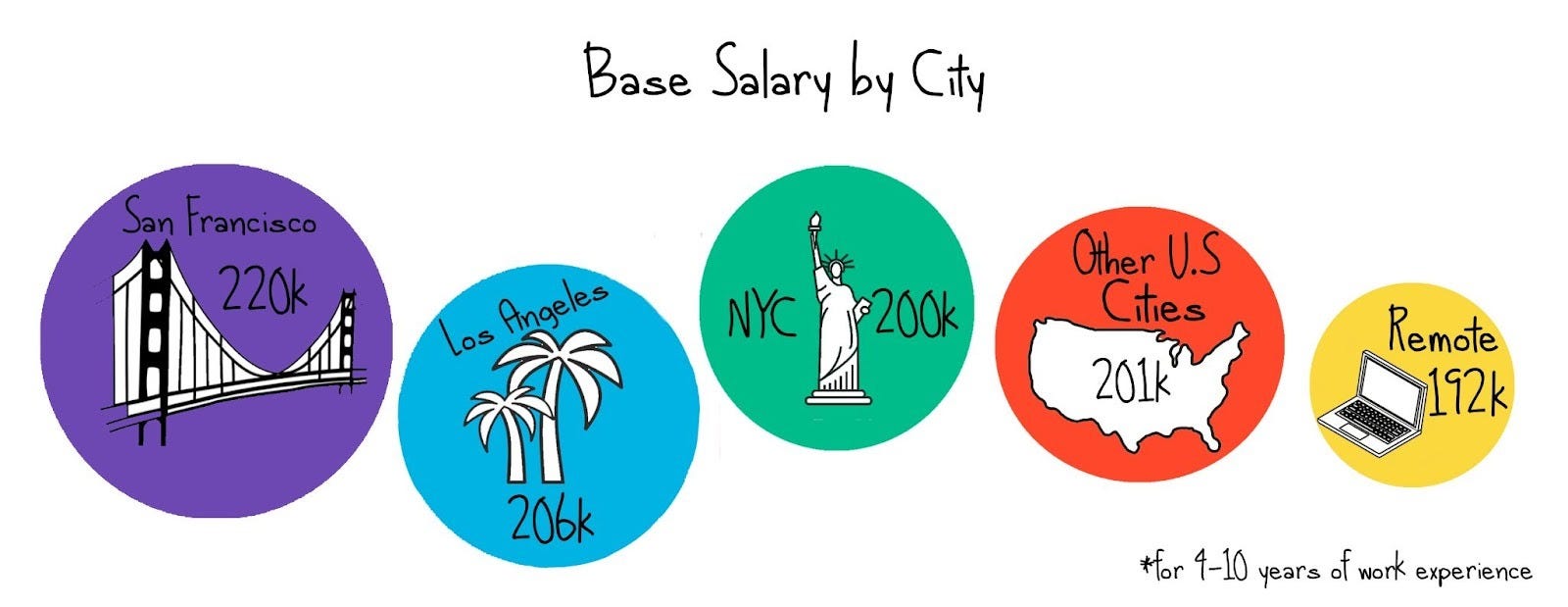
Location: San Francisco still sets the ceiling on compensation. Average base salaries in the Bay Area came in around $220k, ahead of LA and NYC. Clearly the density of well-funded AI startups are competing for the same talent pool which is helping keep Bay Area comp elevated.
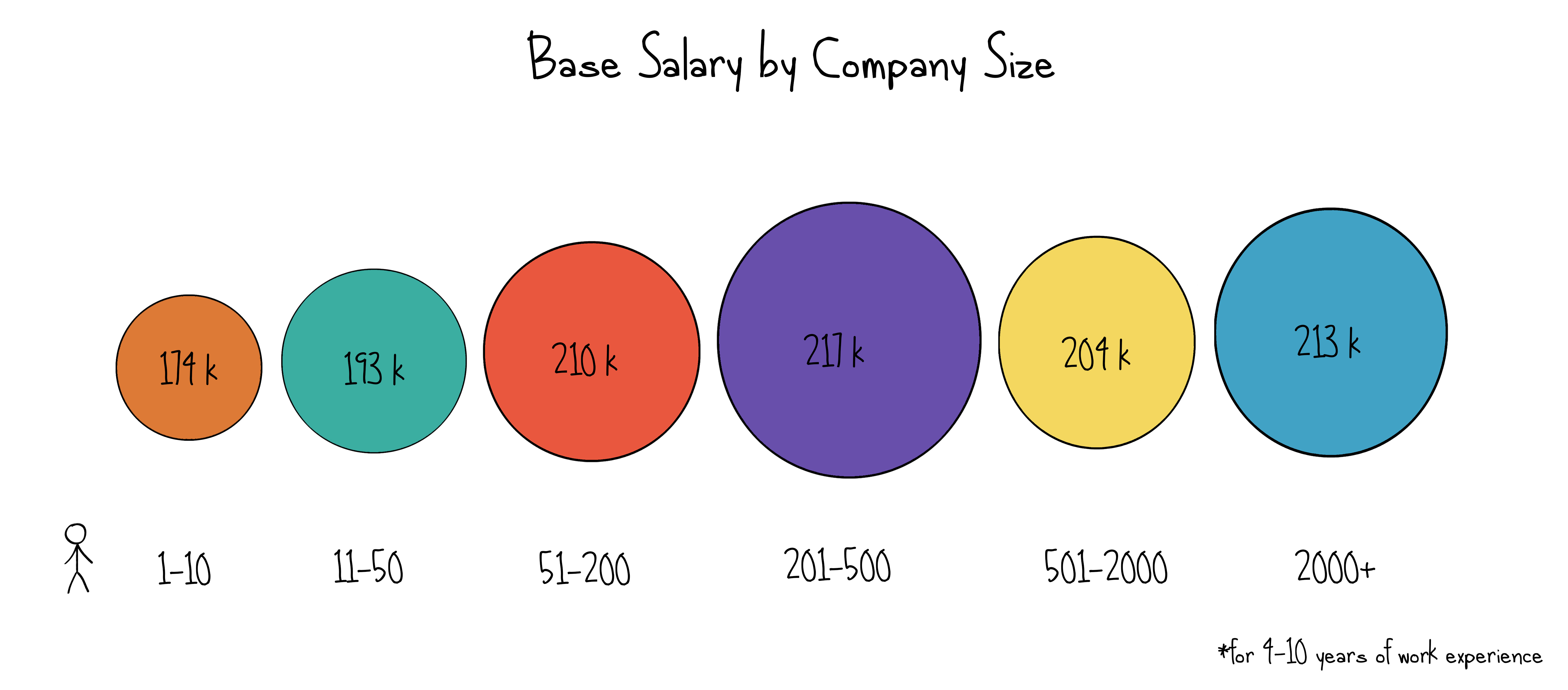
Company Size: Compensation generally increases with company size, though well funded mid-stage startups continue to be some of the most competitive on pay. These companies have enough funding coupled with a a greater urgency to scale, which justifies a higher comp band.
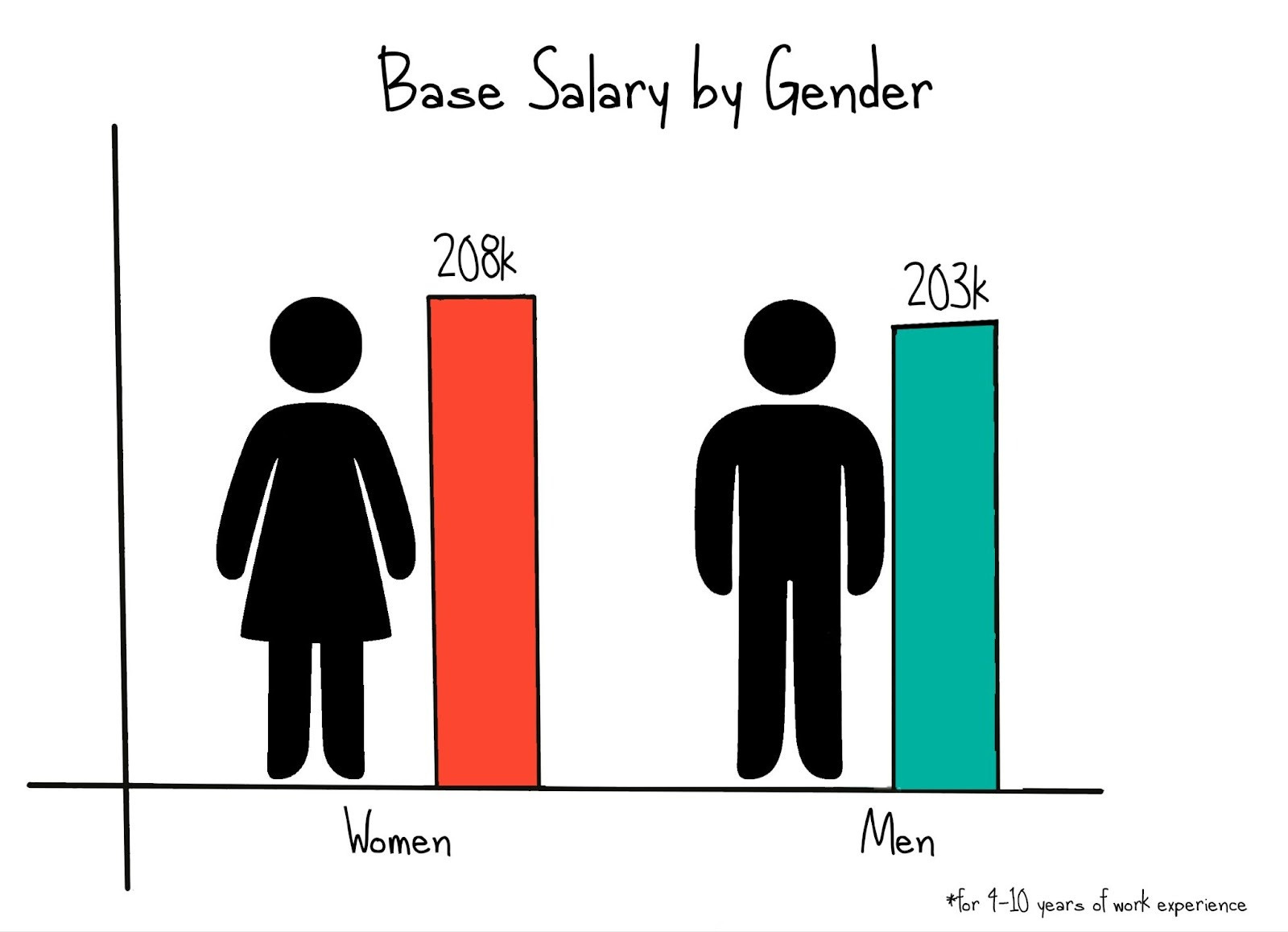
Gender: Encouragingly, base salaries were very close again this year - with women in our dataset actually coming in slightly higher on average. Always a good trend to see, and hopefully one that continues.
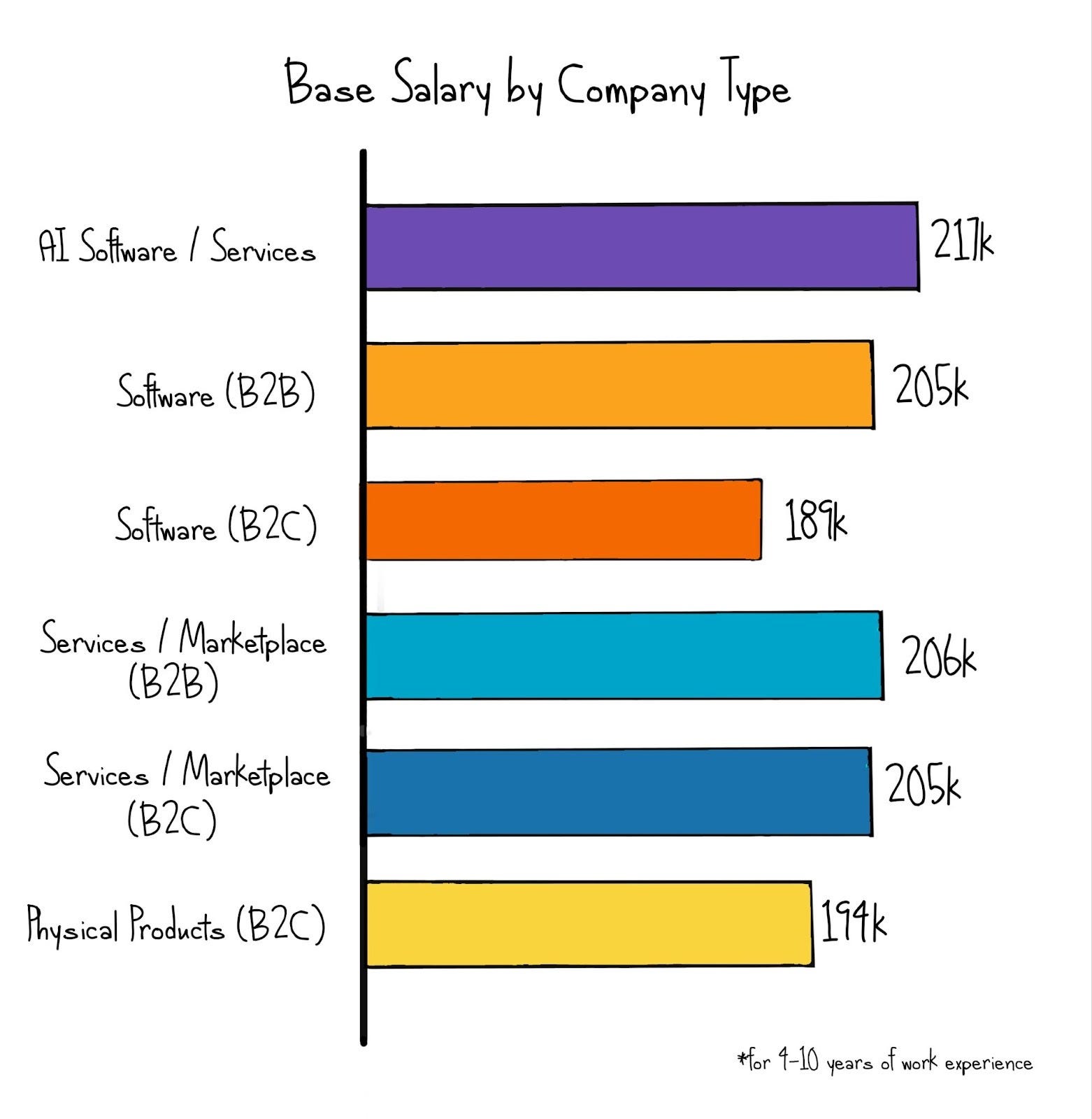
Company Type: AI companies topped the list this year, which won’t surprise anyone following the market. Still, many B2B software and services companies are offering compensation that isn’t far off.
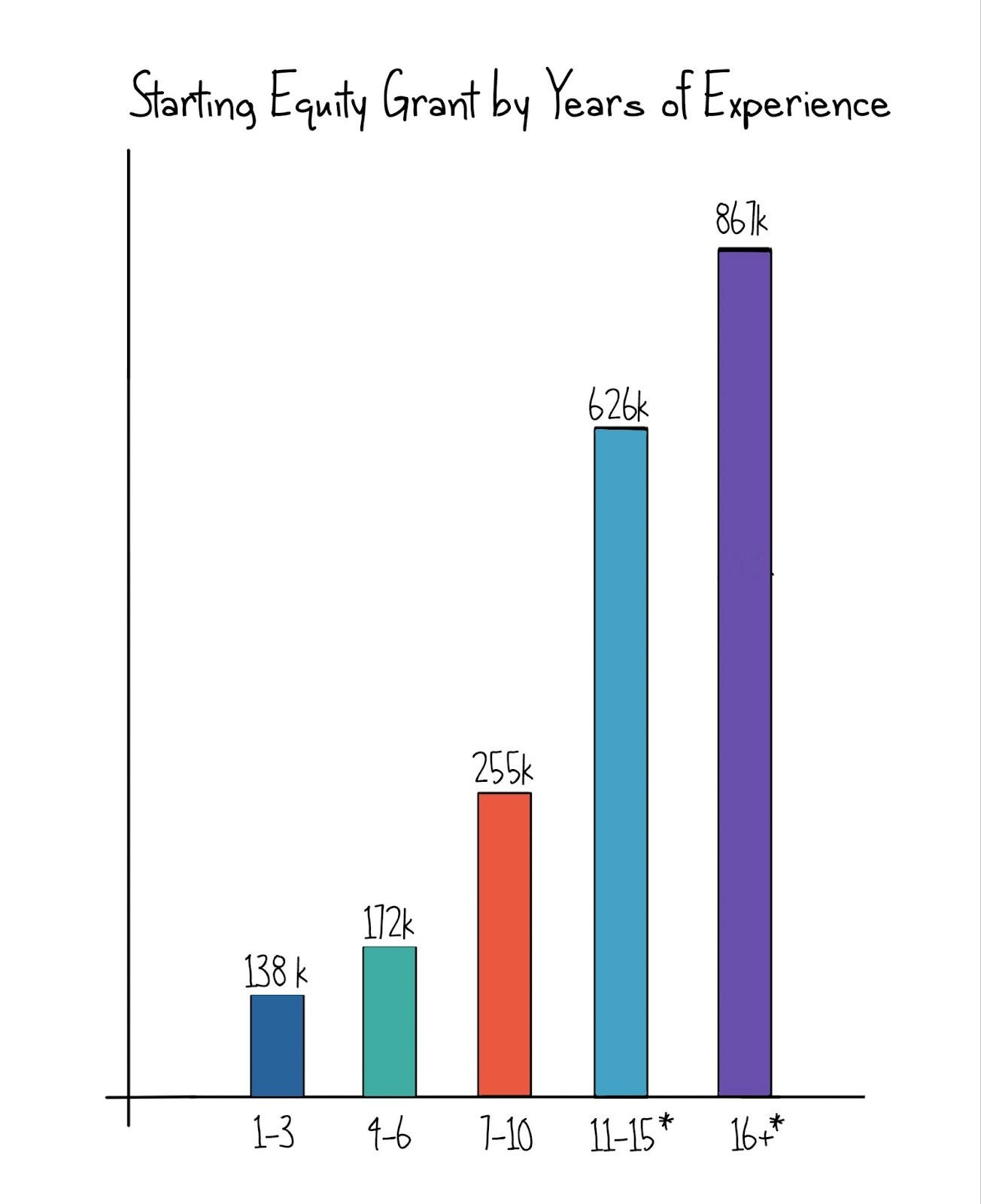
Years of Experience (Equity Grant): As expected, equity increases significantly with seniority, though the ranges widen a lot at the higher levels.
Years of Experience (Cash): Compensation scales predictably with experience, though the jump into more senior roles continues to be one of the biggest inflection points.
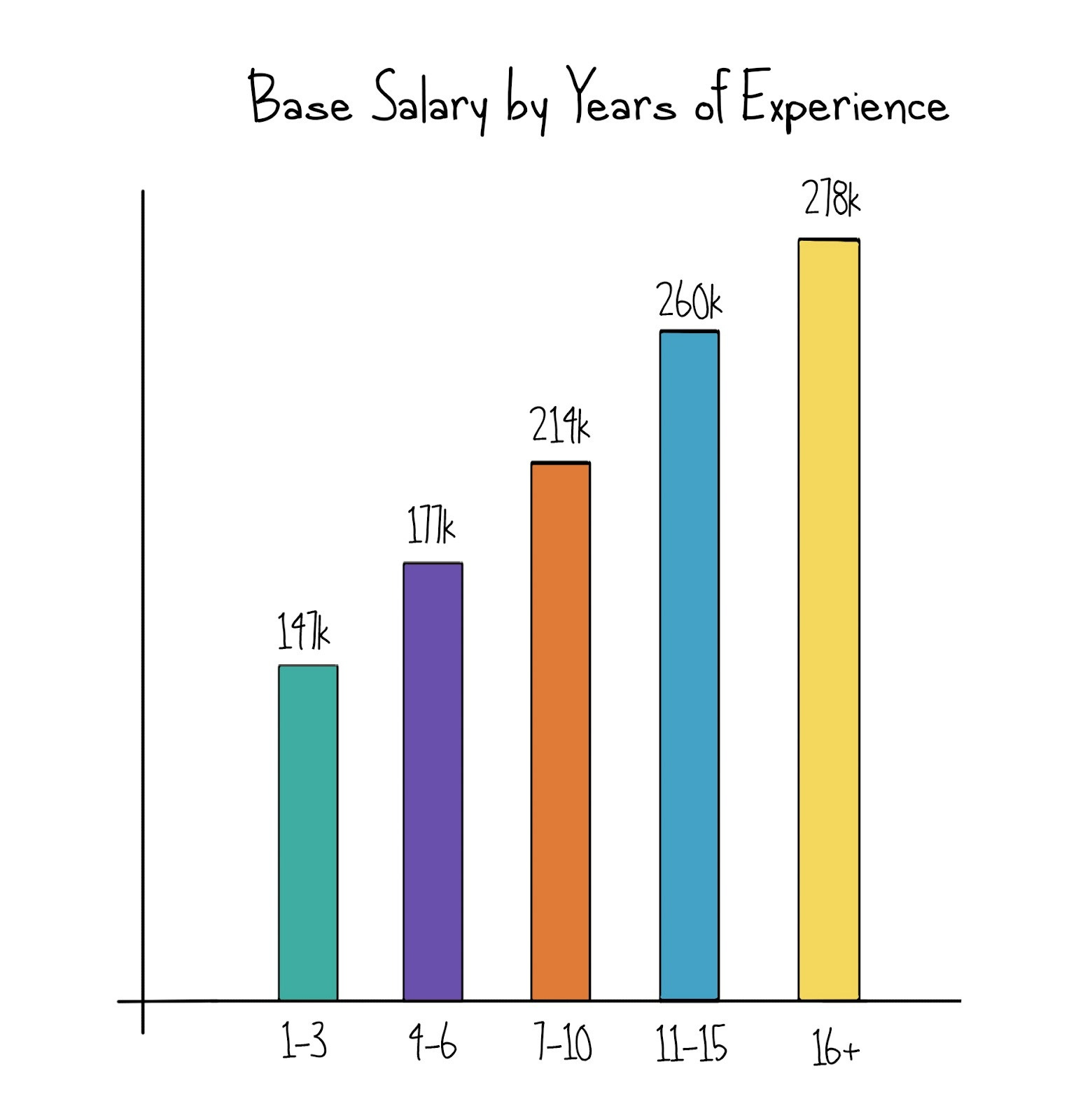
Quick reflection on junior comp - some ex-consultant hiring managers think it’s crazy that current junior consultants need to be paid $150K, (“Back when I was in consulting, I only made $75K.”) But if you were in consulting 10 years ago, at 5% annual inflationary increases, your $75k becomes $125k. Not crazy but puts this into perspective…
A big THANK YOU to everyone who filled it out this year! You should have received the full data set via email already (let us know if you haven’t).
For those who haven’t filled it out yet, you still can! Once you do, you’ll get access to our 2024 compensation study and then we’ll send you the 2025 data. Here's the link to the survey ➡ SURVEY LINK.
Check out a handful of roles working on below, but as always, you can review additional opportunities our Openings Page.
Peregrine [SaaS, SF]: BizOps
Peregrine is a software platform helping state and local governments make faster, better-informed operational decisions. They're building their BizOps & Strategy team, working directly with leadership on special projects that have outsized impact on the growth trajectory for the business. SF-based, in-office working model.
XBOW [AI, Remote]: Strategic Finance & BizOps
XBOW is a Series B startup that builds AI hackers to help companies test their systems. They’re looking for early hires, both in strategic finance and bizops, to focus on everything non-technical (operations, fundraising, customer delivery, talent, finance, sales). Remote-first working model, with team members across North America and Europe.
Two separate Confidential VP level Chief of Staff roles at SaaS Unicorns : Chief of Staff (SF) + Chief of Staff (NYC)
We’re working with two SaaS startups, each looking for a very senior Chief of Staff to support the CEO. Need 15 years of experience (maybe 12 for a rockstar) and at least a few years at a growth stage startup or tech company. Both are in-person.
No posts
Comments
Nothing yet. Say the first thing.
Sign in to join the conversation.